

 Download PDF
 Download PDF
Market Overview
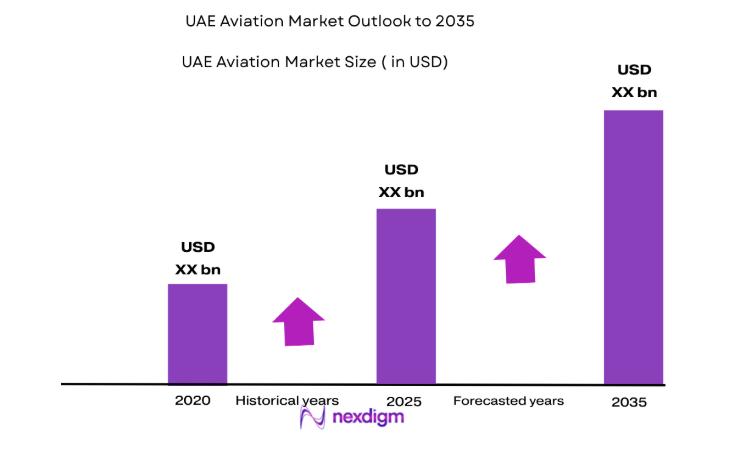
The UAE aviation market is expected to experience substantial growth due to factors such as increasing air passenger traffic, strategic government investments in infrastructure, and a favorable regulatory environment. The market size is driven by the expansion of airports, modernization of aircraft fleets, and technological advancements in air traffic management systems. With a growing demand for efficient, safe, and innovative aviation solutions, the market value for the UAE aviation sector is projected to reach USD 6 billion by the latest market assessments.
The UAE’s dominance in the aviation market is primarily attributed to its strategic geographic location as a global aviation hub and its world-class airports such as Dubai International and Abu Dhabi International. The country’s significant investments in infrastructure and its role as a business and tourism center have solidified its position. Additionally, the government’s commitment to aviation development, coupled with the presence of major carriers like Emirates and Etihad Airways, ensures the UAE’s continued leadership in the region.
Market Segmentation
By Product Type
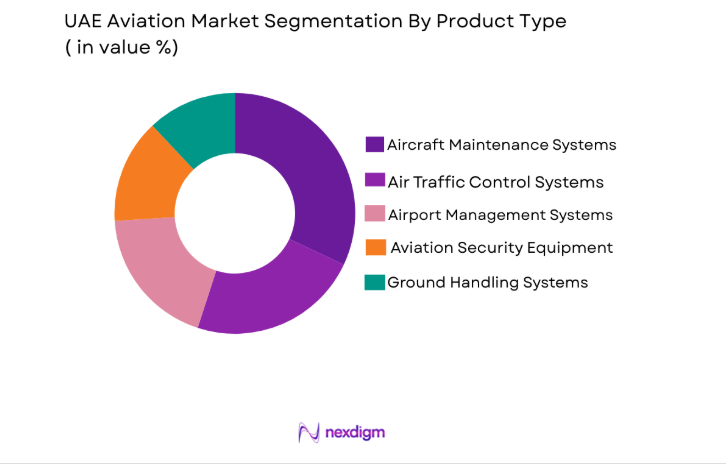
The UAE aviation market is segmented by product type into aircraft maintenance, air traffic control systems, airport management systems, aviation security equipment, and ground handling systems. Recently, aircraft maintenance systems have dominated the market due to the increasing demand for aircraft modernization, maintenance services, and compliance with new aviation safety regulations. Factors such as fleet expansion, aging aircraft, and the need for operational efficiency have led to a higher market share for maintenance systems. These systems ensure optimal aircraft performance, minimize downtime, and reduce overall operational costs.
By Platform Type
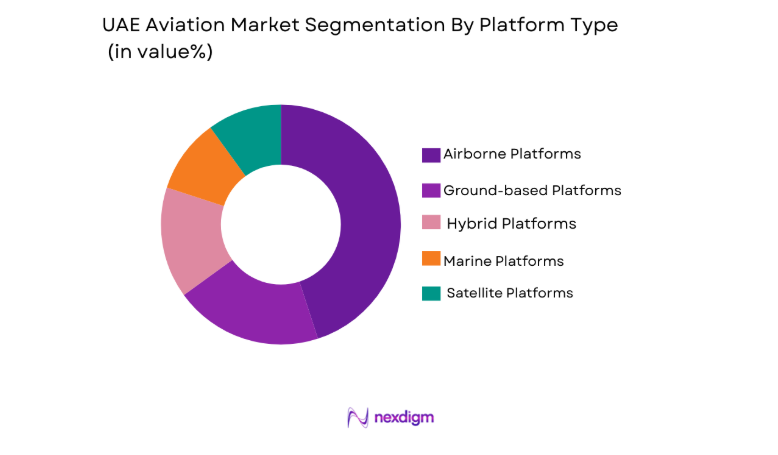
The UAE aviation market is segmented by platform type into airborne platforms, ground-based platforms, hybrid platforms, marine platforms, and satellite platforms. Airborne platforms, particularly commercial and private aircraft, dominate the market due to the increasing demand for air travel and cargo services. These platforms are crucial for supporting the growth of the UAE’s aviation sector, which includes major airlines and international hubs. Additionally, advancements in hybrid platforms that combine both air and ground capabilities, along with the integration of satellite platforms for global communications and navigation, further contribute to the growth of the market. The expanding focus on air mobility and autonomous systems will continue to drive innovation in this segment.
Competitive Landscape
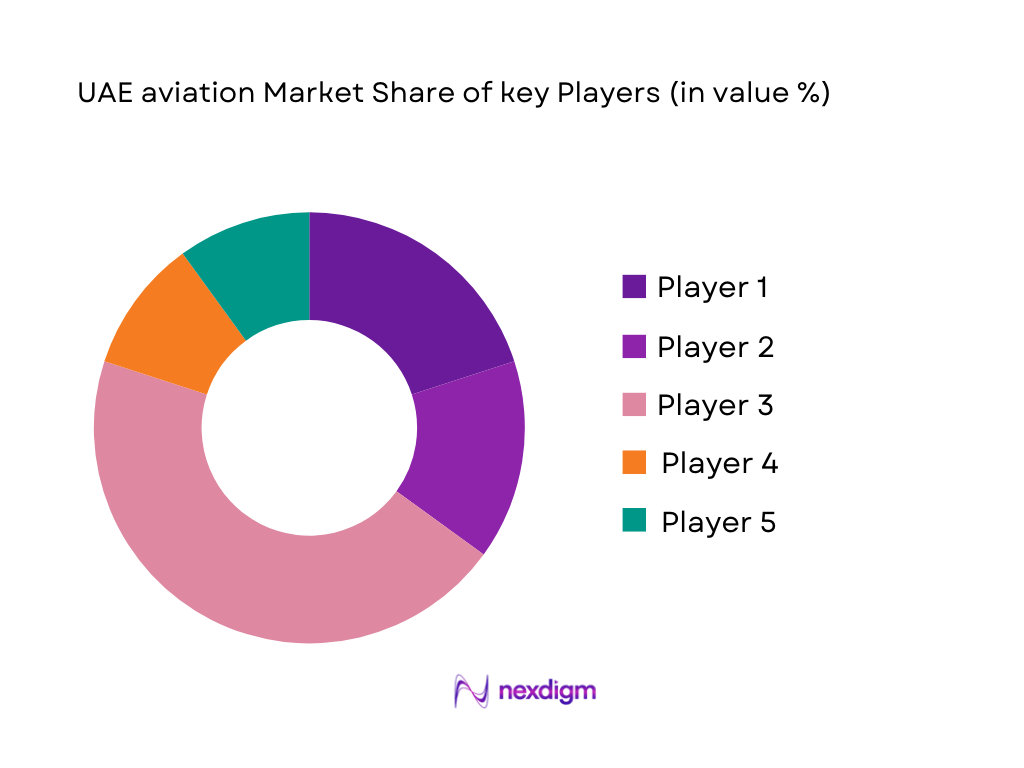
The UAE aviation market is characterized by significant competition, with global and regional players actively shaping its development. Consolidation trends are evident, as major players form strategic partnerships to enhance their technological capabilities and expand their market reach. The presence of large carriers, along with a highly competitive landscape in air traffic control, maintenance, and airport infrastructure, strengthens market dynamics. The dominance of companies such as Emirates and Etihad Airways further influences the competitive environment.
|
Company Name |
Establishment Year | Headquarters | Technology Focus | Market Reach | Key Products | Revenue | Technology Advancements |
| Emirates | 1985 | Dubai, UAE | ~ | ~ | ~ | ~ | ~ |
| Etihad Airways | 2003 | Abu Dhabi, UAE | ~ | ~ | ~ | ~ | ~ |
| Dubai Airports | 2008 | Dubai, UAE | ~ | ~ | ~ | ~ | ~ |
| Thales Group | 1893 | Paris, France | ~ | ~ | ~ | ~ | ~ |
| Rolls-Royce | 1904 | London, UK | ~ | ~ | ~ | ~ | ~ |
UAE Aviation Market Analysis
Growth Drivers
Increased Government Investment in Aviation Infrastructure
The UAE government has been making significant investments in its aviation infrastructure, including the expansion of airports and the modernization of air traffic management systems. This investment is driven by the strategic goal of positioning the UAE as a global aviation hub. The government’s commitment to expanding Dubai International and Abu Dhabi International Airports, coupled with a focus on increasing air connectivity, supports the development of the aviation market. The rise of the UAE as a top international business and tourism destination has created a robust demand for aviation services, facilitating further expansion of the aviation ecosystem. Additionally, the government’s continued push for regulatory frameworks that support innovation in aviation technologies, such as AI and automation in air traffic control systems, has significantly contributed to market growth. The integration of advanced systems such as biometric screening at airports further enhances passenger experience, improving the UAE’s competitive position in the global aviation sector. The modernization of airports and aviation services has led to increased efficiency and safety, which drives demand for newer, more advanced systems, including automated baggage handling and aircraft maintenance systems.
Technological Advancements in Air Traffic Management and Airport Systems
The UAE has been at the forefront of adopting innovative technologies in its aviation sector. The increasing integration of automation and AI in air traffic control systems has led to more efficient management of airspace, helping reduce delays and improving flight safety. The advancement in airport management systems, including smart airport technology, has streamlined operations such as check-in, security, and baggage handling, enhancing passenger satisfaction. The UAE’s commitment to becoming a leader in digital aviation solutions has fostered a strong market for innovative technologies such as biometric authentication and IoT-based systems. The rise of smart airports and air traffic management systems has positioned the country as a leader in aviation infrastructure. The UAE’s adoption of green technologies and sustainable aviation solutions is another key driver, ensuring the future sustainability of the aviation sector in alignment with global environmental goals.
Market Challenges
High Capital Investment for Aviation Infrastructure
One of the significant challenges facing the UAE aviation market is the high capital investment required for the continued expansion and upgrading of aviation infrastructure. Developing and maintaining state-of-the-art airports, air traffic control systems, and aircraft fleets requires massive investments. While the UAE government has demonstrated a strong commitment to aviation development, the cost of financing these projects, particularly amid fluctuating global economic conditions, can place a strain on both public and private sector finances. The high upfront costs of infrastructure development also impact the profitability of new ventures in the aviation industry. The reliance on financing and public-private partnerships raises concerns about the sustainability of such investments in the long term. As the UAE’s aviation market grows, the demand for new infrastructure will increase, necessitating continuous large-scale investments. This challenge requires careful planning and financial management to ensure the long-term viability of these projects.
Cybersecurity Threats in Aviation Systems
As the UAE’s aviation market becomes more reliant on digital and automated systems, the risk of cybersecurity threats also increases. The integration of AI, IoT, and other technologies into air traffic management and airport operations makes aviation systems more vulnerable to cyber-attacks. Threats such as data breaches, hacking, and ransomware attacks could potentially disrupt airport operations and undermine public confidence in aviation safety. Protecting critical infrastructure, including communication systems, navigation, and surveillance technologies, from cyber threats is becoming a top priority for the UAE government and private sector stakeholders. As aviation systems grow more interconnected, maintaining robust cybersecurity measures will be essential to preventing cyber threats from compromising the safety and efficiency of air travel. The ongoing risk of cyber-attacks demands continuous investment in cybersecurity technologies, as well as training and awareness programs for aviation professionals.
Opportunities
Sustainable Aviation Solutions and Alternative Fuel Development
A key opportunity in the UAE aviation market lies in the development and implementation of sustainable aviation solutions. With increasing global emphasis on reducing carbon emissions, the UAE has a significant opportunity to lead the way in adopting sustainable aviation technologies. This includes the development of alternative fuels, such as sustainable aviation fuel (SAF), which can significantly reduce the environmental impact of aviation. The UAE’s commitment to diversifying its energy sources and reducing its carbon footprint creates a favorable environment for the growth of green technologies within the aviation sector. Additionally, as global regulations become stricter in terms of emission controls, the demand for eco-friendly aircraft and fuel alternatives will continue to rise. This trend presents a market opportunity for the UAE to innovate in green aviation technologies, attract investment in research and development, and implement these solutions across its aviation ecosystem.
Growth of Autonomous Aircraft Systems
Another major opportunity in the UAE aviation market is the rise of autonomous aircraft systems. The development and integration of unmanned aerial vehicles (UAVs) and autonomous aircraft technologies present vast potential for innovation within the sector. The UAE government has been proactive in exploring the commercial applications of autonomous technologies, including UAVs for logistics and transportation. As global interest in autonomous systems grows, the UAE is well-positioned to become a leader in the adoption and regulation of these technologies. The country’s favorable regulatory environment, combined with significant investments in technology infrastructure, creates an ideal landscape for the rapid deployment of autonomous aircraft. The potential applications of autonomous aircraft, ranging from passenger services to cargo delivery, present significant opportunities for the UAE aviation sector to diversify its offerings and reduce operational costs. Furthermore, the rise of urban air mobility (UAM) technologies, including autonomous flying taxis, offers a glimpse into the future of aviation in the UAE.
Future Outlook
The future outlook for the UAE aviation market over the next five years is promising, driven by strong government investments in aviation infrastructure and technological advancements. Growth in air traffic, coupled with the UAE’s strategic positioning as a global aviation hub, is expected to fuel market expansion. Technological innovations, including automation, AI, and sustainable aviation solutions, will continue to shape the market, improving operational efficiency and environmental sustainability. The increasing demand for alternative fuel sources and green aviation technologies, alongside favorable regulatory support, will further drive growth in the sector. Additionally, market players will continue to benefit from the UAE’s growing role as a global business, tourism, and logistics center, leading to increased demand for both commercial and private aviation services.
Major Players
- Emirates
- Etihad Airways
- Dubai Airports
- Abu Dhabi Airports
- Thales Group
- Rolls-Royce
- Boeing
- Airbus
- Lockheed Martin
- Raytheon Technologies
- Honeywell Aerospace
- L3 Technologies
- GE Aviation
- Bombardier
- Sikorsky Aircraft
Key Target Audience
- Investments and venture capitalist firms
- Government and regulatory bodies
- Airlines
- Aircraft manufacturers
- Ground handling service providers
- Air traffic management agencies
- Airport infrastructure developers
- Aviation technology companies
Research Methodology
Step 1: Identification of Key Variables
The first step involves identifying key market drivers, challenges, and trends to provide a comprehensive understanding of the market dynamics.
Step 2: Market Analysis and Construction
The market analysis phase includes collecting data from primary and secondary sources to construct a detailed market model, including segmentation, demand trends, and supply chain dynamics.
Step 3: Hypothesis Validation and Expert Consultation
This step involves validating the data and market model through consultations with industry experts, including stakeholders, government bodies, and technology providers.
Step 4: Research Synthesis and Final Output
The final step synthesizes all findings into a coherent market report, providing actionable insights and strategic recommendations for market stakeholders.

- Executive Summary
- Research Methodology (Definitions, Scope, Industry Assumptions, Market Sizing Approach, Primary & Secondary Research Framework, Data Collection & Verification Protocol, Analytic Models & Forecast Methodology, Limitations & Research Validity Checks)

- Market Definition and Scope
- Value Chain & Stakeholder Ecosystem
- Regulatory / Certification Landscape
- Sector Dynamics Affecting Demand
- Strategic Initiatives & Infrastructure Growth

- Growth Drivers
Government Investment in Aviation Infrastructure
Rising Air Passenger Traffic
Technological Innovations in Aviation Systems
Increasing Demand for Sustainable Aviation Solutions
Growing Strategic Partnerships with Global Aerospace Firms - Market Challenges
High Initial Capital Investment for Infrastructure
Regulatory Barriers in International Aviation
Cybersecurity Threats to Air Traffic Management Systems
Skilled Labor Shortages in Aviation Maintenan - Market Opportunities
Growth in Aviation Fuel Alternatives
Expansion of Dubai as a Global Aviation Hub
Demand for Autonomous Aircraft Systems - Trends
Rise of Electric and Hybrid Aircraft
AI and Machine Learning Integration in Air Traffic Control
Growth in Airport Smart Technologies
Increased Focus on Passenger Safety and Security
Rise of Air Mobility Services - Government Regulations & Defense Policy
Aviation Safety and Air Traffic Control Regulations
Environmental and Emission Reduction Policies
Public-Private Partnerships for Aviation Development - SWOT Analysis
- Stakeholder and Ecosystem Analysis
- Porter’s Five Forces Analysis
- Competition Intensity and Ecosystem Mapping

- By Market Value, 2020-2025
- By Installed Units, 2020-2025
- By Average System Price, 2020-2025
- By System Complexity Tier, 2020-2025

- By System Type (In Value%)
Air Traffic Management Systems
Aircraft Engine Maintenance Systems
Airport Security Systems
Ground Handling Equipment
Baggage Handling Systems - By Platform Type (In Value%)
Airborne Platforms
Ground-based Platforms
Hybrid Platforms
Marine Platforms
Satellite Platforms - By Fitment Type (In Value%)
On-premise Solutions
Cloud-based Solutions
Modular Solutions
Integrated Solutions
Hybrid Solutions - By EndUser Segment (In Value%)
Commercial Aviation
Government & Military Aviation
Private Aviation
Cargo & Logistics Operators
Aerospace Contractors - By Procurement Channel (In Value%)
Direct Procurement
Government Tenders
Private Sector Procurement
Online Procurement Platforms
Third-party Distributors - By Material / Technology (In Value%)
Composite Materials
Titanium Alloys
Carbon Fiber Reinforced Polymers
Advanced Electronics & Sensors
Nanotechnology

- Market structure and competitive positioning
Market share snapshot of major players - Cross Comparison Parameters (Platform Type, System Complexity, Procurement Channel, End User Segment, Fitment Type
- SWOT Analysis of Key Competitors
- Pricing & Procurement Analysis
- Key Players
Emirates Group
Etihad Airways
Dubai Airports
Abu Dhabi Airports
Airbus
Boeing
Thales Group
Honeywell Aerospace
Rolls-Royce
General Electric Aviation
Lockheed Martin
Bombardier
Sikorsky Aircraft
L3 Technologies
Raytheon Technologies

- Increased Demand for Cargo & Logistics Solutions
- Government & Military’s Focus on Aviation Modernization
- Private Sector’s Investment in Business Aviation
- Commercial Aviation’s Shift Towards Sustainable Practices

- Forecast Market Value, 2026-2035
- Forecast Installed Units, 2026-2035
- Price Forecast by System Tier, 2026-2035
- Future Demand by Platform, 2026-2035


 Request a Sample
 Ask for Customization
 Get a Quote
 Enquire Now