
 Download PDF
 Download PDF
Market Overview
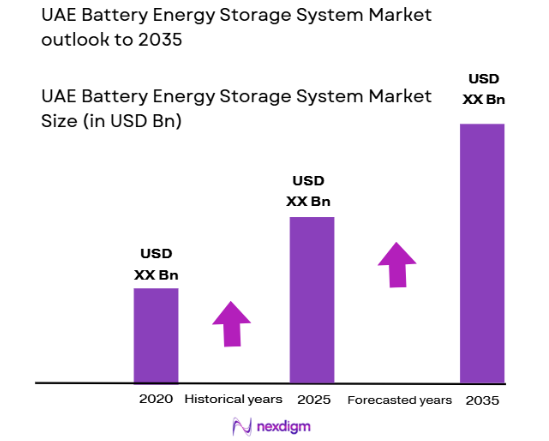
The UAE Battery Energy Storage System (BESS) market is projected to experience significant growth, with the market size reaching USD ~ billion based on a recent historical assessment. The market is primarily driven by increasing demand for renewable energy integration, government incentives supporting sustainability goals, and advancements in battery technologies. Factors such as declining costs of storage systems, coupled with an ongoing push for smart grid modernization, are also contributing to the market’s rapid growth. Moreover, the expansion of utility-scale storage solutions and the rise in decentralized power generation further accelerate market momentum.
The UAE’s dominance in the BESS market can be attributed to its commitment to achieving energy diversification and sustainability. With robust governmental policies and strategic initiatives supporting clean energy development, the country leads the Middle East region in implementing energy storage projects. Cities like Dubai and Abu Dhabi are at the forefront of these advancements, backed by substantial investments from both public and private sectors. Moreover, the nation’s high-tech infrastructure and growing interest in electric vehicle adoption support the increased demand for energy storage solutions.
Market Segmentation
By Product Type
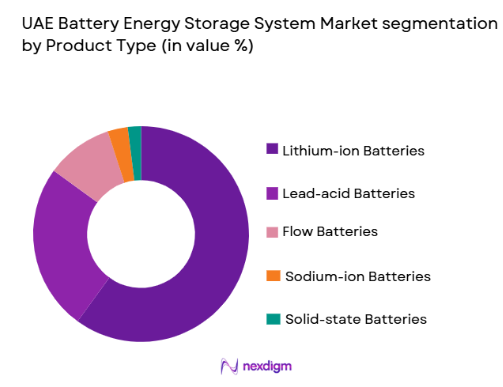
The UAE Battery Energy Storage System market is segmented by product type into various categories, including Lithium-ion, Lead-acid, and Flow battery systems. Among these, the Lithium-ion battery storage systems hold a dominant market share due to factors such as higher efficiency, longer lifecycle, and better energy density. This technology is particularly favored in both utility-scale and commercial-scale applications, providing an efficient solution for the storage of renewable energy. The demand for Lithium-ion batteries is driven by their significant performance improvements and continued cost reductions over recent years, alongside a growing push for sustainable energy solutions and a more flexible grid.
By Platform Type
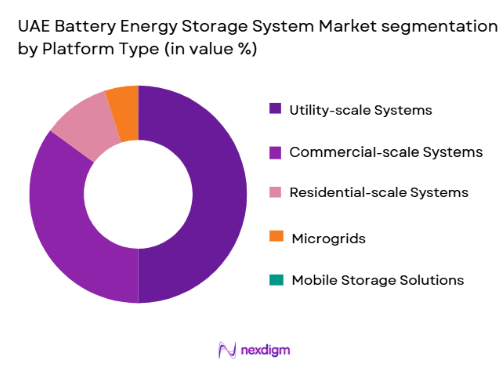
The UAE Battery Energy Storage System market is segmented by platform type into Utility-scale, Commercial-scale, and Residential-scale systems. Recently, utility-scale systems have dominated the market due to increasing government investments in large-scale renewable energy projects. These systems are primarily used to balance grid demand and ensure the stability of power distribution networks. The UAE’s strategy to enhance grid capacity through smart grids and sustainable power generation systems has led to a surge in demand for such platforms. Additionally, these large systems offer higher efficiency, scalability, and performance, making them the preferred choice for both public and private sector initiatives.
Competitive Landscape
The UAE Battery Energy Storage System market is characterized by a competitive landscape dominated by a mix of global technology leaders and regional players. As the market experiences rapid growth, companies are consolidating through mergers and strategic partnerships to better address the growing demand for energy storage solutions. These players are focusing on technological innovations, supply chain improvements, and customer-centric solutions. The market is witnessing a steady influx of investments from both government-backed initiatives and private enterprises to support the integration of energy storage with renewable energy generation.
| Company Name | Establishment Year | Headquarters | Technology Focus | Market Reach | Key Products | Revenue (USD Billion) | Additional Parameter |
| Tesla | 2003 | USA | ~ | ~ | ~ | ~ | ~ |
| LG Chem | 1947 | South Korea | ~ | ~ | ~ | ~ | ~ |
| Siemens | 1847 | Germany | ~ | ~ | ~ | ~ | ~ |
| VARTA AG | 1887 | Germany | ~ | ~ | ~ | ~ | ~ |
| Fluence Energy | 2000 | USA | ~ | ~ | ~ | ~ | ~ |
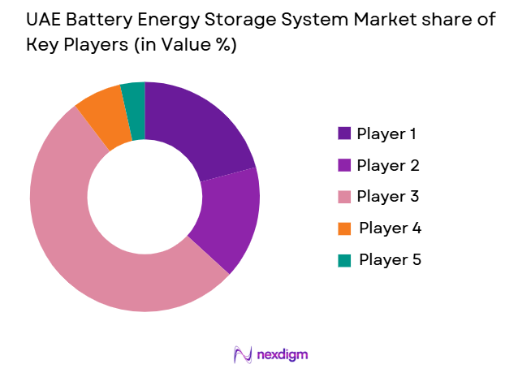
UAE Battery Energy Storage System Market Analysis
Growth Drivers
Government Support for Renewable Energy Integration:
Government policies and incentives aimed at advancing renewable energy projects, including solar and wind power, are critical drivers of the UAE BESS market. These policies include subsidies, regulatory frameworks, and long-term plans such as the UAE Energy Strategy 2050, which aims to increase clean energy production. Additionally, the UAE government is heavily investing in smart grid technologies, which necessitate efficient and scalable energy storage solutions to ensure grid stability and efficiency. The government’s clear vision for the future of energy, including the integration of BESS, has created a conducive environment for market growth. Furthermore, the push toward energy diversification away from oil dependency is fueling demand for BESS as a strategic enabler of the energy transition.
Technological Advancements and Cost Reductions
The continuous improvements in battery technologies, such as Lithium-ion and Flow batteries, are contributing significantly to the growth of the BESS market in the UAE. Recent breakthroughs in energy storage efficiency, longer lifecycles, and reduced costs have made BESS more economically viable, especially for large-scale renewable energy projects. The cost of Lithium-ion batteries, for example, has fallen drastically over the past decade due to advances in manufacturing processes and economies of scale. These innovations make BESS a more attractive investment for both government and private sector players, further driving the market’s expansion.
Market Challenges
High Initial Investment Costs
One of the significant challenges facing the UAE BESS market is the high upfront capital costs associated with energy storage systems. While the costs of batteries have reduced significantly in recent years, the installation of energy storage infrastructure remains expensive. This high initial investment can be a barrier for small and medium-sized enterprises to adopt energy storage systems, limiting the overall market potential. Although government incentives help mitigate some of these costs, the reliance on substantial capital expenditure makes it a challenge for widespread adoption across all sectors. This financial challenge remains a primary concern in scaling up BESS deployment in both commercial and residential sectors.
Battery Recycling and Disposal Issues
As the deployment of BESS increases, so does the concern over the environmental impact of battery disposal. The UAE, like other regions, faces challenges related to the recycling of large-scale battery systems. Most of the energy storage technologies used today, such as Lithium-ion, require specific recycling methods to prevent environmental contamination. While the UAE has made strides in developing sustainable waste management practices, there is still a lack of comprehensive infrastructure dedicated to the recycling of spent batteries. As the BESS market grows, the need for robust recycling systems and policies will become more critical, and failure to address this challenge could hinder the market’s long-term sustainability.
Opportunities
Expansion of Off-Grid Energy Solutions
One of the promising opportunities in the UAE BESS market is the expansion of off-grid energy solutions, especially for remote and rural areas. With the growing demand for decentralized power generation, energy storage systems are being increasingly integrated into off-grid applications. The UAE’s geographical characteristics make it ideal for off-grid solutions that can be powered by renewable energy sources such as solar and wind. BESS technologies allow for the storage of energy produced during peak generation times, which can be used during periods of low generation or high demand. This opportunity is particularly appealing for industries such as agriculture, remote communities, and disaster recovery scenarios, where reliable energy storage is crucial for sustainability.
Increase in Demand for Electric Vehicle Charging Infrastructure
As the UAE transitions to electric mobility, there is a rising demand for electric vehicle (EV) charging infrastructure. This transition presents a significant opportunity for the BESS market, as energy storage systems are essential for managing the charging loads of EVs. By integrating battery storage solutions with EV charging stations, the UAE can enhance the reliability and efficiency of the charging infrastructure, helping to accommodate the growing number of electric vehicles on the road. The shift towards electric vehicles also aligns with the UAE’s long-term sustainability goals and creates a strategic opportunity for BESS market players to collaborate with EV manufacturers and infrastructure developers.
Future Outlook
The future of the UAE Battery Energy Storage System market looks promising, with strong growth projected over the next five years. Technological advancements, such as the continued reduction in battery costs and the adoption of next-generation storage technologies, will drive market expansion. In addition, regulatory support from the UAE government, including initiatives to enhance energy efficiency and sustainability, will play a key role in further accelerating the deployment of BESS. Increasing investments in renewable energy generation, coupled with growing demand for decentralized power solutions and electric vehicle infrastructure, will shape the future landscape of the market, making energy storage a vital component of the UAE’s energy transition.
Major Players
- Tesla
- LG Chem
- Siemens
- VARTA AG
- Fluence Energy
- ABB
- Schneider Electric
- Saft
- BYD
- AES Energy Storage
- Panasonic
- General Electric
- Mitsubishi Electric
- Toshiba
- Enel X
Key Target Audience
- Investments and venture capitalist firms
- Government and regulatory bodies
- Energy utilities and power generation companies
- Renewable energy developers
- System integrators and EPC contractors
- Commercial and industrial end-users
- Residential energy consumers
- Environmental organizations
Research Methodology
Step 1: Identification of Key Variables
Identify the key variables that drive market demand, including technological advancements, regulatory frameworks, and market trends, which influence the growth of the UAE Battery Energy Storage System market.
Step 2: Market Analysis and Construction
Analyze current market conditions, competitive dynamics, and the future outlook by evaluating current BESS adoption rates and project growth across different sectors in the UAE.
Step 3: Hypothesis Validation and Expert Consultation
Validate hypotheses with industry experts, including government bodies, energy providers, and technology developers, to ensure the accuracy of assumptions and projections.
Step 4: Research Synthesis and Final Output
Synthesize research findings to present a comprehensive report on the UAE Battery Energy Storage System market, incorporating the latest market trends, challenges, and growth opportunities.

- Executive Summary
- Research Methodology (Definitions, Scope, Industry Assumptions, Market Sizing Approach, Primary & Secondary Research Framework, Data Collection & Verification Protocol, Analytic Models & Forecast Methodology, Limitations & Research Validity Checks)

- Market Definition and Scope
- Value Chain & Stakeholder Ecosystem
- Regulatory / Certification Landscape
- Sector Dynamics Affecting Demand
- Strategic Initiatives & Infrastructure Growth

- Growth Drivers
Rising Demand for Renewable Energy Integration
Government Policies & Sustainability Goals
Advancements in Battery Technology
Decreasing Battery Costs
Increased Grid Modernization - Market Challenges
High Initial Investment Costs
Regulatory and Policy Barriers
Energy Storage Efficiency Issues
Battery Recycling Concerns
Technology Integration and Interoperability - Market Opportunities
Expansion of Green Energy Projects
Strategic Partnerships with Technology Providers
Rise in Off-Grid Power Solutions - Trends
Integration of AI for Energy Management
Growth in Commercial-Scale Energy Storage
Increase in Demand for Hybrid Energy Systems
Focus on Long-duration Energy Storage
Energy Storage for Electric Vehicle Charging Stations - Government Regulations & Defense Policy
Incentives for Renewable Energy Projects
Battery Safety and Certification Standards
Energy Storage Deployment Policies - SWOT Analysis
- Stakeholder and Ecosystem Analysis
- Porter’s Five Forces Analysis
- Competition Intensity and Ecosystem Mapping

- By Market Value, 2020-2025
- By Installed Units, 2020-2025
- By Average System Price, 2020-2025
- By System Complexity Tier, 2020-2025

- By System Type (In Value%)
Li-ion Battery Storage Systems
Lead-Acid Battery Storage Systems
Flow Battery Storage Systems
Sodium-ion Battery Storage Systems
Solid-State Battery Storage Systems - By Platform Type (In Value%)
Utility-Scale Systems
Commercial-Scale Systems
Residential-Scale Systems
Microgrids
Mobile Storage Solutions - By Fitment Type (In Value%)
On-grid Systems
Off-grid Systems
Hybrid Systems
Modular Systems
Integrated Systems - By EndUser Segment (In Value%)
Energy Utilities
Government & Military
Commercial Enterprises
Residential Customers
Industrial Users - By Procurement Channel (In Value%)
Direct Procurement
Government Tenders
Private Sector Procurement
Online Bidding Platforms
Third-party Distributors - By Material / Technology (in Value%)
Lithium-Ion Batteries
Vanadium Flow Batteries
Lead-Acid Batteries
Solid-State Batteries
Supercapacitors

- Market structure and competitive positioning
- Market share snapshot of major players
- Cross Comparison Parameters (System Type, Platform Type, Procurement Channel, EndUser Segment, Fitment Type, Material/Technology, Government Policies, Market Share, Regulatory Impact, Market Trends)
SWOT Analysis of Key Players
Pricing & Procurement Analysis
Key Players
Tesla
LG Chem
Samsung SDI
BYD
Siemens
VARTA AG
Fluence Energy
Eos Energy Enterprises
CATL
AES Corporation
Schneider Electric
SAFT Batteries
Northvolt
Doosan GridTech
Iberdrola

- Government Focus on Energy Security
- Energy Utilities Increasing Storage Capacity
- Commercial Enterprises Seeking Cost Efficiency
- Residential Users Opting for Off-grid Solutions

- Forecast Market Value, 2026-2035
- Forecast Installed Units, 2026-2035
- Price Forecast by System Tier, 2026-2035
- Future Demand by Platform, 2026-2035


 Request a Sample
 Ask for Customization
 Get a Quote
 Enquire Now