
 Download PDF
Market Overview
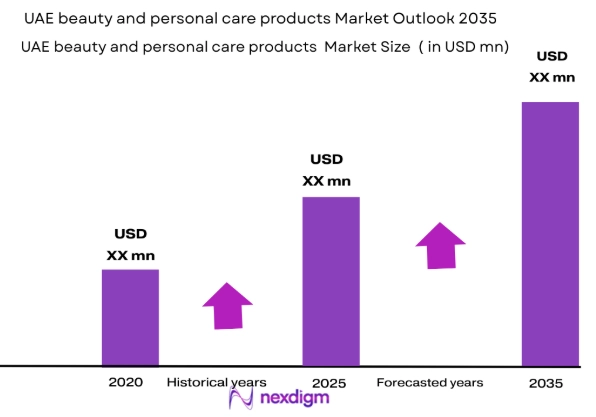
The UAE beauty and personal care products market is valued at USD ~ million, based on IMARC’s latest reported market size, with forecast growth supported by premium beauty spending, e-commerce expansion, social-media-led discovery, and rising demand for natural and high-quality products. IMARC’s earlier forecast placed the sector on a 5.70% CAGR path, while its newer outlook reports USD 2,694.7 million and 5.25% CAGR for the next forecast cycle.
Dubai dominates UAE beauty retail because it combines luxury malls, tourism, airport retail, expatriate demand, and regional brand launches. Dubai received 18.72 million international overnight visitors, compared with 17.15 million previously, strengthening demand for fragrances, premium skin care, cosmetics, and travel retail. Abu Dhabi is also important due to high-income residents, hospitality growth, and premium mall formats, but Dubai remains the primary beauty-commerce hub.
Market Segmentation
By Product Type
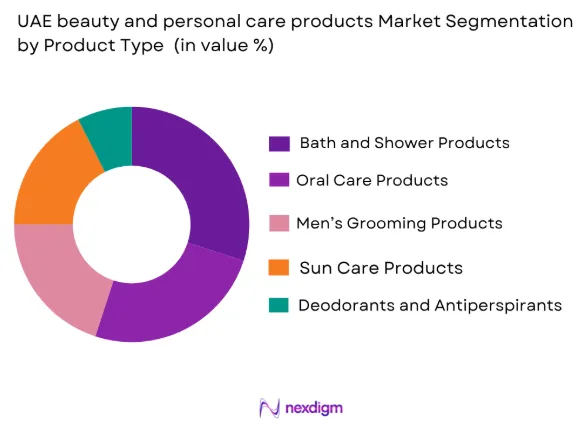
UAE beauty and personal care products market is segmented by product type into skin care, hair care, fragrances and perfumes, color cosmetics, bath and shower products, oral care, and men’s grooming, sun care and others. Recently, skin care has held the dominant position under product type segmentation due to premiumization, high exposure to dermatology-backed claims, climate-driven hydration and sun-protection needs, and rising consumer demand for serums, moisturizers, cleansers, anti-aging products, and multifunctional products. The dominance is also supported by beauty-specialty retailers, pharmacy channels, and online platforms that promote routine-based skin care. Demand is particularly strong among working women, affluent residents, tourists, and young consumers influenced by Korean beauty, clean beauty, and dermatologist-led social media content.
By Gender Type
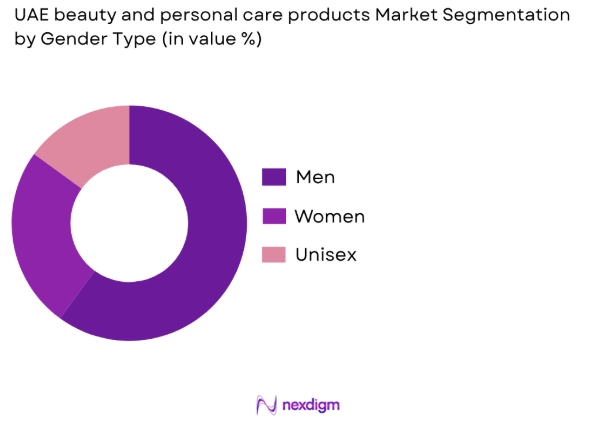
The women segment dominates the UAE beauty and personal care products market due to higher product usage frequency across skin care, hair care, color cosmetics, and fragrances, supported by a female population of 3.37 million and strong workforce participation in urban centers like Dubai and Abu Dhabi. The men segment is expanding steadily with rising grooming awareness, supported by a male population of 7.93 million and increasing demand for beard care, skin care, and deodorants. The unisex segment is growing due to shared household consumption patterns, especially in categories like fragrances, bath products, and natural formulations, driven by multicultural expatriate households and evolving gender-neutral beauty trends.
Competitive Landscape
The UAE beauty and personal care products market is moderately consolidated at the premium and prestige end, with strong influence from global groups such as L’Oréal, Estée Lauder, Unilever, Procter & Gamble, Coty, Shiseido, and Beiersdorf. At the same time, regional fragrance houses, local celebrity-led beauty brands, pharmacy retailers, and e-commerce platforms intensify competition. Dubai’s role as a retail and tourism hub makes the market a preferred launchpad for GCC beauty expansion.
| Company | Establishment Year | Headquarters | Core Categories | UAE Channel Strength | Brand Positioning | Regulatory Focus | Digital Strategy | Sustainability / ESG Focus |
| L’Oréal Middle East | 1909 | Clichy, France | ~ | ~ | ~ | ~ | ~ | ~ |
| Unilever Gulf | 1929 | London, UK | ~ | ~ | ~ | ~ | ~ | ~ |
| Procter & Gamble Middle East | 1837 | Cincinnati, USA | ~ | ~ | ~ | ~ | ~ | ~ |
| Estée Lauder Companies Middle East | 1946 | New York, USA | ~ | ~ | ~ | ~ | ~ | ~ |
| Beiersdorf Middle East / Nivea | 1882 | Hamburg, Germany | ~ | ~ | ~ | ~ | ~ | ~ |
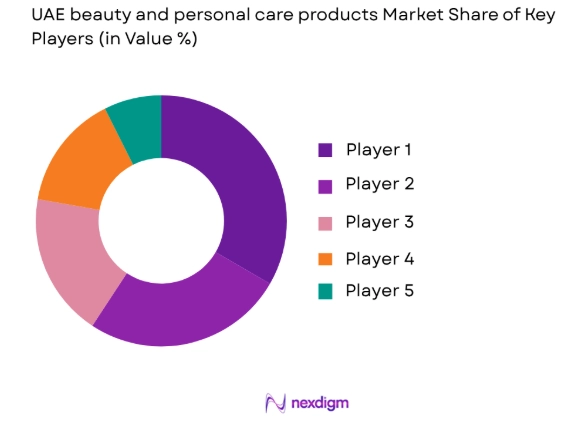
UAE Beauty and Personal Care Products Market Analysis
Growth Drivers
High Disposable Income and Premium Beauty Spending
The UAE’s high-income economy strongly supports premium beauty consumption across skin care, fragrances, and luxury cosmetics. According to the International Monetary Fund, the UAE’s GDP reached USD 621.55 billion, with GDP per capita exceeding USD 54,000, placing it among the highest globally. Additionally, the Federal Competitiveness and Statistics Centre reports a total population of over 11.2 million, with a large share of expatriates in high-paying sectors such as finance, hospitality, and professional services. This economic structure enables consistent spending on discretionary products, including prestige beauty and dermatology-backed skin care. High urbanization, with over 9.5 million urban residents, further supports mall-based retail and premium beauty store formats, particularly in Dubai and Abu Dhabi.
Strong Demand for Luxury Fragrances and Skin Care
Luxury fragrances and advanced skin care products are deeply embedded in UAE consumer culture, particularly influenced by Middle Eastern traditions of perfume usage and grooming. Dubai International Airport handled 92.3 million passengers, while Dubai recorded 18.72 million international visitors, creating strong demand for high-end fragrance brands in travel retail and malls. The UAE’s position as a global retail hub also attracts luxury brand launches and exclusive product lines. Additionally, high temperatures and environmental exposure increase the need for hydration, sun protection, and repair-based skin care, driving demand for premium formulations. Consumers in urban centers frequently purchase multiple fragrance formats and advanced skin care products, reinforcing the dominance of these categories.
Challenges
High Competition Among International and Regional Brands
The UAE beauty and personal care market faces intense competition due to the presence of global multinational brands alongside strong regional fragrance houses and emerging local labels. The country’s open trade environment and logistics infrastructure, supported by GDP of over AED 1,486 billion in the first nine months of the year, enable easy market entry for international players. Dubai’s status as a regional headquarters hub attracts brand investments, increasing product availability across all price points. This results in crowded retail shelves in malls, pharmacies, and e-commerce platforms. Additionally, the presence of over 11 million residents with diverse cultural preferences encourages brands to offer localized products, intensifying competition further and making differentiation increasingly challenging for new entrants.
Regulatory Compliance and Product Registration Requirements
Strict regulatory frameworks create operational challenges for beauty brands entering or expanding in the UAE market. Cosmetic products must be registered through systems such as Dubai Municipality’s Montaji platform, requiring documentation like ingredient lists, safety reports, and Free Sale Certificates. The UAE’s population of 11.29 million represents a large but regulated consumer base where compliance is essential for distribution. Importers must also adhere to GCC labeling standards, halal claims verification, and safety testing protocols. These processes can increase time-to-market and operational costs, particularly for smaller brands. Additionally, the need for continuous compliance with updated regulations and documentation standards creates complexity in maintaining product portfolios across multiple retail and distribution channels.
Opportunities
Clean Beauty and Sustainable Packaging
The UAE market presents strong opportunities for clean beauty and sustainable packaging as consumers become more conscious of product ingredients and environmental impact. Digital engagement is high, with 9.46 million internet users and over 10.7 million social media users, enabling awareness around organic, vegan, and eco-friendly beauty products. Government sustainability initiatives and climate-focused strategies are also encouraging businesses to adopt responsible packaging and sourcing practices. Urban consumers, particularly in Dubai and Abu Dhabi, actively seek products free from harmful chemicals and prefer brands that emphasize transparency and ethical sourcing. This creates opportunities for brands offering recyclable packaging, refillable formats, and plant-based formulations, especially within premium and niche beauty segments.
Luxury and Niche Fragrance Expansion
Luxury and niche fragrance categories continue to offer significant growth opportunities in the UAE due to strong cultural affinity and high tourist spending. Dubai’s 92.3 million airport passengers and 18.72 million visitors create a continuous flow of consumers seeking premium and exclusive fragrance products. Middle Eastern consumers traditionally use multiple fragrance types, including oud, attar, and modern blends, supporting demand for both global luxury brands and regional perfume houses. High disposable income and gifting culture further drive repeat purchases. Additionally, retail spaces such as malls and duty-free stores provide dedicated fragrance zones, allowing brands to showcase niche collections and personalized scent experiences, enhancing customer engagement and driving premium sales.
Future Outlook
Over the next five years, the UAE beauty and personal care products market is expected to grow steadily, supported by premium skin care, fragrance demand, e-commerce penetration, and Dubai’s role as a luxury retail hub. The market’s growth will also be supported by beauty tourism, affluent expatriates, clean beauty preferences, and AI-led personalization. Regulatory compliance will become more important as brands expand product claims, ingredients, and sustainability positioning.
Major Players
- L’Oréal Middle East
- Unilever Gulf
- Procter & Gamble Middle East
- Estée Lauder Companies Middle East
- Beiersdorf Middle East / Nivea
- Coty Middle East
- Shiseido Middle East
- Johnson & Johnson Middle East
- Sephora Middle East
- Faces / Wojooh
- Chalhoub Group
- Huda Beauty
- Kayali
- Swiss Arabian
- Ajmal Perfumes
Key Target Audience
- Beauty and personal care product manufacturers
- Premium and luxury cosmetics brands
- Fragrance and perfume manufacturers
- Retail chains and beauty specialty stores
- E-commerce and marketplace operators
- Salons, spas, and professional beauty service providers
- Investments and venture capitalist firms
- Government and regulatory bodies
Research Methodology
Step 1: Identification of Key Variables
The initial phase involves mapping the UAE beauty and personal care products ecosystem, including manufacturers, importers, distributors, retailers, e-commerce platforms, and regulatory authorities. This step uses secondary research, company disclosures, product registration references, retail channel mapping, and category-level demand indicators to identify core market variables.
Step 2: Market Analysis and Construction
Historical market information is compiled across product categories, price segments, and distribution channels. The analysis assesses beauty retail sales, premium product adoption, tourism-linked demand, e-commerce expansion, and consumer purchasing behavior to construct a revenue-based market model for the UAE beauty and personal care products market.
Step 3: Hypothesis Validation and Expert Consultation
Market assumptions are validated through expert discussions with brand managers, distributors, salon-channel operators, retail category heads, and import specialists. These consultations help verify channel performance, product category strength, pricing bands, regulatory requirements, and the competitive position of international and regional brands.
Step 4: Research Synthesis and Final Output
The final phase integrates secondary data, regulatory inputs, company benchmarking, and expert validation into a structured market report. The output includes market size, segmentation, competitive landscape, future outlook, target audience, and methodology to support strategic decision-making for investors, brands, and retailers.

- Executive Summary
- Research Methodology (Market Definitions and Scope, Primary and Secondary Data Sources, UAE Regulatory Framework Reference, Product Classification Standards, Market Sizing Approach, Price Benchmarking Method, Forecasting Model Logic, Data Confidence and Margin of Error)

- Definition and Industry Scope
- Consumer Usage and Beauty Value Chain
- Retail and Distribution Structure
- Product Category Overview
- Supply Chain Flow from Manufacturers to End Consumers
- Regulatory and Safety Approval Framework in the UAE

- Growth Drivers
High Disposable Income and Premium Beauty Spending
Strong Demand for Luxury Fragrances and Skin Care
Expansion of E-commerce and Omnichannel Beauty Retail
Influence of Social Media, Influencers, and Beauty Trends
Growing Demand from Expatriate and Tourist Consumers
Rising Demand for Halal, Natural, and Clean Beauty Products
- Challenges
High Competition Among International and Regional Brands
Regulatory Compliance and Product Registration Requirements
Price Sensitivity in Mass-Market Segments
Counterfeit and Grey Market Beauty Products
Sustainability and Packaging Compliance Pressure - Opportunities
Clean Beauty and Sustainable Packaging
Luxury and Niche Fragrance Expansion
Men’s Grooming Segment Growth
Premiumization in Skin Care and Hair Care
Personalized Beauty and AI-Led Product Recommendations
Dermatology-Backed and Functional Beauty Products
Travel Retail and Duty-Free Beauty Sales - Trends
Halal Beauty and Fragrance Products
Vegan and Cruelty-Free Beauty Products
Hybrid Beauty and Skinification Products
Inclusive Beauty and Diverse Shade Ranges
Subscription-Based Beauty Retail Models
Influencer-Led and Social Commerce Beauty Sales - Government and Industry Regulations
UAE Cosmetics Product Registration Requirements
Municipality-Level Compliance and Safety Standards
GCC Standardization Organization Guidelines
Import, Labeling, and Ingredient Compliance
Halal Certification and Claims Regulation
- SWOT Analysis
- Porter’s Five Forces
- Stakeholder Ecosystem

- By Market Value, 2020–2025
- By Product Volume, 2020–2025
- By Average Selling Price, 2020–2025
- By Product Category, 2020–2025

- By Product Type ( In value %)
Bath and Shower Products
Oral Care Products
Men’s Grooming Products
Sun Care Products
Deodorants and Antiperspirants - By Gender ( In value %)
Women
Men
Unisex - By Price Segment ( In value %)
Mass Market Products
Premium Products
Luxury Products
Professional and Salon-Grade Products - By Age Group ( In value %)
Teenagers
Young Adults
Middle-Aged Consumers
Senior Consumers - By Distribution Channel ( In value %)
Beauty Specialty Stores
Department Stores
Hypermarkets and Supermarkets
Pharmacies and Drugstores

- Market Structure
- Competitive Intensity and Entry Barriers
- Pricing Matrix by Product Category
- Product Portfolio Comparison
- Cross-Comparison Parameters (Company Overview, Regional Distribution Reach, Product Category Focus,Product Formulation and Technology Specs, Brand Positioning, Regulatory Approvals and Compliance, Average Selling Price Bands, Channel Presence, Annual Revenue from UAE Operations, After-Sales and Customer Support Network, Marketing and Influencer Strategy, Sustainability Initiatives, Private Label and Retail Partnerships, Customer Satisfaction Scores)
- SWOT Analysis of Key Competitors
- Pricing and Procurement Analysis
- Porter’s Five Forces Analysis
- Key Players
L’Oréal Middle East
Unilever Gulf
Procter & Gamble Middle East
Estée Lauder Companies Middle East
Beiersdorf Middle East / Nivea
Johnson & Johnson Middle East
Coty Middle East
Shiseido Middle East
Chalhoub Group
Sephora Middle East
Faces / Wojooh
Bath & Body Works UAE
The Body Shop UAE
Huda Beauty
Kayali
Swiss Arabian
Ajmal Perfumes
Aster Beauty / Retail Pharmacy Channels
Noon Beauty
Amazon UAE Beauty

- Middle- to Upper-Income Beauty-Conscious Consumers
- Demand for Premium, Luxury, and Effective Personal Care Solutions
- Preference for Halal, Natural, Dermatologically Tested, and Sustainable Products
- Premium Services, Discount Options, and Subscription Models
- Demand for Advanced, Innovative, and Personalized Beauty Products
- Social Media-Driven Beauty Trends and Influencer Recommendations
- Tourist and Expatriate Beauty Product Demand

- By Market Value, 2026–2035
- By Product Volume, 2026–2035
- By Average Selling Price, 2026–2035
- By Product Category, 2026–2035


 Request a Sample
 Ask for Customization
 Get a Quote
 Enquire Now