
 Download PDF
 Download PDF
Market Overview
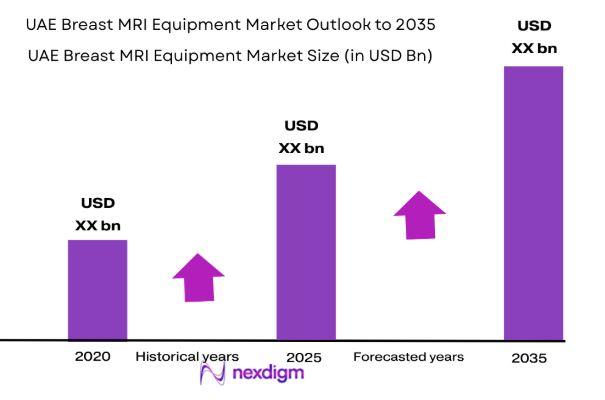
The UAE breast MRI equipment market is estimated to reach a value of USD ~ million based on a recent historical assessment. This growth is driven by increasing investments in healthcare infrastructure, as well as rising awareness of breast cancer and the importance of early detection. The market is also fueled by advancements in MRI technology, which offer higher resolution images and faster scan times, making breast MRI systems more efficient and accurate for medical institutions across the UAE.
The UAE market is primarily dominated by major urban centers like Dubai, Abu Dhabi, and Sharjah, which have well-established healthcare infrastructure. These cities are seeing rapid growth in their medical facilities, including private clinics and hospitals that focus on advanced diagnostics like breast MRI. Factors such as access to cutting-edge technology, international healthcare standards, and strong government healthcare policies have solidified the UAE’s position as a leading market for breast MRI equipment in the region.
Market Segmentation
By Product Type
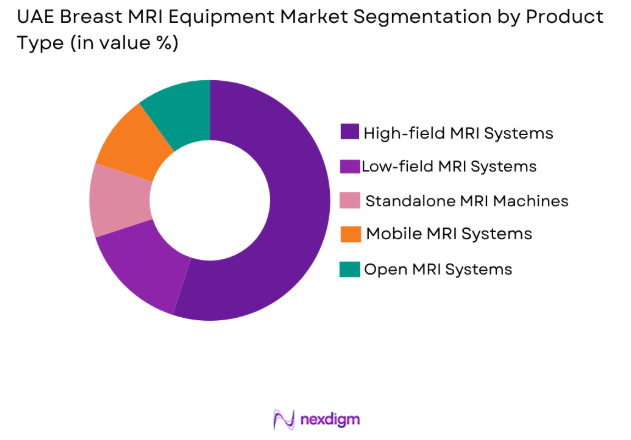
UAE Breast MRI equipment market is segmented by product type into high-field MRI systems, low-field MRI systems, standalone MRI machines, mobile MRI systems, and open MRI systems. Recently, high-field MRI systems have dominated the market due to factors such as higher image resolution, faster scanning capabilities, and an increasing demand for accurate and detailed diagnostic results. High-field systems are preferred by hospitals and diagnostic centers for their efficiency and the ability to conduct high-quality breast cancer screening procedures, making them the go-to choice for medical professionals.
By Platform Type
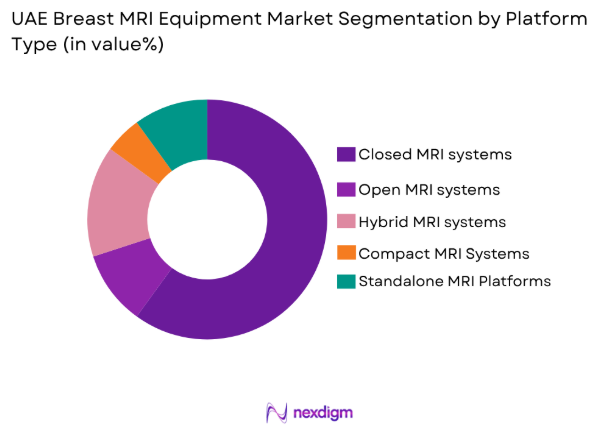
UAE Breast MRI market is segmented by platform type into closed MRI systems, open MRI systems, hybrid MRI systems, compact MRI systems, and standalone MRI platforms. The closed MRI systems sub-segment has the highest market share due to their widespread use in hospitals and diagnostic centers. These systems are known for providing high-quality, reliable, and consistent images, which are essential for precise diagnostics, especially in breast cancer screenings. Their established presence, along with advanced features such as patient comfort and speed, solidifies their dominance in the market.
Competitive Landscape
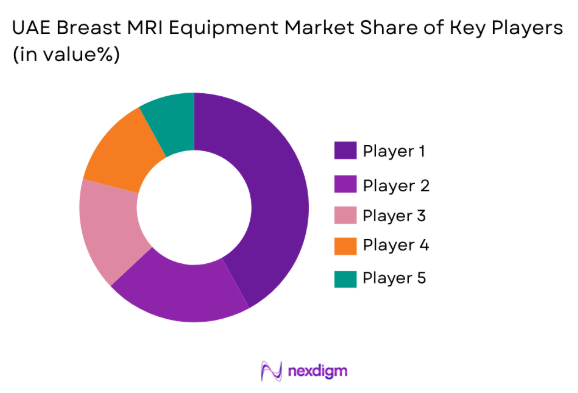
The UAE breast MRI equipment market is highly competitive, with significant consolidation among the major players. Global leaders such as GE Healthcare, Siemens Healthineers, and Philips Healthcare dominate the market, leveraging their vast technological expertise, product portfolios, and brand recognition. Their influence is seen in the ongoing advancements in MRI technology, such as artificial intelligence integration and improved imaging techniques, which enhance diagnostic capabilities. Additionally, these players benefit from strong relationships with hospitals, government healthcare programs, and healthcare institutions that prioritize the adoption of advanced imaging systems.
| Company Name | Establishment Year | Headquarters | Technology Focus | Market Reach | Key Products | Revenue | Innovation Focus |
| GE Healthcare | 1892 | Chicago, USA | ~ | ~ | ~ | ~ | ~ |
| Siemens Healthineers | 1847 | Erlangen, Germany | ~ | ~ | ~ | ~ | ~ |
| Philips Healthcare | 1891 | Amsterdam, Netherlands | ~ | ~ | ~ | ~ | ~ |
| Canon Medical Systems | 1933 | Tochigi, Japan | ~ | ~ | ~ | ~ | ~ |
| Hitachi Medical Systems | 1949 | Tokyo, Japan | Medical Imaging | Asia, Europe | MRI, CT, Ultrasound | $4.8B | MRI Development |
UAE Breast MRI Equipment Market Analysis
Growth Drivers
Increasing prevalence of breast cancer
The increasing prevalence of breast cancer is a significant growth driver for the UAE breast MRI equipment market. The rising awareness about breast cancer and the need for early diagnosis have led to the growing adoption of breast MRI systems across the country. As healthcare facilities continue to focus on offering early detection solutions, demand for advanced imaging technologies like MRI has grown substantially, facilitating the market’s expansion. The increased burden of breast cancer cases has prompted medical institutions to integrate MRI technologies into their diagnostic services, as MRI systems provide highly accurate images that assist in early-stage detection and precise staging of the disease. Moreover, the advancement in MRI technology, which has reduced scanning times and improved diagnostic accuracy, is further driving the adoption of these systems in hospitals and diagnostic centers. Consequently, healthcare professionals and patients have become more reliant on MRI systems to ensure timely and accurate diagnosis, fueling the market’s continued growth. The government’s efforts in funding medical research and healthcare infrastructure improvements are also contributing to the rapid development of breast MRI equipment.
Technological advancements in MRI systems
Technological advancements in MRI systems, including higher resolution imaging, faster scan times, and the integration of artificial intelligence, are another critical driver of growth in the UAE breast MRI equipment market. As MRI systems evolve, they become more efficient and capable of delivering superior diagnostic results. With the rising demand for more detailed images for breast cancer detection, hospitals and diagnostic centers are increasingly adopting the latest MRI systems that offer enhanced performance. In addition, the integration of AI and machine learning technologies with MRI systems has further improved diagnostic precision, offering medical professionals automated assistance in interpreting imaging results. This trend towards technologically advanced systems has prompted healthcare providers to invest heavily in upgrading their MRI facilities to meet the growing demand for highly accurate and efficient diagnostic equipment. The increased focus on enhancing the accuracy of breast cancer screenings and the subsequent rise in demand for advanced MRI systems are key factors propelling the market’s growth.
Market Challenges
High cost of MRI systems
One of the major challenges in the UAE breast MRI equipment market is the high cost of acquiring and maintaining MRI systems. These systems require significant investment, not only for the initial purchase but also for ongoing maintenance and servicing. Hospitals and diagnostic centers, especially smaller ones, face financial strain when it comes to purchasing these advanced systems, and this can limit the adoption rate. The capital-intensive nature of MRI systems can deter healthcare providers from investing in them, even though the systems offer superior diagnostic capabilities. Furthermore, the high operational costs associated with training staff and maintaining the systems over time further discourage new entrants into the market. This financial barrier can also prevent hospitals from upgrading older MRI units to the latest models, which slows down the overall growth of the market.
Limited reimbursement policies for MRI services
Another significant challenge for the UAE breast MRI equipment market is the limited reimbursement policies for MRI services. Many insurance companies have strict guidelines and may not cover the full cost of MRI scans, particularly for preventive screenings. This often leads to a situation where patients are either unable to afford breast MRIs or must pay out-of-pocket, which reduces demand. Additionally, the high cost of MRI procedures, coupled with limited insurance coverage, discourages many individuals from seeking early cancer screenings, especially in the lower-income demographic. The inconsistency in insurance coverage for diagnostic imaging services like breast MRI can also hinder the adoption of MRI systems, especially in a market where cost-conscious consumers are more likely to opt for less expensive imaging alternatives. This creates a significant challenge for market growth, as healthcare providers may find it difficult to justify the substantial investment in MRI systems without guaranteed patient demand.
Opportunities
Government support for healthcare infrastructure
One of the key opportunities for the UAE breast MRI equipment market is the government’s support for healthcare infrastructure development. The UAE government has made significant investments in the healthcare sector, which has led to the expansion of medical facilities and the enhancement of diagnostic services, including breast cancer detection. As part of the UAE Vision 2030, the government is focused on improving the quality and accessibility of healthcare services, which includes the adoption of advanced imaging technologies such as MRI. This creates a favorable environment for the growth of the breast MRI equipment market, as hospitals and diagnostic centers seek to upgrade their facilities to meet higher standards. Additionally, government initiatives and funding for medical research, breast cancer awareness campaigns, and preventive screening programs offer substantial opportunities for market players to expand their operations and reach new customers in the region. The increasing government focus on improving healthcare delivery will drive the demand for advanced MRI systems in the coming years.
Expansion of mobile MRI services
The expansion of mobile MRI services presents a promising opportunity for the UAE breast MRI equipment market. Mobile MRI units allow hospitals and healthcare providers to extend diagnostic services to remote areas where traditional MRI infrastructure may not be available. The increasing adoption of mobile MRI systems helps overcome geographical barriers, providing access to high-quality breast cancer screening for underserved populations. As the UAE continues to focus on improving healthcare accessibility in rural and less developed regions, mobile MRI systems offer a practical solution. The convenience of on-site screenings, coupled with advanced imaging technology, will likely increase the adoption of breast MRI in the region. Additionally, mobile MRI services are a cost-effective solution for healthcare providers looking to expand their reach without investing heavily in building new facilities. This trend presents a significant growth opportunity for the market, especially as demand for breast cancer detection services continues to rise.
Future Outlook
The UAE breast MRI equipment market is poised for steady growth over the next five years. Technological advancements, such as the integration of artificial intelligence for enhanced diagnostics, are expected to drive the adoption of newer and more advanced systems. Additionally, the government’s ongoing investments in healthcare infrastructure and breast cancer awareness campaigns will support the market’s growth. As demand for early-stage cancer detection continues to rise, there will be an increasing focus on providing access to high-quality imaging systems, creating opportunities for market expansion.
Major Players
- GE Healthcare
- Siemens Healthineers
- Philips Healthcare
- Canon Medical Systems
- Hitachi Medical Systems
- Toshiba Medical Systems
- Fujifilm Healthcare
- Neusoft Medical Systems
- Esaote S.p.A.
- Mindray Medical International
- Hologic
- Magnetom
- Aurora Healthcare
- United Imaging Healthcare
- Shenzhen Anke High-Tech
Key Target Audience
- Investments and venture capitalist firms
- Government and regulatory bodies
- Hospitals and diagnostic centers
- Healthcare technology providers
- Insurance companies
- Medical equipment distributors
- Breast cancer research organizations
Research Methodology
Step 1: Identification of Key Variables
We identify the key factors influencing the market, such as technological advancements, regulatory policies, and demand dynamics for breast MRI systems.
Step 2: Market Analysis and Construction
We analyze historical data and current market trends to develop accurate models and forecast future market growth.
Step 3: Hypothesis Validation and Expert Consultation
Expert consultations with industry professionals and stakeholders validate the assumptions and findings made during the analysis phase.
Step 4: Research Synthesis and Final Output
All gathered data, analysis, and expert inputs are synthesized into a comprehensive market report, offering insights into the UAE Breast MRI Equipment market.

- Executive Summary
- Research Methodology (Definitions, Scope, Industry Assumptions, Market Sizing Approach, Primary & Secondary Research Framework, Data Collection & Verification Protocol, Analytic Models & Forecast Methodology, Limitations & Research Validity Checks)

- Market Definition and Scope
- Value Chain & Stakeholder Ecosystem
- Regulatory / Certification Landscape
- Sector Dynamics Affecting Demand
- Strategic Initiatives & Infrastructure Growth

- Growth Drivers
Increasing prevalence of breast cancer
Advancements in MRI technology
Rising healthcare infrastructure investments - Market Challenges
High installation and maintenance costs
Limited reimbursement policies
Lack of trained healthcare professionals - Market Opportunities
Rising demand for early-stage cancer detection
Expansion of mobile MRI services
Government initiatives for healthcare infrastructure - Trends
Shift towards hybrid MRI systems
Adoption of AI-assisted breast imaging - Government Regulations
- SWOT Analysis

- By Market Value, 2020-2025
- By Installed Units, 2020-2025
- By Average System Price, 2020-2025
- By System Complexity Tier, 2020-2025

- By System Type (In Value%)
High-field MRI Systems
Low-field MRI Systems
Standalone MRI Machines
Mobile MRI Systems
Open MRI Systems - By Platform Type (In Value%)
Closed MRI Systems
Open MRI Systems
Hybrid MRI Systems
Compact MRI Systems
Standalone MRI Platforms - By Fitment Type (In Value%)
Fixed MRI Systems
Mobile MRI Systems
Retrofit MRI Systems
Modular MRI Systems - By End User Segment (In Value%)
Hospitals
Diagnostic Centers
Research Institutes

- Market Share Analysis
- Cross Comparison Parameters (System Type, Platform Type, End User Segment, Geographic Presence, Pricing Strategy, Product Innovation, Customer Service)
- SWOT Analysis of Key Competitors
- Pricing & Procurement Analysis
- Key Players
GE Healthcare
Siemens Healthineers
Philips Healthcare
Canon Medical Systems
Hitachi Medical Systems
Toshiba Medical Systems
Fujifilm Healthcare
Neusoft Medical Systems
Esaote S.p.A.
Mindray Medical International
Hologic
Magnetom
Aurora Healthcare
United Imaging Healthcare
Shenzhen Anke High-Tech

- Growth in hospital adoption rates
- Rising demand from diagnostic centers
- Increased focus on early diagnosis and screening programs
- Increased government funding for research institutes

- Forecast Market Value, 2026-2035
- Forecast Installed Units, 2026-2035
- Price Forecast by System Tier, 2026-2035
- Future Demand by Platform, 2026-2035


 Request a Sample
 Ask for Customization
 Get a Quote
 Enquire Now