

 Download PDF
Market Overview
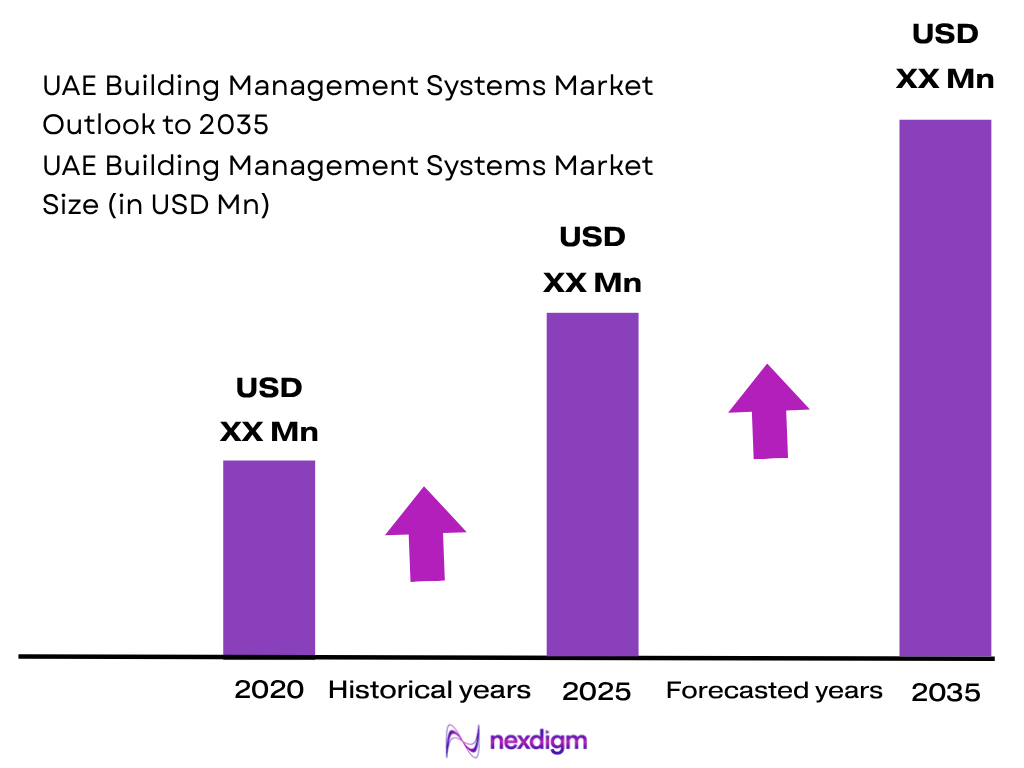
The UAE Building Management Systems Market is valued at approximately ~USD XX million, supported by continued high-rise construction, smart-building regulation, data-centre expansion and energy-efficiency requirements. Dubai real-estate transactions increased from approximately AED634 billion in the preceding annual period to AED761 billion in the latest annual period, while Abu Dhabi’s construction sector reached AED107.4 billion. This expanding commercial and institutional building stock is increasing demand for HVAC controls, energy monitoring, cloud BMS and integrated facility-management platforms.
Dubai dominates UAE BMS deployment because of its concentration of commercial towers, hotels, malls, mixed-use developments and smart-building mandates, while Abu Dhabi is a major market for government buildings, offices, hospitals, data centres and large mixed-use assets. Dubai completed 226,000 real-estate transactions worth AED761 billion in the latest annual period, while Abu Dhabi contained 299,360 buildings and 783,970 real-estate units, compared with approximately 281,000 buildings and 755,000 units in the preceding period.
Market Segmentation
By System Type
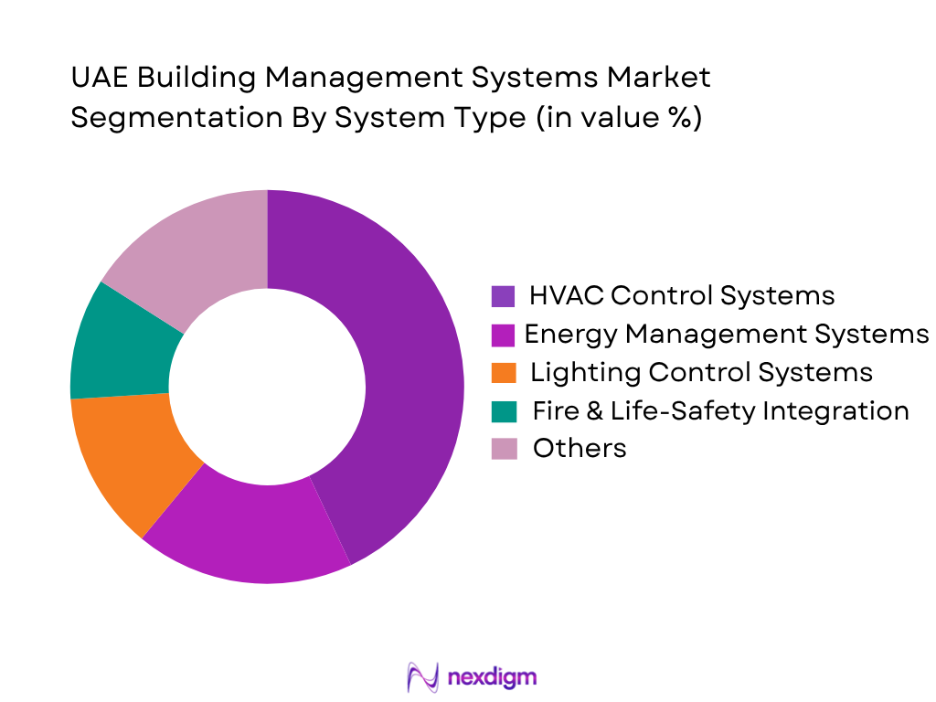
The UAE Building Management Systems Market is segmented into HVAC control systems, energy management systems, lighting controls, fire and life-safety integration, access and security integration, and indoor-air-quality management. HVAC control systems dominate this segmentation because cooling represents one of the most operationally critical functions in UAE commercial buildings, hotels, hospitals, malls, residential towers and data centers. BMS platforms continuously coordinate chillers, chilled-water pumps, cooling towers, air-handling units, fan-coil units, variable-air-volume systems and ventilation equipment. Dubai electricity demand reached 59,594 GWh, reflecting the scale of energy-intensive urban activity requiring more efficient control. Modern platforms also integrate HVAC operation with occupancy, meters, temperature, humidity and air-quality data. Solutions such as Schneider Electric’s EcoStruxure Building Operation demonstrate how HVAC, power, metering, lighting, security and other subsystems can be managed through a unified control environment, reinforcing HVAC automation as the core layer of broader smart-building deployment.
By Building Type
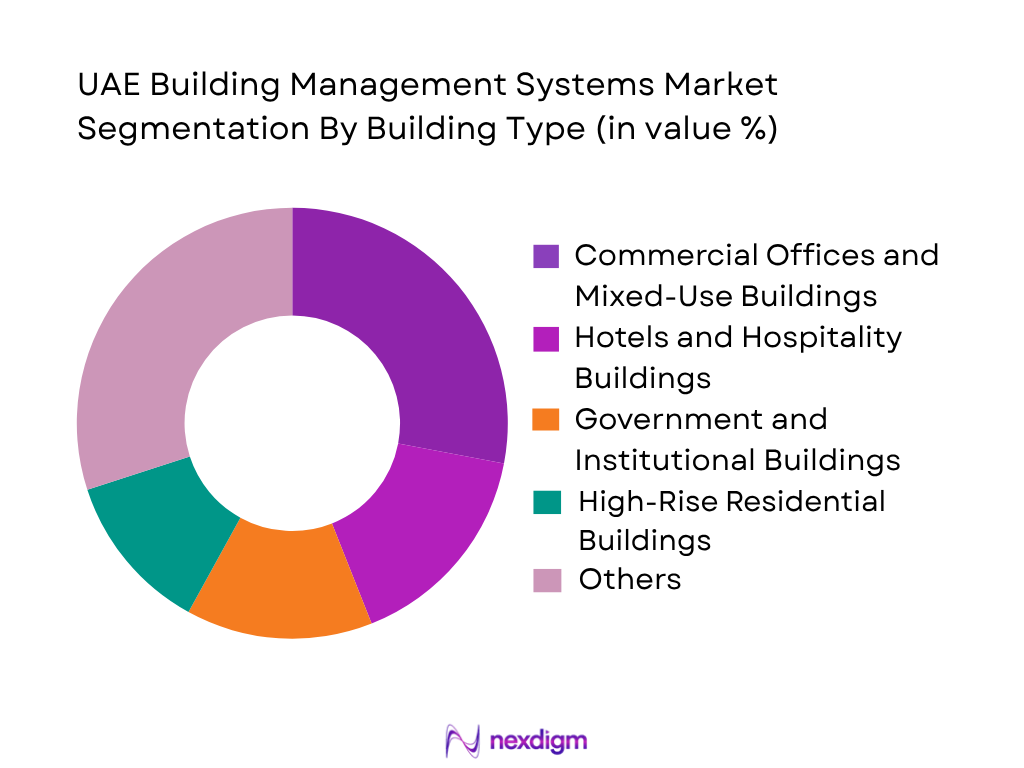
The UAE Building Management Systems Market is segmented by building type into commercial offices, mixed-use developments, hospitality properties, high-rise residential buildings, government facilities, healthcare assets, data centres, retail complexes, educational buildings and industrial facilities. Commercial and mixed-use buildings are considered the dominant sub-segment because they typically contain multiple mechanical and electrical systems that benefit from centralized monitoring, scheduling and energy optimization. Dubai’s high-rise commercial districts, malls and mixed-use developments create particularly dense BMS point counts through HVAC, lighting, electrical distribution, metering, access control and tenant systems. Large office portfolios also have stronger incentives to adopt remote monitoring and multi-building dashboards because energy consumption, tenant comfort and maintenance performance directly affect operating costs and asset value. Abu Dhabi reinforces this segment through large government and commercial developments. Data centres represent one of the fastest-emerging demand pools because BMS platforms are required to monitor cooling equipment, environmental conditions, power-support systems and alarms alongside dedicated DCIM platforms. Healthcare and hospitality properties likewise require continuous environmental control and reliability, increasing demand for integrated BMS rather than standalone HVAC control systems.
Competitive Landscape
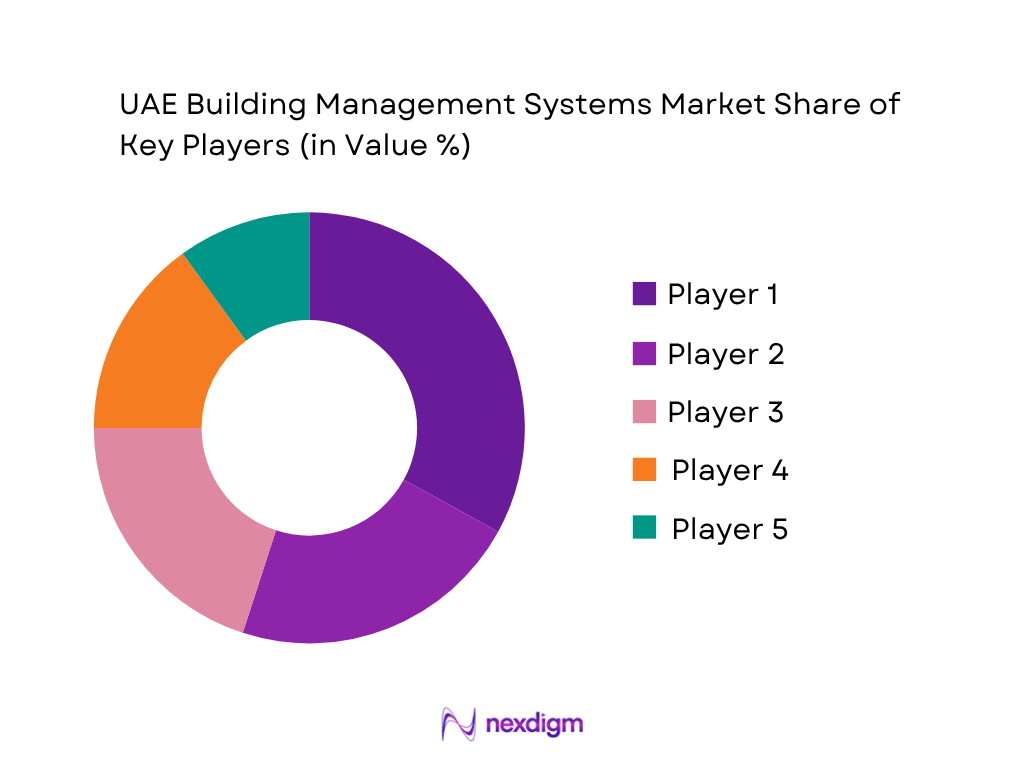
The UAE Building Management Systems Market is led by large multinational automation companies with long-established HVAC-controls portfolios, software platforms, local engineering teams and system-integrator networks. Honeywell, Schneider Electric, Siemens, Johnson Controls and ABB compete across new-build automation, BMS modernization, energy management and smart-building integration. Competition has increasingly shifted beyond controllers and sensors toward open protocols, cloud connectivity, cybersecurity, AI-based fault detection, predictive maintenance and integration with electrical, security and facility-management systems. Local system integrators remain strategically important because project execution requires programming, commissioning, graphics development, points integration and lifecycle support.
| Major Player | Establishment Year | Headquarters | Core BMS Platform | HVAC & Plant Controls | Cloud / Analytics Capability | Protocol & Integration Capability | UAE Market Presence | Retrofit & Service Capability |
| Honeywell Building Technologies | 1906 | Charlotte, USA | ~ | ~ | ~ | ~ | ~ | ~ |
| Schneider Electric | 1836 | Rueil-Malmaison, France | ~ | ~ | ~ | ~ | ~ | ~ |
| Siemens Smart Infrastructure | 1847 | Munich/Berlin, Germany | ~ | ~ | ~ | ~ | ~ | ~ |
| Johnson Controls | 1885 | Cork, Ireland | ~ | ~ | ~ | ~ | ~ | ~ |
| ABB | 1988 | Zurich, Switzerland | ~ | ~ | ~ | ~ | ~ | ~ |
UAE Building Management Systems Market Analysis
Growth Drivers
Expanding High-Rise, Commercial and Smart-Building Stock
The UAE Building Management Systems Market is being supported by continued expansion in commercial, mixed-use, hospitality and institutional buildings that require centralized HVAC control, smart metering, electrical monitoring and integrated facility operations. Dubai recorded 226,000 real-estate transactions valued at AED761 billion in 2024, while its electricity demand reached 59,594 GWh, compared with 56,516 GWh in the preceding period. Dubai also added 48,746 new electricity connections and ended the year with more than 1.27 million customer accounts, indicating continued expansion of the connected building and infrastructure base. This trend directly supports demand for DDC controllers, sensors, automation servers and energy-management platforms capable of controlling increasingly complex assets. The wider macroeconomic environment reinforces this development, with UAE GDP standing at USD552.32 billion and GDP per capita at USD50,273.5 in 2024, while nominal output reached approximately AED2.028 trillion and central-bank gross foreign assets stood at USD238.2 billion. These figures demonstrate the scale of investment capacity supporting high-specification buildings. For BMS vendors, continued growth in offices, hotels, malls and mixed-use developments generates both new system installations and long-term software, commissioning and maintenance demand.
Rising Cooling Loads and Energy-Management Requirements
The UAE’s increasing cooling and electricity requirements are making BMS platforms more important for controlling chillers, air-handling units, pumps, fan-coil units and other high-consumption building systems. Dubai’s electricity demand reached 59,594 GWh in 2024, compared with 56,516 GWh in the preceding annual period, while peak electrical demand reached 10,763 MW. Dubai generated 59.19 TWh of electricity and operated 17,179 MW of installed generation capacity during the year. District cooling provides another indicator of building-system intensity, with 1,637 buildings connected to 88 district cooling plants and more than 418 kilometres of distribution pipelines, while contracted capacity reached 1.78 million refrigeration tons. These assets require advanced controls, metering, plant sequencing and central monitoring at both building and district levels. The broader economy provides a strong base for such investments, with national GDP standing at USD552.32 billion and central-bank foreign assets at USD238.2 billion in 2024. As cooling networks, electricity demand and connected buildings expand, owners have stronger incentives to deploy BMS platforms that optimize equipment sequencing, monitor consumption, identify abnormal operation and coordinate building loads with district utilities and central plants.
Market Challenges
Cybersecurity Exposure of Connected Building Infrastructure
Greater use of cloud BMS, IP-based controllers, remote maintenance and connected IoT sensors is expanding the cyberattack surface of UAE buildings and critical infrastructure. More than 223,800 digital assets hosted in the UAE were identified as potentially exposed to cyberattacks in 2025, while national systems were countering more than 50,000 attacks per day across critical sectors. A separate national response in March 2025 addressed attacks affecting 634 UAE government and private entities, illustrating how connected operational environments are exposed alongside conventional IT systems. The risk is particularly relevant to BMS because HVAC, metering, access control, lighting and plant equipment increasingly communicate through BACnet/IP, Modbus TCP, gateways and cloud interfaces. A compromised automation network can affect comfort, operational continuity or equipment availability even where financial information is not targeted. The macroeconomic context increases the importance of resilience, with UAE GDP standing at USD552.32 billion in 2024, while nominal output reached approximately AED2.028 trillion and central-bank foreign assets stood at USD238.2 billion. Consequently, cybersecurity architecture, network segmentation, role-based access, secure remote connectivity and patch management are becoming essential BMS procurement requirements rather than optional software features.
Complexity of Integrating Legacy and Multi-Vendor Building Systems
A major challenge for UAE BMS modernization is the technical complexity of connecting legacy controllers and proprietary networks with modern cloud platforms, energy-management applications and open-protocol devices. The scale of the installed property base makes this issue commercially significant. Dubai’s utility network exceeded 1.27 million customer accounts at the end of 2024, after adding nearly 59,000 accounts during the year, while the district cooling network alone served 1,637 buildings through 88 plants and more than 418 kilometres of distribution infrastructure. Many existing hotels, offices, malls and mixed-use assets were constructed under different generations of control architecture, creating fragmented combinations of BACnet, Modbus, KNX, proprietary field buses and standalone HVAC controls. Modernization therefore frequently requires phased controller replacement, gateway integration, graphics redevelopment, point normalization and recommissioning rather than simple software installation. The UAE’s macroeconomic scale underscores the size of the installed asset base, with GDP standing at USD552.32 billion and GDP per capita at USD50,273.5, while nominal GDP reached approximately AED2.028 trillion in 2024. For vendors and integrators, this creates execution risk through undocumented points, obsolete hardware, inconsistent naming conventions and dependence on specialist commissioning engineers capable of maintaining operations while upgrading live buildings.
Market Opportunities
Retrofit, Optimization and Cloud Migration of Existing Buildings
The large UAE installed building base creates a strong future opportunity for BMS modernization, cloud migration and energy-performance optimization rather than relying only on greenfield construction. Dubai recorded 18,800 buildings under construction covering more than 36 million square metres during the first half of 2025 and issued 1,669 building completion certificates, adding approximately 2 million square metres of new residential, commercial and industrial space. Alongside new development, the existing stock creates recurring opportunities to replace obsolete controllers, migrate supervisory software, add smart meters and implement remote analytics. District-cooled properties are particularly attractive because 1,637 buildings were served through 88 plants and 1.78 million refrigeration tons of contracted capacity in 2024, creating a substantial installed environment where BMS can coordinate tenant loads, chilled-water systems and equipment performance. Macroeconomic fundamentals provide financial capacity for such upgrades, with UAE GDP standing at USD552.32 billion in 2024, while gross central-bank foreign assets reached USD238.2 billion. These current indicators support future growth in retrofit projects, especially where owners can modernize software and controllers in phases without replacing entire HVAC plants. Cloud dashboards, fault detection, remote commissioning and multi-site portfolio management therefore represent scalable opportunities for BMS suppliers and facility-management providers.
Data Centres, Critical Facilities and Advanced Building Automation
The UAE’s expanding digital infrastructure creates a significant future opportunity for BMS vendors because data centres and critical facilities require dense environmental monitoring, cooling automation, power-system interfaces and continuous alarm management. Digital infrastructure is particularly demanding because temperature, humidity, chilled-water flow, air-handler performance and electrical-support systems must be monitored continuously alongside dedicated DCIM platforms. The wider UAE economy provides a strong foundation for such development, with national GDP standing at USD552.32 billion and GDP per capita at USD50,273.5 in 2024, while central-bank foreign assets reached USD238.2 billion and nominal GDP stood at approximately AED2.028 trillion. Dubai’s wider utility environment demonstrates the scale of capacity available to support digital assets, with 17,179 MW of installed generation capacity and 59,594 GWh of electricity supplied during 2024. The emirate also had more than 1.27 million electricity and water customer accounts, reflecting a mature utility and connected-infrastructure ecosystem. These current conditions create scope for future BMS deployments in data centres, hospitals, airports and other mission-critical buildings where standard comfort controls are insufficient. Opportunities will concentrate around redundant controllers, high-speed alarming, secure BACnet/IP integration, edge analytics, predictive maintenance and interfaces between BMS, power monitoring and DCIM environments.
Future Outlook
The UAE Building Management Systems Market is expected to expand at approximately ~X.X% CAGR during 2026-2035, supported by a growing installed building base, expanding data-centre capacity, energy-management requirements and the modernization of legacy automation infrastructure. Future growth will increasingly come from software, analytics and services in addition to conventional controller and sensor deployments.
Dubai’s sustainability requirements will remain a major structural demand driver. Al Sa’fat requires all new buildings in Dubai to meet at least the mandatory Silver Sa’fa requirements and is designed to improve building performance and the efficiency of electrical and mechanical systems. These requirements strengthen the business case for integrated BMS platforms capable of controlling HVAC, metering, lighting and other building loads.
Major Players
- Honeywell Building Technologies
- Schneider Electric
- Siemens Smart Infrastructure
- Johnson Controls
- ABB
- Carrier / Automated Logic
- Trane Technologies
- Delta Controls
- Distech Controls
- Belimo
- Azbil Corporation
- Beckhoff Automation
- Al-Futtaim Technologies
- Bosch Building Technologies
- Lutron Electronics
Key Target Audience
- Building Management System Manufacturers and Automation Technology Providers
- BMS System Integrators and Smart Building Solution Providers
- Real Estate Developers, Property Owners and Asset Management Companies
- Facility Management and Integrated Facility Management Companies
- MEP Contractors and Building Automation Contractors
- Investments and Venture Capitalist Firms
- Government and Regulatory Bodies (Dubai Municipality, Dubai Electricity and Water Authority, Abu Dhabi Department of Municipalities and Transport, Department of Energy Abu Dhabi, Dubai Civil Defence, Abu Dhabi Civil Defence Authority)
- Data Centre, Hospitality, Healthcare, Retail and Commercial Property Operators
Research Methodology
Step 1: Identification of Key Variables
The initial phase involves constructing an ecosystem map of the UAE Building Management Systems Market covering BMS manufacturers, controllers, sensor suppliers, system integrators, MEP contractors, developers, consultants, facility managers and end users. Desk research is used to identify building categories, installed BMS architectures, connected points, protocol adoption, project pipelines and retrofit potential. Critical variables include BMS value per building, hardware-software-service mix, connected-point density and building automation intensity.
Step 2: Market Analysis and Construction
Historical information is compiled across commercial construction, hospitality development, data centres, institutional buildings and building retrofit activity. The top-down approach converts relevant floor area and building stock into addressable BMS installations, while the bottom-up approach evaluates vendor revenue, system-integrator project activity, controller shipments, connected points and service contracts. The two methodologies are reconciled to establish an internally consistent market sizing framework.
Step 3: Hypothesis Validation and Expert Consultation
Market hypotheses are validated through structured interviews and computer-assisted telephone interviews with BMS vendors, system integrators, MEP contractors, facility managers, developers and controls engineers. These discussions assess typical controller architectures, protocol preferences, cloud adoption, BMS replacement cycles, commissioning practices, retrofit budgets and system-integration requirements. Expert feedback is then used to test assumptions and identify differences between new-build and modernization demand.
Step 4: Research Synthesis and Final Output
The final stage combines supply-side vendor information, demand-side building analysis and project-level automation data. BMS hardware, software and service revenues are triangulated against connected-point counts, installed building stock, project pipelines and retrofit activity. Forecast scenarios incorporate construction growth, Al Sa’fat and Estidama requirements, data-centre expansion, cloud migration, AI analytics, cybersecurity investment and legacy-system modernization to produce the final UAE Building Management Systems Market outlook.

- Executive Summary
- Research Methodology (Market Definitions and Assumptions, UAE Building Management Systems Market Classification, Building Automation Scope, BMS Architecture Mapping, HVAC Controls Assessment, Lighting Controls Assessment, Energy Management Assessment, Electrical Monitoring Assessment, Fire and Life Safety Integration Assessment, Security and Access Control Integration Assessment, Smart Metering Assessment, Chiller Plant Management Assessment, Indoor Air Quality Monitoring Assessment, Room Automation Assessment, IoT Sensor Assessment, Edge Controller Assessment, Cloud BMS Assessment, Building Analytics Assessment, Digital Twin Integration Assessment, BACnet Assessment, KNX Assessment, Modbus Assessment, MQTT and IP-Based Integration Assessment, Cybersecurity Assessment, New-Build BMS Assessment, Retrofit and Modernization Assessment, Al Sa’fat Compliance Assessment, Estidama Compliance Assessment, Supply-Side Assessment, Demand-Side Assessment, Top-Down Market Sizing, Bottom-Up Market Sizing, Primary Industry Interviews, Smart Building Project Pipeline Assessment, Data Triangulation, Forecasting Framework)

- Definition and Scope
- UAE Building Automation Industry Evolution and Development of Standalone HVAC Controls, Centralized BMS Platforms, Integrated Building Management Systems, Web-Based Building Automation, Open-Protocol BMS, Smart Building Platforms, Cloud-Connected BMS, AI-Enabled Building Analytics, Digital Twin Integration, Energy Management Systems, Smart Metering, Occupancy-Based Controls, Predictive Maintenance, Indoor Environmental Quality Monitoring, Portfolio-Level Building Management
- Building Management Systems Value Chain Analysis
- Building Management Systems Supply Chain Analysis
- Sensors and Field Device Suppliers, Smart Meter Manufacturers, HVAC Equipment Suppliers, Valves and Actuator Suppliers, Controllers and DDC Manufacturers, Automation Server Suppliers, BMS Software Vendors, Energy Management Platform Providers, IoT Gateway Suppliers, Cybersecurity Providers, System Integrators, MEP Contractors, Commissioning Specialists, Smart Building Consultants, Facility Management Companies, Developers, Property Owners, Data Centre Operators, Hospitality Operators, Healthcare Operators, Government Building Authorities

- Growth Drivers (High-Rise Commercial Development, Smart City Programs, Data Centre Expansion, Hospitality Development, Energy-Efficiency Mandates, Cooling Energy Optimization, Green Building Requirements, Building Retrofit Programs, Cloud and IoT Adoption, Predictive Maintenance, Portfolio-Level Facility Management)
- Market Challenges (Legacy BMS Fragmentation, Proprietary Protocol Lock-In, Cybersecurity Risks, Skilled Controls Engineer Availability, Integration Complexity, High Retrofit Disruption, Inconsistent Data Quality, Multi-Vendor Commissioning Complexity, System Obsolescence, Facility Team Training Requirements)
- Market Opportunities (Cloud BMS Migration, AI-Based Fault Detection, Data Centre Building Automation, Government Building Retrofits, Hotel Portfolio Optimization, Chiller Plant Analytics, Digital Twin Integration, Smart Metering, Occupancy-Based Controls, Cybersecure Open-Protocol BMS)
- Market Trends (BACnet/IP Adoption, Cloud-Connected BMS, AI Building Analytics, Digital Twins, IoT Sensors, Wireless Room Controls, Occupancy Analytics, Mobile Facility Management, Edge Computing, Semantic Data Models, Predictive Maintenance, Portfolio-Level Dashboards, Integrated Energy Management)
- Government Regulations and Standards (Dubai Al Sa’fat Green Building System, Abu Dhabi Estidama Pearl Rating System, Dubai Municipality Building Requirements, Abu Dhabi Department of Municipalities and Transport Requirements, Energy and Water Efficiency Requirements, Fire and Life Safety Integration Requirements, Connected Building Cybersecurity Requirements, Building Commissioning Requirements, Open Protocol and Interoperability Requirements)
- SWOT Analysis
- Porter’s Five Forces Analysis
- PESTLE Analysis
- Stakeholder Ecosystem
- Smart Building and BMS Project Ecosystem

- By Market Value (2020-2025)
- By BMS Hardware Revenue (2020-2025)
- By BMS Software Revenue (2020-2025)
- By BMS Services Revenue (2020-2025)
- By Controllers and Automation Servers Revenue (2020-2025)
- By Sensors and Field Devices Revenue (2020-2025)
- By Building Analytics and Cloud Platform Revenue (2020-2025)
- By New-Build BMS Installation Value (2020-2025)
- By Retrofit and Modernization Value (2020-2025)
- By Annual Maintenance and Managed Services Value (2020-2025)

- By Component Type (In Value %)
Hardware
Controllers and DDC Panels
Automation Servers
Sensors
Thermostats
Smart Meters
Actuators
Valves and Dampers
Gateways and Routers
Human Machine Interfaces
Software
BMS Supervisory Software
Energy Management Software
Building Analytics Software
Cloud Management Platforms
Mobile Facility Management Applications
Services
System Design and Engineering
Installation and Integration
Commissioning
Annual Maintenance Contracts
Remote Monitoring
Optimization and Managed Services - By System Function (In Value %)
HVAC Control Systems
Chiller Plant Management
Air Handling Unit Controls
Fan Coil Unit Controls
Variable Air Volume Controls
Lighting Control Systems
Electrical Power Monitoring
Energy Management Systems
Water and Utility Monitoring
Fire Alarm Integration
Security and Access Control Integration
Elevator and Escalator Monitoring
Indoor Air Quality Monitoring
Occupancy and Space Monitoring
Renewable Energy Integration
EV Charging Integration - By Deployment Architecture (In Value %)
On-Premise BMS
Web-Based BMS
Cloud-Connected BMS
Cloud-Native Building Management Platforms
Hybrid Edge-Cloud BMS
Multi-Site Portfolio Management Platforms
Standalone Building Automation
Integrated Building Management Systems
Digital Twin-Integrated BMS - By Building Type (In Value %)
Commercial Office Buildings
Mixed-Use Developments
Shopping Malls and Retail Complexes
Hotels and Resorts
High-Rise Residential Buildings
Government Buildings
Healthcare Facilities
Educational Buildings
Data Centres
Airports and Transportation Facilities
Industrial Buildings
Warehouses and Logistics Facilities
Sports and Entertainment Venues
Museums and Cultural Buildings
Religious Buildings - By Project Type (In Value %)
New Construction
BMS Replacement
Legacy BMS Modernization
Energy-Efficiency Retrofit
Cloud Migration
Controls Upgrade
Sensor Retrofit
Smart Metering Upgrade
Chiller Plant Optimization
Building Portfolio Integration
Cybersecurity Upgrade
Digital Twin Integration - By Region (In Value %)
Dubai
Abu Dhabi
Sharjah
Ajman
Ras Al Khaimah
Fujairah
Umm Al Quwain
Dubai Business Districts
Abu Dhabi Business Districts
Free Zones and Industrial Clusters

- Market Share of Major Players (By UAE Revenue, BMS Project Value, Installed BMS Base, Connected Point Count, Controller Portfolio, BMS Software Capability, Cloud Platform Capability, Building Analytics Capability, HVAC and Chiller Plant Control Capability, Open-Protocol Capability, Data Centre Project Portfolio, Commercial Building Project Portfolio, System Integrator Network, Retrofit Capability, Cybersecurity Capability, Service and Maintenance Network)
- Cross Comparison Parameters (UAE BMS Installed-Base Strength, Open-Protocol Interoperability, HVAC and Chiller Plant Control Capability, Cloud and Building Analytics Capability, Cybersecurity Architecture, Local System Integrator and Service Network, Smart Building and Digital Twin Integration, Retrofit and Legacy Migration Capability)
- SWOT Analysis of Major Players
- Competitive Positioning Matrix
- Major Companies
Honeywell Building Technologies
Schneider Electric
Siemens Smart Infrastructure
Johnson Controls
ABB
Carrier / Automated Logic
Trane Technologies
Delta Controls
Distech Controls
Belimo
Azbil Corporation
Beckhoff Automation
Al-Futtaim Technologies
Bosch Building Technologies
Lutron Electronics

- Real Estate Developer BMS Requirement Assessment
- MEP Consultant BMS Specification Assessment
- Main Contractor Procurement Assessment
- MEP Contractor Project Requirement Analysis
- Facility Management Operator Assessment
- Commercial Building BMS Requirement Assessment
- Hospitality BMS Requirement Assessment
- Data Centre BMS Requirement Assessment
- Healthcare BMS Requirement Assessment
- Government Building BMS Requirement Assessment
- Mixed-Use Development BMS Requirement Assessment
- Industrial and Logistics BMS Requirement Assessment

- By Market Value (2026-2035)
- By BMS Hardware Revenue (2026-2035)
- By BMS Software Revenue (2026-2035)
- By BMS Services Revenue (2026-2035)
- By Controllers and Automation Servers Revenue (2026-2035)
- By Sensors and Field Devices Revenue (2026-2035)
- By Building Analytics and Cloud Platform Revenue (2026-2035)
- By New-Build BMS Installation Value (2026-2035)
- By Retrofit and Modernization Value (2026-2035)
- By Annual Maintenance and Managed Services Value (2026-2035)
- By Commercial Building BMS Value (2026-2035)
- By Residential and Mixed-Use BMS Value (2026-2035)
- By Hospitality BMS Value (2026-2035)
- By Data Centre BMS Value (2026-2035)
- By Healthcare and Institutional BMS Value (2026-2035)
- By Industrial and Logistics BMS Value (2026-2035)


 Request a Sample
 Ask for Customization
 Get a Quote
 Enquire Now
