

 Download PDF
 Download PDF
Market Overview
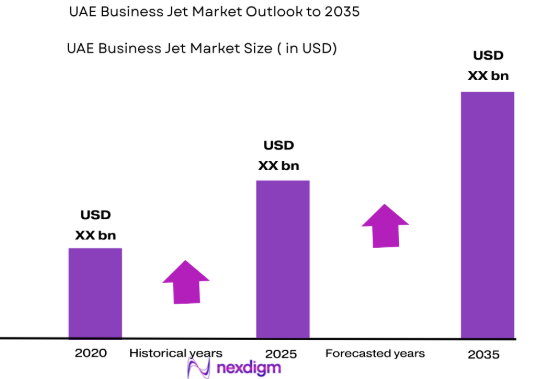
The UAE business jets market was valued at USD ~ million based on a recent historical assessment, supported by rising demand for private air travel among business executives, government officials, and high-net-worth individuals. Increased preference for luxury, flexibility, and faster travel options continues to stimulate fleet expansion and operational upgrades. Strategic initiatives focused on sustainability, fuel efficiency, and advanced technologies further reinforce industry momentum, while ongoing aerospace investments strengthen the country’s position within premium aviation services. Dubai and Abu Dhabi dominate the UAE business aviation ecosystem due to advanced airport infrastructure, dedicated fixed-base operators, and strong concentrations of global wealth and corporate activity. Dubai World Central alone is projected to handle more than ~business jet movements, reflecting intense operational demand and reinforcing its hub status. Additionally, the country holds between 40 and 45 percent of the Middle East and North Africa business aviation activity, supported by regulatory collaboration and continued aircraft registrations.
Market Segmentation
By Product Type
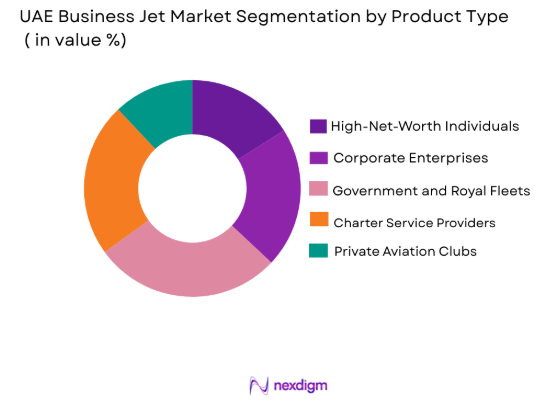
UAE business jet market is segmented by product type into light business jets, mid-size business jets, large cabin business jets, ultra-long-range jets, and VIP airliner conversions. Recently, large cabin business jets have a dominant market share due to factors such as superior range capabilities, higher passenger capacity, and strong adoption among corporate and government travelers requiring intercontinental connectivity. These aircraft support non-stop long-haul operations while offering advanced cabin amenities, making them attractive for executive mobility. Additionally, operators prefer larger jets for charter flexibility and revenue optimization, as they accommodate diverse mission profiles and premium service expectations across international routes.
By Platform Type
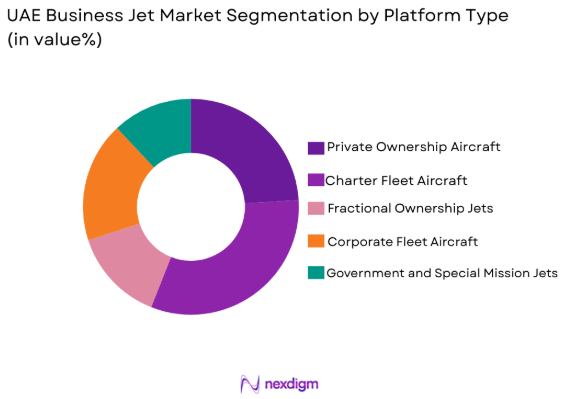
UAE business jet market is segmented by platform type into private ownership aircraft, charter fleet aircraft, fractional ownership jets, corporate fleet aircraft, and government and special mission jets. Recently, charter fleet aircraft have a dominant market share due to rising demand for flexible travel without ownership costs. Operators provide immediate availability, professional management, and consistent service quality, making charter platforms attractive for corporate executives and high-net-worth travelers seeking efficient regional and long-haul mobility.
Competitive Landscape
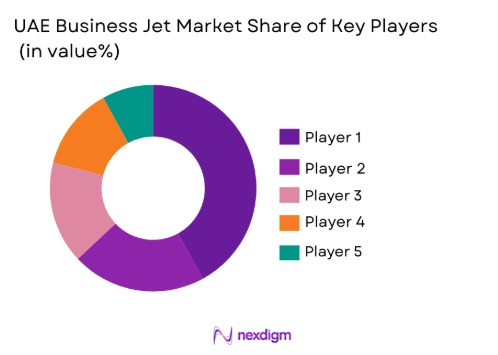
The UAE business jet market demonstrates moderate consolidation, with a mix of regional operators and global manufacturers influencing service quality, fleet modernization, and technological adoption. Established providers maintain competitive advantage through premium charter offerings, integrated maintenance capabilities, and strong airport partnerships, while newer entrants focus on customized travel experiences and digital booking platforms. Strategic investments in sustainability and advanced avionics further intensify competition as firms aim to differentiate through operational efficiency and luxury positioning.
|
Company Name |
Establishment Year | Headquarters | Technology Focus | Market Reach | Key Products | Revenue | Fleet Size |
| Emirates Executive | 2013 | Dubai | ~ | ~ | ~ | ~ | ~ |
| Royal Jet | 2003 | Abu Dhabi | ~ | ~ | ~ | ~ | ~ |
| VistaJet | 2004 | Malta | ~ | ~ | ~ | ~ | ~ |
| Falcon Aviation Services | 2006 | Abu Dhabi | ~ | ~ | ~ | ~ | ~ |
| ExecuJet Middle East | 1991 | Dubai | ~ | ~ | ~ | ~ | ~ |
UAE Business Jet Market Analysis
Growth Drivers
Rising High-Net-Worth Population and Corporate Mobility Demand
The steady increase in ultra-wealthy residents and multinational business activity is significantly elevating demand for private aviation services across the UAE, creating a resilient foundation for the business jet ecosystem. Wealth migration into financial hubs such as Dubai has intensified requirements for secure, time-efficient travel solutions that bypass commercial congestion and enable rapid cross-border engagement. Corporations increasingly rely on private aircraft to optimize executive productivity, as direct routing minimizes travel disruptions and aligns with complex global schedules. Additionally, private aviation offers confidentiality advantages for sensitive negotiations, mergers, and investment discussions, reinforcing its value proposition for enterprise leaders. The expanding network of family offices managing substantial assets further contributes to sustained charter usage and ownership interest. Infrastructure investments, including specialized terminals and maintenance facilities, enhance operational reliability and encourage fleet basing within the country. Operators are simultaneously integrating advanced cabin technologies and connectivity solutions to replicate office environments in flight, strengthening adoption among business travelers. Furthermore, flexible ownership structures such as fractional models reduce capital barriers while preserving access to premium aircraft categories. This convergence of wealth concentration, corporate globalization, and aviation modernization is expected to maintain strong utilization rates while supporting long-term industry expansion.
Expansion of Aviation Infrastructure and Dedicated Business Aviation Facilities
Continuous investment in airport capacity and specialized aviation infrastructure is transforming the UAE into a strategic nucleus for business jet operations across the broader Middle East. Purpose-built fixed-base operators streamline passenger handling, security processing, and aircraft servicing, thereby improving turnaround efficiency and enhancing customer experience for high-value travelers. The development of large-scale aviation hubs enables operators to scale fleet presence while accommodating increasing flight movements without compromising service quality. Maintenance, repair, and overhaul capabilities within the country reduce reliance on external facilities, allowing faster aircraft availability and lower operational downtime. Regulatory coordination between aviation authorities and industry associations also supports smoother aircraft registration processes and encourages international operators to establish regional bases. Technology-driven air traffic management systems further optimize slot utilization, helping mitigate congestion risks associated with growing traffic volumes. These structural enhancements attract foreign investment while strengthening the UAE’s reputation as a dependable operational gateway linking Europe, Asia, and Africa. As aviation ecosystems mature, complementary services such as luxury ground transport and concierge logistics create an integrated travel environment that appeals strongly to premium clientele. Collectively, infrastructure expansion not only supports current traffic levels but also establishes the capacity required for sustained growth in private aviation demand.
Market Challenges
High Capital and Operational Cost Structures Limiting Ownership Expansion
The acquisition and lifecycle management of business jets involve substantial financial commitments that can constrain market accessibility despite strong demand fundamentals. Purchase prices, customization expenses, insurance requirements, and hangar fees collectively elevate entry barriers, often restricting ownership to ultra-high-net-worth individuals and major corporations. Operating expenditures such as fuel, crew salaries, maintenance checks, and compliance obligations further intensify cost pressures, particularly during periods of macroeconomic uncertainty. Even charter operators must carefully balance pricing strategies to preserve margins while remaining competitive against alternative travel models. Financing conditions and interest rate environments can influence purchasing decisions, occasionally delaying fleet modernization plans. Additionally, depreciation dynamics affect residual aircraft values, introducing long-term financial risk for owners evaluating asset performance. Sustainability mandates may also require investment in fuel-efficient technologies or compatible fuels, adding another layer of capital allocation. Smaller operators frequently encounter scale disadvantages when negotiating supplier contracts or maintenance agreements, which can reduce profitability. Consequently, while demand remains robust, the structural expense profile continues to moderate the pace of ownership-driven expansion within the market.
Regulatory Complexity and Airspace Coordination Requirements
Navigating aviation regulations presents a persistent operational challenge, as compliance frameworks encompass safety certifications, aircraft registration procedures, crew licensing, and cross-border flight permissions. Operators must align with both domestic civil aviation rules and international standards, often necessitating dedicated compliance teams and administrative resources. Variations in regulatory requirements across jurisdictions can complicate route planning and increase pre-flight preparation timelines. Slot allocation processes at high-traffic airports demand meticulous coordination, particularly during peak travel seasons when private and commercial movements converge. Security protocols, while essential, may introduce additional procedural layers that affect scheduling flexibility for time-sensitive missions. Environmental oversight is also becoming more prominent, with authorities encouraging lower-emission operations and sustainable fuel adoption, which may require technical upgrades. Insurance and liability frameworks further expand documentation obligations, reinforcing the need for rigorous risk management practices. Rapid technological innovation occasionally outpaces regulatory adaptation, creating transitional uncertainties for operators integrating advanced avionics or digital flight systems. Together, these factors elevate administrative complexity and underscore the importance of regulatory agility for sustained operational efficiency.
Opportunities
Adoption of Sustainable Aviation Fuel and Next-Generation Aircraft Technologies
The accelerating transition toward environmentally responsible aviation creates a substantial opportunity for operators and manufacturers willing to invest in cleaner propulsion solutions. Sustainable aviation fuel compatibility allows fleets to reduce lifecycle emissions while aligning with global decarbonization initiatives, strengthening corporate reputation among environmentally conscious travelers. Technological advancements in engine efficiency and lightweight materials further enhance performance metrics by lowering fuel consumption and extending operational range. Early adopters may benefit from preferential partnerships with fuel suppliers and infrastructure providers, enabling smoother integration into evolving energy ecosystems. Governments and aviation authorities increasingly encourage sustainability practices, potentially unlocking incentives or collaborative programs that offset implementation costs. Corporate clients are also incorporating environmental considerations into travel procurement policies, favoring operators demonstrating measurable progress toward greener operations. Cabin innovation, including energy-efficient systems and recyclable materials, complements this transition by improving overall aircraft sustainability profiles. Over time, technological leadership can serve as a differentiator in competitive charter markets, attracting premium customers seeking responsible luxury travel. This convergence of regulatory encouragement, technological maturity, and shifting consumer expectations positions sustainable aviation as a transformative growth pathway.
Growth of Fractional Ownership and Membership-Based Private Aviation Models
Emerging access frameworks that distribute aircraft usage across multiple stakeholders are redefining how customers engage with private aviation, presenting a scalable growth avenue for service providers. Fractional ownership reduces upfront capital exposure while granting predictable flight availability, making private travel attainable for a broader cohort of affluent professionals. Membership-based programs introduce flexible pricing structures that align with variable travel needs, allowing clients to scale usage without long-term asset commitments. These models also improve fleet utilization rates, enabling operators to maximize revenue while optimizing scheduling efficiency. Digital booking platforms and data analytics enhance transparency, empowering customers with real-time availability and tailored service options. As younger wealth segments increasingly prioritize convenience over outright ownership, shared-access aviation resonates strongly with evolving consumption preferences. Operators can leverage these frameworks to diversify revenue streams while building long-term customer relationships through subscription-style engagement. Partnerships with luxury hospitality and concierge providers further enrich the travel ecosystem, transforming flights into integrated premium experiences. Collectively, fractional and membership models are poised to expand the addressable market while reinforcing operational resilience against cyclical demand shifts.
Future Outlook
The UAE business jet market is expected to experience steady advancement supported by continued wealth inflows, corporate globalization, and infrastructure modernization. Technological integration across avionics, connectivity, and sustainability solutions is likely to redefine operational standards while improving passenger experience. Regulatory alignment and environmental initiatives are anticipated to encourage adoption of efficient aircraft platforms. Growing charter utilization and shared ownership models should broaden accessibility, reinforcing demand momentum across premium aviation segments.
Major Players
- Emirates Executive
- Royal Jet
- VistaJet
- Jetex
- Gama Aviation
- Comlux
- Falcon Aviation Services
- ExecuJet Middle East
- DC Aviation Al-Futtaim
- Empire Aviation Group
- Air Charter Service
- Pristine Jet Charter
- Qatar Executive
- Gulfstream Aerospace
- Bombardier Aviation
Key Target Audience
- Investments and venture capitalist firms
- Government and regulatory bodies
- Business jet manufacturers
- Aircraft leasing companies
- Charter service providers
- Corporate travel departments
- Family offices managing private wealth
- Airport infrastructure developers
Research Methodology
Step 1: Identification of Key Variables
Primary variables including fleet size, ownership models, charter demand, infrastructure capacity, and technological adoption were mapped to define the analytical framework. Secondary datasets from aviation authorities, industry associations, and financial disclosures were reviewed to establish baseline indicators. Macroeconomic factors influencing executive travel were also incorporated.
Step 2: Market Analysis and Construction
Quantitative and qualitative insights were synthesized to construct the market structure, segment distribution, and competitive positioning. Historical performance patterns were evaluated alongside operational metrics such as aircraft movements and infrastructure investments. This approach enabled accurate interpretation of demand drivers and supply dynamics.
Step 3: Hypothesis Validation and Expert Consultation
Preliminary findings were validated through expert commentary, industry publications, and operator perspectives to ensure analytical consistency. Contradictory data points were reconciled using triangulation methods, strengthening reliability. Scenario testing was applied to confirm logical alignment across growth indicators.
Step 4: Research Synthesis and Final Output
Validated insights were consolidated into a structured narrative emphasizing clarity, factual grounding, and strategic relevance. Analytical outputs were refined to highlight actionable intelligence for stakeholders evaluating investment or expansion decisions. Final quality checks ensured methodological transparency and coherence.

- Executive Summary
- Research Methodology (Definitions, Scope, Industry Assumptions, Market Sizing Approach, Primary & Secondary Research Framework, Data Collection & Verification Protocol, Analytic Models & Forecast Methodology, Limitations & Research Validity Checks)

- Market Definition and Scope
- Value Chain & Stakeholder Ecosystem
- Regulatory / Certification Landscape
- Sector Dynamics Affecting Demand
- Strategic Initiatives & Infrastructure Growth

- Growth Drivers
Rising population of high-net-worth individuals supporting private aviation demand
Expansion of UAE aviation infrastructure and dedicated business aviation terminals
Growing corporate preference for time-efficient executive travel
Increased charter adoption for flexible mobility
Integration of sustainable aviation technologies - Market Challenges
High acquisition and operating costs limiting new ownership
Regulatory complexities associated with aircraft registration
Airport slot constraints during peak travel periods
Skilled workforce shortages in specialized maintenance
Economic sensitivity impacting discretionary luxury travel - Market Opportunities
Expansion of fractional ownership programs
Adoption of sustainable aviation fuel across fleets
Growth in luxury tourism-driven charter demand - Trends
Shift toward ultra-long-range aircraft for intercontinental travel
Rising investment in paperless and digital flight operations
Increased cabin customization and premium interior demand
Greater reliance on predictive maintenance technologies
Partnerships between operators and fixed-base service providers - Government Regulations & Defense Policy
Civil aviation authority compliance requirements for private operators
Environmental policies encouraging lower-emission aircraft
Airspace management frameworks supporting business aviation growth
SWOT Analysis
Stakeholder and Ecosystem Analysis
Porter’s Five Forces Analysis
Competition Intensity and Ecosystem Mapping

- By Market Value, 2020-2025
- By Installed Units, 2020-2025
- By Average System Price, 2020-2025
- By System Complexity Tier, 2020-2025

- By System Type (In Value%)
Light Business Jets
Mid-Size Business Jets
Large Cabin Business Jets
Ultra-Long-Range Jets
VIP Airliner Conversions - By Platform Type (In Value%)
Private Ownership Aircraft
Charter Fleet Aircraft
Fractional Ownership Jets
Corporate Fleet Aircraft
Government and Special Mission Jets - By Fitment Type (In Value%)
Line-Fit Aircraft
Retrofit Cabin Upgrades
Luxury Interior Completions
Connectivity and Avionics Upgrades
Special Mission Modifications - By End User Segment (In Value%)
High-Net-Worth Individuals
Corporate Enterprises
Government and Royal Fleets
Charter Service Providers
Private Aviation Clubs - By Procurement Channel (In Value%)
Direct OEM Purchases
Broker-Assisted Transactions
Leasing and Financing Providers
Fractional Ownership Programs
Pre-Owned Aircraft Dealers - By Material / Technology (in Value %)
Advanced Composite Airframes
Next-Generation Fuel-Efficient Engines
Sustainable Aviation Fuel Compatible Jets
High-Speed Satellite Connectivity Systems
AI-Enabled Predictive Maintenance Platforms

- Market structure and competitive positioning
- Market share snapshot of major players
- Cross Comparison Parameters (Fleet Size, Cabin Range, Ownership Model, Average Acquisition Cost, Maintenance Network Strength, Charter Availability, Technology Integration, Sustainability Adoption, Brand Positioning)
- SWOT Analysis of Key Competitors
- Pricing & Procurement Analysis
- Key Players
Emirates Executive
Royal Jet
VistaJet
Jetex
Gama Aviation
Comlux
Pristine Jet Charter
Air Charter Service
Falcon Aviation Services
ExecuJet Middle East
DC Aviation Al-Futtaim
Empire Aviation Group
Qatar Executive
Gulfstream Aerospace
Bombardier Aviation

- Corporate executives increasingly rely on private aviation for regional connectivity
- Government entities utilize business jets for diplomatic and strategic mobility
- Charter operators expand fleets to address on-demand travel requirements
- High-net-worth residents prefer private aircraft for privacy and schedule flexibility

- Forecast Market Value, 2026-2035
- Forecast Installed Units, 2026-2035
- Price Forecast by System Tier, 2026-2035
- Future Demand by Platform, 2026-2035


 Request a Sample
 Ask for Customization
 Get a Quote
 Enquire Now