
 Download PDF
Market Overview
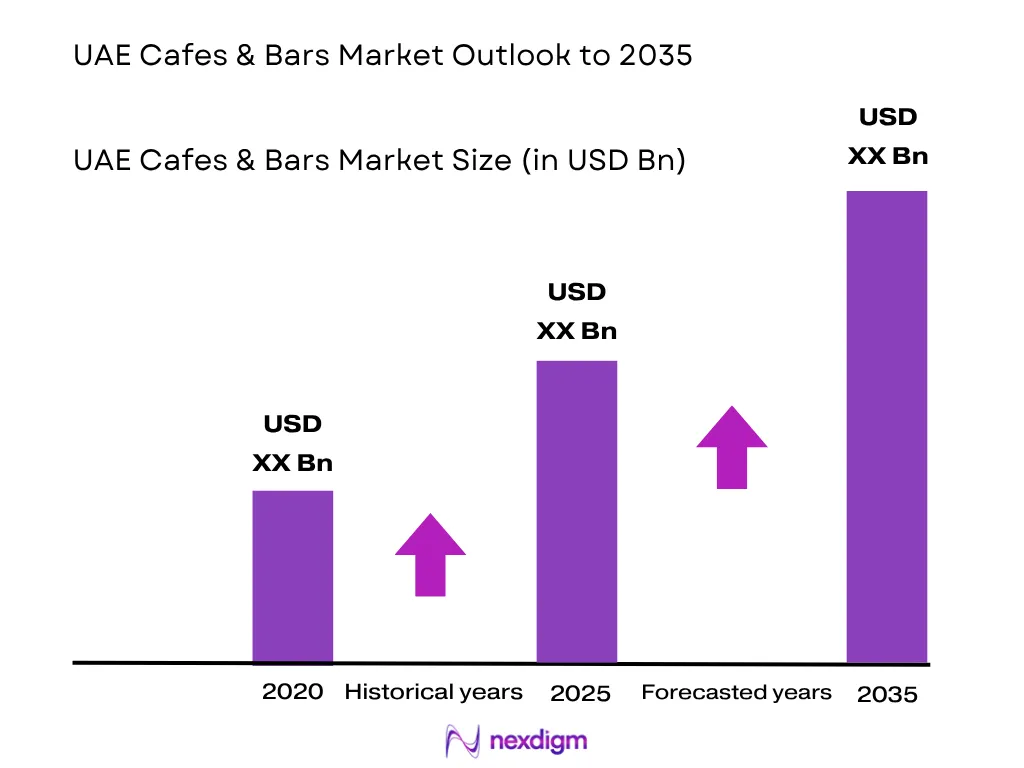
The UAE Cafes & Bars Market is valued at USD ~ billion, based on foodservice sales by sub-sector, with cafés/bars positioned as one of the largest consumer foodservice categories after full-service restaurants. Growth is driven by high out-of-home beverage consumption, premium coffee adoption, hotel-led bar demand, and delivery-enabled café ordering. The market is also supported by USD ~ billion in cafés/bars sales in the preceding period and the broader USD ~ billion UAE foodservice industry base.
Dubai and Abu Dhabi dominate the UAE Cafes & Bars Market due to concentrated tourism, hospitality infrastructure, business districts, licensed hotel venues, mall-led retail footfall, and high-income expatriate demand. Dubai alone has 25,859 foodservice establishments, including 3,257 coffee shops, while international overnight visitors increased from 17.15 million to 18.72 million. Abu Dhabi’s hotel demand, with 4.8 million hotel guests in the first ten months, supports premium cafés, hotel lounges, bars, brunch formats, and destination dining.
Market Segmentation
By Outlet Type
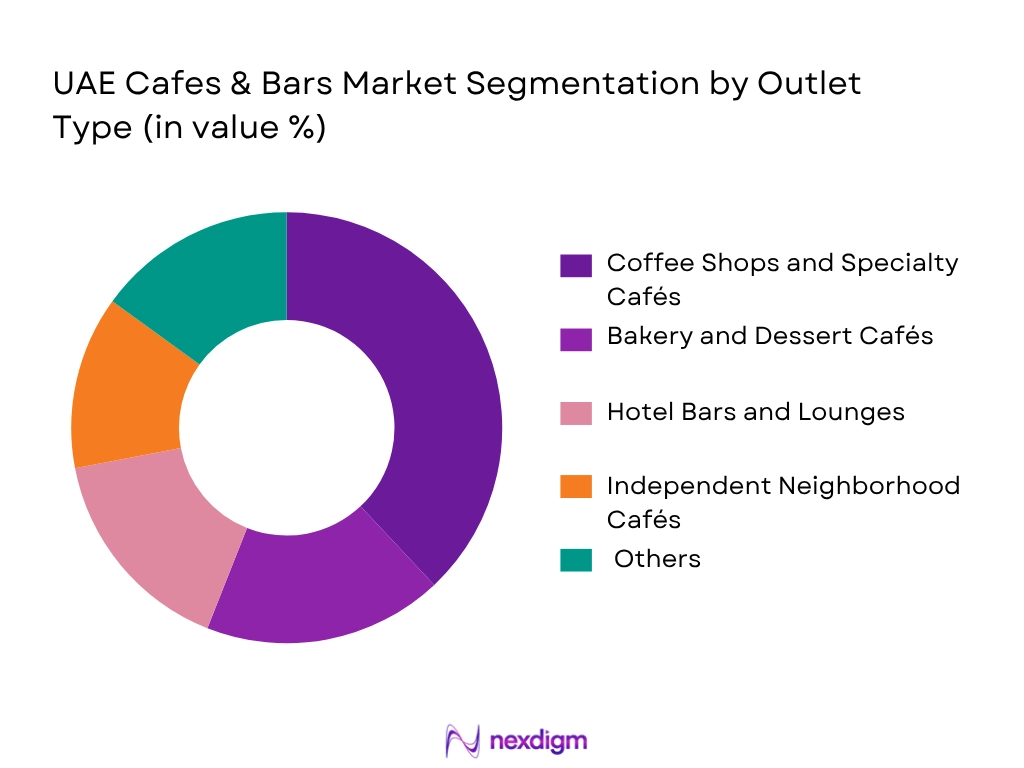
The UAE Cafes & Bars Market is segmented by outlet type into coffee shops and specialty cafés, bakery and dessert cafés, hotel bars and lounges, independent neighborhood cafés, juice and tea cafés, and nightlife bars. Coffee shops and specialty cafés dominate the market as coffee consumption has shifted from standard hot beverages to specialty espresso, cold brew, Arabic coffee, matcha, manual brews, and café-led social experiences. This sub-segment benefits from strong daytime frequency, repeat office consumption, mall visibility, delivery compatibility, and lower licensing complexity compared with alcoholic beverage venues. International chains also add scale through standardized menus, loyalty programmes, app ordering, and high-traffic real estate. Specialty cafés further benefit from UAE consumers’ willingness to pay for single-origin beans, premium interiors, roastery-led concepts, and lifestyle-led café experiences across Dubai, Abu Dhabi, and Sharjah.
By Sales Channel
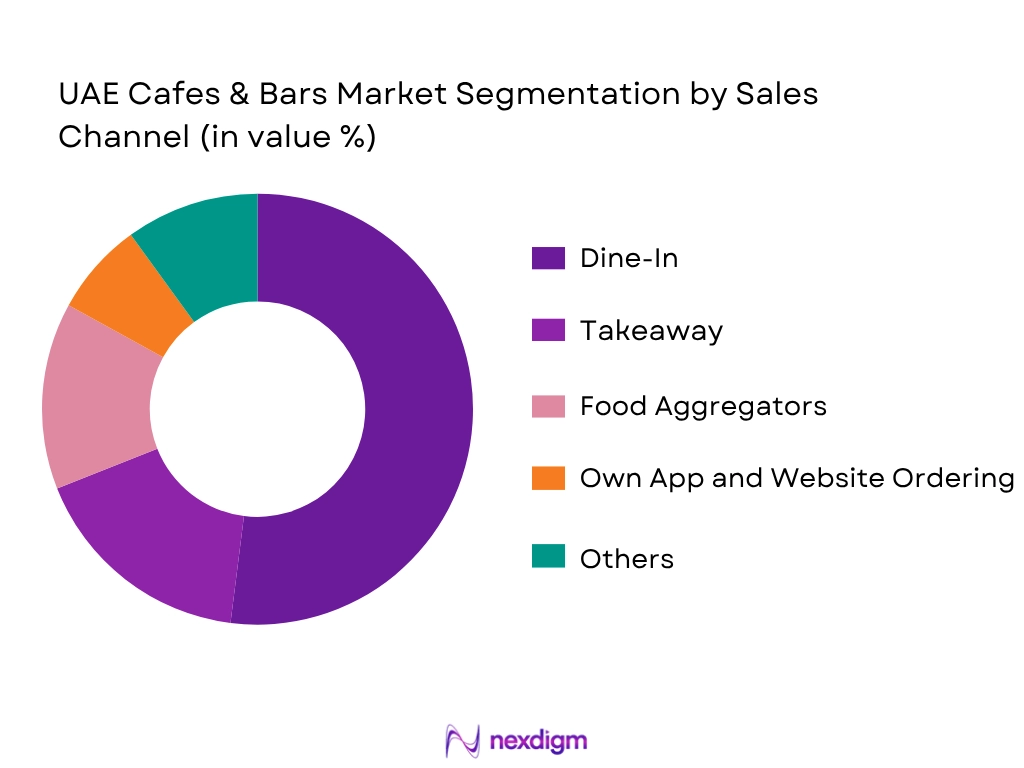
The UAE Cafes & Bars Market is segmented by sales channel into dine-in, takeaway, food aggregators, own app and website ordering, hotel and event bookings, and corporate orders. Dine-in dominates the market because cafés and bars in the UAE are not only beverage outlets but also social, business, leisure, and hospitality destinations. Consumer demand is strongly linked to ambience, seating comfort, Wi-Fi availability, mall visits, hotel stays, brunch occasions, sports screenings, nightlife, and premium customer service. Cafés use dine-in to increase food attachment through pastries, breakfast, desserts, and light meals, while bars use dine-in to capture higher-margin cocktails, spirits, packages, and group bookings. Delivery has expanded strongly, but the experience-led nature of cafés and licensed bars keeps on-premise consumption central to revenue generation.
Competitive Landscape
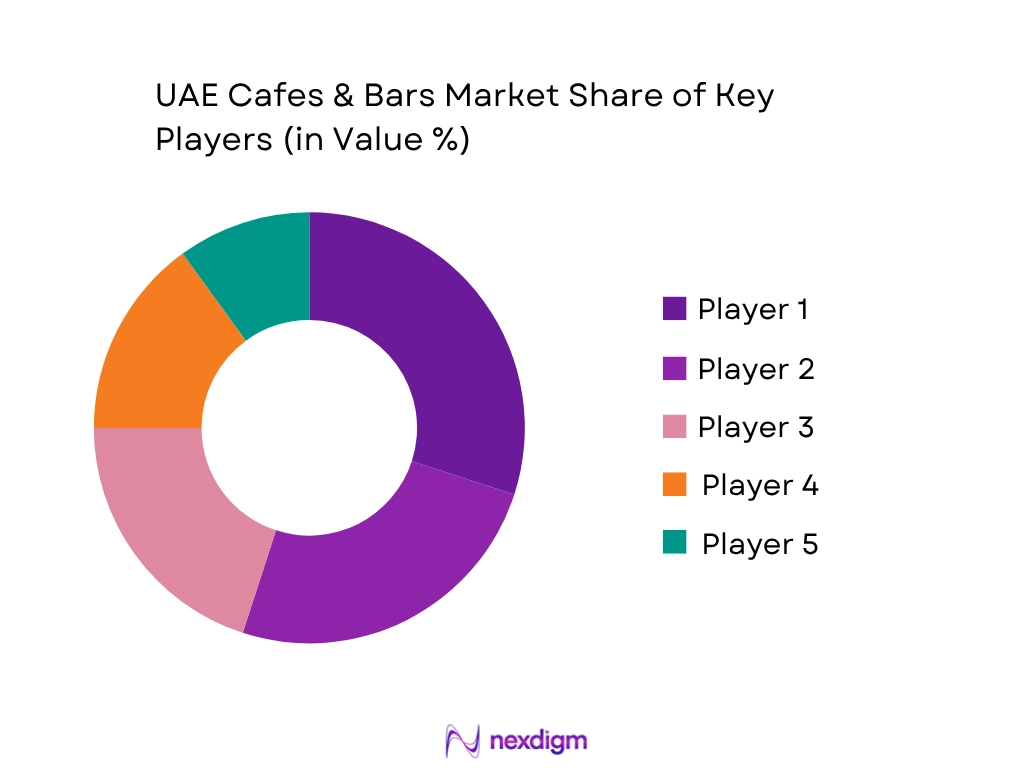
The UAE Cafes & Bars Market is moderately fragmented, with global coffee chains, regional café operators, local boutique cafés, hotel bars, and hospitality groups competing across different price tiers. Starbucks, Costa Coffee, Tim Hortons, Café Bateel, and Sunset Hospitality Group represent different competitive models: international chain scale, franchise-led retail footprint, premium café dining, and licensed lifestyle hospitality. Competition is shaped by outlet location, menu innovation, beverage pricing, specialty coffee capability, digital ordering, loyalty programmes, hotel access, and delivery visibility.
The UAE Cafes & Bars Market is moderately fragmented, with global coffee chains, regional café operators, local boutique cafés, hotel bars, and hospitality groups competing across different price tiers. Starbucks, Costa Coffee, Tim Hortons, Café Bateel, and Sunset Hospitality Group represent different competitive models: international chain scale, franchise-led retail footprint, premium café dining, and licensed lifestyle hospitality. Competition is shaped by outlet location, menu innovation, beverage pricing, specialty coffee capability, digital ordering, loyalty programmes, hotel access, and delivery visibility.
| Company | Establishment Year | Headquarters | UAE Format Focus | Beverage Strength | Pricing Position | Digital/Loyalty Presence | Location Strategy | Market-Specific Advantage |
| Starbucks
|
1971
|
Seattle, USA
|
~ | ~ | ~ | ~ | ~ | ~ |
| Costa Coffee | 1971 | Loudwater, UK | ~ | ~ | ~ | ~ | ~ | ~ |
| Tim Hortons | 1964 | Toronto, Canada | ~ | ~ | ~ | ~ | ~ | ~ |
| 2007 | Dubai, UAE | ~ | ~ | ~ | ~ | ~ | ~ | |
| Sunset Hospitality Group | 2011 | Dubai, UAE | ~ | ~ | ~ | ~ | ~ | ~ |
UAE Cafes & Bars Market Analysis
Growth Drivers
Tourism Arrivals
Tourism arrivals are a direct growth driver for the UAE Cafes & Bars Market because cafés, hotel bars, lounges, beachfront venues, airport cafés, and mall-based beverage outlets depend heavily on visitor footfall. Dubai welcomed 18.72 million international overnight visitors, compared with 17.15 million in the preceding period, strengthening demand across café clusters in Downtown Dubai, Dubai Marina, JBR, Palm Jumeirah, DIFC, and mall-led destinations. Abu Dhabi also supported the market through hospitality-led beverage consumption, recording 4.8 million hotel guests in the first ten months. This tourism base creates recurring demand for breakfast cafés, specialty coffee, hotel lobby lounges, rooftop bars, sports bars, beach clubs, and brunch-led beverage formats. Dubai Municipality’s recreational infrastructure further supports daypart consumption, with parks and facilities attracting more than 31 million visitors, across 220 public parks and recreational facilities, and hosting 1,283 recreational, sporting, community, and cultural events. For cafés and bars, these numbers matter because tourism-driven F&B demand is not limited to hotels; it spills into malls, leisure districts, transport hubs, cultural venues, and outdoor entertainment zones. The UAE’s broader macroeconomic base also supports this demand, with World Bank data showing GDP at USD 552.32 billion and GDP per capita at USD 50,273.5, indicating strong spending capacity for out-of-home food and beverage occasions.
Expat Dining Culture
Expat dining culture supports the UAE Cafes & Bars Market because the country’s urban consumption base is built around international residents, business travellers, professionals, entrepreneurs, and high-frequency social dining occasions. Abu Dhabi’s population reached 4,135,985, while the wider emirate grew from 2.7 million people over the previous decade to more than 4.1 million, creating a larger resident base for cafés, hotel lounges, licensed venues, and community beverage outlets. Dubai’s position is reinforced by its large foodservice infrastructure: the emirate has 25,859 foodservice establishments, including 8,227 restaurants, 3,257 coffee shops, 2,605 cafeterias, 481 hotels, 602 catering services, and 163 food manufacturing-related establishments, giving café and bar operators access to dense consumer touchpoints. The UAE’s macroeconomic conditions also strengthen expatriate-led café and bar demand: World Bank data places GDP per capita at USD 50,273.5, while IMF commentary notes that UAE growth is supported by strong domestic activity in tourism, construction, and financial services. These sectors are strongly linked to office workers, business meetings, after-work socializing, hotel stays, and premium F&B occasions. For the café segment, expatriate demand supports espresso beverages, cold coffee, bakery pairings, remote-working cafés, and delivery orders. For bars, the same base supports licensed hotel venues, brunch formats, business lounges, sports bars, and experiential nightlife.
Market Challenges
Rent Pressure
Rent pressure is a major challenge for the UAE Cafes & Bars Market because prime café and bar locations are concentrated in malls, hotels, beachfront districts, free zones, airports, and high-street retail corridors where real estate demand is structurally high. The Central Bank of the UAE stated that domestic inflation dynamics were influenced by commodity prices, wages, and rents, and revised UAE inflation for the period to 1.8, with inflation expected around 2.0 in the following period and to accelerate slightly afterward. For café and bar operators, even controlled macro inflation can create pressure because rent is a fixed occupancy commitment, while revenue depends on footfall, table turnover, beverage mix, and daypart utilization. Dubai Land Department’s rental index is also relevant because it provides average rent guidance through residential, commercial, industrial, industrial lands, and staff accommodation categories, showing that rent regulation and transparency remain central to the operating environment. Dubai’s commercial density intensifies the issue: 25,859 foodservice establishments and 3,257 coffee shops compete for visible storefronts, mall units, hotel lobby spaces, terraces, and outdoor seating locations. Rent pressure particularly affects specialty cafés and independent bars because they depend on high-design interiors, premium ambience, and destination locations, but have less portfolio-level bargaining power than large chains and hospitality groups.
Staff Costs
Staff costs are a structural challenge for the UAE Cafes & Bars Market because cafés and bars are labour-intensive formats requiring baristas, bartenders, chefs, servers, hosts, cleaners, supervisors, food safety handlers, and delivery coordination teams. The Central Bank of the UAE linked the inflation outlook to commodity prices, wages, and rents, while its annual report recorded headline inflation at 1.7 and forecast inflation at 2.0 and 2.1 in the following two periods. Even when inflation is moderate, wage-linked pressure matters for cafés and bars because service quality is directly tied to staff availability, training, and retention. The compliance environment also raises operational workload: Dubai Municipality conducted 52,233 inspection visits in environment, health, and food fields in the first half, targeting food safety, health, safety, consumer products, and environmental standards. This requires operators to maintain trained staff for hygiene, food handling, kitchen discipline, allergen awareness, delivery handling, and alcohol-service procedures where applicable. Labour compliance has also become broader in the UAE private sector: MoHRE notified more than 12,000 private companies with 20–49 workers about Emiratisation requirements applicable from the period, increasing workforce planning obligations for smaller employers. For cafés and bars, the challenge is acute because service speed, beverage consistency, table experience, and hygiene scores depend on human execution rather than automation alone.
Opportunities
Specialty Roasting
Specialty roasting represents a strong opportunity for the UAE Cafes & Bars Market because the country already has a dense café base and a consumer environment that rewards differentiated coffee quality, origin storytelling, and premium beverage experiences. Dubai has 3,257 coffee shops within a wider base of 25,859 foodservice establishments, creating a large institutional demand pool for roasted beans, private-label blends, single-origin supply, barista training, and café-ready wholesale coffee programmes. The opportunity is also supported by trade-linked coffee infrastructure: OEC data shows the UAE imported USD 99.4 million of domestic electric coffee or tea makers, becoming the 23rd largest importer of that product category, indicating strong equipment-related demand around coffee preparation ecosystems. OEC also shows UAE imports of coffee and tea extracts primarily from Brazil, India, Indonesia, Malaysia, and Germany, highlighting the country’s role as an import-led beverage economy. For café operators, specialty roasting can improve differentiation by reducing dependence on generic blends and enabling signature espresso profiles, cold brew bases, Arabic coffee interpretations, hotel-specific blends, and retail bean sales. For B2B suppliers, it opens white space in roastery-to-café contracts, office coffee supply, hotel F&B procurement, training academies, and branded packaged coffee sold through cafés, gourmet stores, and delivery apps. The opportunity is future-facing, but the current base of coffee shops, foodservice establishments, and coffee equipment imports provides concrete support for expansion.
Premium Non-Alcoholic Beverages
Premium non-alcoholic beverages are a clear opportunity for the UAE Cafes & Bars Market because they allow cafés, hotel lounges, beach clubs, and licensed bars to serve a wider consumer base beyond alcohol occasions. The opportunity is supported by UAE tourism, family leisure, mall culture, and mixed consumer profiles across nationals, expatriates, business travellers, and tourists. Dubai welcomed 18.72 million international overnight visitors, while Abu Dhabi recorded 4.8 million hotel guests in the first ten months, creating broad demand for mocktails, specialty iced teas, cold brews, matcha, juices, functional beverages, Arabic coffee, karak, and alcohol-free premium pairings. UN Comtrade-linked OEC data shows the UAE imported USD 122 million of other non-alcoholic beverages excluding beer and juices, making it the 27th largest importer in that product category, while the country’s overall imports reached USD 444,650.2 million according to WTO tariff and trade data sourced from UN Comtrade. This import profile matters because premium beverage menus in the UAE often rely on imported concentrates, syrups, botanicals, packaged mixers, functional drinks, mineral waters, and specialty ingredients. Non-alcoholic premiumization is especially relevant for cafés and bars operating in malls, family hotels, cultural districts, Sharjah-linked non-alcoholic environments, wellness-focused venues, airport lounges, and daytime hospitality formats. It gives operators a margin and menu innovation pathway without relying solely on alcohol licensing.
Future Outlook
The UAE Cafes & Bars Market is forecast to grow at a CAGR of 7.5% during the forecast period, supported by tourism growth, premium coffee penetration, expansion of branded café chains, and stronger demand for licensed hospitality venues. Dubai and Abu Dhabi will remain the core expansion hubs, while Sharjah and Ras Al Khaimah will benefit from residential and tourism-led café development. Specialty coffee, non-alcoholic premium beverages, hotel bars, brunch concepts, and tech-enabled ordering will define the next phase of market growth. Future growth will be shaped by three structural shifts. First, specialty cafés will continue to move beyond coffee into breakfast, desserts, wellness beverages, branded merchandise, and packaged beans. Second, bars and lounges will grow through hotel pipelines, beach clubs, rooftop venues, sports bars, and event-based formats. Third, operators will increasingly focus on unit economics, rent efficiency, menu engineering, delivery margins, and loyalty-based customer retention.
Major Players
- Starbucks
- Costa Coffee
- Tim Hortons
- Caribou Coffee
- Caffè Nero
- % Arabica
- Café Bateel
- FiLLi Café
- Saddle Café
- Joe & The Juice
- Dunkin’
- Jones the Grocer
- Sunset Hospitality Group
- Solutions Leisure Group
- Addmind Hospitality
Key Target Audience
- Café chain operators and franchise owners
- Bar, lounge, beach club and nightlife operators
- Hotel groups and resort F&B divisions
- Food and beverage distributors
- Coffee roasters, bean importers and beverage suppliers
- Mall developers, retail landlords and commercial real estate owners
- Investments and venture capitalist firms
- Government and regulatory bodies (Dubai Municipality, Abu Dhabi Department of Economic Development, Dubai Department of Economy and Tourism, Department of Culture and Tourism – Abu Dhabi, UAE Ministry of Economy, Federal Tax Authority)
Research Methodology
Step 1: Identification of Key Variables
The initial phase involves mapping the UAE Cafes & Bars Market ecosystem across café chains, independent operators, hotel bars, lounges, roasters, landlords, delivery aggregators, beverage distributors, and regulatory bodies. Variables include outlet count, average ticket size, beverage mix, dine-in frequency, delivery contribution, licensed venue density, and city-level footfall.
Step 2: Market Analysis and Construction
Historical revenue is assessed using foodservice sub-sector sales, outlet count, transaction density, average order value, and channel-level revenue contribution. The bottom-up model evaluates café and bar revenue across coffee shops, specialty cafés, hotel lounges, bakery cafés, bars, and delivery-led formats to construct a validated market base.
Step 3: Hypothesis Validation and Expert Consultation
Market hypotheses are validated through structured interviews with café owners, bar managers, hotel F&B directors, coffee roasters, beverage distributors, mall leasing teams, and delivery platform executives. These consultations help test assumptions around menu pricing, consumer frequency, gross margins, rent pressure, staffing costs, and channel profitability.
Step 4: Research Synthesis and Final Output
The final stage integrates secondary research, operator benchmarking, expert inputs, and bottom-up modelling into a unified market estimate. Final outputs include market size, CAGR, segmentation shares, competitor positioning, growth drivers, target audience mapping, and actionable recommendations for operators, investors, suppliers, and regulators.

- Executive Summary
- Research Methodology (Market Definitions and Assumptions, Café and Bar Classification Framework, Licensed vs Non-Licensed Outlet Mapping, Outlet Census Approach, Menu Price Basket Approach, Average Ticket Size Estimation, Table Turnover Assessment, Coffee Bean Consumption Proxy, POS and Aggregator Data Triangulation, Primary Interviews with Café Owners, Bar Operators, Limitations and Forecast Assumptions)

- Definition and Scope
- Market Genesis and Evolution
- Timeline of Major Café Chains, Specialty Cafés, Hotel Bars and Lifestyle Bar
- Operators
- Business Cycle
- Supply Chain and Value Chain Analysis
- Demand Ecosystem
- Revenue Pool Mapping
- Outlet Format Landscape
- Emirate-Wise Consumption Landscape
- Regulatory and Licensing Landscape

- Growth Drivers (Tourism Arrivals, Expat Dining Culture, Coffee Premiumization, Hotel Pipeline, Mall Footfall, Nightlife Demand, Remote Work Culture, Delivery Aggregator Adoption)
- Market Challenges (Rent Pressure, Staff Costs, Licensing Complexity, Import Dependency, Menu Inflation, Alcohol Compliance, Aggregator Commissions)
- Opportunities (Specialty Roasting, Premium Non-Alcoholic Beverages, Local Concepts, Hotel Partnerships, Corporate Cafés, Experiential Nightlife)
- Trends (Menu Innovation, Experience-Led Venues, Digital Ordering, Sustainability, Premiumization, Functional Beverages)
- Government Regulation (Food Safety, Municipality Permits, Alcohol Licensing, Tourism Authority Rules, VAT, Corporate Tax, Import Duties, Employment Compliance)
- SWOT Analysis (Brand Density, Tourism Pull, Cost Base, Licensing Barriers, Specialty Coffee Opportunity, Saturation Risk)
- Porter’s Five Forces (Supplier Power, Buyer Power, Threat of New Entrants, Threat of Substitutes, Competitive Rivalry)
- Stakeholder Ecosystem (Café Operators, Bar Operators, Hotel Groups, Mall Landlords, Roasters, Coffee Bean Importers, Beverage Distributors, Alcohol Distributors, Delivery Aggregators, POS Providers, Municipality Bodies, Tourism Authorities)
- Unit Economics Analysis (Capex per Outlet, Rent-to-Revenue Ratio, Staff Cost Ratio, Beverage Gross Margin, Food Gross Margin, Pour Cost, Break-Even Sales, Payback Period)
- Pricing Analysis (Espresso Basket, Cappuccino Basket, Cold Brew Basket, Karak Basket, Mocktail Basket, Beer Basket, Cocktail Basket, Brunch Package Basket)
- Consumer Behaviour and Occasion Mapping (Morning Coffee, Office Breaks, Remote Work, Weekend Brunch, Business Meetings, Tourist Dining, Nightlife, Sports Viewing, Date Nights)

- By Value (2020-2025)
- By Outlet Count (2020-2025)
- By Transaction Volume (2020-2025)
- By Average Order Value (2020-2025)
- By Average Spend per Customer (2020-2025)
- By Revenue per Outlet (2020-2025)
- By Beverage Volume Sold (2020-2025)
- By Dine-In, Takeaway and Delivery Revenue Split (2020-2025)

- By Outlet Type (In Value%)
International Coffee Chains
Specialty Coffee Cafés
Independent Boutique Cafés
Dessert and Bakery Cafés
Karak and Tea Cafés
Hotel Bars and Lounges
Sports Bars
Rooftop Bars
Beach Clubs and Pool Bars
Gastro Bars and Pub Concepts - By Beverage Category (In Value%)
Espresso-Based Coffee
Filter and Manual Brew Coffee
Cold Brew and Iced Coffee
Arabic Coffee and Turkish Coffee
Karak Tea and Specialty Tea
Smoothies, Juices and Functional Beverages
Mocktails and Non-Alcoholic Premium Drinks
Beer
Wine
Spirits and Cocktails - By Food Attachment Category (In Value%)
Breakfast and Brunch Plates
Bakery and Pastry Items
Sandwiches, Wraps and Light Meals
Desserts and Cakes
Bar Bites and Sharing Platters
Premium Dining Pairings
Vegan, Gluten-Free and Health-Focused Food - By Price Positioning (In Value%)
Economy Cafés
Mid-Market Cafés
Premium Specialty Cafés
Luxury Hotel Cafés
Mid-Market Bars
Premium Bars and Lounges
Ultra-Luxury Nightlife Venues - By Location Type (In Value%)
Shopping Malls
High-Street Retail Locations
Hotels and Resorts
Business Districts and Free Zones
Residential Communities
Airports and Transit Hubs
Beachfront and Marina Locations
Tourist Attractions and Entertainment Districts - By Emirate (In Value%)
Dubai
Abu Dhabi
Sharjah
Ras Al Khaimah
Ajman
Fujairah
Umm Al Quwain - By Ownership Model (In Value%)
Company-Owned Outlets
Franchise Outlets
Master Franchise Operations
Independent Owner-Operated Outlets
Hotel-Managed Venues
Third-Party Hospitality Operator Venues - By Service Model (In Value%)
Counter Service
Table Service
Hybrid Café Service
Reservation-Led Bar Service
Delivery-First Café Model
Grab-and-Go Model
Event and Group Booking Model - By Consumer Group (In Value%)
UAE Nationals
Expat Professionals
Tourists and Leisure Travellers
Business Travellers
Students and Young Adults
Families
High-Income Nightlife Consumers
Remote Workers and Freelancers - By Sales Channel (In Value%)
Dine-In
Takeaway
Own App and Website Ordering
Food Aggregators
Corporate Catering and Office Orders
Event Bookings and Private Hire
Loyalty Programme Sales

- Market Share of Major Players (Revenue Share, Outlet Share, Transaction Share, Premium Café Share, Licensed Venue Share)
- Market Share by Outlet Type (International Coffee Chains, Specialty Cafés, Independent Cafés, Hotel Bars, Rooftop Bars, Beach Clubs, Gastro Bars)
- Cross Comparison Parameters (Outlet Count in UAE, Emirate Presence, Average Beverage Price Basket, Specialty Coffee Capability, Alcohol Licence Exposure, Delivery Aggregator Presence, Loyalty and Digital Ordering Strength, Hotel/Mall/High-Street Location Mix)
- SWOT Analysis of Major Players (Brand Equity, Location Advantage, Menu Differentiation, Supply Chain Strength, Cost Structure, Expansion Capability)
- Pricing Benchmarking of Major Players (Espresso, Cappuccino, Cold Brew, Karak, Pastry Combo, Mocktail, Beer, Cocktail, Brunch Package)
- Detailed Profiles of Major Competitors
Starbucks
Costa Coffee
Tim Hortons
Caribou Coffee
Caffè Nero
% Arabica
Café Bateel
FiLLi Café
Saddle Café
Joe & The Juice
Dunkin’
Jones the Grocer
Sunset Hospitality Group
Solutions Leisure Group
Addmind Hospitality

- Demand and Utilization (Footfall, Table Turnover, Seat Occupancy, Cups per Day, Drinks per Cover, Delivery Orders)
- Purchasing Power and Budget Allocation (Average Ticket Size, Monthly Café Spend, Nightlife Spend, Tourism Spend, Premium Beverage Willingness to Pay)
- Needs, Desires and Pain Point Analysis (Convenience, Ambience, Wi-Fi, Parking, Menu Variety, Halal Assurance, Alcohol Availability, Price Transparency, Service Speed)
- Decision-Making Journey (Location Discovery, Social Media Influence, Reviews, Reservations, Delivery App Visibility, Loyalty Offers, Menu Price Sensitivity)
- Customer Cohort Analysis (Residents, Tourists, Office Workers, Students, Families, Affluent Nightlife Consumers, Remote Workers)

- By Value (2026-2035)
- By Outlet Count (2026-2035)
- By Transaction Volume (2026-2035)
- By Average Order Value (2026-2035)
- By Revenue per Outlet (2026-2035)
- By Beverage Volume Sold (2026-2035)
- By Dine-In, Takeaway and Delivery Revenue Split (2026-2035)


 Request a Sample
 Ask for Customization
 Get a Quote
 Enquire Now