

 Download PDF
 Download PDF
Market Overview
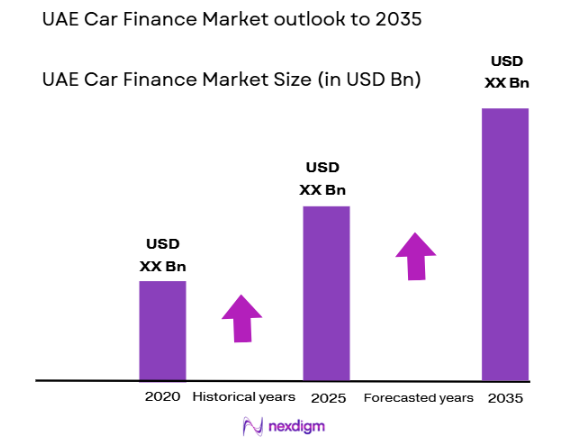
The UAE car finance market is projected to reach USD ~ billion, driven by increased demand for both new and used cars, particularly from young consumers and growing middle-income households. The market is significantly influenced by government policies promoting car ownership, along with low-interest financing options offered by both traditional banks and new-age fintech platforms. Strong infrastructure, increased disposable incomes, and rising consumer confidence are contributing to the market’s robust growth in recent years. Based on a recent historical assessment, the continued expansion of the automotive sector in the UAE underpins this growth, with key drivers such as a shift towards more affordable financing solutions.
The UAE remains a dominant player in the Middle East car finance market, with major cities like Dubai and Abu Dhabi leading the charge due to their strong economic conditions and increasing population. The growth of car ownership in the region is supported by the relatively high number of expatriates in the country, who contribute to the demand for financing options. The automotive industry is also shaped by advancements in digital finance, which have made car loans more accessible to the younger demographic, further driving the market’s expansion. The country’s investment in smart infrastructure and green technologies also fuels demand for electric vehicles, adding a new dimension to car finance offerings.
Market Segmentation
By Product Type
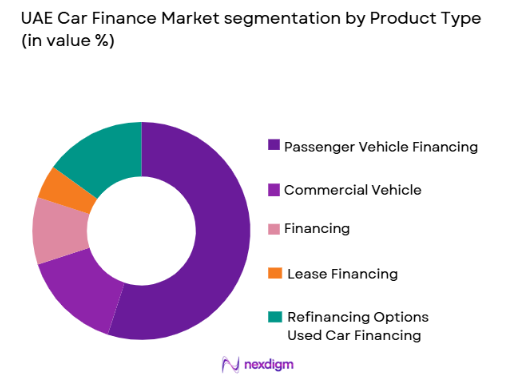
The UAE car finance market is segmented by product type into passenger vehicle financing, commercial vehicle financing, lease financing, refinancing options, and used car financing. Recently, passenger vehicle financing has dominated the market share due to a surge in demand for affordable yet modern cars. Factors such as consumer preference for convenience, easy access to loans, and the increasing popularity of vehicle ownership among millennials are propelling this trend. The dominance of passenger vehicles is attributed to the growing urbanization and the adoption of vehicle ownership as a status symbol. Furthermore, the influx of international car brands into the UAE has made it easier for consumers to acquire new cars, particularly in metropolitan areas like Dubai and Abu Dhabi. The availability of low-interest rates and flexible loan tenures has further increased demand for this sub-segment, reinforcing its market dominance.
By Platform Type
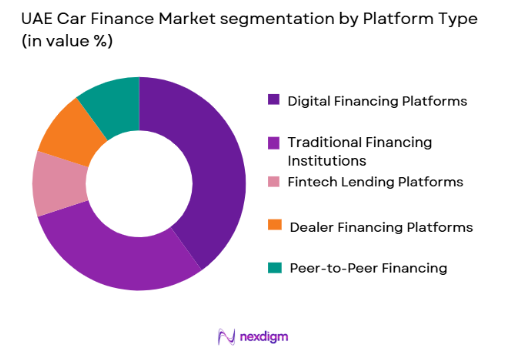
The UAE car finance market is segmented by platform type into digital financing platforms, traditional financing institutions, fintech lending platforms, dealer financing platforms, and peer-to-peer financing. Recently, digital financing platforms have emerged as a dominant sub-segment, thanks to the country’s technological infrastructure and the shift towards digital banking. The increasing reliance on online platforms for car financing has been boosted by consumer demand for convenience and transparency. Consumers are increasingly choosing these platforms due to their simplified loan processes, faster approval times, and competitive interest rates. The platform type is heavily influenced by the country’s high internet penetration and mobile-first culture. The shift towards mobile wallets and banking apps, alongside the rapid growth of e-commerce, positions digital platforms as a key player in the finance space, making them the dominant option for younger consumers looking for easy access to loans.
Competitive Landscape
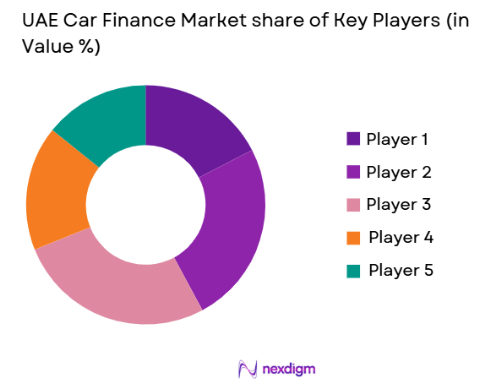
The UAE car finance market is characterized by the dominance of both traditional banking institutions and emerging fintech companies. Major players have been consolidating their position by partnering with car dealerships and offering integrated financing solutions, while others are focusing on technological innovations such as digital platforms and AI-powered lending systems. As competition intensifies, players are differentiating themselves by offering flexible payment plans, low-interest rates, and enhanced customer services. The overall market is expected to see continuous investments in digitization and infrastructure to support evolving consumer demands.
| Company Name | Establishment Year | Headquarters | Technology Focus | Market Reach | Key Products | Revenue (USD Million) | Additional Parameter |
| First Abu Dhabi Bank | 1969 | Abu Dhabi, UAE | ~ | ~ | ~ | ~ | ~ |
| Emirates NBD | 1967 | Dubai, UAE | ~ | ~ | ~ | ~ | ~ |
| Al-Futtaim Group | 1971 | Dubai, UAE | ~ | ~ | ~ | ~ | ~ |
| Mashreq Bank | 1967 | Dubai, UAE | ~ | ~ | ~ | ~ | ~ |
| Abu Dhabi Commercial Bank | 1985 | Abu Dhabi, UAE | ~ | ~ | ~ | ~ | ~ |
UAE Car Finance Market Analysis
Growth Drivers
Government Initiatives for Car Ownership Financing
The UAE government has introduced various schemes and policies to make car ownership more accessible to the population, which has positively impacted the car finance market. The introduction of low-interest loans, subsidies for electric vehicles, and incentives for first-time buyers has led to a growing demand for car financing. These policies have enabled both expatriates and citizens to acquire vehicles with flexible loan terms, leading to an increase in demand for car loans. Additionally, the government’s focus on creating a sustainable and tech-driven economy has accelerated the adoption of digital car financing platforms, giving consumers the ability to access financing solutions from their smartphones. The collaboration between banks and car dealerships has further enhanced the accessibility of car loans, contributing to market growth. This development has increased market penetration, especially among millennials, who prefer hassle-free, online loan applications.
Technological Advancements in Digital Financing Platforms
The rapid growth of digital finance platforms is another key driver of the UAE car finance market. As consumers increasingly turn to online platforms for purchasing products, car finance is no exception. The availability of quick loan approval processes, competitive interest rates, and instant disbursements has made digital platforms attractive to consumers. Fintech companies are integrating AI and machine learning to automate credit scoring and approval, making the process faster and more efficient. These technological advancements have streamlined the entire loan process, making it easier for consumers to access car financing. Furthermore, digital platforms provide transparency in terms of loan terms, making the entire process more consumer-friendly. As mobile penetration in the UAE continues to rise, more consumers are opting for digital financing over traditional bank loans, driving growth in this segment.
Market Challenges
High Interest Rates in Traditional Financing
One of the significant challenges facing the UAE car finance market is the relatively high-interest rates charged by traditional banks. While car financing is readily available, the cost of borrowing remains a concern for many consumers, particularly first-time buyers. High-interest rates can make car loans expensive over the long term, discouraging some potential buyers from pursuing financing options. Additionally, the fluctuating interest rates due to changes in the global economy can make car loans less predictable for consumers, causing uncertainty in their financial planning. This challenge is further exacerbated by the limited availability of fixed-rate financing products, which leaves consumers exposed to rate changes. Despite the availability of attractive offers, the cost of financing remains a hurdle, especially for those with lower credit scores, who are often subjected to higher interest rates.
Economic Instability and Changing Consumer Preferences
The UAE car finance market is also impacted by economic instability and changing consumer preferences. Economic uncertainties, such as fluctuating oil prices, can directly affect disposable incomes and impact the demand for car loans. Additionally, the ongoing shift in consumer behavior, particularly among younger generations, towards shared mobility solutions and electric vehicles, is creating new challenges for traditional car finance models. As consumers are becoming more conscious of environmental factors, there is a growing demand for electric vehicle financing. However, the higher cost of electric vehicles, combined with limited availability of specialized financing products, makes it difficult for consumers to finance these vehicles through traditional car loans. Furthermore, the rise of shared economy models such as car leasing and ride-sharing services has decreased the need for car ownership, which could reduce the overall demand for car finance products in the future.
Opportunities
Expansion of Electric Vehicle Financing
One of the key opportunities in the UAE car finance market is the rise of electric vehicle (EV) financing. With increasing government incentives and a global push towards environmental sustainability, the demand for EVs is on the rise in the UAE. However, the higher upfront cost of electric vehicles compared to traditional internal combustion engine (ICE) vehicles poses a barrier for many consumers. As a result, there is an opportunity for financial institutions to introduce specialized financing products targeted at electric vehicle buyers. The government’s support for green technologies, including tax breaks and low-interest loans, is expected to further boost the adoption of electric vehicles. Car finance providers can also offer attractive financing options to make EVs more affordable to consumers.
Growth of Digital Car Financing Platforms:
The UAE car finance market is also witnessing an opportunity in the expansion of digital car financing platforms. As consumers continue to shift towards online solutions for a wide range of services, digital finance platforms are becoming increasingly popular. This trend is driven by the demand for faster, more transparent, and convenient financing options. Car finance providers can capitalize on this demand by expanding their digital offerings, incorporating advanced technologies such as AI, machine learning, and blockchain to improve loan approval processes, enhance customer experience, and increase operational efficiency. With the UAE’s high mobile and internet penetration rates, the potential for digital platforms in the car finance market is immense. The increasing reliance on digital solutions is not only transforming how consumers access car loans but also enabling financial institutions to reach a broader customer base, further accelerating market growth.
Future Outlook
The future outlook for the UAE car finance market is promising, with strong growth expected in the next five years. Technological advancements, such as the rise of digital lending platforms, are expected to continue reshaping the industry. Regulatory support, particularly for electric vehicles, will further stimulate demand in the car finance market. Increasing adoption of digital finance, coupled with the growing preference for electric vehicles, presents significant growth opportunities for market participants. Consumer demand will remain strong as infrastructure improves and financing options become more affordable. However, players must navigate challenges such as economic fluctuations and evolving consumer preferences to maintain market growth.
Major Players
- First Abu Dhabi Bank
- Emirates NBD
- Al-Futtaim Group
- Mashreq Bank
- Abu Dhabi Commercial Bank
- Dubai Islamic Bank
- National Bank of Fujairah
- Standard Chartered
- RAK Bank
- Sharjah Islamic Bank
- Ajman Bank
- Al Hilal Bank
- Al Qudra Financial Services
- Al Baraka Bank
Key Target Audience
- Investments and venture capitalist firms
- Government and regulatory bodies
- Car dealerships
- Automotive manufacturers
- Car leasing companies
- Fintech companies
- Banks and financial institutions
- Insurance companies
Research Methodology
Step 1: Identification of Key Variables
This step involves identifying the core variables that drive the UAE car finance market, such as product types, customer preferences, and financial regulations.
Step 2: Market Analysis and Construction
Market analysis includes gathering data on historical market performance, customer demand trends, and the impact of regulatory policies on the car finance sector in the UAE.
Step 3: Hypothesis Validation and Expert Consultation
Experts in the fields of car finance, economics, and technology are consulted to validate market assumptions and provide insights on emerging trends and challenges.
Step 4: Research Synthesis and Final Output
This step synthesizes the research findings, drawing conclusions based on data analysis, expert input, and market forecasts to create a final report that accurately reflects the market’s trajectory.

- Executive Summary
- Research Methodology (Definitions, Scope, Industry Assumptions, Market Sizing Approach, Primary & Secondary Research Framework, Data Collection & Verification Protocol, Analytic Models & Forecast Methodology, Limitations & Research Validity Checks)

- Market Definition and Scope
- Value Chain & Stakeholder Ecosystem
- Regulatory / Certification Landscape
- Sector Dynamics Affecting Demand
- Strategic Initiatives & Infrastructure Growth

- Growth Drivers
Increasing Car Ownership in UAE
Government Incentives and Regulations
Growth of Digital Finance Platforms
Rising Consumer Confidence in Financing Options
Expansion of Automotive Leasing Market - Market Challenges
High Interest Rates
Economic Uncertainty and Currency Fluctuations
Limited Awareness of Financing Options
Strict Regulatory Compliance
Lack of Credit Access for First-Time Buyers - Market Opportunities
Rise of Electric Vehicle Financing
Expansion of Used Car Financing Options
Strategic Partnerships Between Banks and Car Dealerships - Trends
Shift Towards Online Financing Platforms
Integration of AI for Loan Approvals
Growth in Used Car Financing Market
Adoption of Digital Wallets for Payment
Emerging Trend of Green Car Financing - Government Regulations & Defense Policy
New Regulatory Framework for Auto Loans
Incentives for Sustainable Vehicle Financing
Consumer Protection Regulations - SWOT Analysis
- Stakeholder and Ecosystem Analysis
- Porter’s Five Forces Analysis
- Competition Intensity and Ecosystem Mapping

- By Market Value, 2020-2025
- By Installed Units, 2020-2025
- By Average System Price, 2020-2025
- By System Complexity Tier, 2020-2025

- By System Type (In Value%)
Passenger Vehicle Financing
Commercial Vehicle Financing
Lease Financing
Refinancing Options
Used Car Financing - By Platform Type (In Value%)
Digital Financing Platforms
Traditional Financing Institutions
Fintech Lending Platforms
Dealer Financing Platforms
Peer-to-Peer Financing - By Fitment Type (In Value%)
OEM Financing
Aftermarket Financing
Third-Party Financing
Flexible Financing Solutions
Subvention Financing - By End User Segment (In Value%)
Individual Consumers
Car Dealerships
Fleet Owners
Leasing Companies
Banks and Financial Institutions - By Procurement Channel (In Value%)
Direct Procurement
Indirect Procurement
Online Platforms
Third-Party Distributors
Dealer Network - By Material / Technology (in Value%)
Artificial Intelligence in Credit Scoring
Blockchain for Transaction Security
Big Data Analytics
Digital Payment Solutions
Automated Loan Processing

- Market structure and competitive positioning
- Market share snapshot of major players
- Cross Comparison Parameters (Loan Approval Process, Interest Rates, Loan Term, Digital Access, Customer Service, Market Penetration, Fleet Financing, Credit Scoring, Regulatory Compliance, Loan Repayment Options)
- SWOT Analysis of Key Players
- Pricing & Procurement Analysis
- Key Players
First Abu Dhabi Bank
Emirates NBD
Al-Futtaim Group
Mashreq Bank
Abu Dhabi Commercial Bank
Dubai Islamic Bank
National Bank of Fujairah
Standard Chartered
RAK Bank
Sharjah Islamic Bank
Ajman Bank
Commercial Bank of Dubai
Al Hilal Bank
Al Qudra Financial Services
Al Baraka Bank

- Increasing Demand for Car Financing Among Young Consumers
- Dealerships Offering Flexible Loan Solutions
- Banks’ Expansion of Auto Loan Offerings
- The Role of Fintech in Enhancing Consumer Experience

- Forecast Market Value, 2026-2035
- Forecast Installed Units, 2026-2035
- Price Forecast by System Tier, 2026-2035
- Future Demand by Platform, 2026-2035


 Request a Sample
 Ask for Customization
 Get a Quote
 Enquire Now