
 Download PDF
Market Overview
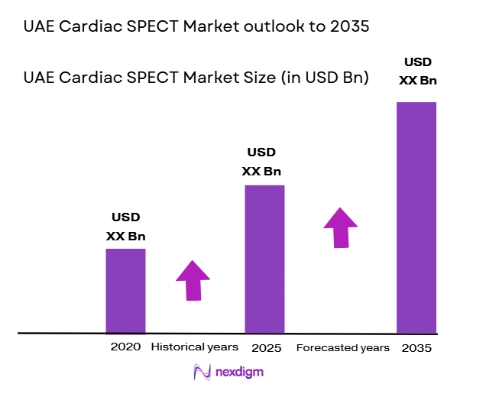
The UAE Cardiac SPECT Equipment Market is valued at approximately USD ~ billion, driven by increased demand for cardiovascular disease diagnostics and advanced imaging technology in the region. Key factors such as a growing aging population, rising incidence of heart diseases, and advancements in imaging modalities are fueling the market’s expansion. Moreover, the increasing adoption of non-invasive diagnostic methods and government healthcare initiatives further contribute to the market’s growth, creating substantial opportunities for manufacturers to capitalize on emerging trends.
The UAE dominates the market, thanks to its robust healthcare infrastructure and strategic positioning as a medical tourism hub in the region. Dubai, Abu Dhabi, and Sharjah are key cities leading the adoption of cardiac imaging technologies due to their advanced medical facilities, increasing demand for high-quality healthcare services, and government investments in health tech. These cities benefit from world-class healthcare systems and are home to numerous international medical equipment suppliers. This trend has positioned the UAE as a regional leader in diagnostic imaging and related equipment.
Market Segmentation
By Product Type:
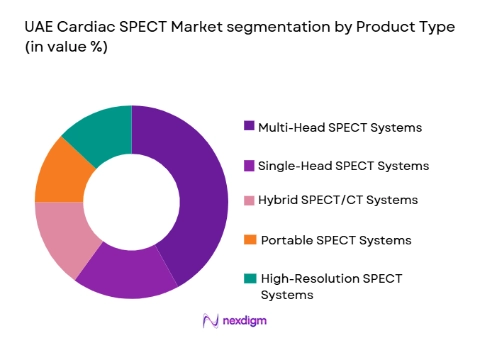
The UAE Cardiac SPECT Equipment market is segmented by product type into multi-head SPECT systems, single-head SPECT systems, hybrid SPECT/CT systems, portable SPECT systems, and high-resolution SPECT systems. The dominant sub-segment is the multi-head SPECT systems due to their ability to provide superior image quality, which is essential for diagnosing complex heart conditions. Additionally, the demand for multi-head systems is supported by the increasing adoption of advanced healthcare technologies and the need for accurate, fast diagnostic imaging in cardiology departments. The flexibility in clinical applications and enhanced performance offered by multi-head systems have contributed to their dominant market share.
By Platform Type:
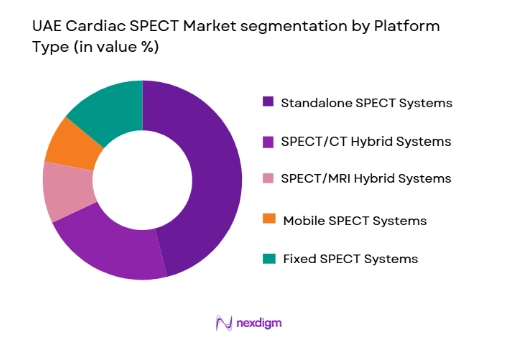
The UAE Cardiac SPECT Equipment market is also segmented by platform type into standalone SPECT systems, SPECT/CT hybrid systems, SPECT/MRI hybrid systems, mobile SPECT systems, and fixed SPECT systems. Among these, standalone SPECT systems lead the market due to their widespread use in hospitals and diagnostic imaging centers. Their reliability, cost-effectiveness, and ability to perform routine cardiac imaging procedures make them the preferred choice for many healthcare providers. The standalone systems are particularly dominant in diagnostic centers where budget constraints and patient volume are key factors in equipment selection.
Competitive Landscape
The competitive landscape of the UAE Cardiac SPECT Equipment Market is characterized by significant consolidation, with major players driving innovation and technological advancements. The market is heavily influenced by key players such as GE Healthcare, Siemens Healthineers, and Philips Healthcare, which dominate with their wide product offerings, strategic collaborations, and strong market presence. These companies are constantly innovating and pushing for advancements in imaging technologies, particularly with hybrid systems and AI integration. This competitive environment leads to rapid technological developments and drives the overall growth of the market, fostering partnerships with healthcare providers for customized solutions.
| Company Name | Establishment Year | Headquarters | Technology Focus | Market Reach | Key Products | Revenue (USD billion) | Additional Market-Specific Parameter |
| GE Healthcare | 1892 | Chicago, USA | ~ | ~ | ~ | ~ | ~ |
| Siemens Healthineers | 1847 | Erlangen, Germany | ~ | ~ | ~ | ~ | ~ |
| Philips Healthcare | 1891 | Amsterdam, Netherlands | ~ | ~ | ~ | ~ | ~ |
| Canon Medical Systems | 1933 | Tokyo, Japan | ~ | ~ | ~ | ~ | ~ |
| Hitachi Medical Systems | 1949 | Tokyo, Japan | ~ | ~ | ~ | ~ | ~ |
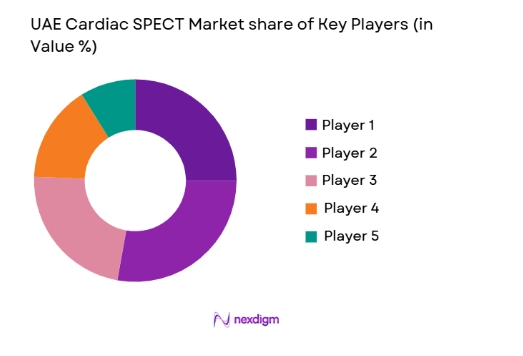
UAE Cardiac SPECT Equipment Market Analysis
Growth Drivers
Technological Advancements in Medical Imaging:
Technological advancements in medical imaging are a significant growth driver for the UAE Cardiac SPECT Equipment market. Innovations such as the development of hybrid SPECT/CT systems have greatly enhanced the accuracy and precision of diagnostic procedures, particularly in cardiology. These systems allow for a more detailed view of the heart’s structure and function, which is essential for diagnosing complex cardiac conditions. Moreover, the integration of artificial intelligence (AI) in cardiac imaging is improving workflow efficiencies and patient outcomes, driving demand for advanced systems. The UAE’s healthcare sector is actively adopting these innovations, leading to increased investments in cutting-edge imaging technologies. Additionally, improvements in detector technologies such as cadmium zinc telluride (CZT) and gallium arsenide (GaAs) detectors are enhancing the sensitivity and resolution of cardiac scans, making them more reliable and efficient. This technological progression is not only improving diagnostic accuracy but also expanding the clinical applications of SPECT systems, resulting in widespread adoption across healthcare facilities in the UAE.
Government Healthcare Initiatives:
Government healthcare initiatives play a crucial role in the growth of the UAE Cardiac SPECT Equipment market. The UAE government has made substantial investments in enhancing healthcare infrastructure, with a focus on improving diagnostic capabilities. These efforts are particularly evident in the UAE’s National Health Insurance Program and the country’s Vision 2021, which aim to improve the quality of healthcare services and promote the adoption of advanced medical technologies. Additionally, government-funded healthcare programs and medical insurance schemes are increasing access to advanced diagnostic tools, such as cardiac SPECT equipment, in public and private healthcare facilities. These initiatives are also driving the demand for high-quality, non-invasive diagnostic technologies, as the government prioritizes early detection and treatment of cardiovascular diseases. The government’s focus on improving the quality and accessibility of healthcare services is creating a favorable environment for the growth of the cardiac SPECT equipment market in the region.
Market Challenges
High Cost of Equipment and Maintenance:
One of the primary challenges facing the UAE Cardiac SPECT Equipment market is the high cost of equipment and ongoing maintenance. SPECT systems, especially advanced hybrid models, require significant capital investment, which can be a barrier for smaller healthcare providers and diagnostic centers. Additionally, the maintenance and servicing costs of these sophisticated systems can be high, further adding to the financial burden. This high cost limits the adoption of such equipment in certain regions and among smaller healthcare institutions that may not have the budget to invest in advanced technology. While the government is actively supporting healthcare improvements, the cost remains a significant challenge, particularly when it comes to upgrading existing diagnostic infrastructure and ensuring that equipment is regularly serviced and maintained to function optimally.
Regulatory and Certification Barriers:
Another major challenge in the UAE Cardiac SPECT Equipment market is the complex regulatory and certification process for medical devices. The regulatory requirements for medical equipment in the UAE are stringent, requiring manufacturers to comply with local and international standards for safety, efficacy, and performance. This process can be time-consuming and costly, particularly for companies entering the market for the first time. Furthermore, ongoing changes in regulations and the need for continuous certification updates can create uncertainty for manufacturers. Compliance with these regulations is essential to ensure market access and avoid delays in product launches. For many companies, navigating these regulatory hurdles requires substantial investments in legal and compliance efforts, adding complexity to market entry and expansion.
Opportunities
Expansion of Medical Tourism in the UAE:
The UAE’s growing reputation as a hub for medical tourism presents a significant opportunity for the cardiac SPECT equipment market. The UAE is attracting an increasing number of international patients seeking advanced medical treatments, particularly in the fields of cardiology and diagnostic imaging. With world-class healthcare facilities, cutting-edge medical technology, and high-quality care, the UAE is positioning itself as a leading destination for medical tourism. The demand for advanced diagnostic tools, such as cardiac SPECT equipment, is increasing as more patients from neighboring countries and beyond seek treatment in the UAE. This trend is driving investments in healthcare infrastructure and the adoption of the latest medical technologies, creating a promising market for suppliers of cardiac imaging equipment.
Adoption of AI-Powered Imaging Systems:
The integration of artificial intelligence (AI) in cardiac imaging systems is an emerging opportunity in the UAE Cardiac SPECT Equipment market. AI has the potential to revolutionize diagnostic processes by providing faster and more accurate image analysis, thereby improving patient outcomes. AI-powered systems can automatically detect abnormalities in cardiac images, reducing human error and enhancing the overall diagnostic workflow. This technological advancement is particularly beneficial for healthcare providers dealing with high patient volumes, as AI systems can assist in managing workloads and improving efficiency. The UAE’s healthcare sector is increasingly adopting AI technologies, with hospitals and diagnostic centers investing in AI-powered medical devices to stay competitive and provide better care. This trend presents a significant opportunity for companies specializing in AI-integrated cardiac SPECT equipment, positioning them for growth in the UAE market.
Future Outlook
The future outlook for the UAE Cardiac SPECT Equipment market is positive, with continued growth expected over the next few years. Technological advancements in imaging systems, such as AI integration and hybrid SPECT/CT devices, will continue to drive innovation and adoption. Additionally, government initiatives supporting healthcare infrastructure and medical tourism will contribute to an increasing demand for advanced diagnostic equipment. With the growing prevalence of cardiovascular diseases, the UAE’s healthcare system is poised for greater investment in cardiac imaging technologies, which will help expand the market.
Major Players
- GE Healthcare
- Siemens Healthineers
- Philips Healthcare
- Canon Medical Systems
- Hitachi Medical Systems
- Esaote
- Accuray
- Medtronic
- United Imaging Healthcare
- Shimadzu Corporation
- Neusoft Medical Systems
- Varian Medical Systems
- Nuclear Medicine Systems LLC
- Trivitron Healthcare
- Carestream Health
Key Target Audience
- Investments and venture capitalist firms
- Government and regulatory bodies
- Healthcare institutions
- Hospitals and diagnostic imaging centers
- Medical equipment distributors
- Cardiology departments
- Health insurance companies
- Medical technology developers
Research Methodology
Step 1: Identification of Key Variables
The first step involves defining the scope of the research, identifying key factors that influence the market, and setting the parameters for analysis. This includes identifying technologies, stakeholders, and demand drivers.
Step 2: Market Analysis and Construction
Data collection and analysis are performed to construct the market model. This includes reviewing historical trends, current market conditions, and key drivers and barriers. The analysis is based on primary and secondary data sources.
Step 3: Hypothesis Validation and Expert Consultation
To validate the research hypothesis, consultations with industry experts, including analysts, manufacturers, and end-users, are conducted. This step ensures the accuracy of the analysis and refines the market assumptions.
Step 4: Research Synthesis and Final Output
The final output is derived by synthesizing the data and insights gathered. This step includes preparing the comprehensive market report that presents the findings in a structured and actionable format.

- Executive Summary
- Research Methodology(Definitions, Scope, Industry Assumptions, Market Sizing Approach, Primary & Secondary Research Framework, Data Collection & Verification Protocol, Analytic Models & Forecast Methodology, Limitations & Research Validity Checks)

- Market Definition and Scope
- Value Chain & Stakeholder Ecosystem
- Regulatory / Certification Landscape
- Sector Dynamics Affecting Demand
- Strategic Initiatives & Infrastructure Growth

- Growth Drivers
Increasing Cardiovascular Disease Prevalence
Technological Advancements in Imaging Equipment
Government Initiatives to Improve Healthcare Infrastructure
Rising Demand for Non-Invasive Diagnostic Procedures
Increase in Geriatric Population - Market Challenges
High Equipment Costs
Limited Skilled Technicians for Advanced Systems
Regulatory Barriers and Certification Processes
Lack of Standardization Across Devices
Limited Reimbursement Policies for SPECT Procedures - Market Opportunities
Expanding Medical Tourism in the UAE
Collaborations Between Healthcare Providers and Equipment Manufacturers
Rising Demand for AI-Based Diagnostic Tools
Integration of Cardiac SPECT with Other Imaging Modalities - Trends
Adoption of Hybrid Imaging Systems
Increased Utilization of Mobile and Portable Devices
Shift Towards AI-Powered Diagnostics
Growing Interest in Preventive Healthcare and Early Detection
Rise in Personalized Healthcare Solutions - Government Regulations & Defense Policy
Regulations on Medical Device Certification
Government Incentives for Healthcare Infrastructure Expansion
Defense Policy Supporting Health and Wellness Programs - SWOT Analysis
- Stakeholder and Ecosystem Analysis
- Porter’s Five Forces Analysis
- Competition Intensity and Ecosystem Mapping

- By Market Value, 2020-2025
- By Installed Units, 2020-2025
- By Average System Price, 2020-2025
- By System Complexity Tier, 2020-2025

- By System Type (In Value%)
Multi-Head SPECT Systems
Single-Head SPECT Systems
Hybrid SPECT/CT Systems
Portable SPECT Systems
High-Resolution SPECT Systems - By Platform Type (In Value%)
Standalone SPECT Systems
SPECT/CT Hybrid Systems
SPECT/MRI Hybrid Systems
Mobile SPECT Systems
Fixed SPECT Systems - By Fitment Type (In Value%)
Hospitals
Outpatient Clinics
Diagnostic Imaging Centers
Research Institutions
Emergency Medical Services - By EndUser Segment (In Value%)
Cardiology Departments
Imaging Centers
Ambulatory Care Centers
Research and Academic Institutions
Emergency Medical Services - By Procurement Channel (In Value%)
Direct Procurement from Manufacturers
Third-Party Distributors
Online Marketplaces
Government Contracts
Hospital Procurement Networks - By Material / Technology (in Value%)
Cadmium Zinc Telluride (CZT) Detectors
Gallium Arsenide (GaAs) Detectors
Sodium Iodide (NaI) Detectors
Image Reconstruction Software
Data Analytics and AI Integration

- Market structure and competitive positioning
- Market share snapshot of major players
- CrossComparison Parameters (Product Innovation, Market Share, Pricing Strategy, Distribution Network, Technological Advancements, Customer Service, Regulatory Compliance, Brand Recognition, R&D Investment, Operational Efficiency)
- SWOT Analysis of Key Players
- Pricing & Procurement Analysis
- Key Players
GE Healthcare
Siemens Healthineers
Philips Healthcare
Canon Medical Systems
Mindray
Hitachi Medical Systems
Esaote
SPECT Imaging Inc.
Accuray
Medtronic
United Imaging Healthcare
Shimadzu Corporation
Neusoft Medical Systems
Varian Medical Systems
Nuclear Medicine Systems LLC

- Growth in Outpatient Care Utilization
- High Demand from Cardiology and Imaging Centers
- Increased Investment by Private Healthcare Providers
- Rising Adoption of Advanced Imaging Solutions in Research Institutions

- Forecast Market Value, 2026-2035
- Forecast Installed Units, 2026-2035
- Price Forecast by System Tier, 2026-2035
- Future Demand by Platform, 2026-2035


 Request a Sample
 Ask for Customization
 Get a Quote
 Enquire Now