

 Download PDF
 Download PDF
Market Overview
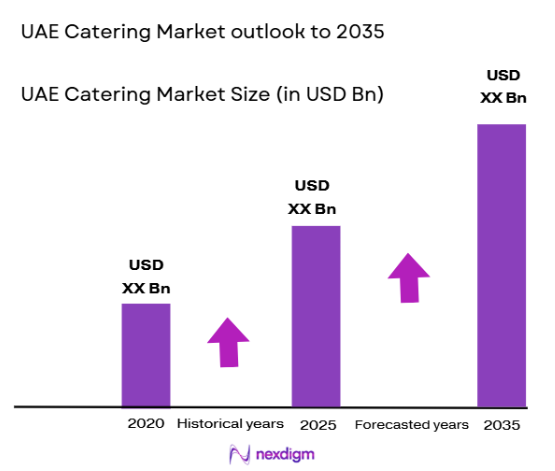
The UAE Catering market is expected to reach a market size of USD ~ billion by the end of the most recent historical assessment, driven by increasing demand across multiple sectors such as healthcare, hospitality, and corporate services. Growth is primarily fueled by the expansion of the food service industry, improvements in food delivery systems, and the rise of event-based catering services. Additionally, the market is benefiting from favorable government regulations and the evolving preference for customized catering experiences.
The UAE market is dominated by major cities like Dubai and Abu Dhabi, where high levels of tourism, corporate activity, and event hosting contribute to a significant demand for catering services. The dominance of these cities is further supported by a robust infrastructure, including world-class event venues, hotels, and international business hubs. The demand is further enhanced by the growing expatriate population and the continuous expansion of the hospitality sector.
Market Segmentation
By Product Type:
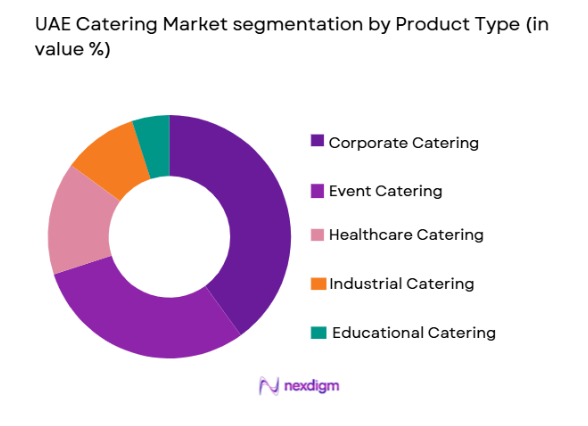
The UAE Catering market is segmented by product type into corporate catering, event catering, healthcare catering, industrial catering, and educational catering. Recently, corporate catering has seen a dominant market share due to factors such as the rise in corporate events, conferences, and seminars, which require large-scale food services. The corporate sector’s need for regular meal provision for employees and catering for business meetings also drives the demand for corporate catering services, making it the leading sub-segment in this market.
By Procurement Channel:
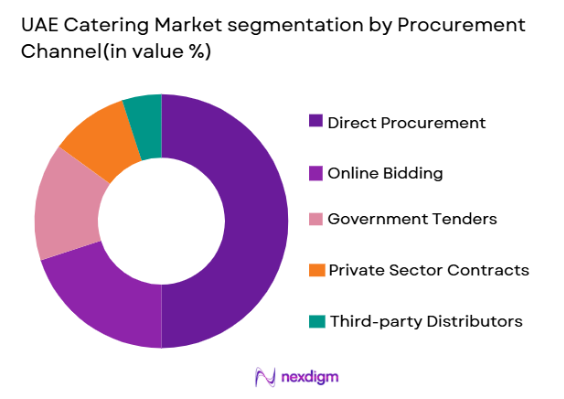
The UAE Catering market is segmented by procurement channel into direct procurement, online bidding, government tenders, private sector contracts, and third-party distributors. Recently, direct procurement has emerged as the dominant sub-segment, driven by the preference for direct contracts between catering companies and large corporations, government entities, or event organizers. This trend is fueled by the need for quality assurance, cost control, and long-term relationships between buyers and catering service providers.
Competitive Landscape
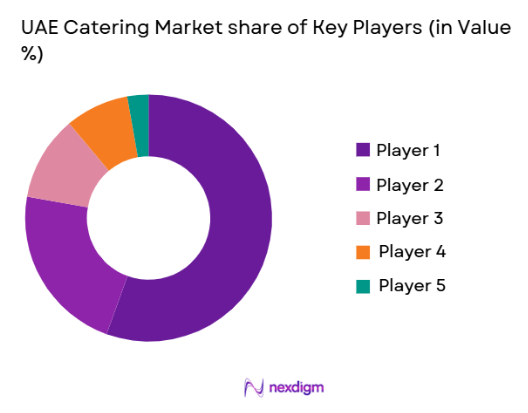
The UAE Catering market is highly competitive, with numerous players vying for market share in a relatively fragmented landscape. Major players exert a significant influence on the market through their established brand presence, infrastructure, and widespread network of clients. The market has seen considerable consolidation, as large catering service providers absorb smaller competitors, creating a more streamlined and efficient supply chain. The competition is further intensified by the need for innovation and sustainable practices, as well as catering services tailored to specific industries.
| Company Name | Establishment Year | Headquarters | Technology Focus | Market Reach | Key Products | Revenue | Additional Parameter |
| Emirates Flight Catering | 1993 | Dubai | ~ | ~ | ~ | ~ | ~ |
| Transmed Catering | 1982 | Dubai | ~ | ~ | ~ | ~ | ~ |
| Royal Catering | 1994 | Abu Dhabi | ~ | ~ | ~ | ~ | ~ |
| Al Harbi Catering | 1985 | Dubai | ~ | ~ | ~ | ~ | ~ |
| Zaitoon Catering | 2005 | Dubai | ~ | ~ | ~ | ~ | ~ |
UAE Catering Market Analysis
Growth Drivers
Increased demand for corporate catering services:
The UAE’s rapid economic growth, especially in cities like Dubai and Abu Dhabi, has fueled the demand for corporate catering services. As more businesses, conferences, and events take place in the country, there is a significant increase in the demand for high-quality, efficient catering services. The trend of hosting international conferences, exhibitions, and business meetings further contributes to this demand, ensuring that corporate catering remains one of the key drivers in the UAE catering industry. The convenience of having on-site catering services that can accommodate large numbers of attendees, coupled with the growing trend of offering customized food options, has positioned corporate catering as a dominant force in the market. Additionally, corporate clients prefer long-term contracts, which offer stability and reliability for catering companies. The rise of the tech sector in the UAE also promotes business meetings that often require catering services, providing more opportunities for catering service providers.
Tourism and hospitality sector expansion:
The UAE is one of the leading tourist destinations globally, attracting millions of visitors every year. The exponential growth of the hospitality industry, including hotels, resorts, and restaurants, has significantly driven the demand for catering services. Tourism is a key pillar of the UAE economy, and this, combined with the rise of high-end tourism offerings like destination weddings, exhibitions, and international festivals, has substantially increased the need for catering services. Hotels and resorts, especially those in popular areas such as Dubai Marina and Palm Jumeirah, frequently require catering services for events, conferences, and private dining experiences. The UAE government’s efforts to expand and develop tourism infrastructure, including mega-projects and events such as Expo 2020, have further contributed to the growth of the catering market, as these events often require large-scale catering operations. The demand for catering in the hospitality sector, therefore, remains one of the key drivers of market growth.
Market Challenges
Regulatory compliance and food safety standards: One
of the major challenges facing the UAE catering industry is the complex regulatory framework regarding food safety standards. Catering companies must comply with stringent health and safety regulations imposed by local authorities, such as the UAE Food Control Department and municipal governments. Failure to comply with these regulations can result in penalties, fines, or even the suspension of business operations. Maintaining high standards of food safety while scaling operations is a significant challenge, particularly for catering providers servicing large events and international clientele. Catering companies must invest in training, certifications, and quality control processes to meet these requirements consistently. Furthermore, the market faces challenges related to food labeling, waste management, and sustainable sourcing, which add to the operational complexity of catering businesses.
High operational costs and competition:
The rising cost of ingredients, labor, and logistics presents a significant challenge for UAE catering companies. Due to the country’s heavy reliance on imported food products, the cost of raw materials and packaging can fluctuate significantly, affecting profitability for catering businesses. This cost pressure is compounded by the intense competition within the sector, with numerous players vying for contracts from high-profile clients. To maintain a competitive edge, companies must offer innovative catering solutions, exceptional service, and value for money, while also managing operational costs effectively. Additionally, the availability of a skilled workforce remains an ongoing challenge for catering service providers, as they must continually train staff to meet the high expectations of clients. This challenge, combined with the pressure to maintain high-quality standards, makes it difficult for smaller catering companies to compete against larger, well-established players.
Opportunities
Growing demand for healthy and sustainable catering options:
As consumers become more health-conscious and environmentally aware, there is a growing demand for healthier and more sustainable catering options. This presents a significant opportunity for catering companies to differentiate themselves by offering organic, locally-sourced, and environmentally-friendly food options. The increasing popularity of plant-based diets and the need for dietary accommodations, such as gluten-free and vegan options, is driving this shift. Catering companies that invest in sustainable practices, such as reducing food waste, using eco-friendly packaging, and sourcing organic ingredients, can attract the growing segment of eco-conscious consumers. Additionally, offering customized catering solutions for specific dietary preferences can cater to a niche market, expanding a company’s reach and enhancing its reputation.
Integration of technology in catering services:
The integration of technology in the catering industry is creating new opportunities for innovation and growth. Online ordering platforms, mobile apps, and automated catering systems are transforming the way catering services are delivered. By investing in technology, catering companies can streamline operations, improve customer service, and offer enhanced convenience to clients. For instance, the use of data analytics can help caterers better understand consumer preferences and personalize catering offerings. Similarly, adopting cloud-based platforms for order management and delivery tracking can increase efficiency and reduce operational costs. With the growing reliance on technology in various industries, catering companies that embrace digital transformation are well-positioned to capitalize on the market’s growth.
Future Outlook
The future outlook for the UAE Catering market is highly positive, with strong growth expected in the coming years. Technological advancements, coupled with an increased demand for sustainable and personalized catering services, will drive market expansion. Government initiatives supporting the food service sector, such as easing regulations for local sourcing and increasing the number of tourism-related events, will further boost the market. Additionally, the growing focus on health-conscious eating and eco-friendly catering options will continue to shape consumer preferences. The rise in corporate and event catering demand, along with a solid infrastructure supporting the hospitality and tourism sectors, will further fuel growth.
Major Players
- Emirates Flight Catering
- Transmed Catering
- Royal Catering
- Al Harbi Catering
- Zaitoon Catering
- Caterplus
- Fresh Express Catering
- Al Diyafa Catering Services
- Gulf Catering Services
- Catermax
- International Catering Services
- Le Meridien Dubai Catering
- Royal Gourmet
- Universal Catering
- Modern Catering
Key Target Audience
- Investments and venture capitalist firms
- Government and regulatory bodies
- Large corporate firms
- Event management companies
- Hospitality industry stakeholders
- Catering equipment suppliers
- Hotel chains
- Private sector catering clients
Research Methodology
Step 1: Identification of Key Variables
Key variables for the UAE Catering market were identified by examining macroeconomic factors, consumer behavior trends, and industry dynamics through primary and secondary data sources.
Step 2: Market Analysis and Construction
A comprehensive market analysis was conducted, segmenting the catering industry into product types, procurement channels, and end-user sectors to construct a detailed market model.
Step 3: Hypothesis Validation and Expert Consultation
Consultations with industry experts and key stakeholders were carried out to validate assumptions and market trends, ensuring the accuracy and relevance of the findings.
Step 4: Research Synthesis and Final Output
Final output was synthesized from gathered data, validated insights, and expert inputs to provide a comprehensive report on the UAE Catering market, highlighting key growth drivers and challenges.

- Executive Summary
- Research Methodology (Definitions, Scope, Industry Assumptions, Market Sizing Approach, Primary & Secondary Research Framework, Data Collection & Verification Protocol, Analytic Models & Forecast Methodology, Limitations & Research Validity Checks)

- Market Definition and Scope
- Value Chain & Stakeholder Ecosystem
- Regulatory / Certification Landscape
- Sector Dynamics Affecting Demand
- Strategic Initiatives & Infrastructure Growth

- Growth Drivers
Rising demand for corporate and event catering
Growing hospitality industry
Technological advancements in food delivery systems
Increased health consciousness among consumers
Government initiatives to support local food businesses - Market Challenges
High competition among catering providers
Rising costs of ingredients and labor
Regulatory compliance and certification challenges
Sustainability concerns in food packaging
Limited skilled workforce in the catering sector - Market Opportunities
Growth in the demand for health-conscious and organic catering
Expansion of the hospitality sector
Adoption of technology-driven catering services - Trends
Rise in demand for customized catering services
Increased use of online platforms for food delivery
Focus on sustainability and eco-friendly practices
Growth of meal delivery services in corporate sectors
Technology-driven innovations in food preparation - Government Regulations & Defense Policy
Food safety and hygiene regulations
Catering industry-specific certifications
Government support for sustainable food practices - SWOT Analysis
- Stakeholder and Ecosystem Analysis
- Porter’s Five Forces Analysis
- Competition Intensity and Ecosystem Mapping

- By Market Value, 2020-2025
- By Installed Units, 2020-2025
- By Average System Price, 2020-2025
- By System Complexity Tier, 2020-2025

- By System Type (In Value%)
Corporate Catering
Event Catering
Healthcare Catering
Industrial Catering
Educational Catering - By Platform Type (In Value%)
Online Platforms
Offline Platforms
Direct Catering Services
Corporate Partnerships
Government Contracts - By Fitment Type (In Value%)
On-site Catering
Off-site Catering
Mobile Catering
Centralized Catering
Integrated Catering - By EndUser Segment (In Value%)
Corporate Sector
Healthcare Industry
Educational Institutions
Government Entities
Private Events - By Procurement Channel (In Value%)
Direct Procurement
Online Bidding
Government Tenders
Private Sector Contracts
Third-party Distributors - By Material / Technology (In Value%)
Fresh Ingredients
Frozen Ingredients
Organic Products
Technological Innovations
Packaging Materials

- Market structure and competitive positioning
- Market share snapshot of major players
- CrossComparison Parameters (System Type, Platform Type, Procurement Channel, EndUser Segment, Fitment Type, Material, Pricing, Service Offerings, Market Reach, Technology Adoption)
- SWOT Analysis of Key Players
- Pricing & Procurement Analysis
- Key Players
Al Harbi Catering
Blue Diamond Catering
Emirates Flight Catering
Caterplus
Fresh Express Catering
Transmed Catering Services
Al Diyafa Catering Services
Gulf Catering Services
Catermax
Zaitoon Catering
International Catering Services
Royal Catering
EFC Catering
Le Meridien Dubai Catering
Royal Gourmet

- Corporate sector’s increasing demand for catering services
- Healthcare institutions shifting towards specialized meal services
- Government-driven catering projects
- Private events and high-end catering demand

- Forecast Market Value, 2026-2035
- Forecast Installed Units, 2026-2035
- Price Forecast by System Tier, 2026-2035
- Future Demand by Platform, 2026-2035


 Request a Sample
 Ask for Customization
 Get a Quote
 Enquire Now