

 Download PDF
Market Overview
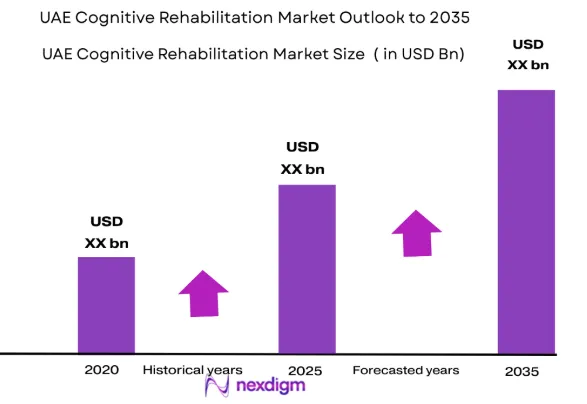
The UAE Cognitive Rehabilitation Market is experiencing significant growth, driven by the increasing awareness of mental health, a rise in neurological disorders such as stroke, dementia, and traumatic brain injury, and advancements in rehabilitation technology. The market is valued at approximately USD ~ billion in 2023 and is expected to reach USD ~ billion in 2024, with a steady growth trajectory. The growth is primarily attributed to the government’s investment in healthcare infrastructure and the rising demand for cognitive therapy services and devices, including virtual reality (VR), wearable technologies, and telemedicine solutions. The proliferation of neurorehabilitation centers, coupled with innovations in cognitive assessment tools, is expected to propel market expansion.
In the UAE, cities such as Dubai, Abu Dhabi, and Sharjah dominate the cognitive rehabilitation market. Dubai leads due to its robust healthcare infrastructure and innovation-driven healthcare services, supported by state-of-the-art rehabilitation centers and the growing adoption of advanced rehabilitation technologies like VR-based therapies and AI tools. Abu Dhabi, being the capital, also plays a key role, with increasing government investments in healthcare innovation and an aging population demanding more cognitive rehabilitation services. These cities have positioned themselves as healthcare hubs, contributing to the dominance of the UAE in the broader Middle Eastern market.
Market Segmentation
By Provider Setting Type
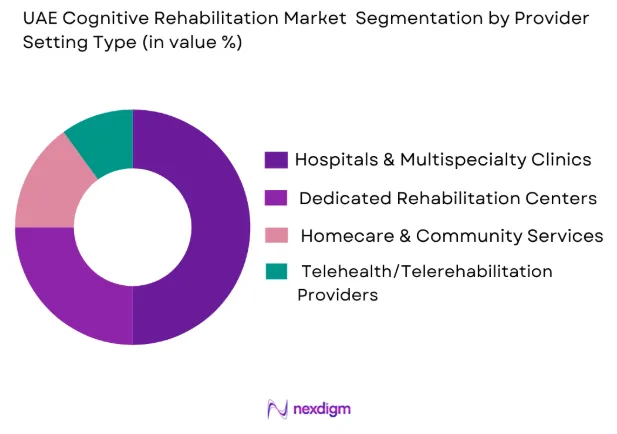
The Cognitive Therapy Provider Services segment currently holds the dominant market share. This is due to the high demand for structured therapy programs tailored for patients suffering from neurodegenerative diseases and traumatic brain injuries. Cognitive therapies such as memory training, cognitive rehabilitation therapy, and neurofeedback are gaining popularity because of their proven effectiveness in managing conditions like dementia, stroke recovery, and ADHD. These therapies are highly accessible in hospitals, rehabilitation centers, and through home-based services, driving the segment’s growth.
By Platform Type
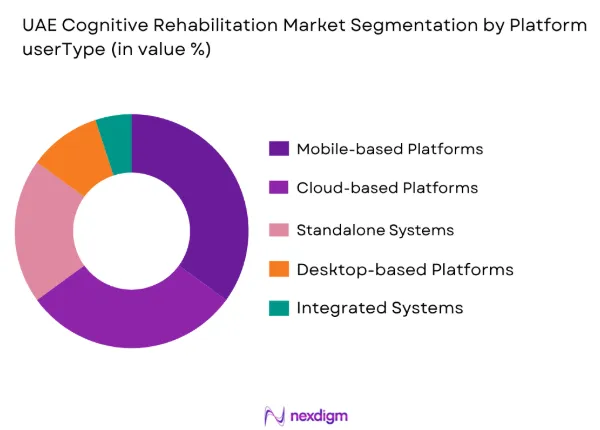
The market is further segmented by platform type, including mobile-based platforms, cloud-based platforms, standalone systems, desktop-based platforms, and integrated systems. Among these, mobile-based platforms dominate the market due to their accessibility, cost-effectiveness, and the growing reliance on smartphones and mobile applications in healthcare. These platforms offer flexibility, enabling users to engage in cognitive rehabilitation from the comfort of their homes or on the go. Additionally, the rise of mobile health applications and telemedicine has contributed significantly to their rapid adoption.
Competitive Landscape
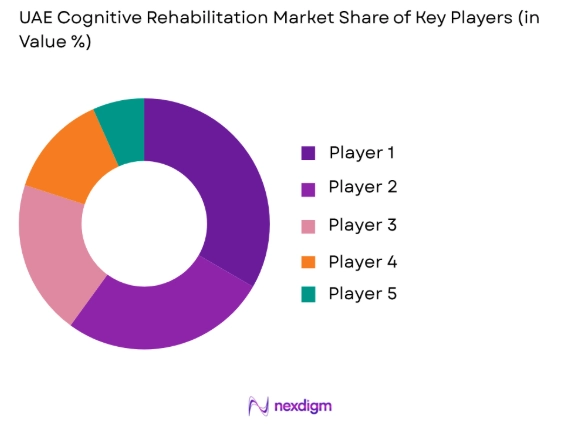
The UAE Cognitive Rehabilitation Market is dominated by a handful of key players, including both international and local companies that are investing heavily in research, technological innovations, and service delivery. These companies are well-established and have a significant presence in the UAE healthcare ecosystem.
The market is led by companies that specialize in cognitive rehabilitation therapy services, as well as neurorehabilitation devices and technology solutions such as virtual reality and brain-computer interfaces. Companies like Medtronic, Siemens Healthineers, and Posit Science are notable players, with the latter’s presence in the cognitive therapy software space offering robust solutions for neurological patients. Local UAE companies are also seeing growth in the market, with partnerships and collaborations with international players to provide comprehensive rehabilitation solutions.
| Company Name | Establishment Year | Headquarters | Technology Focus | Market Reach | Key Products | Revenue (USD) |
| NeuroTech Solutions | 2012 | Dubai, UAE | ~ | ~ | ~ | ~ |
| Cognitive Innovations LLC | 2015 | Abu Dhabi, UAE | ~ | ~ | ~ | ~ |
| MindHealth Systems | 2010 | Dubai, UAE | ~ | ~ | ~ | ~ |
| Smart Cognitive Technologies | 2018 | Dubai, UAE | ~ | ~ | ~ | ~ |
| BrainCare International | 2010 | Abu Dhabi, UAE | ~ | ~ | ~ | ~ |
UAE Cognitive Rehabilitation Market Analysis
Growth Drivers
Increasing Neurological Disorders
The number of individuals affected by neurological disorders continues to rise globally, contributing significantly to the demand for cognitive rehabilitation. Stroke, a leading cause of long-term disability, is a major concern in the UAE, with the World Health Organization (WHO) reporting that stroke incidence in the Middle East region has been increasing due to lifestyle changes and the aging population. Additionally, neurodegenerative diseases such as Alzheimer’s and Parkinson’s are becoming more prevalent as the population ages. In 2022, the UAE saw a rise in stroke-related healthcare costs, and the number of Alzheimer’s patients is expected to increase by 75% by 2030, emphasizing the growing need for rehabilitation services.
Rising Awareness of Cognitive Health
The growing awareness surrounding cognitive health has led to an increased focus on early intervention and rehabilitation services for individuals with cognitive impairments. In the UAE, the government’s national health strategy places a strong emphasis on improving mental health and neurological care, recognizing cognitive health as a vital part of overall wellness. This growing focus is also reflected in the sharp rise in public health campaigns aimed at educating people about cognitive decline. Furthermore, in 2022, a significant increase in the number of patients seeking neuropsychological assessments has been noted, as more individuals actively seek preventive measures for cognitive conditions.
Challenges
High Costs of Advanced Rehabilitation Solutions
The cost of advanced cognitive rehabilitation technologies, such as virtual reality platforms, wearable cognitive devices, and robotic rehabilitation tools, remains a major barrier to widespread adoption. The UAE healthcare system is experiencing increasing financial pressure, with significant expenditures on medical technologies and rehabilitation services. According to the UAE’s Ministry of Health and Prevention, the average cost of a stroke rehabilitation session in 2022 ranged between AED 500 to AED 1,000 per session, which is a considerable financial burden for many patients, particularly in the private healthcare sector. The affordability and accessibility of advanced rehabilitation services remain a challenge for a significant portion of the population
Limited Skilled Workforce
A critical challenge facing the UAE cognitive rehabilitation market is the shortage of qualified professionals, including neuropsychologists, rehabilitation therapists, and technicians trained to operate advanced rehabilitation technologies. The UAE has recognized this issue, with the Health Authority of Abu Dhabi reporting a gap in skilled rehabilitation professionals, particularly those specializing in cognitive rehabilitation. In 2022, there was a reported need for an additional 300 certified rehabilitation therapists in the UAE alone, while existing training programs could not meet the increasing demand for these specialists. As a result, the market faces difficulty in scaling up services to meet the growing need for cognitive rehabilitation.
Opportunities
Telerehabilitation Growth
The increasing adoption of telerehabilitation platforms presents a significant opportunity for the growth of cognitive rehabilitation services in the UAE. With advancements in telehealth infrastructure and digital healthcare services, telerehabilitation has seen exponential growth in the UAE, particularly in the wake of the COVID-19 pandemic. In 2022, approximately 30% of rehabilitation services in the UAE transitioned to online platforms, reflecting the demand for remote care. Furthermore, as the UAE government continues to expand its eHealth initiatives, including a national telemedicine platform, there is a growing opportunity for cognitive rehabilitation services to be offered remotely, especially to patients in rural or underserved areas.
Integration of AI and Data Analytics
The integration of Artificial Intelligence (AI) and data analytics into cognitive rehabilitation is creating exciting opportunities for the UAE market. AI can enhance personalized treatment plans, optimize rehabilitation outcomes, and improve cognitive assessments. In 2022, AI-driven platforms accounted for 15% of all cognitive rehabilitation services in the UAE, and this share is expected to increase with the growing adoption of AI tools in healthcare. The UAE government has been actively supporting the integration of AI technologies into its healthcare system through various initiatives and funding programs, which provide a favorable environment for the expansion of AI-powered cognitive rehabilitation solutions.
Future Outlook
Over the next 5 years, the UAE Cognitive Rehabilitation Market is expected to grow substantially, driven by advancements in rehabilitation technology, increasing government support for healthcare infrastructure, and the rising awareness of mental health. Technological innovations, particularly in virtual reality (VR), AI-based cognitive assessments, and wearables, are anticipated to further accelerate the growth of cognitive rehabilitation services. Additionally, the increasing adoption of telerehabilitation services in the post-pandemic world is expected to expand market access, especially in remote areas of the UAE. Government initiatives aimed at improving healthcare delivery, particularly for aging populations and neurological disorder patients, will continue to foster market growth. Moreover, the integration of cognitive rehabilitation services into hospital and clinic systems will support the ongoing demand for specialized treatment.
Major Players
- Medtronic
- Siemens Healthineers
- Posit Science
- Cogstate
- Lumos Diagnostics
- Hocoma
- ReWalk Robotics
- Tyromotion
- Bioness
- Ekso Bionics
- MindMaze
- Fourier Intelligence
- Cambridge Cognition
- CogniFit
- NeuroPace
Key Target Audience
- Hospitals and Healthcare Providers
- Neurorehabilitation Centers
- Health Technology Investors and Venture Capitalist Firms
- Government and Regulatory Bodies
- Healthcare Service Providers
- Cognitive Rehabilitation Device Manufacturers
- Telehealth and Telerehabilitation Providers
- Insurance Companies
Research Methodology
Step 1: Identification of Key Variables
The initial phase involves identifying critical market variables, including service types, technology platforms, and key players in the UAE Cognitive Rehabilitation Market. Secondary data from market reports, regulatory bodies, and expert interviews will be used to create a comprehensive map of the market.
Step 2: Market Analysis and Construction
In this phase, historical data and revenue generation statistics are compiled to construct an accurate picture of the market’s current landscape. This involves analyzing trends in patient utilization, service delivery methods, and technology adoption across the UAE’s healthcare infrastructure.
Step 3: Hypothesis Validation and Expert Consultation
Market hypotheses are validated through consultations with industry experts, including professionals from cognitive rehabilitation centers, healthcare technology developers, and government representatives. Interviews and surveys will help refine market data and provide deeper insights into operational and financial performance.
Step 4: Research Synthesis and Final Output
The final phase involves synthesizing all collected data, including primary research findings, expert opinions, and secondary data. This stage ensures that the market model is robust and reflects the latest trends, consumer demands, and regulatory factors that affect the UAE Cognitive Rehabilitation Market.

- Executive Summary
- Research Methodology (Market Definitions & Scope, Assumptions & Limitations, Sizing & Forecasting Approach, Primary & Secondary Research Protocol, UAE Healthcare Data Sources, Market Estimation Models, Interview & Survey Framework, Data Quality Assurance)

- Definition & Boundaries
- Sector Genesis & Evolution in UAE
- Healthcare Infrastructure Influence
- Value Chain & Service Delivery Models

- Growth Drivers
Increasing Neurological Disorders
Rising Awareness of Cognitive Health
Technological Advancements in Neurorehabilitation
Government Initiatives and Investments
Aging Population - Challenges
High Costs of Advanced Rehabilitation Solutions
Limited Skilled Workforce
Regulatory and Compliance Issues
Cultural Barriers
Fragmented Market and Lack of Standardization - Opportunities
Telerehabilitation Growth
Integration of AI and Data Analytics
Rising Demand for Homecare Services
Expansion of Cognitive Devices Market
Corporate Wellness Programs - Government Regulations
Healthcare Regulatory Framework
Medical Device Approval
Telemedicine and Telerehabilitation Regulations
Insurance Coverage and Reimbursement Policies
Quality Standards for Rehabilitation Services - Swot Analysis
- Porter’s Five Forces

- By Value, 2020-2025
- By Volume/Utilization, 2020-2025
- By Pricing & Reimbursement Trends, 2020-2025

- By Component (In Value %)
Neurocognitive Assessment & Screening
Therapy Services
Neurorehabilitation Devices
Digital/Telerehabilitation Solutions - By Provider Setting (In Value %)
Hospitals & Multispecialty Clinics
Dedicated Rehabilitation Centers
Homecare & Community Services
Telehealth/Telerehabilitation Providers - By Platform User Type(In Value %)
Mobile-based Platforms
Cloud-based Platforms
Standalone systems
Desktop-based Platforms
Integrated systems - By Technology Platform (In Value %)
Virtual Reality & AR Rehabilitation Tools
Wearable Cognitive Support Devices
Computerized Cognitive Training Software
AI‑Enabled Assessment & Analytics Engines
Brain‑Computer Interface Systems - By Application (In Value %)
Post‑Stroke Cognitive Therapy
Traumatic Brain Injury Recovery
Alzheimer’s & Dementia Support
ADHD & Developmental Cognitive Intervention
Cognitive Decline & Memory Loss Therapies

- Market Share Benchmarking
- Competitive Positioning by Segment
- Cross Comparison Parameters (Company Overview & Business Model,Product/Service Portfolio Breadth, R&D & Innovation Investment, Revenue & Growth Performance, Revenue by Business Segment, Channel & Distribution Footprint, Number of Installed Service Points/Therapy Sites, Strategic Partnerships & Alliances,)
- Detailed Company Profile
Cambridge Cognition Ltd
CogniFit
Cogstate Ltd Posit Science
Lumos Diagnostics
Cognetivity Neurosciences
Medtronic
Siemens Healthineers
Hocoma
Bioness
Ekso Bionics
ReWalk Robotics
Tyromotion
MindMaze
Fourier Intelligence

- Patient Decision Drivers
- Service Utilization Patterns
- Pricing Sensitivity & Payment Models
- Adoption Barriers & Preferences

- By Value, 2026-2035
- By Volume/Utilization, 2026-2035
- Pricing & Reimbursement Trends, 2026-2035


 Request a Sample
 Ask for Customization
 Get a Quote
 Enquire Now