

 Download PDF
Market Overview
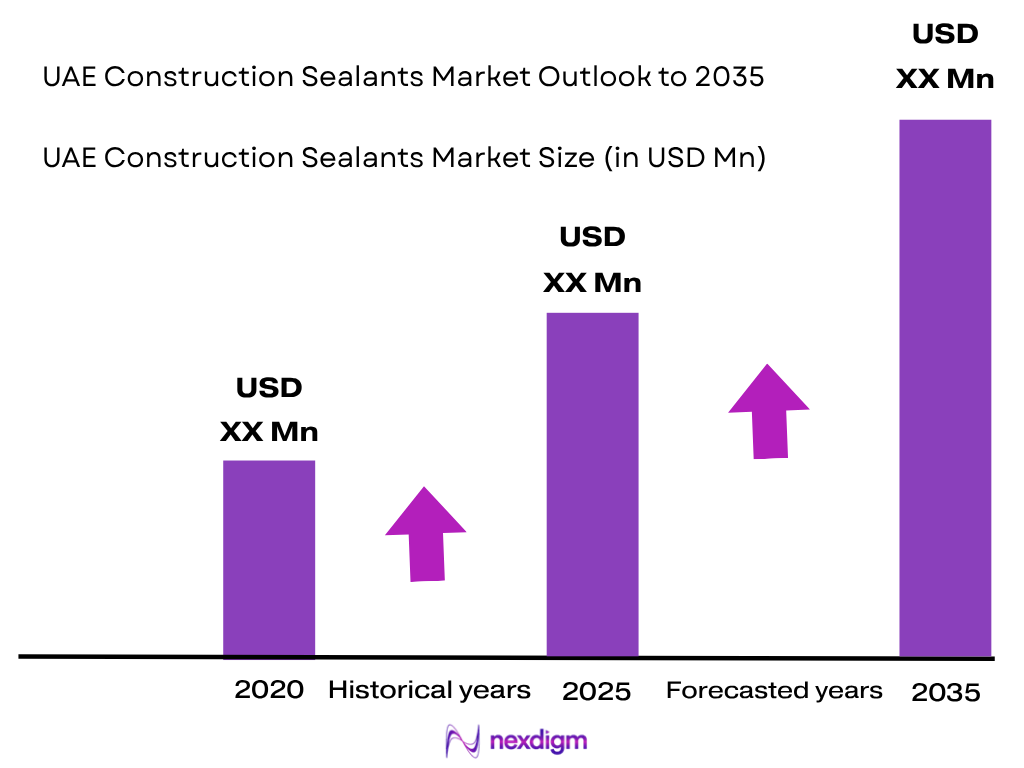
The UAE Construction Sealants Market is valued at approximately ~USD XX million, supported by high-rise construction, glazed façades, hospitality projects, infrastructure and refurbishment. UAE GDP increased from USD 522.62 billion to USD 552.32 billion across the latest two comparable annual observations. Abu Dhabi’s construction activity subsequently reached AED 107.4 billion, reinforcing consumption of structural glazing silicones, weatherproofing sealants, polyurethane joint systems, firestop products and infrastructure-grade sealing materials.
Dubai and Abu Dhabi dominate the UAE Construction Sealants Market because they concentrate glass-façade towers, mixed-use developments, airports, hotels, residential communities and infrastructure assets. Abu Dhabi completed 71 projects in the preceding annual cycle within a broader AED 16 billion development programme, while 144 projects valued at AED 66 billion were subsequently approved. Dubai’s dense curtain-wall skyline and continuous high-rise construction similarly sustain demand for structural glazing, weathersealing, movement-joint and fire-rated sealants.
Market Segmentation
By Sealant Chemistry
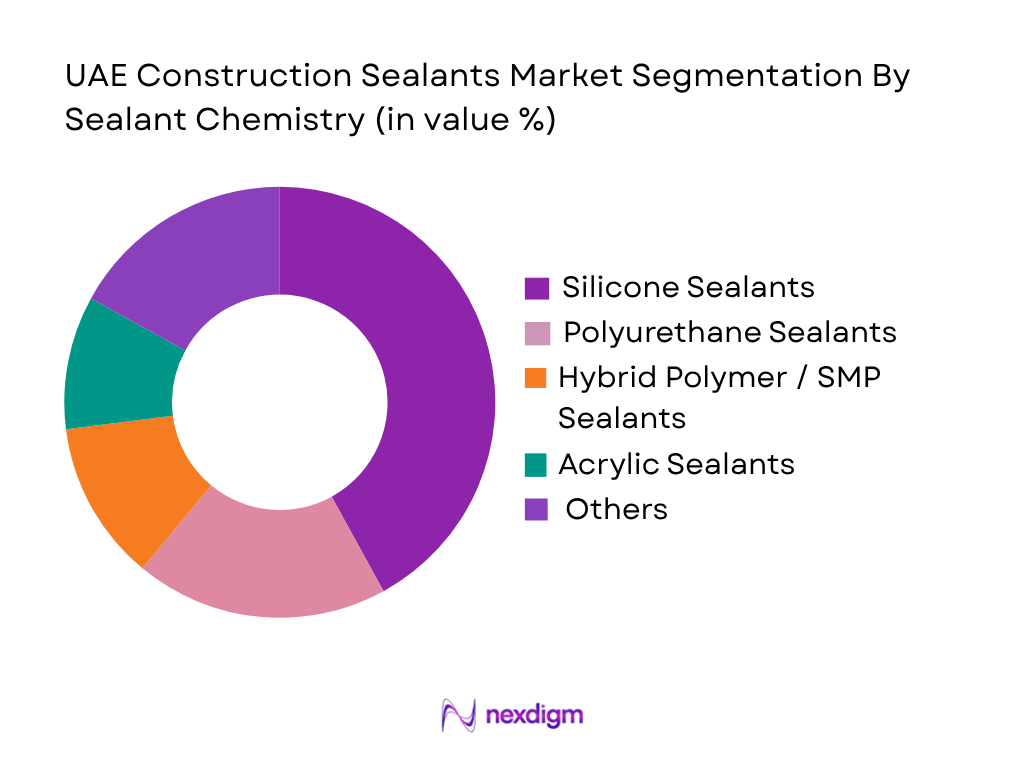
The UAE Construction Sealants Market is segmented into silicone sealants, polyurethane sealants, hybrid polymer and silyl-modified polymer sealants, acrylic sealants, polysulfide sealants, butyl sealants and other specialty systems. Silicone sealants hold the dominant market share because the UAE has an unusually high concentration of curtain-wall, glass-façade and aluminium-cladding buildings where long-term UV resistance, temperature stability and movement capability are critical. Neutral-cure silicone is extensively suited to façade weathersealing, window perimeter sealing and structural glazing, while two-component silicone systems support factory glazing and unitized curtain-wall fabrication. The chemistry is particularly relevant in Dubai and Abu Dhabi because intense solar exposure, high façade surface temperatures and repeated thermal movement require elastomeric systems capable of maintaining adhesion to glass and aluminium. Silicone portfolios also extend into insulating-glass secondary sealing, sanitary applications and fire-rated joints, giving the chemistry a broader construction application base than more specialized polysulfide or acrylic systems.
By Application
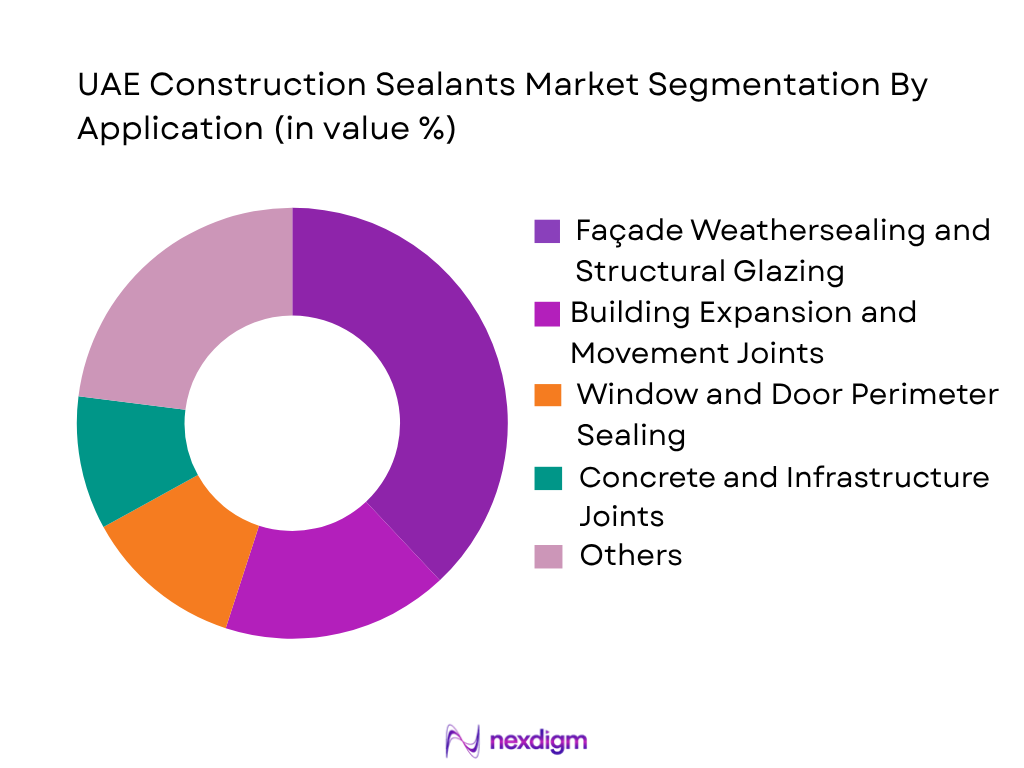
The UAE Construction Sealants Market is segmented into curtain-wall weathersealing, structural glazing, building expansion joints, window and door perimeter sealing, concrete and infrastructure joints, firestopping, sanitary sealing and roofing applications. Façade and glazing applications dominate market demand because UAE architecture relies extensively on aluminium-and-glass curtain walls across office towers, hotels, luxury residential developments, malls and institutional buildings. Structural glazing sealants bond glass to supporting frames, while weatherseal silicones accommodate movement between façade units and protect the envelope against air and water infiltration. Dubai’s vertical construction profile and Abu Dhabi’s large mixed-use and institutional pipeline strengthen this application. High UV exposure and repeated thermal cycling also create replacement demand through façade resealing. Fire-rated perimeter joints and insulating-glass secondary sealing add further sealant consumption within the same building-envelope system, making façade construction substantially more sealant-intensive than conventional low-rise masonry development.
Competitive Landscape
The UAE Construction Sealants Market is characterized by strong participation from multinational silicone, construction-chemical and specialty adhesive companies alongside established regional manufacturers. Sika, Dow, Tremco CPG, Bostik and Soudal compete across structural glazing, façade weathersealing, polyurethane joints, fire-rated systems and hybrid sealants. Competition increasingly depends on project specification capability, ASTM and ISO compliance, hot-climate performance, façade compatibility testing, local warehousing, applicator support and access to glazing and construction-chemical distributors.
| Company | Establishment Year | Headquarters | Structural Glazing Capability | Weatherseal / Joint Capability | Firestop Capability | Hot-Climate / UV Performance | Technical Support | UAE Presence |
| Sika | 1910 | Baar, Switzerland | ~ | ~ | ~ | ~ | ~ | ~ |
| Dow | 1897 | Midland, USA | ~ | ~ | ~ | ~ | ~ | ~ |
| Tremco CPG | 1928 | Beachwood, USA | ~ | ~ | ~ | ~ | ~ | ~ |
| Bostik | 1889 | Colombes, France | ~ | ~ | ~ | ~ | ~ | ~ |
| Soudal | 1966 | Turnhout, Belgium | ~ | ~ | ~ | ~ | ~ | ~ |
UAE Construction Sealants Market Analysis
Growth Drivers
High-Rise Construction, Façade Development and Structural Glazing Demand
The UAE’s active building pipeline is directly supporting demand for structural glazing silicones, façade weatherseal products, window-perimeter sealants and high-movement joint systems. Abu Dhabi’s construction sector reached AED107.4 billion in 2024, while Dubai processed more than 30,000 building-permit applications in H1 2025 and licensed over 5.5 million square metres of new built-up area. Dubai subsequently had 23,270 buildings under construction across 40,028,453 square metres in 2025, including 1,240 multi-storey buildings, 10,896 investment villas, 9,397 private villas, 1,020 public buildings and 717 industrial buildings. These project volumes translate directly into façade perimeter joints, glazing interfaces, expansion joints and building-envelope sealing requirements. World Bank data place UAE GDP at USD552.32 billion in 2024, with GDP per capita of USD50,273.5, providing a strong macroeconomic foundation for premium commercial, hospitality and residential development. The expanding concentration of glass-intensive and multi-storey construction therefore supports sustained use of neutral-cure silicone, structural glazing silicone, polyurethane and hybrid weatherproofing systems.
Infrastructure, Residential and Mixed-Use Development Expanding Joint-Sealing Requirements
Large-scale urban development across Abu Dhabi and Dubai is expanding sealant applications beyond façades into concrete movement joints, parking structures, wet areas, MEP penetrations, roofs and infrastructure assets. Abu Dhabi approved nearly 75 million square metres of gross floor area during 2025, including plans for approximately 190,000 residential units, of which more than 158,000 units are intended for the general property market and nearly 30,000 homes for UAE nationals. More than 11,000 building permits were issued during the year. Momentum continued into Q1 2026 with 20.8 million square metres of approved gross floor area, 5,096 new permit requests, 3,244 work-start notices and 34,391 inspection requests. Dubai also issued 10,776 building permits in Q1 2026, covering nearly 3.9 million square metres of permitted built-up area. These projects create continuous demand for silicone, PU, polysulfide and fire-rated sealants. The UAE’s 2024 GDP of USD552.32 billion and GDP per capita of USD50,273.5 provide additional economic support for this intensive development cycle.
Market Challenges
Dependence on Imported Silicone, Polyurethane and Specialty Chemical Feedstocks
The UAE Construction Sealants Market remains exposed to international chemical supply chains because many silicone polymers, polyurethane prepolymers, silanes, catalysts, plasticizers and specialty fire-retardant additives are imported or sourced through regional distribution networks. UAE non-oil imports reached AED1.701 trillion in 2024, while overall non-oil foreign trade reached approximately AED2.997 trillion. Abu Dhabi alone recorded AED140.2 billion of non-oil imports during 2024, compared with AED136.4 billion in the preceding annual period. This large import base supports industrial availability but also exposes sealant formulators and distributors to international shipping schedules, feedstock availability and qualification issues when projects require approved structural glazing, firestop or façade-weatherproofing systems. The challenge becomes more significant when construction activity is high: Dubai had 23,270 buildings under construction across 40,028,453 square metres in 2025, requiring dependable product availability across thousands of active sites. World Bank data show UAE GDP of USD552.32 billion in 2024 and GDP per capita of USD50,273.5, indicating a large specification-driven construction economy in which disruptions to approved chemical systems can delay façade, envelope and firestop work packages.
Hot-Climate Performance, Façade Movement and Installation Quality
The UAE’s sealant market faces substantial technical challenges because exterior joints must remain durable under intense solar exposure, repeated thermal movement, dust, moisture and demanding façade geometries. The risk is amplified by the scale of active construction. Dubai Municipality inspected more than 18,800 buildings under construction covering over 36 million square metres in H1 2025, while 1,669 building completion certificates were issued during the same period. By 2025, the emirate had 23,270 buildings under construction across more than 40 million square metres, creating an extensive base of structural glazing joints, façade interfaces, precast connections and window-perimeter seals that require correct substrate preparation and joint design. Abu Dhabi simultaneously recorded AED107.4 billion in construction activity during 2024. Poor joint geometry, unsuitable primers, contaminated substrates or incorrect backer-rod depth can undermine even high-performance silicone or PU systems, while structural glazing and firestop installations require strict tested-system compliance. World Bank data show UAE GDP at USD552.32 billion in 2024 and GDP per capita of USD50,273.5, underscoring the value of assets where premature sealant failure can create significant remediation requirements.
Market Opportunities
High-Movement Façade, Structural Glazing and Refurbishment Sealants
The UAE’s expanding building stock creates a strong future opportunity for neutral-cure structural silicones, high-movement weatherseal products, façade-repair sealants and preformed silicone systems. Current project activity provides a substantial installed base: Dubai recorded 23,270 buildings under construction across 40,028,453 square metres in 2025, while more than 30,000 permit applications covering over 5.5 million square metres were processed in H1 2025. Abu Dhabi approved nearly 75 million square metres of development during 2025 and more than 20.8 million square metres in Q1 2026 alone. This volume will create future lifecycle demand because structural glazing, curtain-wall perimeter seals and movement joints require inspection, replacement and refurbishment after prolonged exposure to heat, UV radiation and cyclic building movement. The opportunity therefore extends beyond new construction into resealing of towers, hotels, retail assets and mixed-use developments. UAE GDP reached USD552.32 billion in 2024, while GDP per capita stood at USD50,273.5, supporting investment in premium building-envelope performance and asset maintenance. Suppliers combining high-movement chemistry with compatibility testing, façade engineering and project-site support should be well positioned as the installed façade base continues to expand.
Firestop, Data-Centre and High-Specification Building Sealing Systems
Future growth potential is also emerging in fire-rated, intumescent and specialist sealing systems used around MEP penetrations, curtain-wall interfaces, cables, pipes and technically intensive buildings. Abu Dhabi approved nearly 75 million square metres of gross floor area in 2025, with industrial, technology, data-centre and advanced manufacturing developments identified among the active approval categories. More than 11,000 building permits were issued during the year, while Q1 2026 generated 5,096 permit requests, 3,244 work-start notices and 34,391 inspection requests. Dubai added another 10,776 building permits in Q1 2026, covering almost 3.9 million square metres of built-up area. These current development indicators create a future application base for tested firestop silicones, intumescent acrylics, acoustic sealants and movement-capable penetration systems in data centres, hospitals, towers and industrial facilities. UAE GDP stood at USD552.32 billion in 2024, with GDP per capita at USD50,273.5, supporting continued investment in high-specification assets. The opportunity is strongest for suppliers that can provide certified tested systems, engineering documentation, firestop schedules and applicator support rather than commodity gap-filling products alone.
Future Outlook
The UAE Construction Sealants Market is projected to expand at approximately ~XX.X% CAGR during 2026–2035, supported by high-rise development, infrastructure expansion, tourism construction, data centres and continued façade refurbishment. Future product demand is expected to move increasingly toward high-movement silicones, hybrid polymers, certified firestop systems, low-VOC products and high-performance structural glazing materials. Abu Dhabi approved 144 infrastructure and development projects with a combined budget of AED 66 billion, including more than AED 59 billion directed toward housing and public facilities. Separately, its construction sector reached AED 107.4 billion, reflecting the scale of active building activity that requires movement joints, façade weathersealing, glazing and fire-rated construction systems.
The pipeline has continued to deepen. Abu Dhabi approved nearly 75 million square metres of development during 2025 and issued more than 11,000 building permits. In the first quarter of 2026 alone, approved gross floor area reached 20.8 million square metres, accompanied by 5,096 permit requests and 3,244 work-start notices. These current indicators provide a strong foundation for future sealant demand across new construction and subsequent maintenance cycles.
Major Players
- Sika UAE
- Dow Middle East
- Tremco CPG Middle East
- Bostik UAE
- Soudal Middle East
- Mapei UAE
- Fosroc UAE
- H.B. Fuller Middle East
- Henkel UAE
- 3M Gulf
- Wacker Chemie Middle East
- Momentive Performance Materials
- KCC Silicone Middle East
- Al Muqarram Industry LLC
- Anchor Allied Factory LLC
Key Target Audience
- Construction Sealant Manufacturers
- Façade, Curtain Wall and Glazing Contractors
- General, Waterproofing and Firestop Contractors
- Property Developers and Real Estate Asset Owners
- Building Material, Façade and Construction Chemical Distributors
- Infrastructure and Transport Project Developers
- Investments and Venture Capitalist Firms
- Government and Regulatory Bodies (Dubai Municipality, Abu Dhabi Department of Municipalities and Transport, UAE Ministry of Energy and Infrastructure, Dubai Civil Defence, Abu Dhabi Civil Defence Authority)
Research Methodology
Step 1: Identification of Key Variables
The initial phase involves constructing an ecosystem map encompassing silicone producers, polyurethane suppliers, sealant manufacturers, distributors, façade contractors, applicators, developers and regulatory bodies within the UAE Construction Sealants Market. Key variables include chemistry, consumption volume, façade area, installed joint length, movement class, structural glazing exposure, firestop demand, local filling capacity and imported product dependence.
Step 2: Market Analysis and Construction
Historical development of the UAE Construction Sealants Market is analyzed through top-down and bottom-up approaches. The top-down framework evaluates construction output, building permits, façade-intensive development and infrastructure projects. Bottom-up modeling assesses typical sealant consumption per joint length, curtain-wall area, glazing configuration, building type, joint design, application chemistry and project-level specification requirements.
Step 3: Hypothesis Validation and Expert Consultation
Market hypotheses are validated through structured CATI-based consultations with sealant manufacturers, façade contractors, glazing specialists, firestop contractors, distributors and project-specification professionals. These discussions assess chemistry preferences, structural-glazing adoption, movement requirements, substrate compatibility, façade maintenance cycles, fire-rating requirements, distribution patterns and technical-service expectations within UAE construction projects.
Step 4: Research Synthesis and Final Output
The final phase triangulates project and construction indicators with supplier portfolios, regulatory requirements, application benchmarks and primary industry feedback. Top-down construction activity is reconciled with bottom-up consumption assumptions to establish segmentation, chemistry mix, competitive positioning and future demand. The process also evaluates Dubai and Abu Dhabi separately because their building typologies, infrastructure pipelines and façade intensity materially influence national sealant consumption.

- Executive Summary
- Research Methodology (Market Definitions and Assumptions, UAE Construction Sealants Market Classification, Silicone Sealant Scope, Polyurethane Sealant Assessment, Hybrid Polymer Sealant Assessment, Acrylic Sealant Assessment, Butyl Sealant Assessment, Polysulfide Sealant Assessment, Structural Glazing Sealant Assessment, Weatherseal Sealant Assessment, Window and Door Sealant Assessment, Concrete Joint Sealant Assessment, Traffic-Grade Sealant Assessment, Fire-Rated Sealant Assessment, Acoustic Sealant Assessment, Roofing Sealant Assessment, Building Envelope Assessment, ASTM C920 Assessment, ASTM C719 Movement Capability Assessment, ASTM C1184 Structural Silicone Assessment, ASTM C1248 Staining Assessment, ISO 11600 Assessment, EN 15651 Assessment, Joint Movement Assessment, Substrate Compatibility Assessment, High-Temperature Exposure Assessment, UV Resistance Assessment, Dubai Building Code Assessment, Al Sa’fat Green Building Assessment, Estidama Compatibility Assessment, UAE Fire and Life Safety Code Assessment)

- Definition and Scope
- UAE Construction Sealants Industry Evolution and Development of Acrylic Caulks, Butyl Sealants, Polysulfide Joint Sealants, One-Component Polyurethane Sealants, Two-Component Polyurethane Sealants, Acetoxy Silicone Sealants, Neutral-Cure Silicone Sealants, Structural Silicone Glazing Systems, Low-Modulus Weatherseal Silicones, Hybrid Polymer Sealants, Silyl-Modified Polymer Sealants, Firestop Sealants, Acoustic Sealants, Traffic-Grade Joint Sealants, Airport Pavement Sealants, Window and Door Sealants, Roofing Sealants, Sanitary Sealants, Façade Perimeter Sealants, Low-VOC Sealants and High-Movement ASTM C920 Sealant Systems
- Construction Sealants Value Chain Analysis
- Construction Sealants Supply Chain Analysis
- Silicone Polymer Suppliers, Polyurethane Prepolymer Suppliers, Acrylic Polymer Suppliers, Polysulfide Polymer Suppliers, Silane-Modified Polymer Suppliers, Plasticizer Suppliers, Mineral Filler Suppliers, Catalyst Suppliers, Pigment Suppliers, Fire-Retardant Additive Suppliers, Packaging Suppliers, Construction Sealant Manufacturers, Local Formulators, Local Cartridge and Sausage Filling Facilities, Importers, Building Product Distributors, Façade Contractors, Glazing Contractors, Firestop Contractors, Waterproofing Contractors, Infrastructure Contractors

- Growth Drivers (Dubai High-Rise Construction, Abu Dhabi Urban Development, Hospitality and Resort Construction, Airport Expansion, Metro and Rail Infrastructure, Curtain Wall and Glass Façade Penetration, Luxury Residential Construction, Data Centre Development, Industrial Construction, Building Envelope Modernization, Façade Refurbishment, Fire and Life Safety Compliance, Weatherproofing Demand)
- Market Challenges (Silicone and Polyurethane Feedstock Dependency, High UV Exposure, Extreme Ambient Temperature, Façade Joint Movement, Sealant-Substrate Compatibility Failures, Natural Stone Staining Risk, Adhesion Failure, Incorrect Joint Geometry, Backer Rod Installation Errors, Skilled Applicator Availability, Firestop System Certification Requirements, Specification Complexity, Hot-Climate Storage Requirements)
- Market Opportunities (Structural Glazing Silicones, High-Movement Weatherproofing Sealants, Fire-Rated and Intumescent Sealants, Low-VOC Sealants, Hybrid Polymer Sealants, Non-Staining Natural Stone Sealants, Airport and Bridge Joint Sealants, Data Centre Firestop Sealants, Façade Restoration, Preformed Silicone Seals, Acoustic Sealants, High-Performance Window Perimeter Sealing, Local Sealant Filling and Packaging)
- Market Trends (Neutral-Cure Silicone Adoption, Two-Part Structural Glazing Systems, High-Movement Class 50 Sealants, Low-Modulus Weatherseal Silicone, Hybrid SMP Technology, Faster Skin Formation, High-Temperature Performance, Primerless Substrate Bonding, Non-Staining Façade Sealants, Low-VOC Formulations, Firestop System Integration, Preformed Silicone Joint Systems, Sausage Packaging, Digital Joint Calculators)
- Government Regulations and Standards (Dubai Building Code, Al Sa’fat Dubai Green Building System, UAE Fire and Life Safety Code, Abu Dhabi Building Regulations, Estidama Pearl Rating System, Dubai Central Laboratory Product Conformity Requirements, ASTM C920 Elastomeric Joint Sealants, ASTM C719 Cyclic Movement Testing, ASTM C1184 Structural Silicone Sealants, ASTM C1248 Staining of Porous Substrates, ISO 11600 Building Sealant Classification, EN 15651 Sealant Requirements, Civil Defence Firestop Approvals, VOC and Low-Emitting Material Requirements)
- SWOT Analysis
- Porter’s Five Forces Analysis
- PESTLE Analysis
- Stakeholder Ecosystem
- Construction Sealants Manufacturing and Project Ecosystem

- By Market Value (2020-2025)
- By Sealant Consumption Volume (2020-2025)
- By Silicone Sealant Consumption (2020-2025)
- By Polyurethane Sealant Consumption (2020-2025)
- By Hybrid Polymer Sealant Consumption (2020-2025)
- By Acrylic Sealant Consumption (2020-2025)
- By Building Envelope Sealant Consumption (2020-2025)
- By Window and Door Sealant Consumption (2020-2025)
- By Glazing and Façade Sealant Consumption (2020-2025)
- By Concrete and Movement Joint Sealant Consumption (2020-2025)
- By Infrastructure and Pavement Sealant Consumption (2020-2025)
- By Fire-Rated and Acoustic Sealant Consumption (2020-2025)
- By Residential Construction Sealant Consumption (2020-2025)

- By Sealant Chemistry (In Value %)
Silicone Sealants
Polyurethane Sealants
Hybrid Polymer and Silyl-Modified Polymer Sealants
Acrylic Sealants
Siliconized Acrylic Sealants
Butyl Sealants
Polysulfide Sealants
Polyether Sealants
Other Specialty Construction Sealants - By Product Type (In Value %)
One-Component Sealants
Two-Component Sealants
Non-Sag Gun-Grade Sealants
Self-Leveling Sealants
Pourable Joint Sealants
Structural Glazing Sealants
Weatherseal Sealants
Traffic-Grade Sealants
Fire-Rated Sealants
Acoustic Sealants
Window and Door Sealants
Roofing Sealants
Sanitary Sealants
Preformed Silicone Seals
Sealant Tapes and Butyl Tapes - By Application (In Value %)
Building Expansion and Movement Joints
Window and Door Perimeter Sealing
Curtain Wall Weathersealing
Structural Silicone Glazing
Insulating Glass Secondary Sealing
Precast Concrete Panel Joints
Façade Perimeter Joints
Natural Stone Joints
Roofing and Flashing Sealing
Concrete Floor and Podium Joints
Parking Structure Joints
Airport Runway and Taxiway Joints
Bridge and Highway Joints
Firestopping
Acoustic Sealing
Interior Wet-Area and Sanitary Sealing - By Performance Requirement (In Value %)
High-Movement ±50 Sealants
Medium-Movement ±25 Sealants
Low-Movement Sealants
Low-Modulus Sealants
High-Modulus Sealants
Structural Glazing Performance
Non-Staining Performance
Traffic-Grade Performance
Water Immersion Resistance
High-Temperature Resistance
UV and Weathering Resistance
Fire Resistance
Acoustic Performance
Low-VOC Performance
Primerless Adhesion - By Emirate (In Value %)
Dubai
Abu Dhabi
Sharjah
Ras Al Khaimah
Ajman
Fujairah
Umm Al Quwain

- Market Share of Major Players (By UAE Revenue, Sealant Consumption Volume, Silicone Sealant Portfolio, Polyurethane Sealant Portfolio, Hybrid Polymer Portfolio, Façade and Glazing Exposure, Structural Glazing Exposure, Firestop Sealant Exposure, Infrastructure Project Exposure, Hospitality Project Exposure, UAE Manufacturing or Filling Capacity, Technical Laboratory Capability, Distributor Network, Specification Support, Dubai and Abu Dhabi Project Coverage)
- Cross Comparison Parameters (Structural Glazing and Weatherproofing Silicone Portfolio Breadth, ASTM C920 ISO 11600 and EN 15651 Performance Capability, Firestop and Intumescent Sealant Certification Capability, UAE Façade Glazing and High-Rise Project Reference Base, High-UV High-Temperature and Movement-Joint Performance Capability, Low-VOC Al Sa’fat and Estidama Compatible Product Portfolio, UAE Manufacturing Filling Warehousing and Distribution Network Reach, Façade Compatibility Testing Technical Training and Project-Site Support Capability)
- SWOT Analysis of Major Players
- Competitive Positioning Matrix
- Major Companies
Sika UAE
Dow Middle East
Tremco CPG Middle East
Bostik UAE
Soudal Middle East
Mapei UAE
Fosroc UAE
H.B. Fuller Middle East
Henkel UAE
3M Gulf
Wacker Chemie Middle East
Momentive Performance Materials
KCC Silicone Middle East
Al Muqarram Industry LLC
Anchor Allied Factory LLC

- Glazing Contractor Requirement Assessment
- Façade Contractor Requirement Assessment
- Building Envelope Contractor Requirement Assessment
- Waterproofing Contractor Requirement Assessment
- General Contractor Procurement Assessment
- Concrete and Infrastructure Contractor Requirement Assessment
- Firestop Contractor Requirement Assessment
- Window and Door Installer Requirement Assessment
- Architect and Façade Consultant Specification Assessment
- Property Developer Requirement Assessment
- Facility Manager Sealant Replacement Requirement Assessment
- Technical Compatibility Testing and Field Support Requirement Assessment

- By Market Value (2026-2035)
- By Sealant Consumption Volume (2026-2035)
- By Silicone Sealant Consumption (2026-2035)
- By Polyurethane Sealant Consumption (2026-2035)
- By Hybrid Polymer Sealant Consumption (2026-2035)
- By Acrylic Sealant Consumption (2026-2035)
- By Building Envelope Sealant Consumption (2026-2035)
- By Window and Door Sealant Consumption (2026-2035)
- By Glazing and Façade Sealant Consumption (2026-2035)
- By Concrete and Movement Joint Sealant Consumption (2026-2035)
- By Infrastructure and Pavement Sealant Consumption (2026-2035)
- By Fire-Rated and Acoustic Sealant Consumption (2026-2035)
- By Residential Construction Sealant Consumption (2026-2035)


 Request a Sample
 Ask for Customization
 Get a Quote
 Enquire Now
