
 Download PDF
Market Overview
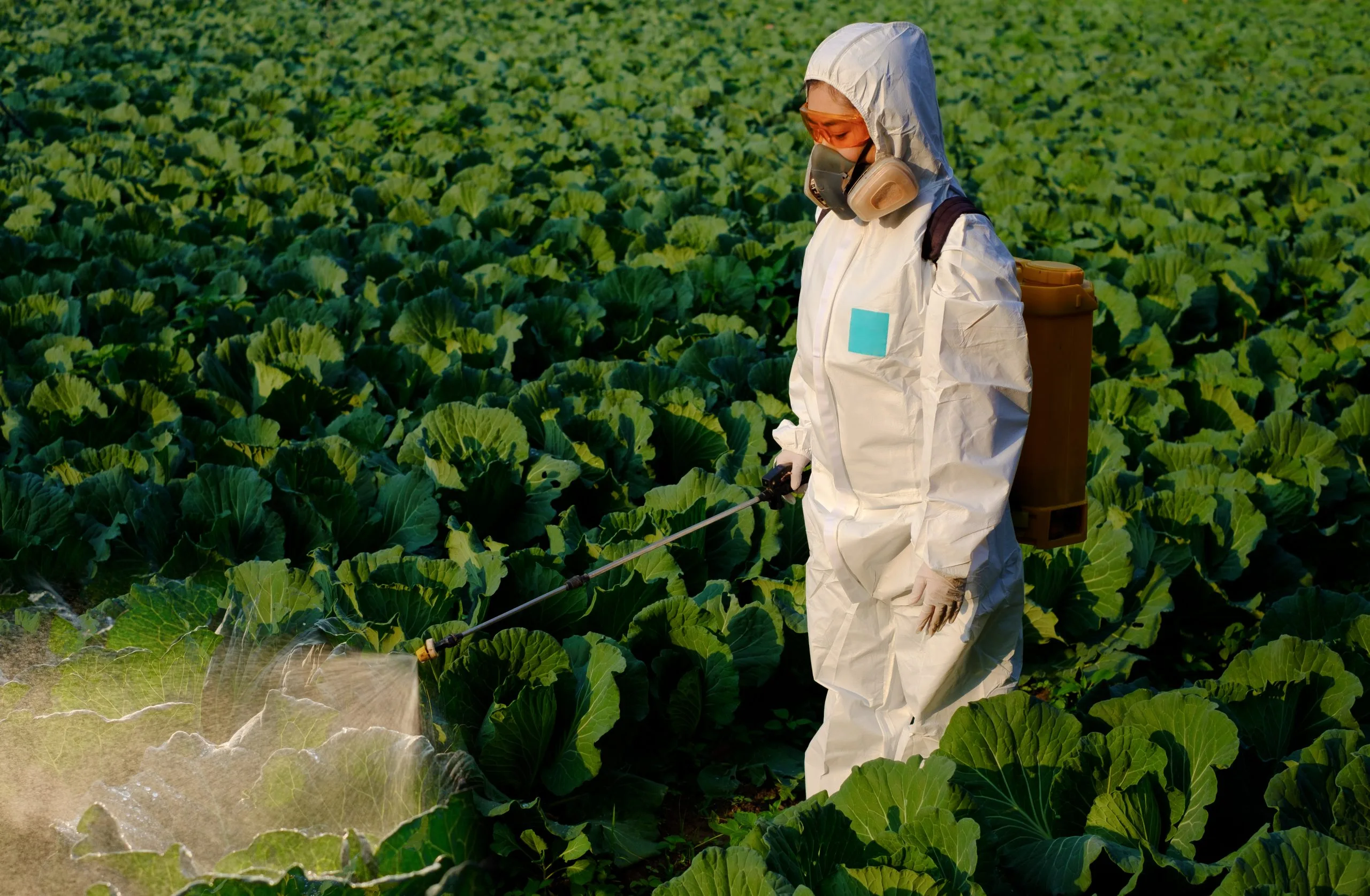
UAE Crop Protection Pesticides Market is valued at USD ~ Billion based on a comprehensive historical assessment of pesticide sales across agricultural production systems. The market is primarily driven by the UAE’s strategic focus on food security and agricultural self-sufficiency in one of the world’s most arid environments, with date palm cultivation covering approximately 40 million trees and greenhouse vegetable production expanding rapidly across Abu Dhabi, Dubai, and Ras Al Khaimah. Total cultivated agricultural land spans approximately 300,000 hectares according to the Ministry of Climate Change and Environment (MOCCAE) and the Abu Dhabi Agriculture and Food Safety Authority (ADAFSA). The country’s unique agricultural challenges arising from extreme heat, low humidity, sandy soils, and high salinity, combined with increasing adoption of protected agriculture systems, controlled-environment farming, and rising demand for locally grown produce, continue to stimulate pesticide consumption across the Emirates’ diverse farming systems.
Market Segmentation
By Product Type
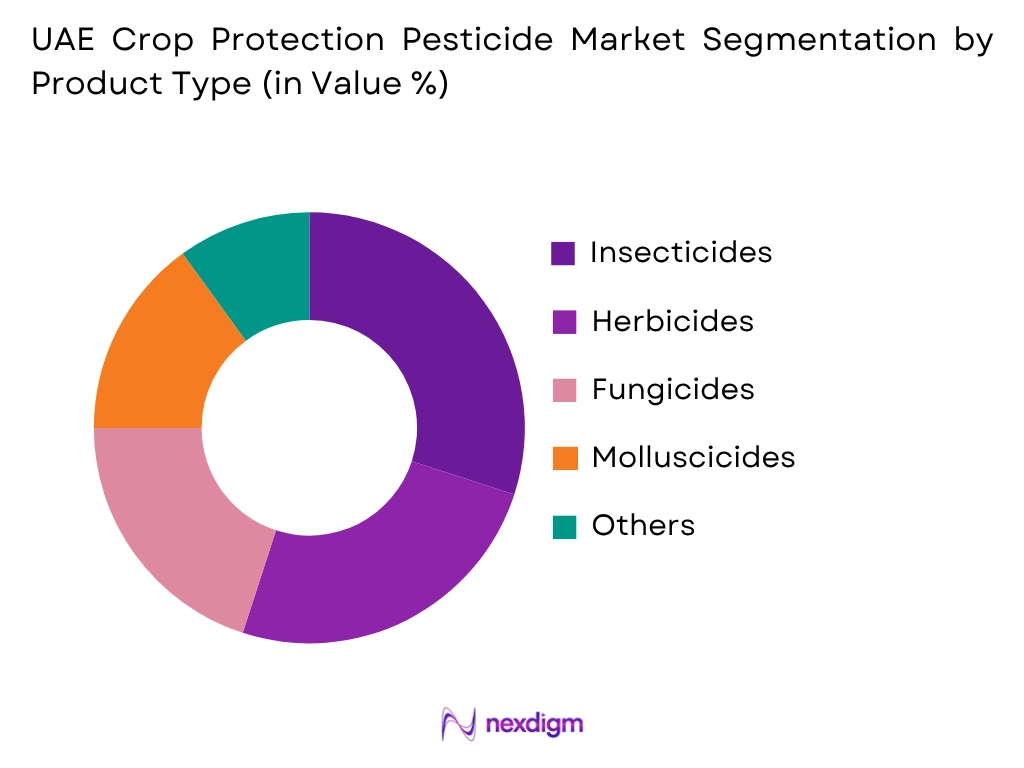
The insecticides segment dominates the UAE Crop Protection Pesticides Market due to the country’s extensive cultivation of date palms, greenhouse vegetables, and ornamental plants, where insect pest management is critical for maintaining crop quality and productivity in an arid desert environment. Protected agriculture systems and greenhouse farming structures across the UAE create warm, humid microclimates that favor year-round insect pest activity, significantly driving insecticide usage throughout multiple growing cycles. The widespread prevalence of red palm weevil, whitefly, mealybug, thrips, and spider mite infestations across date palm plantations and vegetable greenhouses has further strengthened demand for pyrethroids, neonicotinoids, and diamide-based insecticides. The UAE’s extreme summer temperatures drive farmers toward greenhouse and shaded cultivation, concentrating pest pressure within enclosed production environments and making insecticide application a routine crop management practice. Continuous innovation in selective insecticides, resistance management programs, and improved formulation technologies suited to arid climate conditions has enabled growers to maximize productivity, reinforcing insecticides as the largest product category within the market.
By Crop Type
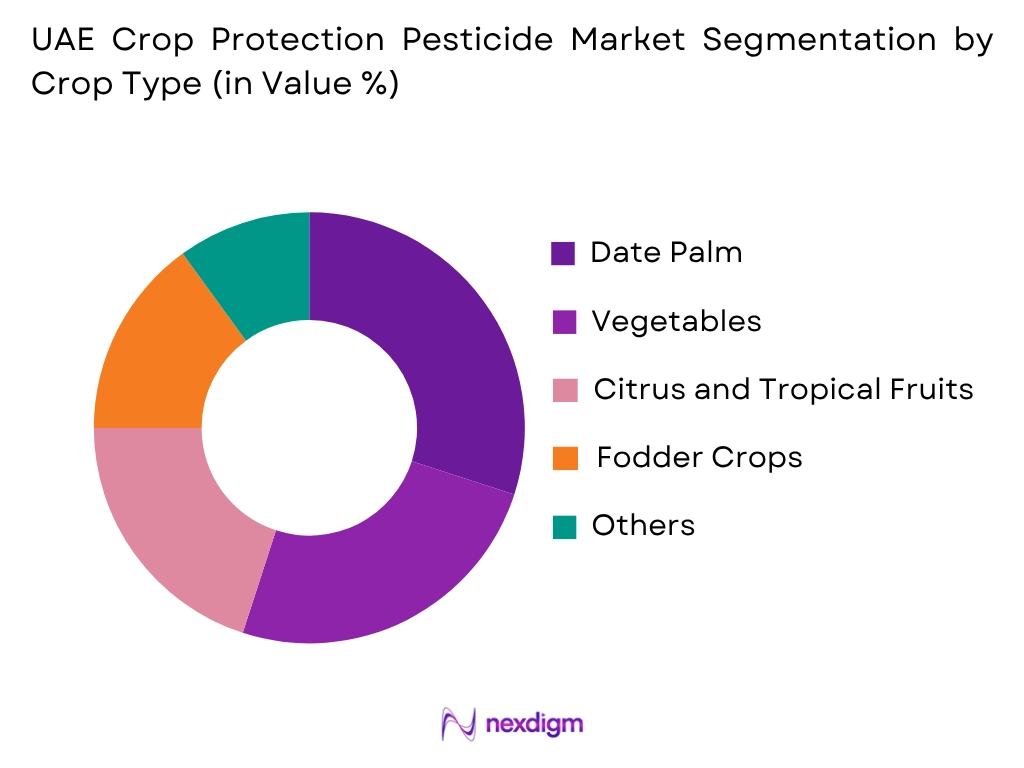
Date palm accounts for the largest share of pesticide consumption owing to the crop’s cultural, economic, and nutritional significance within the UAE, with approximately 40 million date palm trees cultivated across the country. Commercial date palm plantations and heritage groves spanning Abu Dhabi, Al Ain, Dubai, Ras Al Khaimah, and Sharjah require integrated crop protection against the red palm weevil, dubas bug, date palm scale insects, and various fungal diseases throughout the cultivation cycle. The red palm weevil in particular poses a severe biosecurity threat, necessitating preventive and curative pesticide treatments, trunk injection systems, and pheromone-based monitoring programs across thousands of trees each season. Export-oriented premium date production from varieties including Medjool, Khalas, and Lulu demands rigorous pest management to maintain fruit quality and meet international phytosanitary standards enforced by importing markets. Continuous government support programs for date palm preservation, investments in integrated pest management for heritage and commercial plantations, and increasing mechanization of date palm care further reinforce the crop’s dominant position within the UAE’s pesticide market.
Competitive Landscape
The UAE Crop Protection Pesticides Market is moderately fragmented, with international agrochemical companies supplying the majority of registered crop protection products through established import and distribution networks, while a number of UAE-based agricultural input suppliers and regional distributors complement the multinational presence. Leading firms maintain their market positions through comprehensive product registrations with MOCCAE and ADAFSA, strong relationships with government agricultural extension services, biological crop protection investments, and tailored technical support for date palm, greenhouse vegetable, and fodder crop producers. Competition increasingly focuses on precision agriculture solutions, biological pesticides, and sustainable formulations aligned with the UAE’s food security agenda and environmental sustainability commitments under the UAE Net Zero 2050 strategic initiative.
| Company | Establishment Year | Headquarters | Product Portfolio | Biological Products
|
Manufacturing Presence | Major Crop Focus | Distribution Network | R&D Focus |
| Bayer Crop Science | 1863 | ~ | ~ | ~ | ~ | ~ | ~ | ~ |
| Syngenta | 2000 | ~ | ~ | ~ | ~ | ~ | ~ | ~ |
| Agri Advanced Industries | 1997 | ~ | ~ | ~ | ~ | ~ | ~ | ~ |
| Gulf Bio Organics | 2005 | ~ | ~ | ~ | ~ | ~ | ~ | ~ |
| Al Ain Farms | 1981 | ~ | ~ | ~ | ~ | ~ | ~ | ~ |
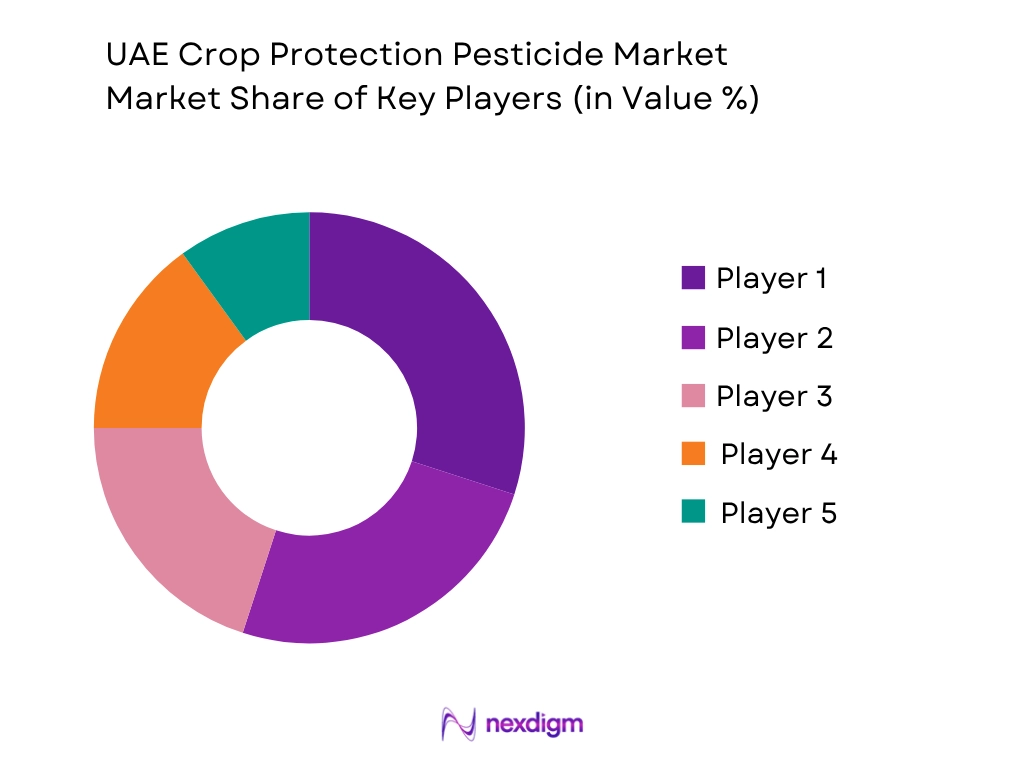
UAE Crop Protection Pesticide Market Analysis
Growth Drivers
Expansion of Protected Agriculture and Food Security Initiatives
The UAE’s national food security agenda remains the primary growth driver for the Crop Protection Pesticides Market, as the government has committed substantial investment to expanding domestic agricultural production capacity in one of the world’s most challenging arid environments. The UAE Food Security Strategy 2051 and the National Food Security Index target a significant increase in the country’s Food Sustainability Index ranking, driving public and private investment into greenhouse farming, controlled-environment agriculture, vertical farming, and hydroponic production systems across all seven Emirates. Protected agriculture land under greenhouses and shade-net structures has expanded substantially, with Abu Dhabi’s Al Ain and Liwa oasis regions, Dubai’s agricultural zones, and Ras Al Khaimah’s cooler highland areas becoming focal points for intensified vegetable and fruit production. Date palm cultivation remains a national priority, with the UAE maintaining approximately 40 million trees across heritage and commercial plantations and government programs actively supporting pest management, irrigation modernization, and productivity enhancement. Tomato, cucumber, pepper, eggplant, and leafy vegetable production within greenhouse complexes requires continuous integrated pest management to maintain yields, product quality, and food safety compliance throughout year-round production cycles. Increasing government subsidies, agricultural development loans, and technical support programs administered by ADAFSA, the Dubai Municipality Agriculture Department, and Sharjah and Ras Al Khaimah agricultural authorities continue to incentivize pesticide adoption and crop protection technology investment across the UAE’s expanding agricultural sector.
Rising Demand for Locally Grown High-Quality Produce
The UAE’s rapidly growing population of over 10 million residents, combined with increasing consumer preference for fresh, locally grown vegetables and fruits, continues to strengthen demand for crop protection pesticides because high-quality domestic production requires consistent pest management and strict food safety compliance. The country imports approximately 80 to 90 percent of its food requirements, creating strong government and commercial incentives to expand domestic agricultural output and reduce import dependency for key fresh produce categories. Local supermarket chains, hotel and hospitality groups, food service operators, and online fresh produce platforms increasingly prioritize UAE-grown vegetables, herbs, and fruits in their procurement strategies, incentivizing farmers to invest in crop protection products that ensure yield consistency, product appearance, and food safety traceability. Premium greenhouse vegetable producers supplying high-end retail and food service channels must comply with the stringent maximum residue limits and food safety standards enforced by Dubai Municipality, Abu Dhabi Public Health Centre, and Sharjah Municipality, increasing reliance on selective, low-residue insecticides, fungicides, and biological crop protection alternatives. Rising cultivation intensity within greenhouse complexes, adoption of hydroponic and aeroponic production systems, and increasing commercial orientation of UAE farmers are together creating sustained demand for advanced crop protection products and integrated pest management services across the country’s agricultural sector.
Market Challenges
Extreme Climatic Conditions and Water Scarcity
Extreme climatic conditions represent one of the most fundamental challenges affecting the UAE Crop Protection Pesticides Market because the country’s desert environment imposes severe constraints on open-field agriculture, pesticide application efficiency, and pest population dynamics. Summer temperatures regularly exceeding 45 degrees Celsius cause rapid pesticide degradation, reduce residual activity of active ingredients, and compress the effective spraying window to early morning and late evening hours, increasing the labor intensity and operational cost of crop protection programs. Persistent heat stress accelerates the development of certain pest species such as spider mites, thrips, and whitefly under greenhouse conditions, while creating biosecurity challenges for date palm plantations exposed to extreme thermal and drought stress. Water scarcity and reliance on desalinated water for irrigation constrains agricultural expansion, limiting the total cultivable area and concentrating pest management requirements within a relatively small but highly intensified production footprint. Soil salinity resulting from brackish groundwater use and intensive irrigation reduces crop vigor and increases susceptibility to root pathogens and soil-borne diseases, creating additional demand for soil treatment products, nematicides, and biostimulants. The UAE’s dependence on imported active ingredients and formulated pesticide products also exposes the market to international supply chain disruptions, currency fluctuation risks, and regulatory changes in exporting countries, creating inventory management challenges for distributors and input suppliers operating across the Emirates.
Regulatory Compliance and Import Dependency
The UAE Crop Protection Pesticides Market operates under a rigorous multi-authority regulatory framework administered by the Ministry of Climate Change and Environment (MOCCAE) at the federal level, with additional oversight by ADAFSA in Abu Dhabi, Dubai Municipality’s Agriculture and Food Safety Department, and corresponding authorities in Sharjah, Ras Al Khaimah, Fujairah, Ajman, and Umm Al Quwain. All pesticide products must be registered and approved before commercial import, distribution, and use, requiring manufacturers and importers to submit comprehensive dossiers covering toxicological profiles, environmental impact assessments, efficacy data, and maximum residue limit information. The UAE imports virtually all of its crop protection products, as domestic pesticide formulation and active ingredient manufacturing capacity is minimal, creating complete dependence on international supply chains and exposure to shipping delays, cost fluctuations, and regulatory changes in source countries. Growing environmental awareness, the UAE’s commitments under the Convention on Biological Diversity, and national sustainability strategies aligned with COP28 climate outcomes are encouraging greater adoption of lower-risk biological formulations and reduced-chemical integrated pest management programs. However, transitioning smallholder date palm farmers and traditional agricultural communities toward compliance-oriented pest management practices requires sustained training, demonstration programs, and financial support from government agricultural extension services, presenting both a regulatory challenge and a market development opportunity for crop protection product manufacturers and distributors.
Market Opportunities
Expansion of Biological Crop Protection Solutions
Growing emphasis on sustainable food production and the UAE’s high-profile environmental commitments present substantial opportunities for biological crop protection products across the Emirates. The country’s expanding greenhouse sector, date palm plantation management programs, and premium fresh produce supply chains increasingly require residue management strategies that comply with international food safety standards and support export market access, encouraging producers to adopt microbial pesticides, biofungicides, botanical insecticides, biopesticide seed treatments, and beneficial insect release programs within integrated pest management frameworks. Biological control agents including predatory mites, parasitic wasps, and entomopathogenic fungi are particularly well-suited to the enclosed microenvironments of UAE greenhouse complexes, where targeted biological intervention can effectively suppress whitefly, thrips, spider mite, and mealybug populations with minimal residue impact. The UAE’s position as a regional hub for agricultural innovation, combined with active government support for sustainable agriculture through ADAFSA’s Good Agricultural Practices program, Dubai’s urban farming initiatives, and Ras Al Khaimah’s agricultural diversification strategy, creates favorable conditions for biological crop protection manufacturers to establish regional distribution and technical support operations. Continuous advances in biological formulation stability under high-temperature arid conditions, improving shelf-life technologies, and increasing farmer awareness of biological alternatives further enhance commercial viability across the UAE’s premium agricultural production segment.
Growth of Precision Agriculture and Smart Application Technologies
The UAE’s position as a regional leader in technology adoption and innovation provides exceptional opportunities for precision crop protection technologies that improve pesticide application efficiency while reducing environmental impact and residue risks. The country’s strong digital infrastructure, high smartphone penetration, and government investment in AgTech through initiatives such as the Dubai Future Foundation, Abu Dhabi’s AgriHub, and the UAE AgriTech ecosystem support the rapid deployment of smart farming tools across commercial greenhouse and date palm production operations. Commercial greenhouse operators and progressive date palm farm managers increasingly utilize sensor-based pest monitoring systems, IoT-connected trap networks, drone-assisted inspection platforms, satellite imagery analysis, and AI-powered disease and pest forecasting applications to optimize pesticide application timing and intensity according to actual field conditions. The concentrated and high-value nature of UAE agricultural production — with greenhouse vegetable operations and premium date palm farms representing significant capital investments per hectare — creates strong economic incentives for precision pest management that protects yield quality and justifies investment in advanced crop protection technologies. Government agricultural modernization programs, including smart farming pilot projects supported by ADAFSA and the Mohammed Bin Rashid Al Maktoum Global Initiatives, are further accelerating the integration of precision agriculture into UAE food production systems. The continued expansion of automated greenhouse management systems, robotic pest scouting platforms, variable-rate spraying equipment, and mobile crop advisory applications creates long-term opportunities for pesticide manufacturers to embed crop protection products within comprehensive precision agriculture service packages tailored to the UAE’s unique agricultural environment.
Future Outlook
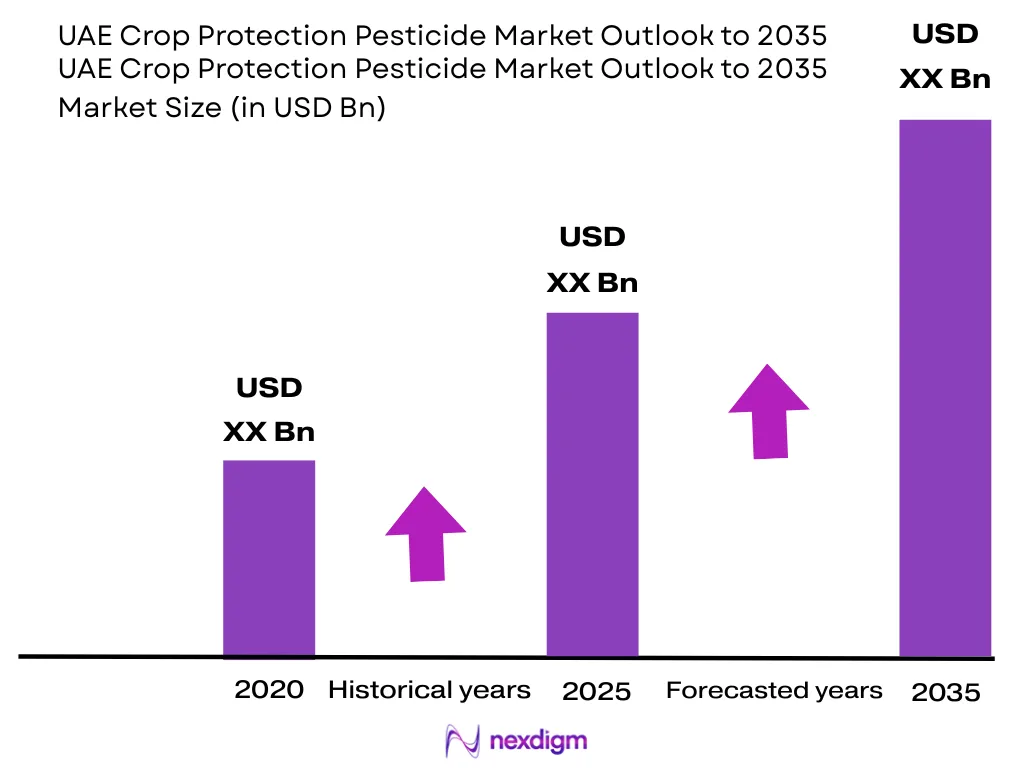
The UAE Crop Protection Pesticides Market is expected to maintain steady growth over the forecast period, supported by continued government investment in food security infrastructure, expanding protected agriculture capacity, and rising demand for locally produced high-quality vegetables, fruits, and dates. Biological crop protection products, precision pest management technologies, and digital agriculture platforms are expected to play an increasingly prominent role as the market evolves in alignment with the UAE’s sustainability commitments and food safety standards. Regulatory modernization aligned with international best practices and growing interest in low-residue and organic production systems are anticipated to accelerate the adoption of advanced, environmentally friendly crop protection formulations. Furthermore, continued growth in date palm cultivation, greenhouse vegetable production, vertical farming, and hydroponic systems, coupled with increasing investments in integrated pest management programs and government-supported agricultural technology initiatives, will support long-term market development across the UAE’s major agricultural production zones.
Major Players
- Bayer Crop Science
- Syngenta
- BASF
- Corteva Agriscience
- FMC Corporation
- UPL Limited
- Agri Advanced Industries
- Gulf Bio Organics
- Al Ain Farms
- Nufarm
- Sumitomo Chemical
- Adama Agricultural Solutions
- Koppert Biological Systems
- Certis Biologicals
- Emirates Bio Farm
Key Target Audience
- Crop Protection Product Manufacturers
- Agricultural Cooperatives and Farmer Groups
- Commercial Greenhouse and Vertical Farming Enterprises
- Agrochemical Importers, Distributors and Retail Chains
- Biological Crop Protection Manufacturers
- Investments and Venture Capitalist Firms
- Government and Regulatory Bodies (MOCCAE, ADAFSA, Dubai Municipality, Ras Al Khaimah Agriculture Authority)
- Precision Agriculture and AgTech Solution Providers
Research Methodology
Step 1: Identification of Key Variables
The initial phase involves constructing an ecosystem map covering pesticide manufacturers, active ingredient importers, distributors, agricultural cooperatives, commercial farms, government agencies, and export organizations within the UAE Crop Protection Pesticides Market. Extensive secondary research using public databases, company reports, agricultural statistics, and proprietary industry sources is undertaken to identify the variables influencing market performance.
Step 2: Market Analysis and Construction
Historical information relating to pesticide imports, distribution, crop acreage, pesticide consumption, application intensity, pricing trends, and farmer purchasing behavior is compiled and analyzed. Market revenues are estimated through both supply-side import and distribution analysis and demand-side crop-wise pesticide consumption, ensuring comprehensive market sizing and segmentation.
Step 3: Hypothesis Validation and Expert Consultation
Market assumptions are validated through structured interviews with pesticide importers, distributors, agricultural cooperatives, agronomists, regulatory experts, and commercial farm managers. Computer-assisted telephone interviews (CATIs) and executive discussions provide operational insights that strengthen the accuracy of market estimates and competitive assessments.
Step 4: Research Synthesis and Final Output
The final phase integrates insights from primary interviews with secondary research findings using bottom-up and top-down estimation techniques. Cross-validation ensures consistency across market segments, competitive analysis, pricing benchmarks, and future projections, resulting in a comprehensive and reliable assessment of the UAE Crop Protection Pesticides Market.

- Executive Summary
- Research Methodology (Market Definitions and Assumptions, Abbreviations, Market Sizing Approach, Top-Down Analysis, Bottom-Up Analysis, Demand-Side Assessment, Supply-Side Assessment, Primary Industry Interviews, Channel Partner Validation, Distributor-Level Assessment, Data Triangulation, Forecasting Framework, Limitations and Future Conclusions)

- Definition and Scope
- Market Evolution and Industry Genesis
- Timeline of Major Industry Developments
- UAE Crop Protection Industry Value Chain Analysis
- Crop Protection Pesticides Supply Chain Analysis

- Growth Drivers (Expansion of Protected Agriculture and Greenhouse Farming, Rising Pest Pressure in Arid Conditions, Increasing Adoption of Hydroponic and Vertical Farming Systems, Growth in Food Security-Oriented Agriculture, Rising Demand for High-Quality Locally Grown Produce, Expansion of Precision Agriculture, Adoption of Biological Crop Protection Solutions)
- Market Challenges (Dependence on Imported Pesticides, Active Ingredient Price Volatility, Extreme Climatic Conditions, Resistance Management Issues, Environmental Compliance Costs, Registration Delays for New Molecules)
- Market Opportunities (Bio-Based Crop Protection Products, Drone Spraying Services, Precision Agriculture Integration, Digital Pest Monitoring Platforms, Sustainable Integrated Pest Management, Premium Seed Treatment Solutions)
- Market Trends (Shift Towards Biologicals, Herbicide Resistance Management Programs, Tank Mix Optimization, Smart Spraying Technologies, Low-Dose High-Efficiency Molecules, Sustainable Formulation Technologies, AI-Based Pest Forecasting)
- Government Regulations (MOCCAE Registration Framework, Abu Dhabi Agriculture and Food Safety Authority Oversight, Dubai Municipality Environmental Assessment, Maximum Residue Limits, Good Agricultural Practices Compliance, Integrated Pest Management Guidelines, Traceability Requirements)
- PESTLE Analysis
- SWOT Analysis
- Porter’s Five Forces Analysis
- Stakeholder Ecosystem
- Competition Ecosystem

- By Market Value (2020-2025)
- By Volume Consumption (2020-2025)
- By Average Selling Price (2020-2025)

- By Product Type (In Value %)
Herbicides
Insecticides
Fungicides
Seed Treatment Chemicals
Plant Growth Regulators
Biological Crop Protection Products
Nematicides
Molluscicides
Rodenticides
Adjuvants and Spray Additives - By Chemical Origin (In Value %)
Synthetic Crop Protection Products
Biological Crop Protection Products
Botanical Pesticides
Microbial Pesticides
Biochemical Pesticides - By Active Ingredient Class (In Value %)
Glyphosate-Based Products
Glufosinate-Based Products
2,4-D Products
Imidacloprid Products
Pyrethroids
Neonicotinoids
Organophosphates
Triazoles
Strobilurins
SDHI Fungicides
Diamides
Copper-Based Products
Sulfonylureas - By Crop Type (In Value %)
Date Palm
Vegetables (Tomato, Cucumber, Pepper)
Citrus and Tropical Fruits
Fodder Crops (Alfalfa, Rhodes Grass)
Ornamental and Landscape Plants
Greenhouse Crops
Herbs and Medicinal Plants
Cereal Crops
Root and Tuber Crops
Hydroponics and Vertical Farming Crops
Aquaculture-Associated Crops
Turf and Sports Surfaces - By Region (In Value %)
Abu Dhabi
Dubai
Sharjah
Ras Al Khaimah
Other Emirates (Ajman, Fujairah, Umm Al Quwain)

- Market Share of Major Players (By Value, Volume, Product Type, Crop Type, Biological Products, Distribution Network)
- Cross Comparison Parameters (Registered Active Ingredients Portfolio, Biological Product Portfolio, Distribution Network Strength, Import and Distribution Capacity in the UAE, R&D Pipeline for New Molecules, Seed Treatment Portfolio Strength, Digital Agriculture & Precision Farming Solutions, Crop Coverage Across Major UAE Crops)
- SWOT Analysis of Major Players
- Pricing Analysis by Active Ingredient, Formulation Type and Crop Segment
- Product Portfolio Benchmarking
- Detailed Profiles of Major Companies
Bayer Crop Science
Syngenta
BASF
Corteva Agriscience
FMC Corporation
UPL Limited
Agri Advanced Industries
Gulf Bio Organics
Al Ain Farms
Nufarm
Sumitomo Chemical
Adama Agricultural Solutions
Koppert Biological Systems
Certis Biologicals
Emirates Bio Farm

- Crop Protection Product Consumption Analysis (Application Frequency, Seasonal Usage, Crop-Wise Consumption Intensity, Pest Pressure)
- Farmer Demographic Analysis (Farm Size, Commercial Orientation, Mechanization Level, Irrigated vs Greenhouse Farming)
- Input Spending Analysis
- Purchase Decision Parameters
- Brand Loyalty Assessment

- By Market Value (2026-2035)
- By Volume Consumption (2026-2035)
- By Average Selling Price (2026-2035)


 Request a Sample
 Ask for Customization
 Get a Quote
 Enquire Now