
 Download PDF
Market Overview
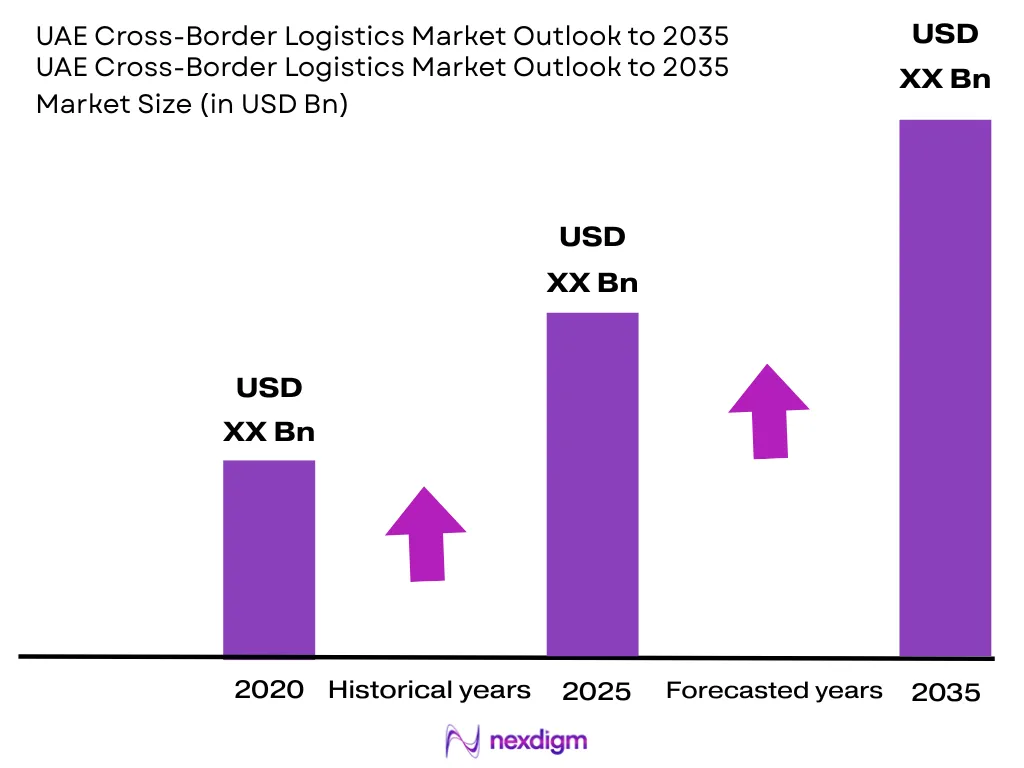
The UAE Cross-Border Logistics Market was valued at USD ~ Billion in 2024 and is anticipated to expand at a CAGR of ~ % during 2026–2035. The market is primarily driven by rising e-commerce expenditure and cross-border parcel volumes, GCC neighbors increasingly sourcing via UAE e-hubs, and government investment in free zone and warehousing infrastructure. According to Mordor Intelligence, the United Arab Emirates Freight and Logistics Market was worth USD 23.05 billion in 2026 and is growing at a CAGR of 6.55 percent to reach USD 31.63 billion by 2031, while the UAE Contract Logistics Market, a key enabler of cross-border fulfillment, was expected to reach USD 8.66 billion in 2025 and grow to USD 11.69 billion by 2030 at a 6.17 percent CAGR. UAE e-commerce expenditures were projected to exceed USD 8 billion by 2025, sustaining strong cross-border parcel and freight forwarding demand across the Emirates.
Market Segmentation
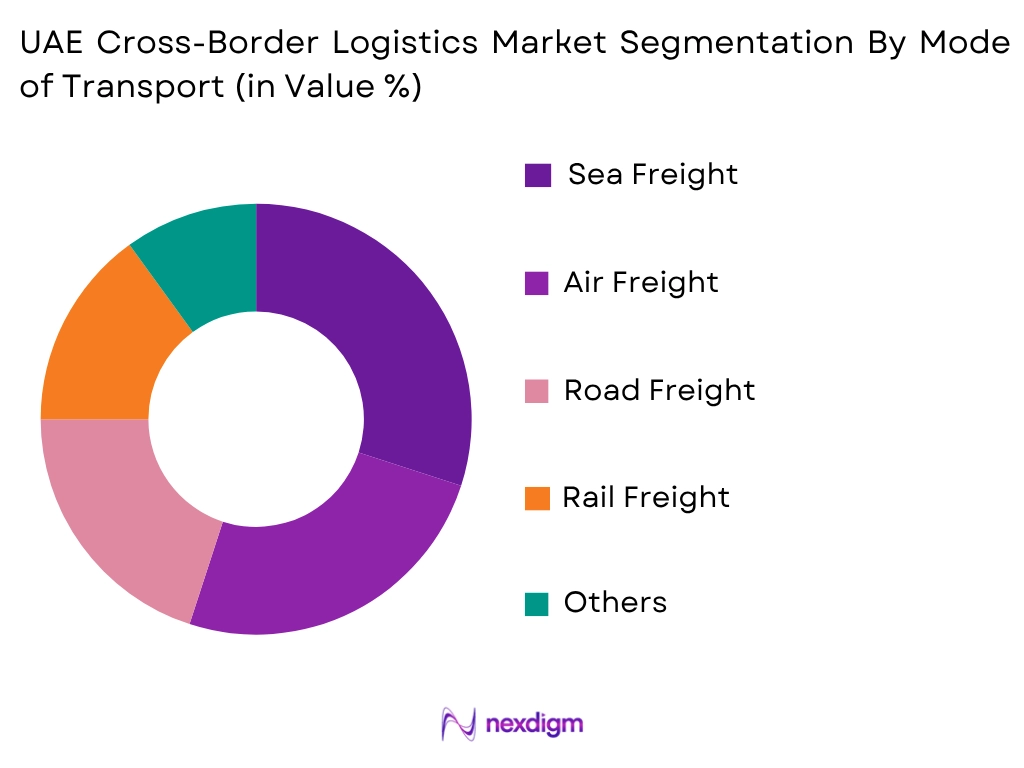
By Mode of Transport
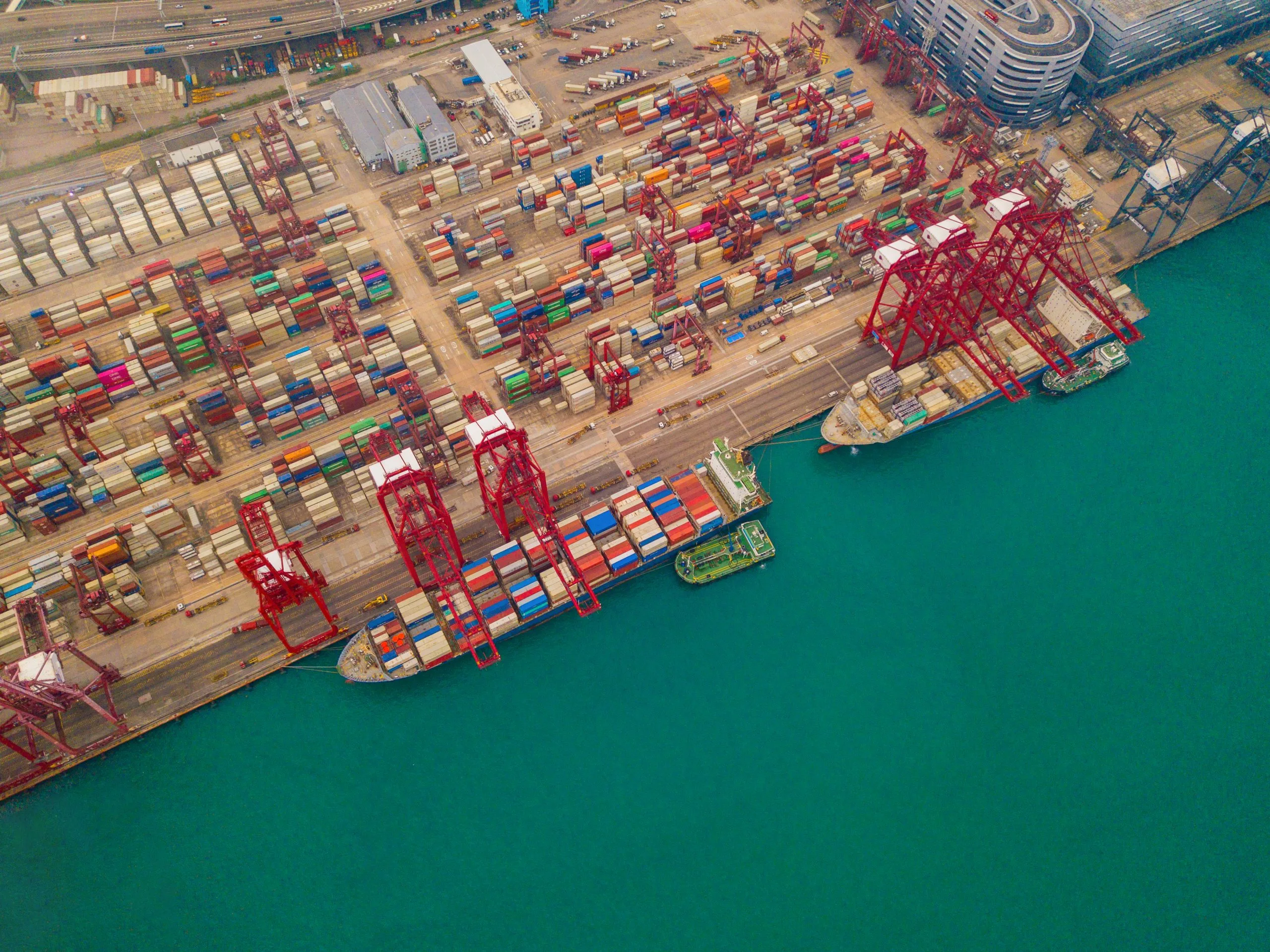
Among these, Sea Freight holds a significant share of the UAE Cross-Border Logistics Market, anchored by the country’s port and aviation networks, which serve as vital conduits for global trade, facilitating the seamless movement of goods between continents, according to IMARC Group. Aldar Properties and DP World agreed in July 2024 to co-develop a 1.55 million square foot logistics park in Jebel Ali to serve regional supply chains, reinforcing the UAE’s position as a maritime trade gateway. At the same time, Air Freight remains critical for high-value and time-sensitive cross-border cargo, supported by expanding cargo facilities and technology-enabled supply chain systems. Road Freight continues to strengthen its role in intra-GCC cross-border movement, with Dubai’s Roads and Transport Authority partnering with digital freight platform TruKKer in 2024 to launch the ‘Logisty’ digital logistics platform, enabling businesses to book and track shipments and access on-demand freight services across the region.
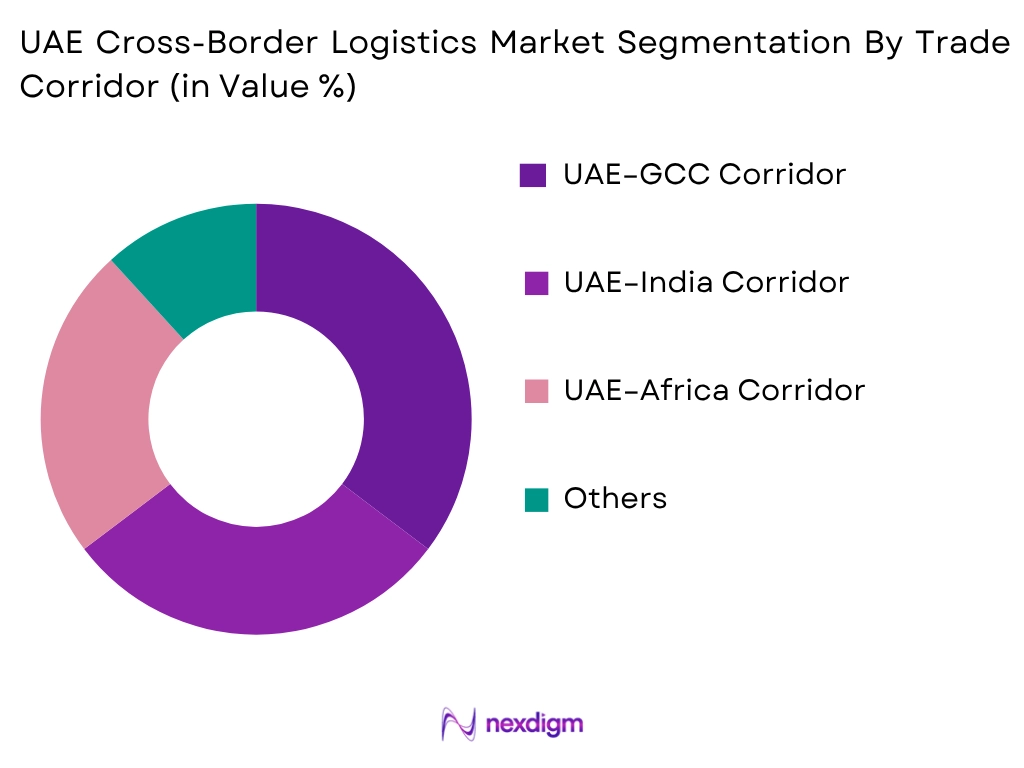
By Trade Corridor
The UAE–GCC Corridor holds a leading share of the UAE Cross-Border Logistics Market, as GCC neighbors increasingly source via UAE e-hubs, extending domestic parcel growth into high-margin cross-border moves, according to Mordor Intelligence. The UAE’s strategic geographic advantage and robust port and aviation infrastructure position Dubai as a critical re-export and distribution hub serving the wider Gulf region. Government-run digitization programs simplify business licensing and customs processes, encouraging omnichannel models that blend storefront, mobile, and social commerce across cross-border trade lanes. Meanwhile, air cargo corridors linking the UAE with Europe, India, and China continue to expand, supported by dnata Logistics’ 2024 construction of a 57,000 square meter warehouse in Dubai South, capable of processing up to 400,000 tons of cargo annually and increasing storage capacity by 50 percent through an AED 100 million investment.
Competitive Landscape
The UAE Cross-Border Logistics Market is moderately consolidated, with DP World, DSV A/S (including DB Schenker), DHL Group, Aramex, and Kuehne+Nagel identified as the major companies operating in the market, according to Mordor Intelligence. Regional consolidation accelerated significantly in 2025, with ADQ completing a majority acquisition of Aramex in July 2025, strengthening regional consolidation and potentially altering slot allocations for cross-border parcels, while DSV finalized its EUR 14.3 billion (USD 15.78 billion) purchase of DB Schenker in April 2025, expanding multimodal coverage across the Emirates. UPS and Dubai South unveiled a USD 100 million logistics district in March 2025 featuring automated sortation and regional distribution infrastructure, positioning early for the next wave of cross-border parcel volume. Tougher cold-chain rules embedded in the Federal Food Safety Law elevate entry barriers, giving incumbents with compliant infrastructure a competitive edge as temperature-sensitive segments from groceries to biologics migrate online.
| Company | Established | Headquarters | Primary Service Portfolio | Cross-Border Corridor Coverage | Fleet & Terminal Capacity | Major End-Use Industries | Key Strategic Focus | Certifications & Compliance |
| DP World | 1972 | ~ | ~ | ~ | ~ | ~ | ~ | ~ |
| DHL Group | 1969 | ~ | ~ | ~ | ~ | ~ | ~ | ~ |
| Aramex | 1982 | ~ | ~ | ~ | ~ | ~ | ~ | ~ |
| Kuehne+Nagel | 1890 | ~ | ~ | ~ | ~ | ~ | ~ | ~ |
| Gulf Agency Company (GAC) | 1956 | ~ | ~ | ~ | ~ | ~ | ~ | ~ |
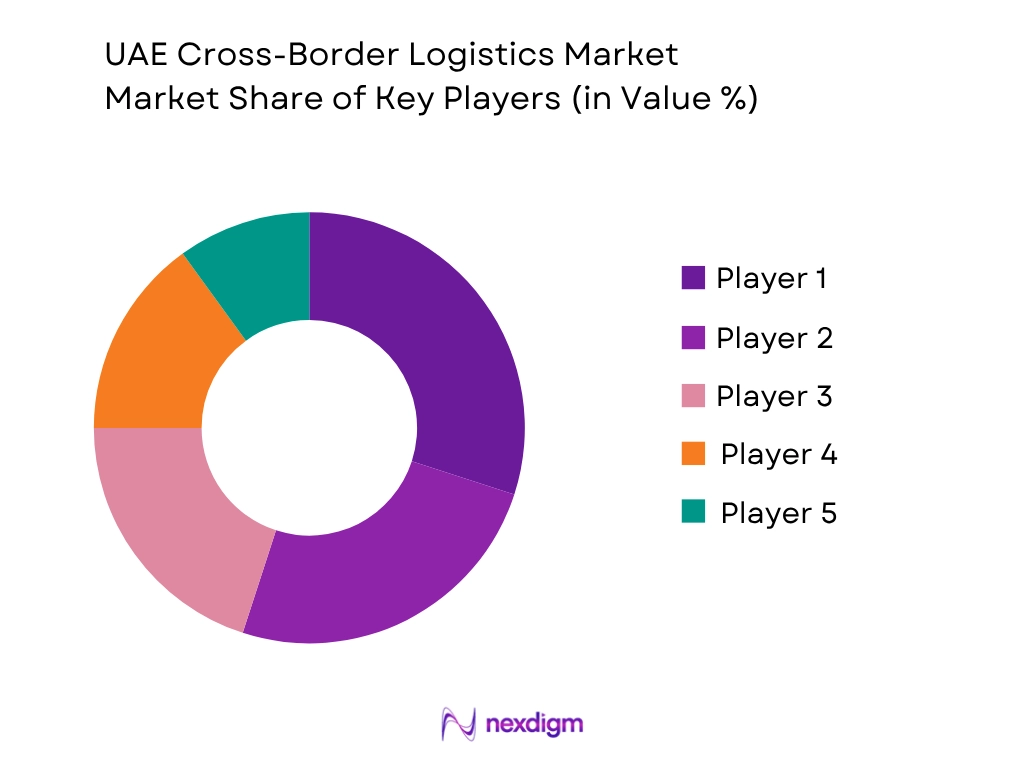
UAE Cross-Border Logistics Market Analysis
Growth Drivers
Rising E-Commerce Expenditure and Cross-Border Parcel Growth
The UAE cross-border logistics market is experiencing sustained growth due to rising e-commerce expenditure and expanding cross-border parcel volumes. The UAE is on track to uphold its status as one of the world’s rapidly expanding e-commerce hubs, with projections suggesting e-commerce expenditures could exceed USD 8 billion by 2025, according to Mordor Intelligence. GCC neighbors increasingly source via UAE e-hubs, extending domestic parcel growth into high-margin cross-border moves. The expansion of retail, e-commerce, and manufacturing activities across the UAE is increasing demand for efficient transportation services to support both domestic cargo movement and cross-border fulfillment, according to IMARC Group, sustaining strong demand for freight forwarding, customs brokerage, and express delivery services across the Emirates.
Government Investment in Free Zone and Automated Logistics Infrastructure
Sustained government and private investment in the UAE’s free zone and automated logistics infrastructure remains a major driver for cross-border logistics demand. dnata Logistics began construction of a 57,000 square meter warehouse in Dubai South in 2024, with an AED 100 million investment, designed to process up to 400,000 tons of cargo annually and increase storage capacity by 50 percent through integrated automated and AI-driven warehouse management systems, according to IMARC Group. Aldar Properties and DP World’s July 2024 agreement to co-develop a 1.55 million square foot logistics park in Jebel Ali further illustrates the scale of infrastructure investment supporting the UAE’s role as a global logistics hub, while UPS’s USD 100 million Dubai South logistics district, unveiled in March 2025, adds automated sortation capacity positioned to capture rising cross-border volumes.
Market Challenges
High Operational Costs and Regulatory Complexity
Despite steady demand growth, the UAE cross-border logistics market remains constrained by high operational costs influenced by fuel prices and regulatory issues affecting cross-border trade, according to Nexdigm. Competition among logistics providers continues pushing for lower pricing, which impacts profitability across the sector. Cross-border shippers must navigate complex documentation requirements spanning UAE Federal Customs Authority regulations, GCC Customs Union tariff structures, and free zone re-export compliance simultaneously, creating administrative complexity that can extend transit times and increase costs for logistics providers serving multiple regional markets.
Geopolitical Tensions and Cold-Chain Compliance Barriers
Geopolitical tensions can significantly impact the UAE cross-border logistics market, leading to disruptions in trade routes, increased security risks, and elevated operational costs, according to BlueWeave Consulting. When geopolitical events cause border closures or restrictions, shipping delays become more likely, affecting supply chain reliability and resulting in higher transportation costs and hindered timely delivery. In addition, tougher cold-chain rules embedded in the Federal Food Safety Law elevate entry barriers, giving incumbents with compliant infrastructure an edge as temperature-sensitive segments from groceries to biologics migrate online, according to Mordor Intelligence, requiring continuous infrastructure investment for logistics providers seeking to compete in temperature-controlled cross-border segments.
Market Opportunities
Rising Investment in Automated Sortation and Logistics Districts
The UAE’s growing e-commerce sector and government-backed infrastructure investment create significant opportunities for investment in automated sortation and dedicated logistics districts. UPS and Dubai South’s USD 100 million logistics district, unveiled in March 2025, features automated sortation and regional distribution infrastructure, according to Mordor Intelligence, illustrating the commercial viability of combining automation with cross-border fulfillment capacity. As global integrators increasingly position for the next wave of e-commerce volume, logistics providers investing early in automated, technology-enabled distribution infrastructure are positioned to capture growing demand from both domestic UAE consumers and GCC neighbors sourcing through UAE-based e-hubs.
Expansion Through Strategic Consolidation and Multimodal Coverage
The UAE’s cross-border logistics sector is attracting significant strategic investment and consolidation activity, creating substantial opportunities for expanded multimodal coverage. ADQ’s July 2025 majority acquisition of Aramex strengthens regional consolidation, while DSV’s April 2025 acquisition of DB Schenker for EUR 14.3 billion expands multimodal coverage across the Emirates, according to Mordor Intelligence. Aldar Properties and DP World’s co-development of a 1.55 million square foot logistics park in Jebel Ali further illustrates the scale of strategic partnership activity reshaping the UAE’s cross-border logistics landscape. As sovereign wealth-backed and strategic acquisitions continue consolidating the market, logistics providers with strong regional networks and diversified service portfolios are well positioned to capture growing investment interest.
Future Outlook
The UAE Cross-Border Logistics Market is expected to witness sustained expansion over the forecast period, supported by continued growth in e-commerce expenditure, expanding free zone and automated logistics infrastructure investment, and increasing GCC regional sourcing through UAE-based e-hubs. Continued strategic consolidation, automated sortation capacity expansion, and cold-chain compliant infrastructure investment will further accelerate formalization across the industry. The market is also likely to benefit from the UAE’s position as a global logistics hub and gateway to the GCC region, enabling greater investment in advanced, compliant, and technology-enabled cross-border logistics capabilities capable of serving both regional and international trade corridors.
Major Players
- DP World
- DHL Group
- Aramex
- Kuehne+Nagel
- Gulf Agency Company (GAC)
- DSV A/S (Including DB Schenker)
- FedEx Express
- United Parcel Service Inc. (UPS)
- Agility Logistics
- Gulf Warehousing Company (GWC)
- Al-Futtaim Logistics
- Emirates Logistics
- Hellmann Worldwide Logistics
- JAS Forwarding
- dnata Logistics
Key Target Audience
- Freight Forwarders and Customs Brokers
- E-Commerce and Retail Platforms
- Manufacturing and Automotive Companies
- Pharmaceutical and Cold-Chain Distributors
- Port, Free Zone and Terminal Operators
- Investment and Sovereign Wealth Funds
- Government and Regulatory Bodies (Federal Customs Authority, Dubai Customs, Jebel Ali Free Zone Authority (JAFZA))
- Fleet, Warehousing and Last-Mile Delivery Infrastructure Providers
Research Methodology
Step 1: Identification of Key Variables
The research process begins with identifying the complete ecosystem of the UAE Cross-Border Logistics Market, including freight forwarders, customs brokers, port and free zone operators, e-commerce and manufacturing shippers, express delivery providers, and regulatory authorities. Extensive secondary research is conducted using company annual reports, government publications, trade associations, customs statistics, industry journals, and proprietary databases to determine the variables influencing market demand, pricing, corridor volumes, and technological developments.
Step 2: Market Analysis and Construction
Historical market information is collected and analyzed to estimate market size, freight volumes, corridor-level trade activity, and pricing trends. A combination of top-down and bottom-up approaches is used to estimate market revenues and validate segment-level performance. Consumption patterns across e-commerce, manufacturing, pharmaceuticals, and FMCG cross-border corridors are evaluated to establish an accurate representation of the industry.
Step 3: Hypothesis Validation and Expert Consultation
The preliminary findings are validated through Computer-Assisted Telephone Interviews (CATIs) and structured discussions with freight forwarders, customs brokers, port and free zone operators, fleet managers, regulatory experts, and senior executives operating within the UAE cross-border logistics industry. These interviews help verify market assumptions, competitive developments, technology adoption trends, pricing dynamics, and future investment opportunities while refining the overall market estimates.
Step 4: Research Synthesis and Final Output
The final stage integrates insights obtained from primary interviews with quantitative information collected through secondary sources. Data triangulation techniques are applied to reconcile differences between supply-side and demand-side estimates, ensuring robust market forecasting. The report is then reviewed through multiple quality assurance checkpoints to deliver a comprehensive analysis covering market size, segmentation, competitive landscape, future outlook, and strategic recommendations for industry stakeholders.

- Executive Summary
- Research Methodology (Market Definitions and Assumptions, Abbreviations, Market Sizing Approach, Top-Down Analysis, Bottom-Up Analysis, Demand-Side Assessment, Supply-Side Assessment, Primary Industry Interviews, Secondary Research Validation, Data Triangulation, Forecasting Framework, Limitations and Future Conclusions)

- Definition and Scope
- Market Evolution and Industry Genesis
- Timeline of Major Industry Developments
- Cross-Border Logistics Industry Value Chain Analysis
- Supply Chain Analysis

- Growth Drivers (Rising E-Commerce Expenditure and Cross-Border Parcel Volumes, GCC Neighbors Increasingly Sourcing via UAE E-Hubs, Government Investment in Free Zone and Warehousing Infrastructure, Expansion of Automated and AI-Driven Sortation Capacity, Growing Pharmaceutical and Cold-Chain Logistics Demand, Strategic Consolidation Through Mergers and Acquisitions)
- Market Challenges (High Operational Costs Driven by Fuel Price Volatility, Regulatory Complexity Affecting Cross-Border Trade Documentation, Intense Price Competition Compressing Provider Margins, Geopolitical Tensions Disrupting Regional Trade Routes, Tougher Cold-Chain Compliance Requirements Raising Entry Barriers, Port and Free Zone Congestion During Peak Trade Periods)
- Market Opportunities (Investment in Automated Sortation and Logistics Districts, Growth in Cold-Chain and Pharmaceutical Cross-Border Infrastructure, Expansion of Multimodal Coverage Through Strategic Acquisitions, Digital Freight Platform and Fleet Management Technology Adoption, Development of Regional Distribution Hub Capacity for GCC Re-Export, Electric and Hybrid Last-Mile Delivery Fleet Transition)
- Market Trends (Rising Adoption of Digital Freight Booking Platforms, Growth in Automated and AI-Driven Warehouse Management Systems, Regional Consolidation Through Sovereign Wealth-Backed Acquisitions, Expansion of Logistics Parks and Free Zone Capacity, Electric Last-Mile Delivery Fleet Adoption, Omnichannel Storefront-to-Cross-Border Commerce Integration)
- Government Regulations (Federal Customs Authority Requirements, UAE Federal Food Safety Law Cold-Chain Compliance, Jebel Ali Free Zone (JAFZA) Regulations, GCC Customs Union Common External Tariff, Dubai Trade and Dubai Customs Digital Systems, Import Compliance and Free Zone Re-Export Regulations)
- Import and Export Analysis (Trade Volume, Major Import Sources, Export Destinations, HS Code Analysis, Trade Balance)
- Raw Material and Infrastructure Availability Analysis (Port and Terminal Capacity, Warehousing and Free Zone Capacity, Air Cargo Terminal Capacity, Fleet and Last-Mile Delivery Infrastructure)
- Technology Landscape (Automated and AI-Driven Warehouse Management Systems, Digital Freight Booking Platforms, Cold-Chain Monitoring Systems, Automated Sortation Technology, Real-Time Fleet Tracking Systems)
- Sustainability Assessment (Electric and Hybrid Vehicle Adoption, Energy-Efficient Warehousing, Carbon Footprint Reduction, Sustainable Free Zone Development, Circular Economy Integration)
- PESTLE Analysis
- SWOT Analysis
- Porter’s Five Forces Analysis
- Stakeholder Ecosystem
- Competition Ecosystem

- By Market Value (2020-2025)
- By Volume Consumption (2020-2025)
- By Average Selling Price (2020-2025)

- By Service Type (In Value %)
Freight Forwarding
Customs Brokerage & Clearance
Warehousing & Distribution
Cross-Border Parcel & Express (CEP) Delivery
Contract Logistics - By Mode of Transport (In Value %)
Sea Freight
Air Freight
Road Freight
Rail Freight - By Trade Corridor (In Value %)
UAE–GCC Corridor
UAE–India Corridor
UAE–China Sea Route
UAE–Africa Corridor
UAE–Europe Air Cargo Corridor - By End-Use Industry (In Value %)
E-Commerce & Retail
Manufacturing & Automotive
Pharmaceuticals & Healthcare
Oil & Gas / Petrochemicals
Consumer Goods & FMCG - By Region (In Value %)
Dubai
Abu Dhabi
Sharjah
Rest of UAE

- Market Share of Major Players (By Value, Volume, Service Type, Corridor Coverage, End-Use Industry)
- Cross Comparison Parameters (Service Portfolio Breadth, Corridor and Network Coverage, Customs Brokerage Capability, Cold-Chain and Technical Support Capability, Fleet and Terminal Capacity, Regulatory Compliance & Certifications, Customer Base Across Industries, Innovation & Technology Adoption Frequency)
- SWOT Analysis of Major Players
- Pricing Analysis by Service Category and Corridor
- Fleet and Terminal Capacity Analysis
- Network and Corridor Footprint Analysis
- Distribution and Hub Network Analysis
- Innovation Benchmarking
- Detailed Profiles of Major Companies
DP World
DHL Group
Aramex
Kuehne+Nagel
Gulf Agency Company (GAC)
DSV A/S (Including DB Schenker)
FedEx Express
United Parcel Service Inc. (UPS)
Agility Logistics
Gulf Warehousing Company (GWC)
Al-Futtaim Logistics
Emirates Logistics
Hellmann Worldwide Logistics
JAS Forwarding
dnata Logistics

- Consumption Pattern Analysis (Industrial Usage, Shipment Volume, Corridor Penetration, Seasonal Demand, Route Diversification Activity)
- Purchasing Criteria (Transit Time Reliability, Cost Efficiency, Customs Clearance Speed, Cargo Security, Regulatory Compliance, Real-Time Tracking Capability)
- Procurement and Provider Selection Analysis
- Sustainable Logistics Adoption Assessment
- Premium vs Standard Freight Service Demand
- Service Attribute Preference Analysis (Transit Reliability, Documentation Accuracy, Cold-Chain Integrity, Real-Time Visibility, Corridor Coverage, Cost Competitiveness)
- Trade Formalization and Digital Customs Influence on Provider Selection
- Pain Point Analysis
- Decision-Making Process

- By Market Value (2026-2035)
- By Volume Consumption (2026-2035)
- By Average Selling Price (2026-2035)


 Request a Sample
 Ask for Customization
 Get a Quote
 Enquire Now