
 Download PDF
Market Overview
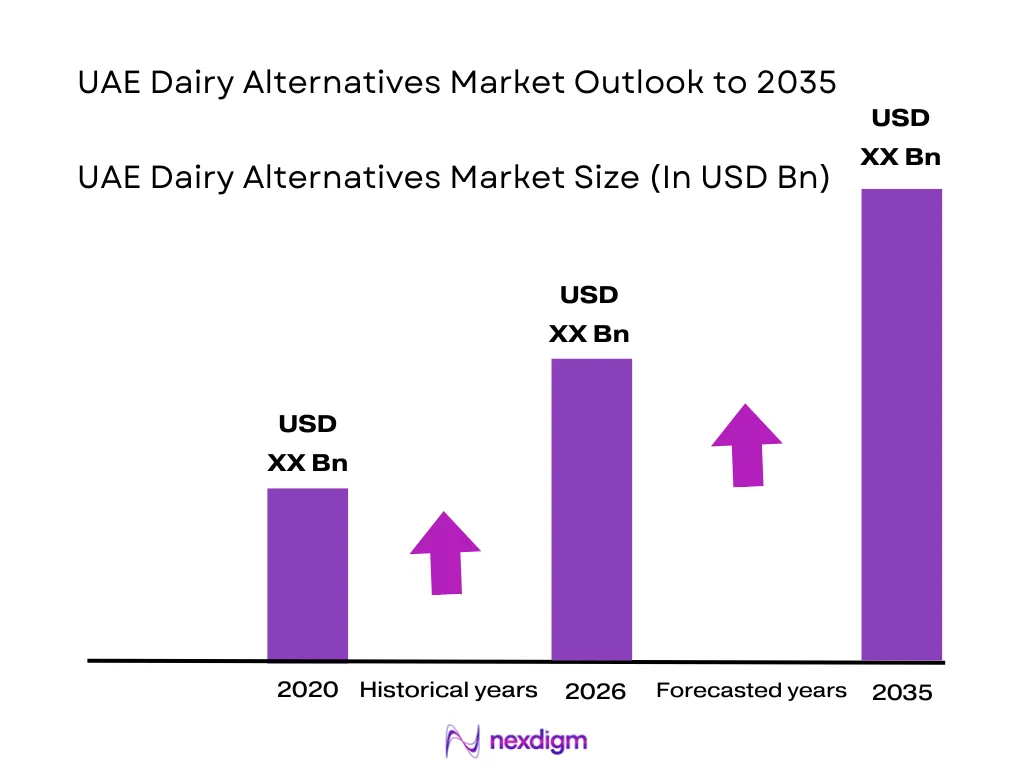
The UAE Dairy Alternatives Market is supported by increasing consumer preference for plant-based nutrition, rising lactose intolerance awareness, and growing demand for functional beverages. The market generated nearly USD ~ million in retail sales, supported by strong import volumes of oat, almond, and soy-based beverages entering the UAE food ecosystem. Expansion of premium cafés, health-focused grocery retail chains, and online grocery platforms has accelerated product visibility across urban centers. Demand for fortified, clean-label, and vegan-certified dairy alternatives continues to strengthen due to rising wellness-focused consumption behavior among expatriate and younger consumer populations.
Dubai and Abu Dhabi dominate the UAE Dairy Alternatives Market because of advanced retail infrastructure, premium foodservice penetration, and strong concentration of health-conscious consumers. Dubai remains the key import and distribution hub due to logistics connectivity through Jebel Ali Port and the presence of premium supermarket chains and vegan cafés. Abu Dhabi has emerged as a major consumption center because of increasing wellness expenditure and government-backed sustainable food initiatives. Sharjah and Northern Emirates are witnessing gradual demand expansion due to rising supermarket penetration and increasing accessibility of affordable dairy-free products.
Market Segmentation
By Product Type
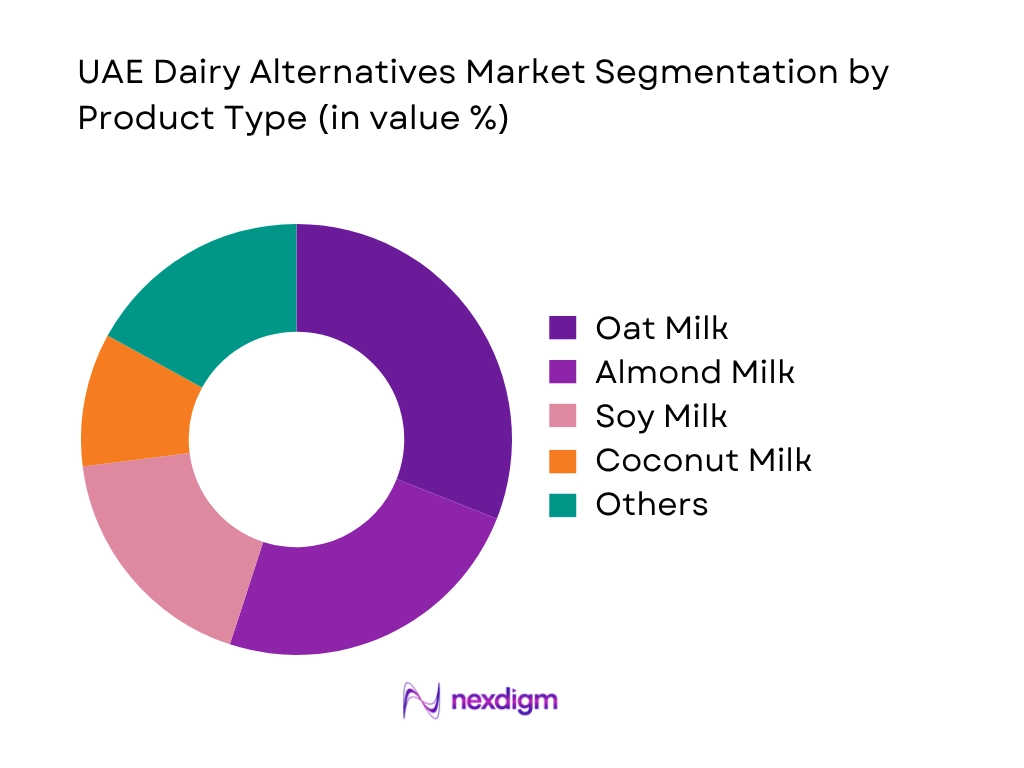
The UAE Dairy Alternatives Market is segmented by product type into oat milk, almond milk, soy milk, coconut milk, rice milk, cashew milk, plant-based yogurt, vegan cheese, and plant-based creamers. Oat milk dominates the UAE Dairy Alternatives Market under the product type segmentation due to strong adoption across premium cafés, coffee chains, and urban retail consumers. Consumers prefer oat milk because of its creamy consistency, compatibility with specialty coffee beverages, and sustainability-focused brand positioning. Premium supermarkets and horeca operators have increased shelf allocation for oat-based beverages because of growing demand among younger and expatriate consumers. In addition, increasing awareness regarding digestive health and lactose-free nutrition has accelerated household adoption. While almond milk maintains broad retail penetration, oat milk continues to strengthen its leadership because of higher café utilization and increasing availability of barista-style formulations across foodservice channels.
By Distribution Channel
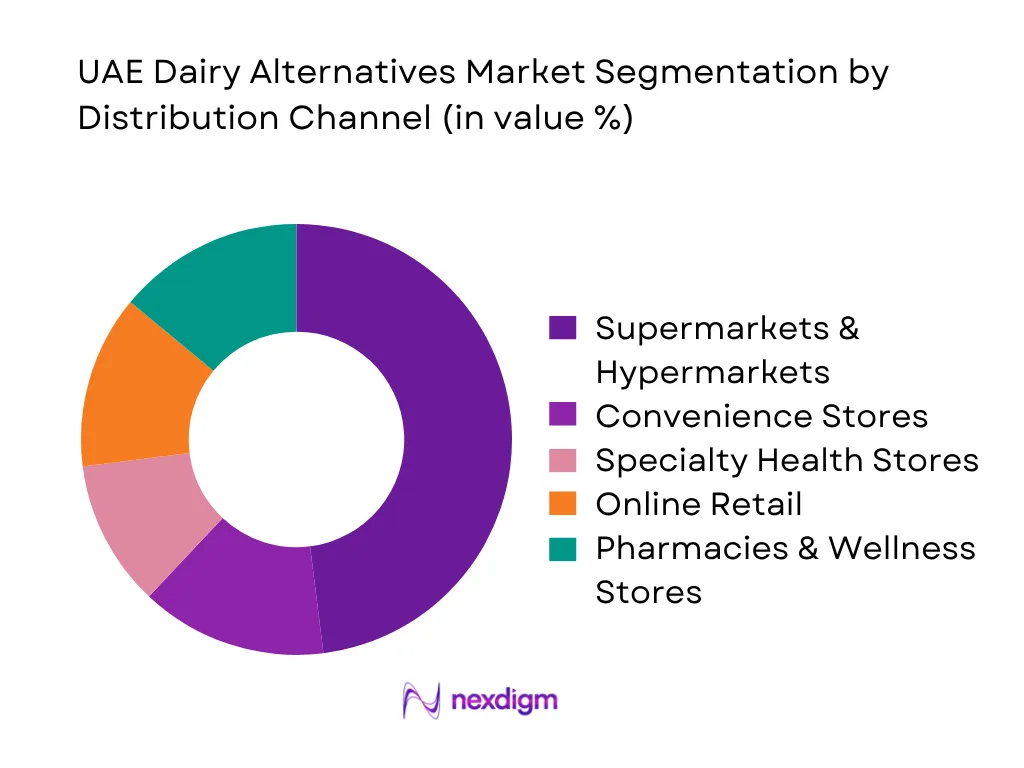
The UAE Dairy Alternatives Market is segmented by distribution channel into supermarkets and hypermarkets, convenience stores, online retail platforms, specialty health stores, horeca channels, and pharmacies & wellness stores. Supermarkets and hypermarkets dominate the UAE Dairy Alternatives Market because they offer extensive product assortments, premium shelf visibility, and greater accessibility for imported dairy-free products. Major retail chains have expanded dedicated vegan and organic aisles to meet increasing consumer demand for plant-based nutrition products. Consumers prefer hypermarkets due to promotional discounts, wider packaging options, and availability of premium international brands. Strong cold-chain infrastructure and strategic partnerships between retailers and dairy alternative manufacturers further support category dominance. Additionally, increasing household spending on wellness-oriented products and the expansion of premium grocery retail formats across Dubai and Abu Dhabi continue to strengthen the leadership of supermarkets and hypermarkets within the UAE dairy alternatives ecosystem.
Competitive Landscape
The UAE Dairy Alternatives Market is moderately consolidated, with leading companies focusing on product innovation, clean-label positioning, and expansion across retail and horeca channels. Market participants are strengthening distribution through premium supermarket partnerships, café collaborations, and online grocery integration. The industry is also witnessing increasing competition from regional wellness-focused brands introducing organic, fortified, and sustainable dairy-free products tailored to evolving consumer preferences within the UAE food ecosystem.
| Company | Establishment Year | Headquarters | Key Product Focus | Distribution Strength | Manufacturing Presence | Sustainability Initiatives | Horeca Presence | Innovation Focus |
| Oatly | 1994 | Sweden | ~ | ~ | ~ | ~ | ~ | ~ |
| Alpro | 1980 | Belgium | ~ | ~ | ~ | ~ | ~ | ~ |
| Koita | 2013 | UAE | ~ | ~ | ~ | ~ | ~ | ~ |
| Danone | 1919 | France | ~ | ~ | ~ | ~ | ~ | ~ |
| Pure Harvest Smart Farms | 2016 | UAE | ~ | ~ | ~ | ~ | ~ | ~ |
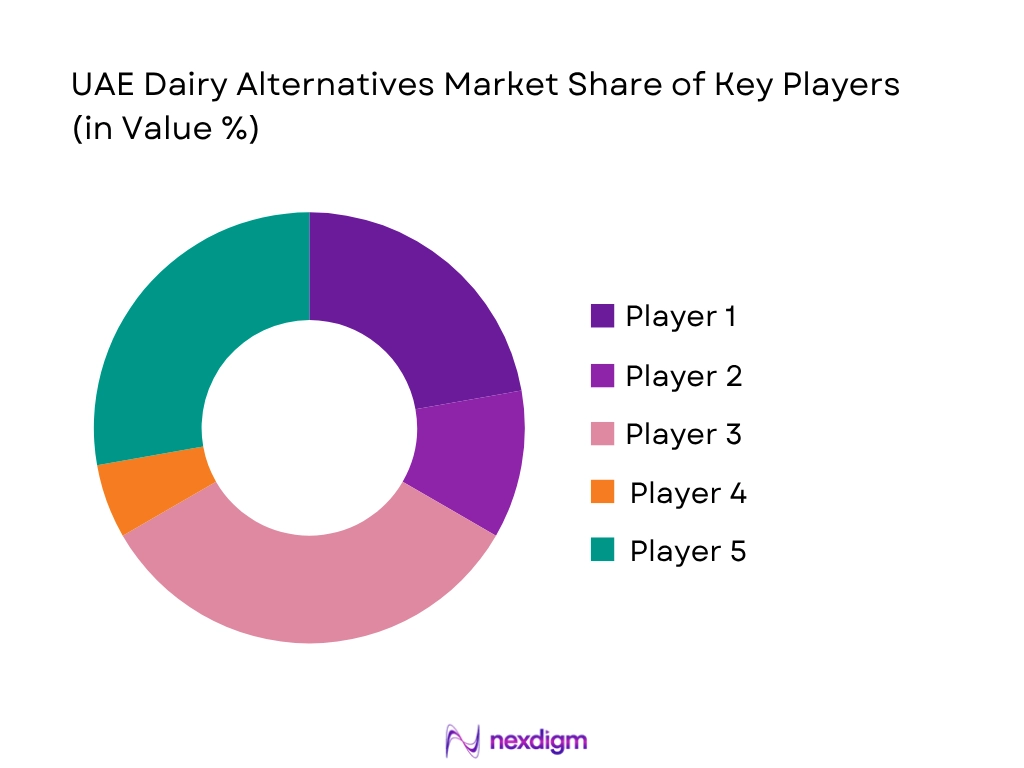
UAE Dairy Alternatives Market Analysis
Growth Drivers
Rising Vegan and Flexitarian Population
The increasing vegan and flexitarian population in the UAE is significantly driving demand for dairy alternatives across retail and horeca channels. UAE GDP per capita exceeded USD 49,000, supporting premium food consumption and wellness-oriented dietary preferences. Dubai hosts more than 13,000 food and beverage establishments, including a growing number of vegan cafés and health-focused restaurants. The UAE population surpassed 10 million residents, with expatriates accounting for a substantial share of consumers seeking globally familiar plant-based nutrition products. Government focus on sustainable food systems and alternative protein adoption is also encouraging supermarkets and specialty retailers to expand dairy-free product assortments across the country.
Increasing Lactose Intolerance Awareness
Growing awareness regarding lactose intolerance and digestive health is accelerating the adoption of dairy alternatives in the UAE. Healthcare expenditure in the UAE exceeded AED 112 billion, reflecting increasing spending on preventive wellness and specialized nutrition products. The country also imported substantial volumes of health and wellness food products, indicating rising consumer demand for functional and lactose-free nutrition categories. Pharmacies, wellness chains, and premium retailers are increasing shelf allocation for fortified oat milk, almond milk, and soy-based beverages. In addition, increasing physician recommendations regarding digestive health management and balanced nutrition are supporting long-term adoption of dairy alternatives among urban consumers.
Market Challenges
High Product Pricing Compared to Conventional Dairy
High pricing of dairy alternatives compared to conventional dairy products remains a major challenge limiting wider consumer penetration in the UAE. The country imports a significant share of oats, almonds, soy proteins, and specialty ingredients, increasing dependence on international freight and logistics networks. Food imports exceeded AED 140 billion, exposing the market to commodity price fluctuations and transportation disruptions. Premium dairy-free products also require specialized packaging and cold-chain management, increasing operational costs for retailers and distributors. As a result, many plant-based beverages continue to remain positioned within premium food categories, restricting accessibility among price-sensitive consumer groups.
Dependence on Imported Raw Materials
The UAE Dairy Alternatives Market remains highly dependent on imported raw materials such as oats, almonds, soybeans, and coconut derivatives because of limited domestic agricultural production capacity. Arable land accounts for less than 1% of total land area within the UAE, limiting large-scale cultivation of plant-based beverage ingredients. Dependence on imports exposes manufacturers and distributors to international trade disruptions, freight bottlenecks, and geopolitical instability affecting ingredient sourcing. Additionally, fluctuations in agricultural output across exporting countries can impact consistency in supply and inventory management across retail and horeca channels operating within the UAE dairy alternatives ecosystem.
Market Opportunities
Expansion of Private Label Plant-Based Products
Expansion of private label dairy-free products presents a major opportunity within the UAE Dairy Alternatives Market as retailers continue strengthening wellness-oriented food portfolios. Large supermarket chains are increasing investments in affordable plant-based beverages and organic nutrition categories to address growing consumer demand for accessible dairy alternatives. Expansion of quick-commerce grocery delivery platforms and online retail channels is also improving product accessibility across major urban centers. The UAE’s position as a regional food trade hub enables retailers to source international plant-based products efficiently through established logistics infrastructure, supporting category diversification and wider shelf penetration.
Growth in Functional and Protein-Enriched Dairy Alternatives
The increasing focus on preventive healthcare, fitness, and functional nutrition is creating strong opportunities for protein-enriched and fortified dairy alternatives in the UAE. Rising participation in fitness activities and wellness programs is encouraging consumers to seek high-protein, vitamin-fortified, and low-sugar plant-based beverages. Premium consumers are increasingly demanding functional dairy alternatives containing probiotics, calcium, adaptogens, and added protein ingredients. This trend is supporting innovation across oat milk, almond milk, vegan yogurt, and ready-to-drink nutrition beverages. In addition, wellness-focused retailers and horeca operators are expanding functional beverage offerings to cater to health-conscious and performance-oriented consumer groups.
Future Outlook
The UAE Dairy Alternatives Market is expected to witness substantial expansion over the coming years due to increasing consumer focus on wellness, sustainability, and functional nutrition. Rising adoption of vegan and flexitarian lifestyles is expected to strengthen demand for plant-based beverages, yogurt, and dairy-free creamers across retail and horeca channels. Manufacturers are expected to focus on clean-label ingredients, protein fortification, and sugar-free formulations to attract health-conscious consumers. Expansion of premium café chains and online grocery platforms is likely to accelerate consumption of oat milk and barista-style dairy alternatives. Increasing investments in sustainable packaging, local manufacturing, and food innovation are expected to strengthen long-term market growth across the UAE.
Major Players
- Alpro
- Oatly
- Califia Farms
- Blue Diamond Growers
- Minor Figures
- Nestlé
- Danone
- Pure Harvest Smart Farms
- Koita
- Vitasoy
- Silk
- Rude Health
- Earth’s Own
- Elmhurst 1925
- Kikkoman
Key Target Audience
- Plant-Based Beverage Manufacturers
- Dairy-Free Yogurt and Cheese Producers
- Retail Supermarket Chains
- Foodservice and Café Operators
- Ingredient and Plant Protein Suppliers
- Investments and Venture Capitalist Firms
- Government and Regulatory Bodies
- Packaging and Sustainable Material Providers
Research Methodology
Step 1: Identification of Key Variables
The initial phase involved identifying major variables influencing the UAE Dairy Alternatives Market, including plant-based beverage adoption, retail shelf expansion, horeca demand, lactose intolerance prevalence, and wellness-oriented consumption behavior. Extensive secondary research was conducted using trade statistics, retail databases, government publications, and industry disclosures to understand the ecosystem and value chain dynamics.
Step 2: Market Analysis and Construction
Historical market analysis was conducted using import-export data, retail performance statistics, product launch activity, and consumption trends related to plant-based dairy products. Market estimations were derived through bottom-up calculations based on product categories, sales channels, and regional demand concentration across the UAE.
Step 3: Hypothesis Validation and Expert Consultation
Preliminary findings were validated through interviews with distributors, retail procurement managers, horeca operators, and dairy alternative suppliers. These consultations provided operational insights regarding product demand, pricing structures, shelf allocation strategies, consumer preferences, and future innovation trends across the UAE dairy alternatives industry.
Step 4: Research Synthesis and Final Output
The final stage involved integrating qualitative and quantitative findings to prepare a comprehensive market assessment. Cross-validation techniques were applied using trade statistics, retailer disclosures, and distributor insights to ensure reliability and consistency of market estimates, segmentation analysis, and future growth projections for the UAE Dairy Alternatives Market.

- Executive Summary
- Research Methodology
(Market Definitions and Assumptions, Abbreviations, Research Framework, Bottom-Up Market Estimation, Top-Down Validation, Demand Side Analysis, Retail Audit Analysis, Trade Flow Assessment, Primary Interviews with Manufacturers and Distributors, Forecasting Methodology, Limitations and Assumptions)

- Definition and Scope
- Evolution of Plant-Based Nutrition Ecosystem in UAE
- Industry Ecosystem and Stakeholder Mapping
- Supply Chain and Value Chain Analysis
- Raw Material Procurement Landscape

- Growth Drivers
Rising Vegan and Flexitarian Population
Increasing Lactose Intolerance Awareness
Expansion of Premium Cafés and Coffee Chains
Growing Health and Wellness Expenditure
Increasing Demand for Functional Beverages - Market Challenges
High Product Pricing Compared to Conventional Dairy
Dependence on Imported Raw Materials
Limited Domestic Manufacturing Base
Shelf-Life and Cold Chain Management Issues - Market Opportunities
Expansion of Private Label Plant-Based Products
Growth in Functional and Protein-Enriched Dairy Alternatives
Increasing Adoption Across Horeca Sector
Innovation in Sustainable Packaging Solutions
Rising Demand for Clean Label and Organic Products - Market Trends
Shift Toward Oat-Based Dairy Alternatives
Premiumization of Plant-Based Beverages
Rise of Barista Edition Dairy Alternatives
Expansion of Subscription-Based Grocery Delivery
Adoption of Carbon Neutral and ESG Branding - Government Regulations
UAE Food Safety and Labeling Standards
Import Regulations for Plant-Based Products
Halal Certification and Compliance Standards
Sustainability and Packaging Regulations - Porter’s Five Forces Analysis
- PESTLE Analysis
- Pricing Analysis
- Competition Ecosystem

- By Value, 2020-2025
- By Volume, 2020-2025
- By Average Selling Price, 2020-2025
- By Per Capita Consumption, 2020-2025

- By Product Type (in Value %)
Plant-Based Beverage Consumption
Shelf Presence
SKU Penetration
Household Adoption Rate
Functional Ingredient Integration - By Source Type (in Value %)
Protein Content
Raw Material Availability
Import Dependency
Nutritional Profile
Processing Efficiency - By Distribution Channel (in Value %)
Shelf Share
Store Penetration
Online Conversion Rate
Basket Size
Retail Throughput - By End User (in Value %)
Household Consumption Volume
Horeca Utilization
Fitness Consumer Adoption
Institutional Procurement
Premium Product Preference - By Packaging Type (in Value %)
Shelf Life
Sustainable Packaging Adoption
Packaging Visibility
Storage Efficiency
Retail Convenience - By Region (in Value %)
Dubai
Abu Dhabi
Sharjah
Northern Emirates

- Market Share Analysis of Major Players on the Basis of Revenue and Volume
- Cross Comparison Parameters (Company Overview, Product Portfolio Breadth, Plant-Based SKU Count, Organic Product Penetration, Barista Product Availability, Distribution Reach, Retail Shelf Presence, Manufacturing Presence, Sustainability Initiatives, Packaging Innovation, Ingredient Sourcing Strategy, Horeca Partnerships, Online Channel Penetration, Pricing Positioning, Innovation Pipeline, Strategic Collaborations)
- Competitive Benchmarking Matrix
- SWOT Analysis of Major Players
- Pricing Analysis by Product Category and SKU
- Detailed Profiles of Major Companies
Alpro
Oatly
Califia Farms
Blue Diamond Growers
Minor Figures
Nestlé
Danone
Pure Harvest Smart Farms
Koita
Vitasoy
Silk
Rude Health
Earth’s Own
Elmhurst 1925
Kikkoman

- Consumption Frequency Analysis
- Consumer Spending and Basket Analysis
- Brand Loyalty and Switching Behaviour
- Purchase Decision Parameters
- Health and Sustainability Preference Mapping

- By Value, 2026-2030
- By Volume, 2026-2030
- By Average Selling Price, 2026-2030
- By Per Capita Consumption, 2026-2030


 Request a Sample
 Ask for Customization
 Get a Quote
 Enquire Now