
 Download PDF
Market Overview
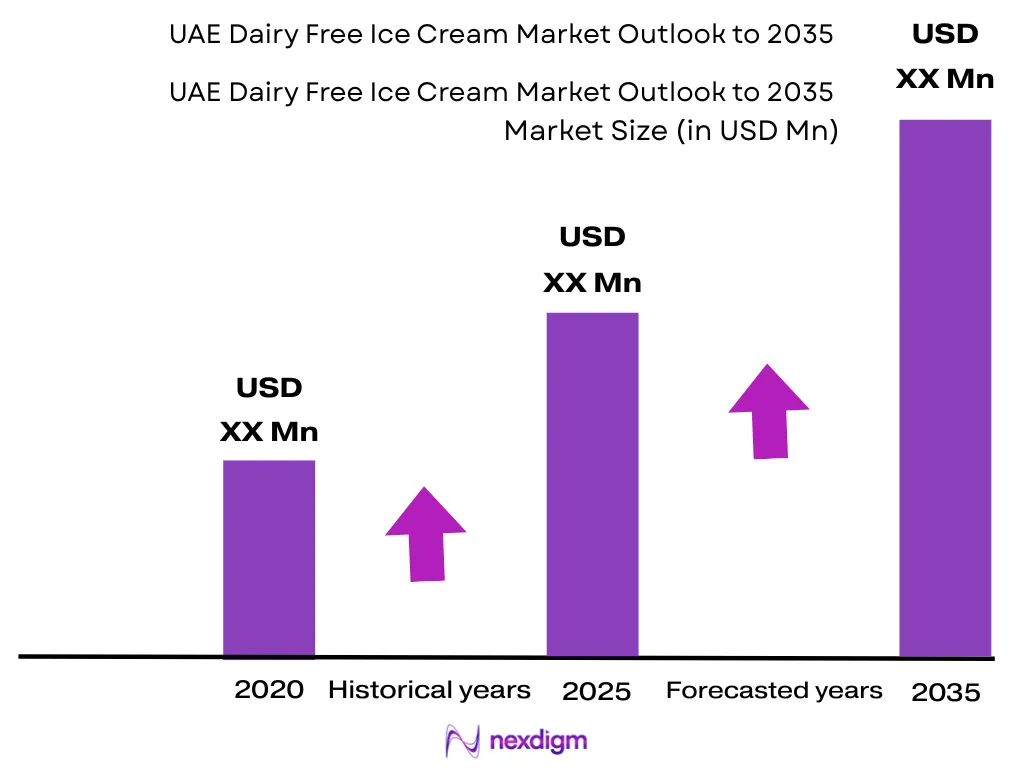
The UAE Dairy Free Ice Cream Market was valued at approximately USD ~ Million in 2024 and is projected to expand at a CAGR of ~% during 2026-2035. The market is driven by the increasing adoption of plant-based diets, rising prevalence of lactose intolerance, and growing demand for vegan and clean-label frozen desserts. According to the World Bank, UAE GDP exceeded USD 548 billion while per capita income remained among the highest globally at over USD 49,000, supporting premium food consumption. Retail sales of health and wellness foods continued to expand, while the UAE’s population surpassed 11 million, creating a larger consumer base for dairy-free frozen dessert products. Growth is further supported by expanding modern retail networks, e-commerce penetration, and increasing availability of premium imported dairy-free ice cream brands across supermarkets and specialty stores.
Market Segmentation
By Base Ingredient Type
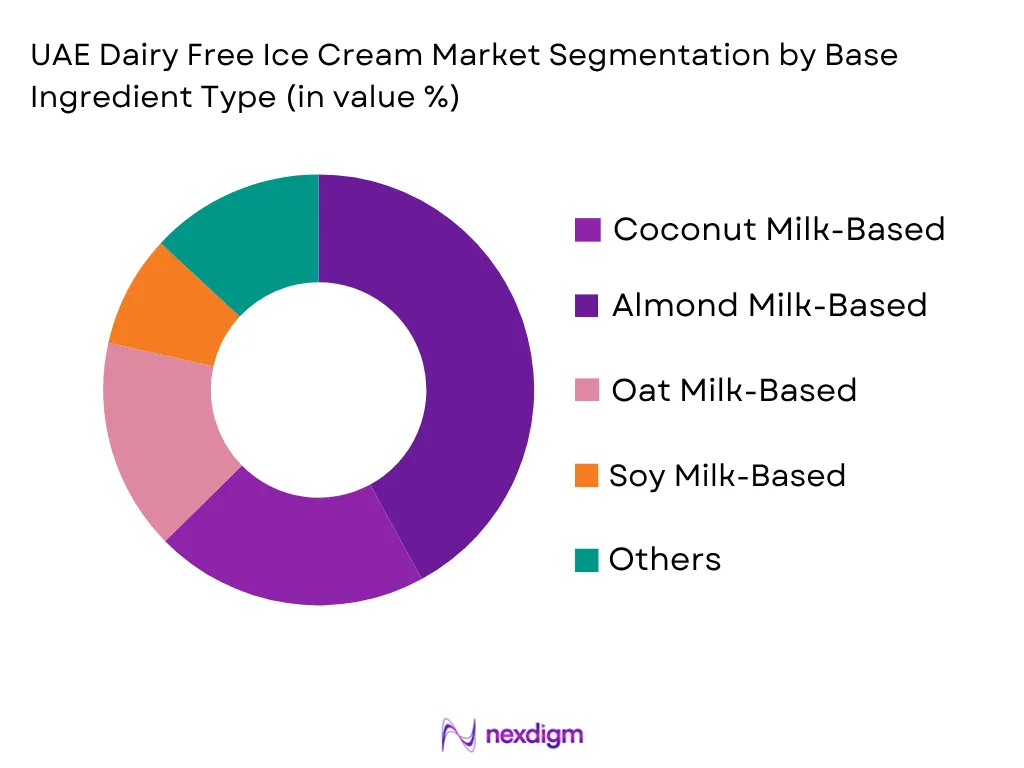
By Plant-Based Base Type, the UAE Dairy Free Ice Cream Market is segmented into Coconut Milk-Based, Almond Milk-Based, Oat Milk-Based, Soy Milk-Based, Cashew Milk-Based, Pea Protein-Based, and Others. Recently, Coconut Milk-Based Ice Cream has held the dominant market share due to its creamy texture, superior mouthfeel, and ability to closely replicate traditional dairy ice cream. Consumers in the UAE increasingly prefer coconut-based formulations because they align with vegan dietary preferences while delivering indulgent taste experiences. The segment has also benefited from strong product availability across premium supermarkets and health food stores. International brands frequently utilize coconut milk as a primary ingredient due to its functional properties and broad consumer acceptance. Furthermore, coconut-based products are often positioned as clean-label offerings, attracting health-conscious consumers seeking dairy alternatives without compromising taste. The segment continues to lead due to strong flavor compatibility, premium positioning, and widespread adoption among vegan, lactose-intolerant, and flexitarian consumers.
By Distribution Channel
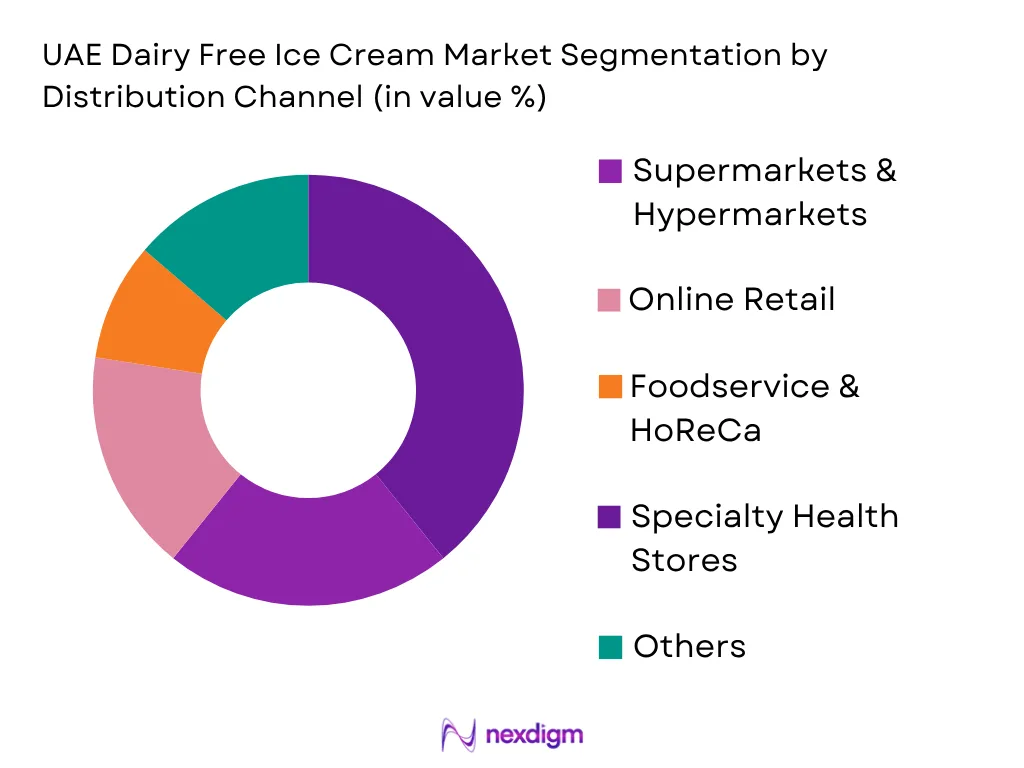
The UAE Dairy Free Ice Cream Market is segmented into Hypermarkets & Supermarkets, Convenience Stores, Specialty Health Stores, Online Retail, Foodservice & HoReCa, Ice Cream Parlors, and Others. Hypermarkets and supermarkets dominate the market due to their extensive product assortment, strong cold-chain infrastructure, and ability to stock both local and imported dairy-free ice cream brands. Major retail chains across Dubai and Abu Dhabi provide dedicated sections for plant-based and health-oriented products, increasing consumer visibility. These outlets offer consumers access to multiple flavor options, package formats, and price points under one roof. Frequent promotional campaigns and premium shelf placements further enhance sales performance. Additionally, consumers often prefer purchasing frozen desserts during routine grocery shopping trips, making modern retail the most convenient channel. The segment’s dominance is reinforced by strong urban retail penetration, increasing premium grocery consumption, and the growing presence of vegan product portfolios in leading supermarket chains.
Competitive Landscape
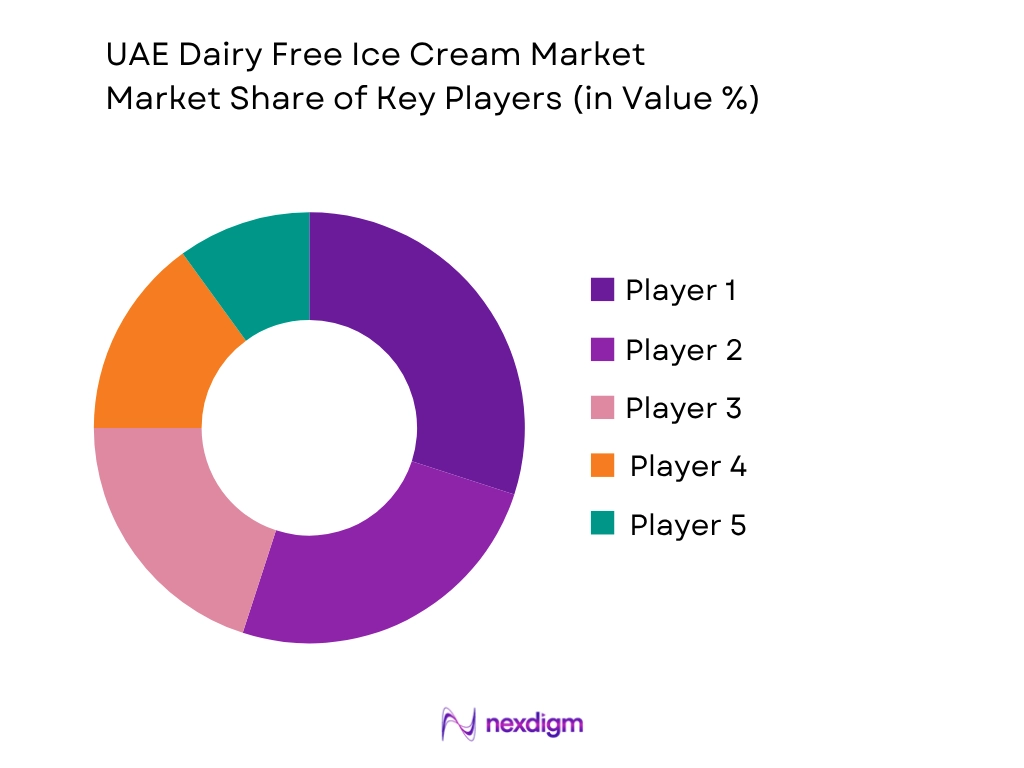
The UAE Dairy Free Ice Cream Market is moderately consolidated and characterized by the presence of international premium brands, regional vegan dessert manufacturers, and specialty frozen dessert companies. Market participants compete through flavor innovation, plant-based ingredient diversification, clean-label formulations, sustainable packaging, and premium retail distribution. The competitive environment is increasingly influenced by consumer demand for indulgent yet health-conscious frozen dessert products.
| Company | Establishment Year | Headquarters | Plant-Based Base Portfolio | Dairy-Free SKU Count | Distribution Reach | Premium Product Portfolio | Vegan Certification | Packaging Sustainability |
| House of Pops | 2018 | ~ | ~ | ~ | ~ | ~ | ~ | ~ |
| Magnum Vegan | 1989 | ~ | ~ | ~ | ~ | ~ | ~ | ~ |
| Ben & Jerry’s Non-Dairy | 1978 | ~ | ~ | ~ | ~ | ~ | ~ | ~ |
| So Delicious Dairy Free | 1987 | ~ | ~ | ~ | ~ | ~ | ~ | ~ |
| Oatly | 1994 | ~ | ~ | ~ | ~ | ~ | ~ | ~ |
UAE Dairy Free Ice Cream Market Analysis
Growth Drivers
Rising Health & Wellness Expenditure and Expanding Plant-Based Consumer Base
The UAE Dairy Free Ice Cream Market is benefiting from rising health-conscious consumption patterns supported by strong economic fundamentals and increasing spending power. The UAE’s nominal GDP exceeded USD 548 billion, while GDP per capita remained above USD 49,000, placing the country among the highest-income consumer markets globally. The population surpassed 11 million people, with expatriates accounting for a substantial share of residents and bringing international dietary preferences that include vegan, lactose-free, and plant-based products. Private final consumption expenditure exceeded USD 300 billion, reflecting strong household spending on premium food categories. The UAE also maintains one of the highest urbanization levels globally, with more than 9.5 million people residing in urban areas, enabling efficient retail penetration of premium frozen dessert products. Growing awareness of lactose intolerance, dairy allergies, and clean-label nutrition has encouraged consumers to shift toward coconut-based, almond-based, and oat-based frozen desserts. The country’s advanced retail ecosystem, combined with increasing shelf space dedicated to plant-based products in supermarkets and specialty food stores, continues to support category expansion. Rising demand for wellness-oriented indulgence products is therefore creating a strong foundation for sustained growth in dairy-free ice cream consumption across the UAE.
Growth of Tourism, Hospitality, and Premium Food Consumption
The UAE’s tourism and hospitality industry is a major driver for the Dairy Free Ice Cream Market. Dubai welcomed more than 18 million international visitors, while Abu Dhabi continued to attract millions of leisure and business travelers through its hospitality infrastructure. The country operates over 1,200 hotel establishments and tens of thousands of foodservice outlets that increasingly incorporate vegan and plant-based menu options to cater to global consumers. The UAE’s food and beverage sector benefits from strong disposable income levels and a large expatriate population representing more than 200 nationalities, creating demand for diverse frozen dessert offerings. Retail sales activity remains robust due to strong consumer purchasing power and high levels of premium food consumption. The country also serves as a regional hub for imported specialty foods, allowing consumers access to a broad range of international dairy-free ice cream brands. Premiumization trends are particularly evident in urban centers such as Dubai and Abu Dhabi, where consumers are willing to pay for innovative flavors, organic ingredients, and functional food products. This combination of tourism-driven demand, luxury consumption patterns, and international food exposure continues to support growth in the dairy-free frozen dessert category.
Market Challenges
Heavy Dependence on Imported Ingredients and Imported Finished Products
The UAE Dairy Free Ice Cream Market faces challenges due to its reliance on imported food ingredients and finished frozen dessert products. The country imports a significant share of its food requirements because of limited domestic agricultural production. Total merchandise imports exceeded USD 450 billion, reflecting the economy’s dependence on global supply chains. Premium dairy-free ice cream formulations frequently require imported ingredients such as almonds, oats, cashews, pea protein isolates, natural stabilizers, and specialty flavoring compounds. Supply chain disruptions, shipping delays, and geopolitical uncertainties can affect inventory availability and product assortment across retail channels. Additionally, maintaining frozen product quality throughout long international transportation routes requires advanced cold-chain logistics infrastructure. While the UAE possesses sophisticated logistics capabilities, imported frozen products remain vulnerable to disruptions in international freight networks. Manufacturers and distributors must continuously manage stock levels and sourcing risks to ensure product availability. Dependence on imported raw materials also limits local value addition opportunities and creates operational complexities for businesses seeking to expand the dairy-free frozen dessert category within the UAE market.
Premium Product Positioning Restricting Mass-Market Adoption
Although disposable incomes in the UAE remain among the highest globally, dairy-free ice cream products are predominantly positioned within premium and super-premium categories, limiting penetration among broader consumer groups. The UAE population exceeds 11 million people, but income distribution varies considerably across expatriate and resident segments. Traditional dairy ice cream continues to enjoy wider availability and stronger consumer familiarity across mass-market retail channels. Many dairy-free products are concentrated in premium supermarkets, specialty health stores, and gourmet retail formats, reducing accessibility for value-conscious consumers. Furthermore, the UAE hosts a highly competitive frozen dessert market featuring both local and international brands. Consumer education regarding plant-based ingredients remains an ongoing requirement, particularly among consumers who do not actively seek vegan or lactose-free alternatives. While demand is growing among health-conscious and affluent consumers, broader category expansion requires increased product accessibility, greater flavor diversity, and stronger consumer awareness initiatives. These factors continue to present challenges for market participants attempting to scale dairy-free ice cream beyond niche and premium consumer segments.
Market Opportunities
Expansion of Modern Retail, Quick Commerce, and E-Commerce Infrastructure
The UAE offers significant opportunities through its advanced retail and digital commerce ecosystem. Internet penetration exceeds 99 million mobile subscriptions across the country, while smartphone adoption ranks among the highest globally. E-commerce activity continues to expand rapidly, supported by digital payment adoption and efficient last-mile delivery infrastructure. The UAE operates thousands of modern retail outlets, including hypermarkets, supermarkets, and convenience stores that increasingly dedicate shelf space to plant-based and health-focused food categories. Quick-commerce platforms and online grocery services have become important distribution channels for premium frozen products requiring temperature-controlled delivery. The country’s logistics infrastructure includes major global transport hubs such as Dubai and Abu Dhabi, supporting efficient inventory movement and cold-chain management. Consumers increasingly purchase specialty foods through digital channels due to convenience and wider product selection. Dairy-free ice cream manufacturers can leverage these channels to improve product accessibility, expand geographic coverage, and introduce premium frozen dessert offerings to a broader consumer base. Continued retail modernization and digital commerce growth create favorable conditions for sustained category development.
Increasing Demand for Functional Foods and Sustainable Consumption
The UAE Dairy Free Ice Cream Market is well positioned to benefit from growing consumer interest in functional nutrition, clean-label products, and sustainable consumption. Government initiatives promoting food innovation and sustainability have encouraged investment in alternative food categories. The UAE’s population is relatively young and highly urbanized, supporting demand for health-oriented products that align with modern lifestyles. Consumers are increasingly seeking products featuring plant-based proteins, reduced sugar content, natural ingredients, and environmentally responsible packaging. The country’s food manufacturing and distribution sectors continue to invest in innovative product development to meet evolving consumer expectations. Growing awareness of environmental sustainability has also increased interest in plant-based diets and lower-impact food choices. Premium consumers are increasingly attracted to dairy-free frozen desserts formulated with oat milk, almond milk, coconut milk, and functional ingredients such as added protein or fiber. As retailers expand their health and wellness product assortments and foodservice operators introduce plant-based dessert options, opportunities for category diversification and premium product innovation are expected to strengthen further within the UAE market.
Future Outlook
The UAE Dairy Free Ice Cream Market is expected to witness substantial expansion over the forecast period, supported by growing vegan adoption, increasing health consciousness, and rising demand for lactose-free indulgence products. Product innovation in oat-based and protein-enriched frozen desserts is expected to create new growth opportunities. Expansion of quick-commerce platforms and premium grocery retailing will further enhance product accessibility. The hospitality sector is increasingly incorporating dairy-free dessert offerings into menus, while international brands continue to expand their presence in the UAE through partnerships with leading retail chains and distributors.
Major Players
- House of Pops
- Ben & Jerry’s Non-Dairy
- Magnum Vegan
- Oatly Frozen Desserts
- So Delicious Dairy Free
- Coconut Bliss
- Booja-Booja
- Häagen-Dazs Non-Dairy
- Alpro
- Swedish Glace
- Halo Top Dairy Free
- Van Leeuwen Non-Dairy
- Cado
- Baskin Robbins Non-Dairy Range
- Kibsons Plant-Based Frozen Desserts
Key Target Audience
- Dairy-Free Ice Cream Manufacturers
- Plant-Based Ingredient Suppliers
- Frozen Dessert Brands
- Hypermarket and Supermarket Chains
- HoReCa Operators
- Investments and Venture Capitalist Firms
- Government and Regulatory Bodies (UAE Ministry of Climate Change and Environment, Abu Dhabi Agriculture and Food Safety Authority, Dubai Municipality Food Safety Department)
- Cold Chain Logistics and Distribution Companies
Research Methodology
Step 1: Identification of Key Variables
The initial stage involves mapping the complete UAE Dairy Free Ice Cream ecosystem, including manufacturers, distributors, retailers, ingredient suppliers, and foodservice operators. Secondary research is conducted through industry databases, company reports, government publications, and trade sources to identify the critical variables influencing market performance.
Step 2: Market Analysis and Construction
Historical industry trends are analyzed using retail sales data, frozen dessert consumption trends, plant-based food adoption rates, and distribution channel performance. Both demand-side and supply-side indicators are incorporated to develop reliable market estimates and segment-level insights.
Step 3: Hypothesis Validation and Expert Consultation
Research findings are validated through structured interviews with manufacturers, distributors, retailers, category managers, and industry experts. These discussions provide operational insights regarding product demand, pricing dynamics, innovation trends, and channel performance.
Step 4: Research Synthesis and Final Output
The final stage combines primary and secondary findings through data triangulation. Bottom-up and top-down approaches are applied to ensure consistency and accuracy. The resulting analysis delivers comprehensive insights into market size, competitive positioning, growth opportunities, and future outlook.

- Executive Summary
- Research Methodology (Market Definitions and Assumptions, Abbreviations, Market Sizing Approach, Top-Down Analysis, Bottom-Up Analysis, Demand-Side Assessment, Supply-Side Assessment, Retail Audit Analysis, Consumer Purchase Tracking, Primary Industry Interviews, Data Triangulation, Forecasting Framework, Limitations and Future Conclusions)

- Definition and Scope
- Market Evolution and Industry Genesis
- Timeline of Major Industry Developments
- Dairy-Free Frozen Dessert Ecosystem
- Industry Value Chain Analysis

- Growth Drivers (Rising Vegan Population, Increasing Lactose Intolerance Awareness, Premium Frozen Dessert Consumption, Growth of Health & Wellness Spending, Expansion of Modern Retail, Tourism-Led Food Consumption)
- Market Challenges (Dependence on Imported Ingredients, Premium Product Pricing, Climate-Controlled Logistics Requirements, Limited Domestic Manufacturing Base, Consumer Education Requirements, Shelf-Life Management Challenges)
- Market Opportunities (Luxury Dairy-Free Dessert Innovation, Expansion Through Quick Commerce Platforms, Functional Frozen Dessert Development, HoReCa Penetration, Private Label Expansion, Tourism and Hospitality Demand)
- Market Trends (Oat Milk Innovation, Premium Vegan Product Launches, Sugar-Free Frozen Desserts, Keto-Friendly Formulations, Sustainable Packaging Adoption, Protein-Enriched Dairy-Free Products, Date-Inspired Flavor Innovation)
- Government Regulations (UAE Food Safety Standards, Emirates Authority Food Regulations, Halal Certification Requirements, Product Labeling Standards, Import Compliance Requirements, Sustainability Regulations)
- Raw Material Analysis (Oat Ingredient Imports, Almond Ingredient Procurement, Coconut Ingredient Supply Chain, Plant Protein Utilization, Natural Sweetener Trends, Premium Ingredient Adoption)
- Consumer Preference Mapping (Taste Preference, Texture Acceptance, Ingredient Transparency, Health Benefits, Sustainability Considerations)
- Supply-Demand Gap Assessment
- SWOT Analysis
- Porter’s Five Forces Analysis
- PESTLE Analysis
- Stakeholder Ecosystem
- Competition Ecosystem

- By Market Value (2020-2025)
- By Volume Consumption (2020-2025)
- By Average Selling Price (2020-2025)

- By Base Ingredient Type (In Value %)
Coconut Milk-Based Ice Cream
Almond Milk-Based Ice Cream
Oat Milk-Based Ice Cream
Soy Milk-Based Ice Cream
Cashew Milk-Based Ice Cream
Pea Protein-Based Ice Cream
Mixed Plant-Based Formulations
Other Alternative Bases - By Flavor Type (In Value %)
Chocolate
Vanilla
Date-Based Flavors
Pistachio
Coffee Flavors
Tropical Fruit Flavors
Nut-Based Premium Flavors
Gourmet and Limited-Edition Flavors - By Distribution Channel (In Value %)
Hypermarkets and Supermarkets
Convenience Stores
Specialty Health Food Stores
Online Retail and Direct-to-Consumer
Quick Commerce Platforms
Foodservice and HoReCa
Ice Cream Parlors and Dessert Chains
Travel Retail and Duty-Free Channels - By Region (In Value %)
Dubai
Abu Dhabi
Sharjah
Ajman
Ras Al Khaimah
Fujairah
Umm Al Quwain - By Packaging Type (In Value %)
Tubs
Cups
Multipacks
Stick and Bar Packaging
Family Packs
Sustainable and Recyclable Packaging

- Market Share of Major Players (By Value, Volume, Product Format, Distribution Channel, Plant-Based Base Type)
- Market Concentration Analysis (International Brand Presence, Regional Brand Strength, Private Label Penetration, Premium Segment Dominance)
- Cross Comparison Parameters (Plant-Based Base Portfolio, Dairy-Free SKU Count, UAE Distribution Reach, HoReCa Penetration, Vegan & Halal Certification Portfolio, Premium Product Penetration, Innovation & New Product Launch Frequency, Presence Across Modern Retail & Quick Commerce Platforms)
- SWOT Analysis of Major Players
- Pricing Analysis by SKU, Pack Size and Product Category
- Detailed Profiles of Major Companies
House of Pops
Kibsons Plant-Based Frozen Desserts
Oatly Frozen Desserts
Ben & Jerry’s Non-Dairy
Magnum Vegan
Häagen-Dazs Non-Dairy
Alpro
Coconut Bliss
Booja-Booja
So Delicious Dairy Free
Halo Top Dairy Free
Cado
Van Leeuwen Non-Dairy
Swedish Glace
Baskin Robbins Non-Dairy Range

- Consumption Behavior Assessment (Purchase Frequency, Seasonal Demand, Consumption Occasions, Household Penetration, Repeat Purchase Rate)
- Demographic Consumption Trends (Age Group, Income Segment, Nationality Mix, Expatriate Population Influence, Urban-Rural Split)
- Purchasing Power Analysis (Disposable Income, Premium Product Affordability, Frozen Dessert Spending, Food & Beverage Expenditure)
- Premium vs Luxury Demand Analysis (Willingness to Pay, Premium Brand Adoption, Gourmet Product Demand, Trading-Up Behaviour)
- Brand Loyalty Assessment (Repeat Purchase Behaviour, Brand Switching Trends, Retention Drivers, Trial Conversion Rates)

- By Market Value (2026-2035)
- By Volume Consumption (2026-2035)
- By Average Selling Price (2026-2035)


 Request a Sample
 Ask for Customization
 Get a Quote
 Enquire Now