
 Download PDF
Market Overview
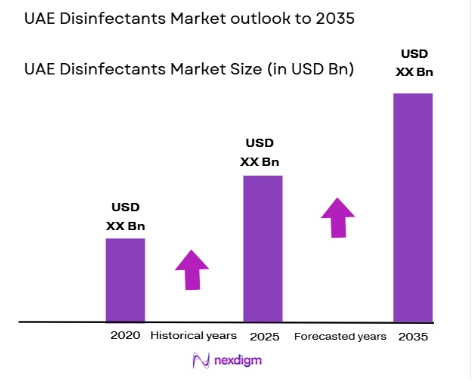
The UAE Disinfectants Market demonstrates strong commercial activity with a recorded market size of USD ~ billion based on a recent historical assessment, supported by verified industry datasets from regional trade and chemical distribution authorities. Demand is driven by sustained investments in healthcare infrastructure, stringent hygiene regulations, and rising consumption across hospitality and commercial sectors. Expansion of infection control protocols, coupled with increased awareness of sanitation standards, continues to support consistent volume and value growth across institutional and consumer segments.
Dubai and Abu Dhabi remain dominant consumption centers due to their dense concentration of hospitals, hotels, airports, and commercial establishments requiring continuous sanitation solutions. These emirates benefit from advanced infrastructure, regulatory enforcement, and high tourist inflows, which drive recurrent disinfectant usage. Industrial hubs such as Sharjah also contribute significantly due to manufacturing and logistics activities. Strong government-led public health initiatives and strict compliance requirements further reinforce demand concentration in these urban regions.
Market Segmentation
By Product Type:
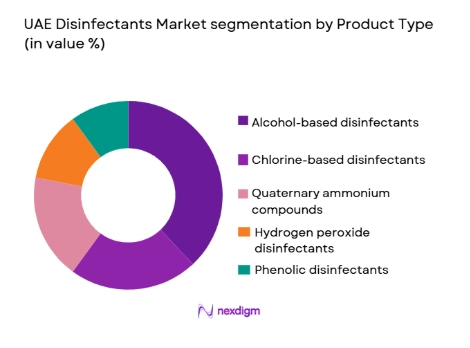
UAE Disinfectants Market is segmented by product type into alcohol-based disinfectants, chlorine-based disinfectants, quaternary ammonium compounds, hydrogen peroxide disinfectants, and phenolic disinfectants. Recently, alcohol-based disinfectants has a dominant market share due to factors such as rapid antimicrobial action, widespread institutional acceptance, and high consumer trust. These products are extensively used in healthcare facilities, hospitality environments, and households due to their convenience and effectiveness. Their compatibility with multiple surfaces and quick drying properties make them a preferred choice across sectors, especially in high-frequency sanitation environments.
By End User:
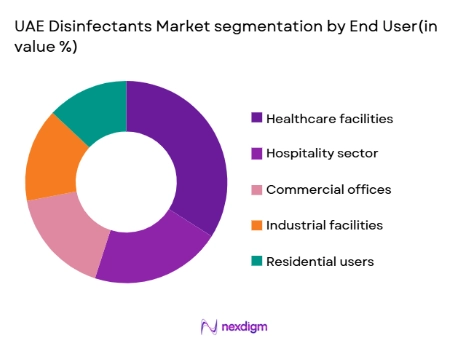
UAE Disinfectants Market is segmented by end user into healthcare facilities, hospitality sector, commercial offices, industrial facilities, and residential users. Recently, healthcare facilities has a dominant market share due to factors such as strict infection control requirements, continuous sanitation cycles, and regulatory mandates. Hospitals, clinics, and diagnostic centers require high-grade disinfectants for surface and instrument sterilization. The presence of advanced healthcare infrastructure and increasing patient volumes further reinforces the sustained demand from this segment.
Competitive Landscape
The UAE disinfectants market is moderately consolidated with a mix of multinational corporations and regional manufacturers competing on product innovation, pricing strategies, and distribution networks. Major players leverage strong brand equity and regulatory compliance capabilities to maintain market presence, while regional firms focus on cost competitiveness and localized supply chains. Strategic partnerships with healthcare institutions and government procurement contracts significantly influence competitive positioning.
| Company Name | Establishment Year | Headquarters | Technology Focus | Market Reach | Key Products | Revenue (USD Billion) | Distribution Strength |
| Reckitt Benckiser Group | 1823 | UK | ~ | ~ | ~ | ~ | ~ |
| Ecolab Inc | 1923 | USA | ~ | ~ | ~ | ~ | ~ |
| 3M | 1902 | USA | ~ | ~ | ~ | ~ | ~ |
| Diversey Holdings | 1923 | USA | ~ | ~ | ~ | ~ | ~ |
| Clorox Company | 1913 | USA | ~ | ~ | ~ | ~ | ~ |
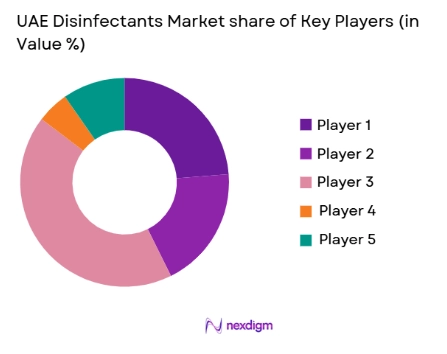
UAE Disinfectants Market Analysis
Growth Drivers
Expansion of Healthcare Infrastructure and Infection Control Standards:
The rapid expansion of healthcare infrastructure across the UAE is a primary driver for disinfectant demand, as hospitals and clinics require continuous sanitation protocols to maintain patient safety. The increasing number of specialized healthcare facilities, including diagnostic centers and outpatient clinics, has led to higher consumption of disinfectant products across multiple applications. Government mandates on infection prevention and control standards have further strengthened the need for certified disinfectants in healthcare environments. Additionally, rising patient inflows due to medical tourism have increased the frequency of sanitation cycles, thereby boosting demand. Hospitals are also investing in advanced disinfectant technologies to enhance operational efficiency and reduce contamination risks. The integration of automated disinfection systems and high-performance chemical solutions has further accelerated product adoption. Continuous training programs for healthcare professionals on hygiene practices contribute to consistent product usage. Regulatory authorities enforce strict compliance with sanitation standards, ensuring sustained demand for high-quality disinfectants. The presence of international healthcare providers in the UAE also promotes adherence to global hygiene benchmarks, further driving market growth.
Growth in Hospitality, Aviation, and Commercial Hygiene Requirements:
The UAE’s strong position as a global tourism and aviation hub significantly drives disinfectant demand across hospitality and commercial sectors. Hotels, resorts, and airports require high-frequency cleaning and sanitation to maintain safety standards and enhance customer experience. The rise in international travel has led to increased emphasis on visible hygiene practices, encouraging businesses to invest in premium disinfectant solutions. Commercial offices and retail spaces also contribute to demand as organizations implement workplace hygiene protocols to ensure employee safety. The expansion of large-scale events and exhibitions further amplifies disinfectant consumption across venues. Companies are adopting advanced cleaning technologies, including automated systems and specialized formulations, to improve efficiency and reduce labor costs. Additionally, brand reputation in hospitality heavily depends on cleanliness standards, prompting continuous investment in disinfectant products. Government guidelines for public spaces reinforce compliance and drive procurement across sectors. The integration of sustainability practices in hygiene management also influences product selection, promoting eco-friendly disinfectants in commercial environments.
Market Challenges
Volatility in Raw Material Prices and Supply Chain Constraints:
The UAE disinfectants market faces challenges due to fluctuations in raw material prices, particularly for alcohol, chlorine compounds, and specialty chemicals used in disinfectant production. These price variations are influenced by global supply-demand imbalances and geopolitical factors affecting chemical supply chains. Manufacturers often experience cost pressures, which impact pricing strategies and profit margins. Additionally, disruptions in international logistics can delay the availability of essential inputs, affecting production schedules. Smaller manufacturers are particularly vulnerable to these fluctuations as they lack the scale to absorb cost increases. The dependency on imported raw materials further exacerbates supply chain risks, especially during periods of global uncertainty. Companies must continuously adapt procurement strategies to maintain operational stability. The need for maintaining consistent product quality despite cost pressures adds another layer of complexity. Regulatory compliance requirements also increase production costs, limiting flexibility in pricing. These factors collectively challenge market participants in sustaining profitability and operational efficiency.
Regulatory Compliance and Environmental Safety Constraints:
Strict regulatory frameworks governing chemical usage and environmental safety present significant challenges for disinfectant manufacturers in the UAE. Authorities require compliance with stringent standards related to product formulation, labeling, and efficacy testing, which can increase operational complexity. Manufacturers must invest in research and development to ensure their products meet evolving regulatory requirements. Environmental concerns regarding chemical residues and waste disposal also influence product approval processes. The push toward sustainable and biodegradable disinfectants adds pressure on companies to innovate while maintaining cost competitiveness. Additionally, obtaining certifications for new products can be time-consuming, delaying market entry. Companies must also ensure compliance with international standards to cater to export markets. The need for continuous monitoring and documentation increases administrative burdens. Non-compliance can result in penalties and reputational damage, making regulatory adherence critical for market participation. These constraints require companies to balance innovation, cost management, and compliance effectively.
Opportunities
Adoption of Eco-Friendly and Sustainable Disinfectant Solutions:
The increasing emphasis on environmental sustainability presents significant opportunities for the UAE disinfectants market, as consumers and institutions seek eco-friendly alternatives to traditional chemical products. Manufacturers are investing in biodegradable formulations and plant-based disinfectants that reduce environmental impact while maintaining efficacy. The demand for green cleaning solutions is particularly strong in hospitality and corporate sectors, where sustainability initiatives are integral to brand positioning. Regulatory support for environmentally safe products further encourages innovation in this segment. Companies can differentiate themselves by offering certified sustainable disinfectants that meet international environmental standards. The integration of sustainable practices in procurement policies by large organizations also drives adoption. Additionally, advancements in green chemistry enable the development of high-performance disinfectants with minimal ecological footprint. The growing awareness among consumers about environmental impact supports the expansion of this segment. Partnerships with sustainability-focused organizations can further enhance market penetration. This shift toward eco-friendly solutions creates long-term growth potential for manufacturers.
Integration of Smart and Automated Disinfection Technologies:
The adoption of smart and automated disinfection technologies represents a significant opportunity for market expansion in the UAE. Advanced solutions such as UV-C disinfection systems, electrostatic sprayers, and robotic cleaning devices are gaining traction across healthcare and commercial sectors. These technologies enhance efficiency by reducing manual intervention and ensuring consistent coverage. The integration of IoT-enabled systems allows real-time monitoring and optimization of disinfection processes. Large facilities such as airports and hospitals benefit from automated solutions that improve operational efficiency and reduce labor costs. The increasing focus on innovation and digital transformation in the UAE supports the adoption of these technologies. Companies investing in research and development can capitalize on this trend by offering integrated hygiene solutions. The demand for contactless disinfection methods has also increased due to heightened hygiene awareness. Strategic collaborations with technology providers can accelerate product development and market entry. This technological evolution is expected to redefine hygiene management practices across sectors.
Future Outlook
The UAE disinfectants market is expected to witness steady growth driven by increasing hygiene awareness, regulatory enforcement, and technological advancements. The adoption of eco-friendly products and smart disinfection systems will shape future demand patterns. Government initiatives supporting healthcare and public sanitation will further strengthen market expansion. Additionally, the growth of tourism and commercial infrastructure will sustain long-term demand. Continuous innovation and digital integration will redefine product offerings and operational efficiency.
Major Players
- Reckitt Benckiser Group
- Procter & Gamble Hygiene Solutions
- Ecolab Inc
- 3M Middle East
- Diversey Holdings Ltd
- Clorox International Company
- Kimberly-Clark Professional
- SC Johnson Professional
- Evonik Industries Hygiene Division
- Lanxess Disinfection Solutions
- BASF Hygiene Chemicals
- Unilever Professional Care
- Al Sharhan Industries UAE
- National Detergent Company UAE
- Neogen Corporation Hygiene Division
Key Target Audience
- Healthcare facility operators
- Hospitality industry chains
- Commercial real estate developers
- Industrial manufacturing companies
- Government and regulatory bodies
- Investments and venture capitalist firms
- Facility management service providers
- Retail and distribution companies
Research Methodology
Step 1: Identification of Key Variables
Key variables such as product demand, pricing trends, regulatory impact, and end-user adoption were identified through secondary research and industry databases.
Step 2: Market Analysis and Construction
Market size and segmentation were constructed using a combination of top-down and bottom-up approaches, integrating trade data and company financials.
Step 3: Hypothesis Validation and Expert Consultation
Findings were validated through expert interviews, including industry professionals, distributors, and regulatory authorities to ensure accuracy.
Step 4: Research Synthesis and Final Output
All data points were synthesized and cross-verified to generate a comprehensive and reliable market report with actionable insights.

- Executive Summary
- Research Methodology (Definitions, Scope, Industry Assumptions, Market Sizing Approach, Primary & Secondary Research Framework, Data Collection & Verification Protocol, Analytic Models & Forecast Methodology, Limitations & Research Validity Checks)

- Market Definition and Scope
- Value Chain & Stakeholder Ecosystem
- Regulatory / Certification Landscape
- Sector Dynamics Affecting Demand
- Strategic Initiatives & Infrastructure Growth

- Growth Drivers
Rising healthcare infrastructure expansion across UAE
Increased hygiene awareness post-pandemic
Growth in tourism and hospitality sector hygiene standards
Government mandates on sanitation compliance
Expansion of food processing and industrial hygiene requirements - Market Challenges
Fluctuating raw material prices impacting production costs
Regulatory constraints on chemical usage and environmental safety
Market saturation with low-cost alternatives
Supply chain disruptions for chemical inputs
Limited differentiation among commodity disinfectant products - Market Opportunities
Adoption of eco-friendly and biodegradable disinfectants
Growth in smart and automated disinfection technologies
Expansion into residential and consumer hygiene segments - Trends
Shift toward non-toxic and green disinfectant formulations
Integration of IoT in automated disinfection systems
Rising demand for multi-surface and multi-purpose disinfectants
Growth in subscription-based hygiene services
Increased use of UV-C and robotics in large facilities - Government Regulations & Defense Policy
Stringent UAE health authority standards on disinfectant efficacy
Mandatory certification and labeling requirements
Increased monitoring of imported disinfectant products - SWOT Analysis
- Stakeholder and Ecosystem Analysis
- Porter’s Five Forces Analysis
- Competition Intensity and Ecosystem Mapping

- By Market Value, 2020-2025
- By Installed Units, 2020-2025
- By Average System Price, 2020-2025
- By System Complexity Tier, 2020-2025

- By System Type (In Value%)
Surface disinfectants
Air disinfectants and fogging systems
Water disinfectants
Instrument disinfectants
Hand sanitizers and antiseptic solutions - By Platform Type (In Value%)
Liquid-based formulations
Spray and aerosol systems
Wipes and impregnated fabrics
Powder and granule disinfectants
UV and electrostatic disinfection systems - By Fitment Type (In Value%)
Standalone disinfectant units
Integrated building sanitation systems
Portable handheld solutions
Wall-mounted dispensers
Automated robotic disinfecting systems - By EndUser Segment (In Value%)
Hospitals and healthcare facilities
Hospitality and tourism sector
Commercial offices and retail spaces
Industrial and manufacturing facilities
Residential households - By Procurement Channel (In Value%)
Direct institutional procurement
Retail pharmacies and supermarkets
Online and e-commerce platforms
Government tenders and bulk contracts
Specialized hygiene solution providers - By Material / Technology (in Value %)
Alcohol-based disinfectants
Chlorine and hypochlorite compounds
Quaternary ammonium compounds
Hydrogen peroxide and peracetic acid
UV-C and advanced oxidation technologies

- Market structure and competitive positioning
- Market share snapshot of major players (Cost Competitiveness, Product Portfolio Breadth, Distribution Network Strength, Regulatory Compliance, Innovation Capability, Brand Recognition, Sustainability Initiatives, Pricing Strategy, Supply Chain Efficiency, EndUser Diversification)
- SWOT Analysis of Key Players
- Pricing & Procurement Analysis
- Key Players
Reckitt Benckiser Group
Procter & Gamble Hygiene Solutions
Ecolab Inc
3M Middle East
Diversey Holdings Ltd
Clorox International Company
Kimberly-Clark Professional
SC Johnson Professional
Evonik Industries Hygiene Division
Lanxess Disinfection Solutions
BASF Hygiene Chemicals
Unilever Professional Care
Al Sharhan Industries UAE
National Detergent Company UAE
Neogen Corporation Hygiene Division

- Healthcare sector dominates demand due to strict infection control protocols
- Hospitality sector drives premium disinfectant adoption for guest safety
- Industrial users focus on cost-effective bulk disinfectant solutions
- Residential segment shows rising demand for convenient and safe products

- Forecast Market Value, 2026-2035
- Forecast Installed Units, 2026-2035
- Price Forecast by System Tier, 2026-2035
- Future Demand by Platform, 2026-2035


 Request a Sample
 Ask for Customization
 Get a Quote
 Enquire Now