
 Download PDF
Market Overview
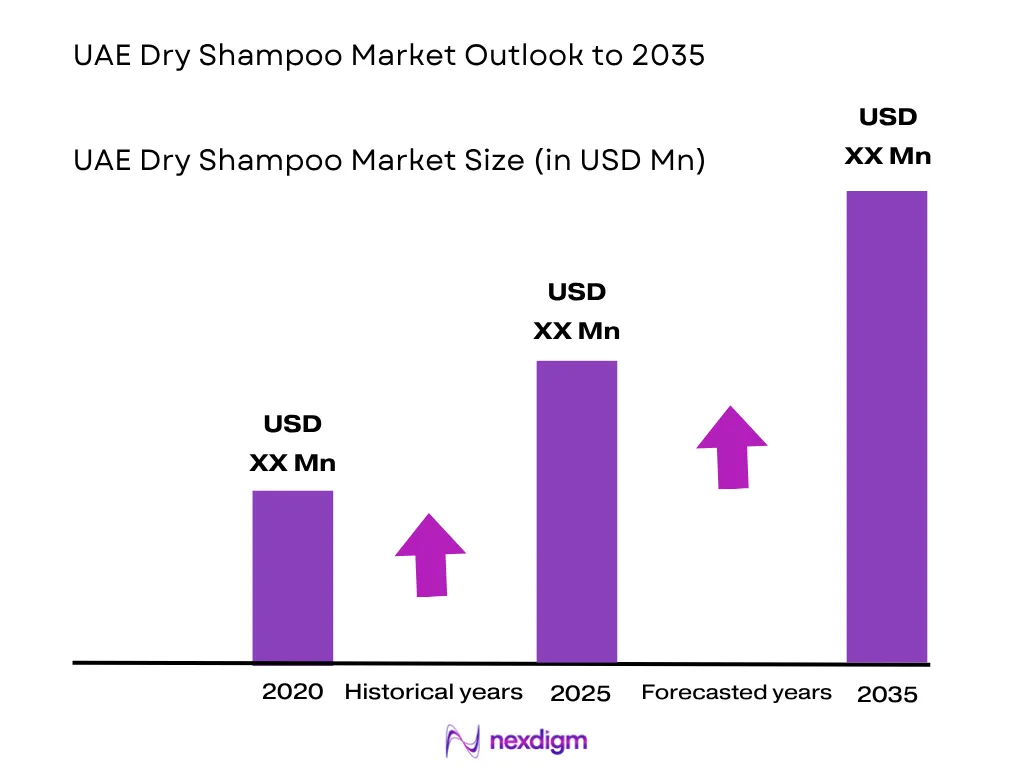
The UAE Dry Shampoo Market is valued at USD ~ million in 2025, with projections indicating a compound annual growth rate (CAGR) of 6.72% for 2026–2035 as per reputable industry analysis covering 2025–2033 forecasts. This valuation is based on a structured assessment of retail sales and distributor tracking data that captures the revenue contribution of dry shampoo products across major retail channels in the UAE. The segment’s growth is attributed to rising urban lifestyles, increased expatriate populations with familiarity of dry shampoo usage, and heightened awareness of personal grooming solutions that save time in grooming routines.
Within the Middle East & Africa region, the United Arab Emirates dominates the dry shampoo space due to its role as a retail and lifestyle hub with high disposable incomes and a cosmopolitan consumer base. Cities like Dubai and Abu Dhabi lead demand because of their dense expatriate populations, high fashion and beauty adoption rates, and well‑developed retail and e‑commerce infrastructure. These factors create a conducive environment for both mass and premium dry shampoo brands to thrive.
Market Segmentation
By Product Format
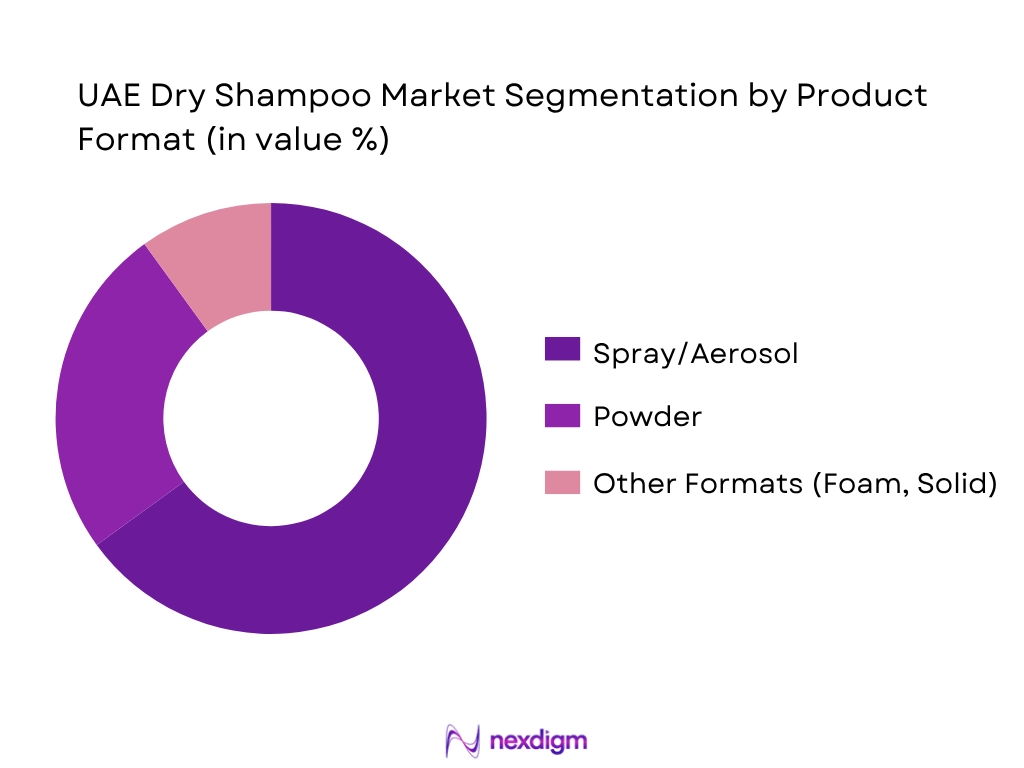
The dry shampoo market in the UAE is segmented by product format into spray/aerosol, powder, and other formats such as foam and solid variants. Spray/aerosol dry shampoos dominate the UAE market in 2024 with ~65% share due to their ease of application, familiarity among consumers, and widespread retail availability at both offline and online outlets. Aerosol products provide quick oil absorption and hair refreshment, making them preferable among busy professionals and urban populations. Powder formats hold a notable share owing to growing interest in natural, non‑propellant products, especially in health‑ and environment‑conscious consumer groups. Other innovative formats, while smaller in share, are gaining adoption due to unique positioning in niche and premium segments.
By Distribution Channel
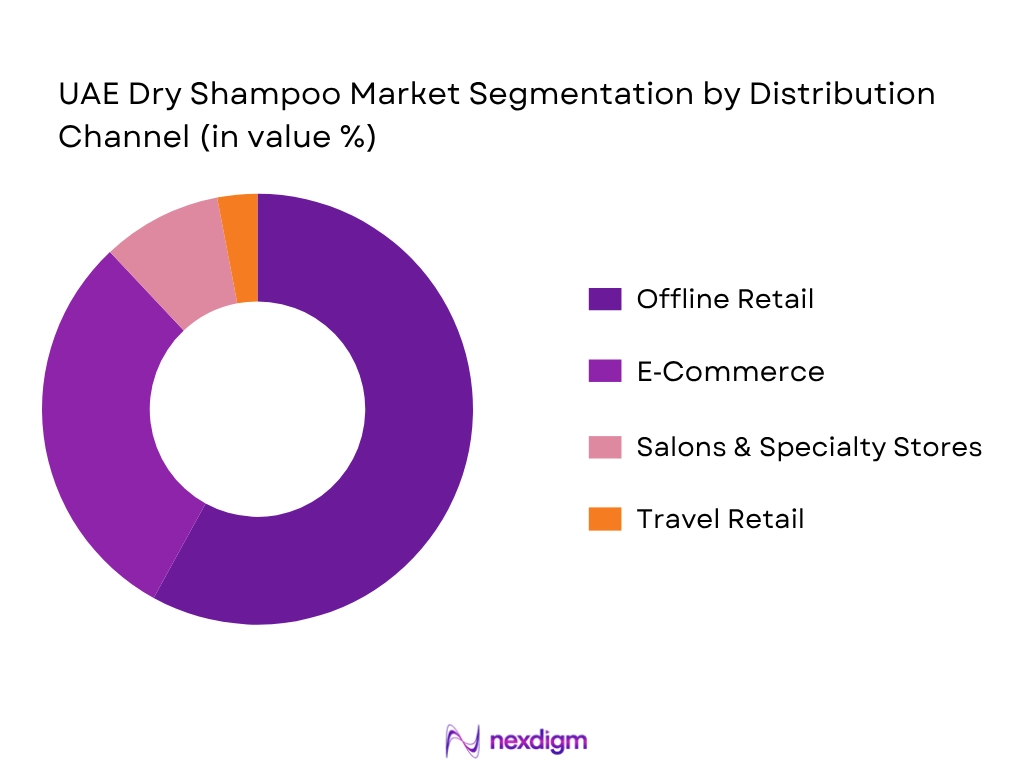
The UAE dry shampoo market is segmented by distribution channel into offline retail, e‑commerce, salons & specialty stores, and travel retail. Offline retail dominates with approximately 58% share in 2024, as pharmacies, beauty specialty stores, and modern trade outlets (such as hypermarkets and supermarkets) remain key purchase points for beauty and hair care products where consumers can experience products first‑hand. However, the e‑commerce channel is rapidly rising, with younger consumers and frequent online shoppers favoring digital platforms for product discovery, comparison, and delivery. This trend is supported by strong logistics networks and the overall digital‑first consumer behavior in the UAE. Salons and specialty stores contribute meaningfully for premium and professional segments, while travel retail captures sales among tourists and frequent travellers visiting major UAE hubs. (Based on broader channel behaviour in personal care markets)
Competitive Landscape
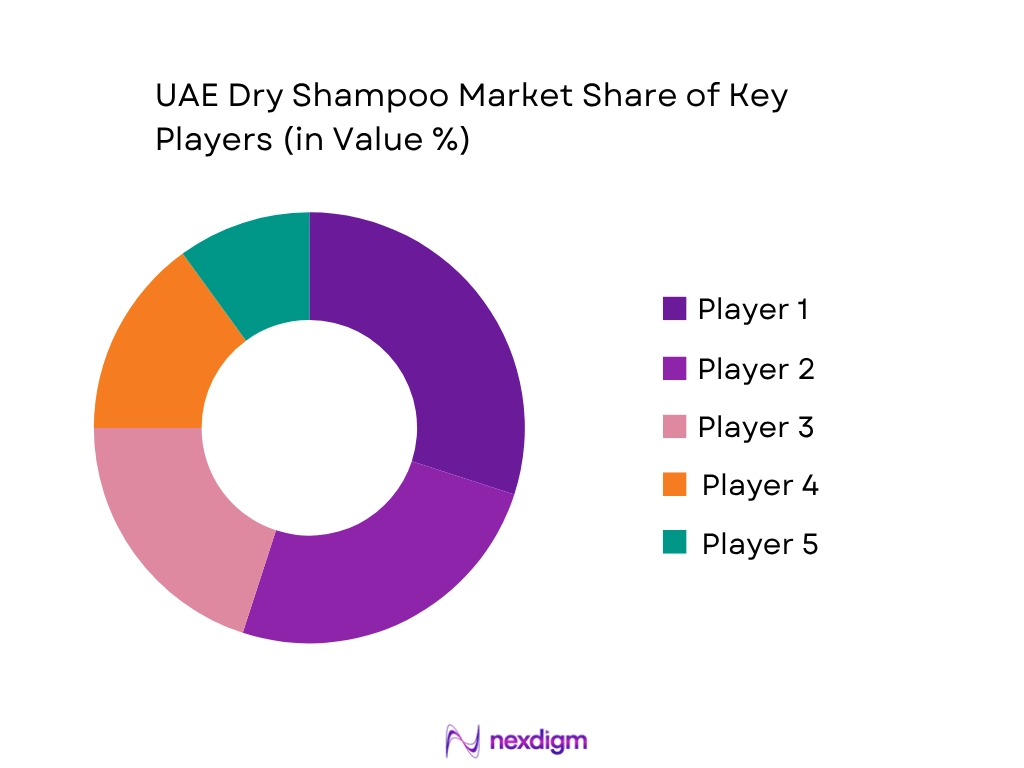
The competitive landscape of the UAE Dry Shampoo Market is moderately consolidated, with a combination of international mass and premium brands competing alongside regional players. Major global personal care companies have leveraged their extensive retail and digital distribution to capture leadership positions, while niche and premium brands differentiate through product innovation and targeted marketing. Leading dry shampoo manufacturers command significant influence on pricing, branding, and distribution within the UAE. International brands benefit from established supply chains and global brand equity, while emerging niche and natural ingredient‑focused offerings address a growing consumer appetite for sustainable and health‑oriented products. Competition is driven by product efficacy, formulation innovation, channel presence (offline vs online), and promotional strategies.
| Brand / Player | Year Established | Headquarters | Product Depth | Distribution Reach | E‑Commerce Presence | Pricing Tier Range | Key Differentiator |
| Batiste | 1973 | UK | ~ | ~ | ~ | ~ | ~ |
| Tresemme | 1947 | USA | ~ | ~ | ~ | ~ | ~ |
| L’Oréal Elvive | 1909 | France | ~ | ~ | ~ | ~ | ~ |
| Schwarzkopf | 1898 | Germany | ~ | ~ | ~ | ~ | ~ |
| Herbal Essences | 1971 | USA | ~ | ~ | ~ | ~ | ~ |
UAE Dry Shampoo Market Analysis
Growth Drivers
Convenience
The adoption of dry shampoo in the UAE is being significantly driven by lifestyle convenience preferences among urban consumers, which is supported by broader personal care consumption trends. The UAE hair care sector generated USD 7,244.4 million in revenue in 2024, highlighting strong underlying demand for hair products (including alternatives to traditional shampoo) that support quick grooming routines suitable for fast‑paced urban life. Urban penetration and modern retail infrastructure in cities like Dubai and Abu Dhabi amplify convenience purchasing, with retail environments offering easy access to a broad range of personal care items. At the macro level, the UAE’s GDP reached USD 537,079 million in 2024, and GDP per capita stood at USD 49,378, reflecting high disposable income that enables discretionary spending on convenience‑oriented products such as dry shampoo. Consumer preference for time‑saving grooming aids is also reinforced by the fact that the UAE’s population is highly connected digitally, with strong e‑commerce adoption driving sales of quick‑use personal care formats. These dynamics show that convenience in grooming contributes materially to dry shampoo uptake as part of broader hair care consumption patterns.
Hair Health
Hair health consciousness among UAE consumers is a material driver for hair care products that promise scalp and hair benefits, underpinning demand for dry shampoo as a supplementary solution. Data on the broader hair care category indicates significant engagement with hair wellness products; for example, the UAE hair and scalp care market generated USD 7,244.4 million in revenue in 2024, signalling strong market focus on diverse hair treatments beyond basic cleansing. Consumers exposed to high heat and humidity often experience scalp oiliness and environmental stress on hair, prompting interest in products that manage sebum and refresh hair between washes. This behavioural trend aligns with broader health and wellness expenditure, where UAE inflation remained modest at 1.7% in 2024, supporting stable consumer spending on quality personal care products rather than just basic hygiene. Additionally, the organic personal care segment in the UAE was valued at USD 113.6 million in 2024, with hair care included within this total, indicating that consumers are gravitating toward formulations perceived as gentler and more nourishing. The shift toward hair health solutions, supported by economic conditions that encourage discretionary grooming purchases, substantiates hair health as a significant driver for dry shampoo usage.
Market Challenges
VOC/Propellant Limits
Volatile Organic Compounds (VOC) and propellant regulations pose a challenge for dry shampoo formulations in the UAE because many dry shampoos use aerosol delivery systems that can include regulated chemical propellants. While detailed UAE‑specific regulatory frameworks for VOC content in cosmetics are not openly published in a single public database, broader GCC cosmetic and environmental standards often align with international safety limits, necessitating compliance testing, documentation, and reformulation efforts for companies entering the market. This regulatory requirement increases product development costs and can slow time‑to‑market, particularly for smaller brands without established compliance infrastructures. Additionally, the UAE’s economic stability, demonstrated by a 2024 GDP of USD 537,079 million, supports consumer awareness of health and environmental standards, accelerating demand for products with compliant and eco‑friendly profiles. This heightened sophistication raises the bar for dry shampoo formulations that must balance performance with regulatory expectations. In essence, regulatory compliance around propellants and VOCs acts as a technical and cost barrier for manufacturers, requiring investment in alternative delivery systems and adherence to local and GCC cosmetics safety frameworks.
Price Sensitivity
Price sensitivity in the UAE personal care market is underscored by competitive pressures between mass and premium product tiers and consumer responsiveness to value propositions. In broader hair care, conventional formulations maintained a 67.62% share of the UAE hair care market in 2025, implying that a substantial portion of consumers still favor lower‑cost, traditional products over potentially higher‑priced niche or specialty offerings. The continued prominence of mass products indicates that price remains a meaningful factor for purchase decisions, especially in categories adjacent to dry shampoo, which may sit at a premium relative to basic cleansing products. Moreover, although the UAE sustains a high GDP per capita of USD 49,378, price‑value trade‑offs are evident in segments where synthetic formulations dominate due to affordability. Retail channels such as supermarkets and hypermarkets captured significant hair care distribution share, highlighting that value pricing drives volume in mainstream segments. As dry shampoo often competes on perceived convenience and performance, pricing must align with consumer expectations shaped by robust but price‑conscious hair care purchasing behaviours.
Opportunities
DTC/Subscription
Direct‑to‑consumer (DTC) and subscription models offer significant opportunity in the UAE dry shampoo market by enhancing accessibility and ongoing engagement. The UAE boasts strong digital infrastructure and high internet penetration, enabling brands to connect directly with consumers. Though precise local DTC cosmetics subscriber numbers are not published by a single authority, broader regional e‑commerce growth in the MENA region reached an estimated USD 1.80 billion in 2024, illustrating an expanding online retail ecosystem where subscription retail can thrive. This increase in digital commerce correlates with preference for convenience and personalised purchase experiences, particularly among younger, tech‑savvy demographics. DTC and subscription channels can foster recurring revenue streams and build deeper consumer relationships, leveraging data insights to refine product offerings and fulfilment. Given that the UAE’s economy generated USD 537,079 million in GDP in 2024, the strong macroeconomic backdrop supports continued consumer spending on premium grooming products purchased through online and subscription formats. The confluence of digital retail momentum and discretionary spending power creates fertile ground for expanding dry shampoo adoption via DTC and subscription frameworks.
Natural/Organic
Consumers in the UAE are increasingly prioritising natural and organic personal care products, which presents a compelling opportunity for dry shampoo formulations that emphasise botanical ingredients and reduced synthetic content. The organic personal care market in the UAE was valued at USD 113.6 million in 2024, and hair care within this category is a significant component of this total, reflecting demand for products perceived as gentler and more environmentally aligned. This trend aligns with heightened consumer health consciousness and willingness to invest in premium, eco‑friendly alternatives. Natural ingredient interest is further buttressed by the performance of the broader natural hair care segment, which recorded USD 343.2 million in revenue in 2024, demonstrating active market participation in products that avoid harsh chemicals. These data points underscore that consumers are making purchasing choices informed by ingredient profiles, creating opportunity for dry shampoo products formulated with plant‑based or ‘clean’ components to differentiate themselves. As regulatory and consumer emphasis on sustainable products continues, aligning dry shampoo offerings with organic and natural preferences can catalyse adoption and foster competitive advantage in the UAE’s sophisticated personal care environment.
Future Outlook
Over the forecast period, the UAE Dry Shampoo Market is expected to expand steadily, driven by ongoing urbanization, higher disposable incomes, and a growing preference for grooming products that deliver convenience and time savings. Continuous innovation in formulations, particularly around natural and sustainable ingredients, is likely to attract new customer segments including health‑conscious consumers and male grooming audiences. Growth in e‑commerce penetration, digital marketing influence, and travel retail demand will also support revenue expansion. As regional beauty and personal care consumption continues to evolve, UAE is poised to remain a key growth hub in the Middle East & Africa dry shampoo landscape.
Major Players
- Batiste
- Tresemme
- L’Oréal Elvive
- Schwarzkopf
- Herbal Essences
- VO5
- Nivea
- bareMinerals
- Moroccanoil
- Acure
- HASK
- Bumble and Bumble
- R+Co
- Amika
- Dabur Amla
Key Target Audience
- Consumer Goods & Personal Care FMCG Businesses
- Product / Brand Managers in Haircare Divisions
- Retail & E‑Commerce Beauty Category Directors
- Investments & Venture Capitalist Firms (Beauty & Personal Care)
- Distribution & Logistics Strategic Planners
- Government & Regulatory Bodies (e.g., UAE MoHAP – Ministry of Health & Prevention)
- Trade Associations (Beauty / Cosmetics Sector)
- Supply Chain & Procurement Leaders in Beauty Retail
Research Methodology
Step 1: Market Definition & Variable Identification
The research begins by defining the market scope of UAE dry shampoo products, including formats, channels, and end uses. This step uses desk research across secondary industry reports and databases to identify key market drivers, constraints, consumer behavior variables, and ecosystem stakeholders.
Step 2: Data Collection & Market Construction
Historical market data and retail sales intelligence are compiled and verified using longitudinal datasets, distributor sales figures, and channel analytics. This phase constructs baseline market size and validates value patterns by product format and channel segmentation.
Step 3: Expert Consultation & Validation
Market hypotheses and estimates are validated through consultations with haircare industry experts, retail buyers, and brand managers operating in the UAE, providing insights into demand drivers, pricing sensitivities, and channel dynamics.
Step 4: Forecasting & Final Analysis
The final phase integrates quantitative modeling with trend analysis and expert insights to project future market performance, including forecasting revenue and growth patterns through econometric and time‑series techniques, ensuring accuracy and robust strategic outlook.

- Executive Summary
- Research Methodology (Market Definitions and Assumptions, Market Taxonomy (Formulation Types, Consumer Segments, Distribution Tiers), Scope of Coverage, Data Sources and Market Data Consolidation Logic, UAE Dry Shampoo Market Sizing Approach (Retail Scanner Distributor Shipments and On‑Trade Estimates), Primary Research Approach (Vendor/Supplier, Retailer, Consumer Surveys), Forecasting Model (Bottom‑Up Demand Model, Time Series, Market Drivers Calibration), Key Research Limitations)

- Definition, Product Classification & Scope
- Industry Genesis & Adoption Curve (Penetration in GCC / UAE)
- Market Value Chain & Channel Flows
- Regulatory Framework
- Trade Policies, Import Compliance & Tariff Structures
- Hair Care Culture & Grooming Practices in UAE

- Growth Drivers (Convenience, Hair Health, Premiumization, Expat Influence, Social Media, Dual-Income Households, Climate, Male Grooming)
- Market Challenges (VOC/Propellant Limits, Price Sensitivity, Liquid Shampoo Preference, Raw Material Costs, Awareness Gap, Environmental Concerns, Limited Retail Space, Scalp Sensitivity)
- Opportunities (DTC/Subscription, Natural/Organic, Private Label, Salon Partnerships, E-Commerce, Travel Packs, GCC Exports, Multi-Format Products)
- Emerging Trends (Influencer Marketing, Personalized Formulas, Sustainable Packaging, Hybrid Products, Hair Type Targeting, Travel SKUs, Ingredient Transparency, Multi-Functional Haircare)
- Regulatory Environment (MoHAP Compliance, GCC Standards, VOC/Propellant Rules, Labeling & Claims, Halal Certification, Import Licensing, Advertising Rules, Packaging Guidelines)
- Porter’s Five Forces Analysis (New Entrants, Supplier Power, Buyer Power, Substitutes, Rivalry)
- SWOT Analysis (Market Level)
- Value Chain & Supply Chain Analysis (Raw Materials – Talc, Starch, Extracts, Propellants; Domestic vs Imports; Packaging; Blending & Filling; Logistics & Distribution; Modern Trade & E-Commerce; Quality Testing)
- Pricing Dynamics & Margin Stack (ASP – Value/Mid/Premium; Channel Price Gaps; Promotions & Allowances; Margins; Online vs Offline; Cost Pass-Through; SKU Size Impact)
- Consumer Purchase Behavior & Retail Analytics (Frequency & Repeat Rate, Basket Affinity, Brand Loyalty, Online vs Store, Social Media Influence, Price Sensitivity, Seasonal Patterns, Packaging Preference)

- By Market Value (2020-2025)
- By Volume (2020-2025)
- By Average Selling Price per SKU (2020-2025)
- By Growth vs Hair Care Total Category (2020-2025)
- By Market Share by Product Format(2020-2025)

- By Product Type (In Value%)
Aerosol
Powder
Spray
Natural/Organic Formulation
Sensitive Scalp/PH Balanced - By Consumer Demographics (In Value %)
Female
Male
Family/Household Purchasers
Age Tiered - By Distribution Channel (In Value %)
Modern Trade (Hypermarkets/Supermarkets)
Pharmacies & Beauty Specialty Stores
E‑Commerce Marketplaces
Brand Flagship Stores
Salons/Professional Channels - By End‑Use (In Value %)
Personal Care – Daily Use
Travel & Convenience
Professional/Salon Use - By Retail Price Tier (In Value %)
Mass / Value Tier
Mid‑Tier
Premium / Luxury

- Market Share & Ranking (Value & Volume Share, Format-wise Share, Channel-wise Share, Price Tier Share)
- Cross-Comparison Parameters (Product Portfolio, Distribution Reach, Retail vs E‑Com Presence, ASP Positioning, Brand Loyalty & NPS, Marketing & Influencer Spend, Regulatory Approvals/Certifications, R&D/Innovation Index)
- Competitive Positioning (Price vs Quality vs Reach, Format Differentiation, Male vs Female Targeting, Natural/Organic Positioning, Premium vs Mass Appeal)
- Pricing & SKU Benchmarking (SKU Price Bands, Pack Size Variations, Channel Price Gaps, Promotions & Bundles, Gross & Contribution Margins, Online vs Offline Economics)
- Innovation & Product Differentiation (New Formats, Ingredients Innovation, Multi-Functional Products, Travel-Sized Options, Sustainable Packaging, Hybrid Formulations)
- SWOT Analysis – Major Players (Strengths – Portfolio, Reach, Branding; Weaknesses – Price, Limited Male/Niche Formats; Opportunities – Subscription, Salon Partnerships, Regional Expansion; Threats – Regulatory Changes, Competitor Launches, Raw Material Costs)
- Key Competitor Profiles
Dabur Amla Herbal Dry Shampoo
Batiste (Church & Dwight)
Tresemme Dry Shampoo
Bumble and Bumble Pret‑a‑Powder
L’Oreal Elvive Dry Shampoo
Schwarzkopf Got2b Fresh It Up!
Herbal Essences Dry Shampoo
VO5 Refresh IT!
Nivea Fresh Revive Dry Shampoo
bareMinerals Boost Dry Shampoo
Moroccanoil Dry Shampoo
Acure Dry Shampoo
HASK Dry Shampoo
R+Co Dallas Dry Shampoo
Amika Perk Up Dry Shampoo

- Demographics & Segmentation (Age – Youth/Adult; Gender – Female/Male; Expat vs Local; Household Type – Single/Family; Income Tier – Value/Mid/Premium)
- Purchase Drivers (Convenience, Brand Reputation, Hair Type Suitability, Packaging, Price, Product Claims, Social Media Influence, Peer Recommendations)
- Usage Patterns (Frequency – Daily/Weekly, Volume per Use, Hair Type Targeting, Climate/Seasonal Influence, Travel vs Home Use)
- Channel Preferences (E-Commerce, Modern Trade, Pharmacies/Beauty Stores, Salons, Brand Flagships)
- Consumer Loyalty & Switching Behavior (Repeat Purchase Rate, Brand Stickiness, Sensitivity to Promotions, Multi-Brand Trial, Subscription Uptake)
- Price Sensitivity & Value Perception (ASP Tolerance by Segment, Bundle Acceptance, Premium vs Mass Tradeoff, Promotions Influence)
- Awareness & Education Levels (Knowledge of Product Benefits, Ingredients Awareness, Organic/Natural Trend Adoption, VOC/Propellant Awareness)
Social & Digital Influence (Influencer Impact, Online Reviews, Social Media Engagement, Peer Recommendations, User-Generated Content Influence) - Pain Points & Unmet Needs (Residue Issues, Scent Preferences, Hair Damage Concerns, Limited Male Options, Availability of Travel-Sized Formats)
- Decision-Making Process (Research vs Impulse, Online Comparison, Channel Choice Influence, Peer & Expert Recommendations, Packaging/Convenience Factors)

- By Market Value (2026-2035)
- By Volume (2026-2035)
- By Average Selling Price per SKU (2026-2035)
- By Growth vs Hair Care Total Category (2026-2035)
- By Market Share by Product Format (2026-2035)


 Request a Sample
 Ask for Customization
 Get a Quote
 Enquire Now