
 Download PDF
Market Overview
The UAE Duty Free and Travel Retail market is valued at USD ~ million in 2024 based on retail revenues generated from airports, airlines, and other travel retail formats, reflecting strong international tourism and premium shopper demand in key hubs like Dubai and Abu Dhabi. Increased passenger throughput, luxury brand presence, and high consumer spending power have collectively sustained retail performance, particularly in fragrances, cosmetics, and high‑end retail categories.
Dubai and Abu Dhabi dominate the UAE Duty Free and Travel Retail market due to their status as global air travel crossroads and luxury tourism destinations. Dubai International Airport remains one of the world’s busiest hubs with high‑yield passengers whose travel patterns contribute disproportionately to retail sales, especially in duty‑free goods. Abu Dhabi’s growing international connectivity and tourism ecosystem similarly support strong retail conversion, while Sharjah and other airports benefit from spillover traffic and regional shopper demand.
Market Segmentation
By Distribution Type
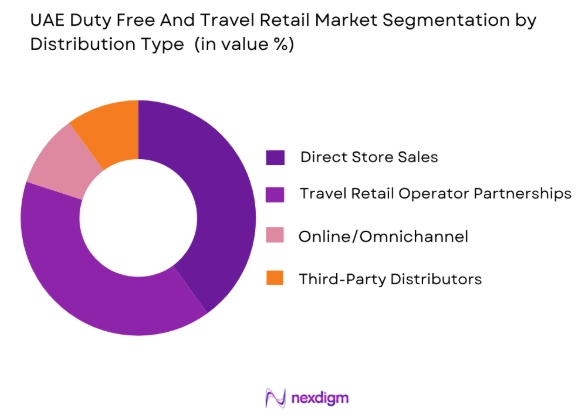
The UAE Duty Free and Travel Retail market is segmented by distribution channel into Airport Duty Free, Airline Onboard Retail, Ferry/Port Retail, and Other Travel Retail Channels. Airport Duty Free dominates due to the extensive retail footprints and high passenger volumes at major airports such as Dubai International (DXB) and Abu Dhabi International (AUH). These airports offer curated premium assortments, exclusive travel retail products, and immersive retail environments that attract both international and transfer passengers, driving high retail spend per traveler. Airline and ferry retail channels contribute smaller shares as they offer limited assortment and lower shopper dwell time, while other Airport Duty Free dominates because it captures traffic from high‑yield international travelers with extended dwell times and more comprehensive product assortments, while smaller channels capture travel convenience purchases or niche buyer segments.
By Product Type
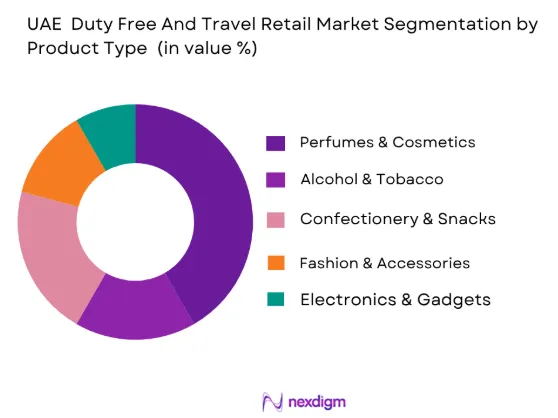
The market is segmented by product type into Perfumes & Cosmetics, Wines & Spirits, Fashion & Accessories, Tobacco Products, Electronics & Gifts, Food & Confectionery, and Other Categories. In 2024, Perfumes & Cosmetics led the market due to strong demand from international and transit passengers who seek premium beauty offerings and exclusive travel retail editions. Wines & Spirits remain a high‑value category driven by luxury buyers and affluent tourists. Fashion & Accessories capture niche high‑end spending, while Tobacco, Electronics & Gifts, and other categories support diverse traveler preferences across price points.Perfumes & Cosmetics dominate because travelers frequently purchase premium beauty and fragrance products either as gifts or personal indulgences at duty‑free prices that are perceived as better value compared to domestic retail.
Competitive Landscape
The UAE Duty Free and Travel Retail market features several major global travel retail operators and regional concession holders competing through expansive airport presence, brand partnerships, digital engagement, exclusive product offerings, and enhanced shopper experiences. Competition is concentrated around major hubs, with retailers collaborating with airports to optimize space, product mix, and promotional activities. The UAE market is shaped by powerful global travel retail brands operating in key airports and travel channels, capitalizing on high inbound tourism, strong luxury demand, and elevated consumer spending patterns. These players distinguish themselves through premium offerings, digital payment integrations, loyalty programs, and exclusive travel retail products tailored for high‑spend tourists and frequent flyers.
| Company | Establishment Year | Headquarters | Retail Footprint | Product Portfolio Coverage | Premium Brand Partnerships | Digital Integration | Exclusive Travel SKUs | Shopper Engagement |
| Dubai Duty Free | 1983 | UAE | ~ | ~ | ~ | ~ | ~ | ~ |
| Avolta AG | 1865 | Switzerland | ~ | ~ | ~ | ~ | ~ | ~ |
| Lagardère Travel Retail | 1994 | France | ~ | ~ | ~ | ~ | ~ | ~ |
| Heinemann Group | 1879 | Germany | ~ | ~ | ~ | ~ | ~ | ~ |
| DFS Group | 1960s | Hong Kong | ~ | ~ | ~ | ~ | ~ | ~ |
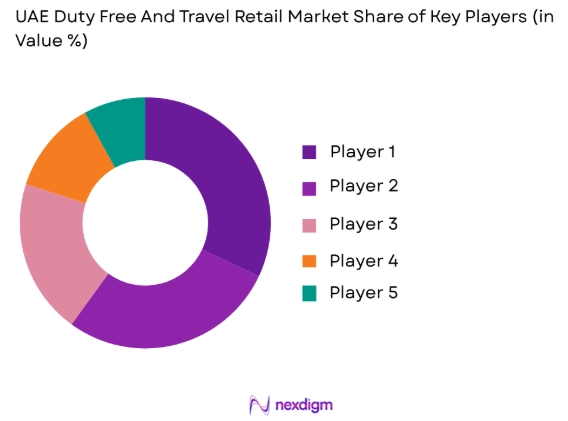
UAE Duty Free and Travel Retail Market Analysis
Growth Drivers
Rising International and Domestic Air Traffic
The UAE duty-free and travel retail market benefits from high volumes of international and domestic air traffic. Airports like Dubai International, Abu Dhabi International, and Sharjah International serve as major global transit hubs, attracting millions of passengers annually. Increased passenger flow drives demand for duty-free products, particularly luxury goods, cosmetics, perfumes, and electronics. The UAE’s position as a business and tourism hub also contributes to frequent travel, boosting retail consumption at airports and ports. Enhanced airport infrastructure and efficient passenger processing encourage longer dwell times, promoting higher spending at duty-free outlets. Domestic travel growth further supports retail sales, making the UAE a highly attractive market for travel retail operators.
Expansion of Tourism Infrastructure
The UAE has strategically invested in tourism infrastructure, including hotels, resorts, cruise terminals, and entertainment complexes, which boosts duty-free retail. Improved transport connectivity, airport expansions, and mega-event hosting contribute to higher footfall in retail areas. Tourism promotion campaigns and major international events such as Expo 2020 Dubai, global sporting events, and trade exhibitions attract high-spending travelers. Enhanced infrastructure ensures smoother travel experiences, encouraging longer dwell times and increased purchases at duty-free outlets. The combination of infrastructure growth and tourism development directly supports sales in luxury, branded products, and local merchandise, creating opportunities for retailers to capture a diversified and affluent customer base.
Market Challenges
Regulatory and Taxation Constraints
Despite being a low-tax environment, the UAE duty-free sector faces regulatory and customs-related challenges. Import procedures, licensing requirements, and compliance with local trade regulations can increase operational complexity for both domestic and international operators. Changes in import duties or procedural updates can delay product availability, affecting inventory management and sales. Retailers must also navigate varying regulations across airports and ports, which can create administrative overhead and operational inefficiencies. Maintaining compliance while ensuring timely product delivery and optimal pricing is crucial to sustaining profitability and competitive positioning in the UAE duty-free market.
Competition from Regional Retail Hubs
The UAE duty-free sector faces strong competition from regional retail hubs such as Qatar, Bahrain, and Oman. Travelers often compare product offerings, pricing, and shopping experiences across these neighboring markets, impacting UAE duty-free sales. High competition pressures operators to differentiate through product exclusivity, superior service, and innovative retail experiences. Without continuous enhancements in product assortment, customer engagement, and in-terminal marketing, UAE operators risk losing market share to neighboring hubs. Retailers must develop strategies to retain high-value travelers, optimize pricing, and introduce innovative shopping experiences that strengthen the UAE’s position as a leading regional duty-free and travel retail destination.
Market Opportunities
Expansion of Omnichannel Duty Free Solutions
UAE duty-free operators have opportunities to expand omnichannel retail strategies by integrating online and offline channels. Pre-ordering, click-and-collect, and digital promotions improve convenience and extend sales beyond airport footfall. Mobile applications, digital kiosks, and online catalogs enable personalized marketing, real-time inventory updates, and seamless customer engagement. Omnichannel solutions appeal to tech-savvy travelers who prefer pre-planned purchases, enhancing satisfaction and boosting revenue. By connecting digital and physical retail touchpoints, UAE operators can increase market penetration, improve operational efficiency, and compete effectively in a market driven by high expectations for convenience, luxury, and personalized shopping experiences.
Growth in Experiential and Luxury Retail
Experiential retail presents a key opportunity for UAE duty-free operators to enhance customer engagement and revenue. Airports can offer interactive brand experiences, exclusive product launches, sampling sessions, and luxury activations that attract affluent travelers. Experiential retail encourages longer dwell times and higher spending, especially in high-margin categories such as fashion, cosmetics, fragrances, and premium spirits. Major international events, exhibitions, and sporting tournaments provide opportunities to create themed or seasonal experiences that attract attention. By combining luxury products with immersive experiences, UAE duty-free outlets can position themselves as destination retail hubs, increasing sales potential while reinforcing the country’s global reputation for high-end retail and tourism.
Future Outlook
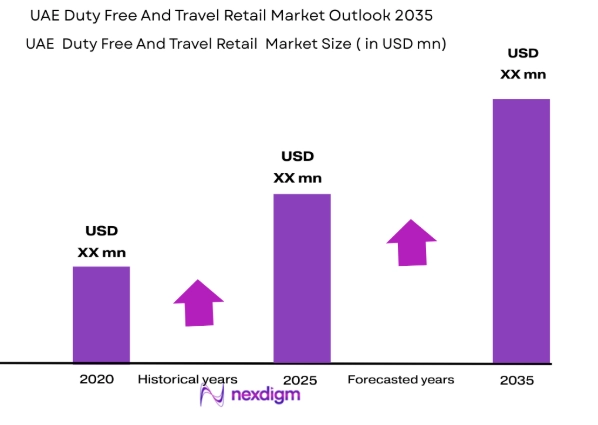
Over the coming decade, the UAE Duty Free and Travel Retail market is expected to grow significantly as international travel continues to expand, driven by strong tourism inflows, airport capacity expansions (notably at Dubai and Abu Dhabi), and rising global connectivity. Retailers are anticipated to adopt digital solutions, personalized marketing, and experiential retail formats to better engage high‑spend travelers and increase conversion rates. Expansion of non‑airport travel retail channels and integration with tourism initiatives will also contribute to broader revenue streams. Forecasted CAGR (2024–2030): ~6.6%, with the market projected to increase from USD 2,271.2 million in 2024 to approximately USD 3,328.5 million by 2030.Through 2035, continued diversification of product portfolios, enhanced duty‑free offerings, and strategic partnerships with global luxury brands are expected to sustain longer‑term growth, even as geopolitical or travel disruptions periodically affect passenger flows.
Major Players
- Dubai Duty Free
- Avolta AG
- Lagardère Travel Retail
- Heinemann Group
- DFS Group
- King Power International
- Aer Rianta International
- Lotte Duty Free
- Duty Free Americas
- World Duty Free
- WH Smith Travel Retail
- Nuance Group
- Dufry AG
- Global Retail Partners
- Airport Concession Specialists
Key Target Audience
- Airport Operators and Retail Concession Management Teams
- Duty Free and Travel Retail Operators
- Luxury Brand Owners and Distributors
- Investments and Venture Capitalist Firms
- Government and Regulatory Bodies
- Travel and Hospitality Revenue Strategists
- Airline Retail and Ancillary Revenue Units
- Digital Retail and Omnichannel Solution Providers
Research Methodology
Step 1: Identification of Key Variables
The initial phase involves mapping key market dynamics including passenger traffic patterns, international travel inflows, airport retail capacities, and luxury product demand. Secondary data from industry reports, aviation authorities, and retail analytics were used to define core variables influencing the UAE duty‑free and travel retail sector.
Step 2: Market Analysis and Construction
Historical retail sales and passenger traffic were compiled to estimate the 2024 market size. Bottom‑up modeling was applied to segment revenues by distribution channels and product types, while correlations between passenger profiles and retail spend informed share estimates.
Step 3: Hypothesis Validation and Expert Consultation
Preliminary insights were validated through expert interviews with airport retail managers, duty‑free operators, and travel retail analysts. These consultations refined segmentation assumptions and growth projections through real‑world industry perspectives.
Step 4: Research Synthesis and Final Output
The final phase consolidated quantitative market data and qualitative insights, triangulating across sources to ensure accuracy. The report structure aligns segmentation analysis, competitive landscape, and growth outlook into a coherent forecast tailored to strategic decision‑making in UAE’s travel retail market.

- Executive Summary
- Research Methodology (Market Definitions and Assumptions, Abbreviations, Research Framework, Bottom-Up Market Estimation, Top-Down Validation, Retailer and Operator Revenue Benchmarking, Airport, Port, and Border Retail Assessment, Import-Export Trade Analysis, Consumer Behavior Mapping, Primary Interviews with Retail Operators and Suppliers, Forecasting Model, Limitations and Assumptions)

- Definition and Scope
- Evolution of Duty Free and Travel Retail in the UAE
- Industry Ecosystem and Stakeholder Mapping
- Supply Chain and Value Chain Analysis
- Retail Infrastructure and Airport Terminal Assessment

- Growth Drivers
Rising International and Domestic Air Traffic
Expansion of Tourism Infrastructure
High Influx of Luxury and Premium Shoppers
Strong Retail Investment and International Events
Government Tourism Promotion Initiatives - Market Challenges
Regulatory and Taxation Constraints
Currency Fluctuations and Import Duties
Competition from Regional Retail Hubs
High Retail Operating Costs
Operational Challenges During Pandemics - Market Opportunities
Expansion of Omnichannel Duty Free Solutions
AI‑Driven Personalized Shopping and Digital Engagement
Growth in Experiential and Luxury Retail
Partnerships with Airlines, Cruise Operators, and Airports
Promotion of UAE Local Products and Cultural Merchandise - Market Trends
Digital Payments and Cashless Retail Adoption
Smart Shelving and Interactive Displays
Sustainable Packaging and Eco‑Friendly Products
Loyalty Programs and Frequent Traveler Incentives
Integration of Augmented Reality and VR Experiences in Retail - Government Regulations
UAE Duty‑Free Policies and Tax Regulations
General Civil Aviation Authority (GCAA) Retail Guidelines
Tourism Promotion Incentives
Customs and Import Compliance Requirements
Free Zone Trade and Retail Incentives - Porter’s Five Forces Analysis
- PESTLE Analysis
- Pricing Analysis
- Competition Ecosyste

- By Revenue, 2020-2025
- By Footfall/Passenger Volume, 2020-2025
- By Average Spend Per Passenger, 2020-2025
- By Product Category Contribution, 2020-2025

- By Product Category (in Value %)
Perfumes & Cosmetics
Alcohol & Tobacco
Confectionery & Snacks
Fashion & Accessories
Electronics & Gadgets - By Retail Format (in Value %)
Airport Duty Free Shops
Seaport and Cruise Retail
Border Shops
Downtown Travel Retail Outlets
Online Duty Free Platforms - By Consumer Type (in Value %)
International Tourists
Domestic Travelers
Business Travelers
Luxury Segment Customers - By Distribution (in Value %)
Direct Store Sales
Travel Retail Operator Partnerships
Online/Omnichannel
Third-Party Distributors - By Region (in Value %)
Dubai International Airport Region
Abu Dhabi International Airport Region
Sharjah International Airport Region
Al Maktoum International Airport Region
Seaport Duty Free Locations

- Market Share Analysis of Major Players (Revenue, Retail Space, Passenger Reach)
- Market Share by Airport Retail Presence
- Cross Comparison Parameters (Company Overview, Product Portfolio, Airport Presence, Consumer Segment Focus, Partnerships, Omnichannel Integration, Revenue, Market Share, Loyalty Programs, Digital Initiatives, Sustainability Practices)
- Competitive Benchmarking Matrix
- SWOT Analysis of Major Players
- Pricing Analysis by Product Category and Retail Format
- Detailed Profiles of Major Companies
Dubai Duty Free
Dufry AG
Lagardère Travel Retail
World Duty Free Group
Shilla Duty Free
Aer Rianta International – UAE
Nuance Group
DFS Group
HMSHost International
Brockmans Travel Retail
Gebr. Heinemann Middle East
WHSmith Travel Retail – UAE Operations
Aelia Duty Free
City Centre Retail Partnerships
King Power International – UAE Presence

- Traveler Demand and Purchase Behavior Analysis
- Passenger Spending Power and Budget Allocation Analysis
- Shopping Motivation Assessment
- Consumer Pain Point Analysis
- Decision-Making Journey Mapping

- By Revenue, 2026‑2035
- By Footfall/Passenger Volume, 2026‑2035
- By Average Spend Per Passenger, 2026‑2035
- By Product Category Contribution, 2026‑2035


 Request a Sample
 Ask for Customization
 Get a Quote
 Enquire Now