
 Download PDF
 Download PDF
Market Overview
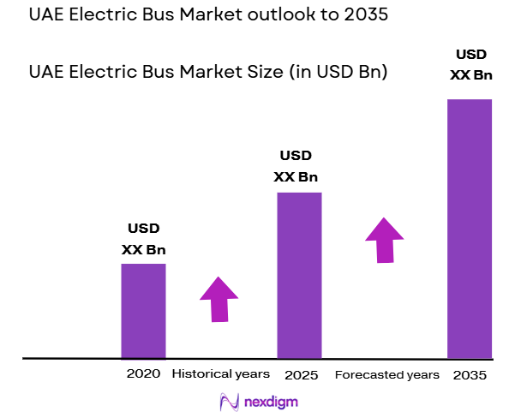
The UAE Electric Bus market has witnessed substantial growth, with a market size of USD ~ billion based on a recent historical assessment. The market has been primarily driven by the UAE’s commitment to reducing carbon emissions and expanding its clean energy infrastructure. Additionally, government incentives and funding for electric vehicle adoption have further accelerated the market’s growth. The growth is supported by various initiatives that align with the country’s sustainability goals, along with the increasing demand for eco-friendly and cost-efficient transportation solutions across urban areas.
Dominating the market are major cities like Dubai, Abu Dhabi, and Sharjah, which are leading the transition to electric public transportation systems. The UAE government’s strong push for sustainable development, along with significant investments in green infrastructure, has positioned these cities as leaders in the electric bus sector. Factors such as well-developed urban transport networks, substantial government backing, and the growing demand for electric mobility solutions have contributed to the dominance of these regions in driving the adoption of electric buses.
Market Segmentation
By Product Type
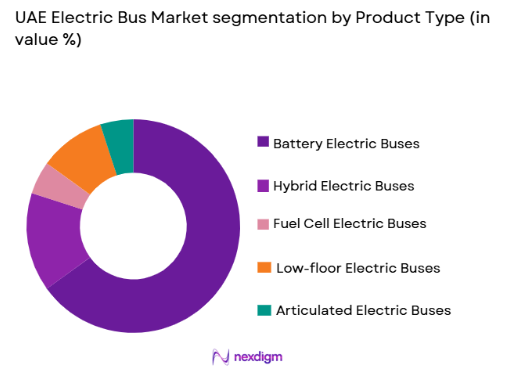
The UAE Electric Bus market is segmented by product type into Battery Electric Buses, Hybrid Electric Buses, Fuel Cell Electric Buses, Low-floor Electric Buses, and Articulated Electric Buses. Recently, Battery Electric Buses have a dominant market share due to factors such as the increasing demand for fully electric and eco-friendly public transportation options. The UAE’s commitment to achieving zero emissions by 2050 has resulted in favorable policies and incentives for the adoption of Battery Electric Buses. Moreover, technological advancements in battery life and charging infrastructure have made these buses more viable for everyday use. Battery Electric Buses are also highly preferred due to their cost-effectiveness in the long term, as they incur lower maintenance and fuel costs compared to their hybrid counterparts.
By Platform Type
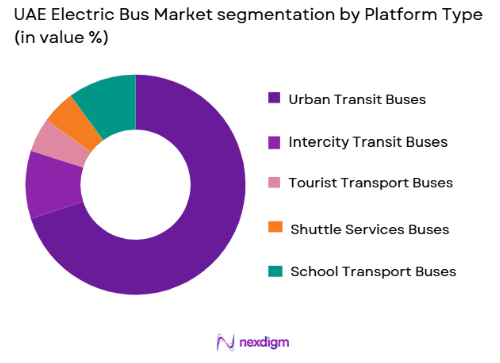
The UAE Electric Bus market is segmented by platform type into Urban Transit Buses, Intercity Transit Buses, Tourist Transport Buses, Shuttle Services Buses, and School Transport Buses. Urban Transit Buses have the highest market share due to their wide usage in city transportation networks. As urban areas in the UAE, particularly Dubai and Abu Dhabi, continue to expand, there is an increasing need for efficient, eco-friendly transportation systems to support the growing population and tourism. The UAE government has prioritized reducing congestion and enhancing the sustainability of its transportation infrastructure, making urban electric buses a core component of these initiatives. Additionally, urban electric buses are suited for high-frequency routes, offering cost-effective solutions for cities aiming to achieve carbon-neutral objectives.
Competitive Landscape
The competitive landscape of the UAE Electric Bus market is shaped by major players like BYD, Proterra, Volvo Buses, Tesla, and NFI Group. These companies are consolidating the market by offering a range of electric bus solutions tailored to meet the demands of urban and intercity transportation. The influence of these major players is marked by their ability to innovate and scale production of electric buses, making them accessible to both public and private fleet operators. As a result, the market is witnessing intense competition, with significant investments in research and development to create next-generation, sustainable, and efficient electric buses. The ongoing expansion of infrastructure for electric vehicles, particularly charging stations, is another factor driving competition among these key players.
| Company Name | Establishment Year | Headquarters | Technology Focus | Market Reach | Key Products | Revenue | Additional Parameter |
| BYD | 1995 | China | ~ | ~ | ~ | ~ | ~ |
| Proterra | 2004 | USA | ~ | ~ | ~ | ~ | ~ |
| Volvo Buses | 1927 | Sweden | ~ | ~ | ~ | ~ | ~ |
| Tesla | 2003 | USA | ~ | ~ | ~ | ~ | ~ |
| NFI Group | 1990 | Canada | ~ | ~ | ~ | ~ | ~ |
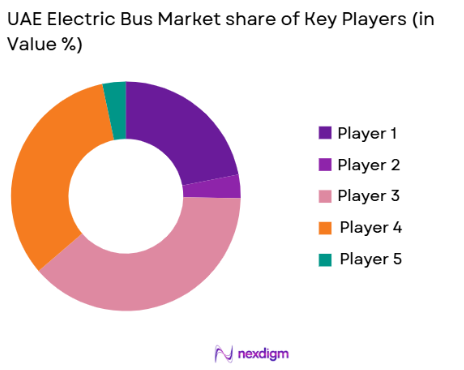
UAE Electric Bus Market Analysis
Growth Drivers
Government Incentives and Regulatory Support
The UAE government has been at the forefront of supporting the adoption of electric vehicles, including buses, through a series of incentives, rebates, and tax exemptions. These measures have made the transition to electric buses more financially viable for public and private transport operators. The government’s long-term sustainability goals, including the Vision 2021, aim to reduce carbon emissions and increase the adoption of clean technologies. The availability of financial incentives and a favorable regulatory environment has been a key driver in the widespread adoption of electric buses, as it helps reduce the upfront costs associated with these vehicles and makes them a more attractive option for fleet operators. Additionally, the government’s commitment to building a robust charging infrastructure and offering subsidies for bus purchases has further bolstered the demand for electric buses in the country.
Technological Advancements in Battery and Charging Infrastructure
Technological advancements in battery technology have significantly boosted the adoption of electric buses in the UAE. The development of high-capacity, long-lasting batteries has reduced concerns about range anxiety, making electric buses a viable option for public transportation networks. Furthermore, improvements in charging infrastructure, including the installation of fast-charging stations and energy-efficient solutions, have made it easier for electric buses to operate efficiently. As battery technologies continue to evolve, the cost per kilowatt-hour has decreased, making electric buses more affordable for operators. This technological progress, combined with the UAE’s commitment to a green economy, has been a major growth driver for the electric bus market.
Market Challenges
High Initial Capital Investment
One of the main challenges faced by the UAE Electric Bus market is the high initial capital investment required for the procurement of electric buses and the establishment of necessary infrastructure, including charging stations. Despite the long-term cost savings associated with reduced fuel and maintenance expenses, the upfront costs remain a significant barrier for many transport operators. Many municipalities and private companies face financial constraints in allocating resources to purchase electric buses, which limits the speed of transition from conventional diesel buses to electric alternatives. The cost of establishing widespread charging infrastructure is also a key challenge that requires substantial investment. As such, the high capital expenditure continues to pose a challenge to the market’s growth.
Limited Charging Infrastructure and Range Anxiety
Although significant strides have been made in expanding the charging infrastructure for electric vehicles, the availability of fast and reliable charging stations remains a challenge in some areas. Public transport operators require a dense network of charging stations to ensure the continuous operation of electric buses. Limited charging infrastructure in less-developed areas of the UAE poses an obstacle to the full-scale deployment of electric buses. Additionally, concerns over battery range and the time required for recharging contribute to range anxiety among fleet operators. Without comprehensive charging networks and improved charging times, operators may hesitate to fully commit to electric bus adoption, which could slow market growth.
Opportunities
Partnerships for Smart City Initiatives
The UAE’s ongoing smart city initiatives, especially in cities like Dubai and Abu Dhabi, present a significant opportunity for the electric bus market. These initiatives focus on enhancing the sustainability and efficiency of urban infrastructure, including transportation networks. Electric buses play a critical role in these initiatives, as they offer a green alternative to conventional vehicles and align with the UAE’s environmental goals. Collaboration between government bodies, private companies, and technology firms can lead to the integration of electric buses with smart city systems, enabling fleet management, real-time monitoring, and predictive maintenance. The expansion of smart cities offers a fertile ground for the widespread adoption of electric buses, as it creates demand for sustainable, innovative, and eco-friendly transport solutions.
Growth in Tourism and Demand for Eco-friendly Transport
The UAE’s tourism sector continues to expand, with millions of visitors arriving each year. As the demand for eco-friendly travel options increases, there is a growing need for electric buses in the tourism and leisure segments. Electric buses are increasingly seen as a sustainable and cost-effective alternative to conventional buses for tourists, offering a clean, quiet, and efficient mode of transportation. As the country moves towards becoming a global tourism hub, especially in cities like Dubai, the need for electric buses to cater to both local and international visitors will continue to grow. This trend presents a significant opportunity for market players to develop tailored solutions for the tourism sector, further driving the adoption of electric buses in the UAE.
Future Outlook
The UAE Electric Bus market is poised for continued growth, driven by increasing government support, technological innovations, and rising demand for sustainable transport solutions. Over the next five years, the market is expected to witness substantial investments in electric bus fleets, as well as the expansion of charging infrastructure to support the growing number of electric vehicles on the road. Additionally, advancements in battery technology and smart city integrations will further enhance the operational efficiency of electric buses. With strong regulatory support and an increasing emphasis on environmental sustainability, the electric bus market is expected to become a cornerstone of the UAE’s public transportation system in the coming years.
Major Players
- BYD Auto
- Proterra
- Volvo Buses
- Tesla
- NFI Group
- Alexander Dennis
- Yutong Bus
- New Flyer
- Scania
- MAN Truck & Bus
- Daimler AG
- Solaris Bus & Coach
- King Long
- Wrightbus
- Gillig
Key Target Audience
- Investments and venture capitalist firms
- Government and regulatory bodies
- Urban transport authorities
- Public transport operators
- Electric vehicle manufacturers
- Bus fleet operators
- Infrastructure development companies
- Technology providers for electric mobility solutions
Research Methodology
Step 1: Identification of Key Variables
Identification of essential variables that influence market growth, such as government regulations, technological advancements, and consumer preferences.
Step 2: Market Analysis and Construction
Market analysis is performed using both primary and secondary data sources to assess market size, segment dynamics, and competitive landscape.
Step 3: Hypothesis Validation and Expert Consultation
Consultation with industry experts and stakeholders to validate assumptions and refine market models based on real-world insights.
Step 4: Research Synthesis and Final Output
Synthesis of gathered data and analysis to generate final market reports, including projections, key insights, and strategic recommendations.

- Executive Summary
- Research Methodology (Definitions, Scope, Industry Assumptions, Market Sizing Approach, Primary & Secondary Research Framework, Data Collection & Verification Protocol, Analytic Models & Forecast Methodology, Limitations & Research Validity Checks)

- Market Definition and Scope
- Value Chain & Stakeholder Ecosystem
- Regulatory / Certification Landscape
- Sector Dynamics Affecting Demand
- Strategic Initiatives & Infrastructure Growth

- Growth Drivers
Government Support for Sustainable Transport
Technological Advancements in Battery Storage
Rising Demand for Public Transport Solutions
Commitment to Clean Energy and Carbon Reduction
Reduction in Operational Costs for Electric Fleets - Market Challenges
High Initial Investment in Electric Bus Infrastructure
Limited Charging Station Availability
Concerns Over Battery Longevity and Efficiency
Regulatory and Policy Inconsistencies
Maintenance and Support System Complexities - Market Opportunities
Government Initiatives for Green Public Transport
Growing Demand for Eco-friendly Travel Solutions
Partnerships with Tech Firms for Smart Bus Integration - Trends
Increased Adoption of Electric Buses in Urban Areas
Focus on Autonomous Electric Bus Technologies
Rise of Eco-conscious Consumer Preferences
Integration of AI for Enhanced Operational Efficiency
Shift Towards Electrification in Long-distance Transport - Government Regulations & Defense Policy
Sustainability and Emission Reduction Policies
Government Subsidies for Electric Bus Procurement
Regulations on Battery Disposal and Recycling - SWOT Analysis
- Stakeholder and Ecosystem Analysis
- Porter’s Five Forces Analysis
- Competition Intensity and Ecosystem Mapping

- By Market Value, 2020-2025
- By Installed Units, 2020-2025
- By Average System Price, 2020-2025
- By System Complexity Tier, 2020-2025

- By System Type (In Value%)
Battery Electric Buses
Hybrid Electric Buses
Fuel Cell Electric Buses
Low-floor Electric Buses
Articulated Electric Buses - By Platform Type (In Value%)
Urban Transit Buses
Intercity Transit Buses
Tourist Transport Buses
Shuttle Services Buses
School Transport Buses - By Fitment Type (In Value%)
Factory Fitted Electric Systems
Retrofit Electric Systems
Modular Electric Systems
Integrated Electric Systems
Custom Electric Systems - By EndUser Segment (In Value%)
Government Transport Agencies
Private Fleet Operators
Public Transport Companies
Educational Institutions
Tourism & Leisure Operators - By Procurement Channel (In Value%)
Direct Procurement from Manufacturers
Public Tenders
Private Sector Procurement
Online Procurement Platforms
Third-party Distributors - By Material / Technology (in Value%)
Lithium-ion Batteries
Solid-state Batteries
Fuel Cell Technology
Regenerative Braking Systems
Autonomous Bus Technology

- Market structure and competitive positioning
- Market share snapshot of major players
- Cross Comparison Parameters (System Type, Platform Type, Procurement Channel, End User Segment, Fitment Type, Material/Technology, Regulatory Compliance, Infrastructure Readiness, Innovation Rate, Customer Satisfaction)
- SWOT Analysis of Key Players
- Pricing & Procurement Analysis
- Key Players
BYD Auto
Tesla Inc.
Proterra
Volvo Buses
BYD Auto Co. Ltd.
Scania
Alexander Dennis Ltd.
NFI Group Inc.
MAN Truck & Bus AG
Solaris Bus & Coach
King Long United Automotive Industry
New Flyer
Yutong Bus
Mercedes-Benz Buses
Arriva

- Government Agencies Driving Fleet Electrification
- Private Operators Seeking Operational Cost Reduction
- Public Demand for Clean and Efficient Transportation
- Tourism Industry Adopting Electric Buses for Eco-friendly Travel

- Forecast Market Value, 2026-2035
- Forecast Installed Units, 2026-2035
- Price Forecast by System Tier, 2026-2035
- Future Demand by Platform, 2026-2035


 Request a Sample
 Ask for Customization
 Get a Quote
 Enquire Now