
 Download PDF
 Download PDF
Market Overview
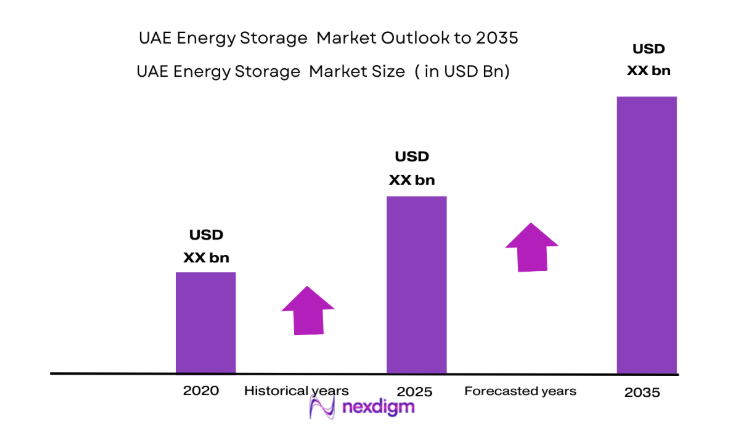
Based on a recent historical assessment, the UAE energy storage market size is valued at approximately USD ~ billion. This growth is primarily driven by the UAE’s investments in solar and wind power infrastructure, as well as the country’s strategic initiatives aimed at enhancing energy security and sustainability. The need to store excess renewable energy for grid stability and peak demand management has become a key factor in the expansion of energy storage technologies. Moreover, the market benefits from government incentives and policies, which encourage both public and private sector involvement, fostering the demand for energy storage systems.
Dominant cities in the UAE, particularly Dubai and Abu Dhabi, lead the energy storage sector due to their position as hubs for renewable energy projects and technological innovation. Dubai’s ambitious goal of becoming the world’s lowest carbon city and Abu Dhabi’s heavy investments in green technologies have propelled the market’s growth in the region. Both cities benefit from substantial financial resources, enabling them to deploy cutting-edge energy storage technologies. The UAE government’s Vision 2021 and the Clean Energy Strategy 2050 further boost demand for energy storage systems, driving large-scale renewable energy projects and energy-efficient initiatives that favor these cities’ dominance in the market.
Market Segmentation
By Product Type:
The UAE energy storage market is segmented by product type into lithium-ion batteries, lead-acid batteries, flow batteries, sodium-ion batteries, and compressed air energy storage. Recently, lithium-ion batteries have gained a dominant market share due to their superior efficiency, longer lifespan, and rapidly declining costs. These batteries are favored by both residential and commercial sectors for their high energy density, fast charging capabilities, and scalability. Moreover, advancements in lithium-ion technology, along with increasing investments in energy storage projects, have made them the preferred choice for most energy storage solutions in the UAE.

Platform type:
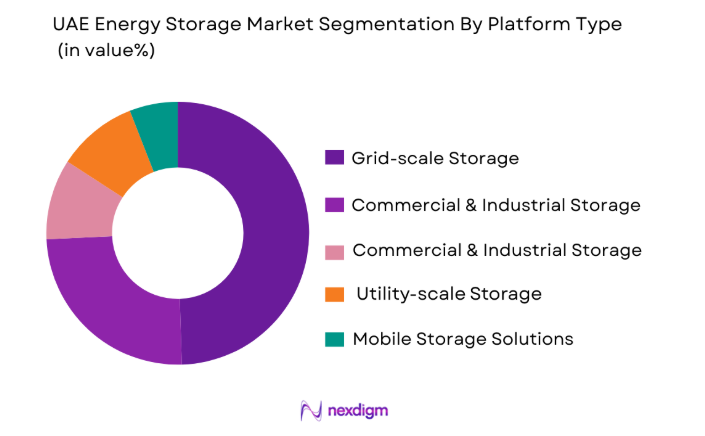
The UAE energy storage market is segmented by platform type into grid-scale storage, commercial & industrial storage, residential storage, utility-scale storage, and mobile storage solutions. Grid-scale storage holds the dominant market share, driven by large-scale renewable energy projects in the UAE. As the country continues to expand its renewable energy generation capacity, grid-scale storage systems play a vital role in stabilizing the electricity grid by storing excess energy produced during peak renewable generation periods. The substantial growth of solar power in the UAE has further reinforced the demand for grid-scale energy storage systems.
Competitive Landscape
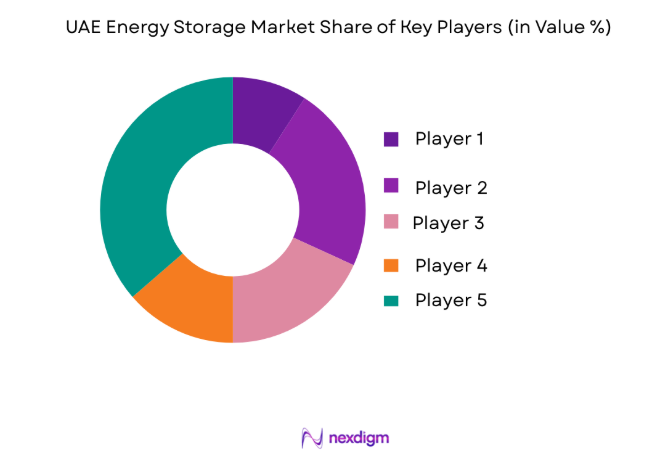
The competitive landscape of the UAE energy storage market is characterized by the presence of several established global and regional players. Consolidation is occurring as companies seek to capitalize on the growing demand for energy storage solutions. Major players have been actively investing in research and development, enhancing their product offerings to meet the needs of the renewable energy sector. The market sees continuous innovation, with companies focusing on energy efficiency, scalability, and integration with renewable energy sources. These factors are shaping the competitive dynamics, as players strive to maintain market leadership.
| Company Name | Establishment Year | Headquarters | Technology Focus | Market Reach | Key Products | Revenue | Additional Parameter |
| Tesla | 2003 | USA | ~ | ~ | ~ | ~ | ~ |
| ABB | 1988 | Switzerland | ~ | ~ | ~ | ~ | ~ |
| Siemens | 1847 | Germany | ~ | ~ | ~ | ~ | ~ |
| Fluence Energy | 2018 | USA | ~ | ~ | ~ | ~ | ~ |
| LG Chem | 1947 | South Korea | ~ | ~ | ~ | ~ | ~ |
UAE Energy Storage Market Analysis
Growth Drivers
Government Support for Renewable Energy Initiatives:
Government policies and incentives play a key role in the UAE energy storage market’s growth. The UAE government has introduced several initiatives, including funding programs and regulations aimed at boosting renewable energy adoption. The Clean Energy Strategy 2050 and Vision 2021 are central to the country’s energy transformation. With ambitious targets for solar and wind energy, the demand for energy storage systems has surged to support the integration of renewable sources into the national grid. The government’s commitment to increasing the share of renewable energy in its power generation mix is expected to further fuel market growth, making energy storage a critical element of the strategy. Additionally, the UAE’s pledge to reduce carbon emissions has bolstered efforts to improve energy efficiency, further promoting the adoption of energy storage technologies.
Technological Advancements in Energy Storage Solutions:
Technological advancements in energy storage systems are driving significant growth in the UAE market. Innovations such as longer-lasting batteries, more efficient charging mechanisms, and improved grid integration have enhanced the appeal of energy storage systems. With advancements in lithium-ion battery technology, energy storage systems are becoming more affordable, efficient, and scalable. The decline in battery prices, coupled with improved performance, makes it economically viable for both residential and commercial consumers to adopt energy storage systems. Furthermore, developments in alternative energy storage technologies such as flow batteries and compressed air systems are creating new opportunities, enabling the UAE to diversify its energy storage solutions and enhance grid resilience. As energy storage technologies continue to evolve, they will play a crucial role in shaping the future of energy management and sustainability in the UAE.
Market Challenges
High Initial Capital Costs:
One of the key challenges in the UAE energy storage market is the high initial capital investment required for energy storage systems. Although the long-term benefits of energy storage, such as improved energy efficiency and cost savings, are well established, the high upfront costs can deter adoption, especially in sectors with limited financial resources. Despite declining prices of energy storage systems, the cost of installation, maintenance, and infrastructure setup remains significant. This challenge is particularly felt by small and medium enterprises (SMEs) and residential customers, who may struggle to afford large-scale storage solutions. While the government has implemented incentives and subsidies to alleviate some of these costs, the initial financial burden continues to pose a barrier to widespread market adoption. Overcoming this challenge will require further innovation and cost reduction in energy storage technologies to make them more accessible to a broader range of consumers and businesses.
Regulatory Barriers and Policy Inconsistencies:
The regulatory environment in the UAE energy storage market can be complex and may vary between regions, posing a challenge for companies looking to expand their operations. Policy inconsistencies and the lack of standardized regulations for energy storage systems have slowed the deployment of large-scale storage projects in some areas. While the UAE government has made significant strides in promoting clean energy and energy storage, regulatory frameworks are still in development to fully support the rapid expansion of energy storage solutions. In addition, the lack of clear guidelines for grid integration and energy storage system operations can create delays and add uncertainty for stakeholders. Regulatory and policy reforms are essential to overcome these barriers, ensuring that energy storage systems can be deployed efficiently and effectively across the country.
Opportunities
Integration of Energy Storage with Electric Vehicles:
The integration of energy storage systems with electric vehicles (EVs) presents a significant growth opportunity in the UAE market. As the demand for electric vehicles continues to rise globally, energy storage technologies can play a key role in supporting the expansion of EV infrastructure. Energy storage systems can be used to charge EVs during off-peak hours, ensuring grid stability and reducing the demand on electricity during peak periods. Moreover, energy storage solutions can enhance the charging process by providing faster and more efficient charging times. This integration can also facilitate the creation of vehicle-to-grid (V2G) systems, allowing EVs to return energy to the grid during periods of high demand, further enhancing the stability and reliability of the electricity grid. As the UAE moves towards a more sustainable and electrified transportation system, energy storage solutions will be integral to supporting the growth of the EV market and the overall energy transition.
Advancements in Solar Energy Storage Solutions:
With the UAE’s commitment to increasing its solar energy capacity, there is a growing opportunity for energy storage solutions to support solar power generation. The country has one of the highest solar energy potentials in the world, making solar energy storage a key focus area for both public and private sectors. Solar energy storage systems allow for the storage of excess energy generated during peak sunlight hours, which can be used during the night or on cloudy days, ensuring a continuous supply of renewable energy. By integrating energy storage with solar power, the UAE can maximize its renewable energy output and reduce its dependence on fossil fuels. The continued development of solar energy storage systems presents a unique opportunity to accelerate the transition towards a fully renewable energy grid, positioning the UAE as a global leader in clean energy innovation.
Future Outlook
The future outlook for the UAE energy storage market is promising, driven by the country’s commitment to renewable energy and sustainability. Over the next five years, energy storage systems will play an increasingly vital role in supporting the UAE’s ambitious clean energy targets. Advancements in energy storage technologies, such as lithium-ion batteries and flow batteries, will make storage solutions more affordable and efficient, enabling broader adoption across residential, commercial, and industrial sectors. With continued regulatory support and technological innovation, the UAE energy storage market is expected to grow substantially, supporting the country’s energy transition and contributing to its carbon reduction goals.
Major Players
- Tesla
- ABB
- Siemens
- Fluence Energy
- LG Chem
- AES Energy Storage
- Vestas
- Schneider Electric
- Samsung SDI
- NextEra Energy
- BYD
- Eaton
- Siemens Gamesa
- Mitsubishi Electric
- Sonnen
Key Target Audience
- Investments and venture capitalist firms
- Government and regulatory bodies
- Energy producers
- Renewable energy developers
- Utility companies
- Large industrial manufacturers
- Commercial and residential customers
- Electric vehicle manufacturers
Research Methodology
Step 1: Identification of Key Variables
Identifying key variables that influence the energy storage market, including technological advancements, market trends, and regulatory factors, to shape the overall market analysis.
Step 2: Market Analysis and Construction
Conducting a thorough analysis of the UAE energy storage market, focusing on demand drivers, technological advancements, and competitive dynamics to construct an accurate market model.
Step 3: Hypothesis Validation and Expert Consultation
Validating market hypotheses by consulting industry experts and stakeholders to gather insights and confirm market assumptions, ensuring the reliability of the data.
Step 4: Research Synthesis and Final Output
Synthesizing the research findings, ensuring that all variables and insights are incorporated into the final report for a comprehensive understanding of the market landscape.

- Executive Summary
- Research Methodology (Definitions, Scope, Industry Assumptions, Market Sizing Approach, Primary & Secondary Research Framework, Data Collection & Verification Protocol, Analytic Models & Forecast Methodology, Limitations & Research Validity Checks)

- Market Definition and Scope
- Value Chain & Stakeholder Ecosystem
- Regulatory / Certification Landscape
- Sector Dynamics Affecting Demand

- Growth Drivers
Increased Renewable Energy Adoption
Government Support for Clean Energy
Declining Battery Costs - Market Challenges
High Initial Investment Costs
Regulatory and Policy Barriers
Limited Energy Storage Infrastructure - Market Opportunities
Expansion of Renewable Energy Projects
Energy Storage for Electric Vehicles
Growth in Off-Grid Energy Solutions - Trends
Advancements in Battery Technology
Integration of AI in Energy Storage
Rising Demand for Decentralized Energy Systems - Government Regulations
Energy Storage Regulation & Policy Framework
Incentives for Renewable Energy Integration
Compliance with International Standards

- By Market Value, 2020-2025
- By Installed Units, 2020-2025
- By Average System Price, 2020-2025
- By System Complexity Tier, 2020-2025

- By System Type (In Value%)
Lithium-ion Batteries
Lead-acid Batteries
Flow Batteries
Sodium-ion Batteries
Compressed Air Energy Storage - By Platform Type (In Value%)
Grid-scale Storage
Commercial & Industrial Storage
Residential Storage
Utility-Scale Storage
Mobile Storage Solutions - By Fitment Type (In Value%)
On-grid Systems
Off-grid Systems
Hybrid Systems
Standalone Systems
Integrated Systems - By EndUser Segment (In Value%)
Energy Providers
Industrial Applications
Commercial Buildings
Residential Consumers
Utility Companies

- Market Share Analysis
- CrossComparison Parameters (System Type, Platform Type, Procurement Channel, EndUser Segment, Fitment Type)
- SWOT Analysis of Key Competitors
- Pricing & Procurement Analysis
- Porter’s Five Forces
- Key Players
ABB
Siemens
GE Renewable Energy
NextEra Energy
Schneider Electric
Tesla
Vestas
LG Chem
Eos Energy Storage
AES Energy Storage
Bloom Energy
Saft
Fluence Energy
Siemens Gamesa
Samsung SDI

- Growing Demand from Industrial Sector
- Residential Market Adoption
- Utility Companies’ Investment in Energy Storage
- Energy Storage for Electric Vehicles

- Forecast Market Value, 2026-2035
- Forecast Installed Units, 2026-2035
- Price Forecast by System Tier, 2026-2035
- Future Demand by Platform, 2026-2035


 Request a Sample
 Ask for Customization
 Get a Quote
 Enquire Now