
 Download PDF
Market Overview
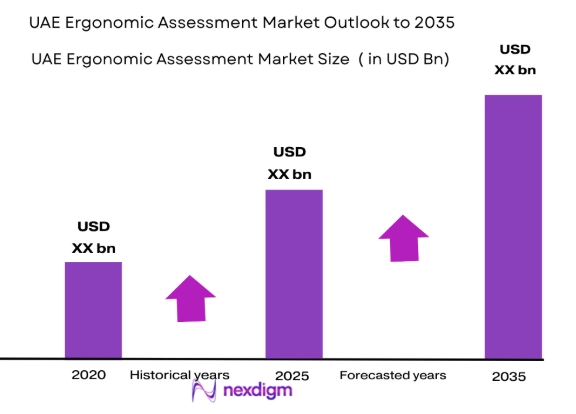
The UAE ergonomic assessment market is valued at USD ~ billion as of 2024, with steady growth driven by the increasing focus on employee health and workplace productivity. The market is fueled by the adoption of ergonomic solutions to mitigate musculoskeletal disorders, a significant health concern in the UAE. With an evolving workforce in both public and private sectors, the demand for ergonomic assessments in offices, industrial settings, and healthcare environments has surged. Companies are increasingly investing in workplace safety, which boosts demand for ergonomic assessment services.
Dubai and Abu Dhabi are the dominant cities within the UAE for ergonomic assessments due to their thriving business ecosystems and focus on corporate wellness. These cities have a strong concentration of multinational corporations, healthcare facilities, and industrial sectors that prioritize employee health. Dubai, as a global business hub, and Abu Dhabi, with its vast government and oil & gas sectors, both emphasize employee welfare, driving the demand for ergonomic solutions. Their advanced infrastructure and adoption of international workplace standards further contribute to their dominance in the market.
Market Segmentation
By Service Type
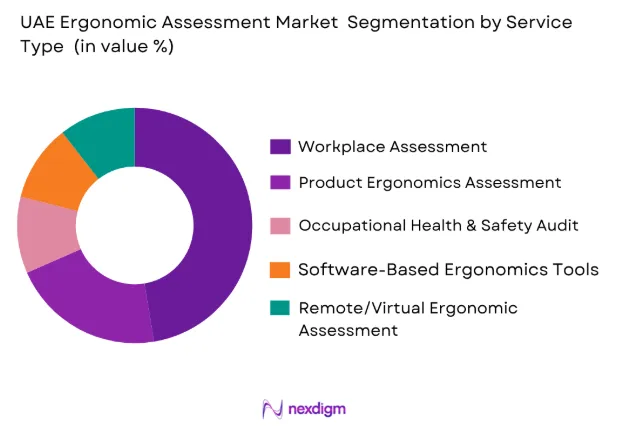
The UAE ergonomic assessment market is segmented by service type into workplace assessment, product ergonomics assessment, occupational health and safety audit, remote/virtual ergonomic assessment, and software-based ergonomic tools. Among these, workplace assessments dominate the market, as businesses in various sectors, especially in office environments, are increasingly aware of the significance of ergonomics in reducing employee health risks and improving productivity. Workplace assessments, including posture analysis and the use of RULA and REBA methods, are being increasingly implemented in corporate offices. Companies recognize that optimizing workstation ergonomics can prevent costly injuries and improve employee comfort, leading to higher productivity and reduced healthcare costs.
By Assessment Method Deployment
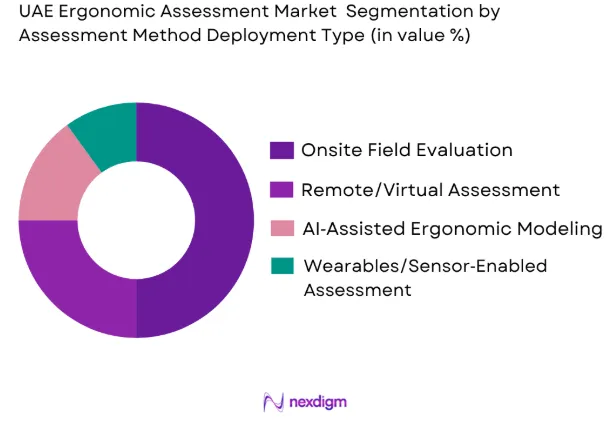
The market is also segmented by assessment method deployment into onsite field evaluation, remote/virtual assessment, wearable/sensor-enabled assessment, and AI-assisted ergonomic modeling. The onsite field evaluation method currently holds the largest market share, as companies continue to prefer in-person, direct evaluation by ergonomics professionals. This method provides a more accurate and tailored approach to identifying ergonomic issues in workplaces, especially in industrial and manufacturing sectors where physical work environments require thorough assessments. However, the growing trend of hybrid work models is accelerating the adoption of remote assessments and AI-assisted ergonomic solutions.
Competitive Landscape
The UAE ergonomic assessment market is dominated by a few key players who provide comprehensive services for workplace assessments, ergonomic software, and remote evaluations. These companies have established a strong foothold due to their expertise in ergonomics, long-standing client relationships, and commitment to health and safety standards.
| Company Name | Establishment Year | Headquarters | Technology Focus | Market Reach | Key Products | Revenue (USD) |
| Humanscale | 1985 | New York, USA | ~ | ~ | ~ | ~ |
| Steelcase | 1912 | Michigan, USA | ~ | ~ | ~ | ~ |
| FlexiSpot | 2011 | California, USA | ~ | ~ | ~ | ~ |
| Uplift Desk | 2013 | Texas, USA | ~ | ~ | ~ | ~ |
| Herman Miller | 1905 | Michigan, USA | ~ | ~ | ~ | ~ |
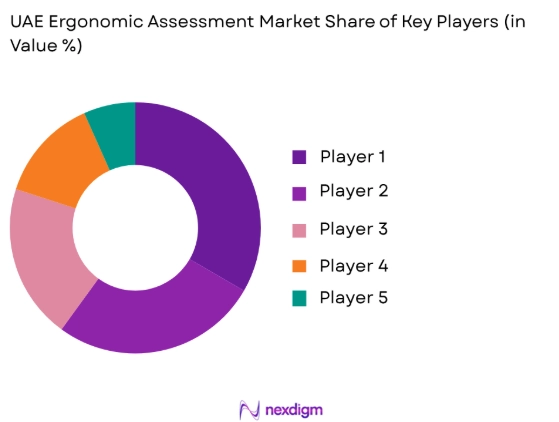
UAE Ergonomic Assessment Market Analysis
Growth Drivers
Increase in UAE Workforce Welfare Initiatives
The UAE government has been implementing several initiatives to improve workforce welfare, with the Ministry of Human Resources and Emiratisation (MOHRE) launching multiple programs to enhance occupational health and safety. The UAE’s Vision 2030 emphasizes a balanced and healthy workforce, with a significant increase in allocated budgets for health and safety programs. The government is focusing on workplace wellness, which includes ergonomic improvements to mitigate work-related injuries. In 2022, the UAE allocated AED 6.2 billion to health and safety improvements across various sectors, ensuring a safer and healthier work environment, thereby boosting the ergonomic assessment market.
Rising Prevalence of Work‑Related Musculoskeletal Disorders
WMSDs are a growing concern in the UAE, especially in sectors like construction, healthcare, and office environments. According to a report by the UAE Ministry of Health, musculoskeletal disorders account for 45% of all work-related injuries reported in the country. In 2022 alone, the UAE healthcare sector reported over 50,000 cases related to work-induced musculoskeletal pain and discomfort. This alarming increase in WMSDs has led to a higher demand for ergonomic assessments. As part of the national health strategy, the government is focusing on preventive measures to address this rising concern, which is expected to drive the demand for ergonomic services across various industries.
Market Challenges
Fragmented Service Provider Base
The UAE ergonomic assessment market is currently facing a challenge due to the fragmentation of service providers. There are a significant number of small, independent ergonomic service providers that lack the resources to scale and integrate advanced technologies such as AI and wearables into their assessments. The lack of a consolidated service provider base also makes it difficult for companies to find reliable, standardized services, especially in remote regions. Despite a growing focus on workplace health, there is no centralized platform for companies to access uniform ergonomic services, limiting the overall effectiveness of workforce health strategies in the UAE.
Standardization and Validation of Remote Ergonomic Assessment Tools
A major challenge in the UAE ergonomic assessment market is the lack of standardization and validation of remote ergonomic assessment tools. While companies have increasingly turned to digital solutions for ergonomic evaluations, remote assessment tools face issues related to reliability and accuracy. These tools are still in their nascent stages and have not been widely accepted as the gold standard for ergonomic evaluations. The UAE Ministry of Human Resources and Emiratisation has set up committees to review ergonomic tools, but as of now, there are no specific laws or standardized guidelines that validate these remote systems as universally reliable for assessment purposes.
Opportunities
Integration of AI, Wearables and Predictive Ergonomic Analytics
The integration of Artificial Intelligence (AI) and wearable devices into ergonomic assessments presents a significant opportunity for growth in the UAE. The Ministry of Health and Prevention (MOHAP) has already emphasized the use of digital health tools, including AI and wearables, to improve the effectiveness of occupational health programs. As of 2023, over 15,000 workers across various sectors in the UAE are using wearables to track their health metrics, including ergonomics. With the increasing adoption of IoT-enabled devices, there is a substantial opportunity to integrate predictive analytics to identify risks and improve the accuracy of ergonomic assessments, creating a future-forward approach to workplace health in the UAE.
Expansion of Corporate Wellness & Sustainability Programs
Corporate wellness programs are becoming increasingly common in the UAE, especially among large organizations in cities like Dubai and Abu Dhabi. Many UAE-based multinationals are adopting sustainability frameworks that include employee well-being as a key pillar. The UAE’s Vision 2021 prioritizes the promotion of healthy lifestyles and well-being among citizens and residents, which aligns with the corporate sector’s growing interest in sustainability and health initiatives. In 2023, over 30% of large enterprises in the UAE implemented comprehensive wellness programs, including ergonomics assessments, highlighting a strong shift towards long-term investments in employee health. This trend is likely to continue as companies see the value of a healthier workforce in reducing healthcare costs and increasing productivity.
Future Outlook
Over the next few years, the UAE ergonomic assessment market is expected to experience significant growth. The rise in employee welfare initiatives, the increasing awareness of work-related musculoskeletal disorders (WMSDs), and the adoption of advanced ergonomic technologies such as wearables and AI-driven assessments are key drivers for market expansion. Additionally, the ongoing shift towards hybrid work models will further stimulate demand for remote ergonomic assessments, creating new opportunities for market players. The integration of digital tools and remote evaluation methods is expected to enhance market accessibility, reaching a wider range of industries beyond traditional sectors like healthcare and office spaces.
Major Players
- Herman Miller
- Humanscale
- Ergonomics Plus
- Pro Ergonomics
- SafeStart
- CPT Ergonomics
- Avery Dennison
- Steelcase
- Office Ergonomics
- Gensler
- S2S Global
- Ergo Works
- ATI Worksite Solutions
- Cargill
- Aujan Group
Key Target Audience
- Investments and Venture Capitalist Firms
- Corporate Human Resources Heads
- Occupational Health and Safety Agencies
- Workplace Health and Wellness Program Managers
- Regulatory Bodies
- Industrial Health and Safety Managers
- Hospitality and Retail Sector Heads
- Large-Scale Government Organizations
Research Methodology
Step 1: Identification of Key Variables
The initial phase involves constructing an ecosystem map of the UAE ergonomic assessment market. This step includes secondary research from market reports, government publications, and industry journals. The objective is to identify the key factors driving demand and to define the critical variables influencing the market, such as government regulations, corporate wellness initiatives, and technological advancements in ergonomic tools.
Step 2: Market Analysis and Construction
In this phase, a historical analysis of the market is conducted to understand past growth trends and the demand for ergonomic assessment services. This includes examining market penetration in major sectors like corporate offices, healthcare, and manufacturing, as well as an assessment of the distribution channels and service models used by leading players.
Step 3: Hypothesis Validation and Expert Consultation
Market hypotheses are formulated based on initial data and then validated through consultations with industry experts. These consultations will be conducted through phone interviews, roundtable discussions, and surveys with key stakeholders such as corporate HR managers, health and safety officers, and ergonomic solution providers.
Step 4: Research Synthesis and Final Output
The final phase involves synthesizing the insights gathered through secondary and primary research. Interviews with industry leaders will provide detailed insights into future trends, technological innovations, and evolving customer demands. This process ensures the validity and accuracy of the data, providing a comprehensive analysis of the UAE ergonomic assessment market.

- Executive Summary
- Research Methodology (Market Definitions and Assumptions, Abbreviations, UAE Ergonomic Assessment Market Sizing Approach, Consolidated Primary + Secondary Research, Understanding Market Potential Through In‑Depth Industry Stakeholder Interviews, UAE Ergonomic Standards and Regulatory Matrix, Limitations and Risk Factors)

- Definition and Scope
- Market Genesis and Adoption Timeline
- Workforce Health & Safety Framework in UAE
- Ergonomic Needs Assessment Across Key UAE Sectors
- Supply Chain and Value Chain Analysis

- Growth Drivers
Increase in UAE Workforce Welfare Initiatives
Rising Prevalence of Work‑Related Musculoskeletal Disorders
Corporate Health & Productivity ROI Imperatives - Market Challenges
Fragmented Service Provider Base
Standardization and Validation of Remote Ergonomic Assessment Tools
High Cost of Advanced Sensor/AI Assessment Technologies - Opportunities
Integration of AI, Wearables and Predictive Ergonomic Analytics
Expansion of Corporate Wellness & Sustainability Programs - Market Trends
Shift to Hybrid Work Models and Home Ergonomic Assessments
Adoption of Digital Assessment Platforms and Software
Regulatory Compliance Pressure in Occupational Health - Government Regulation and Standards
UAE Workplace Safety Regulations and Ergonomics Guidelines
GCC Interoperability Standards for Ergonomic Assessments - SWOT Analysis
- Stakeholder Ecosystem
- Porter’s Five Forces

- By Service Revenue , 2020-2025
- By Region , 2020-2025
- By End‑User, 2020-2025
- By Assessment Technology Penetration, 2020-2025

- By Service Type (In Value %)
Workplace Assessment
Product Ergonomics Assessment
Occupational Health & Safety Audit
Remote/Virtual Ergonomic Assessment
Software‑Based Ergonomics Tools - By Assessment Method Deployment (In Value %)
Onsite Field Evaluation
Remote/Virtual Assessment
Wearables/Sensor‑Enabled Assessment
AI‑Assisted Ergonomic Modeling - By End‑User Industry (In Value %)
Corporate Offices & Financial Sector
Oil & Gas / Energy Industrial Sites
Healthcare & Medical Facilities
Manufacturing & Logistics
Public Sector & Government Bodies
Education & Hospitality - By Client Type (In Value %)
Multinationals
SMEs
Government Agencies
Contractors & Consultants
Individual Consultants - By Geographic Region(In Value %)
Abu Dhabi Emirate
Dubai Emirate
Sharjah & Northern Emirates
Al Ain & Secondary Economic Hubs

- Market Share of Major Players
- Cross Comparison Parameters (Company Overview, Business Strategy, Recent Developments, Strength, Weakness, Organizational Structure, Service Portfolio Depth, Technology Stack, Revenue Breakdown by Service Type, Client Verticals Penetration, Geographic Footprint, Pricing Matrix, Distribution Channels, Partnerships & Alliances)
- SWOT Analysis of Major Players
- Pricing Analysis across Key SKU & Service Packages
- Detailed Profiles of Major Companies
Herman Miller
Humantech
CPT Ergonomics
Ergonomics Plus
Pro Ergonomics
Avery Dennison
Human Factors International
Steelcase
Office Ergonomics
SafeStart
Gensler
S2S Global
Ergo Works
Humanscale
ATI Worksite Solutions

- Market Demand and Utilization Patterns
- Purchasing Power and Budget Allocations
- Regulatory and Compliance Requirements
- User Pain Points and Needs Analysis
- Decision‑Making & Procurement Processes

- By Service Revenue, 2026-2035
- By Region, 2026-2035
- By End‑User, 2026-2035
- By Assessment Technology Penetration, 2026-2035


 Request a Sample
 Ask for Customization
 Get a Quote
 Enquire Now