
 Download PDF
 Download PDF
Market Overview
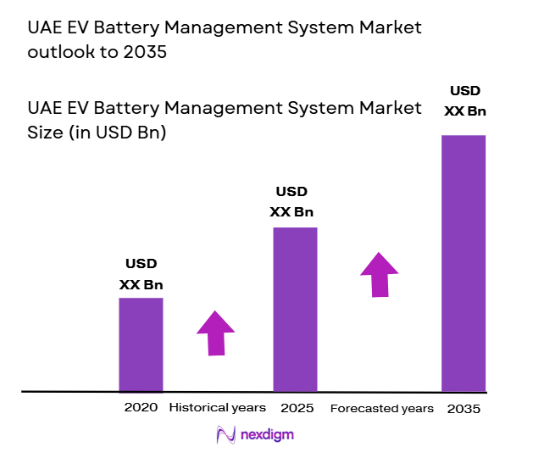
The UAE EV Battery Management System market is projected to reach USD ~ billion based on a recent historical assessment, driven by factors such as increased adoption of electric vehicles (EVs), government initiatives supporting green mobility, and advancements in battery technologies. The market is further boosted by the country’s efforts to diversify its energy sector and reduce reliance on fossil fuels. Growth in EV infrastructure and consumer interest in sustainable solutions are key drivers behind this expansion.
The UAE market is largely dominated by key cities like Dubai and Abu Dhabi, which have established themselves as hubs for technological innovation and sustainability. These cities benefit from strategic government policies aimed at fostering clean energy, electric vehicle adoption, and smart city infrastructure. Additionally, these regions are supported by significant investments in EV infrastructure, such as charging stations, which have enhanced their position in the market, further accelerating demand for EV battery management systems.
Market Segmentation
By Product Type:
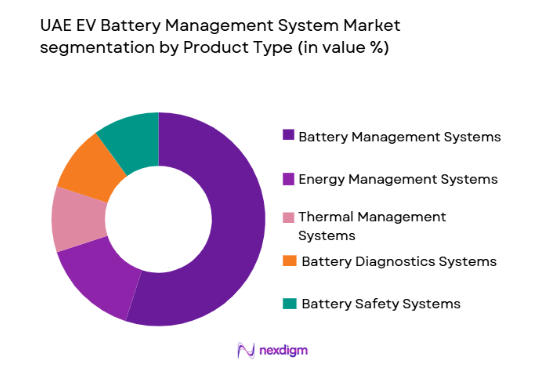
UAE EV Battery Management System market is segmented by product type into Battery Management Systems (BMS), Energy Management Systems, Thermal Management Systems, Battery Diagnostics Systems, and Battery Safety Systems. Recently, Battery Management Systems (BMS) have a dominant market share due to the growing demand for efficient energy storage solutions in EVs, and their ability to enhance battery life and performance. These systems ensure proper charging, energy distribution, and safety features for the battery, making them a critical component of EV infrastructure, especially with increasing governmental and consumer push for EV adoption.
By Technology:
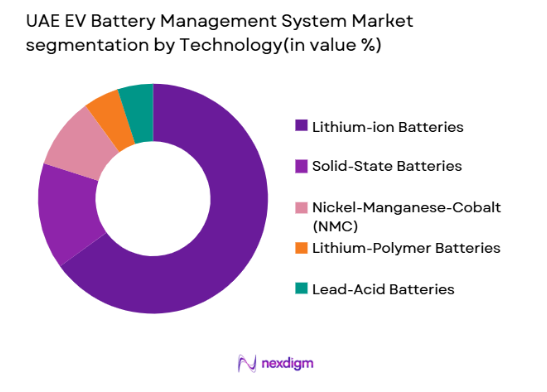
The UAE EV Battery Management System market is also segmented by technology into Lithium-ion Batteries, Solid-State Batteries, Nickel-Manganese-Cobalt (NMC) Batteries, Lithium-Polymer Batteries, and Lead-Acid Batteries. Lithium-ion batteries dominate the market due to their high energy density, longer life cycle, and cost-effectiveness, making them the preferred choice for most electric vehicles in the UAE. Their widespread application in both consumer and commercial vehicles drives the demand for advanced battery management systems.
Competitive Landscape
The UAE EV Battery Management System market features a competitive landscape with several key players dominating the market, including both local and international firms. These players are focusing on innovations in battery management technologies and systems, ensuring that their offerings are well-suited to the fast-growing electric vehicle segment. The market is seeing increasing consolidation, with global companies entering strategic partnerships with local firms to leverage government incentives and technology advancements.
| Company Name | Establishment Year | Headquarters | Technology Focus | Market Reach | Key Products | Revenue (USD) | Additional Parameter |
| Tesla | 2003 | USA | ~ | ~ | ~ | ~ | ~ |
| LG Chem | 1947 | South Korea | ~ | ~ | ~ | ~ | ~ |
| Panasonic | 1918 | Japan | ~ | ~ | ~ | ~ | ~ |
| BYD | 1995 | China | ~ | ~ | ~ | ~ | ~ |
| ABB | 1988 | Switzerland | ~ | ~ | ~ | ~ | ~ |
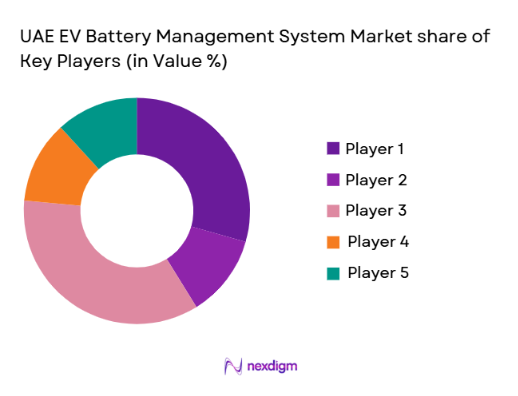
UAE EV Battery Management System Market Analysis
Growth Drivers
Government Support for EV Infrastructure:
The UAE government is heavily investing in the expansion of electric vehicle infrastructure, particularly in cities like Dubai and Abu Dhabi. This includes the establishment of extensive EV charging stations and incentives to boost EV adoption. The government’s commitment to sustainability and reducing carbon emissions has led to the implementation of favorable policies for electric vehicle production and consumption. As a result, the demand for advanced battery management systems (BMS) is expected to grow as the number of EVs on the road increases. The strong government support and environmental goals align with technological advancements in battery management, driving the market forward.
Technological Advancements in Battery Management Systems:
Technological innovation in the field of EV battery management systems is another major driver in the UAE market. Advances in energy management systems, battery diagnostics, and thermal management have improved the efficiency, safety, and longevity of EV batteries. As electric vehicle manufacturers strive to offer more energy-efficient, long-lasting, and safer vehicles, the demand for sophisticated BMS technologies has risen. These innovations enable better monitoring and management of battery performance, ensuring optimal energy usage, preventing overheating, and extending battery life, all of which contribute to the growing adoption of electric vehicles in the UAE.
Market Challenges
High Initial Cost of Battery Management Systems:
One of the key challenges faced by the UAE EV Battery Management System market is the high upfront cost of advanced battery management systems. These systems require significant investment in research and development, as well as in the integration of cutting-edge technologies. As a result, manufacturers and consumers are often deterred by the high initial costs, which can be a barrier to widespread adoption. Although long-term benefits such as enhanced battery life and improved energy efficiency are clear, the financial burden associated with the implementation of advanced systems remains a significant challenge in the market.
Supply Chain and Raw Material Issues:
Another major challenge for the UAE EV Battery Management System market is the dependence on global supply chains for key raw materials, such as lithium and cobalt, which are essential for manufacturing high-performance EV batteries. The market is vulnerable to fluctuations in the supply of these materials due to geopolitical tensions, trade barriers, and environmental concerns regarding mining practices. Disruptions in the supply chain can lead to delays in production, increased costs, and an overall slowdown in the growth of the EV sector, directly impacting the demand for battery management systems.
Opportunities
Expansion of Electric Vehicle Fleets:
The increasing focus on fleet electrification presents a significant opportunity for the UAE EV Battery Management System market. Government and private sector companies are investing in large-scale EV fleets for public transport, logistics, and delivery services. This shift toward electric fleets is driven by the desire to reduce emissions, lower operational costs, and meet sustainability goals. As the adoption of electric fleets expands, the demand for battery management systems that ensure the efficient performance of these vehicles will rise, providing a substantial growth opportunity for market players.
Collaboration with International Manufacturers:
The UAE market offers an opportunity for local players to collaborate with international battery manufacturers and technology providers. Partnerships with global firms that specialize in advanced battery management systems can help local companies integrate state-of-the-art technologies into their products. This collaboration will not only enhance the technological capabilities of UAE-based firms but also enable them to meet the growing demand for electric vehicles and their associated infrastructure. By leveraging these partnerships, UAE companies can position themselves as key players in the Middle East’s electric vehicle ecosystem.
Future Outlook
Over the next five years, the UAE EV Battery Management System market is expected to continue its upward trajectory, driven by advancements in battery technologies and growing governmental support for clean energy initiatives. Technological innovations will likely lead to further improvements in battery performance, while regulatory measures will provide a more robust framework for EV adoption. The expansion of EV infrastructure and fleet electrification is also anticipated to boost demand for battery management systems. As the UAE continues to invest in sustainable mobility, the market for EV battery management systems will experience significant growth.
Major Players
- Tesla
- LG Chem
- Panasonic
- BYD
- ABB
- CATL
- Samsung SDI
- Eaton
- Schneider Electric
- Mitsubishi Electric
- Siemens
- VARTA
- Bosch
- Valeo
- Delphi Technologies
Key Target Audience
- Investments and venture capitalist firms
- Government and regulatory bodies
- Automotive manufacturers
- EV battery manufacturers
- Electric vehicle fleet operators
- Charging infrastructure providers
- Energy companies
- Technology providers
Research Methodology
Step 1: Identification of Key Variables
Identifying the critical variables and parameters that drive market dynamics, such as technological trends, regulatory policies, and industry standards, is the foundation of the research.
Step 2: Market Analysis and Construction
A comprehensive market analysis is conducted, including historical data, current trends, and predictive models to estimate the market size and growth potential.
Step 3: Hypothesis Validation and Expert Consultation
Engagement with industry experts and stakeholders is essential to validate hypotheses, refine assumptions, and ensure the accuracy and relevance of the research findings.
Step 4: Research Synthesis and Final Output
The final output synthesizes data, insights, and expert opinions to provide a comprehensive report that offers actionable insights and a strategic outlook on the market.

- Executive Summary
- Research Methodology (Definitions, Scope, Industry Assumptions, Market Sizing Approach, Primary & Secondary Research Framework, Data Collection & Verification Protocol, Analytic Models & Forecast Methodology, Limitations & Research Validity Checks)

- Market Definition and Scope
- Value Chain & Stakeholder Ecosystem
- Regulatory / Certification Landscape
- Sector Dynamics Affecting Demand
- Strategic Initiatives & Infrastructure Growth

- Growth Drivers
Government Initiatives for EV Adoption
Technological Advancements in Battery Technologies
Rising Fuel Prices Encouraging EV Adoption
Increase in EV Infrastructure Development
Demand for Sustainable Mobility Solutions - Market Challenges
High Initial Costs of EV Battery Systems
Supply Chain Disruptions in Battery Materials
Lack of Standardized Charging Infrastructure
Regulatory and Policy Barriers
Limited Consumer Awareness of Battery Technologies - Market Opportunities
Growth of EV Charging Networks
Collaboration Between EV and Battery Manufacturers
Rising Demand for Efficient Battery Recycling Solutions - Trends
Integration of AI and IoT in EV Battery Systems
Growth of Fleet Electrification
Increased Focus on Battery Recycling and Reuse
Development of Fast Charging Technologies
Collaborations for EV Battery Innovations - Government Regulations & Defense Policy
Government Incentives for EV Purchases
Battery Recycling and Sustainability Regulations
EV Taxation and Environmental Standards - SWOT Analysis
- Stakeholder and Ecosystem Analysis
- Porter’s Five Forces Analysis
- Competition Intensity and Ecosystem Mapping

- By Market Value, 2020-2025
- By Installed Units, 2020-2025
- By Average System Price, 2020-2025
- By System Complexity Tier, 2020-2025

- By System Type (In Value%)
Battery Management Solutions
Energy Management Systems
Thermal Management Systems
Battery Diagnostics & Monitoring Solutions
Battery Safety Systems - By Platform Type (In Value%)
Onboard Systems
Offboard Systems
Hybrid Systems
Portable Systems
Integrated Systems - By Fitment Type (In Value%)
OEM Solutions
Aftermarket Solutions
Standalone Systems
Integrated Solutions
Custom Fitment Solutions - By EndUser Segment (In Value%)
Electric Vehicle Manufacturers
Battery Manufacturers
Automotive OEMs
Energy & Utilities
Fleet Operators - By Procurement Channel (In Value%)
Direct Procurement
Distributors & Resellers
Online Platforms
Third-Party Service Providers
OEM Partnerships - By Material / Technology (In Value%)
Lithium-ion Technology
Solid-State Batteries
Silicon-based Technology
Graphene Batteries
Nickel-Manganese-Cobalt (NMC) Technology

- Market structure and competitive positioning
- Market share snapshot of major players
- CrossComparison Parameters (System Type, Platform Type, Fitment Type, EndUser Segment, Procurement Channel, Material/Technology, Market Value, Installed Units, Average System Price, System Complexity Tier)
- SWOT Analysis of Key Players
- Pricing & Procurement Analysis
- Key Players
ABB
Siemens
Tesla
BYD
LG Chem
Samsung SDI
Panasonic
Eaton
Schneider Electric
Stellantis
CATL
VARTA
Volvo
Nissan
BMW

- Electric Vehicle Manufacturers’ Adoption of Advanced Battery Systems
- Battery Manufacturers’ Role in EV Growth
- Automotive OEMs Shifting to Electric Production
- Fleet Operators’ Focus on Battery Efficiency

- Forecast Market Value, 2026-2035
- Forecast Installed Units, 2026-2035
- Price Forecast by System Tier, 2026-2035
- Future Demand by Platform, 2026-2035


 Request a Sample
 Ask for Customization
 Get a Quote
 Enquire Now