
 Download PDF
 Download PDF
Market Overview
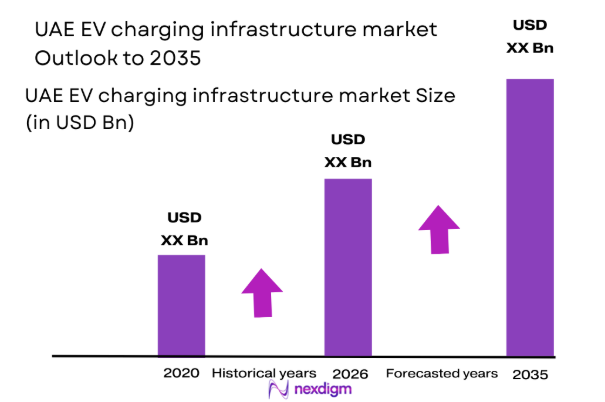
The UAE EV charging infrastructure market is experiencing significant growth, driven by increasing adoption of electric vehicles and the UAE’s commitment to sustainability. With a market size reaching USD ~ billion, government incentives and investments in green technologies are propelling the demand for EV charging stations. A key driver of this growth is the country’s push toward clean energy solutions and emission reductions, alongside robust infrastructure expansion. The market is also shaped by an increasing number of public and private investments, creating a favorable environment for new technology deployments and the expansion of EV networks.
Dominant cities in the UAE, such as Dubai and Abu Dhabi, are leading the charge with rapid infrastructure development and high adoption rates of electric vehicles. The strategic push from these cities is supported by government policies such as the UAE Energy Strategy 2050, which aims to increase the share of clean energy in the country’s energy mix. These regions benefit from a combination of high purchasing power, strong government initiatives, and a focus on sustainable development, making them the primary drivers of EV infrastructure growth.
Market Segmentation
By Product Type
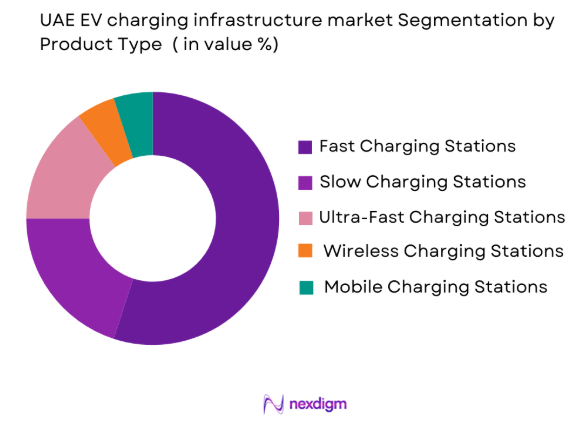
The UAE EV charging infrastructure market is segmented by product type into various types of charging stations such as fast, slow, and ultra-fast charging stations. The dominant sub-segment is fast charging stations, which have a substantial market share due to increasing demand for quick and efficient charging solutions. This segment’s popularity is driven by factors such as the growing number of electric vehicles on the road, the need for rapid charging during long-distance travel, and the UAE’s focus on reducing the time spent at charging stations. The widespread implementation of fast charging stations aligns with government strategies for expanding infrastructure and improving user convenience.
By Platform Type
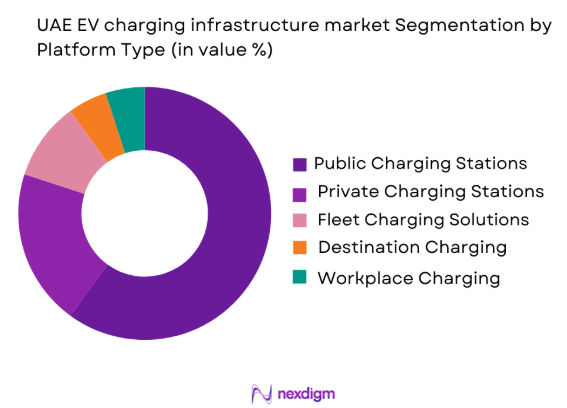
The UAE EV charging infrastructure market is also segmented by platform type, including public, private, fleet charging solutions, and more. Public charging stations dominate the market share due to the high demand for accessible, widespread infrastructure in urban areas and key transport routes. Public stations cater to both residential users and the growing number of commercial fleets, offering convenience and reliability. The government’s initiatives, including the installation of charging stations along highways and in city centers, are further supporting the dominance of this platform type in the market.
Competitive Landscape
The UAE EV charging infrastructure market is becoming increasingly competitive, with both local and international companies vying for market share. The presence of major players such as ABB, Tesla, and Siemens highlights the market’s attractiveness. The competitive landscape is shaped by technological advancements in charging systems, government incentives, and partnerships with electric vehicle manufacturers. The market is also characterized by consolidation as companies work to expand their reach and integrate innovative charging technologies.
| Company Name | Establishment Year | Headquarters | Technology Focus | Market Reach | Key Products | Revenue | Additional Parameter |
| ABB | 1988 | Switzerland | ~ | ~ | ~ | ` | ~ |
| Siemens | 1847 | Germany | ~ | ~ | ~ | ~ | ~ |
| Tesla | 2003 | USA | ~ | ~ | ~ | ~ | ~ |
| Engie | 2008 | France | ~ | ~ | ~ | ~ | ~ |
| ChargePoint | 2007 | USA | ~ | ~ | ~ | ~ | ` |
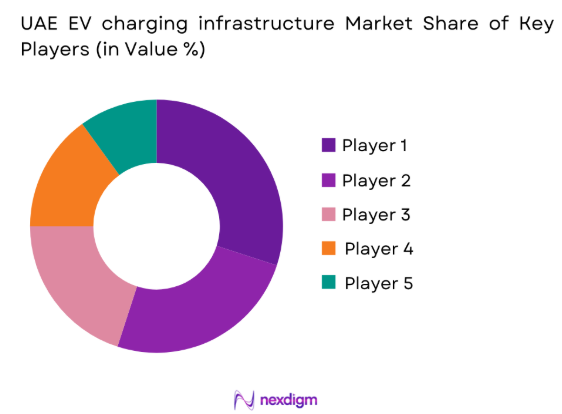
UAE EV charging infrastructure Market Analysis
Growth Drivers
Government Initiatives and Investments
The UAE government’s push for sustainability and reduction of carbon emissions is one of the leading drivers for the growth of the EV charging infrastructure market. The country’s commitment to reducing greenhouse gases and adopting green technologies has resulted in favorable policies, tax incentives, and subsidies for both consumers and businesses. These incentives are designed to stimulate investment in electric vehicles and their supporting infrastructure, providing long-term growth prospects for the sector. Additionally, strategic planning for green cities and EV-friendly environments has led to the rapid expansion of charging stations across key urban and highway locations, further supporting the adoption of electric vehicles. This government-backed initiative aims to position the UAE as a leader in green energy solutions, providing a solid foundation for the expansion of EV infrastructure.
Technological Advancements in Charging Solutions
Another significant growth driver for the UAE EV charging infrastructure market is the continuous technological evolution in charging solutions. Innovations such as ultra-fast charging stations, wireless charging, and enhanced grid integration are making EVs more convenient and accessible to consumers. Moreover, the integration of advanced technologies like artificial intelligence and machine learning into charging infrastructure is helping optimize energy usage, improve charging speeds, and enhance customer experience. These technological advancements enable faster deployment of charging stations and ensure the infrastructure can handle the growing demand for electric vehicles. As technology continues to evolve, it will drive further improvements in infrastructure and energy management, supporting the market’s expansion.
Market Challenges
High Initial Investment and Infrastructure Costs
One of the main challenges hindering the rapid expansion of EV charging infrastructure in the UAE is the high initial investment required to build the infrastructure. Establishing a network of charging stations, particularly in less populated areas, demands substantial capital expenditure. This upfront investment can deter smaller players from entering the market or slow down the expansion process. Furthermore, the long-term return on investment (ROI) is still uncertain for many operators, as consumer adoption of electric vehicles continues to grow but may not yet be as fast as anticipated. This challenge is compounded by the need for regular maintenance and upgrades to ensure charging stations remain operational and meet evolving technological standards.
Limited Availability in Rural and Remote Areas
Despite significant progress in urban areas, there is a lack of EV charging infrastructure in rural and remote locations, limiting the usability of electric vehicles in these regions. The high costs associated with establishing charging stations in these areas, combined with relatively low consumer demand, make it less economically viable for operators to deploy infrastructure in these regions. This disparity in availability creates a barrier for electric vehicle adoption, especially for those who rely on long-distance travel outside major urban centers. To overcome this challenge, additional government support and private sector investment will be needed to incentivize expansion into underserved areas.
Opportunities
Expansion of Charging Infrastructure in New Regions
One of the primary opportunities for growth in the UAE EV charging infrastructure market lies in the expansion of charging stations into underserved regions, particularly in rural and remote areas. With increasing government support, infrastructure development in these regions could provide a significant boost to market penetration. The expansion of the charging network would alleviate concerns over range anxiety, encouraging more consumers to adopt electric vehicles. As the UAE looks to achieve its sustainability targets, this opportunity aligns with the national agenda and offers a strong growth trajectory for the industry.
Integration of Renewable Energy into Charging Stations
The integration of renewable energy sources, such as solar and wind, into EV charging stations presents a significant opportunity for sustainable growth in the UAE market. As the country continues to focus on reducing its carbon footprint, there is a growing push to power charging stations with clean energy. This not only enhances the environmental benefits of electric vehicles but also reduces the reliance on the national grid, ensuring more efficient energy consumption. The development of renewable energy-powered charging stations could attract eco-conscious consumers and provide a competitive edge for infrastructure providers.
Future Outlook
The future of the UAE EV charging infrastructure market is poised for rapid growth, driven by continued government investment, technological advancements, and an increasing demand for electric vehicles. The market is expected to see significant expansion in the next five years, with widespread deployment of ultra-fast and wireless charging stations. The country’s commitment to sustainability and green energy will further bolster the development of charging infrastructure, creating a robust ecosystem for electric vehicle adoption. With continuous innovation and the emergence of new business models, the UAE is set to become a global leader in electric vehicle infrastructure.
Major Players
- ABB
- Siemens
- Tesla
- Engie
- ChargePoint
- Schneider Electric
- BP Chargemaster
- Greenlots
- Alfen
- Shell Recharge
- EVgo
- Nuvve Corporation
- Iberdrola
- Efacec
- Tesla Supercharger
Key Target Audience
- Investments and venture capitalist firms
- Government and regulatory bodies
- Automotive OEMs
- EV infrastructure developers
- Charging station operators
- Technology providers
- Electric vehicle owners
- Commercial fleet operators
Research Methodology
Step 1: Identification of Key Variables
Identification of key market variables such as technological advancements, government policies, and consumer behavior that drive the growth of EV charging infrastructure.
Step 2: Market Analysis and Construction
In-depth analysis of the market dynamics, including segmentation by product type, platform type, and region to build a comprehensive market model.
Step 3: Hypothesis Validation and Expert Consultation
Validation of hypotheses through expert interviews, consultations with industry leaders, and secondary research from trusted sources.
Step 4: Research Synthesis and Final Output
Synthesis of findings from primary and secondary data sources to create a final, actionable market report.

- Executive Summary
- Research Methodology (Definitions, Scope, Industry Assumptions, Market Sizing Approach, Primary & Secondary Research Framework, Data Collection & Verification Protocol, Analytic Models & Forecast Methodology, Limitations & Research Validity Checks)

- Market Definition and Scope
- Value Chain & Stakeholder Ecosystem
- Regulatory / Certification Landscape
- Sector Dynamics Affecting Demand
- Strategic Initiatives & Infrastructure Growth

- Growth Drivers
Government Initiatives and Investments
Rising Demand for Electric Vehicles
Technological Advancements in Charging Infrastructure
Increased Environmental Awareness
Supportive Regulatory Environment - Market Challenges
High Installation Costs
Limited Charging Infrastructure in Rural Areas
Regulatory and Policy Gaps
Interoperability of Charging Stations
Technological Limitations in Fast Charging - Market Opportunities
Growth in Electric Vehicle Sales
Partnerships Between Charging Station Providers and Automakers
Expanding Charging Networks in Urban and Rural Areas - Trends
Integration of AI and IoT in Charging Stations
Rise of Wireless and Ultra-Fast Charging Technology
Increasing Focus on Renewable Energy Sources
Government Regulations
SWOT Analysis of Key Competitors
Porter’s Five Forces

- By Market Value, 2020-2025
- By Installed Units, 2020-2025
- By Average System Price, 2020-2025
- By System Complexity Tier, 2020-2025

- By System Type (In Value%)
Fast Charging Stations
Slow Charging Stations
Ultra-Fast Charging Stations
Wireless EV Charging Stations
Mobile Charging Stations - By Platform Type (In Value%)
Public Charging Stations
Private Charging Stations
Fleet Charging Solutions
Destination Charging
Workplace Charging - By Fitment Type (In Value%)
Dedicated Charging Stations
Residential Charging Solutions
Fleet Charging Solutions
Retail Charging Solutions
On-the-go Charging Solutions - By End User Segment (In Value%)
Residential EV Owners
Commercial Fleet Operators
Public Transport Operators
Retail & Hospitality Providers
EV Charging Network Providers - By Procurement Channel (In Value%)
Direct Procurement
Government Tenders
Private Sector Procurement
Online Bidding Platforms
Third-party Distributors

- Market Share Analysis
- Cross Comparison Parameters (Charging Speed, Charging Type, Cost Efficiency, Market Reach, Technology Integration, User Accessibility, Scalability, Installation Time, Energy Source, Regulatory Compliance)
- SWOT Analysis of Key Competitors
- Pricing & Procurement Analysis
- Key Players
ABB
Siemens
Tesla
Alfen
Schneider Electric
Engie
BP Chargemaster
ChargePoint
Shell Recharge
Greenlots
EVgo
Tesla Supercharger Network
Siemens AG
Nuvve Corporation
Iberdrola

- Residential Consumers’ Growing Adoption of EVs
- Commercial Fleet Operators Seeking Cost-Effective Solutions
- Public Transport’s Transition to Electric Vehicles
- Retail Providers Expanding EV Charging Facilities

- Forecast Market Value, 2026-2035
- Forecast Installed Units, 2026-2035
- Price Forecast by System Tier, 2026-2035
- Future Demand by Platform, 2026-2035


 Request a Sample
 Ask for Customization
 Get a Quote
 Enquire Now