
 Download PDF
Market Overview
The UAE fabric softeners & conditioners market is valued at approximately USD ~ million in 2025, supported by high per capita income, urban lifestyle, and strong demand for premium home care products. The UAE’s population exceeds 10 million, with a high proportion of expatriates contributing to increased consumption of household cleaning and laundry products. The country’s GDP exceeds USD 500 billion, while consumer spending on home care products continues to grow, driven by rising living standards and brand consciousness. Additionally, the expanding hospitality sector and commercial laundry services significantly contribute to the demand for fabric conditioners.
The UAE market is highly concentrated in Dubai and Abu Dhabi due to dense population, strong retail infrastructure, and high purchasing power. Dubai dominates due to its role as a commercial and tourism hub with a large number of hotels and serviced apartments requiring laundry services. Abu Dhabi contributes through government institutions and residential consumption. Sharjah and other northern emirates show steady growth supported by increasing urbanization and retail expansion. These regions benefit from strong distribution networks and modern trade channels, making them key consumption centers.
Market Segmentation
By Product Type
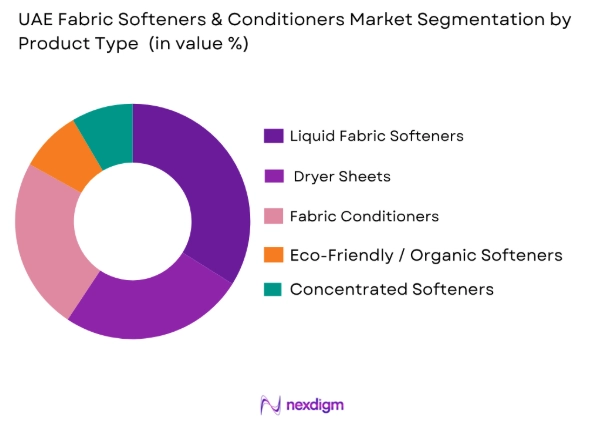
The UAE fabric softeners & conditioners market is segmented into liquid softeners, dryer sheets, fabric conditioners, concentrated softeners, and eco-friendly variants. Liquid fabric softeners dominate the market due to their widespread household usage and ease of application in washing machines. Consumers prefer liquid formats for their superior fragrance, softness, and compatibility with automatic washing systems. The hospitality sector also relies heavily on liquid softeners for large-scale laundry operations. While eco-friendly and concentrated products are gaining traction, liquid softeners continue to lead due to affordability and familiarity among consumers.
By Ingredient Type
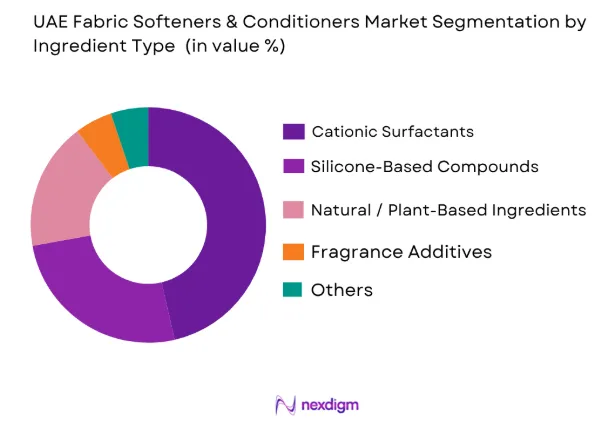
The market is segmented into cationic surfactants, silicone-based compounds, natural ingredients, fragrance additives, and others. Cationic surfactants dominate due to their effectiveness in softening fabrics and reducing static cling. These compounds are widely used across both premium and mass-market products. However, there is a growing shift toward plant-based and biodegradable ingredients due to increasing environmental awareness and regulatory pressure. Premium brands are focusing on natural formulations to attract environmentally conscious consumers, especially in urban areas.
Competitive Landscape
The UAE fabric softeners & conditioners market is moderately consolidated, with global FMCG companies dominating due to strong brand presence and distribution networks. Multinational players leverage advanced product formulations, aggressive marketing strategies, and extensive retail partnerships. Private label brands from major retail chains are also gaining market share by offering cost-effective alternatives.
| Company | Establishment Year | Headquarters | Product Focus | Distribution Network | Key Industries Served | Competitive Advantage |
| Procter & Gamble | 1837 | USA | ~ | ~ | ~ | ~ |
| Unilever | 1929 | UK/Netherlands | ~ | ~ | ~ | ~ |
| Henkel | 1876 | Germany | ~ | ~ | ~ | ~ |
| Reckitt Benckiser | 1999 | UK | ~ | ~ | ~ | ~ |
| SC Johnson | 1886 | USA | ~ | ~ | ~ | ~ |
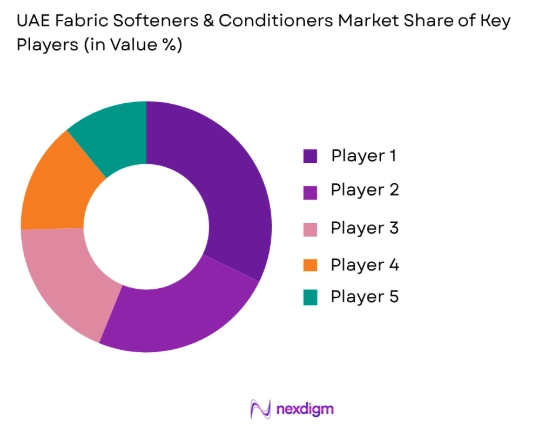
UAE Fabric Softeners & Conditioners Market Analysis
Growth Drivers
Increasing Awareness of Fabric Care and Hygiene
Consumers in the UAE are becoming more focused on clean, fresh, and well-maintained clothing, especially due to hot weather, frequent washing needs, and hygiene-conscious lifestyles. Fabric softeners and conditioners are increasingly seen as products that improve laundry results beyond basic cleaning. They help clothes feel softer, reduce static, support freshness, and improve the overall wearing experience. This growing awareness is encouraging households to include fabric conditioners in regular laundry routines. Demand is also supported by families, working professionals, and expatriate consumers who prefer convenient, branded laundry-care solutions. As hygiene and garment care become more important, the market for fabric softeners and conditioners continues to expand.
Rising Disposable Income and Premium Lifestyle Adoption
Higher disposable income in the UAE is encouraging consumers to purchase premium household-care products, including advanced fabric softeners and conditioners. Many shoppers are willing to pay more for products that offer long-lasting fragrance, luxury scents, fabric protection, and skin-friendly benefits. Premium lifestyle adoption is especially strong among urban households, expatriates, and high-income consumers who associate quality laundry care with comfort and personal presentation. Instead of choosing only basic softening products, consumers are shifting toward value-added variants with superior fragrance and performance claims. This trend supports the growth of premium, concentrated, and branded fabric conditioner products across supermarkets, hypermarkets, and online retail channels.
Market Challenges
Price Sensitivity in Mass Market Segments
Although premium demand is growing, price sensitivity remains a major challenge in the UAE’s mass-market fabric softeners and conditioners segment. Many consumers, especially value-focused households and some expatriate groups, compare prices closely and often choose discounted, bulk, or lower-cost alternatives. Frequent promotions in supermarkets and hypermarkets also make it difficult for brands to maintain stable pricing and strong margins. When raw material, packaging, or logistics costs rise, companies may find it difficult to pass these increases on to consumers. This challenge is stronger in everyday laundry products, where buyers often prioritize affordability over brand loyalty or advanced product features.
Environmental Concerns over Chemical Ingredients
Environmental concerns are increasing pressure on fabric softener and conditioner brands in the UAE. Consumers and regulators are paying closer attention to chemical formulations, biodegradability, water impact, and plastic packaging waste. Traditional fabric conditioners may be criticized for containing synthetic fragrances, preservatives, or ingredients that are not easily biodegradable. This can affect brand perception, especially among younger, health-conscious, and sustainability-focused consumers. Companies may need to reformulate products, reduce harsh chemicals, and invest in greener packaging, which can increase development and production costs. Balancing performance, fragrance strength, affordability, and environmental responsibility remains a key challenge for manufacturers and retailers.
Opportunities
Rising Demand for Eco-Friendly and Organic Products
The UAE market offers strong opportunities for eco-friendly and organic fabric softeners as consumers become more interested in sustainable household-care choices. Products with biodegradable ingredients, plant-based formulations, recyclable packaging, and reduced chemical content can appeal to environmentally aware shoppers. This opportunity is especially relevant among premium consumers, young families, and expatriates familiar with global sustainability trends. Brands that clearly communicate safety, eco-certifications, and skin-friendly benefits can build stronger trust and differentiation. Eco-friendly fabric conditioners can also gain visibility through modern retail, specialty stores, and e-commerce platforms. As sustainability becomes more important, green laundry-care products can support premium pricing and long-term brand loyalty.
Product Innovation in Fragrance and Long-Lasting Freshness
Fragrance innovation is a major opportunity in the UAE fabric softeners and conditioners market, where consumers often value fresh-smelling clothes due to warm weather and active lifestyles. Brands can introduce long-lasting scent technologies, luxury perfume-inspired variants, odor-control formulas, and seasonal fragrance collections. Products that maintain freshness after drying, storage, or outdoor exposure can attract both household and commercial users. Innovation can also include concentrated formulas that deliver strong fragrance with smaller doses. By combining softness, freshness, and premium scent experiences, companies can differentiate themselves from low-cost competitors. This creates room for higher-value products and stronger consumer loyalty in both offline and online channels.
Future Outlook
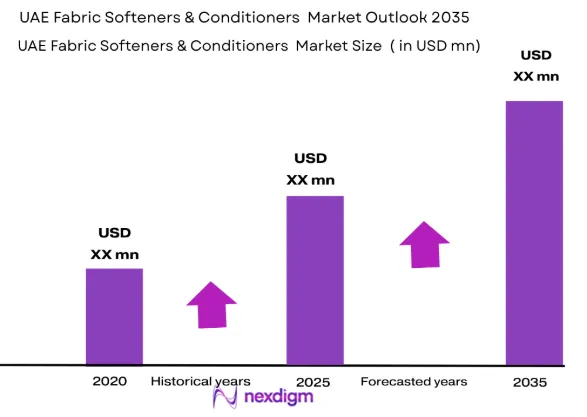
Over the next five years, the UAE fabric softeners & conditioners market is expected to grow steadily due to rising consumer awareness, premiumization trends, and expansion of the hospitality sector. Increasing demand for eco-friendly and concentrated products will shape market evolution. The growth of e-commerce and modern retail channels will enhance product accessibility, while innovation in fragrance and sustainable formulations will drive competition. Additionally, increasing adoption of high-efficiency washing machines will support demand for advanced fabric care solutions.
Major Players
- Procter & Gamble
- Unilever
- Henkel
- Reckitt Benckiser
- SC Johnson
- Church & Dwight
- Ecover
- Method Products
- Carrefour Private Label
- Lulu Private Label
Key Target Audience
- Household consumers
- Hospitality and hotel chains
- Commercial laundry service providers
- Retail and wholesale distributors
- E-commerce platforms
- Investors and venture capital firms
- Government and regulatory bodies
Research Methodology
Step 1: Identification of Key Variables
Mapping key stakeholders including manufacturers, retailers, and end users using secondary data sources.
Step 2: Market Analysis and Construction
Analyzing historical consumption trends and retail sales data to build market estimates.
Step 3: Hypothesis Validation and Expert Consultation
Validating findings through expert interviews and industry insights.
Step 4: Research Synthesis and Final Output
Combining primary and secondary research to deliver accurate and validated insights.

- Executive Summary
- Research Methodology (Market Definitions and Assumptions, Abbreviations, Market Sizing Approach, Consolidated Research Approach, Understanding Market Potential Through In-Depth Industry Interviews, Primary Research Approach, Limitations and Future Conclusions)

- Definition and Scope
- Market Dynamics Overview
- Market Genesis
- Major Players and Market Timeline
- Business Cycle and Trends
- Supply Chain and Value Chain Analysis

- Growth Drivers
Increasing Awareness of Fabric Care and Hygiene
Rising Disposable Income and Premium Lifestyle Adoptio
Growth in Hospitality and Tourism Sector
Expansion of Modern Retail and E-commerce Platforms - Market Challenges
Price Sensitivity in Mass Market Segments
Environmental Concerns over Chemical Ingredients
Competition from Low-Cost and Private Label Brands
Regulatory Compliance for Chemical Formulations - Opportunities
Rising Demand for Eco-Friendly and Organic Products
Product Innovation in Fragrance and Long-Lasting Freshness
Expansion in Commercial Laundry and Hospitality Services
Growth of Premium and Concentrated Product Segments - Key Trends
Shift toward sustainable and biodegradable formulations
Increasing preference for long-lasting fragrance variants
Growth in concentrated and water-saving products
Rising penetration of online retail channels - Government Regulations
- SWOT Analysis
- Porter’s Five Forces

- By Value, 2020–2025
- By Volume, 2020–2025
- By Average Price, 2020–2025

- By Product Type (In Value %)
Liquid Fabric Softeners
Dryer Sheets
Fabric Conditioners
Concentrated Softeners
Eco-Friendly / Organic Softeners - By Ingredient Type (In Value %)
Cationic Surfactants
Silicone-Based Compounds
Natural / Plant-Based Ingredients
Fragrance Additives
Others - By Application (In Value %)
Household
Commercial Laundry Services
Hospitality Sector
Healthcare Facilities - By Distribution Channel (In Value %)
Supermarkets & Hypermarkets
Convenience Stores
Online Channels
Specialty Stores
Direct Sales
- By Region (In Value %)
Dubai
Abu Dhabi
Sharjah
Northern Emirates

- Market Share of Major Players by Value/Volume
- Market Share of Major Players by Product Type
- Cross Comparison Parameters(Company Overview, Business Strategies, Recent Developments, Strength, Weakness, Organizational Structure, Revenues, Revenues by Product Type, Number of Touchpoints, Distribution Channels, Number of Dealers and Distributors, Margins, Production Plant, Capacity, Unique Value Offering and Others)
- SWOT Analysis of Major Players
- Pricing Analysis Based on Product Categories for Major Players
- Detailed Profiles of Major Companies
Procter & Gamble (Downy)
Unilever (Comfort)
Henkel (Softlan / Vernel)
Reckitt Benckiser
Church & Dwight
SC Johnson
Ecover
Method Products
Carrefour Private Label
Lulu Private Label

- Market Demand and Utilization
- Purchasing Power and Budget Allocations
- Regulatory and Compliance Requirements
- Needs, Desires, and Pain Point Analysis
- Decision-Making Process

- By Value, 2026–2035
- By Volume, 2026–2035
- By Average Price, 2026–2035


 Request a Sample
 Ask for Customization
 Get a Quote
 Enquire Now