

 Download PDF
Market Overview
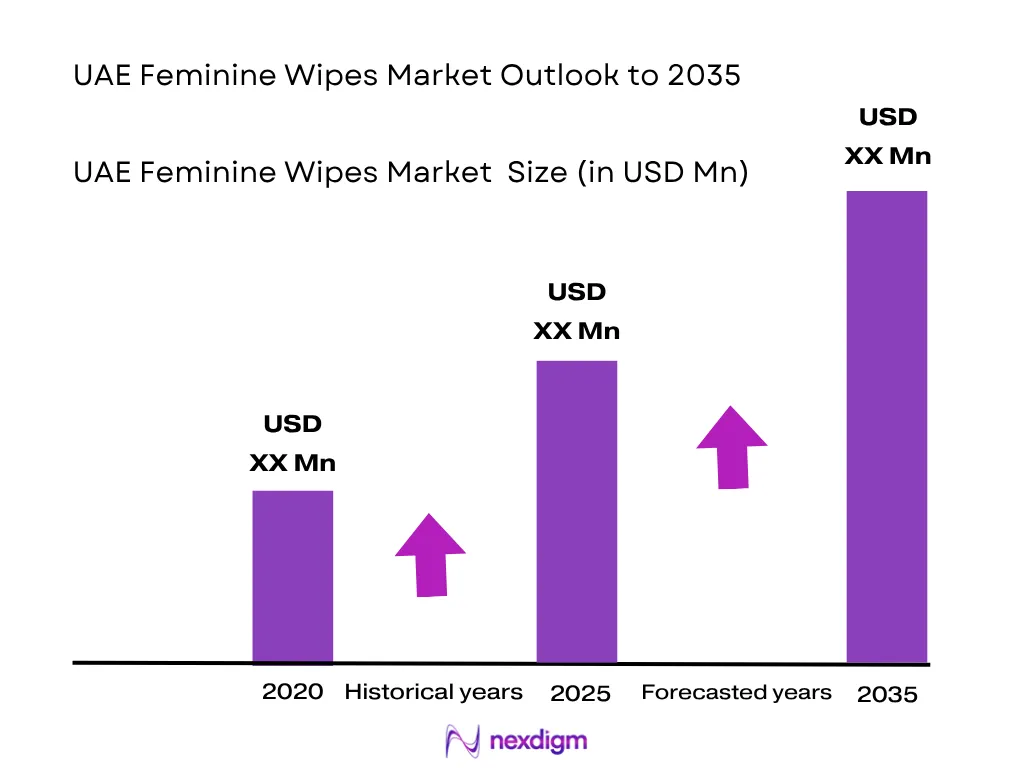
The UAE Feminine Wipes Market is valued at USD ~ million in 2025, based on in‑market estimates mapped from historical and base data provided by credible industry sources. The market is primarily driven by rising women’s health awareness, increasing disposable incomes, expanding retail networks, and broader acceptance of intimate care products in everyday hygiene routines. The growth has also been supported by expanding online retail penetration, which enables discreet purchase and home delivery aspects critical for personal hygiene products in the UAE.
Within the regional landscape, the UAE, especially Dubai and Abu Dhabi, dominates the market due to their high urbanization, strong retail infrastructure, elevated female workforce participation, and sophisticated consumer lifestyles that favor premium and branded personal care products. Additionally, the UAE’s strategic position as a regional hub with high tourist and expatriate footfall increases demand for travel‑friendly hygiene products such as feminine wipes.
Market Segmentation
By Product Type
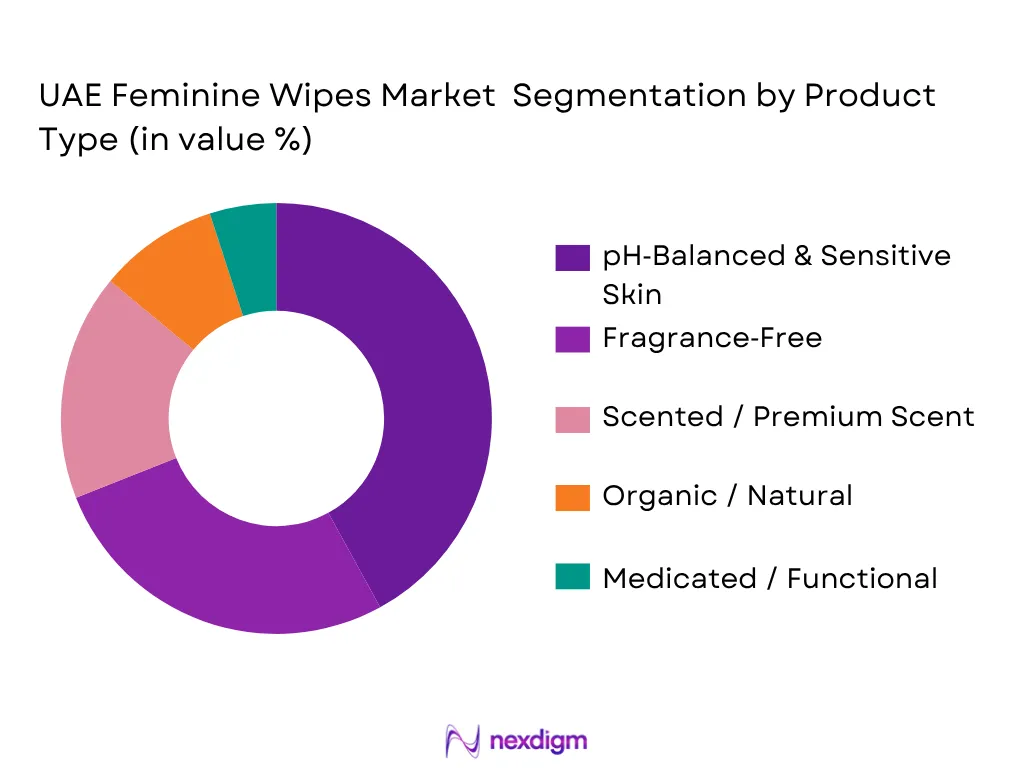
Under product‑type segmentation, pH‑balanced and sensitive skin wipes account for the largest share of the market. This reflects a consumer preference toward products formulated specifically to support intimate area health and comfort. UAE women increasingly prioritize clinically validated and dermatologically tested wipes that maintain optimal pH levels and are free from harsh irritants due to rising health awareness and preference for gentle formulations. Premium brands actively promote pH‑balanced variants through pharmacy channels and online platforms, further reinforcing their dominance in value terms.
By Distribution Channel
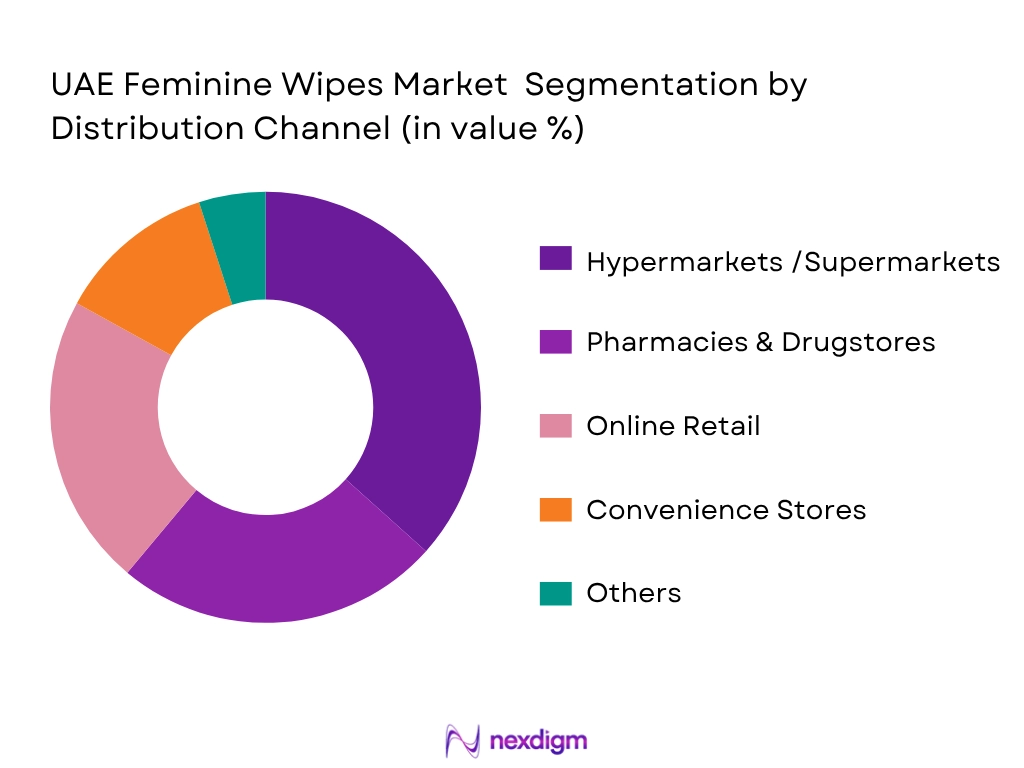
Hypermarkets and supermarkets lead the distribution channel share in the UAE market, supported by the region’s high penetration of organized retail formats offering extensive hygiene product catalogs and promotional activity. These channels provide wide visibility and allow consumers to compare brands and sizes, contributing to higher purchase frequency. In parallel, the online channel is growing rapidly, driven by convenience, subscription purchase options, and discreet purchase behavior for intimate care products.
Competitive Landscape
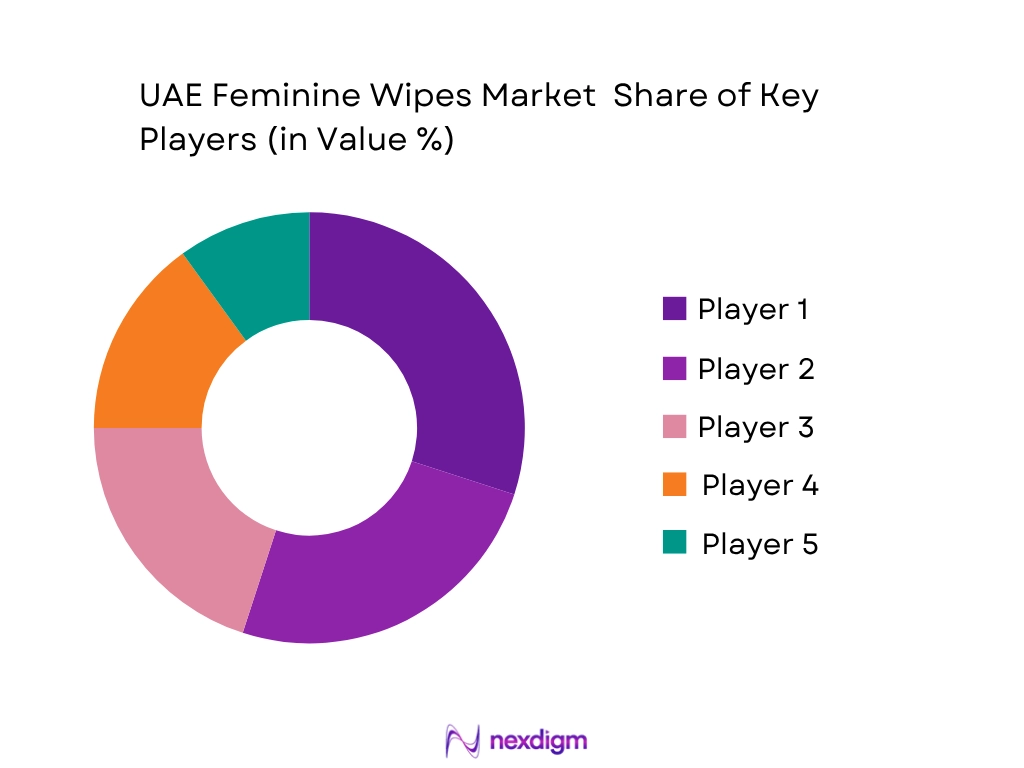
The UAE Feminine Wipes Market demonstrates moderate competition with global personal care majors and regional brands shaping the landscape. Leading players have established brands, diversified portfolios, and strong retail and digital distribution strategies.
The competitive landscape is marked by the presence of few dominant global players with extensive distribution infrastructure across hypermarkets, pharmacies, and digital platforms. These companies leverage established brand trust, broad product portfolios (including advanced hygienic and sensitive variants), and innovation pipelines to maintain market leadership. International brands typically have stronger supply chains and marketing resources compared to smaller regional players, resulting in competitive advantages in pricing flexibility, retail partnerships, and product visibility.
| Company | Est. Year | Headquarters | Product Portfolio Breadth | Channel Penetration | Online DTC Presence | Innovation Index |
| Procter & Gamble | 1837 | USA | ~ | ~ | ~ | ~ |
| Unicharm Corporation | 1961 | Japan | ~ | ~ | ~ | ~ |
| Johnson & Johnson | 1886 | USA | ~ | ~ | ~ | ~ |
| Edgewell Personal Care | 2015 | USA | ~ | ~ | ~ | ~ |
| Albaad | 1961 | Israel | ~ | ~ | ~ | ~ |
UAE Feminine Wipes Market Analysis
Growth Drivers
Rising Consumer Awareness of Feminine Hygiene
In the UAE, the number of female residents provides a foundational consumer base for intimate hygiene products such as feminine wipes. According to World Bank data, the female population in the UAE stood at approximately 3,926,436 persons in 2024, representing about 36.1% of the total population of around 10,986,400 people recorded for that year. Concurrently, female labor force participation reached 54.09% in 2024, indicating that over half of women aged 15 and above are working or actively seeking work, which correlates with enhanced health consciousness and purchasing autonomy in personal care categories. Higher participation in the workforce often aligns with increased spending on hygiene and convenience products, as women with employment status typically allocate portions of personal income toward self‑care. In addition, UAE government initiatives promoting women’s health and empowerment, reflected by 50% representation in the national parliament — further contribute to elevated awareness of women’s health needs, including menstrual and intimate hygiene. These demographic and socio‑economic indicators collectively create a consumer ecosystem that is more informed and more likely to demand quality feminine hygiene products such as wipes.
Increased Disposable Income & Urbanization
The UAE’s macroeconomic environment supports elevated consumer spending power, a key enabler for discretionary and personal care purchases such as feminine wipes. World Bank data reports the UAE’s GDP per capita at USD 50,273.5 in 2024, indicating one of the highest income levels globally. High individual income levels increase household disposable income, allowing a broader proportion of consumers to buy premium or value‑added personal care products without substituting essential expenditures. Furthermore, the UAE exhibits a very high level of urbanization, with urban residents accounting for over 85% of the population, a trend typically associated with greater retail access, exposure to global brands, and adoption of modern hygiene practices. Urban lifestyles in cities such as Dubai and Abu Dhabi are characterized by higher retail density and extensive availability of products through both offline and digital channels, facilitating easier access to feminine hygiene solutions. Moreover, near‑universal internet penetration (reported at 100% individuals using the internet) supports e‑commerce adoption, which is particularly relevant for intimate care categories that consumers may prefer to purchase discreetly online. Such macroeconomic and urbanization indicators underscore a context in which rising purchasing power and urban retail infrastructures converge to expand the consumer base for feminine wipes in the UAE.
Market Challenges
Cultural Acceptance Variability
Cultural norms and social attitudes toward feminine hygiene products remain a nuanced challenge in the UAE due to the country’s diverse population and conservative social frameworks. Although macro data shows that women comprise approximately 36.1% of the total population and that female labor force participation exceeds 50%, these figures also highlight the existence of a significant expatriate workforce, many of whom come from varied cultural backgrounds where intimate care products like feminine wipes may not yet be widely used or socially normalized. In more traditional communities within the UAE, discussions around intimate care can still carry social stigma, which may suppress overt retail demand and influence purchasing behavior. Furthermore, while national representation of women in leadership (50% seats in federal legislative bodies) speaks to formal empowerment, actual consumer purchasing patterns can still be shaped by family and household norms that prioritize conventional hygiene solutions over specialized personal products. The UAE’s unique demographic composition, with a large proportion of male expatriate labor also means that retail offerings must contend with multiple cultural expectations within the same market. These sociocultural dynamics can temper market growth, requiring targeted consumer education initiatives and culturally sensitive marketing strategies to enhance acceptance and regular use of feminine wipes across diverse consumer segments.
Price Sensitivity in Basic Segments
Despite the UAE’s high income levels, a segment of the population, particularly expatriate and lower‑income households, exhibits price sensitivity that poses a challenge for the adoption of premium feminine wipes. World Bank data indicates that the UAE’s population growth is driven by strong net migration, with an increase of 158,634 net migrants in 2025, reflecting a substantial expatriate workforce that often includes lower to middle‑income groups. While disposable income among Emirati citizens may be high, a significant portion of the total population consists of non‑nationals who may allocate a larger share of income to essential living costs such as housing, utilities, and remittances rather than discretionary personal care items. Moreover, macro indicators show that the unemployment rate remains low at approximately 2.1%, yet low unemployment does not necessarily translate to high disposable income for all demographic clusters, especially within the broad expatriate workforce where earning levels vary widely. In this context, basic segments of the feminine wipes category often associated with entry‑level pricing — face competition from generic or lower‑cost alternatives such as traditional tissues or cloth. Retailers and manufacturers therefore must balance quality and price, designing affordable SKUs that attract cost‑conscious consumers without diluting product efficacy. Understanding these price sensitivities and tailoring product tiers accordingly is essential for expanding reach within budget‑constrained market segments.
Opportunities
Expansion of Functional/Medicated Wipes
Current macro demographic and health infrastructure indicators suggest fertile ground for growth in specialized feminine hygiene products such as functional or medicated wipes designed for sensitive skin, pH balance, or medical care adjuncts. The UAE’s life expectancy of approximately 83 years signals a high quality of health services and consumer focus on wellness, which can translate into demand for differentiated health‑oriented hygiene products. Additionally, the fact that people using safely managed sanitation services account for 98% of the population demonstrates widespread acceptance of advanced hygiene standards, providing an enabling environment for the adoption of premium or medically oriented wipe formulations. With over 75% of the female population aged between 15 and 64, according to age distribution data, there exists a substantial cohort likely to seek products that go beyond basic cleansing — such as soothing, dermatologically enriched, or pH‑balanced wipes tailored to active lifestyles, workouts, or post‑medical care routines. Health‑informed consumers, together with an increasingly urban and connected population, create opportunity pathways for manufacturers to introduce functional attributes and evidence‑based claims that resonate with those who prioritize both comfort and medical efficacy in intimate care products.
Strategic Tie‑ups with Health Clinics
The UAE’s advanced healthcare ecosystem, as reflected by high health indicators such as near‑universal access to safely managed sanitation services (98% coverage) and a robust health system that supports high life expectancy, offers significant strategic pathways for market growth through partnerships with health clinics and women’s health service providers. Clinics focusing on obstetrics, gynecology, and family care treatments serve large volumes of women annually, creating touchpoints where feminine wipes can be positioned as complementary to clinical guidance on intimate hygiene and post‑care routines. Furthermore, the UAE’s population structure, where a majority of women fall within the economically active age range, underscores consistent demand for health‑adjacent personal care products. Collaborations between manufacturers and healthcare providers can facilitate product sampling, professional endorsements, and educational campaigns that elevate the perceived value of functional wipes, particularly among women managing sensitive skin concerns or post‑procedure care. Given the high rates of internet usage and health information access among UAE residents, such clinic tie‑ups can be amplified via digital health campaigns, driving awareness and product trials. This structured approach not only enhances product credibility but also embeds feminine wipes within women’s broader health management practices.
Future Outlook
Over the next decade the UAE Feminine Wipes Market is expected to grow steadily, supported by shifting hygiene practices, increasing health literacy among women, greater retail penetration (offline and online), and product innovation in functional and eco‑friendly formulations. Technological enhancements in biodegradable and natural materials are also likely to reshape consumer preferences toward sustainable products. Continued growth in digital commerce will additionally drive convenience‑based purchases, especially among younger, tech‑savvy consumers.
Major Players
- Procter & Gamble (Always)
- Unicharm Corporation
- Johnson & Johnson
- Edgewell Personal Care
- Albaad
- BodyWise
- Corman
- Guy & O’Neill, Inc.
- KCWW
- Laclede, Inc.
- Veeda
- Feminelle
- Private Label — Carrefour UAE
- Private Label — LuLu Hypermarket
- New Regional GCC Innovators
Key Target Audience
- Retail & FMCG Corporations
- Personal Care & Hygiene Product Manufacturers
- Investments and Venture Capitalist Firms
- Healthcare & Wellness Retail Chains
- E‑commerce Platform Strategy Teams
- Regulatory and Standards Agencies (UAE Ministry of Health & Prevention; Emirates Authority for Standardization & Metrology)
- Distribution and Logistics Firms
- Strategic Procurement Teams of Hypermarket Chains
Research Methodology
Step 1: Identification of Key Variables
The initial phase involves constructing an ecosystem map of all major stakeholders in the UAE Feminine Wipes Market using secondary sources (industry reports, trade associations, customs data). Critical variables influencing market dynamics, such as product types, channels, pricing structures, and regulatory factors, are defined.
Step 2: Market Analysis and Construction
Historical and current market revenue data are compiled to analyze penetration across product types and channels. This step assesses distribution networks, price anchors, and sales performance to generate base model revenue figures (e.g., 2024 market size).
Step 3: Hypothesis Validation and Expert Consultation
Market assumptions are validated through structured interviews with industry experts, distributors, and retail category managers. These consultations refine estimates for demand drivers, consumer preferences, channel performance, and competitive positioning.
Step 4: Research Synthesis and Final Output
Insights from secondary data and primary validations are synthesized to produce a calibrated market model. This phase includes forecasting future trends, validating projections, and aligning results with global and regional benchmarks to ensure a robust and defensible analysis.

- Executive Summary
- Research Methodology (Market Definitions and Assumptions, Abbreviations, Market Sizing Approach (Value & Volume Forecasting), Primary & Secondary Research Framework, Data Triangulation Method, Sample Size and Confidence Levels, Research Limitations and Risk Factors )

- Market Definition and Scope
- Market Genesis and Adoption Curve
- Regulatory and Hygiene Guidelines Landscape
- Cultural and Consumer Usage Insights
- Distribution & Retailing Ecosystem
- Pricing Architecture (MSRP vs Discount Channel Pricing)

- Growth Drivers (Rising Consumer Awareness of Feminine Hygiene, Increased Disposable Income & Urbanization, Growth of Online Retailing and DTC, Shift Toward Premium & Natural Ingredients )
- Market Challenges (Stringent Regulatory Compliance on Healthcare Adjacent Products , Cultural Acceptance Variability, Price Sensitivity in Basic Segments , Cannibalization by Substitutes)
- Opportunities (Expansion of Functional/Medicated Wipes, Retailer Exclusive & Private Label Launches, Strategic Tie‑ups with Health Clinics)
- Key Trends (Sustainability Demand (Biodegradable / Compostable Wipes), Ingredient Transparency & Clean Label Focus, Retailer Loyalty Programs, Personalization & Subscription Models)
- Regulatory Landscape (UAE Standards for Cosmeceuticals & Personal Care, Import Compliance & Labeling, Halal Certifications & Claims)
- Porter’s Five Forces
- Value Chain and Supply Chain Analysis (Raw Material Sourcing – Nonwoven Fabrics & Cleansing Agents, Domestic vs Imported Ingredients, Manufacturing Nodes, Logistics Hubs, Wholesale & Retail Distribution, Quality Assurance & Testing)

- By Value (2020-2025)
- By Volume (2020-2025)
- Average Selling Price (2020-2025)

- By Product Type (In Value%)
Fragrance‑Free
Scented
pH‑Balanced
Organic / Natural
Medicated / Functional - By Consumer Demographic (In Value%)
Teens & Young Adults
Working Women
Maternity / Post‑natal
Athletes & Active Lifestyle
Elderly Women - By Distribution Channel (In Value%)
Hypermarkets & Supermarkets
Pharmacy & Drug Stores
E‑commerce Platforms
Specialty Retailers
Modern Trade vs Traditional Trade - By Packaging Format (In Value%)
Travel Packs
Single‑Use Sachets
Multipacks
Refillable Tubs - By Price Tier (In Value%)
Mass / Value Tier
Mid‑Tier
Premium
Luxury Segment - By Purpose / Application (In Value%)
Daily Intimate Care
After Workout
Travel & On‑the‑Go
Sensitive Care

- Competitive Landscape and Market Concentration (top-player dominance, market fragmentation, emerging brand pressure, portfolio breadth across fragrance-free, scented, pH-balanced, organic/natural, and medicated/functional wipes)
- Market Share of Major Players by Value and Volume (overall market share, product-type-wise share, channel-wise share – offline vs e-commerce, branded vs private-label wipes)
- Cross Comparison Parameters (product portfolio depth, distribution reach – pharmacy, modern trade, e-commerce, online DTC penetration %, innovation cadence – new variants & functional launches, ASP by SKU, sustainability credentials – biodegradable & eco-certified, ingredient transparency & functional claims, limited-edition/seasonal pack release frequency)
- Category-Claim Benchmarking (luxury/premium/mid-tier/mass segments, functional claims – pH-balanced, sensitive skin, organic/natural, medicated, Halal-certified, eco-friendly, hypoallergenic, fragrance options)
- SKU Pricing and Pack Architecture Analysis (ASP by product type, promotional depth, assortment ladder, SKU size normalization, bundle/multipack offerings, travel-pack vs daily-use packs)
- SWOT Analysis (strengths, weaknesses, opportunities, threats of major competitors)
- Manufacturing Footprint and Capacity Analysis (owned manufacturing units, third-party/contract manufacturing mix, fill-finish capability, domestic vs import split, batch/limited-edition flexibility)
- Certifications, Claims, and Innovation Benchmarking (eco-certifications, Halal and safety claims, functional claims verification, new-launch cadence, signature/hero product innovation, natural/organic ingredient focus)
- Detailed Company Profiles
Procter & Gamble
Kimberly‑Clark
Essity
Unicharm
Johnson & Johnson
Himalaya Wellness
The Honest Company
Stayfree
Veeda
Seventh Generation
Natracare
Bella
Femfresh
Private Label
Local UAE / GCC NPD Innovators

- Buyer Cohort Profiling (age, gender, income level, lifestyle orientation, health-consciousness, urban vs suburban residence, maternity/post-natal status, active lifestyle)
- Purchase Drivers and Barriers (brand reputation, price sensitivity, ingredient transparency, pH balance & sensitivity perception, availability in preferred channels, cultural acceptance, eco-friendly/biodegradable preference)
- Shopper Journey and Decision Funnel (awareness channels, social media & influencer recommendations, trial triggers, product reviews & ratings, purchase friction points, repurchase motivators, subscription service adoption)
- Channel Behavior Analysis (discovery channels, purchase channels – online vs offline, replenishment frequency, basket mission – daily hygiene vs on-the-go, cross-category bundling with sanitary pads or intimate care products)
- E-Commerce, DTC, and Social Commerce Analysis (traffic sources, customer acquisition cost (CAC), conversion rates, subscription service uptake, repeat purchase rate, AR/VR or interactive product demos engagement)
- Basket Composition and Repurchase Economics (cross-sell & upsell rates, attach rate per hygiene category, replenishment cycles, bundle adoption, seasonal SKU preference – e.g., travel packs during holidays)
- Retailer and Influencer/Health Expert Influence (shelf curation, influencer endorsements, gynecologist or health expert recommendations, stylist/personal shopper inputs for premium/luxury buyers, campaign or event-driven purchase triggers)

- By Value (2026-2035)
- By Volume (2026-2035)
- By ASP Benchmarks (2026-2035)


 Request a Sample
 Ask for Customization
 Get a Quote
 Enquire Now