

 Download PDF
 Download PDF
Market Overview
The UAE fitness trackers market is valued at USD ~ million in 2024, with an increasing adoption rate due to a growing health-conscious population and technological advancements in wearable devices. The market is driven by the rising demand for health and fitness monitoring tools, particularly due to the UAE government’s initiatives to promote a healthy lifestyle. The proliferation of smart devices, combined with the growing awareness about fitness and wellness, has led to widespread adoption of fitness trackers. Additionally, the availability of various fitness tracking apps and integration with mobile devices has boosted market growth, attracting both consumers and corporate clients looking for wellness solutions.
Dubai and Abu Dhabi dominate the UAE fitness tracker market due to their urbanization, high disposable incomes, and a tech-savvy population. Dubai, being a global hub for innovation and technology, is the leading city for fitness tracker adoption, with a large number of gyms, fitness centers, and health-conscious residents. Abu Dhabi, with its growing infrastructure and government-backed health initiatives, also plays a significant role in the market, particularly among health-conscious individuals and corporate wellness programs. These cities lead the market in terms of demand for wearable fitness devices due to the increasing emphasis on health and fitness by both individuals and businesses.
Market Segmentation
By Product Type
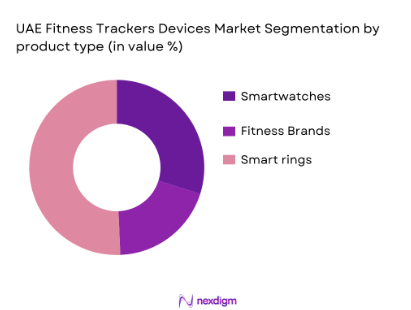
The UAE fitness trackers market is segmented by product type into smartwatches, fitness bands, and smart rings. Among these, smartwatches dominate the market due to their multifunctionality, combining fitness tracking with additional features such as notifications, health monitoring, and connectivity. Their growing popularity is attributed to their appeal to both fitness enthusiasts and tech-savvy consumers who seek an all-in-one wearable device. Smartwatches, such as those from brands like Apple, Samsung, and Garmin, have strong market presence due to their comprehensive health tracking features, seamless integration with smartphones, and appeal to a wide demographic.
End-user Demographics type
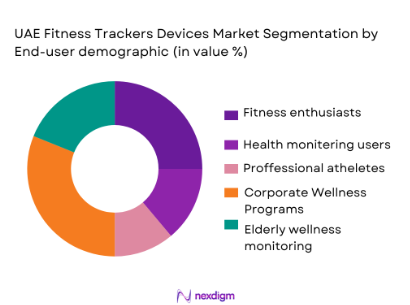
The market is segmented by end-user demographics, including fitness enthusiasts, health monitoring users, professional athletes, corporate wellness programs, and elderly wellness monitoring. Fitness enthusiasts represent the largest segment due to the increasing awareness of health and wellness in the UAE. This segment is dominated by consumers who actively track their physical activity, sleep patterns, and heart rate. The rising popularity of fitness trackers among the general population, especially those engaging in fitness regimes and health-conscious activities, has contributed significantly to the growth of this segment. Additionally, corporate wellness programs and elderly wellness monitoring are gaining traction as part of broader wellness initiatives in the region.
Competitive Landscape
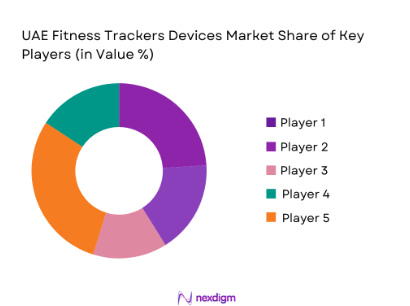
The UAE fitness tracker market is highly competitive, with several global and regional brands vying for market share. The market is led by established players such as Apple, Samsung, Fitbit, and Garmin, who dominate the smartwatch and fitness band segments due to their strong brand recognition, product innovation, and customer loyalty. In addition to global brands, local players like Withings and Oppo are also making a significant impact, especially in niche segments like smart rings and budget-friendly fitness bands. The competition is fierce as these players continually innovate their products with advanced features like heart rate monitoring, GPS tracking, and integration with fitness apps.
| Company Name | Establishment Year | Headquarters | Key Products | Market Focus | Technology |
| Apple Inc. | 1976 | Cupertino, USA | – | – | – |
| Samsung Electronics | 1938 | Seoul, South Korea | – | – | – |
| Fitbit (Google) | 2007 | San Francisco, USA | – | – | – |
| Garmin Ltd. | 1989 | Olathe, Kansas, USA | – | – | – |
| Withings | 2008 | Issy-les-Moulineaux, France | – | – | – |
UAE Fitness Trackers Market Analysis
Growth Drivers
Increasing Health & Fitness Consciousness
As global awareness of health and wellness increases, the demand for fitness trackers in the UAE is growing. In 2024, the UAE’s healthcare spending reached USD ~ billion, highlighting the nation’s commitment to health promotion. The increasing shift towards proactive health management and fitness routines is pushing consumers towards wearable devices that help monitor daily activity, heart rate, and sleep. Additionally, the UAE government’s promotion of healthy lifestyles through initiatives like the UAE National Fitness Day has contributed to the surge in fitness tracker adoption. Such initiatives are expected to drive continued growth in the health and fitness wearable market.
Smartphone & Internet Penetration
The proliferation of smartphones and increased internet penetration are key enablers for the UAE fitness tracker market. As of 2023, over 98% of the UAE’s population had internet access, and nearly 80% of adults owned a smartphone. This high level of connectivity is vital for the widespread adoption of fitness trackers, which rely on synchronization with smartphones to provide real-time health insights and track fitness progress. Moreover, the growth in mobile applications that pair with wearable devices further enhances the consumer experience, making fitness trackers more attractive.
Market Challenges
Price Sensitivity & Device Saturation
Despite the increasing demand for fitness trackers, price sensitivity remains a major challenge in the UAE market. Many fitness trackers, particularly high-end models like Apple Watch Series 8 and Garmin Forerunner, are priced at a premium, making them inaccessible to price-sensitive consumers. In 2024, mid-tier fitness trackers account for a significant portion of the market share due to their affordability, but they often lack advanced features. As the market matures and consumer demand for high-tech features grows, device saturation may also occur, leading to slower growth in certain market segments.
Import Regulations & Compliance
Import regulations and compliance requirements pose significant challenges for manufacturers and distributors of fitness trackers in the UAE. Import tariffs and stringent regulatory standards set by authorities like the Emirates Authority for Standardization and Metrology (ESMA) impact the pricing and availability of fitness trackers. In 2024, the regulatory framework around health-related wearables is expected to tighten, particularly regarding data privacy and health monitoring functionalities. These regulations can increase the operational costs for brands and slow down the entry of new products into the market, restricting overall market growth.
Opportunities
Expansion of Fitness Apps & Wearable Integrations
The growth of fitness apps is a key opportunity for the UAE fitness tracker market. As of 2023, over 50% of smartphone users in the UAE are engaged with fitness and wellness apps. These apps integrate seamlessly with fitness trackers to provide users with comprehensive health data and workout suggestions. The continuous development of apps that sync with wearable devices allows users to personalize their fitness journeys, leading to greater adoption. With the increasing demand for connected health solutions, wearable manufacturers are increasingly partnering with app developers to create integrated health platforms.
Telehealth & Remote Monitoring Synergies
The rise of telehealth and remote patient monitoring presents significant growth opportunities for fitness trackers. In 2023, the UAE government launched several telemedicine initiatives aimed at providing remote healthcare services, including monitoring chronic diseases like diabetes and heart disease. Fitness trackers, particularly those with heart rate and blood oxygen tracking features, play a crucial role in these initiatives. The integration of fitness trackers with telehealth services allows healthcare providers to monitor patients’ health in real-time, providing an opportunity for fitness tracker manufacturers to position themselves within the telehealth ecosystem
Future Outlook
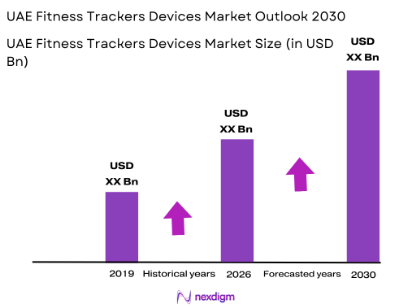
The UAE fitness tracker market is expected to continue its growth trajectory driven by a combination of factors, including the increasing health consciousness among consumers, advancements in wearable technology, and growing adoption of connected fitness solutions. Over the next five years, the demand for fitness trackers is projected to expand with the rise of digital health trends, integration with wellness apps, and the increasing emphasis on preventive healthcare. The market will benefit from the expanding role of fitness trackers in corporate wellness programs, as more businesses encourage employees to adopt healthier lifestyles. Additionally, the expansion of smart city initiatives in Dubai and Abu Dhabi, focused on digital health solutions, will create more opportunities for growth in the fitness tracker market.
Major Players in the UAE Fitness Trackers Market
- Apple Inc.
- Samsung Electronics
- Fitbit (Google)
- Garmin Ltd.
- Withings
- Oppo
- Huawei Technologies
- Xiaomi Corporation
- Amazfit (Zepp Health)
- Polar Electro Oy
- Fossil Group
- Suunto
- Acer Inc.
- Realme
- Mi Band (Xiaomi)
Key Target Audience
- Government Agencies (e.g., UAE Ministry of Health and Prevention, Dubai Health Authority)
- Fitness & Wellness App Providers
- Fitness Tracker Manufacturers & Distributors
- Retailers (Electronics, Health, Fitness)
- Insurance Companies (Health Insurance Providers)
- Corporate Wellness Program Providers
- Investors & Venture Capitalist Firms
- Regulatory & Standards Bodies (e.g., UAE National Standards Authority)
Research Methodology
Step 1: Identification of Key Variables
The initial phase involves identifying and mapping all key variables that affect the fitness tracker market in the UAE. This step utilizes a mix of secondary data sources such as government reports, industry publications, and market research databases. This phase is critical for understanding the market dynamics, key growth drivers, and barriers to entry.
Step 2: Market Analysis and Construction
In this phase, detailed data on market penetration, demand analysis, and consumer behavior will be gathered. This data will be used to create detailed models for the expected growth and segmentation of the fitness tracker market in the UAE. The analysis will also focus on emerging trends and technologies shaping the market.
Step 3: Hypothesis Validation and Expert Consultation
Market hypotheses and models will be tested and validated through primary research. Interviews with industry experts, retailers, manufacturers, and consumers will provide valuable insights into product preferences, adoption rates, and competitive pressures. This step ensures the accuracy and reliability of the market analysis.
Step 4: Research Synthesis and Final Output
The final output will include a synthesis of all gathered data, offering a comprehensive market report that includes detailed insights into market trends, growth forecasts, and competitive dynamics. The report will be designed to guide strategic decision-making for key stakeholders in the fitness tracker market.

- Executive Summary
- Research Methodology (Market Definitions & Scope, Abbreviations, Market Sizing & Forecasting Approach, Data Source Hierarchy, Primary/Secondary Research Process, Stakeholder Interviews & Validation, Limitations & Data Assurance)

- Definition and Scope of Fitness Trackers
- Overview Genesis
- Timeline of Key Product & Technology Milestones
- Business Cycle & Consumer Adoption Patterns
- Supply Chain & Value Chain
- Regulatory, Safety & Data Privacy Protocols

- Growth Drivers
Increasing Health & Fitness Consciousness
Smartphone & Internet Penetration
Corporate & Government Wellness Initiatives
AI/IoT Integration & Health Analytics - Market Challenges
Price Sensitivity & Device Saturation
Import Regulations & Compliance - Opportunities
Expansion of Fitness Apps & Wearable Integrations
Telehealth & Remote Monitoring Synergies
Corporate Wellness & Insurance Partnerships
Local Manufacturing & Customization - Trends
Shift Toward Multifunctional Wearables
Growth of Non‑Invasive Health Metrics
Sustainability & Eco‑Friendly Wearables - Government & Regulatory Framework
Data Protection & Health Record Standards
Consumer Safety & Certification Requirements
Digital Health Integration Policies
Import & Labeling Regulations - SWOT Analysis
- Porter’s Five Forces

- Market Value (Revenue in USD) — Device & Accessory Revenue Pools, 2019-2024
- Volume (Units Shipped & Sold) (Unit Metrics), 2019-2024
- Average Selling Price (ASP) Trends, 2019-2024
- Segmental Revenue Contribution (Wristbands, Smart Watches), 2019-2024
- Channel Revenue Contributions (Online vs Offline), 2019-2024

- By Device Type (In Value%)
Smart Watches
Fitness Bands
Smart Rings
Body‑Worn Sensor - By Feature Capability (In Value%)
Heart Rate Monitoring
Sleep Tracking
GPS Activity Tracking
SpO2 / Blood Oxygen Tracking
Stress & Wellness Insights - By End‑User Demographic (In Value%)
Fitness Enthusiasts
Health Monitoring Users
Professional Athletes
Corporate Wellness Programs
Elderly Wellness Monitoring - By Distribution Channel (In Value%)
Online Retail (E‑commerce)
Specialty Electronics Stores
General Retail Outlets
Telecom Channel Partnerships
Health Insurance‑Linked Distribution - By Geography (In Value%)
Dubai
Abu Dhabi
Sharjah
Northern Emirates
Free Zones & Expat Hotspots

- Market Share by Revenue & Units
Cross Comparison Parameters (Company Overview & Product Portfolio Breadth, Device Types & Feature Capabilities, Price Tier & Channel Penetration, Retail/Online Distribution Strength, Local Partnerships & After‑Sales Network, Warranty & Service Support Ecosystem, AI/Analytics & Health Data Platforms, Brand Loyalty & Consumer Engagement) - SWOT Analysis of Major Players
- Pricing & Feature Benchmarking by SKU
- Detailed Profiles of Major Companies
Apple Inc.
Samsung Electronics
Fitbit Inc. (Google)
Garmin Ltd.
Huawei Technologies
Xiaomi Corporation
Oura Health Ltd.
Whoop Inc.
Withings SA
Polar Electro Oy
Suunto
Fossil Group Wearables
Bose (Wearable Sensors)
FitSpark (Local OEMs/Resellers)

- Consumer Adoption Patterns
- Purchasing Behavior & Price Sensitivity
- Usage Frequency & Feature Engagement
- Pain Points & Switching Drivers
- Decision‑Making & Brand Preferences

- Overall Forecast by Revenue (USD), 2026-203
- Forecast by Device Type, 2026-2030
- Forecast by Feature Capabilities, 2026-2030
- Forecast by End‑User Demographics, 2026-2030


 Request a Sample
 Ask for Customization
 Get a Quote
 Enquire Now