
 Download PDF
Market Overview
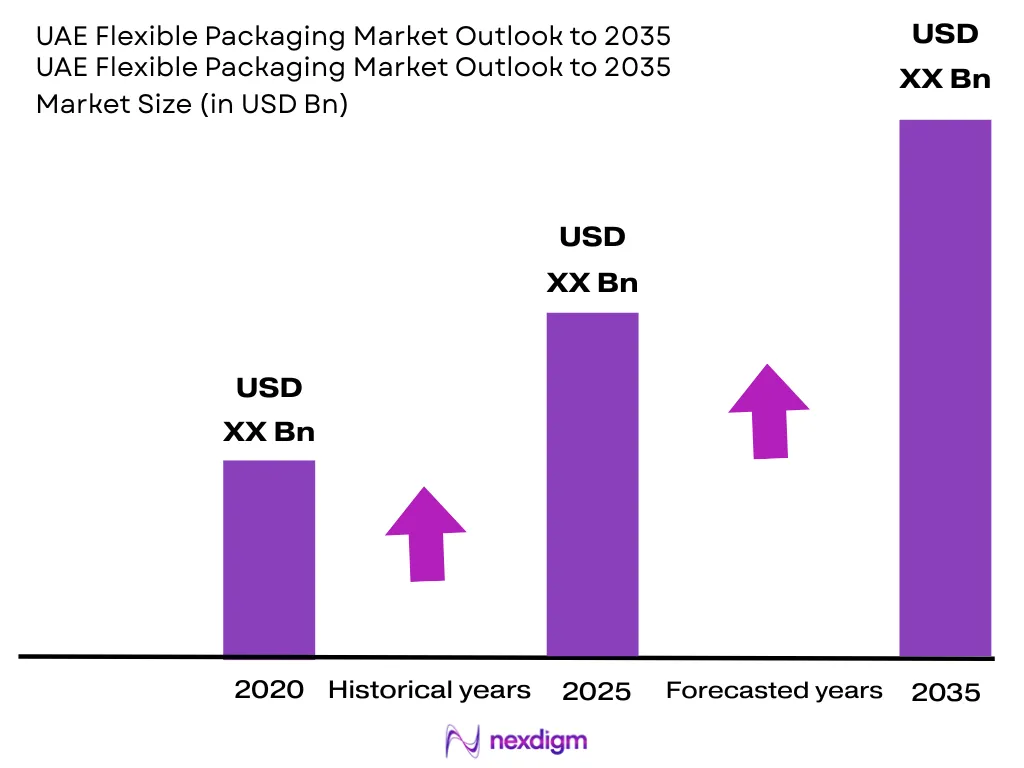
The UAE Flexible Packaging Market was valued at USD ~ Billion in 2026 and is anticipated to expand at a CAGR of 4.2% during 2026–2032, reaching approximately USD ~ Billion by 2032, according to Vyansa Intelligence. The market is primarily driven by explosive growth in food delivery, quick-commerce, and cloud kitchen operations, the government’s Operation 300bn industrial program targeting AED 300 billion (USD 81.6 billion) in manufacturing value-added by 2031, and the formation of Borouge Group International through the ADNOC-OMV-Nova Chemicals transaction, which provides local converters with captive resin supply. UAE e-commerce sales reached USD 8.8 billion in 2024 and are projected by the UAE Ministry of Economy to surpass USD 13.6 billion by 2029, while food e-commerce retail value grew from USD 421 million in 2020 to USD 1.07 billion in 2023, according to the USDA Foreign Agricultural Service. Plastic substrates accounted for 64.58% of the UAE flexible packaging market in 2025, according to Mordor Intelligence, with the flexible plastic segment expanding at a 7.60% CAGR through 2030, outpacing rigid plastic formats. The UAE’s nationwide single-use plastics ban, introduced under Ministerial Decision No. 380 of 2022 and fully in force as of January 1, 2026, continues to reshape the competitive landscape across bakery, dairy, beverages, personal care, and pharmaceutical packaging applications.
Market Segmentation
By Material
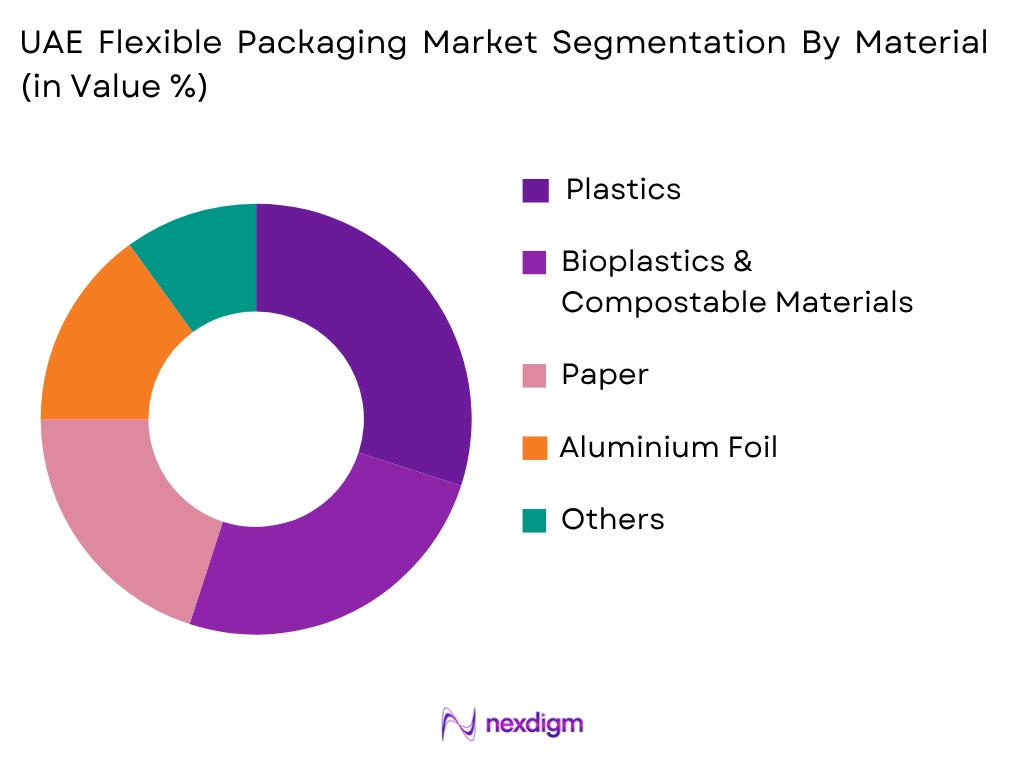
Among these, Plastic dominates the UAE Flexible Packaging Market, with polyethylene alone accounting for nearly 60% of the flexible plastic packaging material segment in 2026, owing to its strong barrier properties, flexibility, and cost-effectiveness in large-scale packaging applications, according to Vyansa Intelligence. Taghleef Industries, headquartered in Dubai as part of the Al Ghurair Group, added new BOPP, CPP, and barrier film production lines focused on mono-material output in December 2024, reflecting the shift toward recyclable plastic structures. Vertically integrated groups such as Taghleef mitigated Red Sea-related feedstock shocks through multi-origin contracts, while the formation of Borouge Group International in 2024 delivers a captive resin supply that helps local converters manage price swings in imported feedstocks. Bioplastics and compostable materials, including PLA and PHA films, are projected to grow rapidly, supported by the UAE National Single-Use Plastic Ban’s explicit exemption for certified compostable alternatives meeting EN13432 or ASTM D6400 standards.
By End User
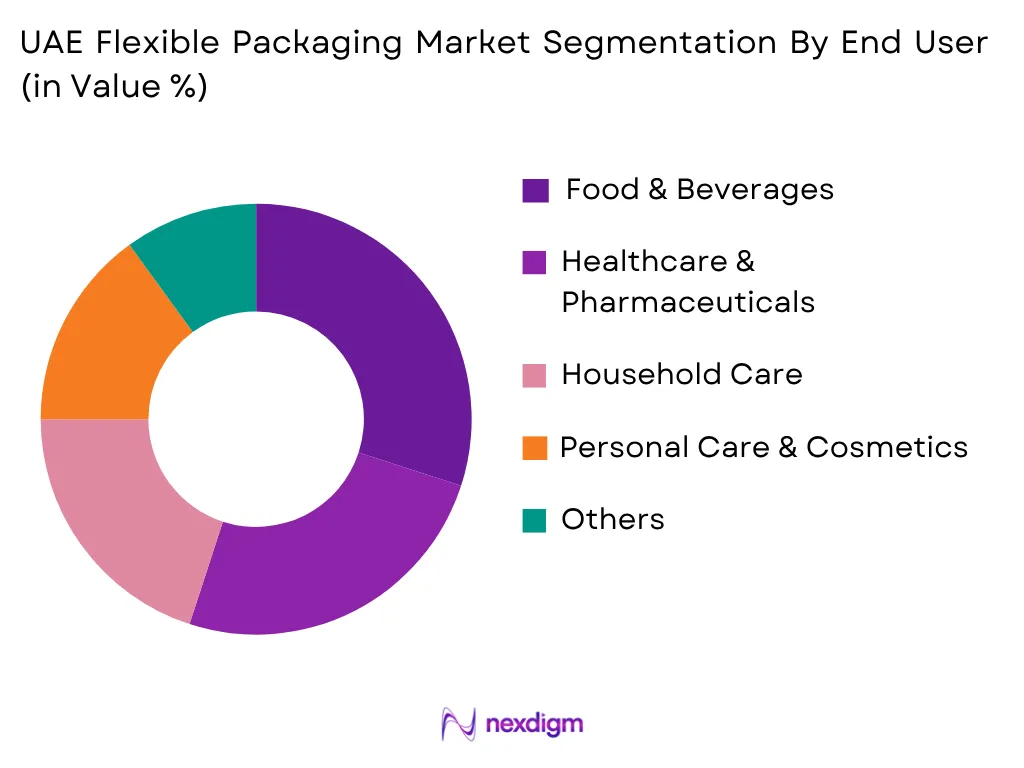
The Food & Beverages segment holds the largest share of the UAE Flexible Packaging Market, driven by the country’s booming e-commerce and food delivery ecosystem alongside a surge in kitchen-as-a-service operators, which tripled site counts between 2024 and 2025. This growth has created substantial demand for grease-proof, heat-stable pouches capable of maintaining food quality across temperature zones, with specialized polyethylene-based laminates featuring anti-fog properties cutting food waste by 18% during delivery windows compared with rigid clamshells. Small-format sachets for sauces and spices are also gaining popularity as portion control becomes integral to meal-kit economics. The Healthcare & Pharmaceuticals segment represents the fastest-growing end-user category, expanding at a 7.10% CAGR through 2030 according to Mordor Intelligence, supported by the broader plastic packaging market’s momentum and the country’s growing pharmaceutical manufacturing base under the Operation 300bn industrial program.
Competitive Landscape
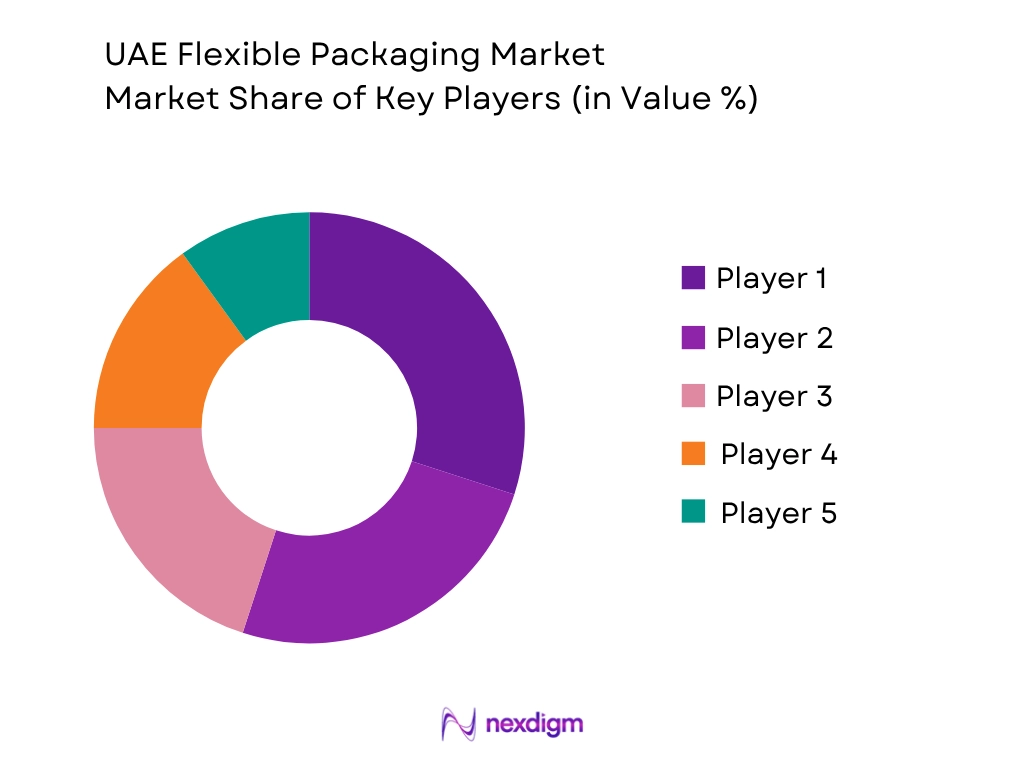
The UAE Flexible Packaging Market is moderately consolidated, with more than 10 companies actively engaged in flexible plastic packaging production and the top five manufacturers collectively holding around 50% market share. Competition is primarily based on manufacturing capacity, barrier film technology, feedstock integration, regulatory compliance with the nationwide single-use plastics ban, and the ability to serve the country’s food delivery, retail, and pharmaceutical sectors. Taghleef Industries, established in 2006 from the merger of Dubai Poly Film and two regional predecessor companies and now part of the Al Ghurair Group, has grown into one of the world’s largest manufacturers of BOPP and biodegradable BOPLA films, with a global production capacity exceeding 500,000 tons per year across 11 manufacturing facilities. Hotpack Global, founded in Dubai in 1995, has expanded into 29 locations across the Middle East, UK, North America, Malaysia, and India, exporting to over 106 countries with 2026 annual revenue reaching approximately USD 1.2 billion. Huhtamaki consolidated its three UAE flexible packaging plants into a single Jebel Ali facility in 2024 while expanding its Ras Al Khaimah operations, generating approximately USD 109 million in efficiency savings and supporting an annual production capacity of around 24,000 metric tons.
| Company | Establishment Year | Headquarters | Primary Product Portfolio | Flexible Packaging Portfolio
|
Manufacturing Presence | Major End-Use Industries | Key Strategic Focus | Certifications & Compliance |
| Taghleef Industries | 2006 | ~ | ~ | ~ | ~ | ~ | ~ | ~ |
| Hotpack Global | 1995 | ~ | ~ | ~ | ~ | ~ | ~ | ~ |
| Huhtamaki (Flexible Packaging Middle East) | 1920 | ~ | ~ | ~ | ~ | ~ | ~ | ~ |
| UFlex Limited | 1985 | ~ | ~ | ~ | ~ | ~ | ~ | ~ |
| Borouge Group International | 2024 | ~ | ~ | ~ | ~ | ~ | ~ | ~ |
UAE Flexible Packaging Market Analysis
Growth Drivers
Explosive Growth in Food Delivery, Quick-Commerce, and Cloud Kitchens
The UAE Flexible Packaging Market is experiencing sustained growth due to the rapid expansion of food delivery, quick-commerce, and cloud kitchen operations across the country. Kitchen-as-a-service operators tripled their site counts between 2024 and 2025, driving demand for grease-proof, heat-stable pouches that maintain food quality across varying temperature zones during delivery. UAE e-commerce sales reached USD 8.8 billion in 2024 and are projected by the UAE Ministry of Economy to surpass USD 13.6 billion by 2029, while food e-commerce retail value grew from USD 421 million in 2020 to USD 1.07 billion in 2023, according to the USDA Foreign Agricultural Service. This operational shift has pushed converters toward rapid product-development cycles supported by digital printing, with specialized polyethylene-based laminates featuring anti-fog properties cutting food waste by 18% during delivery windows, while small-format sachets for sauces and spices gain popularity as portion control becomes integral to meal-kit economics.
Operation 300bn Industrial Program and Captive Petrochemical Feedstock Integration
The UAE federal government’s Operation 300bn industrial program, which targets AED 300 billion (USD 81.6 billion) in manufacturing value-added by 2031, continues to translate directly into new packaging opportunities for domestic food processors, pharmaceutical producers, and fast-moving consumer goods brands. The formation of Borouge Group International through the ADNOC-OMV-Nova Chemicals transaction delivers a captive resin supply that helps local converters mitigate price swings in imported feedstocks. In February 2025, Borouge announced USD 100 million in new supply agreements with Bericap, Taghleef Industries, and Alpla to co-engineer recycled-content solutions for beverages and flexible films, illustrating how domestic petrochemical integration continues to strengthen the competitiveness of UAE-based flexible packaging manufacturers relative to importers reliant on volatile international feedstock markets.
Market Challenges
Nationwide Single-Use Plastics Ban Compliance Complexity
As of January 1, 2026, the UAE’s single-use plastics ban is fully in force nationwide, introduced under Ministerial Decision No. 380 of 2022 and phased in from 2024 onwards, prohibiting plastic shopping bags below 50 microns, beverage cups and lids, cutlery, straws and stirrers, and food containers and styrofoam packaging. Non-compliant products are removed from import, production, and circulation, with fines of up to AED 50,000 pushing suppliers to pivot toward mono-material and recyclable designs. For manufacturers and converters, regulatory alignment has become directly linked to market access, requiring specification sheets to be rewritten and operational formats to evolve in real time. Companies that invested early in compliant capacity and portfolio redesign, such as Integrated Plastics Products, have absorbed the transition more smoothly, while others face compressed timelines and supply constraints.
Red Sea Shipping Disruptions and Feedstock Price Volatility
The UAE Flexible Packaging Market has faced significant feedstock price volatility due to shipping constraints through the Red Sea corridor, with quarterly swings of up to 40% in polypropylene and polyethylene prices recorded during 2024-2025, eroding converter margins and delaying expansion projects. While vertically integrated groups such as Taghleef Industries mitigated these shocks through multi-origin feedstock contracts, smaller players absorbed cost spikes that could not be fully passed downstream, pausing capital allocation toward new sustainable production lines and moderating capacity additions. This supply-chain volatility has made diversified polymer sourcing a key competitive lever, with regional suppliers able to widen their customer base during the disruptions while less-diversified competitors struggled to maintain consistent pricing and supply reliability.
Market Opportunities
Domestic Recycled-Content and Circular Economy Infrastructure Investment
Growing investment in domestic recycling and circular economy infrastructure presents substantial opportunities for UAE flexible packaging manufacturers. The Tetra Pak-Union Paper Mills carton recycling line supports the country’s circular-economy targets, while Dubai’s Circular Economy Policy 2071 reinforces the shift toward bio-based and fully recyclable packaging formats. Emirates Biotech selected Sulzer technology in December 2024 for a polylactic acid (PLA) production complex expected to enter construction in 2025 and begin production by early 2028, positioning the UAE to develop domestic bio-based feedstock supply ahead of anticipated cost declines. Converters are increasingly trialing bio-sourced PLA films in anticipation of this domestic supply scaling, while Borouge’s USD 100 million supply agreements with converters including Bericap, Taghleef Industries, and Alpla to co-engineer recycled-content solutions further exemplify the growing opportunity for vertically integrated circular economy partnerships.
Smart and Traceable Packaging for Food Safety
The UAE’s growing emphasis on smart, traceable packaging presents meaningful opportunities for flexible packaging manufacturers and ink and coating suppliers. Dubai Municipality’s Smart Food Safety Initiative, launched in 2024, promotes traceable, tamper-proof packaging for the emirate’s 26,000 food establishments to ensure hygiene and transparency across supply chains. Hotpack Global has introduced smart flexible packaging using modified atmosphere technology and digital tracking to maintain product freshness and reduce food waste, while Siegwerk, a global ink manufacturer, opened a new Dubai facility in June 2025 to supply advanced digital inks and coatings for sustainable flexible packaging. These developments align with the UAE’s broader vision for smart manufacturing, positioning the country as a regional hub for technologically advanced, traceable flexible packaging solutions.
Future Outlook
The UAE Flexible Packaging Market is expected to witness sustained expansion over the forecast period, supported by continued growth in food delivery and quick-commerce logistics, ongoing implementation of the Operation 300bn industrial program, and increasing domestic petrochemical feedstock integration through Borouge Group International. Continued investment in recycled-content and bio-based PLA production capacity, alongside full enforcement of the nationwide single-use plastics ban, is expected to accelerate the market’s transition toward mono-material and certified compostable formats. The market is also likely to benefit from continued adoption of smart, traceable packaging technologies, supporting long-term growth across food and beverage, pharmaceutical, personal care, and household care applications.
Major Players
- Taghleef Industries
- Hotpack Global
- Huhtamaki (Flexible Packaging Middle East)
- UFlex Limited
- Borouge Group International
- Amber Packaging Industries
- Swiss Pac UAE Packaging Industries
- ENPI Group
- Mondi Group
- Tetra Pak International
- Union Paper Mills
- Hexxa Flexible Packaging
- Al Bayader International
- Falconpack
- Siegwerk
Key Target Audience
- Flexible Packaging Film and Laminate Manufacturers
- Food & Beverage Companies and Cloud Kitchens
- Pharmaceutical and Healthcare Companies
- Personal Care and Cosmetics Companies
- E-Commerce and Quick-Commerce Platforms
- Petrochemical and Resin Suppliers
- Investment and Sovereign Wealth Entities
- Government and Regulatory Bodies (Ministry of Climate Change and Environment (MOCCAE), Emirates Authority for Standardization & Metrology (ESMA), Environment Agency, Abu Dhabi (EAD), Dubai Municipality)
- Raw Material Suppliers and Recycling Companies
Research Methodology
Step 1: Identification of Key Variables
The research process begins with identifying the complete ecosystem of the UAE Flexible Packaging Market, including raw material suppliers, film and laminate manufacturers, converters, brand owners, retailers, and regulatory authorities. Extensive secondary research is conducted using company annual reports, government publications, trade associations, customs statistics, industry journals, and proprietary databases to determine the variables influencing market demand, pricing, production, consumption, and technological developments.
Step 2: Market Analysis and Construction
Historical market information is collected and analyzed to estimate market size, production volumes, import-export activity, application-wise demand, and pricing trends. A combination of top-down and bottom-up approaches is used to estimate market revenues and validate segment-level performance. Consumption patterns across food and beverages, pharmaceuticals, personal care, and household care are evaluated to establish an accurate representation of the industry.
Step 3: Hypothesis Validation and Expert Consultation
The preliminary findings are validated through Computer-Assisted Telephone Interviews (CATIs) and structured discussions with flexible packaging manufacturers, procurement managers, converters, brand owners, regulatory experts, and senior executives operating within the UAE packaging industry. These interviews help verify market assumptions, competitive developments, technology adoption trends, pricing dynamics, and future investment opportunities while refining the overall market estimates.
Step 4: Research Synthesis and Final Output
The final stage integrates insights obtained from primary interviews with quantitative information collected through secondary sources. Data triangulation techniques are applied to reconcile differences between supply-side and demand-side estimates, ensuring robust market forecasting. The report is then reviewed through multiple quality assurance checkpoints to deliver a comprehensive analysis covering market size, segmentation, competitive landscape, future outlook, and strategic recommendations for industry stakeholders.

- Executive Summary
- Research Methodology (Market Definitions and Assumptions, Abbreviations, Market Sizing Approach, Top-Down Analysis, Bottom-Up Analysis, Demand-Side Assessment, Supply-Side Assessment, Primary Industry Interviews, Secondary Research Validation, Data Triangulation, Forecasting Framework, Limitations and Future Conclusions)

- Definition and Scope
- Market Evolution and Industry Genesis
- Timeline of Major Industry Developments
- Flexible Packaging Industry Value Chain Analysis
- Supply Chain Analysis

- Growth Drivers (Explosive Growth in Food Delivery, Quick-Commerce, and Cloud Kitchens, Operation 300bn Industrial Program, Captive Petrochemical Feedstock Integration, Rising Consumption of Convenience Foods, Expansion of Modern Retail, Growth in Sustainable Packaging Adoption)
- Market Challenges (Nationwide Single-Use Plastics Ban Compliance Complexity, Red Sea Shipping Disruptions and Feedstock Price Volatility, High Implementation Costs, Limited Domestic Recycling Infrastructure, Regulatory Compliance Complexity)
- Market Opportunities (Domestic Recycled-Content and Circular Economy Infrastructure Investment, Smart and Traceable Packaging for Food Safety, Mono-Material Recyclable Film Development, Export-Oriented Manufacturing, Pharmaceutical High-Barrier Packaging)
- Market Trends (Shift Toward Mono-Material Recyclable Structures, Growth of Compostable PLA and PHA Films, Digital and Smart Label Adoption, Vertically Integrated Feedstock Sourcing, Consolidation of Regional Manufacturing Footprints)
- Government Regulations (Ministerial Decision No. 380 of 2022 Single-Use Plastics Ban, ESMA Packaging Standards, Dubai Circular Economy Policy 2071, MOCCAE Environmental Regulations, Labeling Requirements)
- Import and Export Analysis (Trade Volume, Major Import Sources, Export Destinations, HS Code Analysis, Trade Balance)
- Raw Material Availability Analysis (Polyethylene, Polypropylene, Polyester Resin, Recycled PET (rPET), Bio-Based Polylactic Acid (PLA))
- Technology Landscape (Biaxial Orientation Technology, Multi-Layer Coextrusion, Barrier Coating Technologies, Digital and Smart Printing, Modified Atmosphere Packaging Technology)
- Sustainability Assessment (Recycled Content Adoption, Mono-Material Design, Compostable Film Development, Carbon Footprint Reduction, Circular Economy Partnerships)
- PESTLE Analysis
- SWOT Analysis
- Porter’s Five Forces Analysis
- Stakeholder Ecosystem
- Competition Ecosystem

- By Market Value (2020-2025)
- By Volume Consumption (2020-2025)
- By Average Selling Price (2020-2025)

- By Material (In Value %)
Plastic (Polyethylene, Polypropylene, BOPP & CPP)
Paper
Aluminum Foil
Bioplastics & Compostable Materials - By Product Type (In Value %)
Pouches & Stand-Up Pouches
Sachets
Bags
Films & Wraps - By Printing Technology (In Value %)
Rotogravure Printing
Flexographic Printing
Digital Printing - By End User (In Value %)
Food & Beverages
Personal Care & Cosmetics
Healthcare & Pharmaceuticals
Household Care
Other Consumer Goods - By Region (In Value %)
Dubai
Abu Dhabi
Sharjah & Northern Emirates

- Market Share of Major Players (By Value, Volume, Material, Application Industry, Product Category)
- Cross Comparison Parameters (Product Portfolio Breadth, Barrier Film Capability, Application Technical Support Capability, Manufacturing Capacity, Regulatory Compliance & Certifications, Food & Beverage Customer Base, Innovation & New Product Launch Frequency)
- SWOT Analysis of Major Players
- Pricing Analysis by Product Category and SKU
- Production Capacity Analysis
- Manufacturing Footprint Analysis
- Distribution Network Analysis
- Innovation Benchmarking
- Detailed Profiles of Major Companies
Taghleef Industries
Hotpack Global
Huhtamaki (Flexible Packaging Middle East)
UFlex Limited
Borouge Group International
Amber Packaging Industries
Swiss Pac UAE Packaging Industries
ENPI Group
Mondi Group
Tetra Pak International
Union Paper Mills
Hexxa Flexible Packaging
Al Bayader International
Falconpack
Siegwerk

- Consumption Pattern Analysis (Industrial Usage, Order Size, Product Category Penetration, Seasonal Demand, Reformulation Activity)
- Purchasing Criteria (Barrier Performance, Regulatory Compliance, Cost Efficiency, Recyclability, Shelf Life, Supply Reliability)
- Procurement and Supplier Selection Analysis
- Sustainable Packaging Adoption Assessment
- Premium vs Conventional Packaging Demand
- Product Attribute Preference Analysis (Barrier Consistency, Print Quality, Seal Integrity, Recyclability, Shelf Appeal, Tamper Evidence)
- Consumer Sustainability Preference Influence on Product Development
- Pain Point Analysis
- Decision-Making Process

- By Market Value (2026-2035)
- By Volume Consumption (2026-2035)
- By Average Selling Price (2026-2035)


 Request a Sample
 Ask for Customization
 Get a Quote
 Enquire Now