
 Download PDF
Market Overview
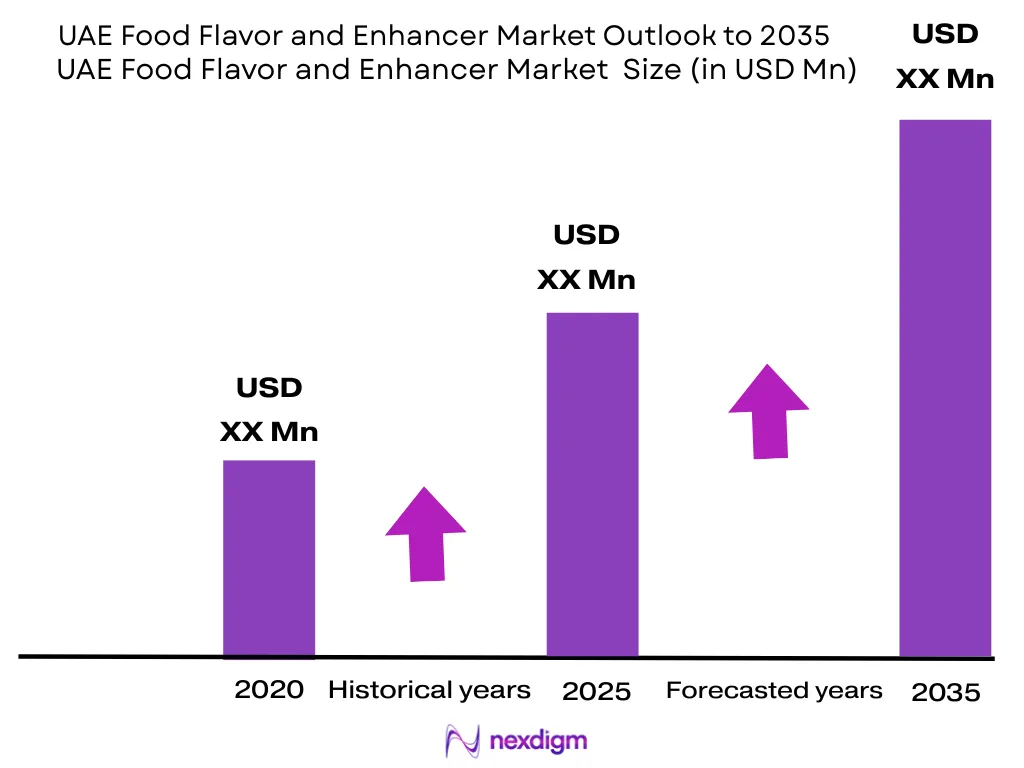
The UAE Food Flavor and Enhancer Market is valued at USD ~ million, based on a five-year historical analysis, and is forecast to grow at % CAGR during the forecast period. Demand is driven by packaged foods, beverages, bakery, confectionery, dairy, frozen desserts, foodservice, airline catering and hospitality. UAE food processing includes more than 570 food and beverage processors, while U.S. agricultural and related exports to the UAE reached USD 1.17 billion, compared with USD 1.09 billion previously. The UAE Food Flavor and Enhancer Market is dominated by Dubai, Abu Dhabi, Sharjah, Ajman, Ras Al Khaimah and Al Ain due to food manufacturing, import logistics, hospitality, airline catering, retail and re-export activity. Dubai dominates through Jebel Ali, foodservice, tourism and beverage innovation; Abu Dhabi through industrial processing and catering; Sharjah-Ajman through bakery and SME manufacturing. UAE GDP reached USD 552.32 billion, GDP per capita reached USD 50,273.5, and Dubai welcomed 18.72 million international visitors.
Market Segmentation
By Product Type
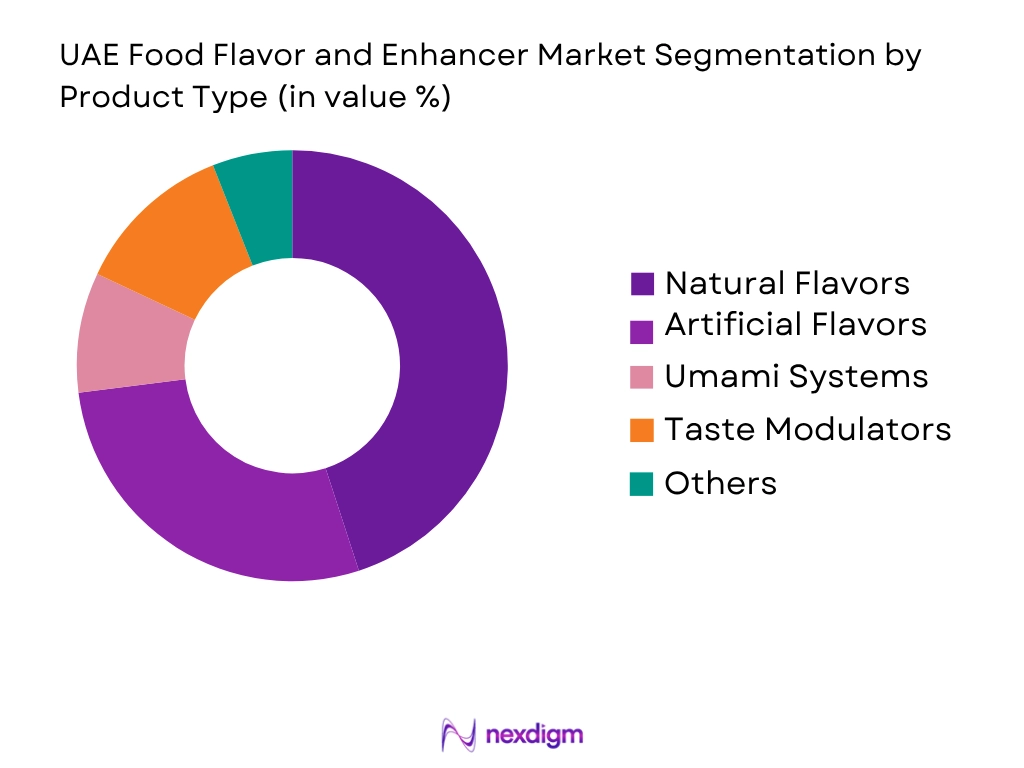
UAE Food Flavor and Enhancer Market is segmented by product type into natural flavors, synthetic flavors, nature-identical flavors, flavor enhancers, yeast extracts, hydrolyzed vegetable proteins, MSG and glutamate-based enhancers, nucleotide enhancers, taste modulators, masking agents, bitterness blockers, sweetness enhancers, salt reduction systems, smoke flavors, grill flavors, reaction flavors and encapsulated flavors. Recently, natural flavors have a dominant market share in UAE under product type segmentation because beverage, dairy, bakery, confectionery, dessert, foodservice, QSR and hospitality customers increasingly require halal-compliant, clean-label and premium sensory systems. Natural flavors are widely used in citrus drinks, juices, Arabic sweets, dairy desserts, frozen desserts, coffee beverages, mocktails, bakery fillings, sauces and premium foodservice products. Their dominance is reinforced by UAE import dependence, multicultural consumer preferences, tourism-led menu innovation and the need for GSO-aligned documentation, halal files, allergen records and food import registration support.
By Application
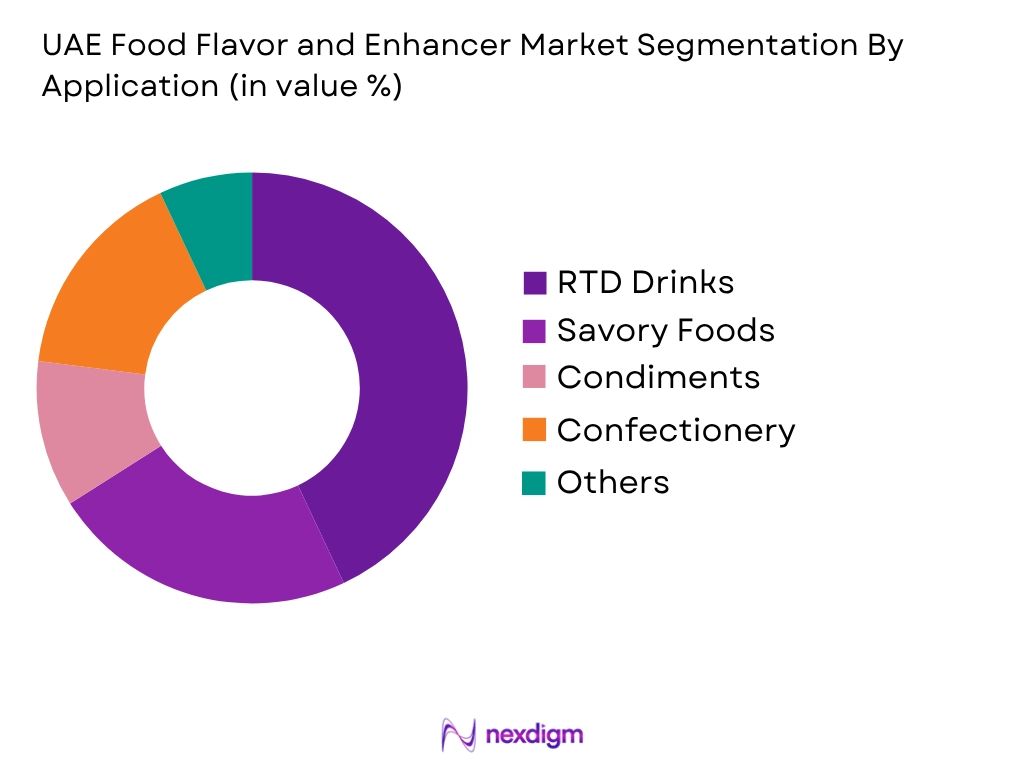
UAE Food Flavor and Enhancer Market is segmented by application into beverages, RTD drinks, juices, coffee beverages, tea beverages, dairy, frozen desserts, bakery, confectionery, Arabic sweets, snacks, sauces, condiments, meat products, poultry products, plant-based foods, nutrition products, foodservice, QSR, cloud kitchens and airline catering. Recently, beverages and RTD drinks have a dominant market share in UAE under application segmentation because flavor systems are central to juices, carbonated drinks, energy drinks, functional beverages, café beverages, mocktails, dairy beverages, iced teas and premium refreshment products. Beverage manufacturers and foodservice chains use citrus oils, tropical fruit profiles, coffee notes, Arabic coffee profiles, tea notes, dairy flavors, sweetness modulators, bitterness blockers and beverage cloud systems. Dubai’s tourism and hospitality base, café culture, premium retail channels and multicultural consumer mix make beverages the most innovation-intensive application for flavor houses and ingredient distributors.
Competitive Landscape
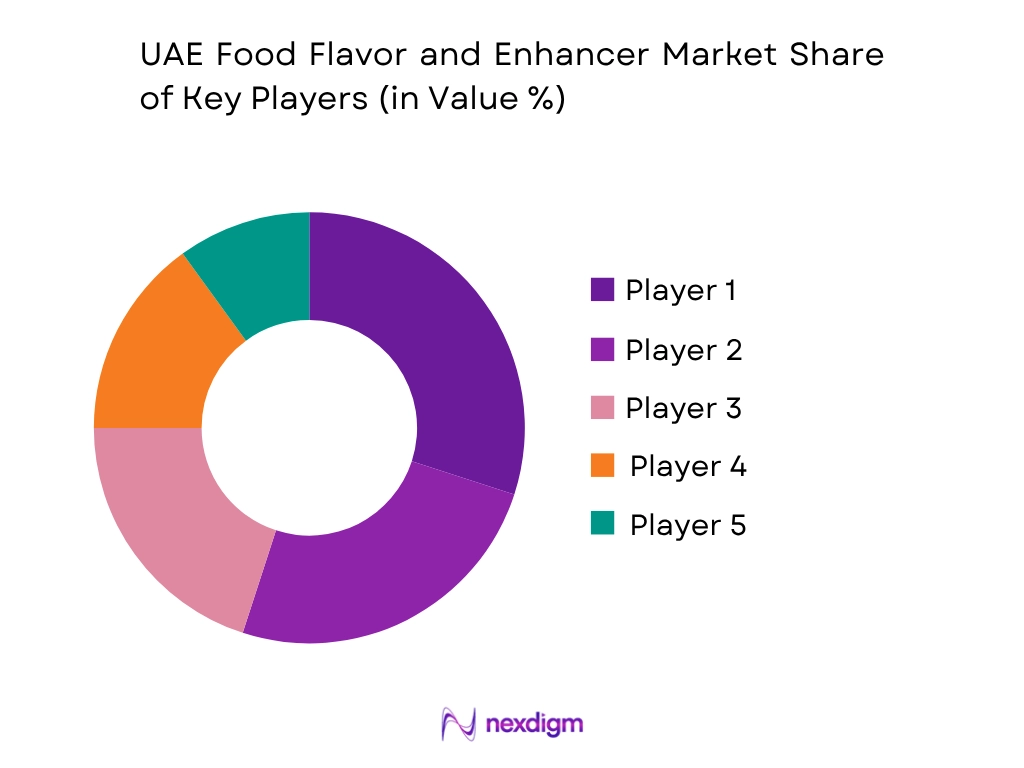
The UAE Food Flavor and Enhancer Market is served by global flavor houses, Middle East regional offices, halal-certified ingredient distributors, foodservice solution providers, beverage compounders, seasoning suppliers and food chemical importers. The market is consolidated at the upper end because large food manufacturers, hotel groups, QSR operators, airline caterers and beverage companies require halal documentation, GSO compliance, food import registration support, rapid sampling, application testing, heat-stability validation and reliable import logistics. Competitive differentiation is shifting toward halal-ready natural systems, Arabic sweet profiles, beverage flavor platforms, foodservice premixes, airline catering standardization, plant-based masking and GCC re-export documentation.
| Company | Establishment Year | Headquarters | Core Flavor Focus | UAE Market Role | Key Applications | Regulatory Capability | Innovation Capability | Market-Specific Capability |
| Givaudan Middle East | 1895 | Vernier, Switzerland | ~ | ~ | ~ | ~ | ~ | ~ |
| International Flavors & Fragrances Middle East | 1958 | New York, USA | ~ | ~ | ~ | ~ | ~ | ~ |
| dsm-firmenich Middle East | 2023 | Kaiseraugst, Switzerland | ~ | ~ | ~ | ~ | ~ | ~ |
| Symrise Middle East | 2003 | Holzminden, Germany | ~ | ~ | ~ | ~ | ~ | ~ |
UAE Food Flavor and Enhancer Market Analysis
Growth Drivers
Food processing base, import-led ingredient demand and GCC re-export role
UAE Food Flavor and Enhancer Market is driven by the country’s food processing and ingredient import ecosystem, where natural flavors, synthetic flavors, yeast extracts, hydrolyzed vegetable proteins, MSG-based enhancers, nucleotide systems, taste modulators, bitterness blockers and masking systems are used across beverages, bakery, confectionery, dairy, frozen desserts, snacks, sauces, meat products, airline catering and foodservice. USDA FAS reported that the UAE has more than 570 food and beverage processors, while U.S. agricultural and related exports to the UAE reached USD 1.17 billion, compared with USD 1.09 billion previously. World Bank reported UAE GDP at USD 552.32 billion, GDP per capita at USD 50,273.5, and GDP growth at 4.0 units per 100. These indicators support demand for imported aroma chemicals, natural extracts, halal-certified flavor systems, beverage compounds, savory enhancers and GCC-ready documentation. Suppliers benefit because UAE manufacturers and distributors need stable stock, halal files, food import registration support and products suited for domestic use and re-export.
Tourism, foodservice, hospitality and beverage innovation
UAE Food Flavor and Enhancer Market is supported by tourism-led foodservice demand, hospitality menus, café beverages, QSR expansion, cloud kitchens and airline catering. Dubai welcomed 18.72 million international overnight visitors, compared with 17.15 million in the previous annual count, while Dubai International Airport handled a record 92 million passengers. These flows create recurring demand for flavor systems used in mocktails, juices, café drinks, Arabic coffee, RTD beverages, desserts, sauces, grilled meat profiles, bakery fillings, frozen desserts and airline meal standardization. The World Bank’s USD 552.32 billion GDP and USD 50,273.5 GDP per capita indicate a premium consumption base that supports natural flavors, date profiles, saffron-cardamom notes, citrus oils, coffee systems, grill notes, smoke flavors, sweetness modulators and functional masking. Flavor suppliers benefit because hotels, QSR operators, catering companies and beverage producers require fast sampling, halal-compliant carriers, shelf-life stability and standardized taste across multicultural menus.
Market Challenges
Halal, GSO, food import registration and documentation burden
UAE Food Flavor and Enhancer Market faces a compliance challenge because suppliers must manage halal documentation, GSO additive alignment, UAE food import registration, allergen records, ingredient identity, origin documents, carrier declarations, processing-aid information and customer-specific technical files. GSO 2500:2022 is the Gulf technical regulation for additives permitted for use in foodstuffs, while the Ministry of Industry and Advanced Technology states that the Halal National Mark is granted after verifying that products conform to approved standards. This compliance burden is commercially important because the UAE has more than 570 food and beverage processors and imports a large volume of food ingredients for local manufacturing, hospitality and re-export. A flavor compound may contain aroma chemicals, essential oils, botanical extracts, solvents, emulsifiers, carriers, yeast extracts, MSG, nucleotides and masking ingredients. Each input can require traceability, halal suitability and product-registration documentation. Suppliers with weak regulatory files face slower approvals with beverage producers, bakeries, dairy companies, hotels, airline caterers and GCC distributors.
Imported ingredient dependency and Gulf climate stability risk
UAE Food Flavor and Enhancer Market is constrained by high dependency on imported specialty ingredients such as citrus oils, vanilla, cocoa derivatives, coffee and tea inputs, saffron, cardamom, rose extracts, dairy notes, aroma chemicals, yeast extracts, MSG, nucleotide systems and plant-based masking technologies. USDA FAS reported U.S. agricultural and related exports to the UAE at USD 1.17 billion, highlighting the country’s role as a food and ingredient import destination. World Bank reported UAE GDP of USD 552.32 billion and GDP per capita of USD 50,273.5, showing a high-value market where consistency expectations are strong. Technical risk is market-specific because flavor systems must remain stable in Gulf heat, long logistics cycles, frozen desserts, RTD beverages, bakery fillings, sauces, seasoning blends, airline catering trays and cloud-kitchen applications. Reformulation can alter Arabic coffee balance, citrus beverage clarity, date-caramel sweetness, saffron dessert notes, grill flavor authenticity, smoke intensity and plant-based off-note masking. Suppliers therefore need UAE warehousing, heat-stability testing, controlled-release technologies and rapid replacement capability.
Market Opportunities
Halal-certified natural flavor, Arabic sweet and premium beverage systems
UAE Food Flavor and Enhancer Market has a strong opportunity in halal-certified natural flavor systems because manufacturers, foodservice operators and distributors need compliant products for beverages, bakery, confectionery, desserts, dairy and hospitality menus. The opportunity is supported by UAE GDP of USD 552.32 billion, GDP per capita of USD 50,273.5, more than 570 food and beverage processors, and Dubai’s 18.72 million international overnight visitors. Suppliers can target citrus, mango, berry, mint, Arabic coffee, tea, date, caramel, saffron, cardamom, rose, pistachio, vanilla and chocolate profiles for juices, mocktails, RTD drinks, café beverages, Arabic sweets, frozen desserts, bakery fillings and premium retail products. The Ministry of Industry and Advanced Technology’s Halal National Mark framework reinforces demand for halal-ready technical files, approved carriers and source traceability. This opportunity is current because hotels, airline caterers, QSR chains and packaged food producers already require flavor systems that combine premium sensory quality with halal, allergen and food import documentation.
Foodservice premixes, airline catering standardization and plant-based masking
UAE Food Flavor and Enhancer Market has a growth opportunity in foodservice premixes, airline catering flavor standardization and plant-based masking systems because Dubai and Abu Dhabi foodservice channels require consistent sensory output across high-volume kitchens. Dubai International Airport handled 92 million passengers, while Dubai welcomed 18.72 million international overnight visitors, creating large demand for standardized sauces, desserts, beverages, spice blends, grilled meat notes, smoke profiles, bakery fillings and central-kitchen flavor systems. World Bank’s USD 50,273.5 GDP per capita supports premium menu formats, functional beverages and plant-based alternatives that need better taste performance. Suppliers can target yeast extracts, HVPs, nucleotide enhancers, smoke notes, grill profiles, shawarma systems, sweetness modulators, bitterness blockers and plant-protein masking for hotels, airline caterers, QSR chains and cloud kitchens. This opportunity reflects current demand because UAE operators already require halal-compatible flavor systems that perform under freezing, reheating, batch cooking, hot holding, chilled distribution and Gulf-temperature logistics.
Future Outlook
Over the forecast period, the UAE Food Flavor and Enhancer Market is expected to grow through foodservice expansion, tourism-led dining, beverage innovation, bakery and confectionery demand, premium retail, cloud kitchens, airline catering and halal-compliant packaged food production. Natural flavors, synthetic flavors, savory enhancers, yeast extracts, taste modulators, Arabic sweet profiles, coffee systems, date flavors, smoke notes, grill profiles and masking technologies will become more relevant as manufacturers focus on taste, label, halal and stability requirements.
Major Players
- Givaudan Middle East
- International Flavors & Fragrances Middle East
- dsm-firmenich Middle East
- Symrise Middle East
- Kerry Ingredients Middle East
- T. Hasegawa Middle East
- Sensient Technologies Middle East
- Mane Middle East
- ADM Middle East
- Takasago Middle East
- McCormick Middle East
- Ajinomoto Middle East
- Brenntag UAE
- DKSH Middle East
- Food Specialities Limited
Key Target Audience
- Food flavor and enhancer manufacturers
- Beverage, RTD drink and café product manufacturers
- Bakery, confectionery and Arabic sweet manufacturers
- Dairy, frozen dessert and functional nutrition manufacturers
- Snack, sauce, meat, poultry and prepared food manufacturers
- Foodservice, QSR, cloud kitchen, hospitality and airline catering ingredient suppliers
- Investments and venture capitalist firms
- Government and regulatory bodies
Research Methodology
Step 1: Identification of Key Variables
The initial phase involves constructing an ecosystem map covering flavor houses, aroma chemical suppliers, halal-certified ingredient distributors, essential oil suppliers, spice extract processors, beverage compounders, seasoning blenders, foodservice solution providers, airline catering suppliers and food manufacturers. This step is supported by desk research, regulatory review, trade indicators and company mapping. The objective is to define variables such as product type, source, form, flavor profile, functionality, application and end-user channel.
Step 2: Market Analysis and Construction
In this phase, historical data is compiled across food processing activity, ingredient imports, beverage manufacturing, bakery and confectionery demand, dairy and frozen desserts, foodservice, hospitality, airline catering, cloud kitchens and halal-certified food products. The top-down approach evaluates macro and food-sector indicators, while the bottom-up approach assesses flavor usage across beverages, foodservice, bakery, dairy, snacks, sauces and functional foods. This supports value, volume and segment-level modelling.
Step 3: Hypothesis Validation and Expert Consultation
Market hypotheses are validated through computer-assisted telephone interviews with flavor suppliers, beverage formulators, bakery application specialists, foodservice procurement teams, airline catering suppliers, hospitality menu developers, halal documentation experts and ingredient distributors. These consultations verify natural flavor demand, beverage application strength, foodservice flavor standardization, Arabic sweet flavor relevance and UAE/GSO documentation requirements. Expert inputs refine segmentation, competitive positioning and future outlook.
Step 4: Research Synthesis and Final Output
The final phase integrates secondary research, UAE food regulation review, GSO compliance mapping, company benchmarking, application mapping, distributor checks and expert consultations into a consolidated market model. Data triangulation is applied across manufacturer demand, flavor house supply, application usage and sensory requirements. The final output includes market size, segmentation, competitive landscape, future outlook and strategic recommendations for UAE Food Flavor and Enhancer Market participants.

- Executive Summary
- Research Methodology (Market Definitions and Assumptions, Abbreviations, Flavor Classification Framework, Natural Flavor Definition Mapping, Synthetic Flavor Definition Mapping, Flavor Enhancer and Taste Modulator Mapping, UAE Food Safety and Additive Regulation Review, GSO 2500 Food Additive Mapping, Dubai Municipality Food Import and Registration Review, Abu Dhabi Agriculture and Food Safety Authority Compliance Review, Emirates Halal and ESMA/MoIAT Standards Review, HS Code Mapping, Market Sizing Approach, Top-Down Analysis, Bottom-Up Analysis, Demand-Side Assessment, Supply-Side Assessment, Food Manufacturer Procurement Checks, Beverage Formulator Interviews, Bakery and Confectionery Application Interviews, Foodservice and Airline Catering Interviews, Ingredient Distributor Interviews, Primary Industry Interviews, Data Triangulation, Forecasting Framework, Limitations and Future Conclusions)

- Definition and Scope
- Market Evolution and Industry Genesis
- Timeline of Major Industry Developments
- Role of Flavors and Enhancers in UAE Packaged Food Manufacturing
- UAE Food Safety, Halal and GSO Compliance Framework

- Growth Drivers (Food Manufacturing and Import-Led Ingredient Demand, Foodservice and Hospitality Expansion, Tourism and Airline Catering Demand, Multicultural Cuisine and Premium Menu Innovation, Beverage and Café Product Development, Bakery and Arabic Sweet Production, Halal-Certified Product Development, GCC Re-Export and Free Zone Distribution)
- Market Challenges (UAE and GSO Compliance Complexity, Halal Documentation Burden, Food Import Registration Requirements, Natural Flavor Source Traceability, Clean-Label Scrutiny of Enhancers, Imported Aroma Chemical Dependency, Heat and Shelf-Life Stability in Gulf Climate, Sensory Replication Across Multicultural Cuisines)
- Market Opportunities (Halal-Certified Natural Flavor Systems, Arabic Sweet and Date-Based Flavor Platforms, Coffee, Tea and Café Beverage Flavor Systems, Foodservice and Cloud Kitchen Flavor Premixes, Airline Catering Flavor Standardization, Plant-Based Off-Note Masking, Sodium Reduction Flavor Enhancers, Sugar Reduction Taste Modulators, GCC Re-Export-Ready Flavor Documentation Platforms)
- Market Trends (Premium Natural Flavors, Saffron, Cardamom, Rose and Date Profiles, Arabic Coffee and Specialty Café Flavors, Global Cuisine and Spicy Profiles, Smoke, Grill and Shawarma Notes, Umami and Savory Enhancement, Clean-Label Masking Systems, Functional Beverage and Protein Masking, Halal-Ready Flavor Innovation)
- SWOT Analysis
- Porter’s Five Forces Analysis
- PESTLE Analysis

- By Market Value (2020-2025)
- By Consumption Volume (2020-2025)
- By Natural Flavor Demand (2020-2025)

- By Product Type (In Value %)
Natural Flavors
Synthetic Flavors
Nature-Identical Flavors
Flavor Enhancers
Yeast Extracts
Hydrolyzed Vegetable Proteins - By Application (In Value %)
RTD Drinks
Confectionery
Savory Foods
Condiments - By Distribution Channel (In Value %)
Direct Sales to Food and Beverage Manufacturers
Flavor House Key Account Sales
Specialty Ingredient Distributors
Foodservice Ingredient Suppliers
Beverage Compound Suppliers - By Emirate (In Value %)
Dubai
Abu Dhabi
Sharjah
Ajman
Ras Al Khaimah

- Market Share of Major Players (By Value, Volume, Product Type, Flavor Profile, Application, End User, Emirate, Distribution Channel, Natural vs Synthetic Portfolio)
- Cross Comparison Parameters (Flavor Portfolio Breadth, Halal and GSO Documentation Strength, Natural Flavor and Extract Capability, Savory Enhancer and Taste Modulation Strength, Beverage and Café Application Lab Capability, Foodservice and Airline Catering Formulation Expertise, UAE Warehousing and GCC Re-Export Footprint, Clean-Label and Plant-Based Masking Capability)
- SWOT Analysis of Major Players
- Detailed Profiles of Major Companies
Givaudan Middle East
International Flavors & Fragrances Middle East
dsm-firmenich Middle East
Symrise Middle East
Kerry Ingredients Middle East
T. Hasegawa Middle East
Sensient Technologies Middle East
Mane Middle East
ADM Middle East
Takasago Middle East
McCormick Middle East
Ajinomoto Middle East
Brenntag UAE
DKSH Middle East
Food Specialities Limited

- Beverage Manufacturer Analysis
- Bakery, Confectionery and Arabic Sweet Manufacturer Analysis
- Snack and Savory Food Manufacturer Analysis
- Sauce, Dressing and Condiment Manufacturer Analysis
- Meat, Poultry and Plant-Based Manufacturer Analysis
- Dairy and Frozen Dessert Manufacturer Analysis

- By Market Value (2026-2035)
- By Consumption Volume (2026-2035)
- By Natural Flavor Demand (2026-2035)


 Request a Sample
 Ask for Customization
 Get a Quote
 Enquire Now