
 Download PDF
 Download PDF
Market Overview
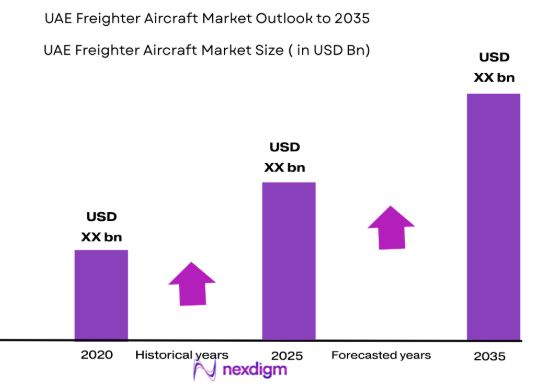
The UAE freighter aircraft market is experiencing significant growth driven by the expansion of e-commerce and the increasing demand for air cargo transport. Based on a recent historical assessment, the market size in 2024 is valued at approximately USD ~ billion, with major drivers including the strategic location of the UAE as a global air cargo hub, improvements in aviation infrastructure, and the rising adoption of air freight services for rapid delivery. Growth is also fueled by the need for high-capacity cargo aircraft and the adoption of advanced technologies in freight transport.
The UAE is positioned as a dominant player in the air cargo sector due to its strategic geographic location between Asia, Europe, and Africa. Dubai and Abu Dhabi are key cities leading the market, with world-class airports such as Dubai International Airport and Abu Dhabi International Airport serving as major air cargo hubs. These cities benefit from robust trade agreements, well-developed logistics infrastructure, and the presence of global players such as Emirates SkyCargo and Etihad Cargo, further cementing the UAE’s dominance in the freighter aircraft market.
By Product Type
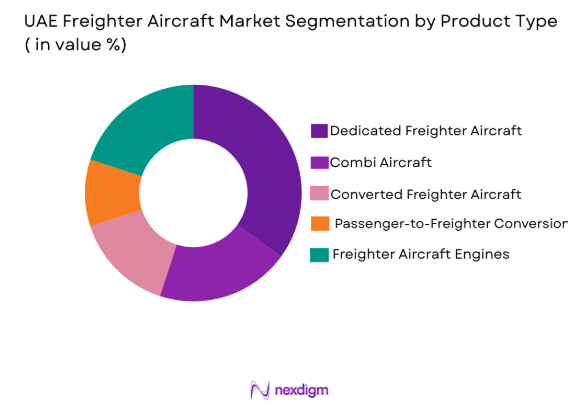
The UAE freighter aircraft market is segmented by product type into dedicated freighter aircraft, combi aircraft, converted freighter aircraft, passenger-to-freighter conversion systems, and freighter aircraft engines. Dedicated freighter aircraft have a dominant market share due to their ability to transport large volumes of cargo efficiently, making them highly suited for high-demand air cargo routes. These aircraft are increasingly favored for their optimized design for freight transport, which enables airlines to meet the growing demand for rapid, long-distance cargo delivery. The rise of global trade and the e-commerce sector further supports the dominance of dedicated freighters. Airlines are investing in these specialized aircraft to reduce turnaround times and enhance operational efficiency, especially for time-sensitive and high-value goods, reinforcing the market dominance of dedicated freighters in the UAE.
By Platform Type
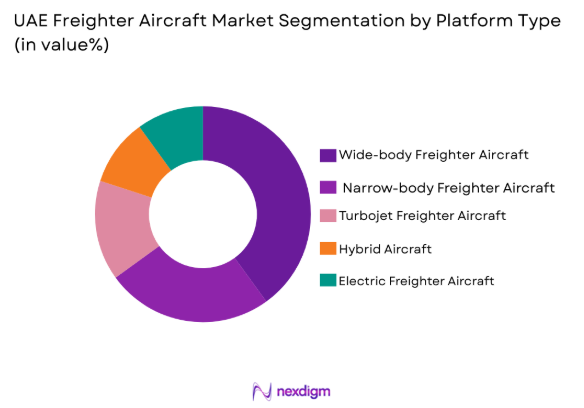
The UAE freighter aircraft market is segmented by platform type into wide-body freighter aircraft, narrow-body freighter aircraft, turbojet freighter aircraft, hybrid aircraft, and electric freighter aircraft. Wide-body freighter aircraft dominate the market share due to their large payload capacity and ability to handle high volumes of cargo, making them ideal for long-haul international routes. These aircraft are particularly well-suited for transporting oversized, heavy, or high-value goods, which are key segments in the UAE market. The UAE’s strategic location as a global trade hub further boosts the demand for wide-body freighters, as they provide the required flexibility and efficiency for both regional and international air freight services. The increasing adoption of hybrid and electric aircraft, however, shows a growing trend toward sustainability and reduced operational costs.
Competitive Landscape
The competitive landscape of the UAE freighter aircraft market is characterized by the presence of both regional and global players who contribute to the overall growth of the market. The sector is witnessing consolidation with major players, such as Emirates SkyCargo and Etihad Cargo, leveraging their extensive network and infrastructure. These companies are focusing on fleet expansion, innovation in aircraft technology, and partnerships to strengthen their position. The growing demand for faster and more efficient cargo solutions is compelling established players to adapt, while new entrants are bringing innovation in sustainable aviation technologies and aircraft conversions.
|
Company Name |
Establishment Year | Headquarters | Technology Focus | Market Reach | Key Products | Revenue | Additional Parameter |
| Emirates SkyCargo | 1985 | Dubai, UAE | ~ | ~ | ~ | ~ | ~ |
| Etihad Cargo | 2004 | Abu Dhabi, UAE | ~ | ~ | ~ | ~ | ~ |
| Air Arabia | 2003 | Sharjah, UAE | ~ | ~ | ~ | ~ | ~ |
| Qatar Airways Cargo | 1993 | Doha, Qatar | ~ | ~ | ~ | ~ | ~ |
| DHL Aviation | 1969 | Bonn, Germany | ~ | ~ | ~ | ~ | ~ |
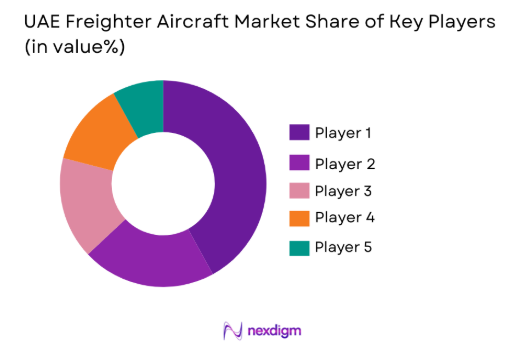
UAE Freighter Aircraft Market Analysis
Growth Drivers
Expansion of E-commerce & Online Retail:
The rapid growth of the e-commerce sector is one of the primary drivers of the UAE freighter aircraft market. The demand for faster delivery services, including international shipping, has led companies to seek efficient air cargo solutions. E-commerce companies rely heavily on air freight due to its speed and ability to handle large volumes of goods quickly. Additionally, the UAE’s strategic location as a trade and logistics hub, with major ports and airports like Dubai International Airport and Abu Dhabi International Airport, supports the growth of e-commerce-driven air cargo. As online shopping continues to expand globally, the demand for freighter aircraft is expected to grow significantly, benefiting the UAE’s aviation sector. The UAE’s infrastructure, including cutting-edge cargo terminals, plays a crucial role in accommodating the surge in e-commerce goods transportation.
Increased Air Cargo Volumes
The rising volumes of global trade and international freight transport have contributed to the growth of the UAE freighter aircraft market. As international trade continues to expand, air freight is becoming the preferred mode of transport for time-sensitive goods, especially high-value products and perishables. The UAE’s geographical position facilitates easy access to Asia, Europe, and Africa, making it a central hub for international freight. As cargo volumes increase, airlines are expanding their freighter fleets, adding more dedicated freighter aircraft to meet demand. Furthermore, global supply chain disruptions and the increased focus on resilience have further pushed demand for air cargo services, as companies seek faster alternatives to traditional sea freight. This expansion in air cargo volumes is expected to drive the continued demand for freighter aircraft in the UAE.
Market Challenges
High Operational & Maintenance Costs
One of the primary challenges facing the UAE freighter aircraft market is the high operational and maintenance costs associated with running and maintaining freighter aircraft. The specialized nature of freighter aircraft, including their larger payload capacity and dedicated infrastructure requirements, leads to high capital expenditures. Additionally, the maintenance costs for these aircraft are considerably higher than those for passenger planes, especially as older models in the fleet require more frequent maintenance and upgrades. The rising cost of fuel, combined with fluctuating global oil prices, further compounds the financial pressures on airlines operating freighter services. In order to remain competitive, operators must carefully manage their cost structure, which often means seeking efficiency improvements through fleet modernization and technology upgrades. These costs challenge smaller operators in the market and require significant investments to remain viable in a competitive market.
Regulatory Challenges & Air Traffic Restrictions
Regulatory challenges, including compliance with international aviation standards and air traffic control restrictions, represent significant barriers to the UAE freighter aircraft market. Air cargo operators must comply with a myriad of regulations, including those related to aircraft emissions, safety standards, and customs procedures. The UAE government and international aviation bodies, such as the International Civil Aviation Organization (ICAO), continue to tighten regulations, pushing airlines to invest in newer, more fuel-efficient aircraft. Additionally, air traffic restrictions imposed by governments to ensure airspace safety can limit the ability of freighter aircraft to meet the growing demand for fast, efficient transportation. The complexity of these regulations, combined with the constantly changing nature of international trade agreements, adds an additional layer of difficulty for UAE freighter aircraft operators. Adapting to these regulatory challenges while maintaining cost-effectiveness is a critical issue for the market.
Opportunities
Expansion in E-commerce Logistics Solutions
With the ongoing growth of the e-commerce sector, there is a substantial opportunity for the UAE freighter aircraft market to expand by offering tailored logistics solutions for online retailers. As demand for rapid, cross-border delivery continues to surge, the need for efficient air cargo services has never been more pronounced. E-commerce giants rely on speedy air freight to meet consumer expectations for fast delivery times, especially for high-demand products. By investing in purpose-built freighter aircraft that cater specifically to the e-commerce market, UAE airlines can tap into this expanding demand. Additionally, partnerships with e-commerce platforms to create dedicated air cargo solutions will help boost the market’s growth. E-commerce logistics solutions, coupled with advanced technologies such as artificial intelligence for route optimization and predictive maintenance, are poised to be key drivers for the future of the UAE freighter aircraft market.
Partnerships with Airlines & Logistics Providers
There is a significant opportunity for growth in the UAE freighter aircraft market through strategic partnerships between airlines and logistics providers. As global supply chains become increasingly interconnected, logistics companies are seeking reliable, fast, and flexible air transport solutions. By partnering with major cargo airlines, logistics providers can expand their service offerings and provide a more integrated solution for international freight transport. Airlines that operate freighter aircraft in the UAE can benefit from these partnerships by securing long-term contracts and increasing the volume of goods transported. Furthermore, airlines can tap into new growth markets by partnering with global logistics giants to create specialized routes for high-value and time-sensitive goods. These partnerships not only offer operational benefits but also enhance the UAE’s position as a central hub for global freight transport.
Future Outlook
The future outlook for the UAE freighter aircraft market over the next five years appears promising, with several growth drivers expected to shape the industry. The expansion of e-commerce, increased demand for express air freight, and the continuous development of aviation infrastructure in the UAE will contribute to market growth. Technological advancements in aircraft, including the use of sustainable fuel and automation in cargo management, will further enhance operational efficiency. As global trade continues to recover, the demand for freighter aircraft is expected to rise, positioning the UAE as a key player in the global air cargo industry.
Major Players
- Emirates SkyCargo
- Etihad Cargo
- Air Arabia
- Qatar Airways Cargo
- DHL Aviation
- Cargolux
- Singapore Airlines Cargo
- China Airlines Cargo
- Korean Air Cargo
- ANA Cargo
- Lufthansa Cargo
- FedEx Express
- UPS Airlines
- Turkish Airlines Cargo
- Cathay Pacific Cargo
Key Target Audience
- Investments and venture capitalist firms
- Government and regulatory bodies
- Airlines operating freighter aircraft
- E-commerce companies
- Third-party logistics providers
- Freight forwarding companies
- Military logistics units
- Aircraft leasing companies
Research Methodology
Step 1: Identification of Key Variables
Identify the key factors affecting the freighter aircraft market, including demand drivers, technological trends, and competitive dynamics.
Step 2: Market Analysis and Construction
Analyze the collected data to build market models and estimate the market size, trends, and segmentation.
Step 3: Hypothesis Validation and Expert Consultation
Validate the hypotheses through discussions with industry experts, stakeholders, and cross-referencing with secondary research.
Step 4: Research Synthesis and Final Output
Synthesize the results of the analysis, incorporating both qualitative and quantitative insights, and prepare the final report

- Executive Summary
- Research Methodology (Definitions, Scope, Industry Assumptions, Market Sizing Approach, Primary & Secondary Research Framework, Data Collection & Verification Protocol, Analytic Models & Forecast Methodology, Limitations & Research Validity Checks)

- Market Definition and Scope
- Value Chain & Stakeholder Ecosystem
- Regulatory / Certification Landscape
- Sector Dynamics Affecting Demand
- Strategic Initiatives & Infrastructure Growth

- Growth Drivers
Growth in E-commerce & Online Retail Demand
Increased Air Cargo Volumes
Strategic Geopolitical Location of the UAE
Technological Advancements in Aircraft Engines
Rising Investments in Aviation Infrastructure - Market Challenges
High Operational & Maintenance Costs
Regulatory Challenges & Air Traffic Restrictions
Limited Availability of Qualified Crew
Market Saturation in Certain Regions
Environmental Impact & Emissions Standards - Market Opportunities
Expansion of E-commerce Logistics Solutions
Partnerships with Airlines & Logistics Providers
Emerging Demand for Sustainable Aviation Solutions - Trends
Increase in Autonomous Air Freight Solutions
Growth in E-commerce-Driven Air Cargo
Integration of AI in Air Cargo Management
Technological Advancements in Fuel Efficiency
Shift Towards Sustainable & Green Aviation - Government Regulations & Defense Policy
Stringent Aviation Safety Standards
Aviation Emission Control Policies
Government Investments in Logistics & Aviation

- By Market Value, 2020-2025
- By Installed Units, 2020-2025
- By Average System Price, 2020-2025
- By System Complexity Tier, 2020-2025

- By System Type (In Value%)
Dedicated Freighter Aircraft
Combi Aircraft
Converted Freighter Aircraft
Passenger-to-Freighter Conversion Systems
Freighter Aircraft Engines - By Platform Type (In Value%)
Wide-body Freighter Aircraft
Narrow-body Freighter Aircraft
Turbojet Freighter Aircraft
Hybrid Aircraft
Electric Freighter Aircraft - By Fitment Type (In Value%)
OEM Freighter Aircraft
Aftermarket Freighter Aircraft
Upgraded Freighter Aircraft
Hybrid Freighter Aircraft
Aircraft Conversion Systems - By End User Segment (In Value%)
Freight Forwarders
Airlines & Cargo Operators
Military Logistics
E-commerce Companies
Third-party Logistics Providers - By Procurement Channel (In Value%)
Direct Procurement from Manufacturers
Third-party Distributors
Leasing Companies
Private Sector Procurement
Government Tenders - By Material / Technology (in Value%)
Carbon Fiber Reinforced Polymers
Lightweight Alloys
Advanced Aerodynamic Technologies
Hybrid & Electric Aircraft Technology
AI-based Cargo Management Systems

- Market structure and competitive positioning
- Market share snapshot of major players
- Cross Comparison Parameters (System Type, Platform Type, Procurement Channel, EndUser Segment, Fitment Type)
- SWOT Analysis of Key Competitors
- Pricing & Procurement Analysis
- Porter’s Five Forces
- Key Players
Emirates SkyCargo
Etihad Cargo
Dubai Air Cargo
Air Arabia
Gulf Air
Qatar Airways Cargo
Lufthansa Cargo
FedEx Express
UPS Airlines
DHL Aviation
Singapore Airlines Cargo
China Airlines Cargo
Cargolux Airlines International
Korean Air Cargo
ANA Cargo

- Growing Demand from E-commerce Logistics Providers
- Need for Faster Delivery in International Freight
- Increased Adoption of Technology by Airlines
- Shifting Focus on Cargo Specialization in Airlines

- Forecast Market Value, 2026-2035
- Forecast Installed Units, 2026-2035
- Price Forecast by System Tier, 2026-2035
- Future Demand by Platform, 2026-2035


 Request a Sample
 Ask for Customization
 Get a Quote
 Enquire Now