
 Download PDF
Market Overview
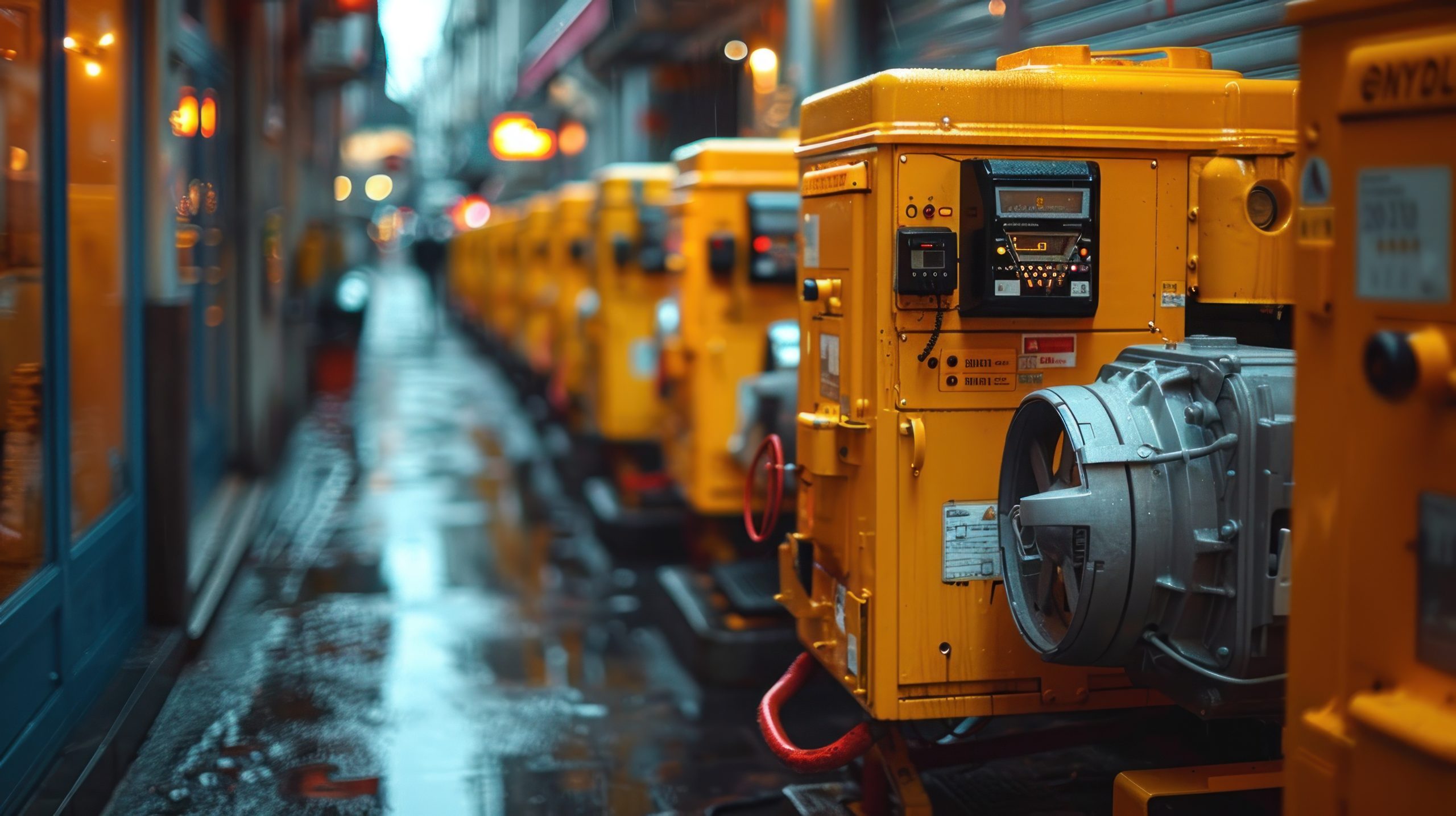
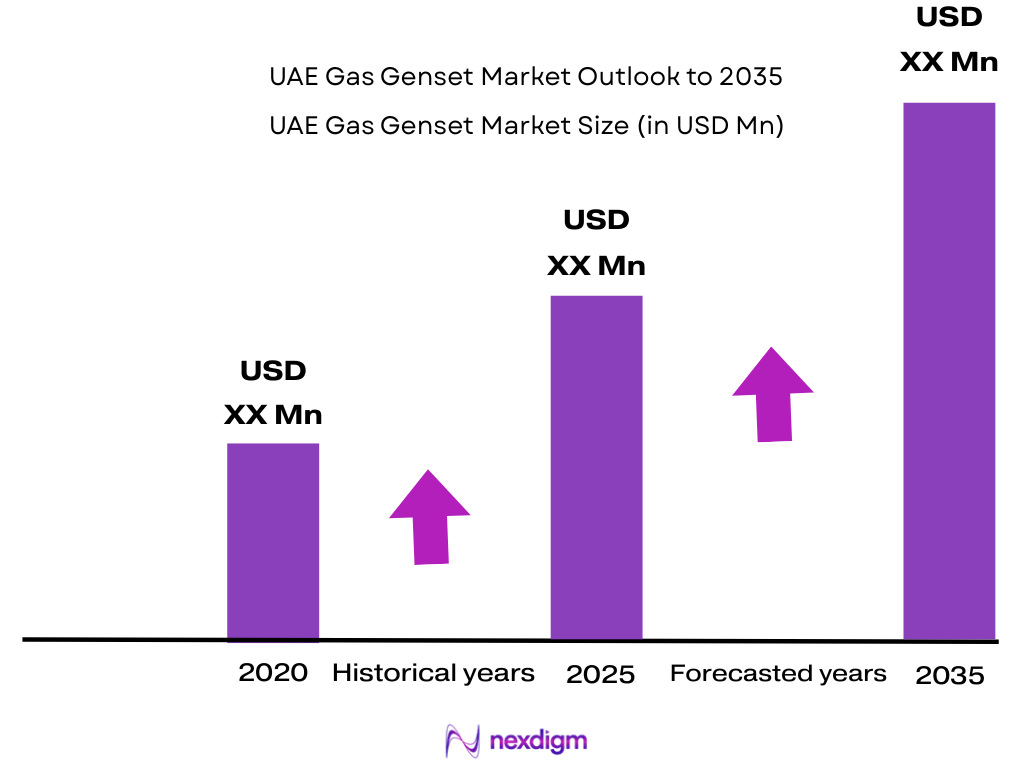
The UAE Gas Genset Market is valued at approximately ~ million, with the figure retained as a placeholder for proprietary validation. Underlying power demand remains substantial: Dubai’s electricity requirement increased from 56,516 GWh to 59,594 GWh, while peak demand reached 10,763 MW. Growth in commercial facilities, construction sites, industrial operations, hospitality assets and critical infrastructure supports demand for gas-based standby and distributed generation where lower-emission combustion and continuous fuel supply are priorities. Dubai and Abu Dhabi dominate UAE gas-genset demand because they concentrate commercial real estate, infrastructure projects, data-intensive facilities, industrial zones and oil-and-gas operations. Dubai electricity accounts expanded beyond 1.17 million and subsequently exceeded 1.25 million, while Abu Dhabi’s construction activity reached record levels amid sustained non-oil expansion. Dubai benefits from dense commercial infrastructure, whereas Abu Dhabi combines large industrial, petrochemical, energy and infrastructure clusters with direct access to the country’s extensive natural-gas ecosystem.
Market Segmentation
By Power Rating
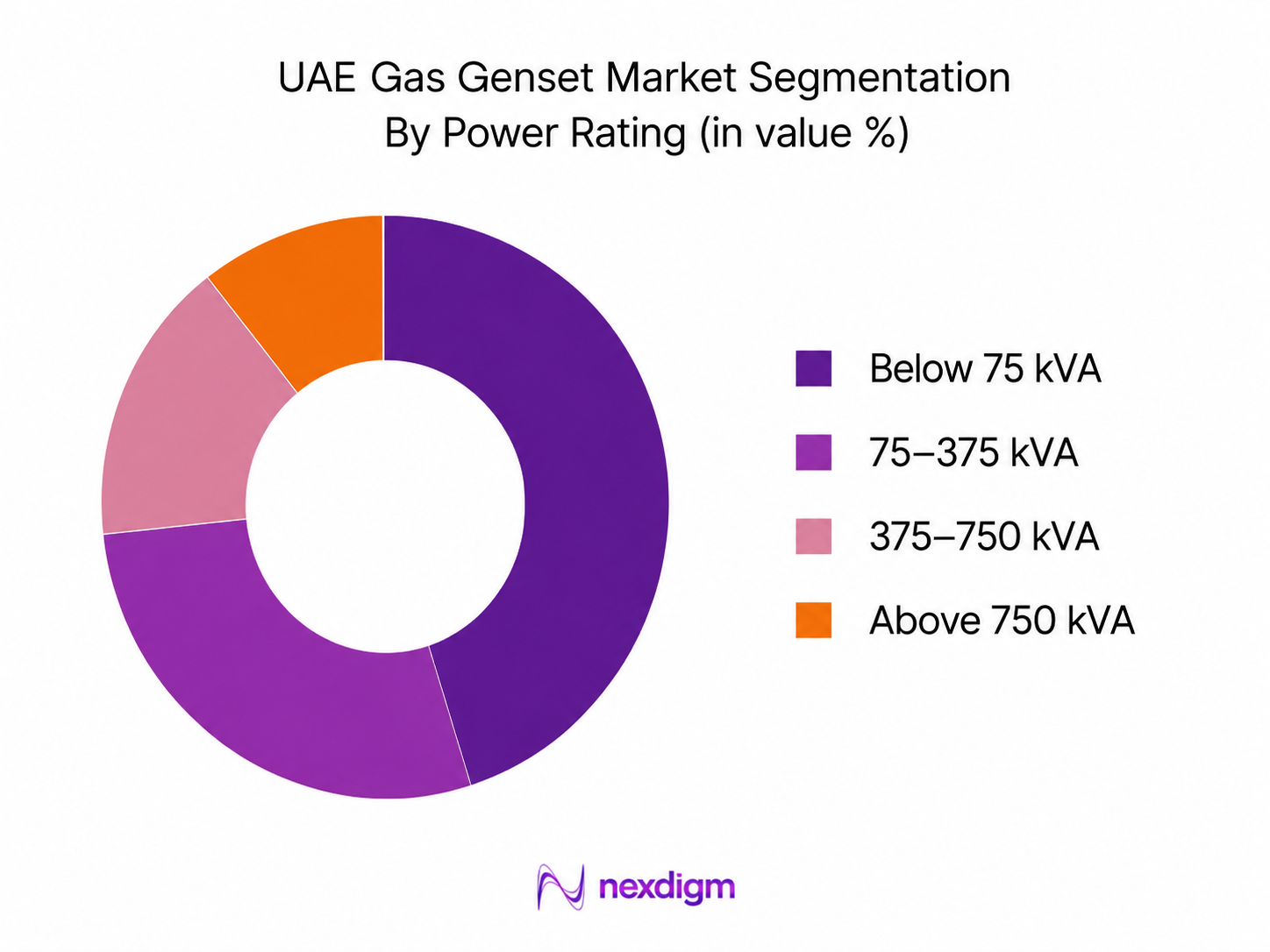
The UAE Gas Genset Market is segmented into below 75 kVA, 75–375 kVA, 375–750 kVA and above 750 kVA systems. The 75–375 kVA category is considered the dominant placeholder segment because it covers a broad range of commercial buildings, medium-sized construction facilities, workshops, warehouses, retail establishments and distributed standby applications. This rating range provides sufficient capacity for essential electrical loads without the footprint and integration complexity associated with large industrial units. UAE demand is increasingly shaped by growing electricity consumption, commercial development and infrastructure construction, while gas availability supports consideration of gaseous-fuel generators where pipeline connectivity is practical. Cummins, for example, offers natural-gas generator sets beginning at roughly 13 kW and extending into multi-megawatt configurations, illustrating the broad addressable range of gas generation technology. As commercial and industrial users seek lower local emissions and flexible standby solutions, mid-range gas gensets can address both emergency and distributed-power requirements.
By End-User Industry
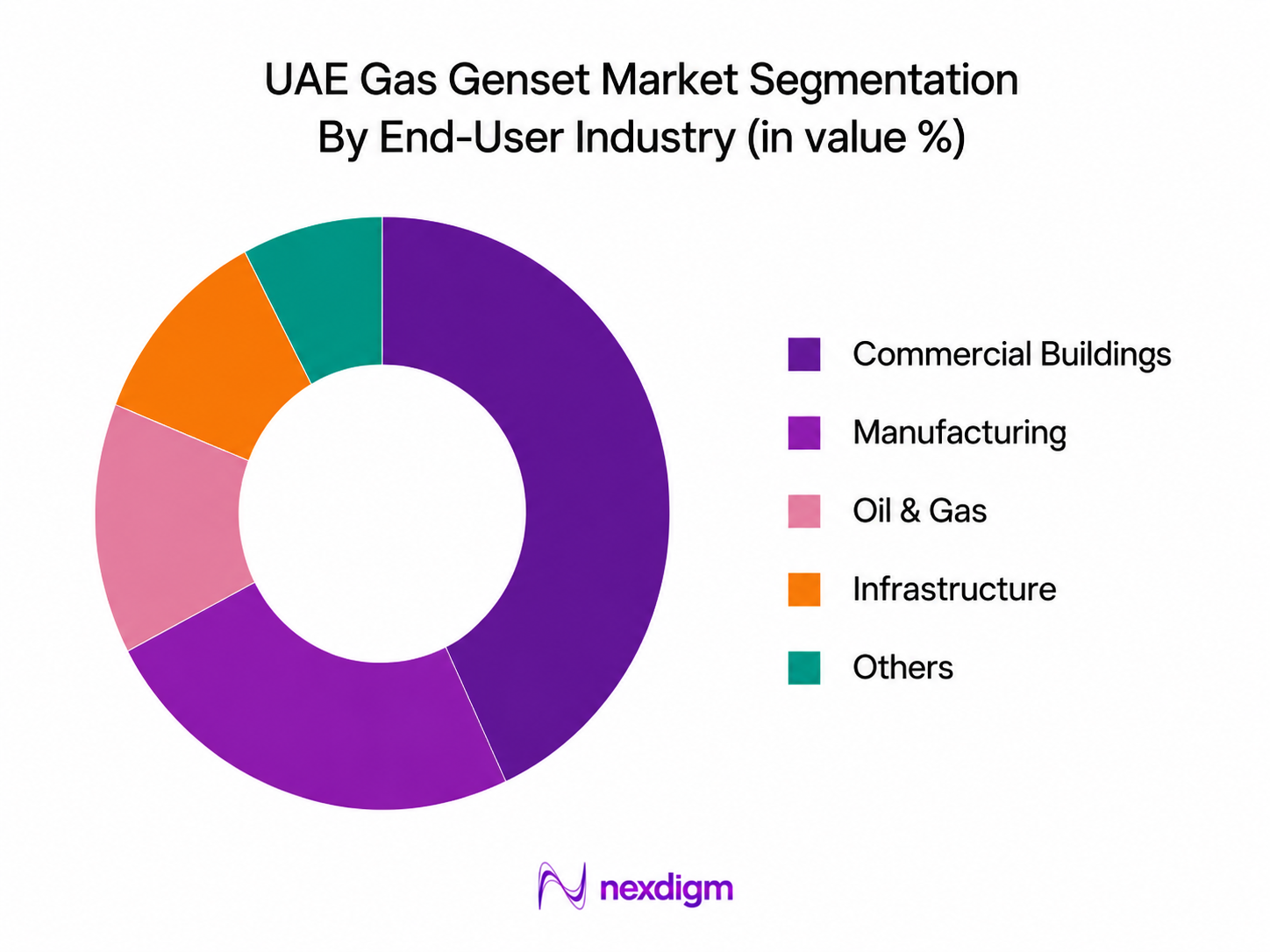
The UAE Gas Genset Market is segmented into commercial buildings and hospitality, industrial and manufacturing facilities, oil and gas operations, construction and infrastructure, residential/community applications and telecommunications/data facilities. Commercial buildings and hospitality represent the dominant placeholder segment, reflecting Dubai and Abu Dhabi’s concentration of hotels, shopping centres, offices, mixed-use developments and business infrastructure requiring reliable emergency power. Dubai alone recorded 59,594 GWh of electricity demand, highlighting the scale of the urban electrical load that commercial infrastructure must support. Gas gensets can be particularly relevant to properties with established natural-gas connections because they reduce on-site liquid-fuel storage requirements and can support cleaner combustion than conventional diesel standby equipment. Industrial users form another substantial segment because Abu Dhabi’s manufacturing and construction sectors continue to expand, while ADNOC Gas supplies approximately 60% of UAE natural-gas requirements, providing an established domestic fuel ecosystem. Critical facilities increasingly evaluate gas gensets together with UPS systems, batteries and grid connections as part of multi-layered resilience architectures.
Competitive Landscape
The UAE Gas Genset Market contains global power-generation specialists supported by local distributors, engineering contractors and power-system integrators. Cummins provides natural-gas gensets across a wide output range and operates regionally through Cummins Arabia. Rehlko, formerly Kohler Energy, competes in industrial and standby power through UAE distribution partners, while Generac has a Dubai-based regional presence through PR Middle East. Caterpillar and INNIO Jenbacher are particularly relevant to larger industrial, distributed-generation and CHP applications. Competition centres increasingly on fuel flexibility, load response, emissions performance, controls integration, service coverage and compatibility with hybrid power architectures.
| Company | Established | Headquarters | Gas Genset Capability | Fuel Flexibility | CHP Capability | Remote Monitoring | Typical UAE Applications | Regional Service Position |
| Cummins | 1919 | Columbus, Indiana, USA | ~ | ~ | ~ | ~ | ~ | ~ |
| Caterpillar | 1925 | Irving, Texas, USA | ~ | ~ | ~ | ~ | ~ | ~ |
| Rehlko | 1873 heritage | Wisconsin, USA | ~ | ~ | ~ | ~ | ~ | ~ |
| Generac | 1959 | Wisconsin, USA | ~ | ~ | ~ | ~ | ~ | ~ |
| INNIO Jenbacher | 1959 heritage | Jenbach, Austria | ~ | ~ | ~ | ~ | ~ | ~ |
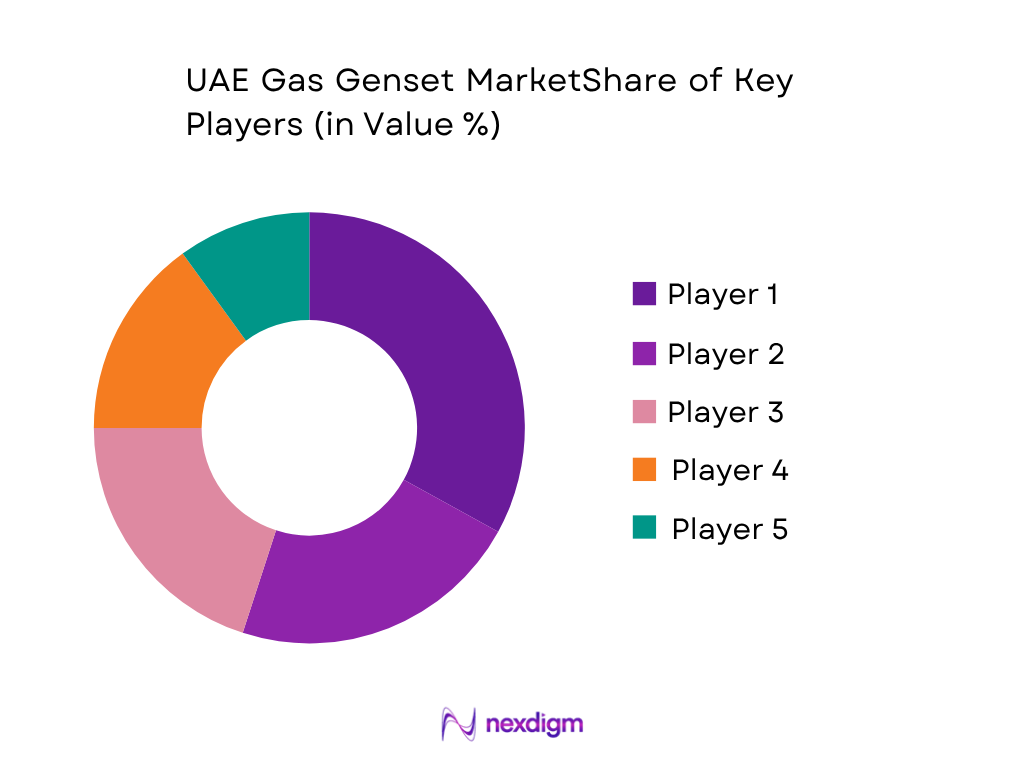
UAE Gas Genset Market Analysis
Growth Drivers
Expanding Domestic Natural Gas Supply and Power Demand
The UAEGas Genset Market is supported by the country’s substantial domestic gas infrastructure and steadily rising electricity requirement, which make natural-gas-powered generating equipment technically viable for vehicle workshops, logistics depots, industrial facilities, construction operations and mobile power applications. ADNOC Gas operates processing capacity of approximately 10 billion standard cubic feet of gas per day and supplies about 60 units out of every 100 units of domestic UAE gas requirements, giving the country an established fuel-production and distribution foundation for gas-fired equipment. More importantly, ADNOC Gas recorded 2,420 TBTU of domestic gas sales during 2025, compared with roughly 2,327 TBTU in 2024, indicating that domestic gas consumption continued expanding alongside economic and industrial activity. Electricity consumption provides another clear demand indicator. Dubai Electricity and Water Authority reported electricity demand of 59,594 GWh in 2024, compared with 56,516 GWh in 2023, while peak demand reached 10.76 GW. DEWA’s installed generating capacity simultaneously reached 17.179 GW, illustrating the scale of electricity-intensive commercial and infrastructure activity in one of the UAE’s principal economic centres. For the gas genset industry, these numbers matter because demand arises primarily where users require power away from permanent connections, redundancy for business-critical operations or flexible electricity during project commissioning and maintenance. Automotive service compounds, fleet maintenance depots, vehicle-testing facilities, construction sites and temporary workshops can use compact and medium-capacity gas gensets where natural gas or compressed gas supply is accessible. The UAE’s broader macroeconomic environment further supports these applications. World Bank data places national GDP at approximately USD 552.32 billion in 2024, with GDP per capita of USD 50,273.5, demonstrating a large high-income economy capable of sustaining continued investment in vehicles, infrastructure, logistics and commercial facilities. Domestic gas demand remained strong in 2025, with ADNOC Gas reporting higher sales volumes supported by UAE consumption and continued industrial activity. This combination of large-scale indigenous gas processing, expanding electricity usage and a substantial economic base supports gas gensets particularly in applications requiring longer operating hours than petrol units but greater flexibility than fixed grid-connected plants. Gas-fired generators can also serve as transitional assets for companies seeking lower local particulate emissions than conventional diesel equipment while retaining dispatchable power. Consequently, the availability of a deep domestic gas ecosystem is not merely an energy-sector indicator; it directly strengthens fuel accessibility, technical familiarity and servicing infrastructure for the UAE Automotive Gas Genset Market.
Expansion of Construction, Logistics and Power-Intensive Commercial Activity
Growth in construction, logistics, vehicle servicing and other power-intensive commercial activities creates another significant demand driver for the UAE Gas Genset Market because many such operations require temporary, mobile or redundant electricity. Federal Competitiveness and Statistics Centre national accounts show that construction remains one of the UAE’s largest non-oil economic activities, with annual output measured in well above AED 100 billion at current prices in the latest federal series. The importance of these projects is visible in Dubai’s electricity system, where energy consumption reached 59,594 GWh in 2024 and peak load reached 10.76 GW, while the utility’s customer base continued expanding alongside population and commercial development. Large construction sites typically establish electrical requirements before permanent connections are fully commissioned, creating demand for temporary generation used to power workshops, compressors, pumps, lighting, vehicle-maintenance areas and contractor facilities. Gas gensets can address these loads at sites where piped natural gas, CNG or LPG-equivalent gaseous fuel infrastructure is available. The automotive ecosystem benefits from the same pattern. Fleet compounds, bus and truck service yards, logistics warehouses and large vehicle workshops increasingly combine mechanical servicing with diagnostic equipment, battery charging, compressed-air systems, lifts, ventilation, cooling and digital fleet-management infrastructure, all of which increase dependence on continuous electricity. At the macro level, the UAE economy generated approximately USD 552.32 billion in output in 2024 according to the World Bank, providing a strong foundation for continued investment in transport and industrial facilities. Energy requirements are simultaneously becoming more concentrated. DEWA reported that Dubai’s installed capacity reached 17.179 GW, while the Ministry of Energy and Infrastructure stated that the UAE had surpassed 12 GW of clean-energy capacity by 2024, consisting of 6.8 GW of renewable generation and 5.6 GW of nuclear capacity. These large grid investments do not eliminate genset demand; rather, they shift it toward temporary power, emergency redundancy and specialised applications where uninterrupted power is commercially critical. Gas generators are particularly suited to users seeking multi-hour operation because fuel can potentially be supplied continuously through gas infrastructure instead of repeatedly transporting liquid fuel to the site. In automotive logistics applications, this can support workshops, refrigerated vehicle facilities, fleet-control centres and remote operational compounds. The strong domestic gas supply network adds further relevance: ADNOC Gas has access to around 10 billion standard cubic feet per day of gas-processing capacity and remains a central supplier to domestic industry. As UAE construction and commercial assets become larger and more technologically intensive, users increasingly require generators with automatic transfer systems, digital controls, paralleling capability and remote monitoring rather than basic standalone equipment. This expands the addressable opportunity from simple emergency generation toward integrated power-management solutions, supporting both equipment suppliers and specialised service providers.
Market Challenges
Exceptional Grid Reliability Restricting Routine Standby Genset Utilisation
One of the most significant constraints for the UAE Gas Genset Market is the exceptionally high reliability of the country’s electricity network, particularly in Dubai, which reduces the number of operating hours for emergency generators and weakens the economic case for backup equipment in many ordinary commercial premises. DEWA recorded electricity Customer Minutes Lost of only 0.94 minutes per customer during 2024, and this fell further to 0.82 minutes, or approximately 49 seconds, during 2025, according to results published in 2026. These figures are important for gas genset suppliers because a backup generator creates the greatest operational value where power interruptions are frequent or lengthy. In the UAE’s principal urban centres, however, businesses can receive grid electricity with very limited annual interruption. DEWA additionally reports electricity transmission and distribution losses of approximately 2 units for every 100 units transmitted, reflecting a highly efficient network supported by smart-grid technology and extensive infrastructure investment. The utility’s network uses artificial intelligence and Internet of Things technologies to monitor approximately 15 million data points each day, enabling faults to be identified and addressed rapidly. For the Automotive Gas Genset Market, this creates a structural challenge: automotive workshops, dealerships and standard fleet depots located inside developed industrial zones often do not experience sufficient outages to justify substantial dedicated standby capacity based solely on grid reliability concerns. Demand therefore becomes concentrated among critical-use facilities, remote sites, temporary projects, construction operations and users requiring independent redundancy under internal business-continuity standards. This is different from developing markets where weak grids create routine generator operation. The UAE’s strong macroeconomic position reinforces the contrast. The World Bank reports national GDP of approximately USD 552.32 billion in 2024, while Dubai alone operated 17.179 GW of installed generation capacity alongside 59,594 GWh of annual electricity demand. Grid capacity is therefore being expanded in parallel with economic development rather than allowing supply deficits to become a persistent generator-demand driver. Gas genset companies consequently face longer equipment replacement cycles because standby units may accumulate relatively few operating hours. Customers can also favour smaller systems sized only for critical loads instead of purchasing large generators intended to support entire facilities. Suppliers must respond by emphasizing resilience, automatic transfer capability, black-start readiness, maintenance contracts and mission-critical applications rather than relying on frequent outage-driven operation. The most viable opportunities therefore lie in specialised segments where even a 0.82-minute interruption can cause operational disruption—for example fleet-control facilities, automated workshops, data-intensive logistics depots, critical refrigeration systems and industrial testing equipment.
Clean-Energy Expansion and Increasing Emphasis on Low-Emission Power Systems
The UAE’s rapid development of nuclear, solar and other clean-energy capacity creates a second structural challenge for gas gensets because customers and regulators are increasingly focused on reducing combustion-based electricity generation where technically practical. The Ministry of Energy and Infrastructure reported that the UAE had surpassed 12 GW of clean-energy capacity by 2024, comprising approximately 6.8 GW of renewable generation and 5.6 GW of nuclear capacity. Dubai’s generation system has also expanded clean-energy capacity while maintaining a total installed base of 17.179 GW. This changing electricity mix means gas gensets increasingly compete not only against diesel generators but also against battery storage, solar-plus-storage systems and hybrid distributed-power solutions. For automotive workshops, fleet depots and logistics facilities, a conventional gas generator may still provide dependable multi-hour backup, but procurement decisions are becoming more sensitive to emissions performance, fuel efficiency, sound levels and compatibility with corporate decarbonisation objectives. The UAE’s Ministry of Energy and Infrastructure is simultaneously pursuing energy-demand-management programmes intended to reduce future industrial energy requirements and improve system efficiency. In 2024, the Ministry reiterated a national industrial-energy-efficiency programme associated with AED 14 billion in potential savings and 63 million tonnes of emissions reduction over the programme horizon. Although these are long-term policy targets rather than current market forecasts, they materially influence equipment specifications being considered by industrial users today. Gas genset manufacturers therefore face pressure to deliver lean-burn engines, electronically controlled air-fuel ratios, improved after-treatment, high-efficiency alternators and hybrid-ready controls rather than relying on basic gas-engine architecture. The broader economy remains supportive—World Bank data places UAE GDP at around USD 552.32 billion in 2024—but investment is increasingly directed toward infrastructure that combines reliability with lower emissions. The challenge is particularly relevant for small and medium gensets used in developed urban areas, where battery systems can respond instantly to short grid interruptions without exhaust emissions, fuel handling or engine maintenance. Since DEWA recorded only 0.94 minutes of Customer Minutes Lost during 2024, batteries can potentially cover many short interruption events that previously justified conventional standby equipment. Gas generators retain advantages for prolonged outages and sustained high loads, but their competitive position increasingly depends on integration into hybrid architectures where batteries handle instantaneous transitions and gas engines operate only during longer-duration events. Suppliers that cannot provide such integration may face declining relevance in premium UAE installations. The resulting market challenge is therefore not an immediate elimination of gas gensets, but a steady elevation of technical requirements around efficiency, emissions, digital control and hybrid compatibility.
Market Opportunities
Smart, Hybrid and Digitally Controlled Gas Genset Systems
Technological upgrading represents a major opportunity for the UAE Gas Genset Market because the country’s electricity, transport and industrial infrastructure is already moving toward digitally managed assets rather than basic standalone equipment. DEWA’s grid infrastructure analyses approximately 15 million data points every day using artificial intelligence and Internet of Things systems, illustrating the level of digitalisation increasingly expected across UAE energy assets. Gas genset suppliers can apply similar technology at a distributed level through remote diagnostics, automatic start-stop functionality, predictive maintenance, fuel-consumption monitoring, load forecasting and cloud-based fleet management. This is particularly relevant for automotive service groups and logistics operators managing multiple workshops, depots or commercial-vehicle sites across different emirates. Rather than maintaining each generator manually, operators can monitor engine temperature, oil pressure, gas flow, battery status, running hours and fault codes from a central control room. The opportunity is strengthened by the scale of UAE electricity consumption. Dubai alone consumed 59,594 GWh of electricity in 2024, with peak demand reaching 10.76 GW and installed generating capacity standing at 17.179 GW. These numbers demonstrate that modern UAE commercial facilities are increasingly electricity intensive, meaning even short interruptions can affect automated vehicle lifts, diagnostic systems, fleet-management servers, compressors, cold storage and charging infrastructure. Because DEWA recorded only 0.94 minutes of annual customer interruption during 2024, the role of the genset can evolve from frequent backup generation toward highly reliable contingency power integrated with battery storage. A hybrid architecture can use batteries or UPS systems to manage the first seconds or minutes of an interruption while an automated gas genset starts and assumes sustained loads. Such systems reduce unnecessary engine starts and allow the generator to operate nearer its efficient loading range. Domestic gas availability supports this configuration: ADNOC Gas has access to approximately 10 billion standard cubic feet per day of processing capacity and recorded 2,420 TBTU of domestic gas sales during 2025. Gas-engine manufacturers therefore have an opportunity to design equipment specifically for UAE operating conditions, including high ambient temperatures, dusty environments and long standby periods followed by rapid load acceptance. Digital controls can also support multiple-genset paralleling so operators install modular capacity rather than one oversized generator. For fleet depots and vehicle-service facilities, this enables power capacity to expand alongside operations. The future growth opportunity is therefore concentrated not in commodity gas engines but in intelligent power packages combining gas generation, battery storage, automatic transfer switches, remote monitoring, predictive service and energy-management software.
Critical Infrastructure, Logistics Hubs and Temporary Power Applications
The strongest future opportunity for the UAE Gas Genset Market lies in applications where reliable power is required outside normal grid conditions rather than in routine household backup. The UAE economy generated approximately USD 552.32 billion in GDP during 2024, and continuing expansion across logistics, construction, transportation, industrial processing and digital infrastructure is creating more electricity-dependent operational sites. Dubai’s annual electricity demand reached 59,594 GWh, compared with 56,516 GWh one year earlier, while peak system load reached 10.76 GW. These current indicators provide a strong foundation for temporary and mission-critical distributed generation even though the public grid itself remains highly reliable. Large fleet yards, vehicle distribution centres, port-related logistics operations, temporary automotive workshops and project commissioning sites often require electricity before permanent supply is available or need independent redundancy for safety-critical functions. Natural-gas gensets can serve these applications where users have access to piped gas or transported gaseous fuels and want longer-duration operation without maintaining substantial diesel inventories. The fuel ecosystem is substantial: ADNOC Gas supplies a major portion of domestic requirements and has access to approximately 10 billion standard cubic feet per day of processing capacity. Domestic sales reached 2,420 TBTU during 2025, highlighting the scale of the country’s existing industrial gas consumption. Another opportunity comes from power-intensive digital and automated infrastructure entering vehicle and logistics facilities. Modern depots increasingly use automated warehousing systems, telematics servers, workshop diagnostics, charging equipment, refrigerated vehicle support, access-control systems and security networks. A power failure lasting even less than one minute can interrupt software-controlled workflows despite the overall reliability of the grid. DEWA’s 0.94 minutes of Customer Minutes Lost during 2024 therefore does not eliminate the need for resilience at businesses where every interruption carries operational consequences. Construction sites provide another target application because gensets can be deployed temporarily and removed once grid connection is established, increasing opportunities for rental fleets and mobile packages instead of only permanent equipment sales. UAE construction remains a major non-oil economic activity according to Federal Competitiveness and Statistics Centre national accounts, while government infrastructure programmes continue to require temporary electricity during development and commissioning. Gas-genset suppliers can target this opportunity with containerised sets, trailer-mounted packages, parallel-ready units and high-ambient-temperature cooling systems. Rental companies can further differentiate through maintenance, remote monitoring and rapid replacement guarantees. The future commercial opportunity therefore centres on high-value applications where reliable, transportable and sustained power is required despite an excellent public grid, allowing gas gensets to function as specialised resilience assets rather than commodity emergency equipment.
Future Outlook
The UAE Gas Genset Market is projected to expand at approximately ~ CAGR during 2026–2035, with growth increasingly linked to distributed generation, critical-power resilience, infrastructure construction and demand for comparatively lower-emission combustion technologies. Natural gas will retain strategic relevance because the UAE possesses an extensive domestic gas supply system. ADNOC Gas supplies approximately 60% of national gas requirements and has access to processing capacity of around 10 billion standard cubic feet per day, supporting a substantial fuel base for industrial energy applications. Gas gensets are also expected to become more integrated with battery storage, solar PV, advanced transfer switches and digital energy-management systems. Instead of operating as isolated emergency assets, larger systems will increasingly function within hybrid microgrids and CHP installations where facilities require reliability, efficiency and lower emissions. At the same time, the UAE’s aggressive clean-energy programme creates competitive pressure. The UAE Energy Strategy 2050 calls for AED 150–200 billion of energy investment, while Dubai continues expanding solar generation. Gas gensets will therefore need higher efficiency, hydrogen compatibility and tighter emissions control to remain competitive within the country’s decarbonising power system.
Major Players
- Cummins Inc.
- Caterpillar Inc.
- Rehlko Power Systems
- Generac Power Systems
- INNIO Jenbacher
- MWM
- MAN Energy Solutions
- Rolls-Royce mtu
- Wärtsilä
- HIMOINSA
- PRAMAC
- AKSA Power Generation
- Mitsubishi Heavy Industries
- Yanmar Energy System
- Clarke Energy
Key Target Audience
- Gas genset manufacturers and power-system OEMs
- EPC contractors and electrical system integrators
- Commercial real estate developers and facility operators
- Oil, gas, petrochemical and industrial operators
- Data-centre, telecom and critical-infrastructure operators
- Natural-gas distributors and distributed-energy developers
- Investments and venture capitalist firms
- Government and regulatory bodies (Ministry of Energy and Infrastructure, Ministry of Industry and Advanced Technology, Dubai Electricity and Water Authority, Department of Energy Abu Dhabi, Dubai Municipality)
Research Methodology
Step 1: Identification of Key Variables
The initial phase constructs an ecosystem map covering gas-genset manufacturers, engine suppliers, UAE distributors, EPC contractors, gas suppliers, utilities, industrial facilities, commercial buildings and critical infrastructure. Key variables include installed power rating, natural-gas availability, operating hours, standby versus prime usage, heat-recovery configuration, fuel pressure, emissions requirements, load factor, redundancy architecture and aftermarket service requirements.
Step 2: Market Analysis and Construction
Historical market demand is constructed using a combined top-down and bottom-up framework. Electricity-demand indicators, commercial construction, manufacturing activity, gas availability and major infrastructure development are evaluated alongside generator shipments, project installations and distributor portfolios. Dubai electricity demand increasing from 56,516 GWh to 59,594 GWh provides one measurable proxy for the expansion of electricity-dependent assets requiring resilient backup architectures.
Step 3: Hypothesis Validation and Expert Consultation
Market hypotheses are validated through CATIs and structured discussions with genset manufacturers, UAE distributors, EPC companies, electrical contractors, facility managers and industrial users. Interviews assess preferred kVA bands, gas availability, transfer-switch requirements, engine technology, service intervals, CHP economics, sound attenuation, emissions compliance, project lead times and competition from diesel generators, batteries and UPS systems.
Step 4: Research Synthesis and Final Output
Demand-side modelling is reconciled with supplier capabilities and the UAE gas ecosystem. ADNOC Gas’s domestic supply position, DEWA’s electricity-demand statistics, Abu Dhabi industrial expansion and current generator product ranges provide benchmarks for triangulation. Scenario analysis then assesses how clean-energy investment, battery deployment, solar generation and hydrogen-compatible technologies may alter the role of gas gensets across standby, prime-power and CHP applications.

- Executive Summary
- Research Methodology (Market Definitions and Assumptions, Gas Genset Scope, Natural Gas-LPG-APG Classification, Top-Down Market Sizing, Bottom-Up Unit Assessment, Installed kVA Capacity Analysis, Import and Distributor Mapping, End-User Demand Assessment, Supplier Interviews, EPC and Rental Company Interviews, Product Portfolio Mapping, Data Triangulation, Forecasting Framework, Limitations and Future Conclusions)

- Definition and Scope
- Market Evolution and Industry Genesis
- Development of Gas-Based Distributed Power
- Natural Gas Genset Industry Ecosystem
- Gas Supply-to-Power Generation Value Chain

- Growth Drivers (Natural Gas Infrastructure Availability, Expansion of Data Centres, Increasing Critical Power Requirements, Industrial and Manufacturing Expansion, Oil and Gas Field Power Demand, Growth of Commercial Buildings, Demand for Lower-Emission Alternatives to Diesel Gensets)
- Market Challenges (Gas Connection Availability, Gas Pressure Requirements, Initial System Engineering Complexity, Heat Derating, Fuel Quality Variability, Competing Battery Storage Technologies, Gas Engine Maintenance Requirements)
- Market Opportunities (Flare Gas Utilisation, Data Centre Microgrids, CHP Deployment, Hydrogen-Ready Engines, Gas-BESS Hybridisation, Power-as-a-Service, Industrial Captive Generation)
- Market Trends (Lean-Burn Engines, Modular Gas Power Plants, Remote Monitoring, Predictive Maintenance, Gas-BESS Hybridisation, Hydrogen Readiness, Containerised Generation)
- SWOT Analysis
- Porter’s Five Forces Analysis
- PESTLE Analysis

- By Market Value (2020-2025)
- By Unit Sales (2020-2025)
- By Installed Genset Capacity (2020-2025)

- By Power Rating (In Value %)
Below 50 kVA
50–125 kVA
126–250 kVA
251–500 kVA
501–1,000 kVA
Above 1,000 kVA - By Gas Fuel Type (In Value %)
Pipeline Natural Gas
Compressed Natural Gas
Liquefied Natural Gas
Liquefied Petroleum Gas
Associated Petroleum Gas / Flare Gas - By End-User Industry (In Value %)
Commercial Buildings
Data Centres and Digital Infrastructure
Oil and Gas Facilities
Industrial and Manufacturing Facilities
Hotels and Hospitality Properties
- By Emirate (In Value %)
Abu Dhabi
Dubai
Sharjah
Ras Al Khaimah
Ajman
Fujairah
Umm Al Quwain

- Market Positioning of Major Gas Genset Suppliers
- Cross Comparison Parameters (Gas Genset Power Range, Electrical Efficiency, Natural Gas/LNG/LPG/APG Fuel Compatibility, Lean-Burn Engine Capability, High-Ambient Derating Performance, Remote Monitoring and Predictive Maintenance Capability, UAE Dealer and Service Network, CHP and Gas-BESS Integration Capability)
- SWOT Analysis of Major Players
- Detailed Profiles of Major Companies
Caterpillar
Cummins
INNIO Jenbacher
MWM
Rolls-Royce Power Systems / mtu
Wärtsilä
MAN Energy Solutions
Generac Power Systems
Rehlko
HIMOINSA
Aggreko
Guascor Energy
Mitsubishi Heavy Industries
Yanmar Energy Systems
Clarke Energy

- Data Centre Backup and Captive Power Requirements
- Oil and Gas Field Power Requirements
- Commercial Building Emergency Power Requirements
- Industrial Captive Power Requirements
- Hotel and Hospitality Backup Power Requirements

- By Market Value (2026-2035)
- By Unit Sales (2026-2035)
- By Installed Genset Capacity (2026-2035)


 Request a Sample
 Ask for Customization
 Get a Quote
 Enquire Now