

 Download PDF
 Download PDF
Market Overview
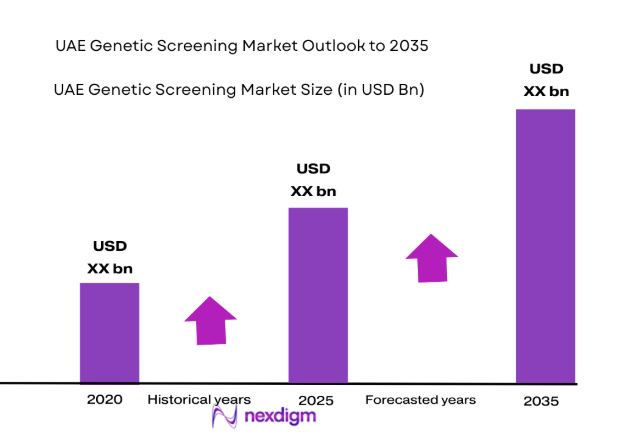
The UAE Genetic Screening market is valued at approximately USD ~ billion, driven by rapid advancements in genetic testing technologies and increasing demand for personalized healthcare. Based on a recent historical assessment, the market is expanding due to innovations in diagnostic tools and government initiatives supporting healthcare modernization. Additionally, the rising prevalence of genetic disorders and the adoption of genetic screening in routine healthcare are contributing to the market’s growth. The availability of more accurate and cost-effective testing solutions has made genetic screening accessible to a wider population, further accelerating market demand.
Dubai and Abu Dhabi are leading the market, benefiting from their well-established healthcare infrastructure and the UAE’s emphasis on becoming a global healthcare hub. The government’s investment in healthcare innovation and the strategic push for advanced diagnostic capabilities are vital drivers of market growth. These cities are also key destinations for medical tourism, attracting patients from across the region and beyond for genetic diagnostics, making them pivotal in the country’s genetic screening landscape.
Market Segmentation
By Product Type
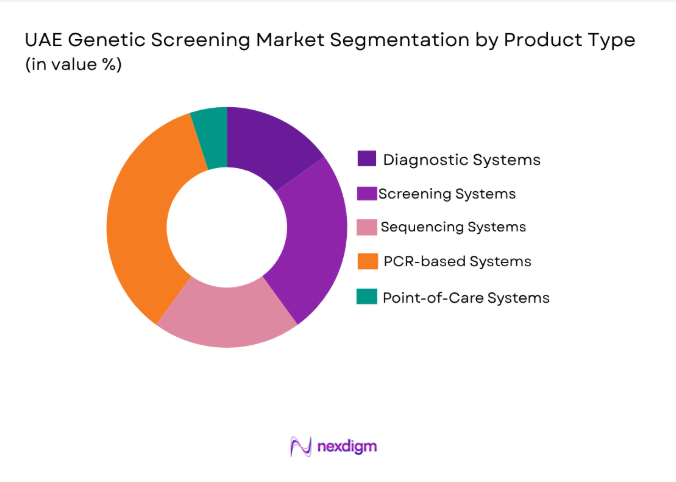
The UAE Genetic Screening market is segmented by product type into diagnostic systems, screening systems, sequencing systems, PCR-based systems, and point-of-care systems. Recently, PCR-based systems have gained a dominant market share due to their reliability, rapid testing capabilities, and increasing demand for personalized healthcare solutions. PCR technology enables quicker detection and more accurate results, making it a preferred option for genetic screening in both clinical and home settings. Moreover, its affordability and ease of use contribute to its market dominance.
By Platform Type
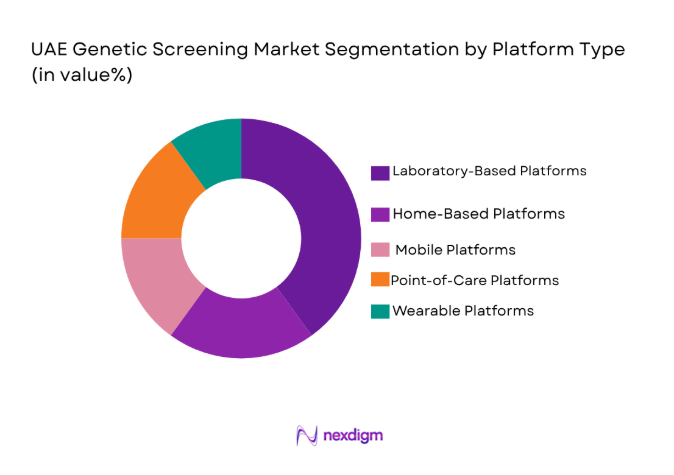
The UAE Genetic Screening market is segmented by platform type into laboratory-based platforms, home-based platforms, mobile platforms, point-of-care platforms, and wearable platforms. Recently, laboratory-based platforms have dominated the market due to their high accuracy, reliability, and integration with advanced diagnostic systems. These platforms are widely used in clinical settings for comprehensive genetic testing and are preferred for their ability to handle complex genetic analyses. The robust infrastructure in hospitals and diagnostic centers in cities like Dubai and Abu Dhabi contributes to the dominance of laboratory-based platforms in the UAE market.
Competitive Landscape
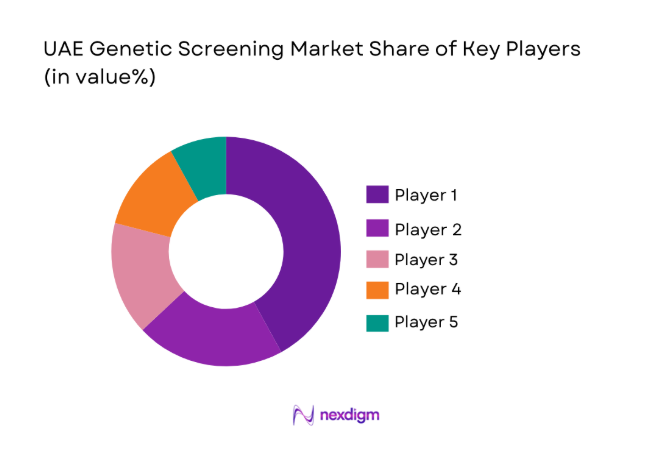
The competitive landscape of the UAE Genetic Screening market is shaped by key players who dominate the market through advanced technological innovations and strategic partnerships. The market is consolidating with major international companies entering into partnerships with local providers, contributing to market expansion. Companies are focused on strengthening their product portfolios and enhancing their service offerings, while government initiatives are also playing a crucial role in driving industry growth.
| Company Name | Establishment Year | Headquarters | Technology Focus | Market Reach | Key Products | Revenue | Market-Specific Parameter |
| Thermo Fisher Scientific | 1956 | Waltham, USA | ~ | ~ | ~ | ~ | ~ |
| Illumina | 1998 | San Diego, USA | ~ | ~ | ~ | ~ | ~ |
| Abbott Laboratories | 1888 | Chicago, USA | ~ | ~ | ~ | ~ | ~ |
| QIAGEN | 1984 | Hilden, Germany | ~ | ~ | ~ | ~ | ~ |
| F. Hoffmann-La Roche AG | 1896 | Basel, Switzerland | ~ | ~ | ~ | ~ | ~ |
UAE Genetic Screening Market Analysis
Growth Drivers
Technological Advancements in Genetic Testing
Technological advancements in genetic testing have emerged as a major driving force for the UAE Genetic Screening market. The introduction of cutting-edge innovations in sequencing technologies, including next-generation sequencing (NGS) and polymerase chain reaction (PCR)-based systems, has significantly enhanced the speed, precision, and affordability of genetic tests. These innovations make genetic screening more accessible to a wider population, fueling increased adoption. Additionally, the integration of artificial intelligence (AI) and machine learning (ML) in genetic testing systems has brought transformative improvements to the diagnosis of genetic disorders. AI and ML are revolutionizing genetic testing by enabling more accurate interpretation of genetic data, faster results, and earlier detection of potential health risks. This shift is also enabling the development of personalized medicine, which tailors treatments based on individual genetic profiles. The continuous evolution of technology ensures that genetic screening services will become increasingly efficient and sophisticated, addressing the growing demand for precision medicine. As these technologies become more advanced, they offer solutions that meet a diverse range of healthcare needs, further propelling market growth in the UAE.
Government Support for Healthcare Innovation
The UAE government’s strategic vision to build a world-class healthcare system has been a cornerstone in driving the demand for genetic screening technologies. Through national initiatives such as the UAE Vision 2021 and the Dubai Health Strategy, the government has laid the groundwork for transforming the healthcare sector with advanced technologies. A major focus of these initiatives is improving healthcare quality and access by fostering innovation, including in the field of genetic testing. This includes substantial funding for genetic research, which supports the development and integration of cutting-edge diagnostic tools and genetic testing systems. Government policies are also aimed at promoting the adoption of these technologies across the public and private healthcare sectors, creating a conducive environment for genetic screening services. By making healthcare more accessible, improving patient outcomes, and encouraging the use of personalized medicine, the UAE government is actively shaping the future of genetic testing. This strong support from government authorities continues to drive the growth of the genetic screening market in the region.
Market Challenges
High Cost of Genetic Testing
A significant challenge for the UAE Genetic Screening market is the high cost of advanced genetic testing technologies. Despite the continuous improvements in testing systems, including PCR and sequencing technologies, these services remain relatively expensive. The cost of implementing such systems, coupled with the price of tests, presents a significant barrier to the widespread adoption of genetic screening, particularly for healthcare providers catering to lower-income populations. Additionally, patients may be reluctant to undergo genetic testing due to the perceived high costs, especially if the potential benefits of testing are not immediately clear. As genetic testing becomes a standard practice in medical diagnostics, it is crucial for stakeholders in the market to find ways to lower costs and make these services more affordable. If costs continue to remain high, it could limit the overall growth potential of the market, particularly for broader population coverage and integration into routine healthcare services. Developing more cost-effective solutions will be key to overcoming this challenge and ensuring the widespread adoption of genetic testing in the UAE.
Regulatory Hurdles and Standardization
Another significant challenge for the UAE Genetic Screening market is the evolving regulatory landscape. While there have been strides in advancing the adoption of genetic screening technologies, the regulatory framework for these technologies remains in a state of development. As new genetic screening technologies are introduced to the market, it is essential that they meet stringent safety and quality standards to ensure their efficacy and reliability. However, the lack of a unified regulatory approach and the inconsistency in testing protocols across different regions in the UAE can cause confusion for healthcare providers and patients alike. This fragmentation slows the process of market entry for new technologies, as companies must navigate various regulations to secure approvals. Furthermore, the absence of standardized procedures in genetic testing can result in discrepancies in test results, affecting the quality of diagnoses and treatment recommendations. Therefore, regulatory challenges and a lack of standardization in genetic testing processes remain a significant barrier to the widespread adoption and growth of genetic screening in the UAE market.
Opportunities
Expansion of Personalized Medicine
The ongoing shift towards personalized medicine in the UAE represents a significant opportunity for the genetic screening market. Personalized medicine, which tailors medical treatment based on an individual’s genetic makeup, has gained traction globally, and the UAE is no exception. As healthcare providers increasingly adopt genetic testing to guide the treatment of diseases, the demand for genetic screening is expected to rise. Genetic tests play a vital role in identifying individuals at risk for certain genetic conditions, enabling earlier intervention and more effective treatment options. Additionally, the UAE government’s support for personalized medicine initiatives, such as funding for genetic research and the integration of advanced technologies into healthcare systems, will further propel this trend. Personalized medicine is poised to become a cornerstone of modern healthcare in the UAE, presenting a growing opportunity for companies offering genetic screening technologies. By developing specialized tests and expanding service offerings, companies in the market can position themselves to capitalize on this burgeoning trend.
Increasing Medical Tourism
As a leading healthcare destination in the Middle East, the UAE is witnessing an increase in medical tourism, further contributing to the growth of the genetic screening market. Patients from across the globe travel to the UAE for high-quality medical care, and genetic screening is becoming an essential component of the diagnostic process. The country’s state-of-the-art healthcare infrastructure, coupled with its growing reputation as a global medical hub, has positioned the UAE to attract more international patients seeking advanced diagnostic services that may not be available in their home countries. The UAE’s comprehensive healthcare offerings, including genetic testing and personalized medicine, are increasingly being recognized as key attractions for medical tourists. As the country continues to strengthen its position as a healthcare leader in the region, the demand for genetic screening services from international patients is expected to increase. This trend presents a significant opportunity for the market, as healthcare providers seek to meet the diagnostic needs of a diverse, global patient base.
Future Outlook
Over the next five years, the UAE Genetic Screening market is expected to see significant growth driven by technological advancements and increasing government support for healthcare innovation. The shift towards personalized medicine will continue to increase the demand for genetic tests, with innovations in sequencing and diagnostic platforms driving market expansion. Additionally, as the cost of genetic testing decreases and regulatory frameworks become more defined, broader adoption is anticipated. These trends, combined with rising healthcare awareness and a growing medical tourism industry, position the market for sustained growth.
Major Players
- Thermo Fisher Scientific
- Illumina
- Abbott Laboratories
- QIAGEN
- F. Hoffmann-La Roche AG
- PerkinElmer
- Quest Diagnostics
- Bio-Rad Laboratories
- Oxford Nanopore Technologies
- Genomic Health, Inc.
- Bertin Technologies
- Merck KGaA
- Myriad Genetics, Inc.
- Genoox
Key Target Audience
- Investments and venture capitalist firms
- Government and regulatory bodies
- Hospitals and diagnostic centers
- Healthcare providers
- Medical device manufacturers
- Biotechnology firms
- Pharmaceutical companies
Research Methodology
Step 1: Identification of Key Variables
Identify the critical market variables affecting the UAE Genetic Screening market, including technological trends, demand drivers, and regulatory policies.
Step 2: Market Analysis and Construction
Analyze the market data and build a comprehensive model to evaluate the size, trends, and opportunities in the market.
Step 3: Hypothesis Validation and Expert Consultation
Validate the hypotheses through expert consultations and interviews with industry leaders to refine the market forecasts.
Step 4: Research Synthesis and Final Output
Synthesize the findings into a final report, highlighting key insights and actionable recommendations for stakeholders.

- Executive Summary
- Research Methodology (Definitions, Scope, Industry Assumptions, Market Sizing Approach, Primary & Secondary Research Framework, Data Collection & Verification Protocol, Analytic Models & Forecast Methodology, Limitations & Research Validity Checks)

- Market Definition and Scope
- Value Chain & Stakeholder Ecosystem
- Regulatory / Certification Landscape
- Sector Dynamics Affecting Demand
- Strategic Initiatives & Infrastructure Growth

- Growth Drivers
Rising Prevalence of Genetic Disorders
Technological Advancements in Genetic Testing
Government Support for Healthcare Innovation - Market Challenges
High Cost of Genetic Screening
Limited Awareness and Education
Regulatory and Compliance Challenges - Market Opportunities
Expansion of Personalized Medicine
Integration of AI in Genetic Testing
Growing Demand for Preventive Healthcare - Trends
Increased Adoption of Non-Invasive Testing
Shift Towards Point-of-Care Genetic Screening - Government Regulations
- SWOT Analysis
- Porter’s Five Forces

By Market Value, 2020-2025
By Installed Units, 2020-2025
By Average System Price, 2020-2025
By System Complexity Tier, 2020-2025

- By System Type (In Value%)
Diagnostic Systems
Screening Systems
Sequencing Systems
PCR-based Systems
Point-of-Care Systems - By Platform Type (In Value%)
Laboratory-Based Platforms
Home-Based Platforms
Mobile Platforms
Point-of-Care Platforms
Wearable Platforms - By Fitment Type (In Value%)
Integrated Solutions
Standalone Solutions
Modular Solutions
Hybrid Solutions - By End User Segment (In Value%)
Hospitals
Clinics
Diagnostic Centers

- Market Share Analysis
- Cross Comparison Parameters (System Type, Platform Type, Procurement Channel, End User Segment, Fitment Type, Technology Adoption, Regulatory Compliance)
- SWOT Analysis of Key Competitors
- Pricing & Procurement Analysis
- Key Players
- Thermo Fisher Scientific
Illumina, Inc.
Abbott Laboratories
LabCorp
QIAGEN
F. Hoffmann-La Roche AG
PerkinElmer
Quest Diagnostics
Bio-Rad Laboratories
Oxford Nanopore Technologies
Genomic Health, Inc.
Bertin Technologies
Merck KGaA
Myriad Genetics, Inc.
Genoox

- Growing Adoption of Genetic Testing in Healthcare
- Increased Focus on Preventive Healthcare by Government
- Rise in Personalized Healthcare Solutions
- Collaborations Between Public and Private Healthcare Entities

- Forecast Market Value, 2026-2035
- Forecast Installed Units, 2026-2035
- Price Forecast by System Tier, 2026-2035
- Future Demand by Platform, 2026-2035


 Request a Sample
 Ask for Customization
 Get a Quote
 Enquire Now