

 Download PDF
Market Overview
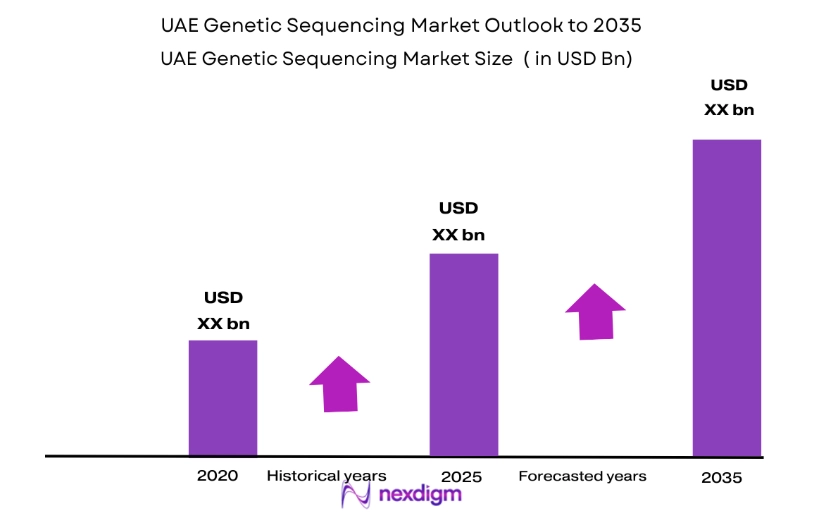
The UAE genetic sequencing market is expected to experience significant growth, driven by advancements in sequencing technologies, increased healthcare investments, and the growing demand for personalized medicine. Based on a recent historical assessment, the market size is estimated to be valued at USD ~ million. Key factors contributing to this growth include a growing population, rising demand for genetic testing in diagnostics, and government initiatives to modernize the healthcare sector, with an increased focus on genomics research and genetic data analysis.
Dominant countries in the region such as the UAE have emerged as key players in the genetic sequencing market due to their well-established healthcare infrastructure, strong investments in biotechnology, and progressive regulatory frameworks that support the adoption of advanced medical technologies. The UAE’s status as a medical hub for the Middle East, its world-class healthcare facilities, and government-backed initiatives aimed at expanding genomics research contribute significantly to the market’s dominance. Additionally, Dubai’s strategic position as a global healthcare destination plays a pivotal role in attracting both local and international demand for genetic sequencing services.
Market Segmentation
By Product Type:
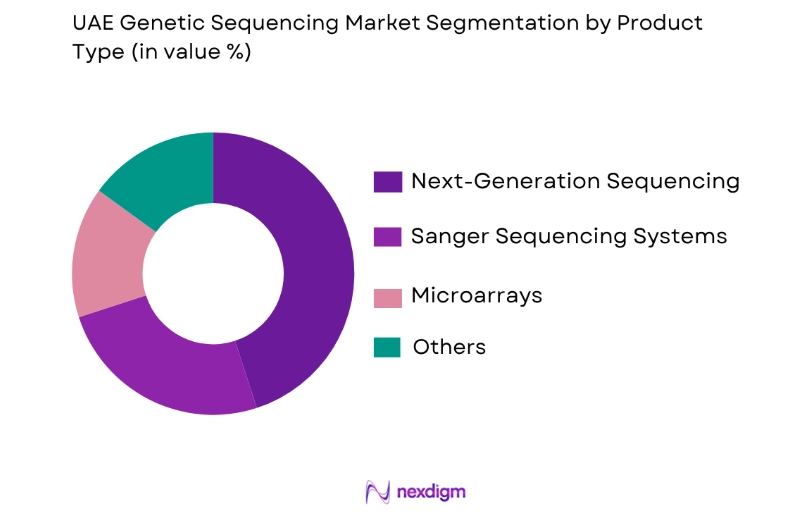
The UAE genetic sequencing market is segmented by product type into next-generation sequencing (NGS) systems, Sanger sequencing systems, microarrays, and others. Among these, next-generation sequencing (NGS) systems dominate the market due to their ability to provide high-throughput, accurate, and cost-effective sequencing capabilities. With increasing demand for personalized medicine and the rise of genetic testing for diagnostics, NGS systems have become the preferred choice. The significant reduction in the cost of sequencing, coupled with technological advancements, has made NGS systems more accessible and widely adopted by healthcare providers and research institutions in the UAE.
By End-User Segment:
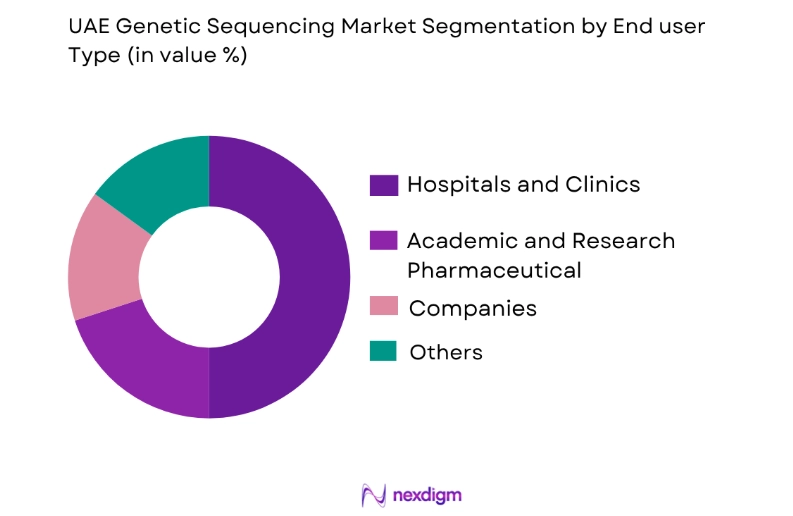
The UAE genetic sequencing market is segmented by end-user segment into hospitals and clinics, academic and research institutions, pharmaceutical companies, and others. Among these, hospitals and clinics dominate the market due to the increasing adoption of genetic sequencing for diagnostic purposes, especially in oncology, cardiology, and rare genetic disorders. The growing availability of advanced medical technologies, along with government support for health infrastructure development, has led to hospitals and clinics leading the adoption of genetic sequencing technologies in the UAE. These facilities are also expanding their genetic testing offerings in response to rising patient demand for precision medicine.
Competitive Landscape
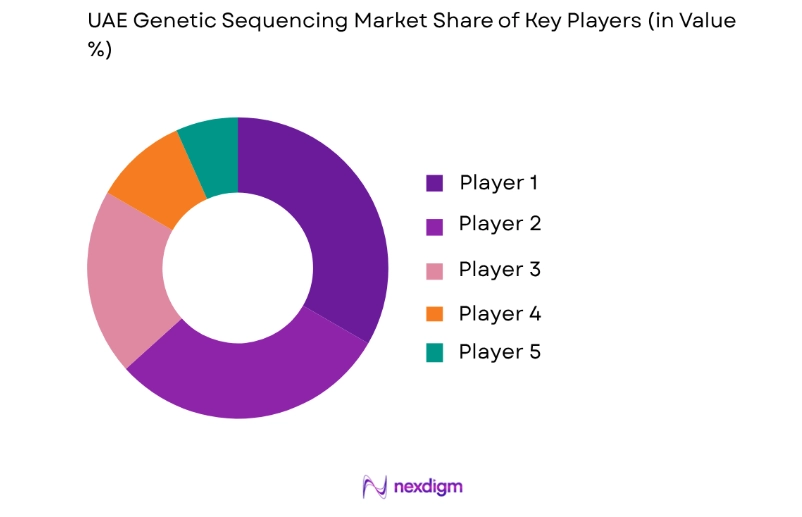
The competitive landscape of the UAE genetic sequencing market is characterized by both international and regional players who are driving technological advancements and expanding market share. The market is increasingly consolidating as leading companies partner with healthcare providers and research institutions to deliver comprehensive sequencing solutions. The influence of major players such as Illumina, Thermo Fisher, and Roche is strong, with these companies offering a wide range of sequencing platforms and services.
| Company Name | Establishment Year | Headquarters | Technology Focus | Market Reach | Key Products | Revenue (USD) | Market-Specific Parameter |
| Illumina | 1998 | San Diego, USA | ~ | ~ | ~ | ~ | ~ |
| Thermo Fisher | 1956 | Waltham, USA | ~ | ~ | ~ | ~ | ~ |
| Roche | 1896 | Basel, Switzerland | ~ | ~ | ~ | ~ | ~ |
| PacBio | 2004 | Menlo Park, USA | ~ | ~ | ~ | ~ | ~ |
| Qiagen | 1984 | Hilden, Germany | ~ | ~ | ~ | ~ | ~ |
UAE Genetic Sequencing Market Analysis
Growth Drivers
Technological Advancements in Sequencing:
The continued technological evolution of genetic sequencing platforms, particularly NGS systems, is one of the main growth drivers for the UAE genetic sequencing market. These advancements have led to the increased efficiency, accuracy, and cost-effectiveness of sequencing, making it more accessible to both healthcare providers and research institutions. NGS technologies allow for high-throughput sequencing and can deliver faster results with greater accuracy than traditional methods such as Sanger sequencing. This has fueled the adoption of genetic sequencing in diagnostics, especially for personalized medicine applications, which require detailed genetic information. Additionally, innovations such as single-cell sequencing and CRISPR-Cas9 gene editing technologies are expected to enhance the market further by enabling more precise, targeted therapies. The decreasing cost of sequencing technologies also plays a crucial role, as it opens the door to genetic testing for a broader patient base. As these technologies become more advanced and affordable, their adoption is likely to increase, driving the market forward in the coming years.
Government Support and Healthcare Initiatives:
Another key growth driver is the significant support from the UAE government for the healthcare sector. The UAE’s healthcare system is heavily invested in modernizing and expanding its capabilities, and genomics plays a central role in these plans. The government has introduced several initiatives to incorporate genetic testing and precision medicine into the national healthcare strategy, such as the Dubai Genome Project, which aims to sequence the genomes of UAE citizens and use this data to improve healthcare outcomes. This support includes funding for research, facilitating regulatory approvals for genomic technologies, and encouraging partnerships between government entities and private sector players. The increasing focus on personalized medicine and the growing demand for genomic data to guide treatment decisions has further reinforced the government’s commitment to the development of genetic sequencing capabilities within the UAE. These initiatives create an environment that fosters growth and innovation within the genetic sequencing market.
Market Challenges
High Costs of Implementation:
One significant challenge facing the UAE genetic sequencing market is the high initial cost of implementing genetic sequencing technologies. Although the cost of sequencing has dropped considerably in recent years, the upfront investment for purchasing the necessary sequencing platforms, reagents, and associated equipment remains a barrier for smaller healthcare providers and institutions. The expense of maintaining and operating these technologies, along with the need for skilled personnel to manage and interpret genetic data, adds additional financial burdens for facilities in the UAE. This challenge is particularly prominent in the public healthcare sector, where budgets may be limited. Additionally, the complexity of the technologies involved means that training is required for medical professionals, further increasing the overall cost. These high costs can slow the widespread adoption of genetic sequencing, particularly in the private sector, where the economic viability of such technologies may be questioned without clear financial returns. As a result, overcoming the cost barriers remains a key challenge for expanding the genetic sequencing market in the UAE.
Regulatory Barriers and Data Privacy Concerns:
Regulatory hurdles are another challenge faced by the UAE genetic sequencing market. While the UAE has made strides in creating a favorable regulatory environment for healthcare technologies, the rapid pace of development in genomics and genetic testing has led to some regulatory gaps. The need for standardized protocols for data collection, testing, and reporting in genetic sequencing is essential to ensure reliability and consistency across the sector. Additionally, data privacy remains a significant concern as genetic data is highly sensitive. The UAE’s regulatory frameworks, although evolving, still face challenges related to safeguarding patient privacy and preventing unauthorized access to genetic information. Furthermore, international regulations, such as the General Data Protection Regulation (GDPR) in the EU, can impact the way genetic data is shared across borders, posing challenges for global collaborations. Addressing these regulatory and privacy concerns will be vital for unlocking the full potential of the genetic sequencing market in the UAE.
Opportunities
Expansion of Personalized Medicine Applications:
A significant opportunity in the UAE genetic sequencing market lies in the continued expansion of personalized medicine. With the UAE’s well-developed healthcare infrastructure and growing demand for customized treatments, the market for genetic sequencing services aimed at personalized medicine is set to increase. As the medical community continues to recognize the importance of genetic data in tailoring treatments to individual patients, genetic sequencing is becoming integral to identifying the most effective therapies based on a patient’s genetic makeup. This trend is especially evident in oncology, where genomic sequencing is used to identify specific mutations in cancer cells, enabling more targeted treatment plans. The use of genetic sequencing in rare diseases, where treatment options may be limited, also holds significant potential. By leveraging sequencing data, healthcare providers can identify rare genetic mutations and potentially develop personalized treatment plans. The UAE’s ongoing investment in healthcare innovation and research makes it an ideal environment for the growth of personalized medicine, offering ample opportunities for genetic sequencing technologies to expand in this sector.
Increased Demand for Non-Invasive Testing:
Another promising opportunity in the UAE genetic sequencing market is the growing demand for non-invasive genetic testing, especially for prenatal testing and early disease detection. Non-invasive prenatal testing (NIPT) has gained significant traction globally due to its ability to detect genetic conditions such as Down syndrome without the need for invasive procedures like amniocentesis. In the UAE, where there is a growing demand for safer healthcare solutions, the market for non-invasive genetic testing is expected to expand rapidly. Additionally, advances in liquid biopsy, which uses blood samples to detect cancer-related genetic mutations, are expected to drive market growth. These non-invasive techniques not only reduce risks associated with traditional testing methods but also increase patient comfort and compliance. As the UAE healthcare system becomes more focused on preventive care and early disease detection, non-invasive genetic testing is likely to experience substantial growth, presenting an exciting opportunity for market players.
Future Outlook
Over the next five years, the UAE genetic sequencing market is expected to experience significant growth, driven by the continued advancements in sequencing technologies, increased government investments in healthcare, and the growing demand for personalized medicine. Technological developments such as the increased use of AI in genetic data analysis and the growth of non-invasive genetic testing are expected to shape the market. Regulatory frameworks will continue to evolve, supporting the adoption of genetic sequencing technologies in both clinical and research settings. With a focus on healthcare innovation and patient-centric care, the UAE is poised to remain a leading hub for genetic sequencing in the Middle East.
Major Players
- Illumina
- ThermoFisher
- Roche
- PacBio
- Qiagen
- Becton Dickinson
- Bio-Rad Laboratories
- Agilent Technologies
- LGCBiosearchTechnologies
- Oxford Nanopore Technologies
- PerkinElmer
- Danaher Corporation
- F. Hoffmann-La Roche
- Abbott Laboratories
- Merck Group
Key Target Audience
- Investments and venture capitalist firms
- Government and regulatory bodies
- Healthcare providers and medical institutions
- Pharmaceutical and biotechnology companies
- Hospitals and diagnostic laboratories
- Research institutions and academiccenters
- Medical technology firms
- Health insurance companies
Research Methodology
Step 1: Identification of Key Variables
Key variables affecting the genetic sequencing market in the UAE are identified, including technological advancements, regulatory frameworks, and market demand.
Step 2: Market Analysis and Construction
Data on market trends, competitive landscape, and historical growth are analyzed to construct a detailed market overview.
Step 3: Hypothesis Validation and Expert Consultation
Industry experts are consulted to validate hypotheses regarding market growth, technological adoption, and regulatory impacts.
Step 4: Research Synthesis and Final Output
Final market analysis is synthesized, incorporating expert feedback and verified data, producing the final report.

- Executive Summary
- Research Methodology (Definitions, Scope, Industry Assumptions, Market Sizing Approach, Primary & Secondary Research Framework, Data Collection & Verification Protocol, Analytic Models & Forecast Methodology, Limitations & Research Validity Checks)

- Market Definition and Scope
- Value Chain & Stakeholder Ecosystem
- Regulatory / Certification Landscape
- Sector Dynamics Affecting Demand

- Growth Drivers
Increase in Government Investment in Healthcare
Rising Demand for Personalized Medicine
Technological Advancements in Sequencing Technologies - Market Challenges
High Initial Investment Costs
Complexity in Data Management and Analysis
Regulatory and Compliance Challenges - Market Opportunities
Expanding Clinical Applications in Oncology
Increased Adoption of Genetic Testing in Personalized Medicine
Growing Demand for Non-invasive Prenatal Testing - Trends
Advancements in Single-cell Sequencing
Rise of CRISPR-Cas9-based Gene Editing
Integration of Artificial Intelligence in Genetic Sequencing - Government Regulations
- SWOT Analysis of Key Competitors

- By Market Value, 2020-2025
- By Installed Units, 2020-2025
- By Average System Price, 2020-2025
- By System Complexity Tier, 2020-2025

- By System Type (In Value%)
Next-generation Sequencing (NGS) Systems
Sanger Sequencing Systems
Real-time PCR Systems
Microarrays
Capillary Electrophoresis Systems - By Platform Type (In Value%)
Automated Sequencing Platforms
Portable Sequencing Platforms
High-throughput Sequencing Platforms
Benchtop Sequencing Platforms
Cloud-based Sequencing Platforms - By Fitment Type (In Value%)
Clinical Applications
Research Applications
Forensic Applications
Agricultural Applications
Personalized Medicine Applications - By EndUser Segment (In Value%)
Hospitals & Diagnostic Laboratories
Academic & Research Institutes
Pharmaceutical & Biotechnology Companies
Contract Research Organizations (CROs)

- Market Share Analysis
- CrossComparison Parameters (System Type, Platform Type, Procurement Channel, EndUser Segment, Fitment Type)
- SWOT Analysis of Key Competitors
- Pricing & Procurement Analysis
- Porter’s Five Forces
- Key Players
Illumina
Thermo Fisher Scientific
Pacific Biosciences
Oxford Nanopore Technologies
Qiagen
Bio-Rad Laboratories
Agilent Technologies
Roche
Veritas Genetics
LGC Biosearch Technologies
F. Hoffmann-La Roche
Becton Dickinson
GenMark Diagnostics
PerkinElmer
SOPHiA GENETICS

- Hospitals Increasing Adoption of Genetic Testing
- Research Institutes’ Focus on Genomic Research
- Biotech Firms Developing Genomic-based Drugs
- CROs Expanding Genetic Research Services

- Forecast Market Value, 2026-2035
- Forecast Installed Units, 2026-2035
- Price Forecast by System Tier, 2026-2035
- Future Demand by Platform, 2026-2035


 Request a Sample
 Ask for Customization
 Get a Quote
 Enquire Now