
 Download PDF
Market Overview
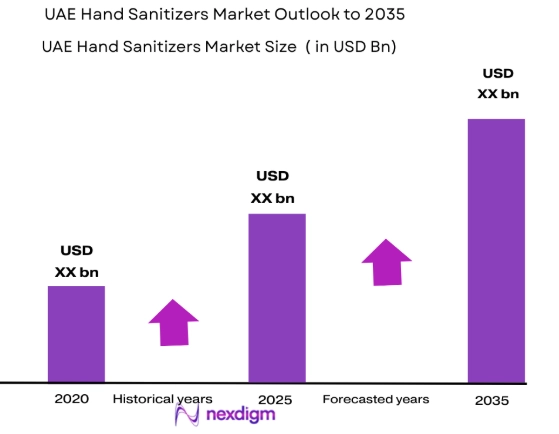
The UAE Hand Sanitizers market is expected to see significant growth in the near future, driven primarily by heightened consumer awareness around hygiene and health safety. Based on a recent historical assessment, the market size is estimated to reach USD ~ billion, as the demand for sanitizers continues to rise across various sectors, especially retail and healthcare. This growth is further supported by the increased frequency of hand washing and sanitizing practices among consumers due to public health initiatives and government regulations. Retail sales and online platforms also play a vital role in boosting product accessibility, contributing to the market’s expansion.
The UAE’s urban centers, particularly Dubai, Abu Dhabi, and Sharjah, are dominant in driving the hand sanitizers market due to their robust infrastructure, large population, and thriving tourism industry. These cities benefit from their strategic positioning as commercial hubs and their fast adoption of international health standards. The dominance is further attributed to the high disposable income of residents and tourists, along with growing investments in healthcare facilities and educational institutions. Increased awareness around personal hygiene during the COVID-19 pandemic has also played a crucial role in elevating the demand for hand sanitizers in these regions.
Market Segmentation
By Product Type
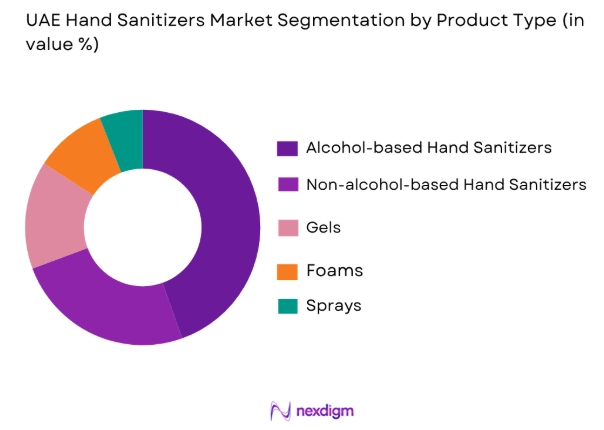
The UAE Hand Sanitizers market is segmented by product type into alcohol-based hand sanitizers, non-alcohol-based hand sanitizers, gels, foams, and sprays. Recently, alcohol-based hand sanitizers have taken a dominant share due to their high effectiveness in eliminating bacteria and viruses. Factors such as consumer preference for quick-drying and portable solutions have led to the increased adoption of alcohol-based sanitizers. The presence of major brands and easy availability across retail and online platforms also contribute to their market leadership. Furthermore, alcohol-based sanitizers are perceived as more effective in high-risk environments, such as healthcare and retail spaces, further driving demand.
By Distribution Channel
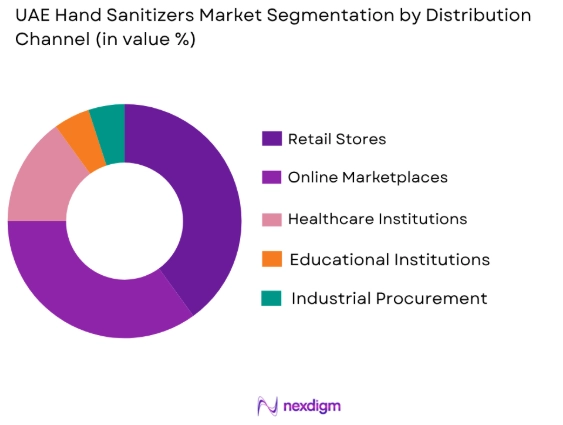
The market is segmented by distribution channel into retail stores, online marketplaces, healthcare institutions, educational institutions, and industrial procurement. Retail stores, including pharmacies and supermarkets, have captured a significant portion of the market share due to easy consumer access and physical proximity. Online marketplaces also play a crucial role, with e-commerce platforms offering convenience and accessibility, further boosting sales. The growth in the retail and online distribution channels is supported by the rising demand from both individual consumers and businesses prioritizing hygiene. Furthermore, institutional and corporate purchases continue to play an important role, particularly in healthcare and large corporations.
Competitive Landscape
The competitive landscape of the UAE Hand Sanitizers market is marked by a mix of global and local players. Major international brands like Procter & Gamble, Reckitt Benckiser, and Unilever dominate the market, leveraging their established brand presence, distribution networks, and consumer trust. Consolidation within the industry is evident, as these companies continue to strengthen their position through strategic acquisitions and partnerships with local distributors. Smaller local players are also expanding their market presence by offering niche products or focusing on eco-friendly and organic alternatives. The competition is further intensified by continuous product innovation and pricing strategies aimed at capturing a larger share of the growing market.
| Company Name | Establishment Year | Headquarters | Technology Focus | Market Reach | Key Products | Revenue | Additional Parameter |
| Procter & Gamble | 1837 | Cincinnati, US | ~ | ~ | ~ | ~ | ~ |
| Reckitt Benckiser | 1823 | Slough, UK | ~ | ~ | ~ | ~ | ~ |
| Unilever | 1929 | London, UK | ~ | ~ | ~ | ~ | |
| Henkel | 1876 | Düsseldorf, Germany | ~ | ~ | ~ | ~ | ~ |
| Gojo Industries | 1946 | Akron, US | ~ | ~ | ~ | ~ | ~ |
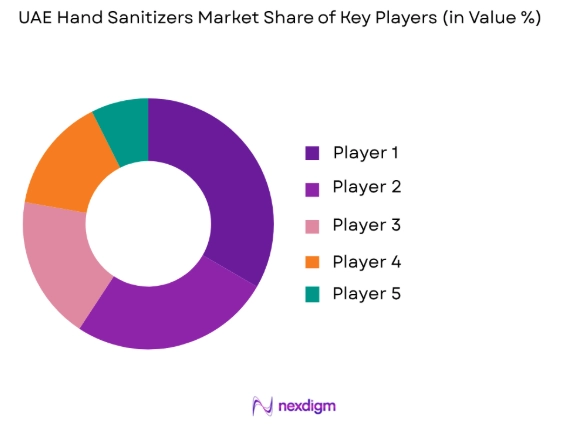
UAE Hand Sanitizers Market Analysis
Growth Drivers
Increasing Hygiene Awareness
Increasing awareness around the importance of hygiene and cleanliness is one of the key growth drivers for the UAE Hand Sanitizers market. With the rising global health concerns and the constant threat of infectious diseases, consumers have become more conscious of hygiene practices, particularly hand sanitization. Governments, healthcare organizations, and international bodies have played an instrumental role in promoting personal hygiene standards through campaigns and public health initiatives. Moreover, the ongoing challenges posed by COVID-19 have created a heightened sense of urgency in maintaining cleanliness, further bolstering the market for sanitizers. As businesses, healthcare facilities, and educational institutions look to maintain safer environments, the demand for hand sanitizers will continue to rise, contributing to the growth of this market.
Regulatory Support and Government Initiatives
Another key growth driver for the UAE Hand Sanitizers market is the support from regulatory bodies and government initiatives aimed at ensuring public safety and hygiene. The UAE government has implemented strict health regulations and standards for the production, distribution, and sale of hand sanitizers, ensuring that these products meet the required safety standards. Additionally, the regulatory frameworks and quality certifications in place further assure consumers of the efficacy and safety of these products. The increased availability of hand sanitizers in public places, schools, hospitals, and other key institutions, supported by government policies, will further drive their adoption across all sectors.
Market Challenges
Supply Chain Disruptions
One of the significant challenges affecting the UAE Hand Sanitizers market is the frequent disruptions in the supply chain. The production of hand sanitizers depends heavily on key raw materials like alcohol and other chemical components, which are often subject to price volatility and supply shortages. These fluctuations have a direct impact on the production costs and, ultimately, the retail prices of hand sanitizers. The global supply chain constraints, further exacerbated by geopolitical events and natural disasters, create instability in the availability of raw materials, hindering manufacturers’ ability to meet demand in a timely manner. Consequently, this poses a challenge for both manufacturers and consumers, as the supply of sanitizers may not always align with peak demand periods.
Regulatory Barriers and Compliance
The strict regulatory requirements surrounding the production and sale of hand sanitizers in the UAE pose another challenge for market participants. Manufacturers must comply with multiple national and international regulations related to product formulation, labeling, packaging, and marketing. These regulations are often complex and may vary from one market to another, creating an additional layer of compliance costs. Furthermore, companies must stay updated with the evolving regulations in response to changing health protocols, particularly in the wake of global health crises. Failure to comply with these standards can result in costly fines, product recalls, and damage to brand reputation, all of which affect the long-term profitability of companies in the market.
Opportunities
Expansion in E-Commerce
With the rise of online shopping, e-commerce presents a significant growth opportunity for the UAE Hand Sanitizers market. Online retail platforms provide an easy, accessible, and convenient way for consumers to purchase hand sanitizers, especially as online shopping habits continue to grow. E-commerce platforms allow for increased reach to a broader consumer base, beyond physical store locations. With the added convenience of home delivery, consumers can effortlessly order their preferred hand sanitizer brands. Additionally, e-commerce provides an opportunity for niche brands to establish a direct relationship with consumers, enabling them to cater to specific needs, such as organic or eco-friendly sanitizers. As e-commerce continues to flourish, the demand for hand sanitizers through these channels is expected to increase, making it a promising growth area for businesses in the market.
Sustainability and Organic Products
The growing consumer interest in sustainability and eco-friendly products provides another opportunity for growth in the UAE Hand Sanitizers market. There is an increasing demand for natural and organic hand sanitizers, as consumers become more concerned about the ingredients used in personal care products. Many consumers are looking for sanitizers with minimal chemical content, environmentally friendly packaging, and sustainably sourced materials. Brands that offer organic, cruelty-free, and biodegradable products are likely to gain a competitive edge in the market. As the trend toward sustainability continues, manufacturers can capitalize on this by expanding their product lines to include eco-friendly and organic options, attracting a growing segment of environmentally conscious consumers.
Future Outlook
The future outlook for the UAE Hand Sanitizers market is promising, with strong growth trends projected for the coming years. Technological advancements in the form of smart dispensers and the increasing demand for natural and sustainable products are expected to shape market developments. Regulatory support will continue to drive innovation in the production and distribution of sanitizing products, while consumer demand for hygiene products remains high. The expansion of e-commerce will play a crucial role in increasing accessibility, further fueling market growth.
Major Players
- Procter & Gamble
- Reckitt Benckiser
- Unilever
- Henkel
- Gojo Industries
- SC Johnson Professional
- Dettol (Reckitt)
- Kimberly-Clark
- Ecolab
- Cantu Hand Sanitizers
- 3M
- Sani Professional
- Solvay
- Diversey
- LabFresh
Key Target Audience
- Investments and venture capitalist firms
- Government and regulatory bodies
- Healthcare providers
- Retailers and wholesalers
- Distribution partners
- Educational institutions
- Corporations in hygiene sectors
- Hospitality industry
Research Methodology
Step 1: Identification of Key Variables
The key variables for this research include market size, product type, distribution channels, regulatory standards, consumer behavior, and competitive landscape. These variables are identified through a combination of primary and secondary research methods.
Step 2: Market Analysis and Construction
The data collected is analyzed to construct a detailed market model, incorporating historical trends and current market dynamics. This analysis helps in determining the future potential and growth areas for the market.
Step 3: Hypothesis Validation and Expert Consultation
Expert consultations are conducted to validate the market hypotheses and assumptions. This step ensures that the findings align with industry insights and expert opinions, enhancing the reliability of the research.
Step 4: Research Synthesis and Final Output
The final research output synthesizes all gathered data, analysis, and expert inputs to provide a comprehensive market report. This report highlights the key trends, challenges, opportunities, and projections for the UAE Hand Sanitizers market.

- Executive Summary
- Research Methodology (Definitions, Scope, Industry Assumptions, Market Sizing Approach, Primary & Secondary Research Framework, Data Collection & Verification Protocol, Analytic Models & Forecast Methodology, Limitations & Research Validity Checks)

- Market Definition and Scope
- Value Chain & Stakeholder Ecosystem
- Regulatory / Certification Landscape
- Sector Dynamics Affecting Demand
- Strategic Initiatives & Infrastructure Growth

- Growth Drivers
Increasing Health Consciousness
Rise in Hygiene Awareness
Government Support and Initiatives - Market Challenges
Supply Chain Disruptions
Regulatory Barriers
High Price Volatility of Raw Materials - Market Opportunities
Expansion in E-commerce Sales Channels
Increasing Demand from Healthcare Sector
Potential for Sustainable Products - Trends
Adoption of Natural Ingredients
Rise in Demand for Travel-Sized Products
Technological Innovations in Dispensers - Government Regulations
- SWOT Analysis of Key Competitors
- Porter’s Five Forces

- By Market Value, 2020-2025
- By Installed Units, 2020-2025
- By Average System Price, 2020-2025
- By System Complexity Tier, 2020-2025

- By Product Type (In Value%)
Alcohol-based Hand Sanitizers
Non-alcohol-based Hand Sanitizers
Gels
Foams
Sprays - By Platform Type (In Value%)
Retail
Healthcare Institutions
Online Marketplaces
Corporate and Industrial Use
Educational Institutions - By End User Segment (In Value%)
Households
Healthcare Providers
Retail Chains
Corporate Offices
Schools and Educational Institutions - By Distribution Channel (In Value%)
Hypermarkets & Supermarkets
Pharmacies & Drug Stores
Convenience Stores
Online / E-commerce Platforms
Institutional & Bulk Supply Channels

- Market Share Analysis
- Cross Comparison Parameters (Alcohol vs. Non-Alcohol-based, Gel vs. Foam, Retail vs. Online Sales, Institutional vs. Commercial Use, Sustainability Focus, Skin Friendliness, Fragrance Variants, Packaging Size Options, Price Competitiveness, Brand Reputation, Product Efficacy, Regulatory Compliance, Distribution Reach, Promotional Strategy, Product Innovation)
- SWOT Analysis of Key Competitor
- Pricing & Procurement Analysis
- Key Players
Procter & Gamble
Unilever
Reckitt Benckiser
Henkel
Johnson & Johnson
Colgate-Palmolive
Cleansolution
Gojo Industries
Kimberly-Clark
Ecolab
Sodexo
SC Johnson Professional
Dettol (Reckitt)
3M
Cantu Hand Sanitizers

- Household Segment Demand
- Healthcare Industry Adoption
- Retail Industry Growth
- Government and Institutional Usage

- By Market Value, 2026-2035
- By Installed Units, 2026-2035
- By Average System Price, 2026-2035
- By System Complexity Tier, 2026-2035


 Request a Sample
 Ask for Customization
 Get a Quote
 Enquire Now