

 Download PDF
Market Overview
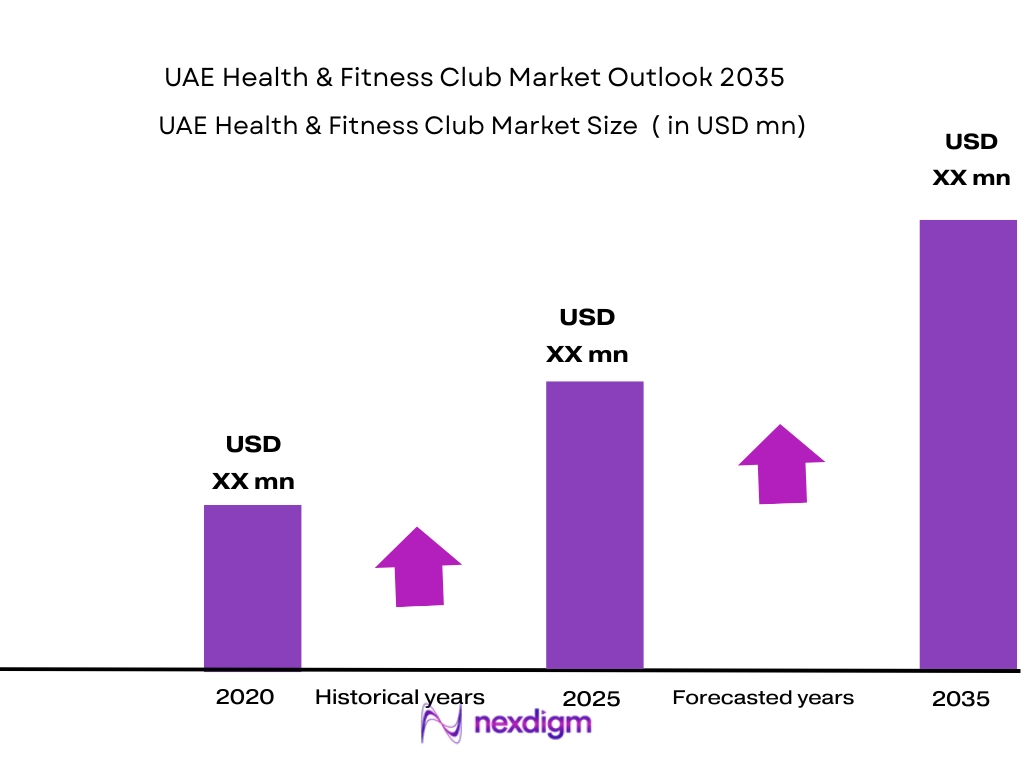
The UAE Health & Fitness Club Market reached USD ~ million based on a recent historical assessment, with structured club services supported by rising health awareness, higher disposable income, lifestyle-disease prevention, and demand for premium wellness experiences. IMARC’s latest country outlook identifies young, fitness-conscious consumers, government-led fitness campaigns, built-in gyms in real estate projects, wellness tourism, and personalized training services as core demand accelerators for club membership and ancillary services.
Dubai and Abu Dhabi dominate the UAE Health & Fitness Club Market because they concentrate affluent residents, expatriate professionals, mixed-use developments, corporate headquarters, luxury hospitality assets, and dense retail destinations that support premium gyms, boutique studios, and multi-location operators. Sharjah is gaining relevance through value-oriented clubs and family-focused fitness facilities, while the Northern Emirates remain expansion markets where lower penetration, residential growth, and improving wellness infrastructure create room for budget and hybrid models.
Market Segmentation
By Facility Type
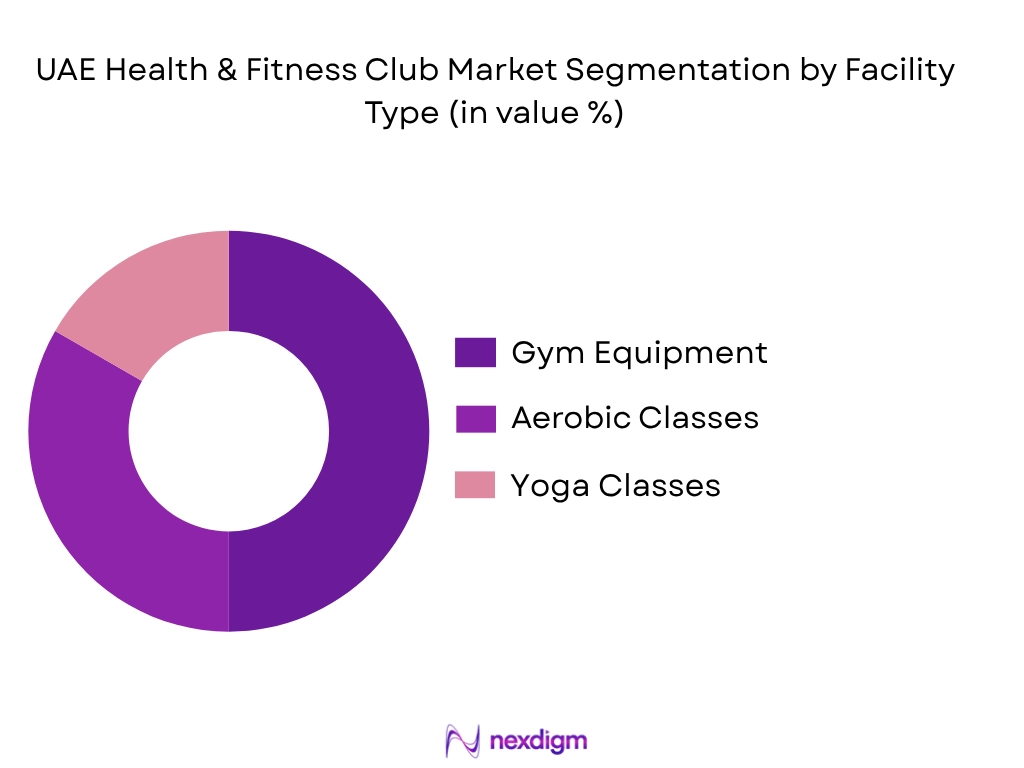
UAE Health & Fitness Club Market is segmented by facility type into gym equipment, aerobic classes, yoga classes, swimming pool facilities, and others. Recently, gym equipment has a dominant market share due to the central role of strength training, cardio equipment, free weights, functional training zones, and self-directed workouts in mainstream fitness club usage. Large-format clubs depend on equipment-led access because it supports flexible attendance, longer opening hours, and higher member throughput without requiring every session to be trainer-led. Consumers also see equipment availability as the most basic proof of value when comparing budget, mid-tier, and premium clubs. Chains such as GymNation, Fitness First, Wellfit, Gold’s Gym UAE, and Fitness 360 use equipment scale to differentiate across price tiers, while boutique studios complement rather than replace the core gym model.
By Membership Type
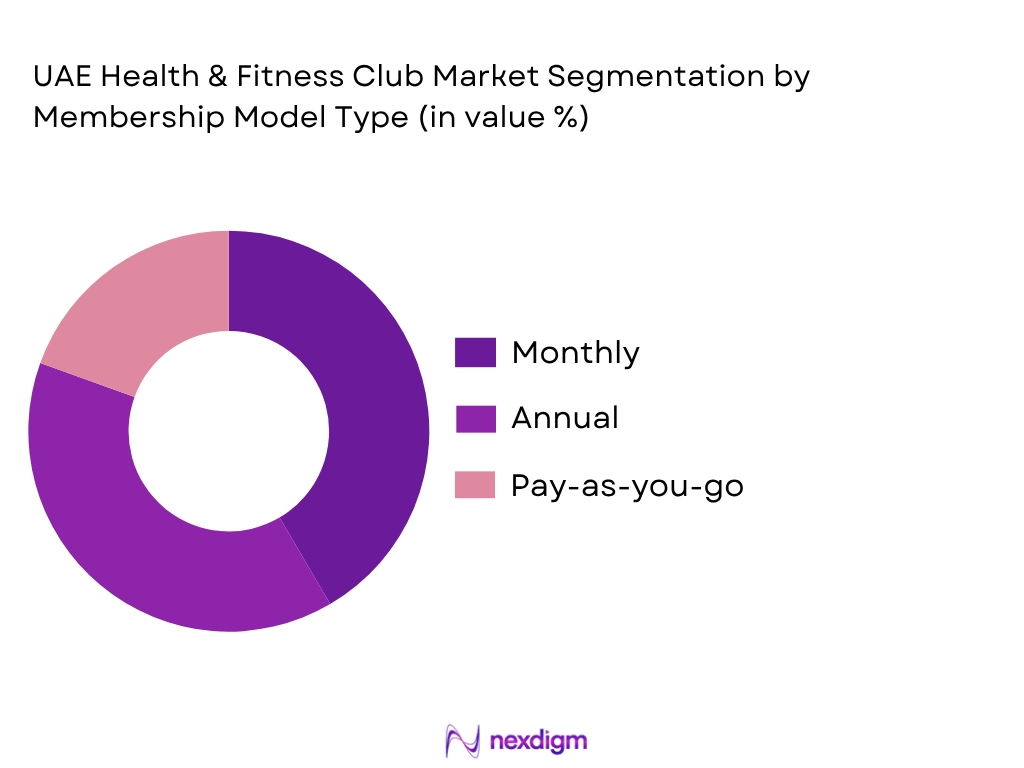
UAE Health & Fitness Club Market is segmented by membership type into monthly memberships, annual memberships, class packages, corporate memberships, and hybrid memberships. Recently, monthly memberships have a dominant market share due to consumer preference for flexibility, expatriate mobility, job changes, residential relocation, and the competitive use of discounted recurring plans by major operators. Monthly contracts reduce the psychological barrier for first-time users and are well suited to younger professionals who compare locations, facilities, and trainer quality before committing to longer plans. Operators also prefer recurring monthly billing because it improves acquisition conversion and enables upselling into personal training, premium classes, app-based coaching, and recovery services. Annual plans remain relevant in premium clubs, but monthly plans better match the UAE’s fluid urban lifestyle and high churn environment.
Competitive Landscape
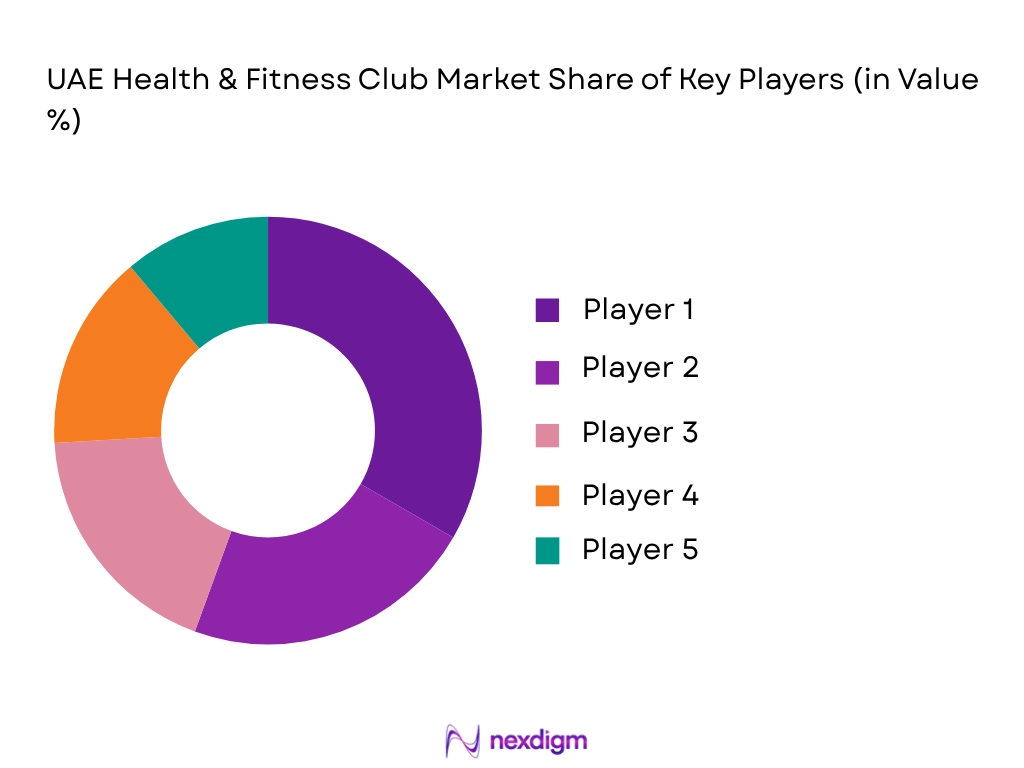
The UAE Health & Fitness Club Market is moderately consolidated in large-format clubs, while boutique studios and specialized wellness formats remain fragmented. Major operators influence pricing, location strategy, technology adoption, trainer quality standards, and brand visibility, particularly in Dubai and Abu Dhabi. Consolidation is rising as larger platforms acquire specialist studios, expand multi-brand portfolios, and use app-based engagement to defend member retention. IMARC notes that Arada expanded its Wellfit division through acquisitions of FitnGlam, The Platform Studios, and FITCODE, while GymNation invested about USD 19 million to acquire and expand its Motor City facility.
| Company Name | Establishment Year | Headquarters | Technology Focus | Market Reach | Key Products | Revenue | Club Format Focus |
| GymNation | 2017 | Dubai, UAE | ~ | ~ | ~ | ~ | ~ |
| Fitness First UAE | 1993 | Poole, UK / UAE operations in Dubai | ~ | ~ | ~ | ~ | ~ |
| Wellfit | 2021 | Sharjah, UAE | ~ | ~ | ~ | ~ | ~ |
| Gold’s Gym UAE | 1965 | Venice, California / UAE franchise operations | ~ | ~ | ~ | ~ | ~~ |
| Fitness 360 | 2010 | Dubai, UAE | ~ | ~ | ~ | ~ | ~ |
UAE Health & Fitness Club Market Analysis
Growth Drivers
Government Initiatives Promoting Active Lifestyles
The UAE Health & Fitness Club Market is supported by public campaigns that convert fitness from an optional leisure activity into a citywide participation habit. Dubai Fitness Challenge recorded 2,735,158 participants in its latest completed edition, creating a large addressable base for gyms, clubs, boutique studios, personal training providers, and hybrid fitness platforms. This matters because Dubai’s resident population reached 4,248,200 people, while the UAE’s urban population reached 9,572,613 people, according to World Bank data, giving organized clubs a dense consumer base in walkable malls, residential communities, business districts, and mixed-use developments. The UAE’s total population was reported by the World Bank at 11 million people, while GDP per capita was USD 50,273.5, supporting discretionary spending on structured wellness, training, recovery, and premium club memberships. These numbers justify stronger club participation because mass public fitness events build awareness, while high-income urban concentration improves operators’ ability to monetize memberships, classes, and personal coaching. Sources:
High Urbanization and Premium Lifestyle Spending
The UAE Health & Fitness Club Market benefits from concentrated urban purchasing power, especially in Dubai and Abu Dhabi, where commercial gyms, premium clubs, wellness studios, and boutique training concepts depend on dense residential and workplace catchments. Dubai’s population stood at 4,248,200 people, while Abu Dhabi’s population reached 4.14 million people, creating two large urban fitness clusters with sufficient depth for budget gyms, mid-tier clubs, premium wellness centers, and luxury recovery-led formats. The World Bank reported UAE GDP at USD 552.32 billion and GDP per capita at USD 50,273.5, indicating a macroeconomic base that supports spending on lifestyle, preventive health, and recurring fitness services without relying only on medical demand. Abu Dhabi also reported health-sector economic output of AED 17 billion, reflecting broader institutional commitment to wellbeing and human capital services. For fitness club operators, these indicators are market-specific because high-income urban consumers are more likely to demand accessible locations, extended hours, trainer-led plans, wellness add-ons, and digitally integrated club experiences. Sources:
Challenges
High Competition and Market Saturation in Dubai and Abu Dhabi
The UAE Health & Fitness Club Market faces intense competitive pressure because the strongest demand pools are concentrated in a limited number of high-density cities. Dubai had 4,248,200 residents, Abu Dhabi had 4.14 million residents, and the UAE’s total population was 11 million people, meaning a major share of commercially attractive club demand is clustered in two emirates rather than spread evenly across the country. Dubai Fitness Challenge participation of 2,735,158 people confirms strong fitness engagement, but it also signals why operators crowd into the same malls, business districts, beachfront communities, and residential corridors. This raises competitive pressure across budget gyms, premium clubs, Pilates studios, boxing studios, HIIT concepts, women-only gyms, and recovery-led wellness centers. Operators must differentiate through trainer quality, facility scale, brand trust, parking access, class timing, and digital booking convenience, because consumers in these dense cities can compare multiple clubs within short travel distances. Sources:
Dependence on Imported Fitness Equipment and Technology
The UAE Health & Fitness Club Market is exposed to supply-chain dependence because fitness clubs require imported cardio machines, strength systems, connected training devices, lockers, flooring, access-control systems, wearable integrations, and digital infrastructure. UAE non-oil imports reached AED 1.701 trillion, while non-oil foreign trade reached AED 3 trillion, showing the scale of the country’s import-led commercial ecosystem. World Bank data also shows imports of goods and services at USD 481.85 billion in the latest available World Bank series within the 2022–2025 window. For fitness clubs, this is market-specific because equipment-heavy formats need regular procurement, maintenance parts, replacement cycles, and technology upgrades to remain competitive. The challenge is stronger for premium and large-format operators because member expectations include modern treadmills, smart strength equipment, app-based access, connected screens, recovery equipment, and high-quality studio infrastructure. Any logistics disruption, currency movement, supplier delay, or after-sales service gap can affect launch timelines, maintenance continuity, and perceived club quality. Sources:
Opportunities
Expansion into Northern Emirates
The UAE Health & Fitness Club Market has room to grow beyond Dubai and Abu Dhabi because the Northern Emirates show health need, lower fitness infrastructure density, and increasing suitability for budget, family-oriented, and women-focused club formats. MoHAP’s obesity study reported obesity levels of 39.1 in Fujairah, 39.1 in Ajman, 38.0 in Ras Al Khaimah, and 36.7 in Umm Al Quwain, compared with 22.2 in Dubai, indicating a stronger preventive-health need in several underserved emirates. The UAE’s urban population reached 9,572,613 people, and national population reached 11 million people, giving operators a broader consumer base outside the most saturated club corridors. Expansion into these emirates can support future growth through lower-friction formats such as mid-sized gyms, women-only studios, family fitness centers, school-linked fitness programs, and hybrid memberships that combine physical access with virtual coaching. The opportunity is market-specific because fitness participation can be positioned around preventive health, affordability, convenience, and community access rather than only luxury wellness. Sources:
Wellness Tourism and Recovery-Based Fitness Services
The UAE Health & Fitness Club Market has a clear opportunity in wellness tourism, recovery services, and hospitality-linked fitness because Dubai welcomed 18.72 million international overnight visitors, while UAE hotel establishments hosted 25.2 million guests. These visitor flows create demand for hotel gyms, day-pass fitness access, recovery lounges, Pilates studios, yoga classes, sports rehabilitation, spa-linked wellness, and premium personal training for travelers and residents using hospitality facilities. The UAE Tourism Strategy includes 25 initiatives and policies, supporting a wider ecosystem where wellness, leisure, hospitality, and active living can be packaged together. Dubai’s annual visitor flow is especially important for premium and boutique fitness operators because tourists and business travelers often prefer flexible access, short-term packages, recovery treatments, and branded training experiences rather than long-term memberships. This supports future growth without relying on future statistics: the current tourism base already provides a large pool of consumers for wellness clubs integrated with hotels, malls, resorts, and mixed-use destinations.
Future Outlook
The UAE Health & Fitness Club Market is expected to expand steadily over the next five years as health awareness, urban wellness spending, and digital fitness adoption mature. Growth will likely be supported by smart clubs, AI-assisted training, hybrid memberships, connected equipment, and corporate wellness partnerships. Regulatory and public-sector support for active living will continue to strengthen consumer participation.
Demand will increasingly shift toward personalized training, women-focused formats, boutique studios, and affordable multi-location club access.
Major Players
- Fitness First UAE
- GymNation
- Gold’s Gym UAE
- Fitness 360
- Wellfit
- Warehouse Gym
- FitRepublik
- SEVEN Wellness Club
- Barry’s UAE
- F45 Training UAE
- UFC Gym UAE
- Embody Fitness
- Bodytree Studio
- Crank Fitness
- Platform Studios
Key Target Audience
- Fitness club operators
- Boutique studio owners
- Wellness center operators
- Real estate developers
- Hotel and hospitality groups
- Investments and venture capitalist firms
- Government and regulatory bodies
- Corporate wellness buyers
Research Methodology
Step 1: Identification of Key Variables
Key variables were identified across facility type, membership type, city concentration, consumer demographic, price tier, trainer model, and technology adoption. The research framework also considered urban density, health awareness, corporate wellness demand, expatriate concentration, and club expansion strategies. Public market references, company announcements, and sector-specific indicators were mapped to structure the market model.
Step 2: Market Analysis and Construction
The market was analyzed using top-down and bottom-up approaches covering club revenues, membership pricing, facility mix, and operator positioning. Available public figures were reconciled with reported company activity, city-level fitness infrastructure, and consumer demand indicators. Segmentation shares were developed using modeled allocation where public audited segment-level disclosures were unavailable.
Step 3: Hypothesis Validation and Expert Consultation
Market assumptions were tested against known operator footprints, price-tier positioning, facility offerings, and recent expansion activity.
The analysis considered how budget chains, premium clubs, boutique studios, and wellness-led formats compete for different user groups.
Validation emphasized consistency with published market sizing, observed UAE fitness trends, and competitive developments.
Step 4: Research Synthesis and Final Output
The final report synthesized market sizing, segmentation, competitive benchmarking, growth drivers, challenges, and opportunity areas.
Outputs were structured to support investors, operators, developers, and policy stakeholders evaluating the UAE Health & Fitness Club Market.
Findings were presented in a commercially usable format with clear segment definitions and strategic implications.

- Executive Summary
- Research Methodology (Market Definitions and Assumptions, Abbreviations and Terminology, Data Sources and Validation Approach, UAE Health & Fitness Club Market Sizing Methodology, Primary and Secondary Research Benchmarks, Market Reliability and Confidence Intervals)

- Industry Definition and Scope
- Market Genesis and Evolution in the UAE
- Consumer Adoption Patterns
- Market Value Chain and Distribution Architecture
- Import and Export Dynamics

- Growth Drivers
Rising Health Awareness and Preventive Healthcare Adoption
High Urbanization and Premium Lifestyle Spending
Growing Expatriate Population
Increasing Demand for Boutique and Specialized Fitness Studios
Corporate Wellness Program Expansion
Government Initiatives Promoting Active Lifestyles
Growth of Digital Fitness and Hybrid Membership Models - Challenges
High Competition and Market Saturation in Dubai and Abu Dhabi
High Rental and Operating Costs
Membership Churn and Price Sensitivity
Dependence on Imported Fitness Equipment and Technology
Shortage of Qualified Fitness Professionals
Seasonality and Climate-Related Outdoor Fitness Limitations - Opportunities
Expansion into Northern Emirates
Growth of Women-Only Fitness Clubs
AI-Based Personal Training and Virtual Coaching
Corporate Wellness Partnerships
Boutique Fitness and Specialized Training Formats
Wellness Tourism and Recovery-Based Fitness Services
Hybrid Fitness Club Membership Models - Trends
Smart Gyms and Connected Fitness Equipment
Subscription-Based Fitness Apps
Boutique Studios and Community-Led Fitness
Personalized Fitness and AI Coaching
Wellness, Recovery, and Mental Health Integration
Outdoor Fitness, Running Clubs, and Adventure Sports
Luxury Health Clubs and Lifestyle Memberships - Government Regulations
Health and Safety Standards for Fitness Clubs
Licensing and Regulation of Fitness Trainers
Municipality and Free Zone Requirements for Fitness Facilities
Regulations for Online Fitness and Virtual Coaching Services
Government Initiatives Supporting Fitness and Healthy Living
Public Health Campaigns and Active Lifestyle Programs - SWOT Analysis
- Porter’s Five Forces Analysis

- By Market Value, 2020-2025
- By Number of Members / Subscribers, 2020-2025
- By Average Membership Fee, 2020-2025
- By Club Category Revenue Contribution, 2020-2025

- By Facility Type (In Value %)
Gym Equipment
Aerobic Classes
Yoga Classes - By Membership (In Value %)
Monthly
Annual
Pay-as-you-go - By Consumer Demographic (In Value %)
Urban Professionals
Young Adults
High-Income Households
Middle-Income Households
Expatriate Population
Women’s Fitness Segment
Senior Fitness Segment
Corporate Wellness Members - By Price Tier (In Value %)
Budget / Entry-Level Clubs
Mid-Tier Clubs
Premium Clubs
Luxury / Exclusive Membership Clubs - By Emirate / Region (In Value %)
Dubai
Abu Dhabi
Sharjah
Ajman
Ras Al Khaimah
Fujairah
Umm Al Quwain

- Market Share by Club Category
- Number of Members by Major Fitness Club Brands
- Cross Comparison Parameters (Company Overview, Service Portfolio Strength, Location Footprint, Technology and Digital Integration, Pricing Strategy, Brand Equity, Consumer Preference Score, Annual Revenue, Growth Trajectory)
- Company Profiles
Fitness First UAE
Warehouse Gym
GymNation
Gold’s Gym UAE
Fitness 360
FitRepublik
SEVEN Wellness Club
Barry’s UAE
F45 Training UAE
UFC Gym UAE
Wellfit
Embody Fitness
Bodytree Studio
Crank Fitness
Platform Studios

- Buying Decision Drivers
- Brand Loyalty and Membership Renewal Cycle
- Payment Preferences and Financing Options
- Post-Membership Usage Patterns
- Pain Points in Fitness Club Usage and Renewal
- Consumer Preferences for Group Classes, Personal Training, and Digital Add-ons

- By Market Value, 2026-2035
- By Number of Members / Subscribers, 2026-2035
- By Average Membership Fee, 2026-2035
- By Club Category Revenue Contribution, 2026-2035


 Request a Sample
 Ask for Customization
 Get a Quote
 Enquire Now