

 Download PDF
Market Overview
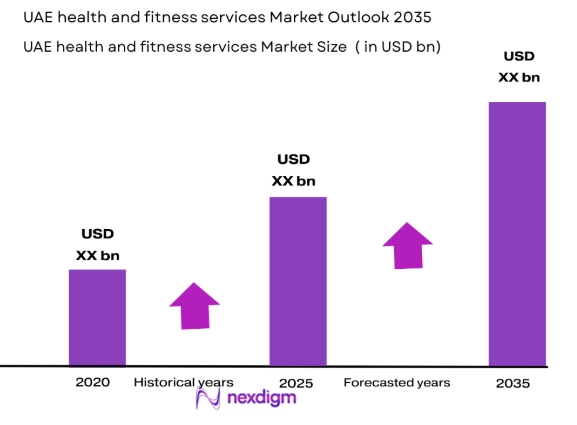
The UAE health and fitness services market is valued at approximately USD ~ billion, driven by rising health awareness, a growing interest in wellness programs, and the expansion of fitness centers and digital fitness platforms. The market has witnessed a steady upward trajectory as consumers focus on improving their physical and mental well-being. Factors such as increased disposable income, government initiatives promoting fitness, and an influx of fitness technology are propelling the growth of health services, including gyms, wellness programs, and personal training services.
Dubai and Abu Dhabi dominate the UAE health and fitness services market due to their economic prosperity, high population density, and increased expatriate communities. These cities host a variety of international and local fitness centers, wellness retreats, and fitness tech hubs. Dubai, in particular, serves as a regional hub for health and fitness, with a significant presence of premium health services targeting both residents and tourists. The growing trend of corporate wellness initiatives in these cities further contributes to their dominance in the market.
Market Segmentation
By Service Type
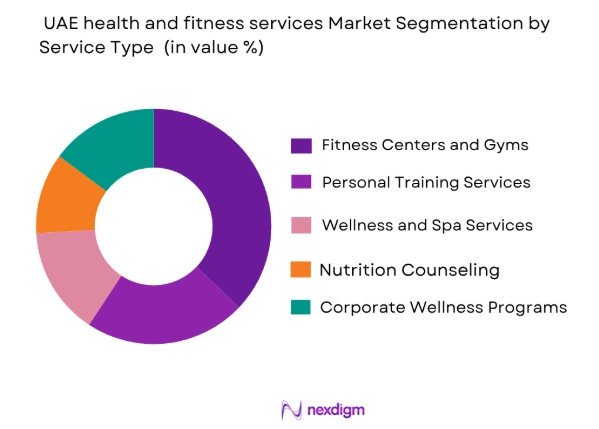
The UAE health and fitness services market is segmented into fitness centers and gyms, personal training services, wellness and spa services, nutrition counseling and diet plans, corporate wellness programs, and group exercise and fitness classes. Among these, fitness centers and gyms command the largest share due to the strong presence of well-established local and international gym chains. The demand for fitness centers is primarily driven by urban professionals and the increasing emphasis on physical fitness and well-being. Major gym chains like Fitness First, Gold’s Gym, and Fitness 360 dominate the segment, offering state-of-the-art facilities, personalized training programs, and fitness tracking systems to cater to the growing consumer base.
By Distribution Channel
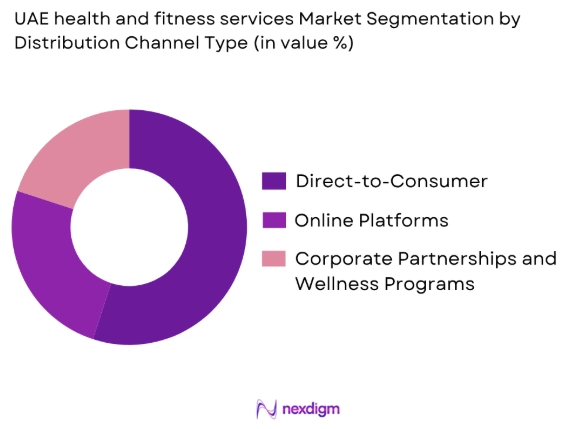
The distribution channel for health and fitness services in the UAE includes direct-to-consumer (in-store services), online platforms and virtual fitness services, and corporate partnerships. Among these, online platforms and virtual fitness services are the dominant sub-segment. This segment has seen rapid growth, particularly in the wake of the COVID-19 pandemic, where consumers have shifted to at-home fitness solutions. The flexibility and convenience offered by virtual fitness platforms such as ClassPass, Peloton, and local fitness apps have led to their increasing popularity. Virtual classes, on-demand workout videos, and personalized training programs allow consumers to engage in fitness routines from the comfort of their homes.
Competitive Landscape
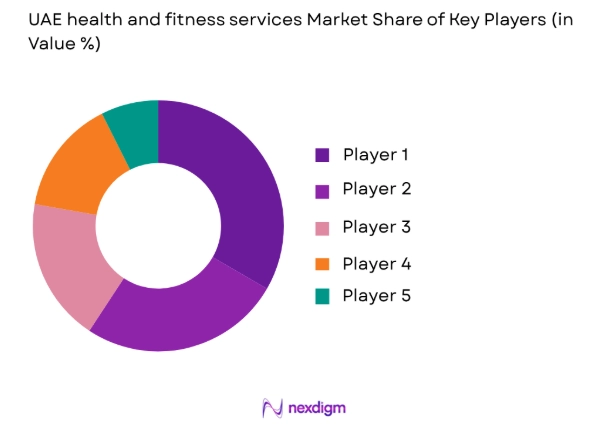
The UAE health and fitness services market is competitive, with a mix of global fitness chains and local players vying for market share. Major players such as Fitness First, Gold’s Gym, and Fitness 360 lead the market, offering a wide array of services ranging from gym memberships to personal training and wellness services. These companies leverage their established brand presence, comprehensive service offerings, and strategic locations across urban centers. Furthermore, the rise of fitness technology companies like Peloton and local wellness platforms has introduced new forms of competition, especially in the virtual fitness space.
| Company Name | Establishment Year | Headquarters | Product Offering | Technology Integration | Pricing Strategy | Annual Revenue (USD) |
| Fitness First | 2003 | Dubai, UAE | ~ | ~ | ~ | ~ |
| Gold’s Gym | 1965 | Dubai, UAE | ~ | ~ | ~ | ~ |
| Fitness 360 | 2009 | Dubai, UAE | ~ | ~ | ~ | ~ |
| ClassPass | 2013 | New York, USA | ~ | ~ | ~ | ~ |
| Peloton | 2012 | New York, USA | ~ | ~ | ~ | ~ |
UAE Health and Fitness Services Market Analysis
Growth Drivers
Rising Health Consciousness and Lifestyle Diseases
The UAE has seen a significant rise in lifestyle-related diseases such as diabetes, hypertension, and obesity, creating a stronger focus on health and fitness. According to the World Health Organization (WHO), the prevalence of obesity among adults in the UAE was 27.8% in 2021, contributing to the increasing demand for fitness services. The government’s efforts to promote healthier lifestyles have been echoed by the UAE’s Vision 2021 National Agenda, focusing on improving the population’s health. The rising burden of lifestyle
diseases is driving the demand for fitness centers and wellness services across the country.
Government Initiatives for Health and Fitness
The UAE government has implemented several initiatives aimed at encouraging physical activity and improving public health. In 2023, the UAE launched its National Strategy for Wellbeing, which emphasizes physical activity, aiming to boost the nation’s fitness levels. The government also promotes community fitness programs such as “Dubai Fitness Challenge,” a 30-day initiative that encourages residents to be active. Such initiatives, along with subsidized fitness programs, have contributed significantly to the market’s growth. Moreover, the government has committed to ensuring all public spaces are equipped with fitness amenities by 2025.
Challenges
High Price Sensitivity and Economic Sensitivity
High price sensitivity is a major challenge for the UAE health and fitness market. Despite the growing interest in fitness, many consumers are reluctant to invest in expensive memberships or fitness-related services due to the country’s fluctuating economic conditions. The UAE’s inflation rate was estimated to be 4.8% in 2023, which has placed additional pressure on disposable income, making luxury health and fitness services less accessible to some consumer segments. The economic sensitivity is especially evident in mid-tier markets where consumers seek more affordable alternatives for fitness services.
Source: World Bank
Fragmented Service Providers and Competition
The health and fitness services market in the UAE faces a challenge due to the fragmented nature of service providers. There is a wide array of gyms, wellness centers, and fitness apps, many of which operate in niche segments. This fragmentation makes it difficult for consumers to choose among the wide offerings, often resulting in confusion. Moreover, the market is highly competitive, with both international chains and local providers vying for market share. The presence of established players like Fitness First, Gold’s Gym, and local fitness centers increases competition, which impacts the profitability of smaller providers.
Opportunities
Expansion of Digital and Virtual Fitness Solutions
The increasing adoption of digital fitness solutions presents significant opportunities for growth in the UAE market. According to a report by the UAE’s Ministry of Health, digital fitness solutions, such as virtual classes and apps, have gained traction, especially post-pandemic. In 2023, the country saw a 20% rise in the usage of online fitness platforms. This expansion is driven by the growing preference for flexible fitness routines, which allow consumers to engage in workouts from home. The rise of smart fitness devices and virtual workout platforms offers a lucrative opportunity for businesses to tap into a larger consumer base.
Rise of Wellness Tourism and Retreats
The UAE is increasingly becoming a hub for wellness tourism, driven by its world-class infrastructure and luxury wellness resorts. According to the UAE Tourism Department, wellness tourism has seen substantial growth, with Dubai and Abu Dhabi emerging as top destinations for health retreats. The country’s focus on developing health and wellness resorts and retreats has attracted high-end clientele from across the globe. In 2023, wellness tourism contributed approximately 7% to the total tourism revenue in the UAE, offering immense growth potential for the fitness services market.
Future Outlook
Over the next five years, the UAE health and fitness services market is expected to experience significant growth driven by the increasing demand for digital fitness solutions, the expansion of corporate wellness programs, and a continued focus on physical and mental well-being. The market is also poised to benefit from government initiatives promoting health and fitness among the population, such as subsidies for fitness services and wellness programs. Additionally, with the rise of health-conscious young professionals and an increasing expatriate population, there will be a continued expansion of premium and boutique fitness services, alongside virtual fitness offerings.
Major Players
- Fitness First
- Gold’s Gym
- Fitness 360
- ClassPass
- Peloton
- Virgin Active
- FitRepublik
- Crunch Fitness
- Flex Fitness
- Life Fitness
- F45 Training
- Fitness 101
- Core Fitness
- The Body Coach
- Technogym
Key Target Audience
- Investments and Venture Capitalist Firms
- Government and Regulatory Bodies (e.g., Dubai Health Authority, UAE Ministry of Health)
- Fitness Equipment Manufacturers
- Wellness Retreat and Spa Operators
- Digital Fitness Platforms and App Developers
- Corporate HR and Wellness Program Managers
- Health Insurance Providers
- Fitness Franchise Owners
Research Methodology
Step 1: Identification of Key Variables
The first step involves constructing an ecosystem map encompassing all major stakeholders within the UAE health and fitness services market. This includes identifying the key drivers, restraints, and opportunities, based on secondary data from government publications, industry reports, and market research.
Step 2: Market Analysis and Construction
Historical data on the UAE health and fitness services market is analyzed, with a focus on revenue generation, service penetration, and consumer behavior trends. Service provider data is gathered to understand the market dynamics.
Step 3: Hypothesis Validation and Expert Consultation
Market hypotheses regarding service trends and customer preferences are validated through consultations with industry experts, including gym owners, personal trainers, and wellness program managers. These expert insights are essential for refining and validating the data collected during the market analysis phase.
Step 4: Research Synthesis and Final Output
The final phase involves synthesizing the data obtained from various sources, validating them with key industry players, and generating the market report. This ensures the market forecast is accurate, comprehensive, and aligned with emerging industry trends.

- Executive Summary
- Research Methodology (Market Definitions and Assumptions, Abbreviations and Terminology, Data Sources and Validation Approach, UAE Health and Fitness Services Market Sizing Methodology, Primary and Secondary Research Benchmarks, Market Reliability and Confidence Intervals)

- Industry Definition and Scope
- Market Genesis and Evolution in the UAE
- Consumer Adoption Patterns
- Market Value Chain and Service Delivery Architecture
- Import and Export Dynamics

- Growth Drivers
Rising Health Consciousness and Lifestyle Diseases
Government Initiatives for Health and Fitness
Increased Adoption of Digital Fitness Solutions
Corporate Wellness and Employee Health Programs - Challenges
High Price Sensitivity and Economic Sensitivity
Limited Awareness on Wellness Benefits
Fragmented Service Providers and Competition
Regulatory Challenges and Compliance - Opportunities
Expansion of Digital and Virtual Fitness Solutions
Rise of Wellness Tourism and Retreats
Integration of Technology in Fitness Services
Increased Investment in Fitness Startups
Collaborations Between Fitness and Healthcare Providers - Trends
Shift Toward Hybrid Fitness Models (In-person and Online)
Growth of Corporate Wellness Programs
Personalized Health and Fitness Solutions
Rise of Boutique and Specialized Fitness Studios
Fitness Integration with Mental Health and Well-being Programs - Government Regulations
- SWOT Analysis
- Porter’s Five Forces

- By Market Value, 2020-2025
- By Revenue Sources, 2020-2025
- By Segment Growth, 2020-2025

- By Service Type (In Value %)
Fitness Centers and Gyms
Personal Training Services
Wellness and Spa Services
Nutrition Counseling and Diet Plans
Corporate Wellness Programs - By Distribution Channel (In Value %)
Direct-to-Consumer
Online Platforms
Corporate Partnerships and Wellness Programs - By Consumer Demographic (In Value %)
Young Professionals
Middle-Aged Consumers
Senior Wellness Segment
Corporate Wellness Purchases
Expatriate Population - By Pricing Model (In Value %)
Pay-Per-Use
Subscription Models
Corporate Wellness Program Contracts
Premium Membership Packages - By Region (In Value %)
Dubai
Abu Dhabi
Sharjah
Northern Emirates

- Market Share by Service Category
- Revenue by Major Service Providers
- Cross Comparison Parameters (Company Overview, Service Portfolio Strength, Technology and Digital Integration, Pricing Strategy and Revenue Positioning, Brand Equity, Consumer Loyalty and Satisfaction, Service Accessibility and Network, Annual Revenue and Growth Trajectory)
- Company Profiles
Fitness First UAE
Gold’s Gym UAE
Life Fitness UAE
Fitness 360
FitRepublik
The Body Coach
F45 Training UAE
Virgin Active UAE
MyFitnessPal UAE
Crunch Fitness UAE
Flex Fitness
Core Fitness UAE

- Buying Decision Drivers
- Brand Loyalty and Service Preference
- Pricing Sensitivity and Payment Models
- Post-Purchase Service Usage Patterns
- Pain Points in Service Delivery and Ownership

- By Market Value, 2026-2035
- By Revenue Sources, 2026-2035
- By Segment Growth, 2026-2035


 Request a Sample
 Ask for Customization
 Get a Quote
 Enquire Now