

 Download PDF
Market Overview
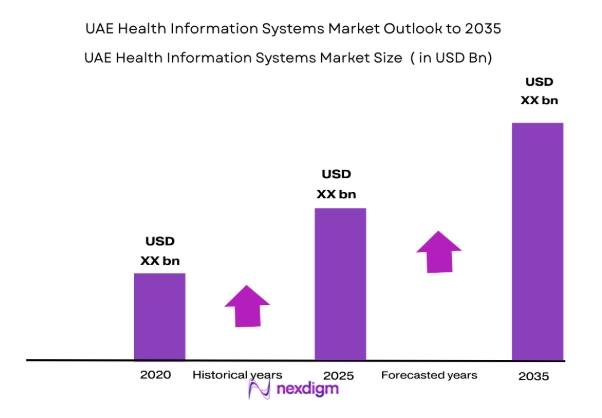
The UAE health information systems market is expected to experience significant growth, with the market size in recent historical assessments reaching USD ~ billion. This growth is driven by increasing demand for healthcare IT solutions, the growing adoption of electronic health records (EHR), and advancements in healthcare data analytics. Additionally, the market is also propelled by substantial investments from the government and healthcare providers aiming to modernize their systems to comply with regulatory requirements and improve patient care quality. Rising healthcare infrastructure, especially in cities like Dubai and Abu Dhabi, further contributes to this market expansion.
Based on recent assessments, the UAE stands as a dominant player in the Middle East for healthcare technology implementation, largely driven by its advanced urban centers. Cities like Dubai and Abu Dhabi lead in terms of healthcare spending, innovation in digital healthcare solutions, and public-private partnerships. These cities are attracting healthcare investments, particularly in high-tech hospital systems, smart healthcare technologies, and telemedicine. The government’s push for regulatory frameworks that support innovation also plays a critical role in fostering the growth of the health information systems market in these regions.
Market Segmentation
By Product Type:
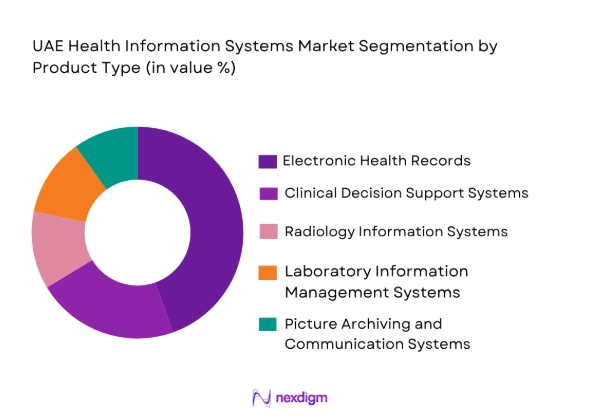
The UAE health information systems market is segmented by product type into electronic health records (EHR), clinical decision support systems (CDSS), radiology information systems (RIS), laboratory information management systems (LIMS), and picture archiving and communication systems (PACS). Recently, the electronic health records (EHR) systems sub-segment has gained dominant market share due to their widespread adoption across healthcare facilities, driven by government mandates for digitizing patient information and streamlining medical workflows. The growing demand for interoperability and patient-centered care is also driving the expansion of EHR systems, which are fundamental for enhancing healthcare delivery efficiency, reducing errors, and improving patient outcomes across the UAE.
By Platform Type:
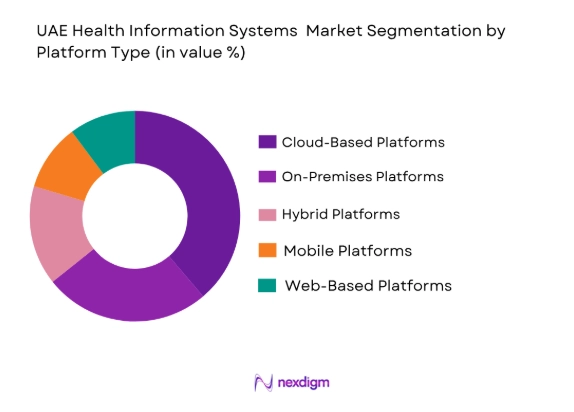
The UAE health information systems market is segmented by platform type into cloud-based platforms, on-premises platforms, hybrid platforms, mobile platforms, and web-based platforms. Among these, cloud-based platforms have dominated the market share due to their scalability, cost-effectiveness, and flexibility, which are critical for healthcare providers looking to implement solutions with lower upfront costs. Cloud-based systems enable seamless integration of data across healthcare facilities, ensuring better coordination and sharing of patient information, especially in a multi-location network, which is becoming increasingly common across the UAE’s healthcare landscape.
Competitive Landscape
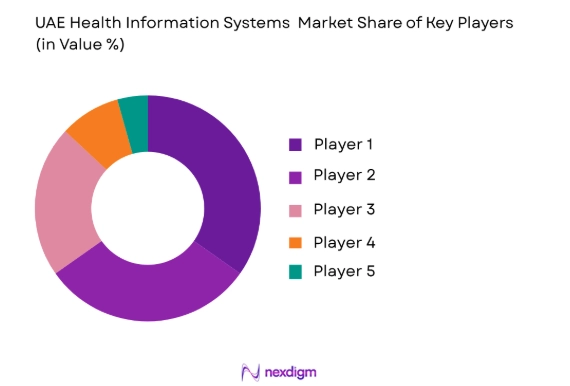
The UAE health information systems market is highly competitive, with major players focused on consolidation and forming strategic partnerships to enhance market share. The presence of global giants and local innovators has created a dynamic competitive environment, where consolidation is common to meet the growing demand for digital healthcare solutions. These companies focus on offering advanced products, such as cloud-based solutions, artificial intelligence (AI)-enabled platforms, and telemedicine systems, which are tailored to the UAE’s healthcare infrastructure. Government initiatives and regulations also play a critical role in shaping the competitive landscape, with companies aligning their solutions to comply with these frameworks.
| Company Name | Establishment Year | Headquarters | Technology Focus | Market Reach | Key Products | Revenue | Additional Parameter |
| Cerner Corporation | 1979 | North Kansas City, USA | ~ | ~ | ~ | ~ | ~ |
| McKesson Corporation | 1833 | Irving, Texas, USA | ~ | ~ | ~ | ~ | ~ |
| Siemens Healthineers | 1847 | Erlangen, Germany | ~ | ~ | ~ | ~ | ~ |
| Allscripts Healthcare Solutions | 1986 | Chicago, Illinois, USA | ~ | ~ | ~ | ~ | ~ |
| Philips Healthcare | 1891 | Amsterdam, Netherlands | ~ | ~ | ~ | ~ | ~ |
UAE Health Information Systems Market Analysis
Growth Drivers
Increased Government Investment in Healthcare Infrastructure:
The UAE government has significantly boosted investments in healthcare infrastructure, particularly digital health technologies, as part of its broader vision to enhance the national healthcare system. These investments include the development of state-of-the-art healthcare facilities, digitalization of health records, and integration of artificial intelligence into healthcare workflows. The government has been instrumental in driving these initiatives, as part of the UAE Vision 2030, which emphasizes improving the quality of life and healthcare services in the country. The growing focus on patient-centered care, as well as the need for efficient data management and reporting systems, has spurred demand for health information systems across hospitals, clinics, and government healthcare organizations. Moreover, these investments are bolstered by partnerships with global technology companies, further accelerating the adoption of innovative health IT solutions.
Adoption of Telemedicine and Remote Healthcare Services:
The growing adoption of telemedicine and remote healthcare services in the UAE is a significant growth driver for the health information systems market. Telemedicine solutions are increasingly being used to provide consultations, diagnosis, and treatment remotely, which is particularly valuable in the context of the UAE’s widespread geographical distribution and high population density in urban areas. The COVID-19 pandemic accelerated this shift, with more healthcare providers adopting telemedicine as a means to continue providing healthcare while minimizing exposure. As telemedicine becomes a more integral part of the healthcare ecosystem, the need for integrated digital platforms that manage patient data, appointment scheduling, and medical records has increased. Telemedicine also aligns with the UAE’s strategy to modernize healthcare services, ensuring they are accessible and efficient.
Market Challenges
Data Security and Privacy Concerns:
One of the major challenges facing the UAE health information systems market is the issue of data security and patient privacy. With the increasing volume of health data being digitized and stored on cloud platforms, concerns over data breaches, cyberattacks, and unauthorized access have escalated. Healthcare providers are required to comply with stringent regulations on data privacy, such as the UAE’s Personal Data Protection Law, which governs how patient information is collected, stored, and shared. However, the complexity of integrating secure systems across various platforms and ensuring compliance with international data protection standards presents a challenge. As the use of cloud-based platforms and telemedicine increases, so does the need for robust cybersecurity measures to protect sensitive patient data.
High Initial Investment Costs:
Despite the potential long-term savings and efficiency improvements offered by health information systems, the high initial investment required for implementation remains a barrier for many healthcare providers. The upfront costs of purchasing hardware, software, and training personnel can be prohibitive, particularly for smaller healthcare facilities. Moreover, the need for ongoing maintenance, system upgrades, and technical support adds to the financial burden. These costs can deter smaller healthcare providers from adopting advanced health IT solutions, limiting the market’s overall growth. Although the UAE government offers incentives for adopting digital health solutions, the financial constraints remain a significant challenge for a portion of the healthcare sector.
Opportunities
Expansion of Healthcare Digitization in Remote Areas:
One of the key opportunities for the UAE health information systems market lies in the expansion of healthcare digitization to remote and underserved areas. The government is actively promoting digital health services in less urbanized areas, where access to traditional healthcare facilities may be limited. By implementing mobile health applications, telemedicine, and remote patient monitoring systems, healthcare providers can deliver quality services to these regions without requiring patients to travel long distances. The expansion of digital infrastructure in remote areas presents an untapped opportunity for health information systems providers to implement cost-effective solutions that improve healthcare accessibility and outcomes for rural populations. With the UAE’s commitment to enhancing healthcare access, this market opportunity is expected to see significant growth over the coming years.
Integration of Artificial Intelligence in Healthcare Solutions:
The integration of artificial intelligence (AI) and machine learning (ML) into health information systems presents a major opportunity for the market. AI can be leveraged to automate routine administrative tasks, such as appointment scheduling, claims processing, and patient triage, thereby reducing administrative costs and improving operational efficiency. Additionally, AI-driven analytics can enhance clinical decision support systems by providing physicians with actionable insights based on patient data, improving diagnostic accuracy and treatment outcomes. The adoption of AI technologies in healthcare is expected to increase as the UAE focuses on becoming a regional leader in medical innovation. This trend presents a significant opportunity for health IT providers to integrate AI into their solutions, enabling them to offer cutting-edge products that cater to the growing demand for data-driven healthcare services.
Future Outlook
The future of the UAE health information systems market looks promising, with continued growth driven by advancements in technology, government investments, and the increasing demand for efficient, patient-centered healthcare solutions. Over the next five years, the market is expected to expand significantly, fueled by the ongoing digital transformation of the healthcare sector. Technologies such as artificial intelligence, cloud computing, and telemedicine are expected to play a pivotal role in enhancing healthcare delivery and operational efficiency. Moreover, government policies that encourage healthcare digitization and the establishment of smart hospitals will further support market growth. As the market matures, there will also be increased focus on data security and interoperability, ensuring that the systems can integrate seamlessly with other healthcare platforms both locally and globally.
Major Players
- Cerner Corporation
- McKesson Corporation
- Siemens Healthineers
- Allscripts Healthcare Solutions
- Philips Healthcare
- GE Healthcare
- Medtronic
- IBM Watson Health
- NextGen Healthcare
- Optum
- eClinicalWorks
- Intelerad
- Carestream Health
- Dell Technologies
- Oracle Health Sciences
Key Target Audience
- Investments and venture capitalist firms
- Government and regulatory bodies
- Healthcare providers (hospitals, clinics)
- Telemedicine service providers
- Health IT solution providers
- Healthcare insurers
- Pharmaceutical companies
- Research and development organizations
Research Methodology
Step 1: Identification of Key Variables
This step involves identifying and defining the key variables that affect the health information systems market, such as market size, growth drivers, and key market segments.
Step 2: Market Analysis and Construction
Here, we gather relevant data from primary and secondary sources to analyze market trends, dynamics, and segments. This helps in constructing a comprehensive market model that is used for future projections.
Step 3: Hypothesis Validation and Expert Consultation
The hypotheses generated during the analysis phase are validated through expert consultations with industry leaders, market analysts, and key stakeholders in the healthcare and technology sectors.
Step 4: Research Synthesis and Final Output
The final step involves synthesizing the data and research findings into a coherent report that presents a detailed analysis of the market, its trends, and its future outlook.

- Executive Summary
- Research Methodology (Definitions, Scope, Industry Assumptions, Market Sizing Approach, Primary & Secondary Research Framework, Data Collection & Verification Protocol, Analytic Models & Forecast Methodology, Limitations & Research Validity Checks)

- Market Definition and Scope
- Value Chain & Stakeholder Ecosystem
- Regulatory / Certification Landscape
- Sector Dynamics Affecting Demand
- Strategic Initiatives & Infrastructure Growth

- Growth Drivers
Increased adoption of digital health solutions
Government investments in healthcare infrastructure
Rising demand for healthcare data analytics - Market Challenges
High initial investment costs
Lack of skilled workforce
Data security and privacy concerns - Market Opportunities
Expansion in remote healthcare solutions
Advancements in AI and machine learning integration
Growing adoption of telemedicine services - Trends
Shift towards cloud-based health information systems
Increase in interoperability standards
Integration of IoT in healthcare systems
Government Regulations
SWOT Analysis of Key Competitors
Porter’s Five Forces nt

- By Market Value, 2020-2025
- By Installed Units, 2020-2025
- By Average System Price, 2020-2025
- By System Complexity Tier, 2020-2025

- By System Type
Electronic Health Record (EHR) Systems
Clinical Decision Support Systems (CDSS)
Picture Archiving and Communication Systems (PACS)
Laboratory Information Management Systems (LIMS)
Radiology Information Systems (RIS) - By Platform Type
Cloud-Based Platforms
On-Premises Platforms
Hybrid Platforms
Mobile Platforms
Web-Based Platforms - By Fitment Type
Integrated Systems
Modular Systems
Stand-Alone Systems
Custom Fit Systems
Cloud-Integrated Systems - By EndUser Segment
Hospitals
Ambulatory Care Centers
Diagnostic Laboratories
Long-Term Care Facilities
Government Health Agencies - By Procurement Channel
Direct Sales
Distributors
Value Added Resellers (VARs)
System Integrators
Online Platforms

- Market Share Analysis
- CrossComparison Parameters (System Complexity, Platform Type, End-User Segment, Procurement Channel, Fitment Type)
- SWOT Analysis of Key Competitors
- Pricing & Procurement Analysis
- Porter’s Five Forces
- Key Players
Cerner Corporation
McKesson Corporation
Allscripts Healthcare Solutions
Athenahealth
GE Healthcare
Siemens Healthineers
Philips Healthcare
Medtronic
Meditech
IBM Watson Health
NextGen Healthcare
Optum
EClinicalWorks
Intelerad
Carestream Health

- Hospitals driving the largest market share
- Rising adoption in private healthcare sectors
- Government initiatives in public health systems
- Growth in telemedicine and homecare applications

- Forecast Market Value, 2026-2035
- Forecast Installed Units, 2026-2035
- Price Forecast by System Tier, 2026-2035
- Future Demand by Platform, 2026-2035


 Request a Sample
 Ask for Customization
 Get a Quote
 Enquire Now