

 Download PDF
 Download PDF
Market Overview
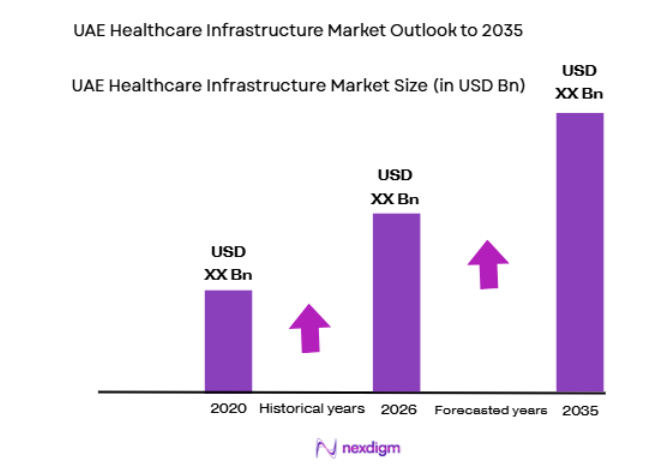
Based on a recent historical assessment, the UAE Healthcare Infrastructure market generated approximately USD ~ billion according to healthcare investment analyses referenced by the UAE Ministry of Health and Prevention and regional healthcare reports by the Dubai Health Authority. Growth is driven by strong government investment in hospital construction, expansion of specialized healthcare facilities, adoption of advanced medical technologies, and public private partnerships aimed at strengthening national healthcare capacity to meet rising population and medical tourism demand.
Major healthcare infrastructure development is concentrated in Dubai and Abu Dhabi because these cities host the largest hospital networks, advanced medical technology centers, and internationally accredited healthcare institutions. These metropolitan healthcare hubs benefit from strong government funding, large international patient inflows, and integrated healthcare ecosystems including research institutions, specialized clinics, and medical universities that support continuous healthcare infrastructure expansion across the United Arab Emirates.
Market Segmentation
By Facility Type
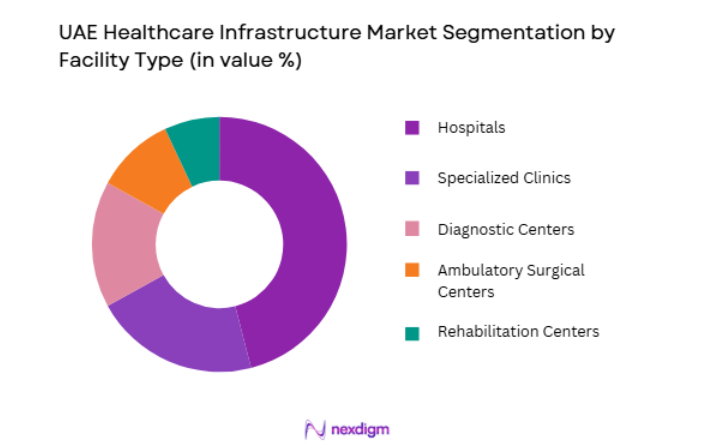
UAE Healthcare Infrastructure market is segmented by product type into hospitals, specialized clinics, diagnostic centers, rehabilitation centers, and ambulatory surgical centers. Recently, hospitals have a dominant market share due to factors such as strong government investment in tertiary healthcare facilities, expansion of multi specialty hospital networks, and the need to support complex medical procedures requiring advanced infrastructure and intensive care units. Large hospital projects in the UAE include modern facilities equipped with robotic surgery systems, digital imaging equipment, and specialized treatment departments covering cardiology, oncology, orthopedics, and neurology. Government healthcare strategies prioritize the construction of integrated hospital campuses capable of delivering comprehensive healthcare services for both residents and international patients. These hospitals also support clinical research programs and medical training institutions that enhance healthcare capacity across the country. The presence of internationally accredited hospitals further strengthens the country’s reputation as a regional healthcare hub and supports continued infrastructure development.
By Ownership Model
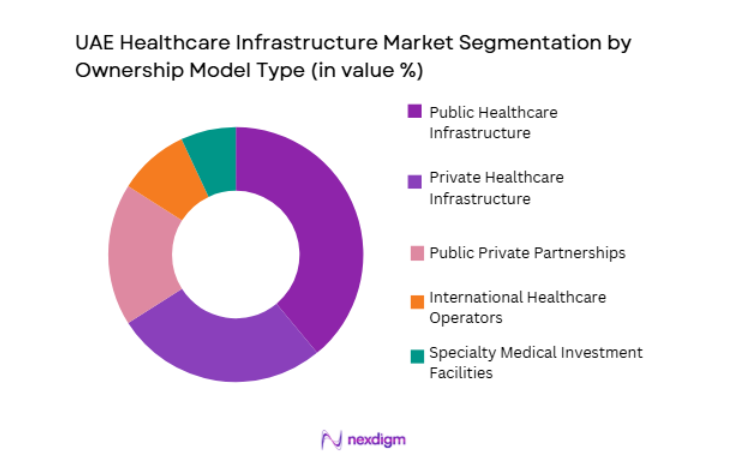
UAE Healthcare Infrastructure market is segmented by ownership model into public healthcare infrastructure, private healthcare infrastructure, public private partnerships, international healthcare operators, and specialty medical investment facilities. Recently, public healthcare infrastructure has a dominant market share due to factors such as strong government commitment to healthcare development, national healthcare modernization strategies, and large scale public investment in hospital expansion programs across the Emirates. Government healthcare authorities are responsible for developing major hospital projects, medical research centers, and specialized healthcare institutions that support national healthcare capacity. Public investment also supports advanced healthcare technologies, digital health infrastructure, and training programs for medical professionals. Government funded hospitals provide comprehensive treatment services including emergency care, surgical treatment, and specialized medical programs that serve the majority of the population. Public healthcare infrastructure also forms the foundation for public private partnerships where private investors collaborate with government authorities to develop advanced healthcare facilities. These initiatives ensure long term sustainability and expansion of healthcare infrastructure across the UAE.
Competitive Landscape
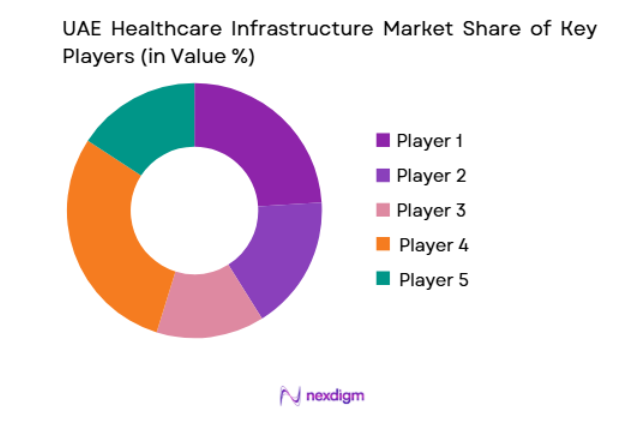
The UAE Healthcare Infrastructure market demonstrates moderate consolidation with government healthcare authorities and large private hospital groups leading infrastructure development across the Emirates. Major healthcare providers invest heavily in advanced hospital facilities, digital healthcare technologies, and specialized treatment centers. Public private partnerships play a significant role in expanding healthcare infrastructure while international hospital operators collaborate with regional healthcare organizations to strengthen healthcare capacity.
| Company Name | Establishment Year | Headquarters | Technology Focus | Market Reach | Key Products | Revenue | Hospital Network Size |
| SEHA Health System | 2007 | Abu Dhabi, UAE | ~ | ~ | ~ | ~ | ~ |
| Mediclinic Middle East | 1983 | Dubai, UAE | ~ | ~ | ~ | ~ | ~ |
| NMC Healthcare | 1974 | Abu Dhabi, UAE | ~ | ~ | ~ | ~ | ~ |
| Aster DM Healthcare | 1987 | Dubai, UAE | ~ | ~ | ~ | ~ | ~ |
| VPS Healthcare | 2007 | Abu Dhabi, UAE | ~ | ~ | ~ | ~ | ~ |
UAE Healthcare Infrastructure Market Analysis
Growth Drivers
Strong Government Investment in Healthcare Infrastructure and National Healthcare Development Programs
The UAE healthcare infrastructure market is expanding rapidly due to substantial government investment in modern healthcare facilities designed to support a rapidly growing population and position the country as a regional healthcare hub. National healthcare development strategies emphasize the construction of advanced hospital networks, specialized treatment centers, and medical research institutions capable of delivering high quality healthcare services across multiple medical disciplines. Government healthcare authorities allocate significant funding toward infrastructure development projects including new hospitals, expansion of existing healthcare facilities, and modernization of medical equipment across public hospitals. These initiatives support the development of advanced healthcare ecosystems equipped with digital health systems, robotic surgical technologies, and precision diagnostic equipment that improve clinical outcomes and patient care quality. Public investment also supports the establishment of medical education institutions and clinical research programs designed to train healthcare professionals and strengthen the country’s medical expertise. Healthcare infrastructure development is closely aligned with national economic diversification strategies that aim to strengthen knowledge based industries and reduce reliance on traditional economic sectors. Public private partnerships also play an important role in healthcare infrastructure development as government authorities collaborate with private healthcare investors to build specialized hospitals and advanced treatment facilities. Large scale hospital construction projects across Abu Dhabi and Dubai are designed to accommodate increasing healthcare demand while supporting the growth of medical tourism services within the region. Infrastructure modernization also includes integration of digital healthcare systems that allow hospitals to manage patient records electronically and improve coordination between healthcare providers. As government healthcare investment continues expanding across the UAE, infrastructure development will remain a primary growth driver supporting long term expansion of the UAE Healthcare Infrastructure market.
Expansion of Private Healthcare Investment and International Hospital Partnerships
The increasing involvement of private healthcare investors and international hospital operators represents another major growth driver for the UAE Healthcare Infrastructure market as private sector organizations collaborate with government authorities to expand advanced healthcare facilities across the country. Private healthcare providers invest in modern hospital campuses equipped with specialized treatment departments, digital diagnostic systems, and high precision surgical equipment capable of supporting complex medical procedures. International hospital operators partner with regional healthcare organizations to establish globally recognized medical centers that attract both local residents and international patients seeking specialized treatment. These partnerships facilitate knowledge transfer between global healthcare institutions and regional medical professionals which improves the overall quality of healthcare services delivered within the UAE. Private healthcare investors also focus on developing specialized treatment facilities including oncology centers, fertility clinics, orthopedic hospitals, and rehabilitation institutes that complement public healthcare infrastructure. Advanced healthcare technologies including robotic surgical systems, artificial intelligence diagnostic tools, and digital health platforms are increasingly integrated within privately operated hospitals to improve treatment outcomes and operational efficiency. The growth of health insurance coverage across the UAE also supports private healthcare infrastructure development because insured patients increasingly seek treatment in modern private hospitals offering specialized services and shorter waiting times. Healthcare real estate investment funds and international healthcare companies continue investing in hospital development projects designed to expand medical service capacity across the Emirates.
Market Challenges
High Capital Investment Requirements for Advanced Healthcare Infrastructure Development
One of the most significant challenges affecting the UAE Healthcare Infrastructure market involves the high capital investment required to develop advanced healthcare facilities equipped with modern medical technologies and specialized treatment infrastructure. Construction of large multi specialty hospitals requires substantial financial investment in building design, medical equipment procurement, diagnostic imaging technologies, and intensive care units capable of supporting complex surgical procedures. Healthcare infrastructure projects also require investment in digital health systems, hospital information management platforms, and cybersecurity technologies that ensure secure management of patient data and clinical records. The cost of acquiring advanced medical equipment including robotic surgical systems, molecular diagnostic analyzers, and high precision imaging devices significantly increases the financial requirements associated with hospital infrastructure development. Private healthcare investors must carefully evaluate long term investment returns when financing large hospital projects due to the high operational costs associated with maintaining advanced healthcare facilities. Healthcare infrastructure projects also require skilled medical professionals capable of operating specialized medical equipment and delivering complex treatment services which adds additional operational expenses related to workforce recruitment and training programs. Hospitals must continuously upgrade medical technologies and diagnostic equipment to maintain competitive treatment capabilities and meet international healthcare accreditation standards. These capital intensive requirements can limit the pace of healthcare infrastructure expansion if investment resources are not allocated efficiently.
Workforce Shortages and Dependence on International Medical Professionals
Another significant challenge affecting the UAE Healthcare Infrastructure market involves workforce shortages and the heavy dependence on international medical professionals to staff hospitals and specialized healthcare facilities. Rapid healthcare infrastructure expansion across the UAE has increased demand for highly qualified doctors, nurses, medical technicians, and healthcare administrators capable of delivering specialized treatment services within advanced hospital environments. The domestic supply of trained healthcare professionals remains limited due to the relatively small national population and the specialized training required for advanced medical disciplines such as oncology, neurology, and cardiac surgery. As a result, hospitals frequently recruit medical professionals from international healthcare systems to fill staffing requirements for newly developed healthcare facilities. While international recruitment allows hospitals to maintain high clinical standards, it also introduces workforce management challenges related to licensing requirements, professional accreditation, and staff retention. Healthcare providers must offer competitive compensation packages and career development opportunities to attract and retain experienced medical professionals from global healthcare markets. Workforce shortages may also affect hospital operational capacity if staffing levels are insufficient to support increasing patient demand across expanding healthcare infrastructure. Government initiatives aimed at expanding medical education programs and training local healthcare professionals will therefore be essential for addressing workforce challenges within the UAE Healthcare Infrastructure market.
Opportunities
Development of Smart Hospitals and Integration of Digital Health Technologies
The adoption of smart hospital technologies and digital healthcare infrastructure represents a significant opportunity for the UAE Healthcare Infrastructure market as healthcare providers increasingly integrate advanced digital systems within hospital operations. Smart hospital technologies include artificial intelligence diagnostic platforms, telemedicine systems, robotic surgical equipment, and automated patient monitoring technologies designed to improve treatment efficiency and patient care quality. Digital health platforms enable hospitals to manage patient data electronically while facilitating communication between doctors, laboratories, and diagnostic imaging centers. Artificial intelligence algorithms can analyze medical images and patient data to support clinical decision making while reducing diagnostic errors. Smart hospital infrastructure also incorporates Internet of Things devices that monitor patient vital signs and hospital equipment performance in real time. Integration of digital technologies improves hospital operational efficiency and enhances patient safety while reducing administrative workloads for healthcare professionals. As healthcare technology innovation continues advancing globally, adoption of smart hospital systems will play an important role in modernizing healthcare infrastructure across the UAE.
Expansion of Medical Tourism Infrastructure and Specialized Treatment Centers
The expansion of medical tourism infrastructure presents another major opportunity for the UAE Healthcare Infrastructure market as the country continues positioning itself as a regional destination for advanced healthcare services. Government initiatives promoting healthcare tourism encourage investment in specialized treatment centers capable of attracting international patients seeking high quality medical procedures. Hospitals are developing internationally accredited treatment facilities focusing on cardiology, oncology, orthopedic surgery, and fertility treatment services that attract patients from neighboring regions. Integration of healthcare services with hospitality infrastructure including recovery resorts and wellness centers further enhances the medical tourism experience. As medical tourism continues expanding globally, development of specialized treatment centers and internationally recognized hospitals will create new growth opportunities for healthcare infrastructure development across the UAE.
Future Outlook
The UAE Healthcare Infrastructure market is expected to experience significant growth over the next five years as government authorities continue investing in hospital development and advanced medical technologies. Smart hospital systems, artificial intelligence diagnostics, and telemedicine platforms will enhance healthcare service delivery. Public private partnerships will accelerate construction of specialized healthcare facilities. Increasing demand for medical tourism and expanding health insurance coverage will further strengthen healthcare infrastructure development across the Emirates.
Major Players
- SEHA Health System
- Mediclinic Middle East
- NMC Healthcare
- Aster DM Healthcare
- VPS Healthcare
- Burjeel Holdings
- Dubai Health Authority
- Cleveland Clinic Abu Dhabi
- Thumbay Group Healthcare
- Fakeeh University Hospital
- Saudi German Health UAE
- Al Zahra Hospital
- Prime Healthcare Group
- Emirates Hospitals Group
- Danat Al Emarat Hospital
Key Target Audience
- Hospital operators
- Healthcare infrastructure developers
- Medical equipment manufacturers
- Healthcare technology providers
- Health insurance companies
- Investments and venture capitalist firms
- Government and regulatory bodies
- Private healthcare investors
Research Methodology
Step 1: Identification of Key Variables
Key variables including hospital infrastructure capacity, healthcare investment levels, public private partnerships, medical tourism demand, and adoption of digital healthcare technologies were identified through analysis of government healthcare development strategies and industry datasets.
Step 2: Market Analysis and Construction
The market structure was constructed by evaluating healthcare infrastructure development across hospital construction projects, specialized treatment centers, diagnostic facilities, and digital healthcare systems operating across public and private healthcare providers.
Step 3: Hypothesis Validation and Expert Consultation
Market assumptions were validated through consultation with healthcare infrastructure developers, hospital administrators, healthcare policy experts, and medical technology specialists to confirm infrastructure development trends and healthcare investment patterns.
Step 4: Research Synthesis and Final Output
Validated research findings were synthesized through comparative analysis of healthcare infrastructure investments, hospital capacity expansion, and technological adoption trends to produce a comprehensive assessment of the UAE Healthcare Infrastructure market.

- Executive Summary
- Research Methodology (Definitions, Scope, Industry Assumptions, Market Sizing Approach, Primary & Secondary Research Framework, Data Collection & Verification Protocol, Analytic Models & Forecast Methodology, Limitations & Research Validity Checks)

- Market Definition and Scope
- Value Chain & Stakeholder Ecosystem
- Regulatory / Certification Landscape
- Sector Dynamics Affecting Demand

- Growth Drivers
Government investments under national healthcare expansion strategies
Increasing demand for advanced medical facilities driven by population growth and expatriate residents
Expansion of private healthcare providers and specialty care hospitals - Market Challenges
High capital investment required for advanced healthcare facility development
Dependence on imported medical technologies and equipment
Shortage of specialized healthcare professionals in certain medical fields - Market Opportunities
Development of integrated healthcare cities and medical free zones
Expansion of specialty hospitals targeting international medical tourists
Growth of digitally integrated smart hospital infrastructure - Trends
Adoption of smart hospital technologies and AI integrated healthcare systems
Growth of specialized centers for oncology cardiology and fertility treatments - Government Regulations
Healthcare regulatory frameworks under the Ministry of Health and Prevention
Dubai Health Authority licensing and accreditation requirements
Abu Dhabi Department of Health regulatory standards for healthcare facilities - SWOT Analysis
- Porter’s Five Forces

- By System Type (In Value%)
Hospital Infrastructure Development
Specialty Medical Center Infrastructure
Ambulatory Surgical Center Infrastructure
Diagnostic and Imaging Center Infrastructure
Primary Healthcare Clinic Infrastructure - By Platform Type (In Value%)
Public Healthcare Infrastructure
Private Healthcare Infrastructure
Public Private Partnership Healthcare Projects
Medical Free Zone Healthcare Facilities
Integrated Healthcare City Developments - By Fitment Type (In Value%)
New Hospital Construction Projects
Hospital Expansion and Capacity Upgrade Projects
Advanced Medical Equipment Infrastructure Integration
Smart Hospital Digital Infrastructure - By End User Segment (In Value%)
Government Healthcare Authorities
Private Hospital Groups
Diagnostic and Specialty Medical Centers
Medical Tourism Healthcare Providers

- Market Share Analysis
- Cross Comparison Parameters (Hospital Bed Capacity Expansion, Infrastructure Investment Scale, Technology Integration Level, Specialty Care Capability, Healthcare Accreditation Standards)
- SWOT Analysis of Key Competitors
- Pricing & Procurement Analysis
- Key Players
Cleveland Clinic Abu Dhabi
Mediclinic Middle East
NMC Healthcare
Burjeel Holdings
Aster DM Healthcare
Saudi German Health
Thumbay Group Healthcare
Al Zahra Hospital
Emirates Hospitals Group
Moorfields Eye Hospital Dubai
Prime Healthcare Group
Dubai London Clinic
American Hospital Dubai
King’s College Hospital Dubai
Universal Hospital Group

- Government healthcare authorities expanding public hospitals and community clinics
- Private hospital groups investing in high end multi specialty medical facilities
- Diagnostic centers deploying advanced imaging and laboratory infrastructure
- Medical tourism providers developing specialized treatment centers

- Forecast Market Value, 2026-2035
- Forecast Installed Units, 2026-2035
- Price Forecast by System Tier, 2026-2035
- Future Demand by Platform, 2026-2035


 Request a Sample
 Ask for Customization
 Get a Quote
 Enquire Now