
 Download PDF
 Download PDF
Market Overview
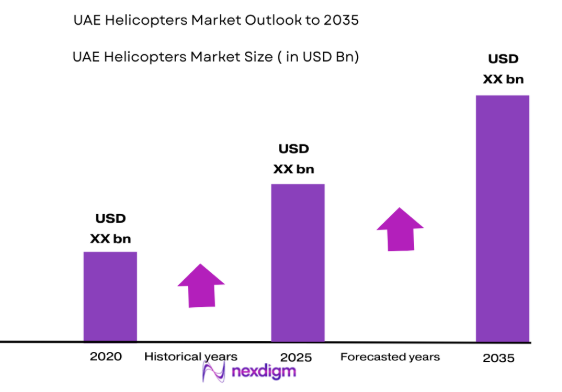
The UAE Helicopters Market size reached approximately USD ~ million based on a recent historical assessment of helicopter services revenue in the UAE, driven by expanding demand in offshore oil and gas support operations, emergency medical services, search and rescue missions, tourism-related air mobility, and growing defense contracts that require advanced rotary‑wing assets. The market’s valuation reflects economic activity across commercial and government sectors, where helicopters support critical transport, logistics, and aerial operations that underpin broader aviation growth in the region.
Dominant cities in the UAE helicopter industry include Dubai and Abu Dhabi, where robust aviation infrastructure, strategic economic diversification, and high tourism demand elevate helicopter utilization across both commercial and government applications. These cities benefit from significant investments in heliport facilities, luxury transport services, and offshore logistics linked to oil and gas operations, making them focal points for domestic and international operators. The presence of regulatory frameworks that support aviation safety and integration with broader transport networks further strengthens their leadership in the helicopter market.
By Product Type
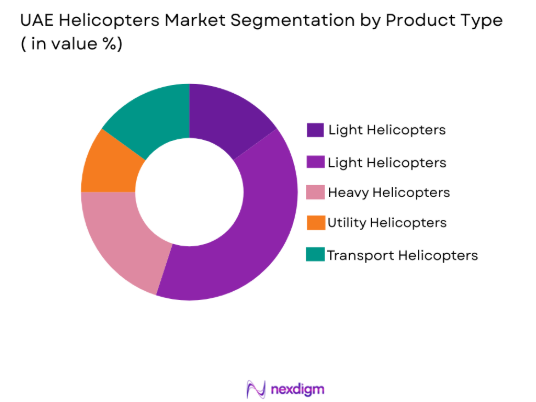
The UAE Helicopters market is segmented by product type into light helicopters, medium helicopters, heavy helicopters, utility helicopters, and transport helicopters. Medium helicopters currently dominate the market due to their versatility and ability to perform a wide range of tasks, from search and rescue operations to military transport and offshore oil rig services. This segment benefits from growing demand for helicopters that can handle multiple roles effectively, particularly in challenging environments such as offshore oil and gas exploration. The medium helicopter’s capacity, range, and cost-effectiveness contribute to its continued popularity, making it the leading product type in the UAE Helicopter market.
By Platform Type
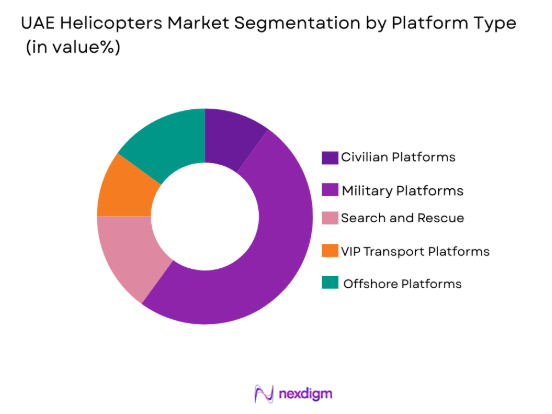
The UAE Helicopters market is segmented by platform type, including civilian platforms, military platforms, search and rescue platforms, VIP transport platforms, and offshore platforms. Military platforms dominate the market, driven by the UAE’s increasing defense budgets and its strategic focus on military modernization. Military helicopters are essential for operations such as troop transport, surveillance, and combat missions. Additionally, the demand for military platforms is fueled by ongoing geopolitical tensions in the region, where helicopters play a critical role in enhancing operational capabilities. The strategic importance of military platforms, combined with long-term defense contracts, ensures that this platform type continues to lead the market in the UAE.
Competitive Landscape
The competitive landscape of the UAE Helicopters market is highly consolidated, with key players vying for dominance through technological innovation and strategic defense contracts. Major players such as Airbus, Boeing, and Sikorsky dominate the market with their advanced rotorcraft systems. These companies leverage their global presence and strong relationships with both governmental and private sectors to secure long-term contracts. Market consolidation continues as established players strengthen their positions through mergers, acquisitions, and joint ventures, particularly in the military aviation sector.
|
Company Name |
Establishment Year | Headquarters | Technology Focus | Market Reach | Key Products | Revenue | Technology Development Focus |
| Airbus Helicopters | 1967 | France | ~ | ~ | ~ | ~ | ~ |
| Boeing | 1916 | USA | ~ | ~ | ~ | ~ | ~ |
| Sikorsky Aircraft | 1923 | USA | ~ | ~ | ~ | ~ | ~ |
| Leonardo | 1948 | Italy | ~ | ~ | ~ | ~ | ~ |
| Bell Helicopter | 1935 | USA | ~ | ~ | ~ | ~ | ~ |
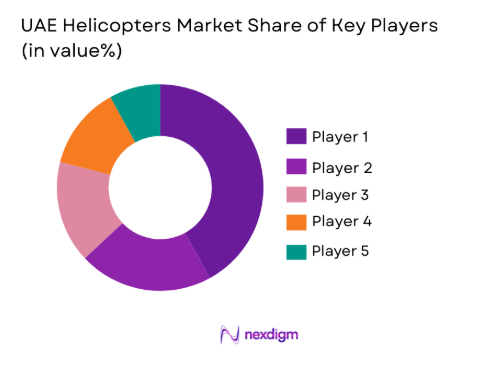
UAE Helicopters Market Analysis
Growth Drivers
Increase in defense spending and military modernization
The UAE’s ongoing commitment to military modernization has significantly boosted the demand for advanced helicopter systems. With defense spending continuing to rise, the UAE is enhancing its aerial capabilities, including acquiring more helicopters for military operations such as troop transport, surveillance, and combat missions. These investments are spurred by the growing need for secure and efficient transportation, advanced surveillance systems, and mobility across challenging terrains. Military helicopters are now considered a crucial component of the UAE’s strategic defense framework, contributing to an increase in demand for specialized systems, including heavy-lift and utility helicopters. Moreover, the UAE’s desire to maintain regional security and its partnerships with global powers have also catalyzed investments in cutting-edge rotorcraft technology. Additionally, military modernization is closely linked to global defense contracts and strategic acquisitions, ensuring long-term market stability.
Growing demand for offshore oil and gas exploration
Offshore oil and gas exploration in the UAE has seen exponential growth, particularly with the discovery of new resources in the Arabian Gulf. Helicopters are crucial for transporting personnel, supplies, and conducting aerial surveys in these remote and often challenging environments. The oil and gas sector in the UAE continues to be one of the key drivers of helicopter demand, with companies relying heavily on helicopters to service offshore rigs, transport executives, and provide emergency medical services. Helicopter operators in the UAE have tailored their fleet to meet the specific needs of this sector, focusing on helicopters with longer ranges, higher payload capacities, and advanced avionics. This specialized demand has led to further investment in both the military and civilian aviation sectors, reinforcing the critical role helicopters play in the country’s economic backbone. With sustained growth in offshore oil exploration activities, helicopter companies in the UAE are poised to meet increasing demands for specialized rotary-wing services in this sector.
Market Challenges
High capital expenditure for helicopter procurement
Helicopter procurement, both for military and civilian applications, involves significant capital expenditure, which remains one of the major barriers to market growth. The cost of acquiring advanced helicopters, coupled with the need for high maintenance and operational costs, limits accessibility for some smaller operators and less affluent sectors. Despite the growing demand for helicopter services in the UAE, the substantial financial commitment required for fleet expansion and maintenance creates challenges for both government and private sector players. The high capital expenditure often requires long-term financing and extensive governmental support, especially for the military sector, which typically receives substantial funding from national defense budgets. As helicopter technology continues to evolve, the costs associated with cutting-edge innovations such as hybrid propulsion systems and advanced avionics are adding further financial burdens, which could potentially slow down market expansion in the coming years.
Stringent regulatory requirements for certifications
Helicopter operators in the UAE face stringent regulatory requirements that are necessary to ensure safety, reliability, and compliance with international standards. These regulations are often time-consuming and costly to adhere to, as they require regular inspections, certification renewals, and compliance with both local and international aviation authorities. In the UAE, regulatory bodies such as the General Civil Aviation Authority (GCAA) enforce strict standards that must be met by helicopter operators and manufacturers. While these regulations are essential for ensuring the safe operation of helicopters, they also create a challenge for companies seeking to expand their fleets or introduce new technologies into the market. The long approval processes for new helicopter models or retrofitting existing aircraft with the latest systems can delay the entry of innovative solutions into the market, making it difficult for operators to remain competitive. These regulations, while crucial for safety, often create significant operational bottlenecks that companies must navigate to stay in compliance and avoid costly penalties.
Opportunities
Introduction of autonomous helicopter systems
The growing interest in unmanned systems presents a significant opportunity for the UAE helicopter market, especially in military applications and remote area surveillance. Autonomous helicopters, which use artificial intelligence to perform certain tasks without direct human intervention, have the potential to revolutionize the industry. This technology could significantly enhance operational efficiency, reduce costs, and increase safety by minimizing human error in high-risk environments. As the UAE seeks to modernize its defense systems, the integration of autonomous helicopter technology offers several advantages, such as the ability to conduct surveillance, reconnaissance, and even combat operations with minimal risk to human life. The development of autonomous systems also aligns with global trends in defense technology, making the UAE a key player in adopting these innovations. Investment in autonomous helicopter technology is expected to grow, with both military and civilian applications benefiting from enhanced capabilities in areas like emergency medical services, border patrol, and offshore operations.
Expansion of commercial helicopter services for tourism
Helicopter services in the UAE have grown significantly in recent years, especially within the tourism sector. The UAE, particularly Dubai, is known for its luxury tourism market, attracting high-net-worth individuals seeking unique experiences, such as aerial tours of the city’s iconic landmarks, desert safaris, and scenic flights over the Palm Jumeirah. Helicopter tour operators are expanding their fleets to accommodate the growing demand for premium travel experiences, and this trend is expected to continue as tourism numbers rise in the coming years. Additionally, the UAE’s strategic location as a global tourism hub further enhances the potential for commercial helicopter services, particularly for VIPs, corporate clients, and leisure travelers. The demand for such services is projected to rise as both international and domestic tourism continue to flourish, with helicopters offering the quickest and most scenic way to explore the country’s attractions. With the expansion of Dubai’s infrastructure, including new luxury hotels and entertainment hubs, the demand for helicopter services is likely to increase, creating substantial growth opportunities for the industry.
Future Outlook
The UAE Helicopters market is expected to see continued growth in the next five years, driven by technological advancements, increased demand from both military and civilian sectors, and sustained infrastructure development. The introduction of hybrid and autonomous helicopter systems, along with more efficient designs, will further support market expansion. Additionally, government policies focusing on defense modernization and infrastructure improvement will play a pivotal role in shaping the market’s trajectory. The offshore oil and gas sector will remain a major demand driver, while commercial services for tourism and VIP transport will continue to grow, strengthening the market outlook for the coming years.
Major Players
- Airbus Helicopters
- Boeing
- Sikorsky Aircraft
- Leonardo
- Bell Helicopter
- MD Helicopters
- Kaman Aerospace
- Russian Helicopters
- Helibras
- BAE Systems
- Northrop Grumman
- Textron Aviation
- AgustaWestland
- General Electric Aviation
- Lockheed Martin
Key Target Audience
- Investments and venture capitalist firms
- Government and regulatory bodies
- Military organizations
- Private aviation operators
- Offshore oil and gas companies
- Helicopter maintenance and repair service providers
- Emergency services
- Aviation manufacturers
Research Methodology
Step 1: Identification of Key Variables
Identifying the key factors influencing the market, such as economic trends, technological advancements, and regulatory factors, is the first step in research methodology.
Step 2: Market Analysis and Construction
This involves analyzing the historical market trends, evaluating the current market situation, and constructing a model that predicts future developments.
Step 3: Hypothesis Validation and Expert Consultation
At this stage, data is validated with insights from industry experts to ensure the accuracy and relevance of the findings.
Step 4: Research Synthesis and Final Output
The final step involves synthesizing the collected data into a comprehensive report that highlights key findings, opportunities, and market trends.

- Executive Summary
- Research Methodology (Definitions, Scope, Industry Assumptions, Market Sizing Approach, Primary & Secondary Research Framework, Data Collection & Verification Protocol, Analytic Models & Forecast Methodology, Limitations & Research Validity Checks)

- Market Definition and Scope
- Value Chain & Stakeholder Ecosystem
- Regulatory / Certification Landscape
- Sector Dynamics Affecting Demand
- Strategic Initiatives & Infrastructure Growth

- Growth Drivers
Increase in defense spending and military modernization
Growing demand for offshore oil and gas exploration
Technological advancements in rotorcraft systems
Expansion of emergency and search and rescue operations
Rising demand for VIP transport services - Market Challenges
High capital expenditure for helicopter procurement
Stringent regulatory requirements for certifications
Lack of skilled workforce for maintenance and operations
Fluctuations in fuel prices affecting operating costs
Security and geopolitical tensions in the region - Market Opportunities
Introduction of autonomous helicopter systems
Rising demand for urban air mobility solutions
Potential for expansion in civil aviation applications - Trends
Increasing integration of AI and automation in helicopter systems
Advancements in electric and hybrid-powered helicopters
Growing focus on helicopter maintenance and after-sales services
Improvement in safety and operational efficiency standards
Expansion of commercial helicopter services for tourism - Government Regulations & Defense Policy
Helicopter airworthiness standards and certification requirements
Military procurement policies and defense contracts
Export control regulations affecting helicopter technology

- By Market Value, 2020-2025
- By Installed Units, 2020-2025
- By Average System Price, 2020-2025
- By System Complexity Tier, 2020-2025

- By System Type (In Value%)
Light Helicopters
Medium Helicopters
Heavy Helicopters
Utility Helicopters
Transport Helicopters - By Platform Type (In Value%)
Civilian Platforms
Military Platforms
Search and Rescue Platforms
VIP Transport Platforms
Offshore Platforms - By Fitment Type (In Value%)
On-premise Solutions
Cloud-based Solutions
Hybrid Solutions
Modular Solutions
Integrated Solutions - By End User Segment (In Value%)
Military Forces
Commercial Operators
Search and Rescue Agencies
VIP Transport Services
Offshore Oil and Gas Operators - By Procurement Channel (In Value%)
Direct Procurement
Government Tenders
Private Sector Procurement
Online Bidding Platforms
Third-party Distributors - By Material / Technology (in Value%)
Carbon Fiber Materials
Alloy Composite Materials
Avionics Systems
Power Systems
Rotor Blade Technologies

- Market structure and competitive positioning
- Market share snapshot of major players
- Cross Comparison Parameters (System’s Type, Platform Type, Procurement Channel, EndUser Segment, Fitment Type)
- SWOT Analysis of Key Competitors
- Pricing & Procurement Analysis
- Porter’s Five Forces
- Key Players
Leonardo
Airbus Helicopters
Bell Helicopter
Sikorsky Aircraft
MD Helicopters
Kaman Aerospace
Russian Helicopters
Helibras
Boeing
Lockheed Martin
AgustaWestland
China Aviation Industry Corporation
Eurocopter
Kawasaki Heavy Industries
Gulf Helicopters

- Military Forces’ increasing reliance on helicopters for combat and rescue
- Civil operators expanding use in emergency and commercial services
- Search and rescue agencies investing in specialized aircraft
- Offshore oil and gas sectors demanding heavy-lift helicopters

- Forecast Market Value, 2026-2035
- Forecast Installed Units, 2026-2035
- Price Forecast by System Tier, 2026-2035
- Future Demand by Platform, 2026-2035


 Request a Sample
 Ask for Customization
 Get a Quote
 Enquire Now