
 Download PDF
Market Overview
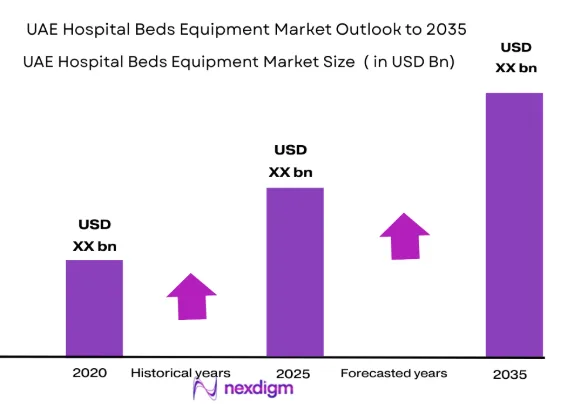
The UAE Hospital Beds Equipment Market is expected to see a significant market size based on recent historical assessments. The demand for hospital beds is largely driven by the expanding healthcare infrastructure, growing patient populations, and technological advancements in medical equipment. Based on credible sources, the market in the UAE is valued in the range of USD ~ billion, with a major contribution from both private and public sectors. Technological innovations, such as the integration of electric beds and advanced support systems, play a crucial role in expanding the market’s scope. Rising healthcare investments and modernization of medical facilities further amplify the growth trajectory.
Dominant countries and cities driving the market include the UAE, particularly the capital, Abu Dhabi, and the largest city, Dubai. Dubai is the hub of healthcare development, with ongoing projects aimed at modernizing the healthcare infrastructure to meet rising demand. The government’s focus on improving healthcare services through regulations, healthcare financing, and global partnerships contributes to the dominance of these cities. Additionally, the demand for hospital beds has been rising due to an increasing population, an aging demographic, and the expansion of healthcare services to cater to tourists and residents alike.
Market Segmentation
By Product Type
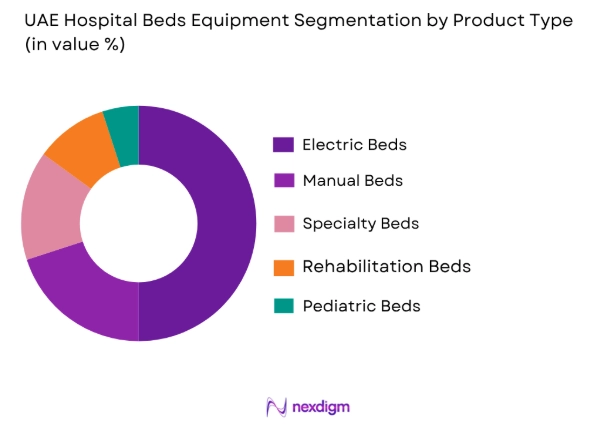
UAE Hospital Beds Equipment market is segmented by product type into electric beds, manual beds, specialty beds, rehabilitation beds, and pediatric beds. Recently, electric beds have a dominant market share due to their increasing preference for ease of use and comfort in hospitals and care facilities. These beds are equipped with adjustable settings, providing patient-centric features that enhance comfort and safety. The rising demand for more advanced technology in hospitals, combined with the ability to integrate these beds into smart healthcare systems, further drives the market’s demand for electric beds. Additionally, the development of more affordable electric models has made these beds more accessible, adding to their widespread adoption across the UAE’s medical facilities.
By Platform Type
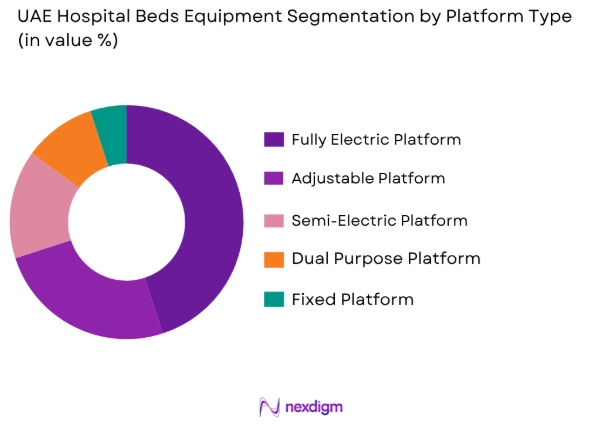
UAE Hospital Beds Equipment market is segmented by platform type into fixed platform beds, adjustable platform beds, dual-purpose beds, semi-electric platform beds, and fully electric platform beds. Among these, fully electric platform beds dominate the market share due to their advanced features that ensure optimal patient care. These beds offer the highest level of adjustability and functionality, which is highly valued by healthcare professionals and patients alike. The demand for fully electric beds is driven by the increasing trend of hospitals and care facilities opting for state-of-the-art medical equipment. Additionally, these beds can integrate with various other systems like monitoring devices and electronic health records, making them highly versatile and efficient for hospitals in the UAE.
Competitive Landscape
The competitive landscape in the UAE Hospital Beds Equipment market is characterized by a mix of global and regional players that are expanding their footprints in the country. Consolidation in the market is driven by mergers, acquisitions, and partnerships between major players to enhance their product portfolios and distribution channels. With the growing demand for technologically advanced hospital beds, the presence of established market leaders, coupled with a rise in product innovation, plays a crucial role in shaping the competitive environment.
| Company Name | Establishment Year | Headquarters | ~ | ~ | ~ | ~ | ~ |
| Medtronic | 1949 | Dublin, Ireland | ~ | ~ | ~ | ~ | ~ |
| Stryker | 1941 | Kalamazoo, MI, USA | ~ | ~ | ~ | ~ | ~ |
| Hill-Rom | 1929 | Chicago, IL, USA | ~ | ~ | ~ | ~ | ~ |
| Arjo | 1957 | Malmö, Sweden | ~ | ~ | ~ | ~ | ~ |
| Invacare | 1885 | Elyria, OH, USA | ~ | ~ | ~ | ~ | ~ |
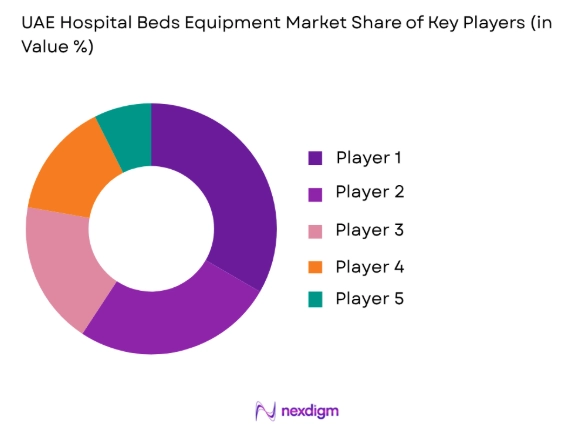
UAE Hospital Beds Equipment Market Analysis
Growth Drivers
Increasing Healthcare Infrastructure Investment
The United Arab Emirates continues substantial investment in its healthcare infrastructure, expanding hospital capacity and capital equipment acquisitions that directly affect demand for hospital beds. According to World Bank data, the UAE maintained 2 hospital beds for every 1,000 residents, indicating existing base capacity and the need for incremental additions as total population exceeds 10.6 million people and healthcare delivery expands. This absolute hospital bed count correlates with growing facility expansions in emirates like Abu Dhabi and Dubai, where new tertiary hospitals and specialty clinics are under construction, driving recurrent procurement of advanced hospital beds for general, ICU, and specialized care units.
Aging Population Driving Bed Demand
Even with a relatively youthful demographic profile, the UAE’s life expectancy and chronic condition prevalence elevate hospital utilization that requires bed capacity. World Bank population data places the UAE total population at over 10,600,000, a figure that includes a growing cohort of older individuals who use hospital services more frequently. Hospitals in emirates like Abu Dhabi report significant inpatient volumes, with average lengths of stay requiring reliable hospital bed availability across general wards and specialized units. This cohort’s clinical needs add sustained pressure to hospital bed inventories, enhancing equipment procurement in both public and private sectors.
Market Challenges
High Initial Capital Investment
Procurement of hospital beds, particularly advanced electric and smart beds, is capital intensive for UAE healthcare providers. With 2 beds per 1,000 population in existing facilities, hospitals must balance significant upfront costs for bed purchases against broader capital commitments like facility expansion and diagnostic equipment acquisitions. Capital budget planning is further constrained by national health expenditure priorities, meaning hospital administrators often defer or phase bed equipment purchases in favor of higher‑priority investments. The absolute count of existing beds highlights the scale of financial planning required to upgrade or expand inventories across emirates.
Regulatory Compliance & Certifications
Hospital beds and associated clinical equipment in the UAE must adhere to stringent regulatory frameworks administered by multiple health authorities, including the Ministry of Health & Prevention (MoHAP), Dubai Health Authority (DHA), and Department of Health – Abu Dhabi. These compliance regimes involve product registration, safety certification, and periodic review, which introduce procedural durations for approval of imported beds. The country’s reliance on imported medical equipment means manufacturers and suppliers must navigate multiple certification pathways before hospital deployment, delaying time to operational use in facilities even as infrastructure investments continue.
Opportunities
Rising Demand for Specialized Beds
Demand for categorically differentiated hospital beds—such as ICU, bariatric, pediatric, and NICU beds—is increasing alongside broader healthcare capacity growth. The UAE’s total hospital bed count of 2 per 1,000 people underscores both existing clinical capacity and the potential for diversified bed portfolios as hospitals expand service lines. Facilities across emirates are introducing specialized units (e.g., neurological care, cardiac surgery, bariatric recovery units) that require tailored bed solutions, creating procurement opportunities for suppliers of these niche bed types. This structural shift in clinical offerings supports expanding hospital beds beyond general ward inventories.
Technological Integration with IoT
The UAE’s healthcare digitalization trajectory offers opportunities for hospital beds equipped with integrated monitoring and connectivity features. The absolute hospital bed count in the UAE provides a baseline for incremental deployment of smart beds that interface with electronic health records and remote patient monitoring systems. As hospitals invest in digital infrastructure, hospital beds that support IoT functionalities—such as real‑time patient status tracking and integrated fall‑risk alerts—align with broader institutional goals for quality and operational efficiency, presenting a technology‑driven growth segment within the equipment market.
Future Outlook
The future outlook of the UAE Hospital Beds Equipment market indicates steady growth over the next few years. Technological developments in hospital bed systems, particularly smart beds and IoT integrations, are expected to drive demand across healthcare facilities in the UAE. The market will also benefit from regulatory support as the UAE government continues to invest in healthcare infrastructure. Demand-side factors, such as an aging population and increased private healthcare investments, will further fuel market growth. Moreover, as healthcare facilities modernize and adopt more advanced medical technologies, the demand for high-tech hospital beds will continue to rise.
Major Players
- Medtronic
- Stryker
- Hill-Rom
- Arjo
- Invacare
- Linet
- Stiegelmeyer
- Drive DeVilbiss Healthcare
- GF Health Products
- KI Healthcare
- Shanghua
- Paramount Bed
- France Bed
- Avidicare
- Famed
Key Target Audience
- Investments and venture capitalist firms
- Government and regulatory bodies
- Private hospitals
- Public hospitals
- Long-term care facilities
- Rehabilitation centers
- Ambulatory surgical centers
- Medical equipment distributors
Research Methodology
Step 1: Identification of Key Variables
We identify key market variables, including demand drivers, regional trends, and technological advancements, which influence market size and growth.
Step 2: Market Analysis and Construction
Market data is collected through secondary and primary research, followed by analysis to build the market model and segments.
Step 3: Hypothesis Validation and Expert Consultation
The initial market hypotheses are validated through expert consultations, including discussions with industry leaders and healthcare professionals.
Step 4: Research Synthesis and Final Output
Final research findings are synthesized, providing a comprehensive market report that includes insights, forecasts, and strategic recommendations.

- Executive Summary
- Research Methodology (Market Definitions and Assumptions, Abbreviations, Market Sizing Approach ,Primary Research Design, Data Triangulation Framework, Limitations)

- Market Definition and Scope
- Value Chain & Stakeholder Ecosystem
- Regulatory / Certification Landscape
- Sector Dynamics Affecting Demand
- Strategic Initiatives & Infrastructure Growth

- Growth Drivers
Increasing Healthcare Infrastructure Investment
Aging Population Driving Bed Demand
Technological Advancements in Hospital Beds - Market Challenges
High Initial Capital Investment
Regulatory Compliance & Certifications
Supply Chain Disruptions - Market Opportunities
Rising Demand for Specialized Beds
Technological Integration with IoT
Expansion of Private Healthcare Facilities - Trends
Rising Adoption of Electric Beds
Increase in Smart Hospital Bed Solutions
Shift Toward Patient-Centered Care Models - Government Regulations
- SWOT Analysis of Key Competitors
- Porter’s Five Forces

- By Revenue, 2020-2025
- By Units Installed, 2020-2025
- By Average Selling Price, 2020-2025
- Installed Base and Annual Procurement, 2020-2025

- By Product Type (In Value%)
Electric Beds
Manual Beds
Specialty Beds
Rehabilitation Beds
Pediatric Beds - By Platform Type (In Value%)
Fixed Platform Beds
Adjustable Platform Beds
Dual Purpose Beds
Semi-Electric Platform Beds
Fully Electric Platform Beds - By Fitment Type (In Value%)
Inpatient Fitment
Outpatient Fitment
ICU Fitment
Emergency Fitment
Specialized Fitment - By EndUser Segment (In Value%)
Private Hospitals
Public Hospitals
Long-Term Care Facilities
Ambulatory Surgical Centers
Rehabilitation Centers - By Procurement Channel (In Value%)
Direct Procurement
Distributors
Online Procurement
Group Purchasing Organizations
Procurement via Tendering

- Market Share of Major Players (By Revenue & Units Installed)
- Market Share by Bed Type Segment
- Cross Comparison Parameters ( Company Overview Product Portfolio Breadth, Regulatory Certifications & Quality Standards, Technology Integration & Smart Features, ASP & Pricing Tier Positioning, After‑Sales Services & Maintenance Network, Distribution & Channel Coverage, Production / Regional AssemblyFootprint, Custom Solutions & Project Capabilities, Warranty Terms & Service SLAs, Unit Sales vs. Revenue Mix, Hospital Tender Performance Scorecard, Clinical Feedback & End‑User Satisfaction, Supply Chain Reliability & Lead Time)
- SWOT Analysis of Major Players
- Pricing Analysis by SKU & Model
- Hospital Tender & Contracting Performance
- Detailed Profiles of Major Hospital Bed Manufacturers / Suppliers
Hill‑Rom (Teleflex)
Stryker Corporation
Getinge Group
Linet Group
Stiegelmeyer GmbH & Co. KG
Arjo AB
Invacare Corporation
Medline Industries, LP
Drive DeVilbiss Healthcare
Paramount Bed Co., Ltd.
Malvestio S.p.A.
Narang Medical Ltd.
GPC Medical Ltd.
SI Surgical (UAE)
Medicare General Trading (UAE)
Additional Regional OEM/Distributor Entities

- Hospital Bed Demand & Utilization Patterns
- Procurement Budget Allocations & Capital Planning
- Clinical Requirements & Functional Specifications
- Regulatory & Compliance Requirements for End Users
- Buyer Decision‑Making Framework

- By Revenue, 2026-2035
- By Units Installed, 2026-2035
- By Average Selling Price, 2026-2035
- Installed Base and Annual Procurement, 2026-2035


 Request a Sample
 Ask for Customization
 Get a Quote
 Enquire Now