

 Download PDF
 Download PDF
Market Overview
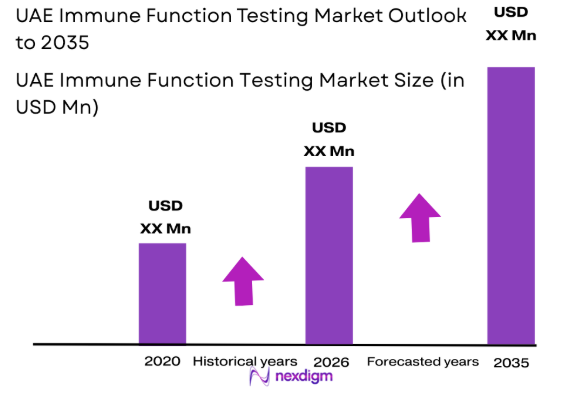
The UAE Immune Function Testing market is valued at USD ~ million based on a recent historical assessment, driven by the increasing adoption of diagnostic technologies and growing awareness of autoimmune disorders. The rise in healthcare expenditures, coupled with advancements in immunology, has contributed to the market’s growth. A shift towards personalized healthcare and preventive diagnostics has propelled demand for immune function testing, especially in clinical and research applications. With an increase in chronic disease prevalence and government healthcare initiatives, the market is poised for steady expansion.
Dominant countries like the UAE are leading the growth in immune function testing due to robust healthcare infrastructure, public-private partnerships, and increasing investments in medical research. Dubai and Abu Dhabi, with their modern healthcare facilities and focus on medical tourism, are central to this trend. The UAE government’s active role in healthcare policy and initiatives targeting non-communicable diseases has further spurred demand. The region’s focus on becoming a hub for medical innovation and specialized healthcare services strengthens its position in the global market.
Market Segmentation
By Product Type
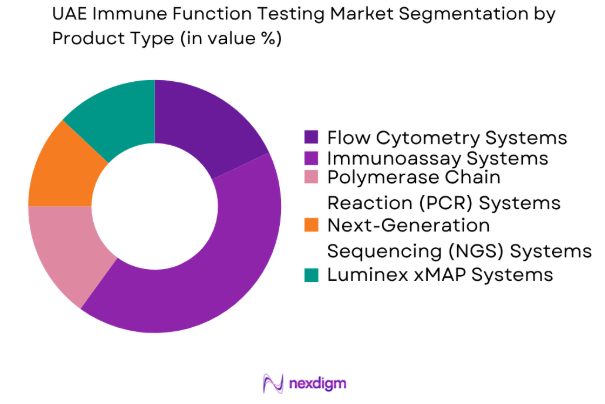
The UAE Immune Function Testing market is segmented by system type into Flow Cytometry, Immunoassay, Polymerase Chain Reaction (PCR), Next-Generation Sequencing (NGS), and Luminex xMAP Systems. Recently, the Immunoassay Systems sub-segment has dominated the market due to their widespread application in clinical diagnostics. The growing number of diagnostic centers, coupled with the ease of use and cost-effectiveness of immunoassay systems, has contributed to their market dominance. Their ability to provide quick results with high sensitivity makes them a preferred choice in healthcare settings.
By Platform Type
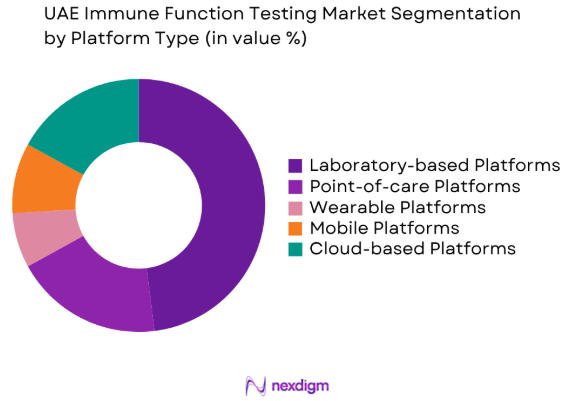
The UAE Immune Function Testing market is segmented by platform type into Laboratory-based Platforms, Point-of-care Platforms, Wearable Platforms, Mobile Platforms, and Cloud-based Platforms. Recently, Laboratory-based Platforms have been dominant due to the critical role of specialized equipment in diagnosing immune disorders in healthcare settings. Their reliability and precision make them suitable for both routine diagnostics and complex research studies. Additionally, the expanding healthcare infrastructure in urban areas contributes to the widespread adoption of laboratory-based platforms, enhancing their market position.
Competitive Landscape
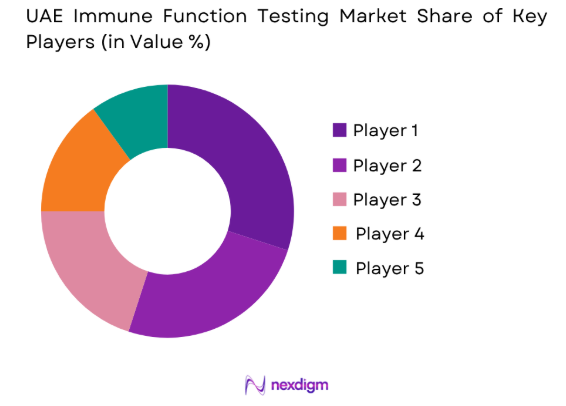
The UAE Immune Function Testing market is characterized by the presence of both global and regional players, with ongoing consolidation. Leading players like Thermo Fisher Scientific, Abbott Laboratories, and Siemens Healthineers dominate the market, driven by their advanced technology offerings, extensive product portfolios, and strong distribution networks. The increasing demand for faster and more reliable testing solutions has intensified competition, pushing firms to innovate and expand their market presence through strategic collaborations and partnerships.
| Company Name | Establishment Year | Headquarters | Technology Focus | Market Reach | Key Products | Revenue | Additional Parameter |
| Thermo Fisher Scientific | 1956 | USA | ~ | ~ | ~ | ~ | ~ |
| Abbott Laboratories | 1888 | USA | ~ | ~ | ~ | ~ | ~ |
| Siemens Healthineers | 1847 | Germany | ~ | ~ | ~ | ~ | ~ |
| Roche Diagnostics | 1896 | Switzerland | ~ | ~ | ~ | ~ | ~ |
| PerkinElmer | 1937 | USA | ~ | ~ | ~ | ~ | ~ |
UAE Immune Function Testing Market Analysis
Growth Drivers
Increased Prevalence of Autoimmune Diseases
The rise in autoimmune diseases such as rheumatoid arthritis, lupus, and multiple sclerosis is driving the demand for immune function testing. Autoimmune disorders often require regular monitoring of immune system activity, making testing essential for both diagnosis and treatment management. This has resulted in the expansion of immune function testing, particularly in hospitals and diagnostic centers. With a growing number of people diagnosed with such conditions, there is an increasing need for accurate, accessible, and efficient testing solutions. The growing awareness about the importance of early diagnosis and treatment is also contributing to this trend, leading to an expanding market for immune function tests.
Technological Advancements in Diagnostic Tools
Technological advancements in immune function testing, particularly the development of more precise assays, have greatly boosted market growth. Innovations like Next-Generation Sequencing (NGS) and enhanced Immunoassay systems provide faster, more reliable results. These improvements also expand applications in fields like genomics and immunology. Additionally, the move towards laboratory automation is driving demand by reducing human error and increasing efficiency. As these technologies evolve, testing systems become more accessible, user-friendly, and cost-effective, broadening their appeal and expanding the customer base. This shift is enabling greater market penetration, offering opportunities for both established and emerging players to meet the growing need for high-quality immune function diagnostics across diverse healthcare settings.
Market Challenges
High Cost of Testing Equipment
One of the primary challenges in the UAE Immune Function Testing market is the high cost of advanced diagnostic equipment. Instruments like flow cytometers, Next-Generation Sequencers (NGS), and high-end immunoassay platforms require significant capital investment. These costs can be prohibitive for smaller diagnostic centers and healthcare providers in the region, limiting the widespread adoption of advanced immune function testing systems. Furthermore, the maintenance and operational costs of these systems can further strain budgets, particularly in the context of an already expensive healthcare infrastructure. Although the demand for testing is growing, these high costs could hinder further market expansion, especially in less urbanized areas.
Regulatory Hurdles and Compliance Issues
A significant challenge in the UAE Immune Function Testing market is the complex regulatory environment surrounding diagnostic products and medical devices. Manufacturers face strict regulatory requirements that vary across regions, potentially delaying product approvals. Compliance with both local and international standards adds further complexity, requiring continuous investment in ensuring that products meet all necessary certifications and quality guidelines. This process can increase operational costs and extend the time needed for market entry. These regulatory hurdles can restrict growth opportunities for new entrants and slow the pace of innovation, ultimately hindering the expansion of the market and limiting access to advanced diagnostic solutions.
Opportunities
Expansion of Point-of-Care Testing Solutions
A major opportunity in the UAE Immune Function Testing market is the expansion of point-of-care testing (POCT) solutions. As demand for rapid and accurate diagnostic results grows, particularly in emergency and remote environments, POCT systems are becoming more popular. These systems allow healthcare providers to deliver immediate test results at the patient’s location, improving outcomes and reducing hospital visits. The increasing use of POCT in clinics, pharmacies, and mobile health units presents substantial growth potential, especially in underserved areas where access to traditional laboratories is limited. This trend supports the expansion of the immune function testing market, catering to both urban and rural healthcare needs.
Collaboration with Research Institutions and Biotech Companies
The UAE’s emphasis on becoming a hub for medical innovation creates opportunities for collaboration between immune function testing companies and research institutions or biotech firms. Through partnerships, these entities can accelerate advancements in testing technologies, developing more precise, scalable, and cost-effective solutions. Collaborations with biotech companies can also foster the creation of specialized tests, particularly in emerging fields like personalized medicine and immuno-oncology. Such partnerships are crucial in driving market growth, as they address the increasing demand for customized, cutting-edge diagnostic tools. By combining expertise, these collaborations can meet the growing need for advanced, personalized healthcare solutions, positioning the UAE as a leader in medical innovation and expanding the immune function testing market.
Future Outlook
The UAE Immune Function Testing market is expected to witness significant growth over the next five years, fueled by technological advancements in diagnostic tools and increasing demand for personalized healthcare. Government initiatives to improve healthcare infrastructure and awareness campaigns about autoimmune diseases will continue to push the adoption of immune function tests. Technological innovations, including AI-based diagnostic systems, will further accelerate growth, making testing faster, more efficient, and more accessible. As regulatory frameworks stabilize, the market is likely to see more entry of international players, increasing competition and driving product innovation.
Major Players
- ThermoFisher Scientific
- Abbott Laboratories
- Siemens Healthineers
- Roche Diagnostics
- PerkinElmer
- Qiagen
- Bio-Rad Laboratories
- GE Healthcare
- Illumina
- Agilent Technologies
- Merck & Co.
- Becton Dickinson and Company
- Sysmex Corporation
- Beckman Coulter
- Luminex Corporation
Key Target Audience
- Investments and venture capitalist firms
- Government and regulatory bodies
- Hospitals and healthcare providers
- Diagnosticcenters
- Biotechnology firms
- Pharmaceutical companies
- Medical device manufacturers
- Research institutions
Research Methodology
Step 1: Identification of Key Variables
The research begins with identifying key variables influencing the immune function testing market, including technological advancements, healthcare policies, and disease prevalence.
Step 2: Market Analysis and Construction
The next step involves analyzing market trends, growth patterns, and segmentation based on system type, platform, and end-user segments to build a comprehensive market structure.
Step 3: Hypothesis Validation and Expert Consultation
Market hypotheses are validated through expert consultations, ensuring the accuracy of the market data and alignment with industry insights.
Step 4: Research Synthesis and Final Output
Finally, the research findings are synthesized into a comprehensive report, with a clear market outlook and actionable insights for stakeholders.

- Executive Summary
- Research Methodology (Definitions, Scope, Industry Assumptions, Market Sizing Approach, Primary & Secondary Research Framework, Data Collection & Verification Protocol, Analytic Models & Forecast Methodology, Limitations & Research Validity Checks)

- Market Definition and Scope
- Value Chain & Stakeholder Ecosystem
- Regulatory / Certification Landscape
- Sector Dynamics Affecting Demand
- Strategic Initiatives & Infrastructure Growth

- Growth Drivers
Increased prevalence of autoimmune diseases
Government initiatives to improve healthcare infrastructure
Technological advancements in immune function testing - Market Challenges
High costs of testing equipment
Lack of trained professionals for operation
Regulatory and certification hurdles - Market Opportunities
Expansion of point-of-care immune function testing
Rise in demand for personalized medicine
Strategic partnerships for research and development - Trends
Growth in non-invasive testing technologies
Integration of artificial intelligence in testing
Adoption of telemedicine for immune function testing - Government Regulations
- SWOT Analysis of Key Competitors
- Porter’s Five Forces

- Forecast Market Value, 2026-2035
- Forecast Installed Units, 2026-2035
- Price Forecast by System Tier, 2026-2035
- Future Demand by Platform, 2026-2035

- By System Type (In Value%)
Flow Cytometry Systems
Immunoassay Systems
Polymerase Chain Reaction (PCR) Systems
Next-Generation Sequencing (NGS) Systems
Luminex xMAP Technology Systems - By Platform Type (In Value%)
Laboratory-based Platforms
Point-of-care Platforms
Wearable Platforms
Mobile Platforms
Cloud-based Platforms - By Fitment Type (In Value%)
Standalone Systems
Integrated Systems
Portable Systems
Modular Systems
Cloud-integrated Systems - By End User Segment (In Value%)
Hospitals and Clinics
Research Laboratories
Diagnostic Centers
Biotechnology Companies
Pharmaceutical Companies - By Procurement Channel (In Value%)
Direct Procurement
Distributor Networks
Online Marketplaces
Government Tenders
Third-Party Suppliers

- Market Share Analysis
- Cross Comparison Parameters (System Type, Platform Type, Procurement Channel, End User Segment, Fitment Type, Technology Integration, Pricing Model, Service Coverage, Regulatory Compliance, Market Reach)
- SWOT Analysis of Key Competitors
- Pricing & Procurement Analysis
- Key Players
Thermo Fisher Scientific
Abbott Laboratories
Siemens Healthineers
Roche Diagnostics
Bio-Rad Laboratories
PerkinElmer
Qiagen
GE Healthcare
BD Biosciences
Illumina
Agilent Technologies
Merck & Co.
AbbVie
Ortho Clinical Diagnostics
Sysmex Corporation

- Increasing use of immune function testing in diagnostics
- Growth in research-driven applications for immune function tests
- Adoption of personalized healthcare models
- Integration of immune function testing in routine healthcare

- Forecast Market Value, 2026-2035
- Forecast Installed Units, 2026-2035
- Price Forecast by System Tier, 2026-2035
- Future Demand by Platform, 2026-2035


 Request a Sample
 Ask for Customization
 Get a Quote
 Enquire Now