
 Download PDF
Market Overview
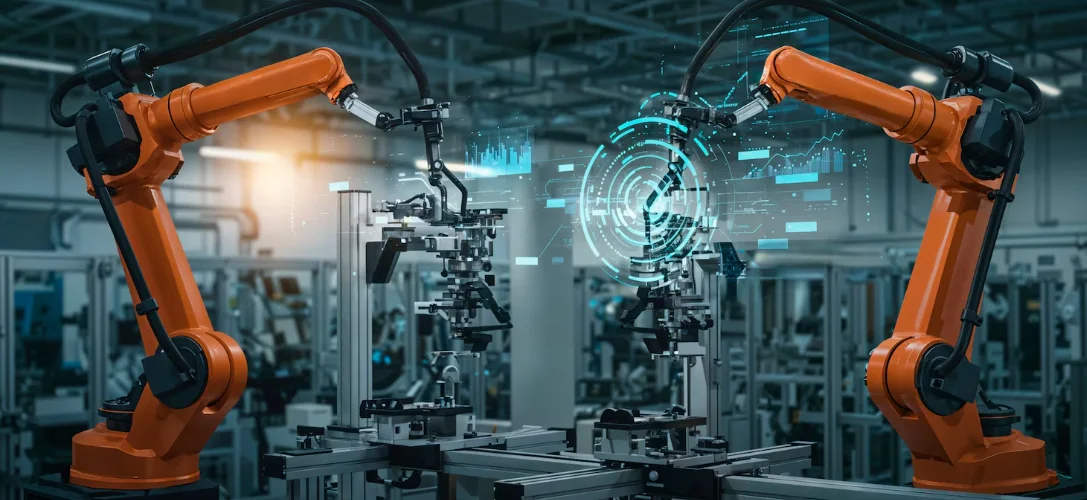
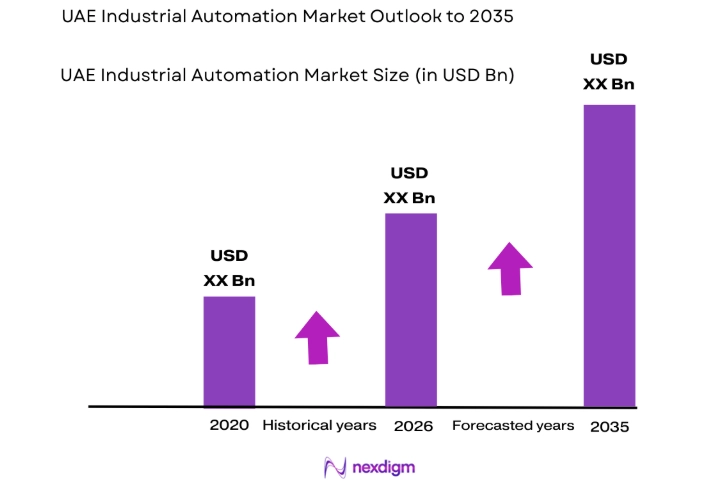
Based on a recent historical assessment, the UAE industrial automation market was valued at approximately USD ~ billion, supported by large scale investments in advanced manufacturing, smart factories, and digital infrastructure modernization. Industrial automation adoption is driven by expansion of oil refining facilities, logistics hubs, petrochemical complexes, and advanced manufacturing zones. National industrial development strategies encourage companies to deploy robotics systems, distributed control systems, industrial sensors, and intelligent manufacturing platforms to improve production efficiency, operational safety, and process reliability across energy, utilities, manufacturing, and logistics sectors.
Dubai and Abu Dhabi dominate industrial automation deployment because they host the majority of industrial infrastructure including energy processing facilities, ports, logistics corridors, and advanced manufacturing clusters. Abu Dhabi’s industrial zones and energy processing complexes deploy automation technologies to manage large scale hydrocarbon production and petrochemical operations. Dubai’s logistics ecosystem, port operations, and advanced manufacturing parks increasingly utilize robotics, machine vision systems, and automated warehousing technologies to support high throughput industrial operations and international trade activities.
Market Segmentation
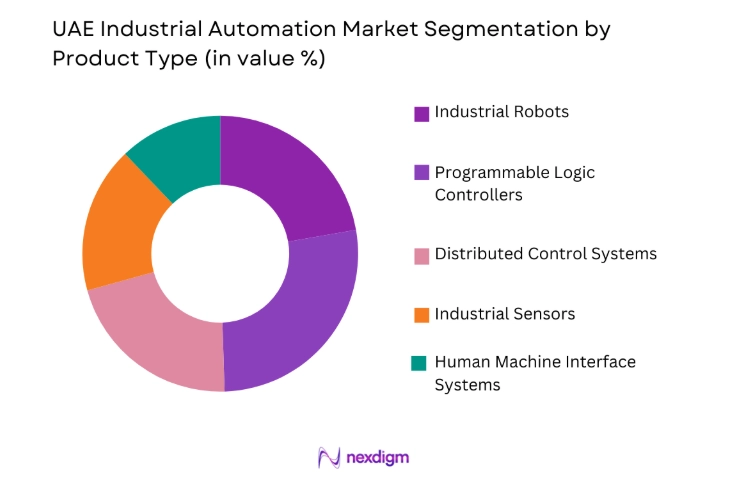
By Product Type
UAE Industrial Automation market is segmented by product type into Industrial Robots, Programmable Logic Controllers, Distributed Control Systems, Industrial Sensors, and Human Machine Interface Systems. Recently, Programmable Logic Controllers has a dominant market share due to factors such as demand patterns, brand presence, infrastructure availability, or consumer preference. Industrial companies across the UAE widely deploy programmable logic controllers because these systems provide flexible control over manufacturing processes, energy facilities, and automated production lines. Oil refining plants, petrochemical complexes, water treatment facilities, and logistics infrastructure rely heavily on PLC based automation systems to maintain continuous operations. Integration with sensors, robotics platforms, and industrial networking technologies also strengthens PLC adoption within advanced manufacturing environments.
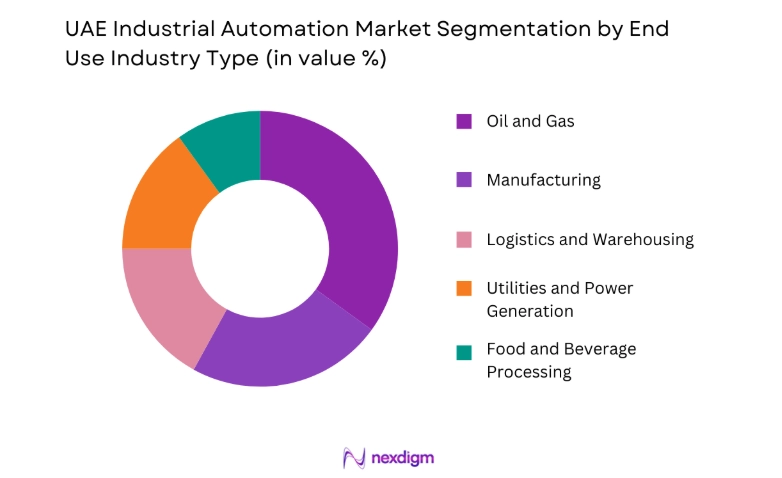
By End Use Industry
UAE Industrial Automation market is segmented by end use industry into Oil and Gas, Manufacturing, Logistics and Warehousing, Utilities and Power Generation, and Food and Beverage Processing. Recently, Oil and Gas has a dominant market share due to factors such as demand patterns, brand presence, infrastructure availability, or consumer preference. Large scale hydrocarbon extraction, refining, and petrochemical production operations require highly automated process control systems capable of maintaining safety, precision, and operational continuity. Automation platforms such as distributed control systems, safety instrumented systems, and real time monitoring networks are widely implemented across upstream and downstream operations. These technologies help energy companies optimize production efficiency, manage hazardous environments, and reduce operational downtime within complex energy processing facilities.
Competitive Landscape
The UAE industrial automation market demonstrates a moderately consolidated competitive structure dominated by global automation technology providers that supply robotics systems, industrial control equipment, and smart manufacturing platforms. International automation companies collaborate with local system integrators and engineering firms to deploy advanced industrial technologies across oil processing plants, manufacturing facilities, and logistics hubs. Continuous investments in digital manufacturing platforms, industrial internet of things infrastructure, and artificial intelligence powered automation solutions strengthen competition among major players operating across energy, utilities, and manufacturing industries.
| Company Name | Establishment Year | Headquarters | Technology Focus | Market Reach | Key Products | Revenue | Regional Integration Capability |
| Siemens AG | 1847 | Germany | ~ | ~ | ~ | ~ | ~ |
| ABB Ltd | 1988 | Switzerland | ~ | ~ | ~ | ~ | ~ |
| Schneider Electric | 1836 | France | ~ | ~ | ~ | ~ | ~ |
| Rockwell Automation | 1903 | United States | ~ | ~ | ~ | ~ | ~ |
| Mitsubishi Electric | 1921 | Japan | ~ | ~ | ~ | ~ | ~ |
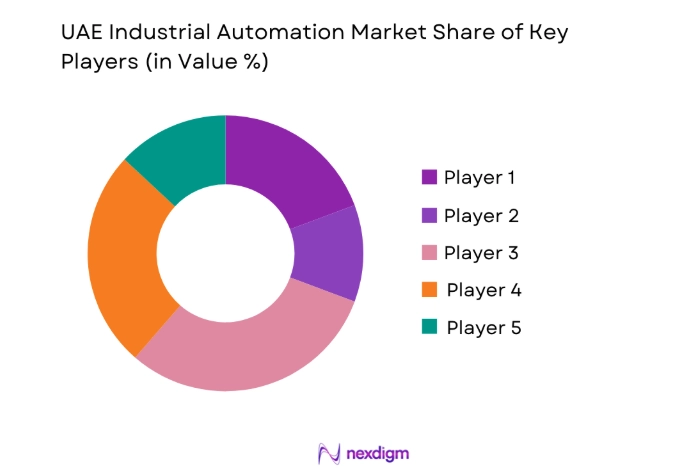
UAE Industrial Automation Market Analysis
Growth Drivers
Industrial Diversification and Smart Manufacturing Expansion Initiatives
The UAE government promotes industrial diversification programs designed to reduce dependency on hydrocarbon revenues while strengthening domestic manufacturing capabilities through advanced industrial technologies and automation infrastructure. National initiatives supporting smart manufacturing encourage companies to adopt robotics systems, artificial intelligence powered monitoring platforms, and integrated industrial data systems capable of improving productivity and operational efficiency across manufacturing sectors. Industrial zones and manufacturing clusters across Abu Dhabi and Dubai increasingly deploy automated production systems to support advanced electronics manufacturing, food processing, and aerospace component production. Automation technologies allow factories to maintain consistent production quality while reducing labor intensive manufacturing processes. Industrial digital transformation strategies further integrate cloud based analytics platforms and industrial internet of things sensors across production lines. Manufacturing companies therefore gain real time operational insights that allow predictive maintenance and improved process optimization. Government incentives including infrastructure development programs, industrial licensing support, and investment incentives encourage manufacturers to modernize production facilities with automation technologies. Global industrial automation companies collaborate with regional manufacturers to deploy advanced robotics and digital factory platforms that support scalable production environments. Continuous expansion of manufacturing ecosystems therefore accelerates adoption of industrial automation technologies across the UAE industrial landscape.
Energy Sector Automation and Advanced Process Control Deployment
The UAE energy sector represents one of the most automation intensive industrial environments because hydrocarbon extraction, refining operations, and petrochemical processing require highly sophisticated industrial control systems capable of managing complex operational processes under strict safety conditions. Large scale oil refineries and petrochemical facilities deploy distributed control systems, safety instrumented systems, and real time monitoring technologies that allow operators to manage continuous production operations across complex processing environments. Automation technologies improve operational efficiency by enabling precise control over pressure levels, temperature conditions, chemical reactions, and energy consumption within processing facilities. Industrial automation systems also enhance safety by reducing human exposure to hazardous environments associated with hydrocarbon processing operations. Energy companies deploy advanced analytics platforms integrated with industrial sensors to monitor equipment performance and detect potential system failures before operational disruptions occur. These technologies allow predictive maintenance strategies that significantly reduce downtime and operational costs. Continuous expansion of petrochemical processing capacity and energy infrastructure within the UAE further strengthens demand for automation technologies across upstream, midstream, and downstream energy operations.
Market Challenges
High Capital Investment Requirements for Industrial Automation Infrastructure
Industrial automation technologies require significant upfront capital investment because advanced robotics systems, industrial control platforms, and digital manufacturing infrastructures involve high equipment costs, software licensing expenses, and integration expenditures. Many industrial companies operating in the UAE must allocate large financial resources to upgrade legacy production facilities with modern automation technologies capable of supporting digital manufacturing operations. Implementation of robotics platforms, automated production lines, and industrial internet of things networks often requires complete redesign of factory layouts and process workflows. Integration of automation technologies also demands specialized engineering expertise and system integration services that further increase project costs. Small and medium sized manufacturing companies often face financial constraints that limit their ability to implement advanced automation solutions. High implementation costs also include workforce training requirements needed to operate sophisticated automation systems and digital manufacturing platforms. Industrial companies must invest in specialized technical personnel capable of managing robotics platforms, automation controllers, and industrial analytics software. These capital requirements may slow adoption rates for automation technologies within smaller industrial operations despite long term efficiency benefits associated with automation deployment.
Limited Availability of Skilled Industrial Automation Workforce
Advanced industrial automation technologies require highly skilled technical professionals capable of designing, deploying, and maintaining complex robotics systems and digital manufacturing platforms across industrial facilities. However the availability of specialized automation engineers, robotics technicians, and industrial data analysts remains limited within the regional labor market. Companies implementing automation technologies must therefore rely heavily on expatriate technical experts or international engineering firms to support automation system integration and maintenance activities. This dependence on external expertise increases operational costs and creates challenges for long term technology sustainability within industrial operations. Training programs for automation engineering and robotics technologies remain relatively limited across regional technical institutions compared with rapidly expanding industrial automation demand. Industrial operators must therefore invest in workforce development programs to build technical capabilities among local employees. Continuous upgrades of automation systems and digital manufacturing platforms further require ongoing technical training to maintain workforce competence in emerging industrial technologies. Limited availability of specialized automation expertise therefore creates operational challenges for companies attempting to expand advanced automation infrastructure across UAE industrial sectors.
Opportunities
Integration of Industrial Internet of Things and Artificial Intelligence Manufacturing Platforms
The rapid integration of industrial internet of things infrastructure with artificial intelligence powered analytics platforms presents significant growth opportunities for automation technology providers operating in the UAE industrial sector. Industrial companies increasingly deploy smart sensors and connected devices capable of collecting operational data from machinery production lines and industrial equipment across manufacturing environments. These data streams allow advanced analytics software to identify production inefficiencies equipment anomalies and predictive maintenance requirements before system failures occur. Artificial intelligence driven analytics platforms further optimize production scheduling energy consumption and supply chain coordination within automated manufacturing ecosystems. Industrial operators gain the ability to monitor equipment performance remotely while receiving automated insights that support operational decision making. Integration of AI powered monitoring systems with robotics platforms and automation controllers creates highly adaptive manufacturing environments capable of self optimizing operational processes. Industrial internet of things ecosystems also enable centralized monitoring of distributed industrial assets across large production facilities and energy processing plants. These technological developments significantly expand opportunities for automation technology providers supplying intelligent manufacturing platforms and advanced industrial analytics solutions across UAE industries.
Expansion of Automated Logistics Infrastructure and Smart Warehousing Systems
Rapid growth of logistics infrastructure across the UAE presents major opportunities for industrial automation providers specializing in automated material handling systems robotics based warehouse management technologies and intelligent logistics platforms. Dubai and Abu Dhabi operate major global trade corridors supported by large scale seaports cargo airports and logistics free zones that handle high volumes of international freight movement. Logistics companies increasingly deploy robotic sorting systems automated storage and retrieval systems and artificial intelligence driven warehouse management software capable of optimizing distribution operations. Automated logistics technologies improve order fulfillment speed reduce operational errors and increase throughput within high capacity logistics facilities. E commerce growth and digital trade expansion further increase demand for automated fulfillment centers capable of handling large volumes of online orders efficiently. Robotics systems integrated with conveyor automation and machine vision inspection technologies support rapid parcel sorting and packaging operations within modern logistics hubs. These automation technologies enable logistics operators to manage large scale distribution networks efficiently while reducing labor intensive warehouse processes across rapidly expanding logistics infrastructure within the UAE.
Future Outlook
The UAE industrial automation market is expected to expand significantly as industries accelerate digital transformation and adopt intelligent manufacturing technologies. Increasing integration of robotics, artificial intelligence platforms, and industrial internet of things infrastructure will strengthen automation capabilities across manufacturing and energy sectors. Government industrial diversification programs and smart manufacturing initiatives will further support automation adoption across industrial zones and logistics hubs. Expansion of automated logistics infrastructure, energy processing facilities, and advanced manufacturing clusters will sustain long term demand for industrial automation technologies.
Major Players
- Siemens AG
- ABB Ltd
- Schneider Electric
- Rockwell Automation
- Mitsubishi Electric
- Emerson Electric
- Honeywell International
- Yokogawa Electric
- Omron Corporation
- Bosch Rexroth
- Fanuc Corporation
- KUKA AG
- Delta Electronics
- Hitachi Industrial Equipment Systems
- General Electric
Key Target Audience
- Industrial automation equipment manufacturers
- Oil and gas companies
- Manufacturing companies
- Logistics and warehouse operators
- Investments and venture capitalist firms
- Government and regulatory bodies
- Industrial robotics integrators
Research Methodology
Step 1: Identification of Key Variables
The research process begins with identification of key variables influencing the UAE industrial automation market including automation technologies, industrial infrastructure expansion, energy sector modernization, and manufacturing digitalization. Key demand drivers, regulatory policies, and technological trends are analyzed to determine market scope and segmentation parameters.
Step 2: Market Analysis and Construction
Extensive secondary research is conducted using industry databases, company reports, government publications, and industrial technology reports. Data collected from these sources is used to construct the market structure, segmentation framework, and competitive landscape of the UAE industrial automation ecosystem.
Step 3: Hypothesis Validation and Expert Consultation
Industry experts including automation engineers, manufacturing executives, and industrial technology consultants are consulted to validate market assumptions and technological adoption trends. Expert insights ensure accuracy of market segmentation, technology adoption drivers, and competitive positioning across industrial sectors.
Step 4: Research Synthesis and Final Output
All validated data and analytical insights are synthesized into a comprehensive market report outlining industry structure, competitive dynamics, growth drivers, and future opportunities. The final output provides strategic intelligence for stakeholders seeking investment or expansion opportunities within the UAE industrial automation market.

- Executive Summary
- Research Methodology (Definitions, Scope, Industry Assumptions, Market Sizing Approach, Primary & Secondary Research Framework, Data Collection & Verification Protocol, Analytic Models & Forecast Methodology, Limitations & Research Validity Checks)

- Market Definition and Scope
- Value Chain & Stakeholder Ecosystem
- Regulatory / Certification Landscape
- Sector Dynamics Affecting Demand

- Growth Drivers
Expansion of Smart Manufacturing Initiatives Across UAE Industrial Zones
Increasing Automation Investments in Oil and Gas Production Facilities
Rising Deployment of Robotics and Automated Systems in Logistics Infrastructure - Market Challenges
High Initial Capital Investment for Industrial Automation Infrastructure
Limited Availability of Specialized Automation Engineering Talent
Integration Complexity Between Legacy Industrial Systems and Modern Automation Platforms - Market Opportunities
Development of Smart Industrial Zones and Digitally Connected Manufacturing Facilities
Expansion of Automated Logistics and Warehouse Infrastructure Supporting E Commerce
Adoption of Artificial Intelligence Driven Industrial Control Systems - Trends
Growing Integration of Industrial Internet of Things Platforms Across Manufacturing
Increasing Adoption of Collaborative Robots in Industrial Production Environments - Government Regulations
- SWOT Analysis
- Porter’s Five Forces

- By Market Value, 2020-2025
- By Installed Units, 2020-2025
- By Average System Price, 2020-2025
- By System Complexity Tier, 2020-2025

- By System Type (In Value%)
Industrial Robotics Systems
Programmable Logic Controllers
Distributed Control Systems
Supervisory Control and Data Acquisition Systems
Industrial Machine Vision Systems - By Platform Type (In Value%)
Manufacturing Automation Platforms
Energy and Utilities Automation Platforms
Logistics and Warehouse Automation Platforms
Oil and Gas Industrial Control Platforms - By Fitment Type (In Value%)
New Industrial Facility Automation
Retrofit Automation for Existing Plants
Integrated Smart Factory Systems
Modular Automation Systems - By End User Segment (In Value%)
Oil and Gas Industry
Manufacturing and Industrial Production
Logistics and Infrastructure Operators

- Market Share Analysis
- Cross Comparison Parameters (Automation Technology Portfolio, System Integration Capability, Industrial Application Coverage, Digital Platform Integration, Pricing Strategy, Regional Service Network, Innovation and R&D Capability)
- SWOT Analysis of Key Competitors
- Pricing & Procurement Analysis
- Key Players
Siemens AG
ABB Ltd
Schneider Electric
Rockwell Automation
Mitsubishi Electric
Honeywell International
Emerson Electric
Yokogawa Electric Corporation
Bosch Rexroth
Omron Corporation
Fanuc Corporation
KUKA AG
General Electric Automation
Hitachi Industrial Equipment Systems
Delta Electronics

- Oil and Gas Operators Deploying Automation Systems to Improve Operational Safety and Efficiency
- Manufacturing Companies Implementing Smart Factory Technologies for Productivity Improvement
- Logistics Providers Investing in Automated Warehousing and Material Handling Systems
- Energy Infrastructure Operators Utilizing Automation Platforms for Grid and Facility Monitoring

- Forecast Market Value, 2026-2035
- Forecast Installed Units, 2026-2035
- Price Forecast by System Tier, 2026-2035
- Future Demand by Platform, 2026-2035


 Request a Sample
 Ask for Customization
 Get a Quote
 Enquire Now