

 Download PDF
 Download PDF
Market Overview
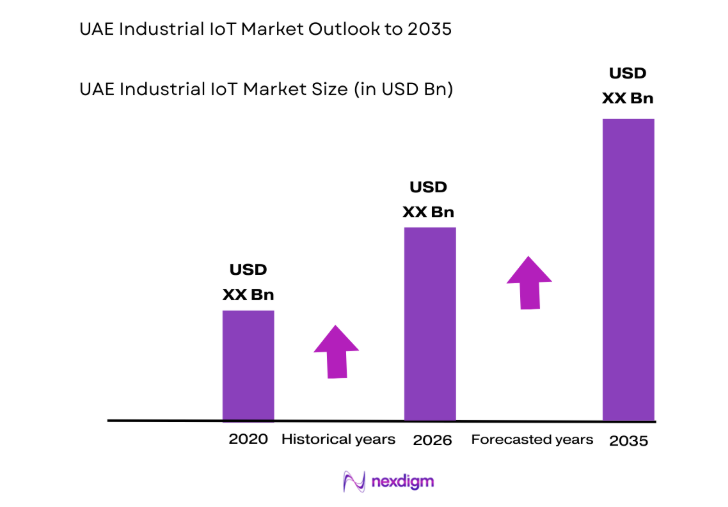
A recent historical assessment valued the UAE Industrial IoT market at approximately USD ~ based on data referenced from IDC Middle East digital transformation tracking and national digital infrastructure investments. Market expansion is primarily driven by smart manufacturing initiatives, industrial automation programs, connected asset monitoring, and large scale digital transformation across energy, logistics, and utilities sectors adopting advanced sensor networks and analytics platforms.
Industrial IoT deployment is concentrated across major economic centers including Dubai and Abu Dhabi where industrial zones, ports, logistics hubs, and energy facilities actively integrate connected industrial technologies. These cities dominate the market because of strong digital infrastructure, large manufacturing bases, government supported Industry ~ initiatives, and the presence of multinational technology vendors supporting industrial connectivity, data analytics platforms, and smart infrastructure development.
Market Segmentation
By Component
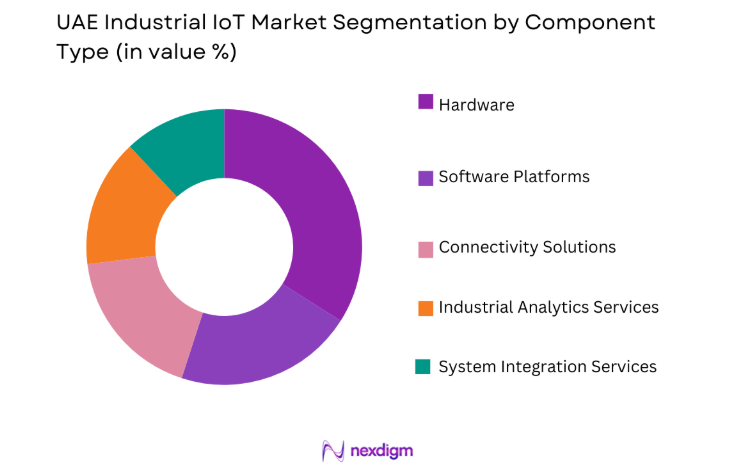
UAE Industrial IoT market is segmented by product type into hardware, software platforms, connectivity solutions, industrial analytics services, and system integration services. Recently, hardware has a dominant market share due to factors such as strong demand for industrial sensors, edge devices, programmable controllers, and machine monitoring equipment across manufacturing plants, energy facilities, and logistics centers. Industrial operators increasingly deploy connected sensors and edge gateways to collect real time operational data from machinery and production environments. Hardware adoption expands further because large scale infrastructure and industrial modernization projects require extensive deployment of connected devices that enable predictive maintenance, automated monitoring, and asset tracking across complex industrial ecosystems.
By End Use Industry
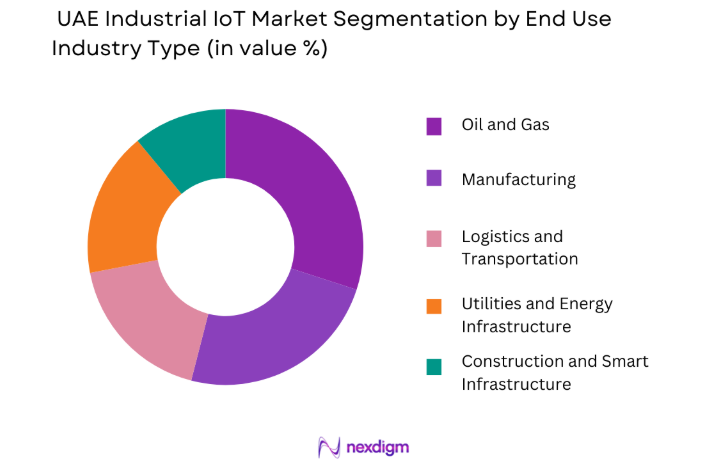
UAE Industrial IoT market is segmented by end use industry into manufacturing, oil and gas, logistics and transportation, utilities and energy infrastructure, and construction and smart infrastructure. Recently, oil and gas has a dominant market share due to factors such as extensive use of connected monitoring systems, pipeline surveillance sensors, predictive maintenance platforms, and remote asset management technologies deployed across large upstream and downstream facilities. Energy companies continuously adopt Industrial IoT technologies to optimize drilling operations, monitor refinery equipment, improve worker safety, and track pipeline performance across geographically dispersed infrastructure. Large national energy operators invest heavily in digital monitoring platforms and connected industrial systems to enhance operational efficiency and asset reliability.
Competitive Landscape
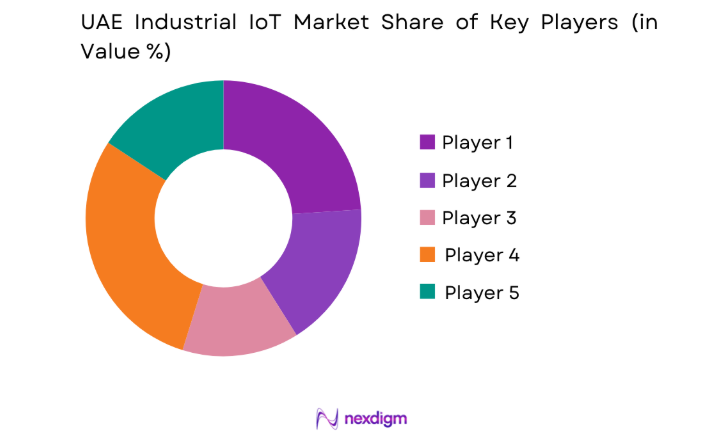
The UAE Industrial IoT market demonstrates moderate consolidation with several multinational technology providers dominating enterprise scale industrial digitalization projects. Large global companies provide integrated solutions combining industrial sensors, connectivity platforms, cloud analytics, and automation software. Strategic partnerships between technology vendors, telecommunications operators, and government backed digital transformation programs significantly influence competitive positioning. Companies compete through industrial automation platforms, predictive analytics capabilities, cybersecurity integration, and scalable cloud infrastructure supporting large industrial deployments.
| Company Name | Establishment Year | Headquarters | Technology Focus | Market Reach | Key Products | Revenue | Industrial IoT Platform Capability |
| Siemens | 1847 | Germany | ~ | ~ | ~ | ~ | ~ |
| Cisco Systems | 1984 | United States | ~ | ~ | ~ | ~ | ~ |
| Honeywell International | 1906 | United States | ~ | ~ | ~ | ~ | ~ |
| Schneider Electric | 1836 | France | ~ | ~ | ~ | ~ | ~ |
| IBM | 1911 | United States | ~ | ~ | ~ | ~ | ~ |
UAE Industrial IoT Market Analysis
Growth Drivers
Industrial Digital Transformation Programs Across Energy Manufacturing and Logistics Infrastructure
Large scale digital transformation programs across energy facilities manufacturing plants and logistics hubs significantly accelerate adoption of Industrial IoT technologies throughout the UAE industrial ecosystem. Government supported smart industry initiatives encourage companies to deploy connected sensors automation platforms and predictive analytics systems capable of improving industrial productivity and operational efficiency. Industrial organizations increasingly integrate IoT enabled asset monitoring technologies that provide real time insights into machinery performance energy consumption and operational reliability across large industrial environments. Connected industrial infrastructure allows operators to detect equipment failures early optimize maintenance scheduling and reduce unexpected downtime affecting production operations. Energy companies deploy IoT enabled monitoring platforms across refineries pipelines and offshore infrastructure to maintain safe and efficient operations. Manufacturing facilities implement industrial connectivity solutions to automate production lines monitor quality control metrics and improve supply chain visibility across complex production networks. Logistics hubs deploy sensor networks to track cargo movements optimize warehouse operations and monitor equipment utilization across large distribution centers. Continuous investment in digital industrial infrastructure therefore strengthens demand for Industrial IoT technologies supporting automation data driven decision making and operational optimization across multiple industries.
Expansion of Smart Infrastructure and Industrial Automation Initiatives in National Development Programs
National infrastructure development strategies emphasizing smart industry automation and digital connectivity significantly contribute to the rapid expansion of Industrial IoT deployments across the UAE economy. Industrial automation technologies become essential components of modern infrastructure projects including smart ports intelligent transportation systems and advanced energy management networks. Large scale infrastructure investments integrate IoT enabled monitoring systems capable of managing utilities transportation networks and industrial equipment across connected digital ecosystems. Manufacturing companies also invest in automated robotics systems connected through IoT platforms to improve production efficiency and maintain international quality standards. Smart logistics infrastructure including automated ports and digitally connected supply chains requires advanced monitoring systems capable of tracking equipment cargo and operational conditions continuously. Government supported digital innovation zones encourage industrial companies to deploy advanced technologies supporting automation predictive maintenance and industrial data analytics. Telecommunications infrastructure supporting high speed connectivity further strengthens the deployment of connected industrial systems across industrial facilities logistics centers and infrastructure assets. These coordinated national digitalization initiatives create strong long term demand for Industrial IoT platforms supporting intelligent industrial operations across the country.
Market Challenges
Cybersecurity Vulnerabilities in Connected Industrial Systems and Critical Infrastructure Networks
Rapid expansion of Industrial IoT connectivity across industrial environments significantly increases exposure to cybersecurity threats affecting operational technology networks and connected industrial equipment. Industrial facilities integrating thousands of connected sensors devices and gateways create complex digital ecosystems that require robust security frameworks capable of protecting sensitive operational data. Cyberattacks targeting industrial control systems may disrupt manufacturing operations compromise critical infrastructure and create operational safety risks. Energy facilities pipelines and smart utilities networks become particularly vulnerable because these systems rely heavily on continuous monitoring platforms connected through digital communication networks. Industrial operators must therefore invest heavily in cybersecurity infrastructure including network monitoring encryption and threat detection platforms designed to protect connected industrial assets. However implementing comprehensive cybersecurity solutions across large industrial networks often increases operational costs and technical complexity for companies adopting Industrial IoT technologies. Ensuring compatibility between legacy industrial equipment and modern cybersecurity systems also presents integration challenges. These security concerns can slow deployment of Industrial IoT systems as companies prioritize secure implementation strategies to protect operational infrastructure and sensitive industrial data from cyber threats.
High Implementation Costs and Integration Complexity Across Legacy Industrial Infrastructure
Industrial IoT adoption often requires significant investment in hardware infrastructure connectivity platforms software analytics systems and integration services necessary to connect existing industrial equipment with modern digital technologies. Many industrial facilities operate legacy machinery and control systems that were not originally designed to support digital connectivity or advanced data analytics platforms. Integrating these legacy systems with IoT enabled monitoring technologies requires specialized system integration expertise and extensive infrastructure upgrades. Industrial companies must deploy sensors communication gateways data management platforms and cybersecurity frameworks to support large scale connected operations. Implementation costs can therefore become substantial particularly for small and medium sized industrial operators seeking to modernize existing production facilities. Additionally workforce training becomes necessary to ensure technical teams can manage and maintain complex digital industrial systems. Operational disruptions during technology integration may also affect production schedules and industrial performance. These financial and technical barriers can delay adoption decisions as companies carefully evaluate return on investment before deploying Industrial IoT technologies across their facilities.
Opportunities
Growth of Predictive Maintenance and AI Driven Industrial Analytics Solutions
Rapid advancement of artificial intelligence analytics and machine learning technologies creates major opportunities for Industrial IoT platforms focused on predictive maintenance and operational optimization across industrial sectors. Connected sensors continuously collect data on machine vibration temperature pressure and operational performance enabling analytics platforms to identify early indicators of equipment malfunction. Predictive maintenance solutions allow industrial operators to schedule maintenance activities before equipment failures occur reducing downtime and maintenance costs. Energy facilities manufacturing plants and logistics operations increasingly deploy AI driven analytics systems capable of processing massive volumes of industrial data in real time. These platforms generate insights that improve asset utilization extend machinery lifespan and enhance production reliability. Industrial companies also benefit from reduced operational disruptions and improved safety outcomes through predictive monitoring technologies. Cloud based analytics platforms further enable scalable industrial data analysis across multiple facilities and distributed infrastructure networks. As industrial organizations increasingly prioritize operational efficiency and cost optimization predictive maintenance solutions become key drivers of future Industrial IoT technology adoption.
Expansion of Smart Manufacturing and Industry 4.0 Ecosystems Across Industrial Zones
Growing adoption of smart manufacturing technologies across industrial zones creates strong opportunities for Industrial IoT vendors offering connected automation solutions and digital manufacturing platforms. Industry 4.0 transformation programs encourage manufacturers to integrate robotics automation systems sensor networks and real time production monitoring technologies within modern production environments. Connected factories utilize Industrial IoT platforms to coordinate machinery operations monitor product quality and optimize resource utilization across production lines. Digital manufacturing ecosystems also enable manufacturers to analyze production data improve supply chain visibility and respond quickly to changes in market demand. Industrial zones supporting advanced manufacturing attract technology providers delivering integrated IoT solutions combining connectivity analytics and automation capabilities. Collaborative innovation between technology companies industrial operators and government supported research initiatives accelerates development of advanced manufacturing technologies. These initiatives strengthen the growth potential of Industrial IoT platforms supporting highly automated digitally connected manufacturing environments across the country.
Future Outlook
The UAE Industrial IoT market is expected to experience sustained expansion as industrial sectors accelerate digital transformation and automation initiatives. Growth will be supported by increased deployment of connected sensors predictive analytics platforms and smart infrastructure technologies across energy logistics and manufacturing industries. Government initiatives promoting Industry 4.0 development will encourage industrial connectivity investments while telecommunications infrastructure improvements will enable reliable high speed industrial data communication. Rising adoption of artificial intelligence analytics and predictive maintenance platforms will further strengthen market demand.
Major Players
- Siemens
- Cisco Systems
- Honeywell International
- Schneider Electric
- IBM
- ABB
- Rockwell Automation
- Emerson Electric
- Intel Corporation
- Huawei Technologies
- Oracle Corporation
- SAP SE
- Bosch IoT Solutions
- Dell Technologies
- Hitachi Vantara
Key Target Audience
- Industrial automation companies
- Oil and gas operating companies
- Manufacturing corporations
- Smart infrastructure developers
- Telecommunications network operators
- Investments and venture capitalist firms
- Government and regulatory bodies
Research Methodology
Step 1: Identification of Key Variables
The research process begins by identifying major variables influencing the UAE Industrial IoT market including industrial digitalization investment connectivity infrastructure and automation adoption across manufacturing energy logistics and infrastructure sectors. These variables establish the analytical foundation used to evaluate demand patterns and technological adoption trends within the market.
Step 2: Market Analysis and Construction
Industry data is analyzed through evaluation of industrial technology deployment across major sectors including oil and gas manufacturing logistics and utilities. Market sizing frameworks integrate technology adoption indicators industrial infrastructure investments and vendor deployment patterns to construct a comprehensive market model representing the Industrial IoT ecosystem.
Step 3: Hypothesis Validation and Expert Consultation
Industry experts including technology providers industrial automation engineers and digital transformation specialists provide validation for market assumptions and technological adoption patterns. Expert consultations ensure that analytical models reflect realistic industry deployment conditions and technology integration strategies across industrial sectors.
Step 4: Research Synthesis and Final Output
All collected data insights and expert perspectives are synthesized into a structured research framework. Market dynamics competitive positioning industry adoption drivers and technological trends are consolidated to produce the final analytical report outlining current market conditions and future development trajectories.

- Executive Summary
- Research Methodology (Definitions, Scope, Industry Assumptions, Market Sizing Approach, Primary & Secondary Research Framework, Data Collection & Verification Protocol, Analytic Models & Forecast Methodology, Limitations & Research Validity Checks)

- Market Definition and Scope
- Value Chain & Stakeholder Ecosystem
- Regulatory / Certification Landscape
- Sector Dynamics Affecting Demand

- Growth Drivers
Expansion of Smart Manufacturing and Industry 4.0 Initiatives Across UAE Industrial Zones
Increasing Deployment of Industrial IoT Platforms in Oil and Gas Production Facilities
Rapid Growth of Data Center Infrastructure and Digital Industrial Monitoring Systems - Market Challenges
Cybersecurity Risks Associated with Connected Industrial Infrastructure
High Capital Costs for Industrial IoT Infrastructure Deployment
Integration Complexity with Legacy Industrial Control Systems - Market Opportunities
Development of Smart Industrial Cities Utilizing Connected Infrastructure
Expansion of Predictive Maintenance Platforms Across Industrial Facilities
Adoption of Artificial Intelligence Driven Industrial Analytics Systems - Trends
Increasing Adoption of Edge Computing in Industrial IoT Architectures
Growing Integration of Artificial Intelligence and Machine Learning in Industrial Data Platforms - Government Regulations
- SWOT Analysis
- Porter’s Five Forces

- By Market Value, 2020-2025
- By Installed Units, 2020-2025
- By Average System Price, 2020-2025
- By System Complexity Tier, 2020-2025

- By System Type (In Value%)
Industrial IoT Sensors and Devices
Industrial IoT Connectivity Platforms
Industrial IoT Data Analytics Platforms
Industrial IoT Edge Computing Systems
Industrial IoT Security Solutions - By Platform Type (In Value%)
Manufacturing and Smart Factory Platforms
Energy and Utilities Monitoring Platforms
Oil and Gas Industrial Monitoring Platforms
Logistics and Supply Chain Platforms - By Fitment Type (In Value%)
New Industrial IoT Infrastructure Deployment
Retrofit IoT Integration for Existing Facilities
Cloud Based Industrial IoT Platforms
Hybrid Edge Cloud IoT Architectures - By End User Segment (In Value%)
Oil and Gas Industry
Manufacturing and Industrial Production
Energy and Utilities Operators

- Market Share Analysis
- Cross Comparison Parameters (IoT Platform Capability, Device Connectivity Portfolio, Industrial Application Coverage, Data Analytics Integration, Cybersecurity Capability, Pricing Structure, Research and Development Strength)
- SWOT Analysis of Key Competitors
- Pricing & Procurement Analysis
- Key Players
Siemens AG
Cisco Systems
IBM Corporation
Microsoft Corporation
Schneider Electric
Honeywell International
ABB Ltd
Emerson Electric
Rockwell Automation
Hitachi Ltd
Bosch IoT Solutions
PTC Inc
Oracle Corporation
General Electric Digital
Huawei Technologies

- Oil and Gas Companies Deploying IoT Sensors for Real Time Pipeline and Facility Monitoring
- Manufacturing Companies Implementing Smart Factory Platforms for Operational Efficiency
- Energy Infrastructure Operators Using IoT Platforms for Grid and Facility Monitoring
- Logistics Operators Utilizing Connected IoT Systems for Supply Chain Visibility

- Forecast Market Value, 2026-2035
- Forecast Installed Units, 2026-2035
- Price Forecast by System Tier, 2026-2035
- Future Demand by Platform, 2026-2035


 Request a Sample
 Ask for Customization
 Get a Quote
 Enquire Now