
 Download PDF
Market Overview
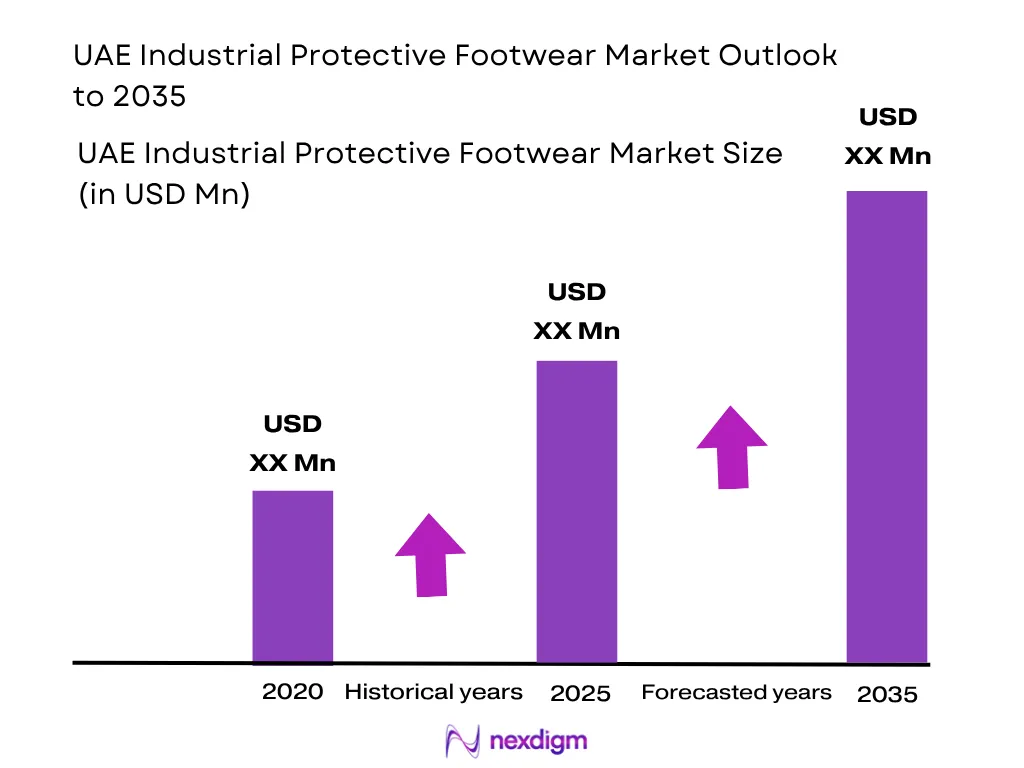
The UAE industrial protective footwear market is valued at approximately USD ~ million. The growth of the market is fueled by the increasing demand for safety and compliance in various industries such as construction, oil and gas, manufacturing, and logistics. The country’s rapid infrastructural development, especially in sectors like construction and oil & gas, has heightened the need for personal protective equipment (PPE). The adoption of strict occupational health and safety regulations by government bodies, such as the Ministry of Human Resources and Emiratisation (MoHRE), has also driven the demand for protective footwear, ensuring the safety of workers in high-risk environments.
Dubai and Abu Dhabi dominate the UAE industrial protective footwear market due to their status as key economic hubs with heavy investments in construction, oil and gas, and manufacturing sectors. These cities house a significant portion of the UAE’s infrastructure projects, including mega construction developments and industrial zones. The growing focus on worker safety, driven by stringent regulatory frameworks, has made these regions focal points for the demand for industrial protective footwear. The presence of large multinational companies and local contractors further strengthens the market dynamics in these cities.
Market Segmentation
By Product Type
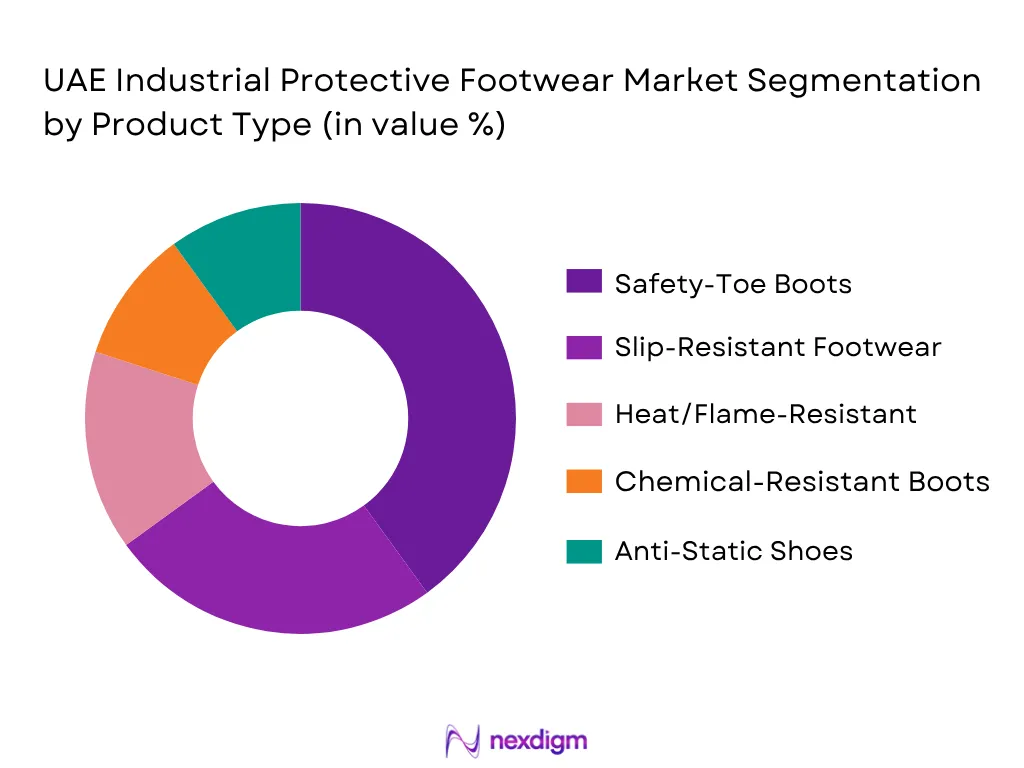
The UAE industrial protective footwear market is segmented by product type into safety-toe boots, slip-resistant footwear, heat/flame-resistant footwear, chemical-resistant boots, and anti-static shoes. Among these, safety-toe boots dominate the market. This segment leads due to its widespread usage across multiple industries such as construction, oil and gas, and manufacturing. Safety-toe boots provide essential protection against impact and compression, making them a vital component of personal protective equipment (PPE) for workers in high-risk environments. Brands like Honeywell and Bata Industrial are particularly focused on this product segment, catering to the growing demand in the construction and oil sectors.
By Material Composition
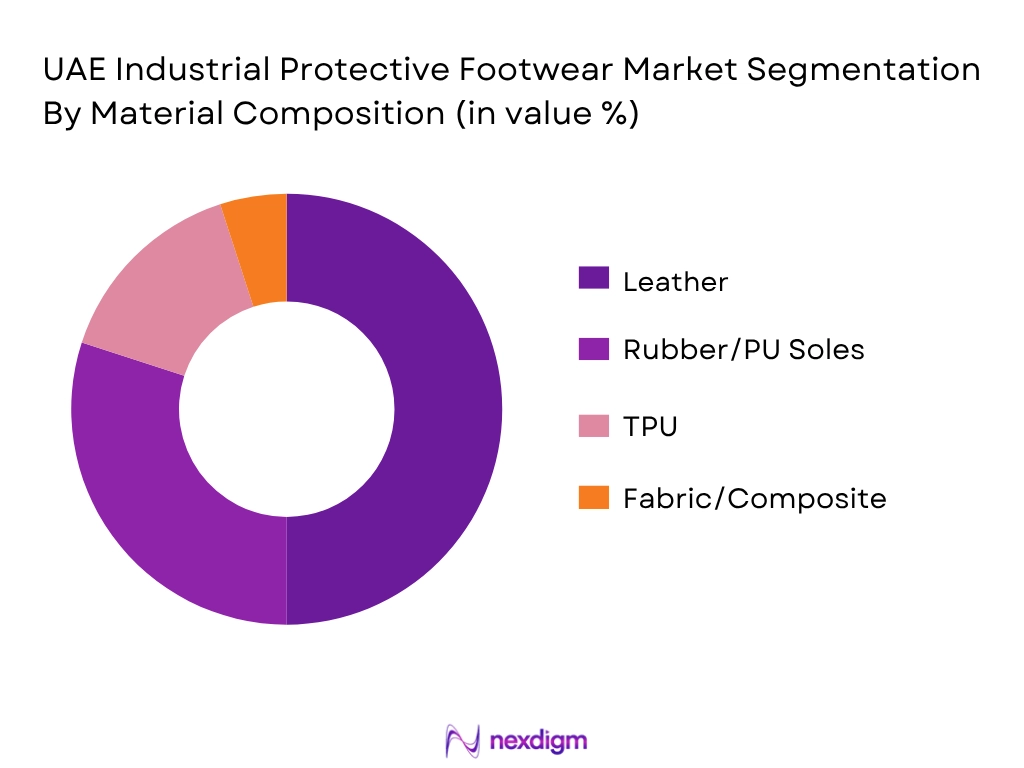
The market is further segmented by material composition into leather, rubber/PU soles, TPU (thermoplastic polyurethane), and fabric/composite materials. The leather segment is expected to hold the largest share in 2024, driven by its durability and comfort, which are critical factors in the harsh working conditions of industries like construction and manufacturing. Leather is widely preferred for safety boots as it offers superior protection against impact, cuts, and abrasions. Moreover, its long-lasting nature and resistance to wear and tear make it the preferred choice for industrial applications.
Competitive Landscape
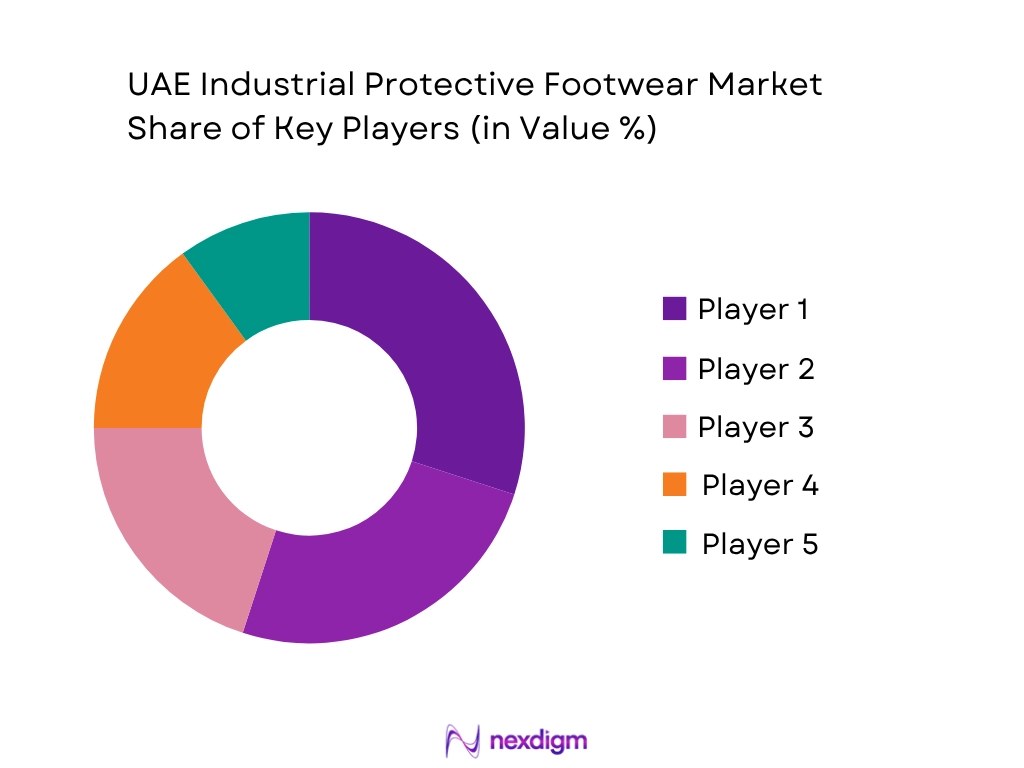
The UAE industrial protective footwear market is highly competitive, with both local manufacturers and global players vying for market share. The market is dominated by key players such as Honeywell, Bata Industrial, and 3M Safety Products, who have established a strong presence through their diverse product offerings and comprehensive distribution networks. These companies focus on innovation, ensuring compliance with regional safety standards while catering to the growing industrial sector’s needs.
| Company | Establishment Year | Headquarters | Product Range | Distribution Network | Certifications | Manufacturing Facilities |
| Honeywell Safety Products | 1906 | UAE (Regional HQ) | ~ | ~ | ~ | ~ |
| Bata Industrial | 1931 | UAE (Regional HQ) | ~ | ~ | ~ | ~ |
| 3M Safety Products | 1902 | UAE (Regional HQ) | ~ | ~ | ~ | ~ |
| Lakeland Industries | 1980 | UAE (Regional HQ) | ~ | ~ | ~ | ~ |
| Ansell Limited | 1905 | UAE (Regional HQ) | ~ | ~ | ~ | ~ |
UAE Industrial Protective Footwear Market Dynamics
Growth Drivers
Industrial Infrastructure Development
The UAE has been heavily investing in infrastructure, with projects like Expo 2020 Dubai, and various industrial zones and cities, contributing to a significant expansion in the construction and manufacturing sectors. According to the World Bank, the UAE’s GDP in 2024 is forecasted to grow at 3.9% with a focus on boosting non-oil industries like construction. The industrial sector alone has been increasing its contribution to GDP, driven by urbanization and government initiatives. The UAE government’s emphasis on diversifying the economy has intensified the demand for industrial protective footwear, as workers in construction and manufacturing sectors are required to follow stringent safety protocols.
Regulatory Enforcement of Safety Standards
The UAE’s government has established comprehensive regulations concerning workplace safety, mandating the use of personal protective equipment (PPE) in high-risk environments. The Ministry of Human Resources and Emiratisation (MoHRE) has been active in promoting occupational safety standards, ensuring that industries like oil and gas, construction, and manufacturing adhere to these regulations. For instance, in 2024, the UAE government rolled out stricter worker safety measures under its National Occupational Safety and Health Framework. These regulations include mandatory use of certified industrial footwear to prevent workplace injuries, thus driving the demand for compliant protective footwear. The UAE’s safety regulatory framework is considered one of the most robust in the region.
Market Challenges
Fluctuating Raw Material Prices
One of the primary challenges affecting the UAE industrial protective footwear market is the volatility in raw material prices. For instance, leather, rubber, and polyurethane (PU) prices have been subject to fluctuations due to global supply chain disruptions and trade uncertainties. In 2024, global raw material prices have been impacted by factors like the COVID-19 pandemic aftermath and geopolitical tensions, particularly with oil-producing countries, leading to instability in the pricing of petroleum-based products like PU. In addition, leather prices have been affected by the livestock industry’s challenges and environmental policies. According to the International Monetary Fund (IMF), the global inflation rate in 2024 is forecasted to be 6.7%, impacting the cost structure of manufacturing, including the production of industrial footwear in the UAE.
Import Dependency and Foreign Exchange Impact
The UAE’s industrial protective footwear market faces challenges from its reliance on imports for raw materials and finished products. A large portion of the footwear is imported from markets like China, India, and other Southeast Asian countries, making the UAE vulnerable to fluctuations in foreign exchange rates. In 2024, the UAE’s exchange rate has seen volatility, with the dirham slightly depreciating due to external economic conditions. This has impacted the cost of importing materials and finished goods. According to the UAE Central Bank, in 2024, the UAE’s total imports amounted to AED 553 billion, with protective footwear as a key import category. Exchange rate volatility makes it difficult for local manufacturers to manage costs, thereby impacting market pricing and profitability.
Opportunities
Demand for Advanced PPE
The demand for advanced personal protective equipment (PPE) in the UAE is experiencing an upward trajectory, as safety standards become increasingly stringent across industries. The construction, oil, and gas sectors have been at the forefront of adopting advanced PPE, driven by the country’s efforts to enhance worker safety. In 2024, the UAE government, through various ministries, has been pushing for the adoption of more technologically advanced PPE, including footwear equipped with features such as built-in sensors for monitoring health and safety conditions. As reported by the UAE Ministry of Economy, the industrial sector is expected to require higher-quality protective footwear to comply with new standards for workplace safety. Additionally, with increasing construction projects and oil extraction ventures, the demand for specialized industrial footwear has grown in parallel. The UAE government’s focus on improving occupational health and safety standards is expected to further fuel the adoption of advanced PPE.
Regional Manufacturing/Assembly Hubs
The UAE’s strategic location as a trading hub in the Gulf Cooperation Council (GCC) has opened up opportunities for the establishment of regional manufacturing and assembly hubs. In 2024, the UAE’s manufacturing output is projected to increase by 4.3%, with a focus on boosting non-oil sectors, including the production of industrial safety equipment. The UAE government is offering incentives for local manufacturers through programs like the “Made in UAE” initiative, aimed at encouraging production within the country. This shift towards local manufacturing will help reduce the dependency on imports, thus contributing to the growth of the industrial protective footwear market. According to the UAE Ministry of Industry and Advanced Technology, the growth in local manufacturing capacity will not only reduce costs but also address regional demand more efficiently. The increasing number of footwear manufacturing plants will offer a significant opportunity for growth in the industrial protective footwear market
Future Outlook
Over the next decade, the UAE industrial protective footwear market is expected to witness significant growth. The demand for industrial protective footwear will continue to rise as industries such as construction, oil and gas, and manufacturing in the UAE expand further, especially with mega infrastructure projects underway. Additionally, the enforcement of stricter safety standards and growing awareness about workplace safety will continue to boost market growth. Technological advancements in footwear design and material innovations, such as lightweight and ergonomic models, will drive future market dynamics.
Major Players
- Honeywell Safety Products
- Bata Industrial
- 3M Safety Products
- Lakeland Industries
- Ansell Limited
- UVEX Safety Group
- Delta Plus Group
- Magid Glove & Safety
- Cofra S.p.A.
- Fort Safety Products
- Arbesko AB
- Dr. Martens (Safety Line)
- Pioneer Safety Footwear
- Panther Safety Footwear
- SoleRebels (Industrial Division)
Key Target Audience
- Government & Regulatory Bodies
- Investments and Venture Capitalist Firms
- Large-scale Industrial Manufacturers
- Construction Companies & Contractors
- Oil & Gas Industry Enterprises
- Logistics & Warehousing Firms
- Industrial Equipment Procurement Heads
- Retailers in Safety Footwear Distribution
Research Methodology
Step 1: Identification of Key Variables
The research begins with the identification and mapping of key stakeholders within the UAE industrial protective footwear market. This includes manufacturers, suppliers, distributors, and end-users across various sectors. Desk research, coupled with proprietary databases, helps identify variables impacting market dynamics, including regulatory changes, safety trends, and technological innovations.
Step 2: Market Analysis and Construction
In this phase, historical data on the protective footwear market is compiled and analyzed. Key trends, such as material preferences, safety certification compliance, and market penetration across sectors, are examined. Service quality data is also evaluated to provide accurate revenue estimates.
Step 3: Hypothesis Validation and Expert Consultation
Hypotheses regarding market trends and growth drivers are validated through expert consultations. These consultations include interviews with industry professionals, safety officers, and procurement managers in the construction, oil, and gas industries, offering valuable insights into market conditions and demand drivers.
Step 4: Research Synthesis and Final Output
The final phase involves synthesizing the data gathered, incorporating expert feedback, and validating insights with direct interactions with key manufacturers and distributors. This interaction ensures that the analysis is both accurate and comprehensive, representing the true dynamics of the UAE industrial protective footwear market.

- Executive Summary
- Research Methodology (Market Definitions and Industrial Protective Footwear Specifications, Geographic and End‑User Scope (UAE Federated Emirates Coverage), Regulatory & Compliance Research Framework (GSO/ISO Safety Standards), Pricing & Cost Benchmarking Approach (CIF, FOB, Import Duty Impact), Primary and Secondary Data Sourcing Methodology, Sales Channel Channel Assessment Protocols, Forecasting, Trend Extrapolation & Projection Methodology, Limitations and Assumptions)

- Definition and Scope
- Market Genesis and Industrial Safety Evolution in UAE
- Industrial Safety Infrastructure Development and Regulations
- Industrial Protective Footwear Value Chain
- Supply Chain Dynamics
- Price Structure and Cost Build‑Up

- Growth Drivers (Industrial Infrastructure Development, Regulatory Enforcement of Safety Standards (MoHRE, GSO/ISO Certifications), Focus on Worker Safety & Insurance Cost Reduction, Corporate Procurement Policies and Tenderization, Urbanization and Project‑Led Demand)
- Market Challenges (Fluctuating Raw Material Prices (Leather, Polymers), Import Dependency and Foreign Exchange Impact, Distributor Channel Fragmentation, Counterfeit/Non‑Standard Product Influx)
- Emerging Opportunities(Demand for Advanced PPE, Regional Manufacturing/Assembly Hubs, Sustainability in Safety Footwear, Eco‑Certifications)
- Key Market Trends (Shift to E‑Commerce and Digital Procurement Portals, Integration of Ergonomics and Occupational Health, Customization & OEM Partnership Models)
- Regulatory & Compliance Landscape(UAE Industrial Safety Norms , GSO/ISO PPE Standards (EN ISO 20345/20347), Quality Assurance, Testing & Certification)
- Competitive Intensity Analysis
- Porter’s Five Forces
- SWOT Analysis – Market Level

- By Market Value (2020-2025)
- By Market Volume (2020-2025)
- By Average Selling Price (2020-2025)
- By End‑User Spend (2020-2025)

- By Product Type (In Value%)
Safety Toed Boots
Slip‑Resistant Shoes
Heat/Flame‑Resistant Footwear
Chemical‑Resistant Boots
Anti‑Static Footwear - By Material Composition (In Value%)
Leather PPE Footwear
Rubber/Polyurethane (PU) Soles
Thermoplastic Polyurethane (TPU)
Fabric/Composite Safety Footwear - By End‑User Industry (In Value%)
Oil & Gas; Construction
Manufacturing & Engineering
Logistics & Warehousing
Utilities & Energy
Municipal Services - By Distribution Channel (In Value%)
Direct OEM/Industrial Procurement
Safety Equipment Dealers/Distributors
E‑Commerce/Online PPE Portals
Wholesale Cash & Carry
Retail Safety Stores - By Buyer Category (In Value%)
Corporate Contracts
Government/Defence Tenders
Small & Medium Enterprises (SMEs)
Individual Buyers
Project‑Based Procurement

- Market Share of Key Participants (By Value and By Volume)
- Cross Comparison Parameters (Company Overview, Safety Standard Certifications and Compliance (EN ISO, ASTM), Product Range and SKU Depth, Distribution Network Footprint (Dealers, Service Points), Supply Chain Control and Inventory Availability, Pricing Benchmarks by Segment, Brand Perception and Industrial Customer Loyalty , R&D and Product Innovation)
- Investment, Manufacturing/Assembly Capabilities, After‑Sales Service and Warranty Policies) SWOT Analysis of Key Players (Strengths, Weaknesses, Opportunities, Threats)
- Safety Footwear Pricing Analysis (SKU‑Level)
- Detailed Profiles of Major Companies
Honeywell Safety Products
3M Personal Safety Division
Lakeland Industries
Ansell Limited
Uvex Safety Group
Bata Industrial
SoleRebels (Industrial Division)
Arbesko AB
Dr. Martens (Safety Line)
Pioneer Safety Footwear
Panther Safety Footwear
Delta Plus Group
Magid Glove & Safety
Cofra S.p.A.
Fortress Safety Products

- Industrial Buyer Needs and Safety Policy Drivers
- Purchasing Criteria (Certification, Durability, Cost‑of‑Ownership)
- Tendering & Contractual Procurement Mechanisms
- Price Sensitivity & Volume Purchasing Trends
- Preferred Value Adds (After‑Sales Service, Warranty, Local Stocking)

- By Value (2026-2035)
- By Volume (2026-2035)
- By Future Average Selling Price Trends (2026-2035)


 Request a Sample
 Ask for Customization
 Get a Quote
 Enquire Now