
 Download PDF
Market Overview
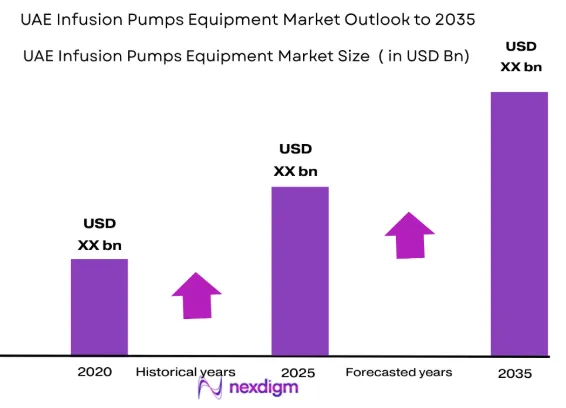
The UAE Infusion Pumps Equipment Market is expected to experience significant growth in the coming years, driven by an increase in the adoption of advanced medical technologies and the rising demand for high-quality healthcare systems. The market is valued at approximately USD ~ billion, backed by the growing prevalence of chronic diseases, particularly diabetes, which has heightened the need for infusion therapy. Furthermore, the ongoing infrastructural development in the healthcare sector, particularly in private hospitals and clinics, is expected to drive market expansion. As more hospitals and healthcare facilities adopt sophisticated infusion pumps to enhance patient care and improve safety, the market for these devices is poised for continued growth. The market is also benefiting from increased healthcare expenditure, government support for the healthcare industry, and greater awareness of the benefits of automated and accurate infusion systems.
The UAE remains a dominant player in the Gulf region when it comes to the infusion pumps equipment market. Dubai and Abu Dhabi lead the way due to their status as hubs for advanced healthcare services, which are supported by robust infrastructure and strong governmental support. The healthcare sector’s growth in these cities is largely driven by a significant influx of medical tourists and residents seeking state-of-the-art treatments. Additionally, government initiatives that prioritize healthcare system improvements, coupled with the UAE’s status as a key player in the global medical devices market, continue to bolster the demand for infusion pumps. The country’s ongoing investment in modernizing healthcare facilities ensures that the UAE will maintain its leading position in the market for infusion pump devices.
Market Segmentation
By Product Type
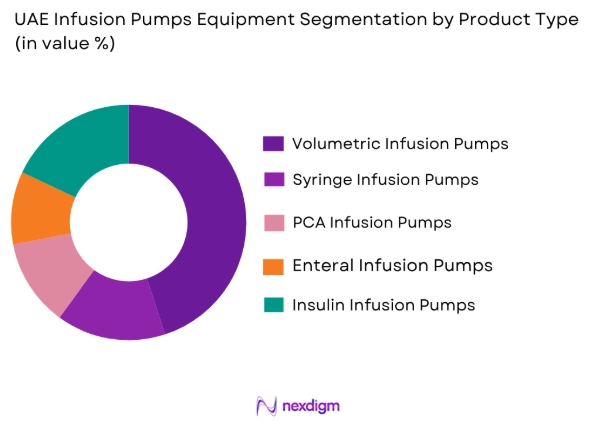
The UAE Infusion Pumps Equipment market is segmented by product type into volumetric infusion pumps, syringe infusion pumps, patient-controlled analgesia (PCA) infusion pumps, enteral infusion pumps, and insulin infusion pumps. Among these, volumetric infusion pumps hold the dominant market share, driven by their widespread use in hospitals and clinics. These pumps are particularly favored for their ability to deliver precise volumes of fluids at controlled rates, making them ideal for a variety of applications, including critical care and surgery. The high demand for these pumps is also attributed to the increasing number of surgeries and hospital admissions for chronic disease management, where precise fluid delivery is crucial.
By End-User Segment
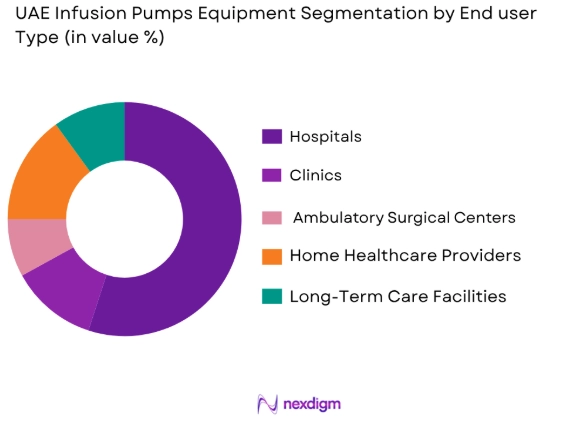
The UAE Infusion Pumps Equipment market is further segmented by end-user into hospitals, clinics, ambulatory surgical centers, home healthcare providers, and long-term care facilities. Hospitals lead this segment due to their high demand for infusion pumps for various treatments, including critical care, anesthesia, and chemotherapy. As the number of surgeries and patients requiring infusion therapy rises, hospitals remain the largest users of infusion pumps. The increasing adoption of advanced infusion systems in hospitals, especially in major cities like Dubai and Abu Dhabi, further strengthens their dominance in the market.
Competitive Landscape
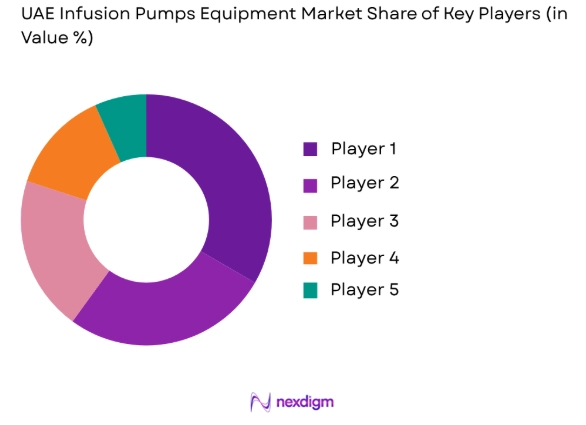
The competitive landscape of the UAE Infusion Pumps Equipment Market is characterized by a mix of global and regional players, with large companies consolidating their market presence through strategic acquisitions, partnerships, and technological innovations. Leading manufacturers dominate the market, offering a range of products equipped with advanced features, such as wireless connectivity, real-time monitoring, and enhanced safety features. Companies are also focusing on expanding their regional reach and strengthening distribution networks to cater to the growing demand for infusion pumps in hospitals and healthcare facilities. Additionally, the influence of major players in setting industry standards and driving innovation further supports market growth.
| Company Name | Establishment Year | Headquarters | Technology Focus | Market Reach | Key Products | Revenue (USD) | Product Innovation Focus |
| Medtronic | 1949 | Ireland | ~ | ~ | ~ | ~ | ~ |
| Baxter International | 1931 | US | ~ | ~ | ~ | ~ | ~ |
| Smiths Medical | 1851 | UK | ~ | ~ | ~ | ~ | ~ |
| B. Braun | 1839 | Germany | ~ | ~ | ~ | ~ | ~ |
| Terumo Corporation | 1921 | Japan | ~ | ~ | ~ | ~ | ~ |
UAE Infusion Pumps Equipment Market Analysis
Growth Drivers
Increasing Prevalence of Chronic Diseases
The increasing prevalence of chronic diseases such as diabetes, cardiovascular diseases, and cancer is significantly driving the demand for infusion pumps. According to the World Health Organization (WHO), cardiovascular diseases are the leading cause of death globally, accounting for 32% of all deaths in 2022. In the UAE, diabetes is a major health concern, with the International Diabetes Federation reporting that approximately 16.2% of the adult population was living with diabetes in 2022. The rising number of these conditions boosts the demand for infusion pumps to manage long-term treatments and medication delivery.
Rising Demand for Home Healthcare
The shift toward home healthcare services is a significant growth driver for infusion pump systems. The global aging population and preference for home-based care are key factors influencing this trend. In the UAE, the percentage of the population aged 60 years and older has steadily increased, with the United Nations forecasting that this demographic will grow by 6.4% by 2025. Home healthcare solutions, particularly infusion pumps for at-home treatments like chemotherapy or insulin delivery, are on the rise. This trend is supported by the UAE government’s initiatives to enhance homecare services and improve healthcare delivery efficiency.
Challenges
High Cost of Infusion Pump Systems
Despite the technological advancements, the high cost of infusion pumps remains a significant barrier to widespread adoption, particularly in cost-sensitive healthcare environments. In the UAE, the high per-unit cost of these devices, combined with maintenance and training expenses, has led to a reluctance in adopting these systems across all healthcare sectors. The UAE government allocates approximately 6.8% of its GDP to healthcare (World Bank, 2022), but the financial burden of high-tech medical devices still affects healthcare facility budgets. Hospitals and clinics are prioritizing cost-effective solutions while addressing the escalating cost of advanced healthcare technologies.
Regulatory and Certification Challenges
Regulatory compliance remains a significant challenge for the infusion pump market. The UAE follows stringent medical device regulations through the Emirates Authority for Standardization and Metrology (ESMA), which ensures that medical devices meet the highest safety and efficacy standards. However, the approval process for new devices is often lengthy and resource-intensive. This process can delay the availability of advanced infusion pumps in the market. Moreover, as infusion pumps become more complex, meeting these regulatory demands becomes a significant challenge for manufacturers and suppliers.
Opportunities
Expansion of Healthcare Infrastructure
The UAE has seen substantial investments in expanding healthcare infrastructure, particularly in developing world-class hospitals and clinics. In 2022, the UAE government spent an estimated $4.3 billion on healthcare development projects as part of its national health strategy. The growing number of healthcare facilities, especially in rural and underdeveloped regions, creates a strong demand for infusion pumps. With an increase in the number of hospitals and outpatient care centers, there is significant opportunity for both domestic and international companies to provide infusion pump solutions.
Adoption of Smart and Connected Infusion Pumps
The UAE’s healthcare system is increasingly adopting smart medical devices, including connected infusion pumps. In 2022, the UAE’s healthcare sector witnessed an accelerated push toward digitalization, with a growing number of hospitals and clinics implementing smart devices. Infusion pumps with wireless communication capabilities are expected to play a pivotal role in enhancing patient safety and reducing errors. The government’s support for digital healthcare through initiatives like the Dubai Health Strategy, which emphasizes electronic health records (EHR) and connected devices, further fuels this growth. The country’s drive for technological advancements offers a strong market opportunity for connected infusion pump systems.
Future Outlook
The future outlook for the UAE infusion pumps equipment market is optimistic, with significant growth expected over the next five years. Technological advancements, including smart infusion pumps with integrated monitoring capabilities, are set to drive the market forward, alongside increasing demand for chronic disease management and home healthcare solutions. The government’s ongoing support for healthcare infrastructure, coupled with rising healthcare spending, will continue to play a pivotal role in market expansion. Furthermore, the increasing adoption of telemedicine and connected healthcare systems will complement the growth of infusion pump technologies. With a solid foundation for continued development, the market is poised to experience steady growth and innovation in the years ahead.
Major Players
- Medtronic
- Baxter International
- Smiths Medical
- B. Braun
- Terumo Corporation
- Fresenius Kabi
- Abbott Laboratories
- Johnson & Johnson
- ICU Medical
- Roche
- GE Healthcare
- Siemens Healthineers
- Micrel Medical Devices
- InfuSystem
- Halyard Health
Key Target Audience
- Investments and venture capitalist firms
- Government and regulatory bodies
- Healthcare providers
- Medical equipment distributors
- Pharmaceutical companies
- Healthcare technology developers
- Medical device manufacturers
- Hospitals and healthcare facilities
Research Methodology
Step 1: Identification of Key Variables
This step involves identifying the key variables that impact the UAE infusion pumps equipment market, including technological advancements, regulatory factors, and market trends.
Step 2: Market Analysis and Construction
A detailed analysis is conducted to assess the current state of the market, including size, growth trends, and key drivers, followed by segmentation based on product types and end-users.
Step 3: Hypothesis Validation and Expert Consultation
Consultations with industry experts, medical device manufacturers, and healthcare professionals validate hypotheses and provide deeper insights into emerging trends and challenges.
Step 4: Research Synthesis and Final Output
The final output synthesizes all findings, providing actionable insights and a comprehensive analysis of the market, with clear recommendations for stakeholders.

- Executive Summary
- Research Methodology (Definitions and Scope of Infusion Pumps Equipment Data Sources and Database Calibration UAE Regulatory Data Collection Framework Healthcare Provider & Distributor Primary Interviews Forecasting Model Limitations, Bias Controls, Forecast Confidence Intervals)

- Overview Genesis and Market Evolution
- Healthcare Delivery Models in UAE
- Infusion Technology Adoption Patterns
- Healthcare Digitalization & Connected Pumps

- Growth Drivers
Increasing Prevalence of Chronic Diseases
Rising Demand for Home Healthcare
Technological Advancements in Infusion Pump Systems - Market Challenges
High Cost of Infusion Pump Systems
Regulatory and Certification Challenges
Risk of Infusion Pump Errors - Market Opportunities
Expansion of Healthcare Infrastructure
Adoption of Smart and Connected Infusion Pumps
Rising Demand for Home Care Solutions - Trends
Increase in Remote Monitoring of Infusion Pumps
Shift Towards Patient-Centric Care Models
Integration of Infusion Pumps with Electronic Health Records
- Government Regulations
- SWOT Analysis of Key Competitors
- Porter’s Five Forces

- By Value, 2020-2025
- By Unit Shipments, 2020-2025
- By Average Selling Price Trends, 2020-2025
- Market Share by Product Family, 2020-2025

- By Product Type (In Value%)
Volumetric Infusion Pumps
Syringe Infusion Pumps
PCA Infusion Pumps
Enteral Infusion Pumps
Insulin Infusion Pumps - By EndUser Segment (In Value%)
Hospitals
Clinics
Ambulatory Surgical Centers
Home Healthcare Providers
Long-Term Care Facilities - By Fitment Type (In Value%)
Hospital Infusion Pumps
Ambulatory Infusion Pumps
Homecare Infusion Pumps
Infusion Pumps for Critical Care
Infusion Pumps for Surgery - By Procurement Channel (In Value%)
Direct Procurement
Distributors & Resellers
Online Sales
Group Purchasing Organizations (GPO)
Tendering Processes

- Market Share Analysis
- Cross Comparison Parameters (Market Size, Product Segment, End-User Adoption, Competitive Positioning, Technological Drivers, Device Portfolio Breadth, Regional Penetration, Pricing Matrix, Service Footprint, Regulatory Approvals, Digital/Smart Capabilities, Installation Base, After‑Sales Support)
Competitive Benchmarks & Profiles - SWOT Analysis of Key Competitors
- Pricing & Procurement Analysis
- Key Players
B. Braun Melsungen AG
Becton, Dickinson and Company
Medtronic plc
Baxter International Inc.
Fresenius Kabi AG
Terumo Corporation Smiths Medical
Moog Inc.
Nipro Medical Corporation
Shenzhen Mindray Bio‑Medical Electronics Co., Ltd.
Zyno Medical
JMS Co., Ltd.
Hospira, Inc.
Ypsomed AG
Insulet Corporation

- Hospitals’ Adoption of Advanced Infusion Pump Technologies
- Demand for Infusion Pumps in Home Healthcare
- Impact of Ambulatory Surgical Centers on Infusion Pump Usage
- Growth of Infusion Pump Applications in Critical Care Units


 Request a Sample
 Ask for Customization
 Get a Quote
 Enquire Now