

 Download PDF
Market Overview
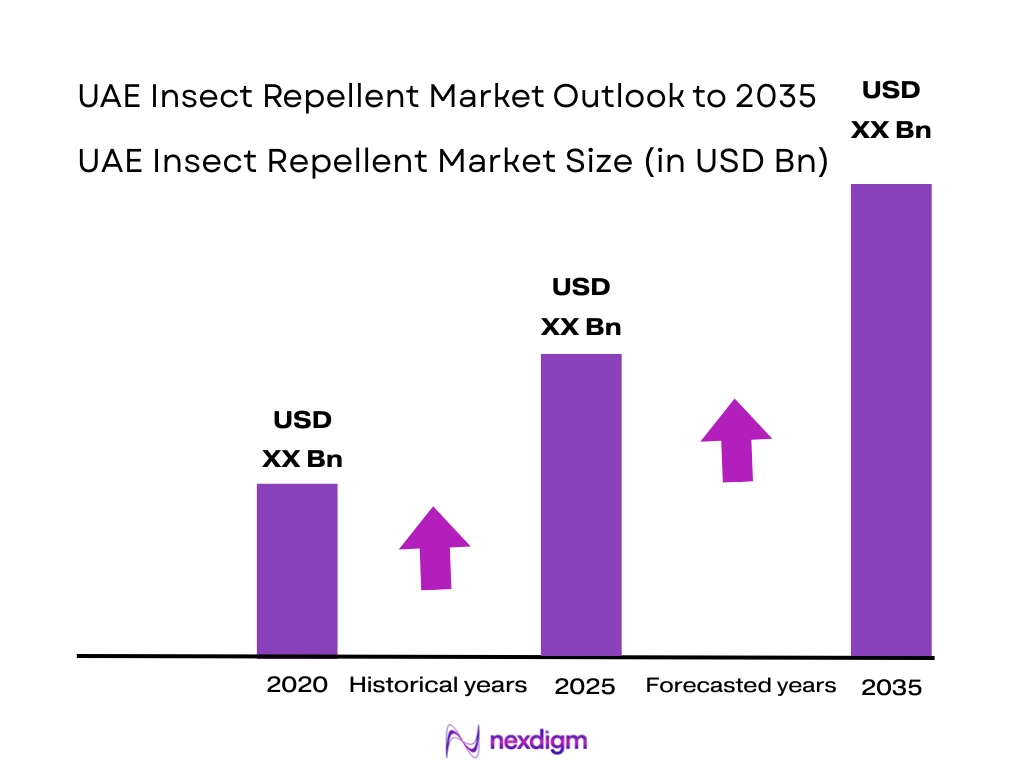
The UAE insect repellent market operates within a broader regional context where the GCC insect repellent market was valued at USD ~ billion, dominated by strong demand for health protection products amid warm climates and significant urban populations. This regional valuation includes the UAE as a major contributor based on consumer expenditure on repellents and pest protection products in 2023 and 2024, reflecting heightened awareness of vector‑borne diseases such as dengue and malaria and tourism‑driven protection needs. Consumer preference for diverse formats (sprays, vaporizers, creams) further propels spending across retail and e‑commerce channels.
Within the UAE, Dubai and Abu Dhabi stand as dominant markets due to their high population densities, substantial expatriate communities, vibrant outdoor and tourism sectors, and robust retail infrastructures that support rapid product introduction and distribution. These urban centers generate significant demand for repellents as protective consumer goods — particularly in luxury, travel, and outdoor lifestyle segments — driven by seasonal mosquito activity and a premium consumer base seeking both synthetic and natural formulations.
Market Segmentation
By Product Type
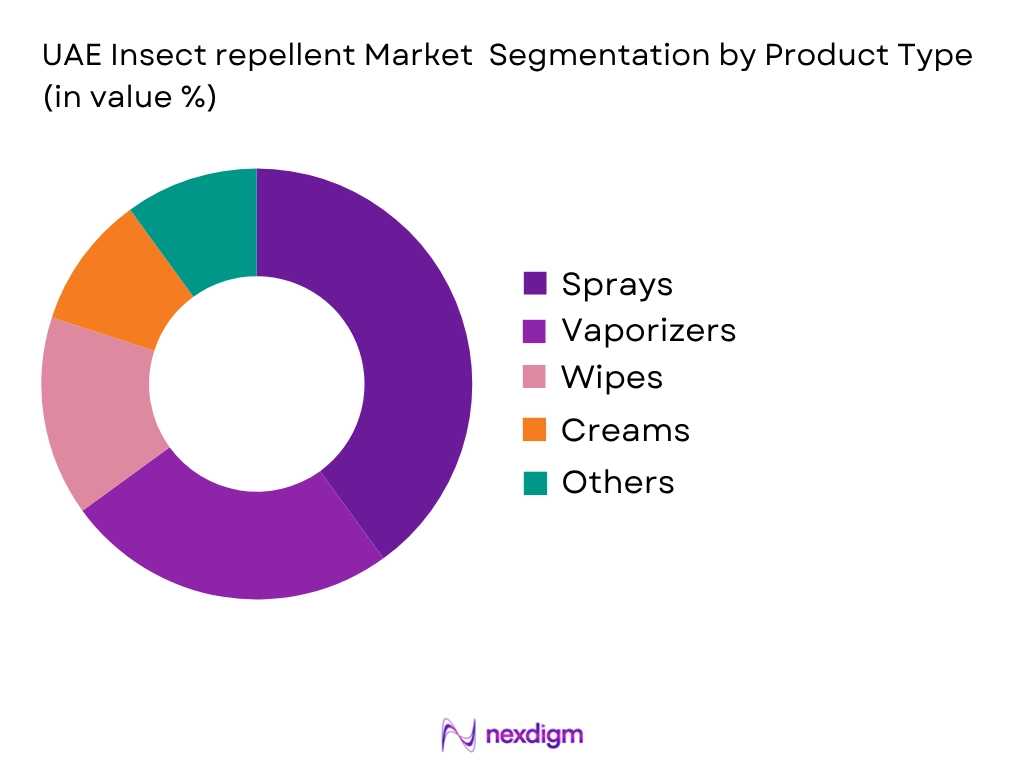
By product form, sprays and aerosols dominate the UAE insect repellent market due to their broad application convenience, established consumer familiarity, and effectiveness across a wide range of insects. These formats benefit from extensive retail distribution through supermarkets, pharmacies, and online channels, delivering high visibility and accessibility. Consumer trust in sprays is reinforced by legacy brands that have historically led marketing and innovation in this category, making them the default choice for residential and travel use. Longer‑lasting vaporizers and device‑based formats are growing but have lower penetration relative to sprays due to higher unit price points and more specific usage contexts (e.g., outdoors, hospitality venues). Electrical and wearable formats are emerging as supplementary protection solutions.
By Ingredient Type
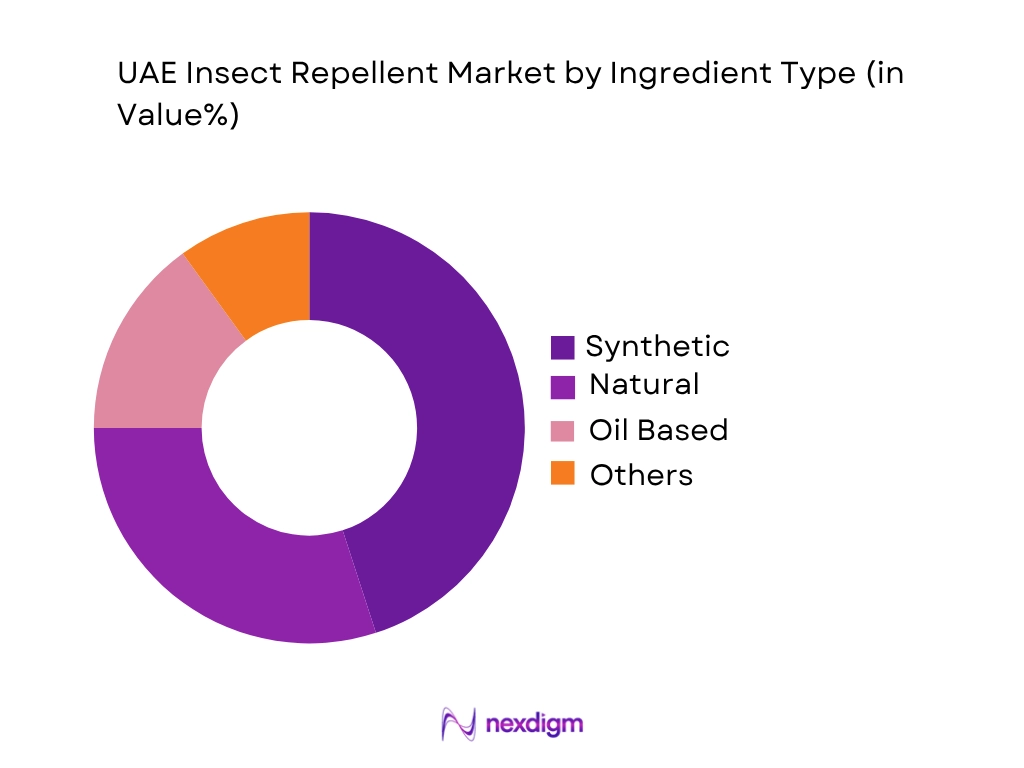
Under ingredient type, synthetic actives such as DEET and picaridin maintain the largest share due to their broad‑spectrum efficacy, longer protection duration, and established safety profiles when used as directed. These formulations are widely available from major brands and preferred in environments with high insect activity. Natural repellents featuring botanical extracts (citronella, lemon eucalyptus) are the second most prominent sub‑segment, driven by increasing health and environmental consciousness among UAE consumers, particularly expatriates and urban professionals seeking lower‑toxicity options. Essential oil‑based solutions appeal in niche lifestyle and eco‑focused segments but currently have lower overall share than synthetic products due to variability in perceived efficacy and regulatory scrutiny.
Competitive Landscape
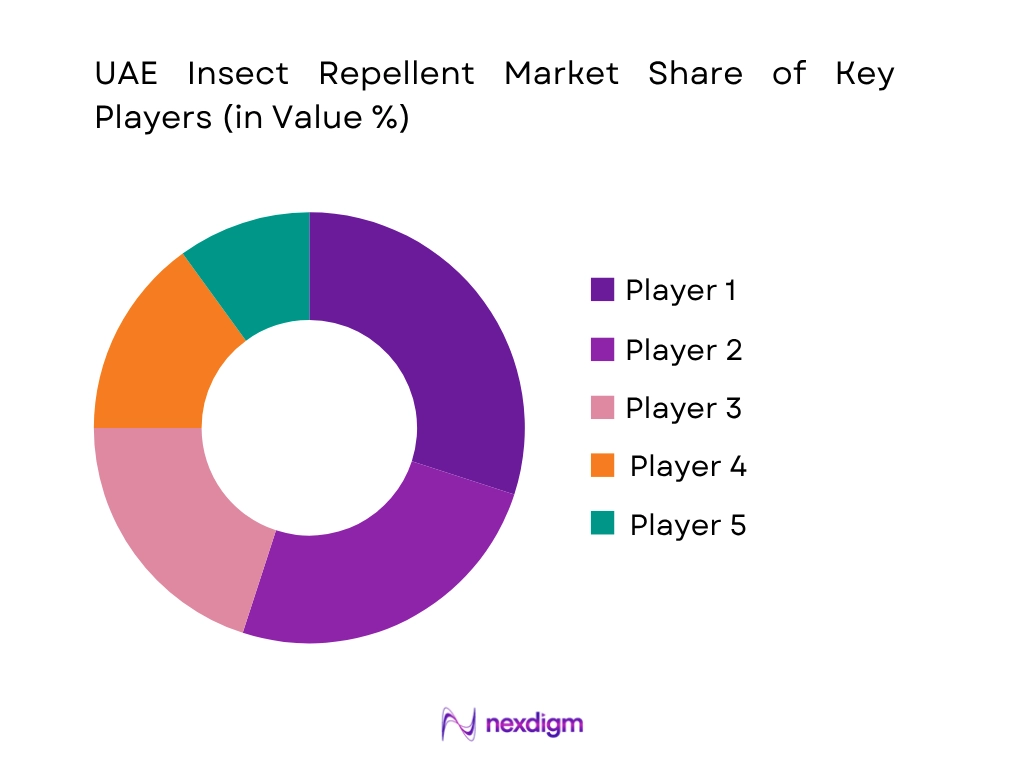
The UAE insect repellent market is characterized by competition between global personal care and pest control brands, with consolidation around recognized international players. Established companies focus on diversified product portfolios, formulation innovation, and multi‑channel distribution to capture both household and travel consumer segments.
| Company | Year Established | Headquarters | Product Range Depth | Active Ingredient Diversity | Distribution Channels Presence | Regulatory Approvals Compliance | Brand Equity/Recognition | Innovation Pipeline |
| SC Johnson & Son Inc. | 1886 | USA | ~ | ~ | ~ | ~ | ~ | ~ |
| Reckitt Benckiser Group plc | 1812 | UK | ~ | ~ | ~ | ~ | ~ | ~ |
| Spectrum Brands Holdings, Inc. | 1906 | USA | ~ | ~ | ~ | ~ | ~ | ~ |
| Godrej Consumer Products Ltd. | 1897 | India | ~ | ~ | ~ | ~ | ~ | ~ |
| Herbal Armor (All Terrain) | 1998 | USA | ~ | ~ | ~ | ~ | ~ | ~ |
UAE Repellent Market Analysis
Growth Driver
High Population Density and Urban Lifestyle Supporting Insect Repellent Demand
The United Arab Emirates’ demographic profile directly supports elevated demand for insect repellent products because a large, concentrated population increases interactions in urban and outdoor settings where insect exposure occurs. The total population is 10,986,400, comprised of residents who regularly use outdoor spaces such as parks, beaches, promenades, and community areas where mosquito presence is more pronounced. Urban centres like Dubai with a population exceeding 3,500,000 and Abu Dhabi with a population above 1,530,000 house sizeable expatriate communities engaging in recreational outdoor activities including sports, public events, and waterfront leisure. Urban population density necessitates protective products as part of everyday consumer behaviour, especially in areas where insect exposure can impact comfort and health. The lifestyle patterns in these emirates include extensive outdoor recreation attendance by both residents and tourists, amplifying consumer demand for products that provide personal insect protection. Urban dwellers in dense residential and mixed‑use developments seek practical solutions for insect avoidance, contributing to consistent consumption of repellents across retail and digital channels. This demographic context illustrates how population concentration and lifestyle behaviours underpin core demand dynamics for insect repellent usage in the UAE.
Large International Tourist Footfall Elevating Consumption of Protective Products
Tourism plays a central role in the United Arab Emirates’ economy, and international visitor traffic significantly influences the demand for protective products such as insect repellents due to increased outdoor activities and travel‑related exposure risks. In 2024 the total number of international tourist arrivals reached 16,730,000, reflecting extensive leisure and business travel into outdoor, resort, and event destinations across the UAE. Major tourism hubs such as Dubai and Abu Dhabi host events, concerts, festivals, and waterfront attractions that draw millions of visitors, driving transient demand for products that support comfort and health protection against insect contact, particularly in evening or warm‑weather settings. Tourism infrastructure includes widespread hospitality services — hotels, resorts, cruise port zones, and desert‑tour operations — where protective insect repellent products are frequently integrated into guest amenities and retail offerings. The consistent flow of visitors contributes not only to temporary consumption spikes but also to broader normalization of insect protection as part of travel packing behaviour. Given the scale of tourism engagement and sustained outdoor exposure from international travel volumes, insect repellent products benefit from recurring demand patterns linked to visitation trends and experiential outdoor tourism offerings across the UAE.
Challenges
Vector‑Borne Disease Management Burden on Public Health
Systems Vector‑borne diseases, notably dengue and West Nile virus, present a substantive public health burden that shapes the regulatory and consumer environment for personal insect protection products in the United Arab Emirates. Healthcare infrastructure and public health agencies are tasked with disease surveillance, outbreak response, and clinical management, which influences public messaging and prevention strategies. In 2024 the UAE public health expenditure reported approximately USD 22,000,000,000, highlighting substantial allocations to healthcare services, preventive care, and emergency health operations. Public health focus on clinical intervention and mosquito control programs — including fogging, larvicide deployment, and environmental management — can overshadow decentralized consumer adoption of insect repellents, as health authorities prioritise broad population health measures. The number of reported vector‑borne disease cases across the wider region remains in the thousands annually, underlining continual pressure on health systems. Such epidemiological context requires insect repellent manufacturers to coordinate with health agencies and align product positioning with official health guidelines, which can delay approvals and complicate messaging. Conservatism in public health advisories and the need for regulatory alignment restricts rapid market adjustments, thereby posing a structural challenge for repellent producers seeking broader integration into public health strategies rather than being viewed solely as consumer items.
Climate Conditions Increasing Operational Complexity for Product Availability
The climatic profile of the UAE creates operational challenges for insect repellent supply chains and distribution planning due to significant seasonal variability in temperature and humidity that influence insect activity patterns. The UAE’s average annual temperature approximates 27.4 degrees Celsius with substantial midday highs in desert areas, driving fluctuating mosquito and insect behaviour across seasons and locations. These environmental conditions mean that peaks in product demand can occur unpredictably, particularly in coastal zones or flood‑prone urban drainage areas after rainfall events. Insect repellent manufacturers and distributors must anticipate rapid shifts in consumer demand tied to weather dynamics — where even temporary humidity increases can heighten insect presence — complicating inventory forecasting and retail placement strategies. Additionally, logistical constraints related to temperature‑controlled transport and storage to maintain product integrity in high heat environments impose cost and planning demands on supply chain operators. Temperature extremes require careful handling protocols to preserve product efficacy and ensure safety compliance, especially for formulation stability in creams, aerosols, and liquid carriers. This climate‑linked complexity influences production scheduling, inventory buffers, and distribution routing, making climate volatility.
Opportunities
High Internet Penetration Supporting E‑Commerce Retail Expansion
The UAE’s digital infrastructure presents a strong opportunity for insect repellent products to capture broad consumer segments through online channels and omnichannel retail models. The country’s internet penetration rate stands at approximately 99.9%, placing it among the most digitally connected populations globally. This near‑universal connectivity enables extensive access to e‑commerce platforms where consumers increasingly browse, compare, and purchase personal care and health protection products, including insect repellents, without reliance on physical retail alone. High online engagement supports direct‑to‑consumer strategies, targeted digital marketing campaigns, and rapid product education, particularly for niche formulations such as botanical or travel‑specific repellents. E‑commerce allows manufacturers to quickly scale availability across emirates without the geographical limitations of physical shelf space, expanding reach into secondary cities and suburban zones where retail penetration may vary. Digital marketplaces also permit integration of customer reviews and interactive product demonstrations, enhancing consumer confidence in product choice. High connectivity combined with mobile commerce growth increases touchpoints for insect repellent brands to influence purchase decisions, reduce friction in product discovery, and accelerate trial adoption across diverse consumer cohorts engaged in health‑conscious purchase behaviour.
Strong Economic Output and Disposable Income Supporting Consumer Spending
The strong macroeconomic output and high disposable income levels in the UAE create an enabling environment for increased consumer spending on personal care and protection products, including insect repellents, as part of broader lifestyle expenditure choices. In 2024 the gross domestic product was USD 552,320,000,000, reflecting extensive economic activity across diversified sectors beyond oil and gas, including tourism, services, and retail. In parallel, the GDP per capita reached approximately USD 50,273, showing substantial average income capacity among residents that supports discretionary spending behaviours. High economic output correlates with robust retail sectors and extensive consumer choice, enabling greater adoption of products that enhance personal comfort and health during outdoor activities, travel, and public events. Elevated income levels also promote market acceptance of premium or multifunctional insect repellent products, including those with additional benefits such as sunscreen integration, natural ingredient positioning, or wearable protective technologies. The economic environment thus not only underpins consumer ability to afford protective personal care goods but supports retailer confidence in stocking diversified repellent portfolios, reinforcing product availability and marketing investment across multiple distribution channels. In this context, strong national economic performance and income metrics represent a considerable opportunity for expanding insect repellent product demand.
Future Outlook
The UAE insect repellent market is positioned for continued growth driven by sustained awareness of health risks related to insect bites, robust tourism and outdoor lifestyle sectors, and demand for both high‑efficacy and natural protection products. Innovations in product delivery (wearable formats, long‑lasting formulations) will shape consumer preferences, while regulatory emphasis on safety and eco‑friendly products will accelerate the adoption of botanical and low‑toxicity solutions. Urban expansion and expatriate population growth will further underpin repellent consumption across retail and online channels.
Major Players
- SC Johnson & Son Inc.
- Reckitt Benckiser Group plc
- Spectrum Brands Holdings, Inc.
- Godrej Consumer Products Ltd.
- Herbal Armor
- Dabur International Ltd.
- Bayer AG (Natural Lines)
- BASF SE
- EcoSMART Technologies
- Murphy’s Naturals
- Quantum Health
- Enesis Group
- Al Ain National Factory for Insecticides
- Saudi Modern Factory Co.
- Local UAE Pest & Repellent Brands
Key Target Audience
- Household Consumer Goods Retailers
- Hospitality & Resort Facility Managers
- Outdoor Lifestyle & Recreation Sector Buyers
- UAE Ministry of Climate Change and Environment
- Environmental & Public Health Departments
- Investments and Venture Capitalist Firms
- Hotel & Resort Procurement Divisions
- Import/Distribution Channel Partners
Research Methodology
Step 1: Identification of Key Variables
The initial phase involves mapping stakeholders in the UAE insect repellent ecosystem, including manufacturers, distributors, and regulatory bodies, leveraging verified industry databases and public health records to define critical market drivers.
Step 2: Market Analysis and Construction
Historical consumption and industry revenue data were compiled from GCC insect repellent studies and regional reports. Distribution channel penetration, product usage patterns, and retail pricing were assessed to construct a bottom‑up market estimate.
Step 3: Hypothesis Validation and Expert Consultation
Hypotheses on consumer preferences and product performance were validated through consultations with regional trade and retail experts, ensuring alignment with observed market behavior and distribution feedback.
Step 4: Research Synthesis and Final Output
The final phase cross‑verified secondary data with industry insights to produce validated conclusions on market structure, segmentation, competitive positioning, and future outlook, ensuring robustness of the analysis for professional use.

- Executive Summary
- Research Methodology (Market Definitions and Assumptions, Insect Repellent Classification Standards, Market Sizing Framework – Value & Volume, Data Triangulation Approach, Primary Research Framework – Key Opinion Leaders & Trade Panels, Secondary Research Sources, Market Forecasting Techniques, Limitations and Confidence Intervals)

- Definition and Scope
- Market Genesis & Evolution
- Endemic Vector Profile and Disease Burden
- Consumer Awareness & Usage Ecosystem
- Supply Chain and Value Chain Structure

- Growth Drivers Increasing Vector Mosquito & Arthropod Incidence
Augmenting Outdoor Recreation and Tourism Activities
Rising Consumer Awareness on Vector‑Borne Disease Prevention - Market Challenges
Regulatory Compliance & Pesticide Registration Barriers
Sensory & Skin Sensitivity Concerns
Seasonal Demand Fluctuations - Opportunities
Formulation Innovation
Natural and Eco‑Friendly Repellents
Expansion of E‑Commerce Penetration - Market Trends
Personalized & Wearable Repellent Devices
Integrated Pest Management Solutions
Smart & Connected Repellent Devices - Regulatory Environment
Pesticides and Biocides Registration Framework
Labeling & Safety Standards
Import & Tariff Regulations - SWOT Analysis
- Value Chain Stakeholder Ecosystem
- Porter’s Five Forces Analysis
- Competitive Intensity & Market Concentration

- By Market Value (2020-2025)
- By Market Volume (2020-2025)
- By Average Selling Price (2020-2025)

- By Product Type
Aerosol Sprays
Roll‑Ons
Lotions & Creams
Wipes
Coils & Mats - By Active Ingredient Type (In Value %)
DEET Based
Picaridin Based
IR3535 Based
Natural/ Botanical Based - By Distribution Channel (In Value % )
Modern Trade
Pharmacy & Drug Stores
Online/E‑Commerce
Specialty Outdoor & Travel Stores
Traditional Trade
- By End‑User (In Value % )
Household Consumers
Commercial/ HORECAT
Healthcare & Institutions
Travel & Tourism

- Market Share of Leading Players
- Cross‑Comparison Parameters (Company Overview; Product Portfolio Depth; Active Ingredient Mix; Distribution Footprint; R&D Intensity; Brand Equity Index; Sales Force & Channel Partnerships; Regulatory Approvals; Innovation Pipeline; Manufacturing & Formulation Capabilities; Consumer Loyalty Metrics; Pricing Architecture; E‑Commerce Penetration)
- SWOT Profiles of Key Competitors
- Pricing & SKU Strategy Analysis
- Detailed Company Profiles of Major Participants
SC Johnson & Son Inc.
Reckitt Benckiser Group plc
Avon Products Inc.
SC Johnson
Godrej Consumer Products Ltd.
Dabur India Ltd.
Klenzo Biotech Pvt. Ltd.
EcoSmart Organic Insect Repellent
Cutter
Thermacell Corporation
Johnson Diversey
Herbal Armor
BullFrog
Local & Regional Brands

- Consumer Demand Patterns
- Purchase Drivers & Barriers
- Regulatory Compliance Expectations
- Pain Points & Unmet Needs
- Purchase Decision Journey

- By Market Value (2026-2035)
- By Market Volume (2026-2035)
- By Average Selling Price (2026-2035)


 Request a Sample
 Ask for Customization
 Get a Quote
 Enquire Now