
 Download PDF
Market Overview
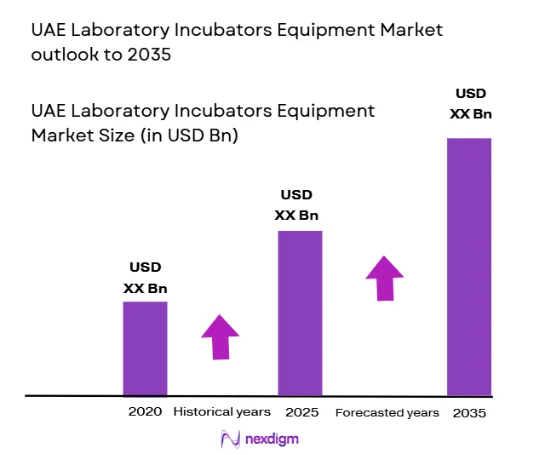
The UAE Laboratory Incubators Equipment market reached approximately USD ~ billion based on a recent historical assessment, driven by strong investments in healthcare infrastructure, pharmaceutical manufacturing expansion, and increasing research activities. Demand is significantly influenced by rising clinical diagnostics, biotechnology advancements, and stringent laboratory quality standards. The adoption of automated and energy-efficient incubators further supports market expansion, alongside government-backed initiatives promoting innovation and localized life sciences production capabilities across the region.
Dubai and Abu Dhabi dominate the UAE Laboratory Incubators Equipment market due to their advanced healthcare ecosystems, concentration of pharmaceutical hubs, and strong regulatory frameworks. Dubai benefits from its status as a global healthcare and research hub with free zones supporting biotech firms, while Abu Dhabi leverages large-scale government investments in medical research and innovation infrastructure. These cities host major hospitals, research institutions, and diagnostic centers, creating sustained demand for high-performance laboratory incubation systems.
Market Segmentation
By Product Type:
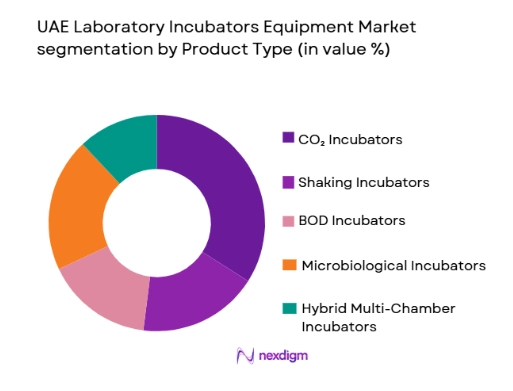
UAE Laboratory Incubators Equipment market is segmented by product type into CO₂ incubators, shaking incubators, BOD incubators, microbiological incubators, and hybrid multi-chamber incubators. Recently, CO₂ incubators have a dominant market share due to their extensive use in cell culture applications, particularly in pharmaceutical and biotechnology laboratories. These systems provide precise temperature and gas control, which is essential for advanced research and clinical testing. Their widespread adoption is further driven by increasing demand for regenerative medicine, vaccine development, and biologics production, along with strong infrastructure availability in leading UAE research centers.
By EndUser:
UAE Laboratory Incubators Equipment market is segmented by end users into pharmaceutical and biotechnology companies, academic and research institutes, hospitals and diagnostic laboratories, food and beverage testing laboratories, and environmental testing agencies. Recently, pharmaceutical and biotechnology companies have a dominant market share due to increasing investments in drug development and biologics manufacturing. These organizations require advanced incubation systems for cell culture, microbial testing, and stability studies. The growth of local pharmaceutical production and contract research services has further reinforced their dominance, supported by government initiatives encouraging domestic manufacturing capabilities. 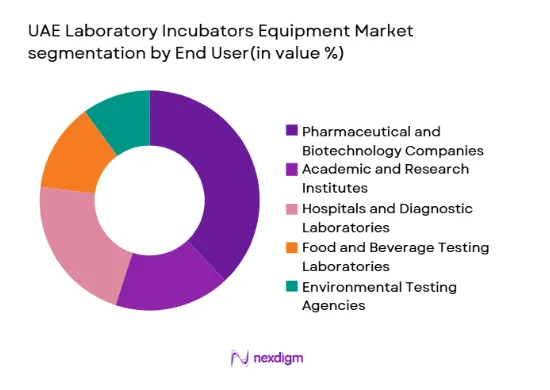
Competitive Landscape
The UAE Laboratory Incubators Equipment market exhibits moderate consolidation, with a mix of global manufacturers and regional distributors shaping competition. Major international players dominate through advanced technology offerings, strong brand recognition, and established distribution networks, while regional suppliers compete through localized service capabilities and pricing flexibility. Innovation in smart incubators and compliance with international standards remains a key differentiator among leading companies.
| Company Name | Establishment Year | Headquarters | Technology Focus | Market Reach | Key Products | Revenue (USD Billion) | UAE Distribution Strength |
| Thermo Fisher Scientific | 1956 | USA | ~ | ~ | ~ | ~ | ~ |
| Eppendorf AG | 1945 | Germany | ~ | ~ | ~ | ~ | ~ |
| Panasonic Healthcare | 1969 | Japan | ~ | ~ | ~ | ~ | ~ |
| Binder GmbH | 1983 | Germany | ~ | ~ | ~ | ~ | ~ |
| Esco Lifesciences | 1978 | Singapore | ~ | ~ | ~ | ~ | ~ |
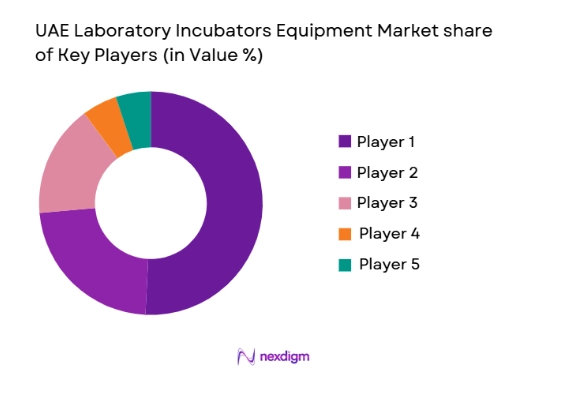
UAE Laboratory Incubators Equipment Market Analysis
Growth Drivers
Expansion of Pharmaceutical and Biotechnology Manufacturing in UAE:
The rapid expansion of pharmaceutical and biotechnology manufacturing in the UAE is a critical growth driver for laboratory incubators equipment demand. The government has prioritized local drug production to reduce dependency on imports, resulting in significant investments in manufacturing facilities. These facilities require advanced incubation systems for cell culture, microbial analysis, and stability testing processes. The establishment of biotech clusters and free zones has attracted multinational companies, further accelerating equipment demand. Additionally, partnerships between global pharmaceutical firms and local entities are enhancing technology transfer and research capabilities. This environment fosters increased procurement of high-precision incubators to meet regulatory standards. Continuous innovation in biologics and personalized medicine further drives the need for specialized incubation solutions. The integration of automated systems within production lines also increases reliance on advanced incubator technologies. Overall, the expansion of this sector creates sustained demand for both high-capacity and specialized incubators across the UAE.
Rising Demand for Advanced Clinical Diagnostics and Research Infrastructure:
The growing demand for advanced clinical diagnostics and research infrastructure significantly contributes to the expansion of the UAE laboratory incubators equipment market. The increasing prevalence of chronic diseases and infectious conditions has necessitated improved diagnostic capabilities across healthcare institutions. Hospitals and diagnostic laboratories are investing heavily in advanced testing technologies that rely on incubation processes. Additionally, the UAE government is supporting research initiatives through funding programs and infrastructure development, boosting demand for laboratory equipment. The establishment of research centers focused on genomics, virology, and precision medicine further strengthens this trend. High standards of laboratory accreditation and quality assurance also require the use of reliable incubation systems. Technological advancements such as smart monitoring and automation are increasingly integrated into laboratory workflows. The demand for rapid and accurate diagnostic results is pushing laboratories to adopt efficient incubator solutions. Consequently, this driver continues to expand the market scope across multiple end-user segments.
Market Challenges
High Cost of Advanced Laboratory Incubators and Maintenance Requirements:
The high cost associated with advanced laboratory incubators presents a significant challenge for market growth in the UAE. Modern incubators equipped with automation, IoT integration, and precise environmental control systems require substantial capital investment. This financial burden is particularly impactful for smaller laboratories and research facilities with limited budgets. Additionally, ongoing maintenance costs, including calibration, repairs, and replacement of critical components, add to the total cost of ownership. Laboratories must also invest in skilled technicians to ensure proper operation and compliance with regulatory standards. The need for regular validation and certification further increases operational expenses. These factors collectively limit the adoption of advanced incubator systems among cost-sensitive end users. Furthermore, fluctuations in import costs and supply chain disruptions can increase pricing volatility. The dependency on international suppliers exacerbates these cost challenges. As a result, affordability remains a key barrier to widespread adoption of high-end laboratory incubators.
Dependence on Imported Equipment and Limited Local Manufacturing Capabilities:
The UAE laboratory incubators equipment market faces challenges due to its reliance on imported technologies and limited domestic manufacturing capabilities. Most advanced incubators are sourced from international manufacturers, leading to extended procurement timelines and higher costs. This dependency exposes the market to supply chain disruptions and geopolitical uncertainties that can affect equipment availability. Additionally, import regulations and logistics complexities can delay delivery and installation processes. The lack of local production facilities restricts the development of cost-effective alternatives tailored to regional needs. Technical support and spare parts availability may also be impacted, leading to longer maintenance cycles. This situation creates operational inefficiencies for laboratories that depend on continuous equipment functionality. Efforts to establish local manufacturing are still in early stages and require significant investment. The absence of a strong domestic ecosystem limits innovation and customization opportunities. Consequently, this challenge continues to influence market growth dynamics.
Opportunities
Integration of Smart Technologies and IoT-Enabled Laboratory Equipment:
The integration of smart technologies and IoT-enabled features in laboratory incubators presents a significant opportunity for market expansion in the UAE. Advanced incubators equipped with real-time monitoring, remote access, and predictive maintenance capabilities enhance operational efficiency. Laboratories are increasingly adopting these systems to improve accuracy and reduce manual intervention. The demand for digital transformation in healthcare and research facilities supports the adoption of connected devices. These technologies enable better data management and compliance with stringent regulatory standards. Additionally, automation reduces the risk of human error and enhances reproducibility in experiments. Manufacturers can leverage this trend to introduce innovative products tailored to evolving laboratory needs. The growing emphasis on smart laboratories aligns with national strategies promoting technological advancement. Integration with laboratory information management systems further increases the value proposition of such equipment. This opportunity is expected to drive significant advancements in the market.
Expansion of Contract Research Organizations and Specialized Testing Services:
The growth of contract research organizations and specialized testing services in the UAE creates substantial opportunities for laboratory incubators equipment providers. These organizations require advanced infrastructure to support diverse research activities, including clinical trials and analytical testing. The increasing outsourcing of research and development by pharmaceutical companies is driving demand for high-quality laboratory equipment. Contract research organizations focus on efficiency and compliance, necessitating reliable incubation systems. The UAE’s strategic location and supportive regulatory environment make it an attractive hub for such services. Investments in healthcare innovation and research facilities further boost this segment’s growth. The need for scalable and customizable incubation solutions is increasing as these organizations expand their operations. Collaboration between local and international firms enhances knowledge transfer and technology adoption. This trend opens new revenue streams for equipment manufacturers and suppliers. Overall, the expansion of this sector provides a strong growth avenue for the market.
Future Outlook
The UAE Laboratory Incubators Equipment market is expected to experience steady growth over the next five years, supported by increasing investments in healthcare, biotechnology, and research infrastructure. Technological advancements such as automation, AI integration, and energy-efficient systems will play a critical role in shaping market evolution. Government initiatives promoting local pharmaceutical production and innovation will further strengthen demand. Additionally, rising diagnostic needs and expansion of research institutions will continue to drive equipment adoption across multiple sectors.
Major Players
- Memmert GmbH
- Binder GmbH
- Thermo Fisher Scientific Inc.
- Eppendorf AG
- Panasonic Healthcare Co. Ltd.
- PHC Corporation
- Sheldon Manufacturing Inc.
- LabTech Srl
- NuAire Inc.
- Carbolite Gero Ltd.
- Jeio Tech Co. Ltd.
- Genlab Limited
- Esco Lifesciences Group
- BMT Medical Technology s.r.o.
- Shanghai Boxun Industry & Commerce Co. Ltd.
Key Target Audience
- Pharmaceutical manufacturers
- Biotechnology companies
- Hospital networks
- Diagnostic laboratory chains
- Food safety testing companies
- Environmental monitoring agencies
- Investments and venture capitalist firms
- Government and regulatory bodies
Research Methodology
Step 1: Identification of Key Variables
The research begins with identifying critical variables influencing the UAE Laboratory Incubators Equipment market, including demand drivers, technological trends, pricing structures, and regulatory frameworks. Both macroeconomic and sector-specific indicators are evaluated.
Step 2: Market Analysis and Construction
A structured market model is developed using collected data, incorporating segmentation, supply-demand mapping, and value chain analysis. Quantitative and qualitative techniques are applied to construct a reliable market framework.
Step 3: Hypothesis Validation and Expert Consultation
Findings are validated through consultations with industry experts, manufacturers, and distributors. Assumptions are tested against real-world insights to ensure accuracy and credibility of the data.
Step 4: Research Synthesis and Final Output
All validated data is synthesized into a comprehensive report, integrating analysis, forecasts, and strategic insights. The final output ensures consistency, clarity, and actionable intelligence for stakeholders.

- Executive Summary
- Research Methodology (Definitions, Scope, Industry Assumptions, Market Sizing Approach, Primary & Secondary Research Framework, Data Collection & Verification Protocol, Analytic Models & Forecast Methodology, Limitations & Research Validity Checks)

- Market Definition and Scope
- Value Chain & Stakeholder Ecosystem
- Regulatory / Certification Landscape
- Sector Dynamics Affecting Demand
- Strategic Initiatives & Infrastructure Growth

- Growth Drivers
Expansion of pharmaceutical and biotech sectors in UAE
Rising demand for advanced clinical diagnostics
Growth in academic and government-funded research initiatives
Increasing focus on food safety and environmental testing
Adoption of automation and smart laboratory infrastructure - Market Challenges
High initial cost of advanced incubator systems
Maintenance and calibration complexities
Dependence on imported equipment and components
Limited skilled technicians for advanced systems
Energy consumption concerns in large-scale laboratories - Market Opportunities
Integration of AI and remote monitoring capabilities
Growth in contract research organizations in UAE
Increasing investment in healthcare infrastructure - Trends
Shift toward smart and connected incubators
Rising preference for energy-efficient laboratory equipment
Growth of modular and customizable incubator solutions
Adoption of contamination control technologies
Increasing use of hybrid multifunction incubators - Government Regulations & Defense Policy
Implementation of UAE health and safety laboratory standards
Compliance with international ISO and GMP certifications
Government initiatives promoting local research infrastructure - SWOT Analysis
- Stakeholder and Ecosystem Analysis
- Porter’s Five Forces Analysis
- Competition Intensity and Ecosystem Mapping

- By Market Value, 2020-2025
- By Installed Units, 2020-2025
- By Average System Price, 2020-2025
- By System Complexity Tier, 2020-2025

- By System Type (In Value%)
CO₂ incubators
Shaking incubators
BOD incubators
Microbiological incubators
Hybrid multi-chamber incubators - By Platform Type (In Value%)
Benchtop incubators
Floor-standing incubators
Portable incubators
Modular incubator systems
Integrated incubator workstations - By Fitment Type (In Value%)
Standalone units
Built-in laboratory systems
Mobile cart-mounted units
Wall-integrated units
Cleanroom-compatible installations - By EndUser Segment (In Value%)
Pharmaceutical and biotechnology companies
Academic and research institutes
Hospitals and diagnostic laboratories
Food and beverage testing laboratories
Environmental testing agencies - By Procurement Channel (In Value%)
Direct procurement from manufacturers
Distributor and supplier networks
Government tenders and contracts
Online laboratory equipment platforms
Leasing and rental services - By Material / Technology (in Value %)
Stainless steel chamber incubators
Antimicrobial coated incubators
Smart IoT-enabled incubators
Energy-efficient incubator systems
AI-integrated monitoring incubators

- Market structure and competitive positioning
- Market share snapshot of major players
- CrossComparison Parameters (Product Portfolio Breadth, Pricing Strategy, Technology Integration, Distribution Network Strength, After-Sales Support, Customization Capability, Energy Efficiency Standards, Regulatory Compliance, Innovation Pipeline, Market Presence in UAE)
- SWOT Analysis of Key Players
- Pricing & Procurement Analysis
- Key Players
Memmert GmbH
Binder GmbH
Thermo Fisher Scientific Inc.
Eppendorf AG
Panasonic Healthcare Co. Ltd.
PHC Corporation
Sheldon Manufacturing Inc.
LabTech Srl
NuAire Inc.
Carbolite Gero Ltd.
Jeio Tech Co. Ltd.
Genlab Limited
Esco Lifesciences Group
BMT Medical Technology s.r.o.
Shanghai Boxun Industry & Commerce Co. Ltd.

- Pharmaceutical firms driving demand for high-precision incubators
- Academic institutions focusing on cost-effective and versatile systems
- Hospitals prioritizing compact and rapid incubation solutions
- Food and environmental labs emphasizing compliance and reliability

- Forecast Market Value, 2026-2035
- Forecast Installed Units, 2026-2035
- Price Forecast by System Tier, 2026-2035
- Future Demand by Platform, 2026-2035


 Request a Sample
 Ask for Customization
 Get a Quote
 Enquire Now