
 Download PDF
Market Overview
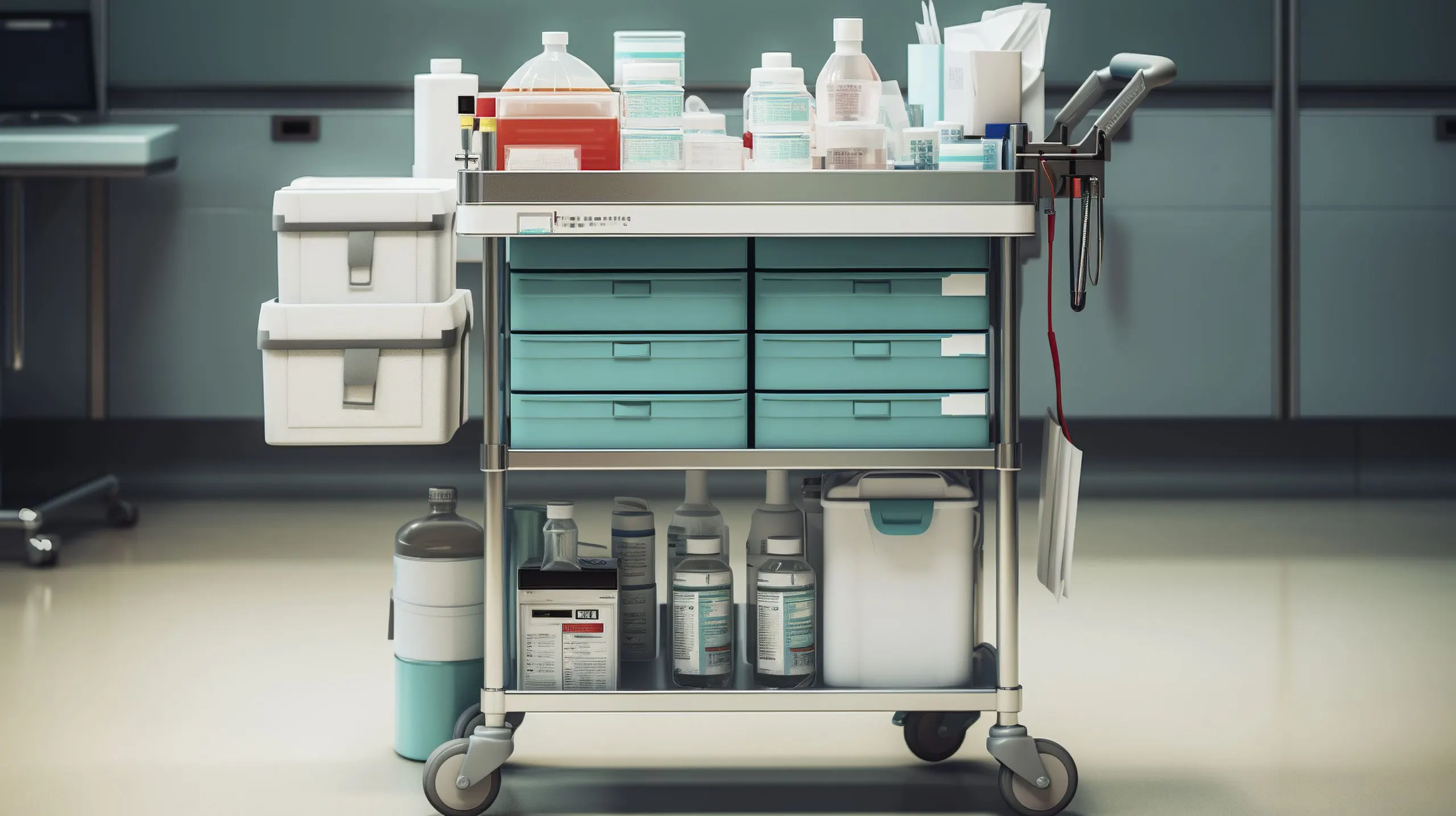
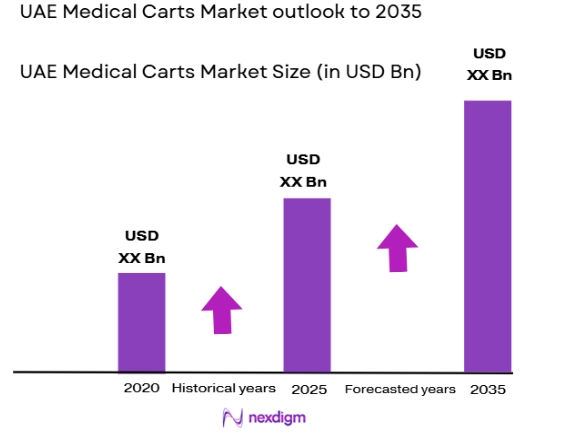
The UAE Medical Carts Market is anticipated to reach USD ~ billion based on a recent historical assessment. The market’s growth is primarily driven by the increasing demand for medical mobility solutions in hospitals, outpatient clinics, and emergency services. Factors such as technological advancements in healthcare, the rising need for improved patient care, and the growing adoption of medical carts equipped with advanced features, such as mobility, electronic components, and smart functionalities, are contributing to the market’s expansion. Additionally, government initiatives supporting healthcare infrastructure play a vital role in sustaining this growth.
The UAE medical carts market is concentrated in major cities like Dubai, Abu Dhabi, and Sharjah, driven by a robust healthcare infrastructure and demand from advanced healthcare facilities. The UAE’s focus on upgrading its healthcare sector to meet global standards and cater to the needs of medical tourists also contributes to the market’s dominance in these regions. The increasing investment in hospitals, outpatient care facilities, and emergency medical services has further bolstered the demand for medical carts, positioning the UAE as a regional leader in medical mobility solutions.
Market Segmentation
By System Type
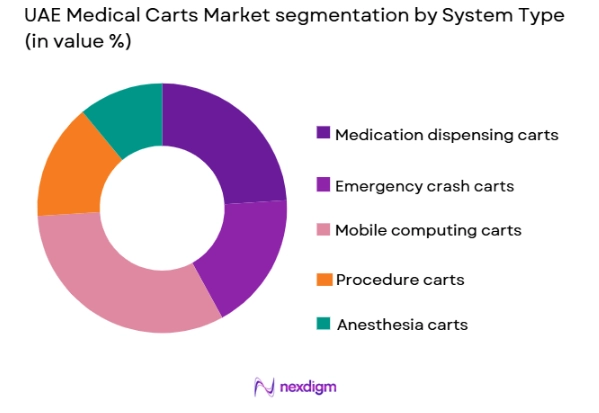
UAE Medical Carts market is segmented by product type into medication dispensing carts, emergency crash carts, mobile computing carts, procedure carts, and anesthesia carts. Recently, mobile computing carts has a dominant market share due to factors such as increasing digitalization of hospital workflows, expansion of electronic medical record systems, and demand for real time patient data access. Hospitals increasingly prioritize nurse efficiency and patient safety, which requires mobile documentation platforms integrated with secure storage. Additionally, healthcare facilities prefer multifunctional carts capable of supporting telehealth devices and medication verification systems. Government backed smart hospital initiatives have also encouraged procurement of connected medical workstations. Strong vendor presence and availability of modular designs further contribute to higher adoption. Continuous patient monitoring trends and bedside data entry needs continue to strengthen this segment’s leadership position in the UAE healthcare infrastructure environment.
By Platform Type
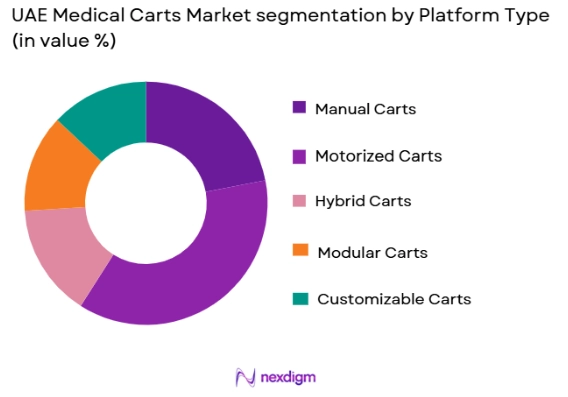
UAE Medical Carts Market is segmented by platform type into manual carts, motorized carts, hybrid carts, modular carts, and customizable carts. Recently, motorized carts have taken the lead in market share due to their convenience and enhanced functionality. These carts are favored in high-traffic medical environments, as they reduce the physical strain on healthcare staff while ensuring faster access to medical supplies and equipment. As healthcare facilities increasingly prioritize efficiency, motorized carts allow for easy movement through crowded hospital halls, particularly in settings where rapid response is critical. This shift towards motorized solutions is further supported by advances in battery technology, offering longer operational lifetimes and more reliable power sources for medical carts. Moreover, the increasing need for smart healthcare solutions that integrate with electronic health records is driving the demand for motorized and hybrid carts with digital features.
Competitive Landscape
The competitive landscape of the UAE medical carts market is highly consolidated, with a few key players maintaining a significant market presence. These companies are continuously innovating and expanding their product offerings to cater to the growing demand for advanced, smart medical carts. The market is driven by both global and regional manufacturers, with many focusing on enhancing product features such as mobility, integration with hospital management systems, and ergonomic designs. Consolidation within the industry is occurring through mergers, acquisitions, and strategic partnerships, allowing companies to expand their portfolios and distribution networks.
| Company Name | Establishment Year | Headquarters | Technology Focus | Market Reach | Key Products | Revenue (USD) |
| Stryker Corporation | 1941 | Kalamazoo, MI | ~ | ~ | ~ | ~ |
| Ergotron, Inc. | 1982 | Minnesota, USA | ~ | ~ | ~ | ~ |
| JACO, Inc. | 1986 | Ohio, USA | ~ | ~ | ~ | ~ |
| Harloff Manufacturing Co. | 1951 | Ohio, USA | ~ | ~ | ~ | ~ |
| Capsa Healthcare | 2003 | Portland, OR, USA | ~ | ~ | ~ | ~ |
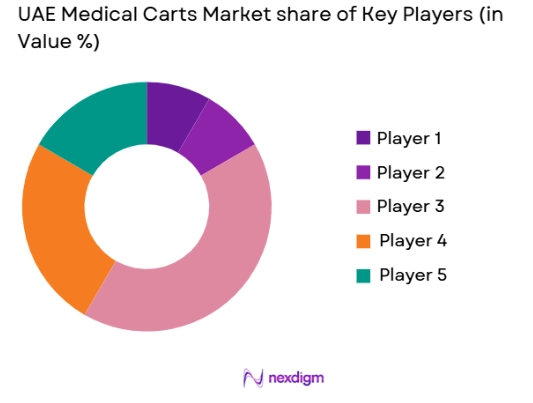
UAE Medical Carts Market Analysis
Growth Drivers
Increased Healthcare Investments
One of the key drivers of growth in the UAE Medical Carts Market is the significant increase in investments in the healthcare sector. The UAE has been committed to modernizing its healthcare infrastructure through both government initiatives and private-sector investments. A surge in the construction of hospitals, ambulatory care centers, and emergency response units is contributing to a higher demand for medical carts. These investments are aimed at improving healthcare delivery, increasing efficiency, and expanding access to quality care, which in turn drives the need for reliable, mobile solutions like medical carts. Furthermore, initiatives like the UAE Vision 2021, which focuses on creating a world-class healthcare system, continue to promote infrastructure upgrades and the adoption of advanced healthcare technologies. The increasing awareness of the need for quick and accessible medical equipment is fueling the market for medical carts in healthcare settings across the country.
Technological Advancements in Medical Carts
Technological advancements in medical carts have also significantly contributed to the growth of the UAE medical carts market. The introduction of motorized and smart medical carts, which integrate digital systems for patient care, is increasingly popular in healthcare environments. These carts are equipped with advanced features such as touchscreens, automated medication dispensing systems, and integration with electronic health records, making them essential for modern medical practices. As healthcare providers increasingly adopt digital and automated solutions to enhance patient care and reduce errors, the demand for medical carts that support these technologies is on the rise. Furthermore, innovations aimed at improving the ergonomics, mobility, and durability of medical carts are making them more attractive to healthcare institutions looking to streamline workflows and improve staff efficiency. The ability of these carts to adapt to various medical scenarios and offer advanced features is a major factor driving their adoption.
Market Challenges
High Initial Investment Costs
One of the significant challenges faced by the UAE medical carts market is the high initial investment cost. Medical carts, especially those equipped with advanced technologies, come at a premium price, making them difficult for smaller healthcare facilities and low-budget hospitals to afford. The financial burden associated with purchasing medical carts can deter institutions from upgrading or acquiring new equipment, which may delay the adoption of newer, more efficient models. Additionally, as many healthcare providers focus on essential equipment and immediate patient care needs, investing in high-tech medical carts might be viewed as a lower priority compared to other pressing needs. For many smaller clinics or healthcare centers, this cost barrier can restrict access to the latest medical cart technologies, limiting their ability to enhance operational efficiency and patient care.
Regulatory Compliance and Standardization
Another challenge that the market faces is the regulatory compliance and standardization of medical carts. Medical carts are subject to various regulatory standards set by government bodies and international organizations. The complex process of ensuring compliance with these regulations can be time-consuming and costly for manufacturers. Furthermore, differences in regulatory standards across regions can make it challenging for companies to maintain a consistent product offering. Medical carts must meet stringent quality and safety requirements to be approved for use in hospitals, particularly those that integrate with electronic health systems or are used in critical care areas. This can lead to delays in product launches and increased costs associated with testing, certification, and quality control.
Opportunities
Smart Healthcare Solutions
One of the most significant opportunities in the UAE medical carts market is the growing demand for smart healthcare solutions. As healthcare systems evolve, the integration of technology in medical devices is becoming increasingly important. Medical carts with embedded technologies, such as electronic health record (EHR) systems, automated medication dispensing, and mobile connectivity, offer a substantial advantage in improving patient care. These smart carts enable healthcare providers to reduce errors, improve efficiency, and deliver faster treatment. The shift towards digitized healthcare practices, driven by both healthcare professionals and patients, is opening up new avenues for medical cart manufacturers to develop innovative products that enhance workflow efficiency, reduce human error, and improve patient outcomes. The potential to integrate medical carts with telemedicine and remote monitoring systems also presents growth opportunities.
Expanding Healthcare Infrastructure
Another opportunity lies in the rapid expansion of healthcare infrastructure in the UAE, particularly in new healthcare facilities and medical centers. With the UAE government investing heavily in healthcare infrastructure, the demand for medical carts is set to rise. New hospitals and medical centers, especially those catering to medical tourists, will require state-of-the-art medical equipment, including medical carts, to meet international standards. Additionally, the government’s emphasis on improving healthcare services and facilities in underserved regions will increase the demand for mobile medical solutions, including medical carts, across a broader geographical range. This expansion creates an opportunity for manufacturers to penetrate new markets and establish long-term relationships with healthcare providers.
Future Outlook
The future outlook for the UAE Medical Carts Market is promising, with continuous advancements in technology and regulatory support playing pivotal roles in shaping the market’s trajectory. The demand for smart and automated medical carts is expected to rise as healthcare providers prioritize operational efficiency, safety, and patient care. Over the next five years, technological innovations such as IoT integration, real-time tracking, and enhanced mobility features will dominate the market. The UAE’s commitment to improving healthcare infrastructure, along with an increasing focus on smart healthcare solutions, will drive market expansion, offering manufacturers ample opportunities for growth.
Major Players
- Stryker Corporation
- Ergotron, Inc.
- JACO, Inc.
- Harloff Manufacturing Co.
- Capsa Healthcare
- Global Medical Equipment
- Meditek Solutions
- CompuCarts
- Rubbermaid Commercial Products
- Advantech Co., Ltd.
- The Stanley Healthcare Solutions
- GE Healthcare
- Altus Inc.
- Soma Tech Intl
- AFC Industries
Key Target Audience
- Investments and venture capitalist firms
- Government and regulatory bodies
- Healthcare providers
- Hospitals and medical centers
- Healthcare equipment distributors
- Emergency medical service providers
- Medical equipment manufacturers
- Healthcare infrastructure development firms
Research Methodology
Step 1: Identification of Key Variables
The research began with identification of demand indicators including hospital capacity expansion, medical device procurement trends, and healthcare capital expenditure. Product level adoption indicators were mapped with procurement data and vendor sales benchmarks to establish baseline analysis variables.
Step 2: Market Analysis and Construction
Market estimates were constructed through triangulation of supply side revenue data, healthcare infrastructure indicators, and distributor level shipment trends. Segment level modeling was performed based on product demand patterns and technology adoption trends.
Step 3: Hypothesis Validation and Expert Consultation
Initial findings were validated through interviews with healthcare equipment distributors and procurement specialists. Industry publications and financial disclosures were referenced to confirm demand trends and competitive positioning insights.
Step 4: Research Synthesis and Final Output
All collected data was synthesized using market modeling frameworks and cross validation checks. Final outputs were structured to reflect realistic market conditions, competitive positioning, and expected demand trajectories.

- Executive Summary
- Research Methodology (Definitions, Scope, Industry Assumptions, Market Sizing Approach, Primary & Secondary Research Framework, Data Collection & Verification Protocol, Analytic Models & Forecast Methodology, Limitations & Research Validity Checks)

- Market Definition and Scope
- Value Chain & Stakeholder Ecosystem
- Regulatory / Certification Landscape
- Sector Dynamics Affecting Demand
- Strategic Initiatives & Infrastructure Growth

- Growth Drivers
Increasing Demand for Mobility and Flexibility in Healthcare Settings
Technological Advancements in Medical Equipment
Rising Prevalence of Chronic Diseases
Government Initiatives Supporting Healthcare Infrastructure
Rising Demand for Emergency Care Solutions - Market Challenges
High Initial Investment Costs
Lack of Standardization in Medical Cart Features
Limited Awareness about Advanced Medical Carts
Regulatory Compliance and Certification Issues
Maintenance and Durability Concerns - Market Opportunities
Growing Adoption of Smart Carts in Healthcare
Rise in Home Healthcare Services
Expanding Medical Tourism in the UAE - Trends
Integration of IoT in Medical Carts
Increasing Focus on Ergonomic Design and User Comfort
Technological Advancements in Automation
Growth in Demand for Telemedicine and Remote Monitoring
Sustainability in Manufacturing of Medical Carts - Government Regulations & Defense Policy
Government Policy on Healthcare Infrastructure Growth
Standards for Medical Equipment Safety
Regulatory Framework for Smart Healthcare Devices - SWOT Analysis
- Stakeholder and Ecosystem Analysis
- Porter’s Five Forces Analysis
- Competition Intensity and Ecosystem Mapping

- By Market Value, 2020-2025
- By Installed Units, 2020-2025
- By Average System Price, 2020-2025
- By System Complexity Tier, 2020-2025

- By System Type (In Value%)
Mobile Treatment Carts
Mobile Anesthesia Carts
Pharmacy Carts
Crash Carts
Radiology Carts - By Platform Type (In Value%)
Manual Carts
Motorized Carts
Hybrid Carts
Modular Carts
Customizable Carts - By Fitment Type (In Value%)
Standard Fitment
Wall-mounted Fitment
Standalone Fitment
Ceiling-mounted Fitment
Portable Fitment - By EndUser Segment (In Value%)
Hospitals
Ambulatory Surgical Centers
Long-term Care Facilities
Emergency Medical Services
Outpatient Clinics - By Procurement Channel (In Value%)
Direct Sales
Distributors
Online Platforms
Third-Party Suppliers
Government Contracts - By Material / Technology (In Value %)
Metal Carts
Plastic Carts
Hybrid Material Carts
Smart Medical Carts
Ergonomic Design Carts

- Market structure and competitive positioning
- Market share snapshot of major players
- Cross Comparison Parameters (Product Portfolio Diversity, Pricing Competitiveness, Distribution Network Strength, Customization Capability, Technology Integration Level, After Sales Service Strength, Regional Presence, Manufacturing Capability, Strategic Partnerships, Innovation Pipeline, Healthcare Client Base, Regulatory Compliance Capability, Supply Chain Efficiency, Brand Reputation, Warranty Terms)
- SWOT Analysis of Key Players
- Pricing & Procurement Analysis
- Key Players
Stryker Corporation
Ergotron, Inc.
JACO, Inc.
Capsa Healthcare
Harloff Manufacturing Co.
Global Medical Equipment
Meditek Solutions
CompuCarts
Rubbermaid Commercial Products
Advantech Co., Ltd.
The Stanley Healthcare Solutions
GE Healthcare
Altus Inc.
Soma Tech Intl
AFC Industries

- Hospitals prioritize multi functional carts to improve nursing efficiency
- Specialty clinics demand compact carts due to limited operational space
- Ambulatory centers focus on procedure specific carts
- Diagnostic labs require IT integrated mobile workstations

- Forecast Market Value, 2026-2035
- Forecast Installed Units, 2026-2035
- Price Forecast by System Tier, 2026-2035
- Future Demand by Platform, 2026-2035


 Request a Sample
 Ask for Customization
 Get a Quote
 Enquire Now