
 Download PDF
Market Overview
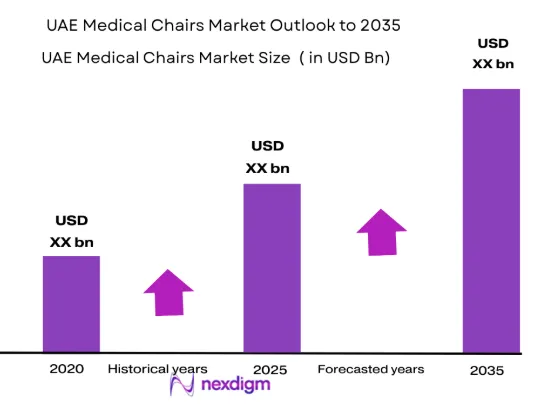
The UAE medical chairs market has seen robust growth, with the market size based on a recent historical assessment valued at approximately USD ~ billion in 2025. This growth is primarily driven by the rapid advancements in healthcare infrastructure, increasing demand for medical devices in hospitals and clinics, and the adoption of specialized chairs in surgical, diagnostic, and home care settings. Technological improvements in medical chair designs, such as electric adjustments and ergonomically optimized systems, have also contributed to this expansion. Additionally, increased healthcare expenditure and rising awareness of the importance of comfort in medical treatments are fueling this growth.
Dominant regions in the UAE medical chairs market include Dubai and Abu Dhabi, where most of the healthcare facilities, including specialized clinics and hospitals, are concentrated. These cities are benefiting from the presence of advanced healthcare infrastructure and growing investments in medical technologies. Dubai’s role as a hub for medical tourism further elevates the demand for high-quality medical equipment, including medical chairs. Additionally, Abu Dhabi’s focus on expanding its healthcare sector under government initiatives ensures the continued demand for innovative medical solutions in both public and private health facilities.
Market Segmentation
By Product Type
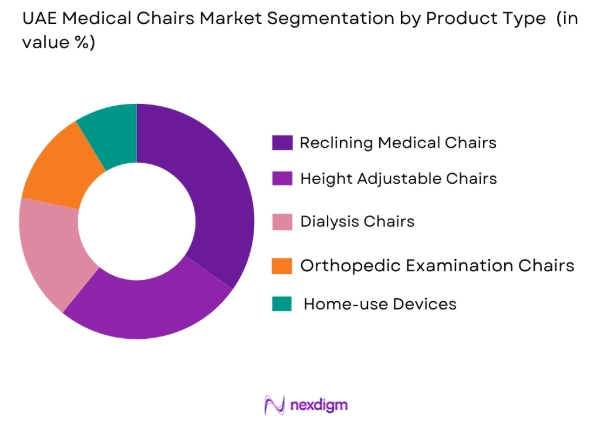
The UAE medical chairs market is segmented by product type into reclining medical chairs, dialysis chairs, orthopedic examination chairs, height-adjustable chairs, and specialized surgery chairs. Recently, reclining medical chairs have a dominant market share due to their widespread use in hospitals and clinics. Their versatility and comfort features make them essential in various settings, including patient recovery rooms, treatment areas, and specialized medical procedures. This product’s ability to accommodate patients for extended periods and its ergonomic design contribute to its high demand.
By End User
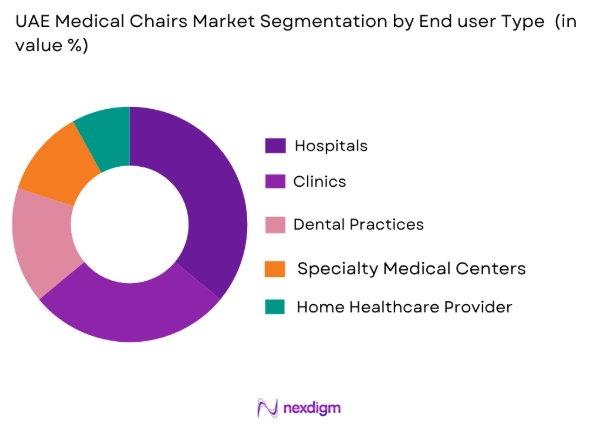
The UAE medical chairs market is segmented by end user into hospitals, clinics, denta practices, specialty medical centers, and home healthcare providers. Among these, hospitals dominate the market due to the vast number of patients requiring medical treatments, surgeries, and recovery care. The continuous growth of healthcare infrastructure and the increasing capacity of public and private hospitals to cater to a larger patient pool fuel the demand for medical chairs. The hospitals’ need for a variety of specialized medical chairs for different departments ensures their prominence in the market.
Competitive Landscape
The competitive landscape in the UAE medical chairs market is characterized by the presence of both established global players and regional companies. Major players are continually engaging in product innovation, mergers, and strategic partnerships to consolidate their market position. The market remains competitive with ongoing advancements in technology, such as the development of electric, ergonomic, and multifunctional medical chairs. As companies focus on high-quality, durable, and cost-effective solutions, consolidation within the market is expected to increase over time. Major players are driving market growth by expanding their product offerings and establishing strong distribution networks across the UAE.
| Company Name | Establishment Year | Headquarters | Technology Focus | Market Reach | Key Products | Revenue | Product Customization |
| Stryker Corporation | 1941 | USA | ~ | ~ | ~ | ~ | ~ |
| Hill-Rom | 1929 | USA | ~ | ~ | ~ | ~ | ~ |
| Invacare Corporation | 1885 | USA | ~ | ~ | ~ | ~ | ~ |
| Medline Industries | 1910 | USA | ~ | ~ | ~ | ~ | ~ |
| Arjo | 1957 | Sweden | ~ | ~ | ~ | ~ | ~ |
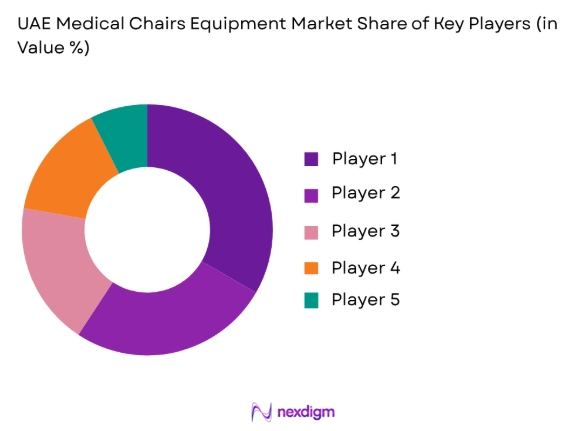
UAE Medical Chairs Market Analysis
Growth Drivers
Increasing Healthcare Infrastructure Investments
The United Arab Emirates continues to expand healthcare infrastructure, directly influencing procurement of medical chairs across hospitals, clinics, and outpatient centers. The World Bank reports the UAE population at 10,628,336 people, supporting expansion of healthcare delivery facilities that require seating solutions for waiting areas, procedure rooms, and patient support spaces. Independent government health data shows over 140 public and private hospitals operating nationwide, indicating broad capital investment in facilities where medical chairs are essential clinical and non‑clinical assets. Expansion of infrastructure in key emirates such as Abu Dhabi and Dubai enhances recurring demand for chairs that support patient care, comfort, and clinical workflows.
Rising Geriatric Population
The UAE’s demographic trend toward an aging cohort is a tangible driver for medical chair demand in clinical and long‑term care settings. While national population figures include over 10.6 million residents, WorldBank life expectancy data indicates that citizens and residents are living longer, necessitating expanded elderly care services where supportive seating is critical. The proportion of older adults is reflected in healthcare utilization patterns in emirate health authority reports showing sustained hospital admissions among adults aged 60 and above, increasing requirements for ergonomic, safety‑focused seating in inpatient rooms, geriatric assessment units, and outpatient clinics to support mobility and clinical comfort.
Market Challenges
High Initial Investment Costs
Procurement of specialized medical chairs—such as electrically adjustable treatment chairs or ergonomic dental chairs—represents a substantial capital outlay for UAE healthcare providers amidst broader facility investments. According to Ministry of Health and Prevention capacity data, the UAE has significant healthcare infrastructure with hundreds of clinical facilities requiring comprehensive seating solutions across waiting, procedural, and therapeutic areas. These capital demands must be balanced with other clinical equipment investments, constraining budget allocations for high‑end chairs and delaying replacement cycles for existing seating assets as facilities prioritize essential diagnostic and therapeutic infrastructure.
Regulatory Compliance and Certification Challenges
Medical chairs used in clinical settings in the UAE must meet regulatory guidelines enforced by authorities such as the Ministry of Health and Prevention (MoHAP), Dubai Health Authority (DHA), and Department of Health – Abu Dhabi. These bodies require product registration, safety documentation, and adherence to international quality standards before equipment can be deployed in patient care areas. Compliance timelines and certification requirements can extend procurement lead times for imported chairs, especially those with advanced features, affecting purchasing schedules within hospitals and specialty clinics. These compliance processes, while ensuring safety, add administrative and logistical complexity to market entry.
Market Opportunities
Growing Demand for Home Healthcare
The UAE is witnessing growth in home healthcare services as patients increasingly utilize in‑home care for chronic conditions and post‑operative recovery. Government health surveys and social service data indicate expanding utilization of home care support services, particularly among older adults and post‑acute patients requiring ongoing clinical support. Medical chairs designed for home care—such as adjustable treatment chairs and support seating—are essential in these settings, offering comfort and clinical utility outside traditional facilities. As home healthcare providers expand service networks, demand for medical chairs that support safe, long‑term use in residential environments is rising with the overall shift toward community‑based care.
Technological Advancements in Chair Design
Advances in medical chair technology, including integration of ergonomic engineering, easy‑to‑clean antimicrobial surfaces, and electric adjustability, present a growth opportunity in the UAE’s healthcare equipment market. Healthcare facility procurement data shows increased investment in clinical furniture solutions that enhance patient comfort, staff usability, and infection control. As hospitals and specialty clinics invest in modernizing clinical environments, chairs that incorporate contemporary design features that support improved clinical workflows and patient experience align with institutional quality initiatives. This technological orientation expands the product differentiation available to buyers and supports higher adoption across facility types.
Future Outlook
The future outlook for the UAE medical chairs market is promising, with expected growth in both the short and long term. As healthcare infrastructure continues to expand and advanced technologies become more integrated into healthcare facilities, demand for specialized medical chairs will rise. Technological developments in the medical chair segment, including smart and adjustable systems, are anticipated to drive further growth. Additionally, supportive government policies aimed at healthcare expansion and the increasing focus on elderly care are expected to contribute to the market’s sustained growth. The next five years will see increased investments in healthcare infrastructure and a higher adoption of specialized equipment, propelling the demand for medical chairs in hospitals, clinics, and home healthcare settings.
Major Players
- Stryker Corporation
- Hill-Rom
- Invacare Corporation
- Medline Industries
- Arjo
- Gendron
- Permobil
- Sunrise Medical
- Human Touch
- A-Dec
- GF Health Products
- Drive DeVilbiss Healthcare
- ErgoQuest
- KardexRemstar
- Drive Medical
Key Target Audience
- Investments and venture capitalist firms
- Government and regulatory bodies
- Hospitals
- Healthcare providers
- Home healthcare agencies
- Healthcare equipment distributors
- Medical device retailers
- Technology integrators
Research Methodology
Step 1: Identification of Key Variables
Identification of market drivers, constraints, and potential growth factors.
Step 2: Market Analysis and Construction
Comprehensive data collection and segmentation based on relevant market dimensions.
Step 3: Hypothesis Validation and Expert Consultation
Engagement with industry experts to validate key assumptions and market hypotheses.
Step 4: Research Synthesis and Final Output
Final synthesis of data, followed by the production of the market report.

- Executive Summary
- Research Methodology (Market Definitions and Assumptions, Abbreviations, Market Sizing and Forecasting Approach, Data Sources and Validation Framework, Primary Research Approach , Limitations and Assumptions)

- Definition and Scope
- Clinical and Non‑Clinical Use of Medical Chairs Healthcare Delivery Landscape in UAE
- Regulatory and Standards Framework
- Market Definition and Scope
- Value Chain & Stakeholder Ecosystem
- Regulatory / Certification Landscape
- Sector Dynamics Affecting Demand
- Strategic Initiatives & Infrastructure Growth

- Growth Drivers
Increasing Healthcare Infrastructure Investments
Rising Geriatric Population
Advancements in Medical Technologies - Market Challenges
High Initial Investment Costs
Limited Awareness in Emerging Markets
Regulatory Compliance and Certification Challenges - Market Opportunities
Growing Demand for Home Healthcare
Technological Advancements in Chair Design
Rising Adoption of Dialysis and Orthopedic Treatments - Trends
Shift Towards Ergonomic and Comfortable Designs
Increased Adoption of Electrically Adjustable Systems
Rising Popularity of Portable Medical Chairs - Government Regulations
- SWOT Analysis
- Stakeholder Ecosystem Mapping
- Porter’s Five Forces Analysis

- By Revenue, 2020-2025
- By Units Sold/Installed, 2020-2025
- By Average Selling Price, 2020-2025
- By Installed Base and Annual Procurement Metrics, 2020-2025

- By Product Type (In Value%)
Reclining Medical Chairs
Height Adjustable Chairs
Dialysis Chairs
Orthopedic Examination Chairs
Specialized Surgery Chairs - By End User Segment Type (In Value%)
Hospitals
Clinics
Dental Practices
Specialty Medical Centers
Home Healthcare Provider - By Platform Type (In Value%)
Manual Medical Chairs
Electric Medical Chairs
Battery Operated Medical Chairs
Hydraulic Medical Chairs
Pneumatic Medical Chairs - By Fitment Type (In Value%)
Standalone Medical Chairs
Wall-Mounted Medical Chairs
Portable Medical Chairs
Convertible Medical Chairs
Adjustable Medical Chairs - By Procurement Channel (In Value%)
Direct Procurement from Manufacturers
Distributors & Suppliers
Online Procurement
Government Procurement
Third-Party Procurement Agencies

- Market Share of Major Players (By Revenue & Units Sold)
- Market Share by Chair Type Segment
- Cross Comparison Parameters (Company Overview
Medical Chair Product Portfolio Breadth, Technology Integration and Smart Features, Distribution and Channel Network Coverage, Regulatory Certifications & Compliance Credentials, After‑Sales Support & Service Footprint, Warranty and Maintenance Policies, Regional Presence and Local Support Infrastructure, Pricing Positioning & Value Proposition, Production / Assembly Location and Capacity, Customization and OEM Integration Capabilities, Unit Sales vs Revenue Mix, Healthcare Facility Tender Performance, Customer Clinical Feedback & End‑User Satisfaction Metrics, Supply Chain Reliability and Lead Time Metrics) - SWOT Analysis of Major Players
- Pricing Analysis by SKU and Chair Model
- Tender Performance & Contract Acquisition Comparison
- Detailed Profiles of Major Players
Hill‑Rom
Stryker Corporation
KaVo Kerr
Midmark Corporation
Chattanooga
Invacare Corporation
Drive DeVilbiss Healthcare
Arjo AB
Genderm Healthcare
Herman Miller Healthcare Solutions
Narayana Dental Chairs
General Medical Corporation
MedPro Medical Furniture
Comfy Seating & Medical Systems
Abu Dhabi Medical Furniture Solutions
Dubai Healthcare Seating Co.

- Healthcare Facility Chair Demand Drivers
- Capital Budget Allocation and Procurement Priorities
- Clinical Requirements and Use Case Specifications
- Regulatory and Compliance Considerations for End Users
- End User Decision‑Making Framework

- By Revenue, 2026-2035
- By Units Sold/Installed, 2026-2035
- By Average Selling Price, 2026-2035
- By Installed Base and Annual Procurement Metrics, 2026-2035


 Request a Sample
 Ask for Customization
 Get a Quote
 Enquire Now