

 Download PDF
Market Overview
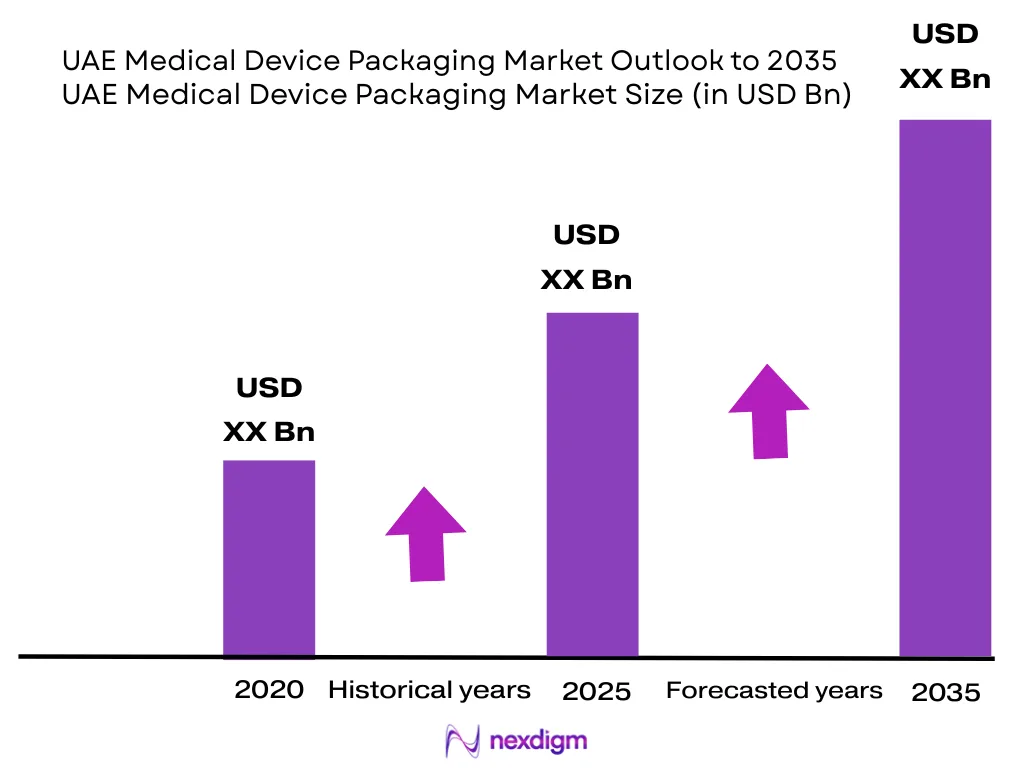
The UAE medical device packaging market is valued at USD ~ billion, supported by increasing healthcare expenditure, expansion of hospitals, rising medical device imports, and growing demand for sterile packaging solutions. The market growth is driven by the country’s advanced healthcare infrastructure, increasing adoption of disposable medical devices, and expansion of specialty healthcare services. The UAE healthcare sector recorded continued investment in hospitals, diagnostic centers, and medical technology infrastructure, strengthening demand for reliable packaging solutions that ensure device safety, sterility, and regulatory compliance. The UAE medical device packaging market is primarily concentrated in Dubai, Abu Dhabi, and Sharjah due to their developed healthcare ecosystems, high concentration of hospitals, medical device distributors, and international healthcare companies. Dubai acts as a regional healthcare hub because of its medical tourism infrastructure, free zones, and logistics connectivity. Abu Dhabi dominates due to government-backed healthcare investments and large hospital networks, while Sharjah contributes through healthcare manufacturing and distribution activities. These cities attract global medical device companies requiring advanced packaging solutions.
Market Segmentation
By Packaging Type
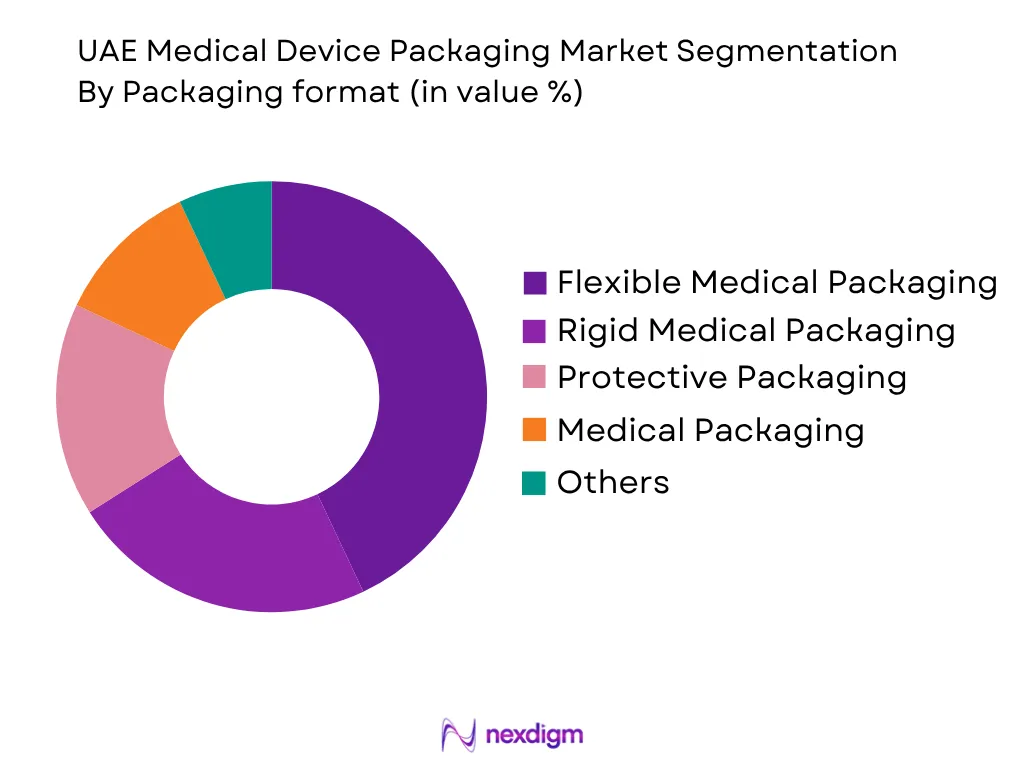
The UAE medical device packaging market is segmented by packaging type into flexible packaging, rigid packaging, protective packaging, and specialty packaging solutions. Flexible medical packaging holds the dominant position due to its extensive usage in sterile barrier systems, surgical instruments, disposable devices, and diagnostic products. Flexible packaging solutions such as sterile pouches, medical films, and laminated structures provide high barrier protection against contamination and moisture while supporting efficient sterilization processes. The increasing consumption of single-use medical devices across hospitals and clinics has strengthened demand for flexible packaging formats. Additionally, lightweight characteristics, transportation efficiency, and compatibility with sterilization methods such as ethylene oxide and gamma radiation have increased adoption among medical device manufacturers and healthcare suppliers.
By Packaging Material
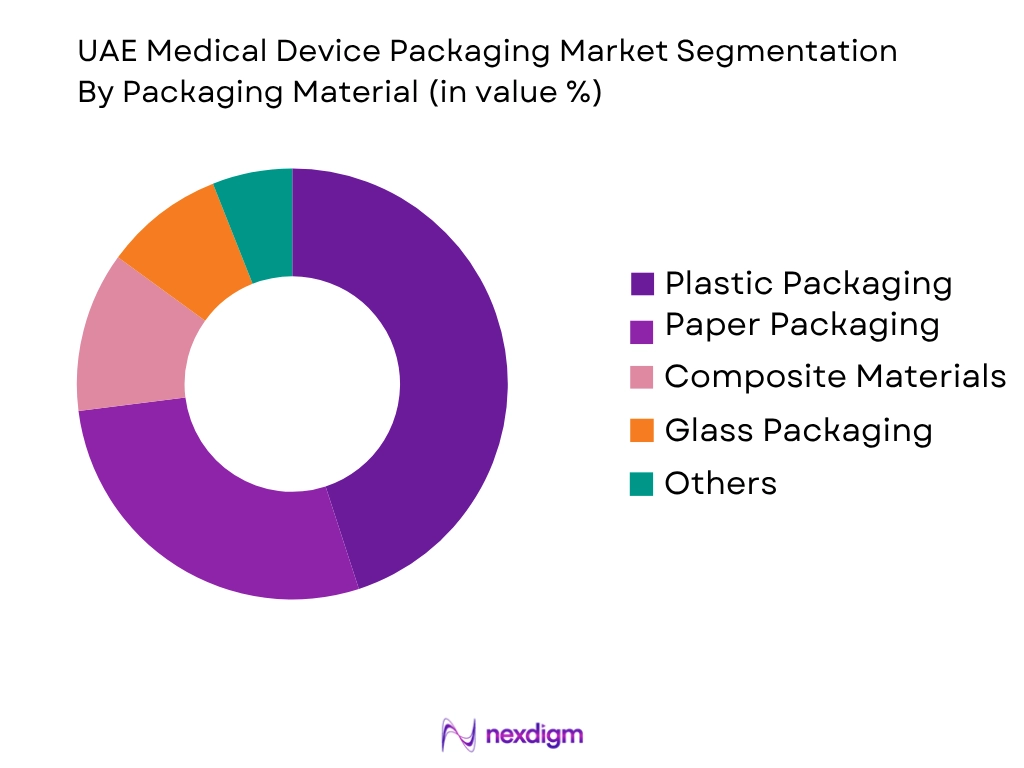
The UAE medical device packaging market is segmented by material type into plastic-based packaging, paper-based packaging, glass packaging, and composite materials. Plastic-based medical packaging dominates due to its durability, flexibility, cost efficiency, and compatibility with multiple medical device applications. Materials including polyethylene, polypropylene, and PET are widely used for sterile pouches, trays, containers, and protective packaging components. The growing requirement for lightweight packaging, improved barrier properties, and enhanced product protection has accelerated adoption of medical-grade plastics. Furthermore, plastic materials enable manufacturers to design customized packaging formats for complex medical devices while maintaining compliance with international healthcare standards. Increasing demand for disposable medical products and diagnostic equipment has further supported the dominance of plastic-based solutions.
Competitive Landscape
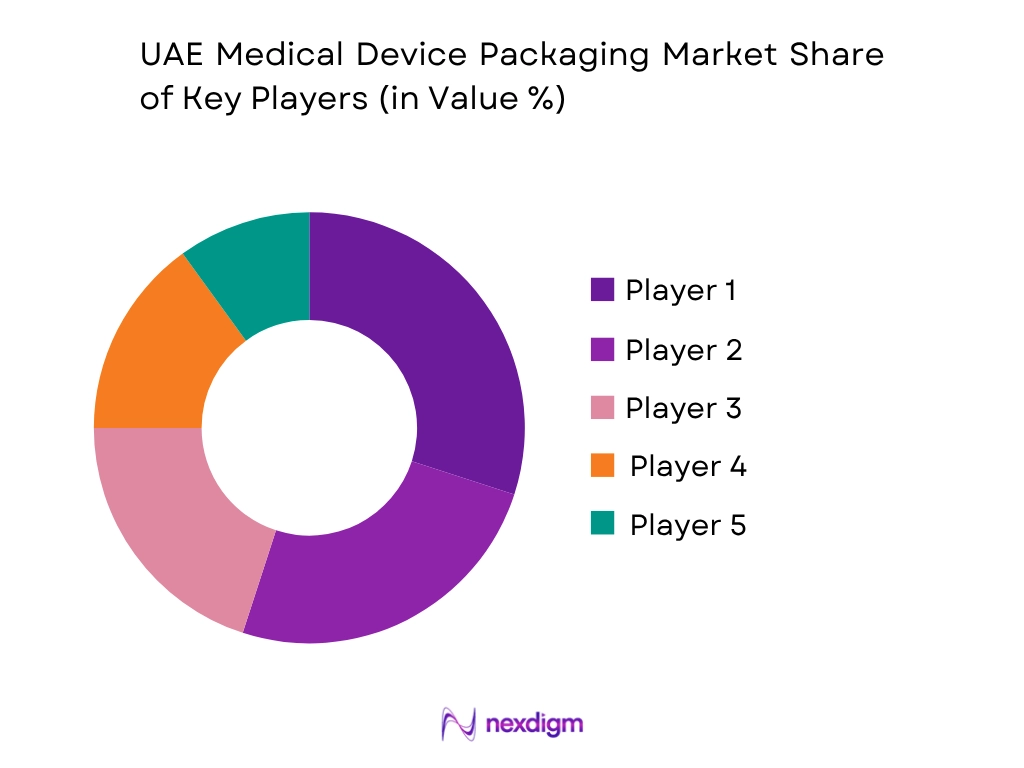
The UAE medical device packaging market is characterized by the presence of global packaging manufacturers and specialized healthcare packaging providers. International companies dominate due to their advanced sterile barrier technologies, regulatory certifications, global supply networks, and ability to support multinational medical device manufacturers. Companies compete through product innovation, sustainable packaging solutions, customized packaging designs, and expansion of regional healthcare supply networks.
| Company | Establishment Year | Headquarters | Medical Packaging Portfolio | Sterile Barrier Capability | Regional Presence | Key Strength | Healthcare Applications |
| Amcor plc | 1860 | Switzerland | ~ | ~ | ~ | ~ | ~ |
| West Pharmaceutical Services | 1923 | USA | ~ | ~ | ~ | ~ | ~ |
| Berry Global | 1967 | USA | ~ | ~ | ~ | ~ | ~ |
| AptarGroup | 1992 | USA | ~ | ~ | ~ | ~ | ~ |
| Tekni-Plex | 1967 | USA | ~ | ~ | ~ | ~ | ~ |
UAE Medical Device Packaging Market Analysis
Growth Drivers
Urbanization
The increasing urbanization rate in the UAE is supporting healthcare infrastructure expansion and creating sustained demand for medical device packaging solutions. Urban centers such as Dubai, Abu Dhabi, and Sharjah accommodate a large concentration of hospitals, specialty clinics, diagnostic laboratories, and medical device distributors, increasing consumption of sterile packaging systems. According to the World Bank, the UAE urban population reached more than 8.7 million people, reflecting the country’s highly urbanized economic structure. The UAE’s population exceeded 10 million residents, increasing healthcare service utilization and demand for disposable medical devices requiring secure packaging. Urban healthcare networks are increasingly adopting advanced surgical instruments, diagnostic equipment, and single-use medical products, creating demand for sterile barrier packaging, protective trays, and medical-grade films. The concentration of healthcare facilities in metropolitan areas also enables faster adoption of international packaging standards, including ISO-compliant sterile packaging practices. Growth in outpatient care centers, specialty hospitals, and medical tourism facilities further strengthens the requirement for high-performance medical device packaging solutions capable of ensuring product safety, contamination prevention, and extended shelf life.
Industrialization
Industrial development in the UAE is contributing to the expansion of healthcare manufacturing capabilities and increasing demand for specialized medical device packaging. The country’s industrial diversification strategy has encouraged investment in pharmaceutical, biotechnology, and medical technology sectors, creating opportunities for localized healthcare production. According to the World Bank, the UAE recorded a gross domestic product of approximately USD 504 billion, reflecting strong economic capacity supporting industrial investments. Manufacturing activities, including healthcare-related production, benefit from industrial zones and free economic zones that attract international companies. Medical device manufacturers require advanced packaging systems such as sterile pouches, thermoformed trays, and barrier films to meet international export and quality requirements. The UAE’s industrial infrastructure, including logistics hubs and manufacturing clusters, supports efficient movement of medical products across domestic and regional markets. Expansion of local healthcare manufacturing also reduces dependency on imported medical products, increasing demand for packaging suppliers capable of providing customized solutions. Industrial growth therefore acts as a key driver by improving medical device production capabilities, strengthening supply chains, and encouraging adoption of advanced packaging technologies.
Market Challenges
High Initial Costs
High investment requirements associated with advanced medical device packaging technologies remain a significant challenge for market participants. Medical packaging requires specialized materials, validated manufacturing processes, sterilization compatibility testing, and strict quality management systems, increasing operational requirements for suppliers. Companies involved in sterile barrier packaging must invest in advanced production equipment, cleanroom facilities, testing infrastructure, and compliance systems to meet healthcare standards. According to International Monetary Fund economic indicators, the UAE maintains a high-income economic structure with strong investment capacity; however, smaller healthcare packaging suppliers may still face barriers when adopting advanced technologies. Medical device packaging manufacturers must also manage expenses related to material innovation, sustainability initiatives, and regulatory documentation. The adoption of environmentally responsible materials requires additional technical development while maintaining required barrier properties and sterility protection. These investment requirements can slow the entry of smaller companies and increase dependence on established global packaging suppliers with existing healthcare packaging capabilities. Consequently, high initial investment requirements remain a challenge for expanding local medical device packaging manufacturing capacity.
Technical Challenges
Technical complexity associated with medical device packaging design, sterilization compatibility, and product protection creates challenges for manufacturers operating in the UAE market. Medical devices require packaging solutions capable of maintaining sterility throughout transportation, storage, and handling while complying with international healthcare standards. Packaging suppliers must ensure compatibility with sterilization techniques such as ethylene oxide, gamma radiation, and steam sterilization. According to UAE healthcare regulatory frameworks, medical devices require strict conformity assessment and quality controls before market entry, increasing technical requirements for packaging providers. The UAE imported more than USD 100 billion worth of goods annually, highlighting the importance of international supply chains where packaging performance must withstand long-distance transportation conditions. Medical packaging companies must address challenges related to humidity resistance, barrier protection, material compatibility, and shelf-life validation. Additionally, increasing demand for smart packaging technologies requires integration of tracking systems, digital identification solutions, and advanced monitoring features. These technical requirements increase product development complexity and require specialized expertise, making innovation and compliance critical challenges within the UAE medical device packaging ecosystem.
Market Opportunities
Technological Advancements
Technological advancements in healthcare packaging provide significant opportunities for the UAE medical device packaging market by enabling improved safety, traceability, and product performance. Increasing adoption of digital healthcare systems and advanced medical technologies is encouraging demand for smart packaging solutions incorporating identification technologies, tracking capabilities, and improved barrier materials. The UAE has invested heavily in healthcare digitalization, with government initiatives supporting artificial intelligence, electronic health records, and advanced medical infrastructure. According to government economic data, the UAE healthcare sector continues to receive significant investment through national development programs focused on improving healthcare quality and accessibility. These developments create opportunities for packaging suppliers offering innovative solutions such as RFID-enabled packaging, antimicrobial materials, and sustainable medical packaging formats. Growth in specialized healthcare facilities and advanced treatment centers increases the requirement for customized packaging solutions designed for complex medical devices. Technological innovation also supports automation in packaging operations, improving efficiency and consistency for medical device manufacturers. Companies capable of providing high-performance packaging technologies are positioned to benefit from increasing healthcare modernization and demand for advanced medical product protection.
International Collaborations
International collaborations represent a major opportunity for the UAE medical device packaging market due to the country’s position as a regional healthcare and logistics hub. The UAE actively attracts global healthcare companies through free zones, investment incentives, and strategic partnerships that support medical technology development. According to the World Bank, the UAE’s foreign direct investment inflows remained among the strongest in the region, supporting expansion of multinational businesses across healthcare and manufacturing sectors. International medical device companies operating in the UAE require globally compliant packaging solutions aligned with regulatory standards in multiple markets. Partnerships between global packaging manufacturers, local distributors, and healthcare organizations can improve access to advanced packaging technologies and strengthen domestic capabilities. Dubai and Abu Dhabi continue to attract international healthcare companies due to their infrastructure, transportation networks, and regional market access. These collaborations create opportunities for technology transfer, local manufacturing development, and introduction of innovative sterile packaging solutions. Increased cooperation between international medical technology companies and UAE healthcare stakeholders is expected to support market development by improving packaging capabilities and strengthening supply chain efficiency.
Future Outlook
The UAE medical device packaging market is expected to witness sustained growth due to increasing healthcare infrastructure development, rising adoption of advanced medical devices, and growing demand for sterile and sustainable packaging solutions. Expansion of private hospitals, medical tourism, and local healthcare manufacturing initiatives will create additional opportunities for packaging suppliers. Future market growth will also be supported by smart packaging adoption, improved traceability systems, automation in packaging operations, and increasing focus on environmentally responsible healthcare packaging materials.
Major Players
- Amcor plc
- West Pharmaceutical Services
- Berry Global
- AptarGroup
- Tekni-Plex
- Oliver Healthcare Packaging
- Nelipak Healthcare Packaging
- Mondi Group
- Sonoco Products Company
- Constantia Flexibles
- DuPont
- Wipak
- SteriPack Group
- Gerresheimer
- SCHOTT Pharma
Key Target Audience
- Medical device manufacturers
- Healthcare packaging manufacturers
- Hospitals and healthcare networks
- Diagnostic equipment manufacturers
- Pharmaceutical and biotechnology companies
- Investments and venture capitalist firms (Healthcare investment funds, medical technology investors)
- Government and regulatory bodies (Ministry of Health and Prevention, Dubai Health Authority, Department of Health Abu Dhabi)
- Medical device distributors and healthcare supply chain companies
Research Methodology
Step 1: Identification of Key Variables
The initial research phase involves mapping the UAE medical device packaging ecosystem by identifying manufacturers, healthcare providers, regulatory authorities, distributors, sterilization service providers, and raw material suppliers. Extensive secondary research is conducted to determine major market variables including packaging demand, healthcare infrastructure expansion, regulatory requirements, and medical device consumption patterns. Key factors influencing market development are evaluated through industry databases, government publications, trade statistics, and healthcare sector information.
Step 2: Market Analysis and Construction
The second stage focuses on analyzing historical market trends, medical device import activities, healthcare infrastructure growth, and packaging adoption patterns. Supply-side assessment includes evaluation of packaging manufacturers, production capabilities, material availability, and distribution networks. Demand-side analysis covers hospitals, diagnostic centers, medical device manufacturers, and healthcare procurement organizations to determine packaging requirements and consumption behavior.
Step 3: Hypothesis Validation and Expert Consultation
Market assumptions are validated through discussions with industry professionals including medical device manufacturers, packaging suppliers, healthcare procurement specialists, and regulatory experts. These consultations provide operational insights regarding packaging standards, sterilization compatibility, product requirements, and emerging technology adoption. Expert feedback is integrated to improve market accuracy and validate research findings.
Step 4: Research Synthesis and Final Output
The final phase combines primary and secondary research findings to develop a comprehensive analysis of the UAE medical device packaging market. Data validation is conducted through triangulation of industry information, healthcare statistics, trade data, and company-level analysis. The final report provides insights into market size, segmentation, competitive landscape, future opportunities, and strategic recommendations.

- Executive Summary
- Research Methodology (Market Definitions and Assumptions, Market Boundary and Scope, Medical Device Packaging Ecosystem Mapping, Abbreviations, Market Sizing Approach, Top-Down Analysis, Bottom-Up Analysis, Demand-Side Assessment, Supply-Side Assessment, Primary Industry Interviews, Regulatory Data Assessment, Import-Export Analysis, Healthcare Infrastructure Mapping, Data Triangulation, Forecasting Framework, Limitations and Future Conclusions)

- Definition and Scope
- Market Evolution and Industry Genesis
- Timeline of Major Industry Developments
- UAE Healthcare Ecosystem Analysis
- Medical Device Packaging Value Chain Analysis
- Supply Chain Analysis

- Growth Drivers (Healthcare Infrastructure Expansion, Medical Tourism Growth, Medical Device Import Growth, Healthcare Technology Adoption)
- Market Challenges (Regulatory Compliance Burden, Import Dependence, Manufacturing Limitations)
- Market Opportunities (Local Manufacturing Development, Advanced Packaging Adoption, Healthcare Investment Expansion)
- Market Trends (Digital Healthcare Transformation, Sustainability Adoption, Advanced Packaging Technologies)
- SWOT Analysis
- Porter’s Five Forces Analysis
- PESTLE Analysis

- By Market Value (2020-2025)
- By Packaging Volume Consumption (2020-2025)
- By Average Selling Price (2020-2025)

- By Packaging Type (In Value %)
Flexible Medical Packaging
Rigid Medical Packaging
Protective Packaging Systems
Specialty Packaging - By Packaging Material (In Value %)
Plastic-Based Packaging
Paper and Paperboard Packaging
Glass Packaging
Composite Materials - By Medical Device Application (In Value %)
Diagnostic Devices
Surgical Instruments
Implantable Medical Devices
Disposable Medical Devices
Monitoring and Life-Support Devices - By End User (In Value %)
Hospitals and Healthcare Networks
Medical Device Manufacturers
Diagnostic Centers
Research and Clinical Laboratories
Government Healthcare Facilities

- Market Share of Major Players
- Cross Comparison Parameters (Company Overview, Product Portfolio, Medical Packaging Solutions, Sterile Barrier Packaging Capability, Manufacturing Facilities, Regional Distribution Network, Regulatory Certifications, Material Technology Portfolio, Sustainability Initiatives, Healthcare Customer Base)
- SWOT Analysis of Major Players
- Detailed Profiles of Major Companies
Amcor plc
West Pharmaceutical Services
Berry Global
AptarGroup
Mondi Group
Sonoco Products Company
Tekni-Plex
Oliver Healthcare Packaging
Nelipak Healthcare Packaging
Constantia Flexibles
DuPont
Wipak
SteriPack Group
Gerresheimer
SCHOTT Pharma

- Healthcare Provider Demand Assessment
- Medical Device Manufacturer Requirements
- Government Healthcare Procurement Analysis
- Consumer Healthcare Product Demand Analysis
- Purchasing Decision-Making Process

- By Market Value (2026-2035)
- By Packaging Volume Consumption (2026-2035)
- By Average Selling Price (2026-2035)


 Request a Sample
 Ask for Customization
 Get a Quote
 Enquire Now